2026-06-01
Share This Article
ANSI Cut Resistance Levels in the United States
Quick Answer

ANSI cut resistance levels run from A1 through A9, with higher numbers indicating greater protection against straight-blade cut hazards under the ANSI/ISEA 105 test method used in the United States. In practical terms, A1-A2 usually fit light assembly and packaging, A3-A4 are common for general manufacturing and glass handling, A5-A6 are often chosen for metal fabrication and automotive stamping, and A7-A9 are reserved for very high cut risks such as heavy sheet metal, sharp-edged parts, and demanding industrial maintenance. Buyers in the United States should match the glove to the actual hazard, grip requirement, dexterity needs, and abrasion exposure rather than assuming the highest rating is always best.
For immediate sourcing, well-known options in the U.S. market include Ansell, Honeywell, MCR Safety, PIP, Superior Glove, and HexArmor, all of which offer multiple ANSI-rated cut-resistant glove lines for different industries and procurement scales. Qualified international suppliers can also be worth considering, especially factory-direct manufacturers with relevant certifications, OEM capability, and responsive before-sales and after-sales support, because they often deliver stronger cost-performance for importers, distributors, and private-label programs.
Understanding the U.S. Market for Cut-Resistant Gloves

The United States remains one of the largest and most compliance-driven markets for hand protection. Demand is concentrated in industrial corridors such as the Midwest manufacturing belt, the Gulf Coast energy region, Texas warehousing hubs, California logistics networks, and East Coast port-linked distribution centers. From Chicago and Detroit to Houston, Savannah, Los Angeles, and Newark, employers are under constant pressure to reduce recordable hand injuries while keeping productivity high.
That is why ANSI cut ratings matter so much in U.S. procurement. Safety managers, distributors, and purchasing teams frequently use the ANSI/ISEA 105 framework as a common language when comparing gloves across brands. Instead of relying on vague claims like “high cut protection,” buyers can specify a performance range that aligns with real tasks. In the U.S., this matters not only for workplace safety but also for documentation, training, standardization across multiple facilities, and contractor compliance.
Another key market factor is the shift toward task-specific gloves. Employers increasingly want gloves that combine cut resistance with grip, touchscreen compatibility, oil resistance, impact protection, cold resistance, or high-visibility design. Warehouses near major import gateways such as Long Beach, Houston, and New York/New Jersey often need lighter gloves for fast-moving fulfillment, while steel processors and fabrication shops around Ohio, Pennsylvania, and Indiana typically require heavier ANSI A5 to A7 options.
Cost remains important, but total value has become the main buying standard. A glove that lasts longer, improves worker acceptance, and lowers replacement frequency can outperform a cheaper option with lower durability. That is why U.S. buyers now look at ANSI cut level alongside abrasion, puncture, coating performance, laundering behavior, and consistency across production lots.
What ANSI A1 Through A9 Actually Mean

ANSI cut levels measure the grams of cutting load needed for a blade to cut through glove material under controlled test conditions. Higher ratings mean the glove resists more cutting force. However, the right glove depends on the shape of the hazard, contact duration, hand movement, grip conditions, and whether there are secondary risks like impact or heat.
| ANSI Level | Cut Load Range | Typical U.S. Tasks | Protection Profile | Common Materials | Buying Note |
|---|---|---|---|---|---|
| A1 | 200-499 grams | Light packaging, general handling, warehouse picking | Basic cut resistance | HPPE blends, lightweight liners | Good where dexterity matters more than heavy protection |
| A2 | 500-999 grams | Assembly, parts handling, appliance work | Low-to-moderate cut protection | HPPE, engineered yarns | Often used as an entry-level industrial cut glove |
| A3 | 1000-1499 grams | Sheet handling, HVAC work, mixed manufacturing | Moderate protection | HPPE, glass fiber blends | Common balance of comfort and safety |
| A4 | 1500-2199 grams | Glass handling, metal service centers, construction trades | Strong mid-range protection | HPPE, steel or mineral reinforced yarns | Frequently specified in standard U.S. PPE programs |
| A5 | 2200-2999 grams | Automotive stamping, metal fabrication, recycling | High protection | Engineered composite yarns | Popular in heavy industrial environments |
| A6 | 3000-3999 grams | Sharp part handling, glass manufacturing, appliance plants | High-to-very-high protection | Steel, tungsten, reinforced HPPE | Often chosen when injury history shows repeated lacerations |
| A7 | 4000-4999 grams | Heavy metal forming, stamping, demolition sorting | Very high protection | Advanced engineered yarn systems | Can reduce dexterity if the glove is too bulky |
| A8 | 5000-5999 grams | Extreme sheet metal handling, high-risk maintenance | Extremely high protection | Dense composite liners | Use where severe cut exposure is documented |
| A9 | 6000+ grams | Maximum-risk edge exposure, heavy industrial rescue tasks | Highest ANSI cut rating | Premium high-strength fiber blends | Best for narrow, severe cut hazards, not all-day fine handling |
The table shows that ANSI levels are best treated as a task-matching tool. A warehouse in Columbus or Memphis may gain better worker compliance from an A2 or A3 glove with strong grip, while a metal fabricator in Gary or Pittsburgh may need A5 or above to control real laceration risk. The ideal specification is not the highest score but the most appropriate level for the job.
How U.S. Buyers Usually Group Product Types
American buyers rarely purchase by cut level alone. They typically evaluate glove type by liner construction, coating, cuff style, and whether the glove must handle oil, moisture, cold, or impact. This is especially true for multi-site companies that standardize PPE across facilities with different hazard profiles.
| Product Type | Typical ANSI Range | Common Work Setting | Main Benefit | Potential Limitation | Best Fit |
|---|---|---|---|---|---|
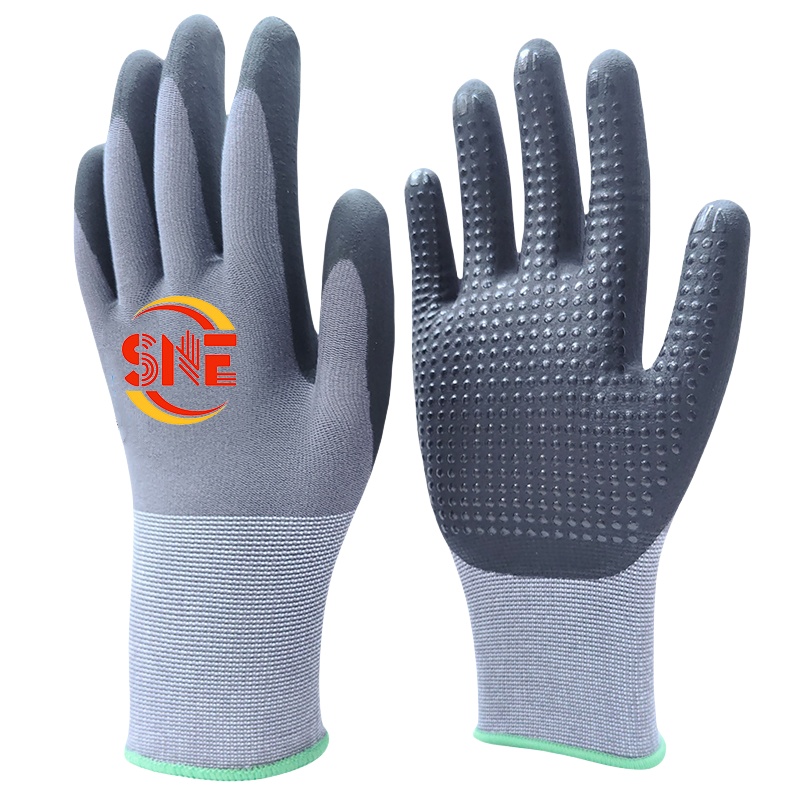
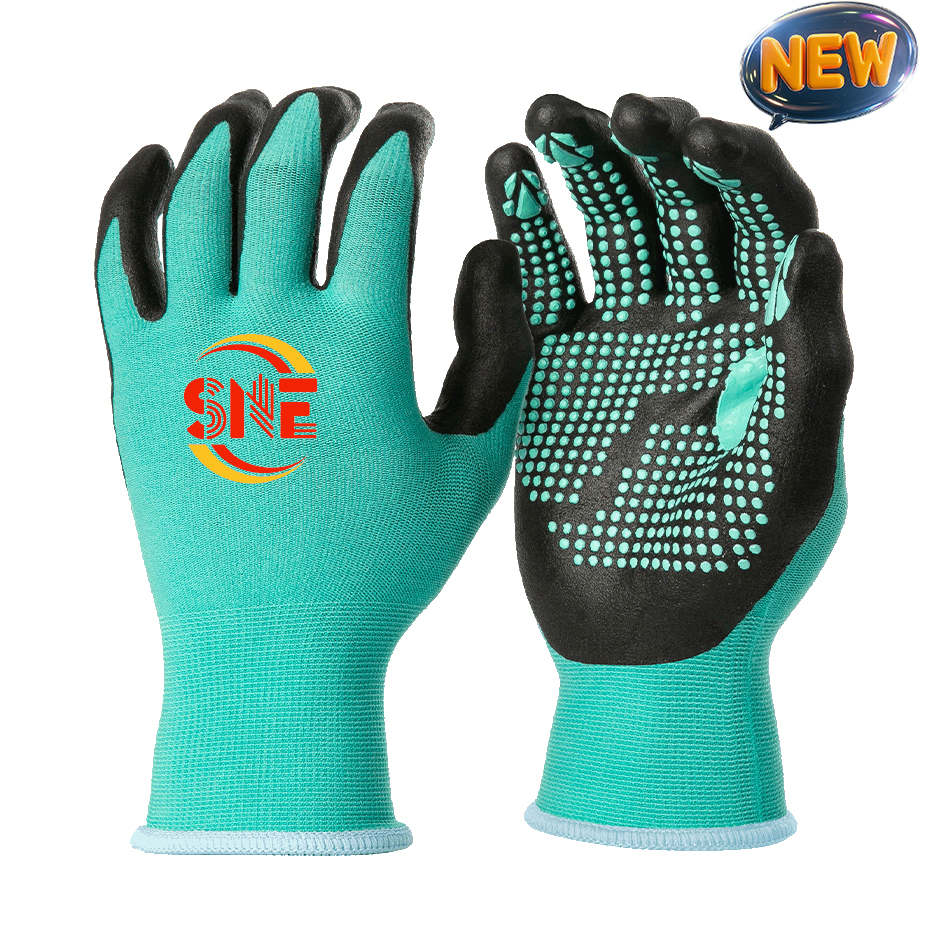
| Seamless knit PU-coated gloves | A1-A4 | Electronics, precision assembly, light manufacturing | High dexterity and clean grip | Less suited for oily heavy-duty tasks | Fine handling and dry environments |
| Nitrile palm-coated gloves | A2-A6 | Automotive, logistics, machine operation | Versatile grip and abrasion resistance | May feel warm in hot facilities | General industrial use |
| Foam nitrile cut gloves | A3-A6 | Warehousing, parts handling, fabrication | Strong grip with good comfort | Performance varies in saturated oil conditions | Mixed dry and light-oil tasks |
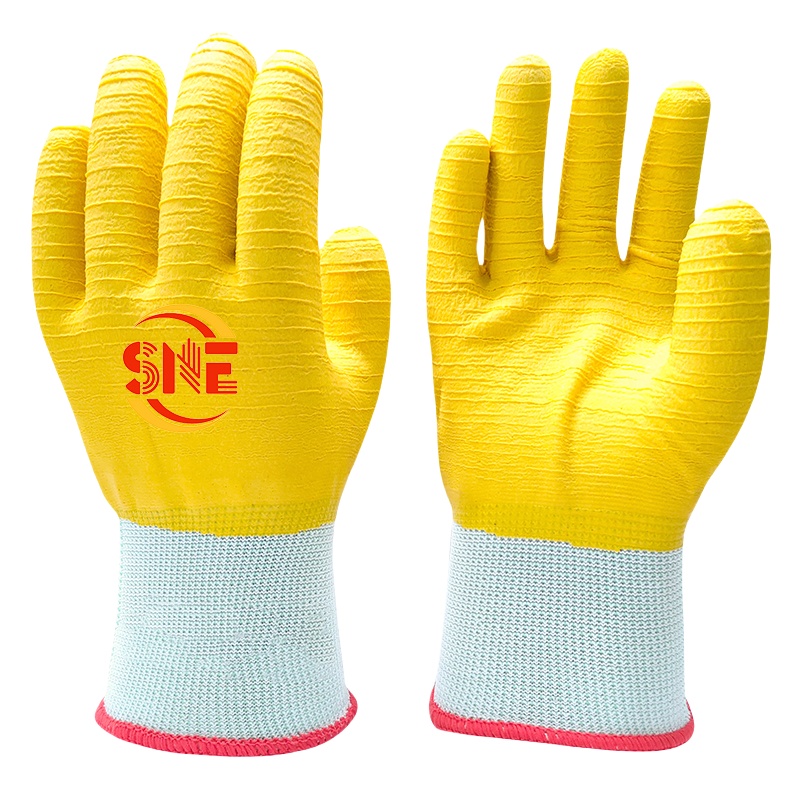
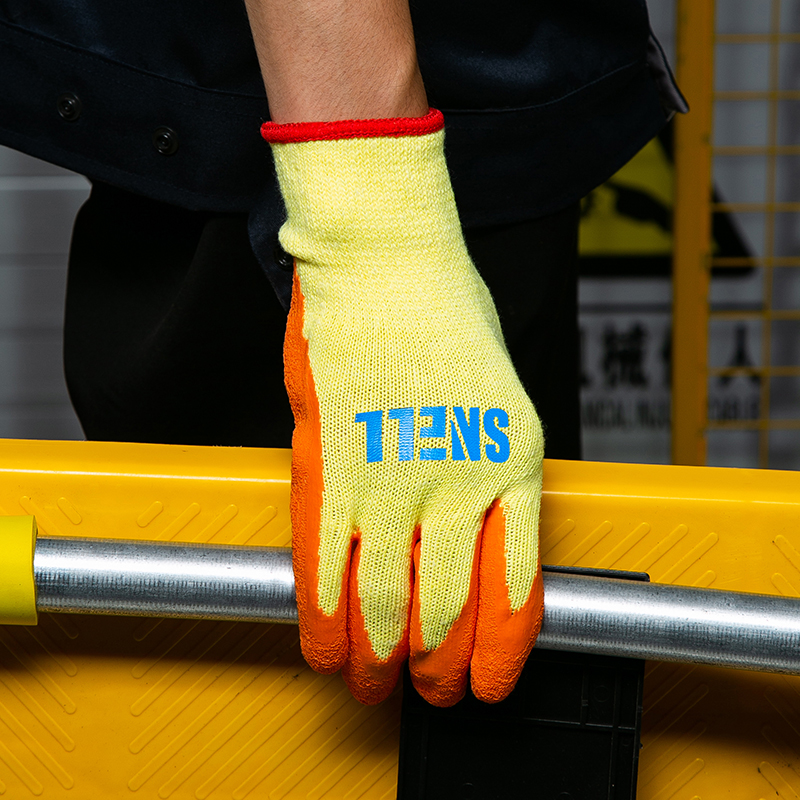
| Latex-coated cut gloves | A2-A5 | Construction, masonry supply, outdoor handling | Excellent grip on rough surfaces | Not preferred where latex sensitivity exists | Rugged outdoor work |
| Double-dipped industrial gloves | A4-A7 | Oil and gas, steel, maintenance | Better liquid barrier and durability | Reduced breathability | Harsh, oily conditions |
| Impact cut-resistant gloves | A4-A8 | Oilfield, mining support, heavy equipment service | Combined cut and back-of-hand protection | Bulkier than standard gloves | Multi-hazard industrial jobs |
| Cut-resistant sleeves | A3-A7 | Glass, sheet metal, food processing | Forearm protection | Need pairing with compatible hand PPE | Extended arm exposure |
This breakdown helps clarify why two gloves with the same ANSI rating may perform very differently in real use. A foam nitrile A4 glove can feel very different from a double-dipped A4 glove in comfort, grip, and wear life. U.S. buyers should therefore compare rating plus construction, not rating alone.
Market Growth and Procurement Direction
Demand for ANSI-rated gloves in the United States continues to rise as injury prevention programs mature and as labor-intensive sectors struggle with training turnover. Distribution centers, e-commerce fulfillment networks, renewable energy component assembly, and reshoring-related manufacturing have all expanded the addressable market for cut-resistant hand protection.
The line chart illustrates a realistic growth pattern for the U.S. cut-resistant glove market index, driven by stronger OSHA-focused safety culture, warehouse expansion, automation support jobs, and continued replacement of cotton or leather gloves in higher-risk tasks. By 2026, growth is expected to be supported by policy tightening, better hand-injury analytics, and broader adoption of task-based PPE matrices.
Where Demand Is Strongest by Industry
Not every industry buys the same glove profile. Automotive and metal fabrication typically pull the market toward A4-A6, while warehousing tends to favor A2-A4 for comfort and speed. Construction is more fragmented because tasks vary sharply from framing to HVAC to glazing.
The bar chart highlights how metal fabrication and automotive remain core demand centers in the United States. These sectors often face repetitive exposure to unfinished edges, stamped parts, and machine-fed components. Warehousing demand is also significant because modern facilities increasingly seek lower-level cut protection for carton opening, returns processing, and mixed-material handling.
How Buying Patterns Are Shifting
One major trend in the U.S. is the move away from heavy, uncomfortable high-cut gloves for every task. Safety teams are now segmenting by workstation and issuing lighter gloves where possible. This increases wearer compliance and often reduces improper glove removal during work.
The area chart shows a realistic increase in task-specific glove programs. This means more U.S. employers are matching ANSI A2 or A3 for light fulfillment, A4 or A5 for standard fabrication, and A6 or above only for the highest-risk stations. The result is better comfort, lower resistance from workers, and improved inventory control.
Buying Advice for U.S. Safety Managers and Importers
First, identify the exact cut source. Sharp sheet edges, burrs, broken glass, and utility blades create different risk patterns. If the hazard is intermittent but severe, a higher ANSI level may be justified. If the hazard is frequent but lower intensity, grip and dexterity may matter just as much as cut rating.
Second, check coating and surface conditions. A glove that performs well on dry aluminum may fail in oily machining or cold outdoor service. In U.S. Gulf Coast maintenance work, nitrile and double-dip options often outperform lighter PU styles because moisture and oil are common. In electronics assembly around Austin or Phoenix, thinner PU-coated gloves may be preferred.
Third, evaluate worker acceptance. If a glove is too stiff, too hot, or too bulky, employees may remove it, defeating the protection plan. Pilot testing in real departments is more valuable than lab rating alone.
Fourth, look at total supply reliability. U.S. buyers operating across multiple states need stable replenishment, lot consistency, and clear packaging by size and rating. This is especially important for distributors supplying municipal accounts, industrial vending programs, and national maintenance contracts.
Fifth, demand evidence. Ask suppliers for ANSI test data, coating details, wash guidance, and sizing consistency. Reputable suppliers in the U.S. market should be comfortable discussing performance limits rather than overselling one glove for every task.
Key Applications Across U.S. Industries
ANSI-rated gloves are used in a wide variety of workplaces, but the best level depends on the edge severity and frequency of contact. In automotive plants in Michigan, Tennessee, and Alabama, cut-resistant gloves support stamping, assembly, and service parts handling. In construction markets such as Dallas, Atlanta, and Phoenix, they are used for HVAC ducting, framing hardware, glazing, and general material handling.
In logistics hubs like Louisville, Inland Empire, and central Pennsylvania, employers often deploy lighter ANSI A2 to A4 gloves to protect against carton blades, plastic straps, sharp packaging corners, and mixed returns. In food processing, stainless equipment maintenance and blade-adjacent work may call for higher cut levels, though glove material must also align with hygiene and task requirements. In oil and gas support operations around Houston and Odessa, buyers often need hybrid cut and impact protection because hand injuries can involve both sharp metal and pinch or strike hazards.
| Industry | Typical ANSI Levels | Main Hazards | Preferred Glove Features | Common U.S. Regions | Procurement Tip |
|---|---|---|---|---|---|
| Automotive | A4-A6 | Stamped metal, trims, components | Dexterity, abrasion resistance, grip | Michigan, Ohio, Tennessee, Alabama | Trial gloves by workstation, not plant-wide only |
| Metal fabrication | A5-A7 | Sharp sheet edges, burrs, formed parts | High cut resistance, durable coating | Indiana, Pennsylvania, Illinois, Texas | Use heavier levels only where exposure is continuous |
| Warehouse and logistics | A2-A4 | Box cutters, bands, broken packaging | Lightweight fit, grip, touchscreen | California, Kentucky, New Jersey, Georgia | Comfort drives compliance in high-turnover sites |
| Construction | A2-A5 | Duct edges, fasteners, rough materials | Grip, flexibility, durable palm | Texas, Florida, Arizona, Carolinas | Segment by trade because hazards vary widely |
| Oil and gas | A4-A7 | Sharp tools, pipes, pinch points | Impact plus cut protection | Texas, Louisiana, Oklahoma | Combine cut and back-of-hand testing requirements |
| Glass and glazing | A5-A7 | Sheet glass, sharp edges | Smooth handling, high cut rating | Pennsylvania, Ohio, California | Arm protection may be needed with sleeves |
| Maintenance and MRO | A3-A6 | Mixed hazards, sharp housings, tool slips | Versatility, grip, long wear | Nationwide | Keep two or three glove types, not one universal model |
The table demonstrates that no single ANSI level dominates every U.S. industry. The best purchasing strategy is to build a small glove matrix by department or task family rather than trying to force one product into every application.
Case Studies from Typical U.S. Use Scenarios
A Midwest metal stamper had frequent hand lacerations despite workers wearing basic leather gloves. After mapping injury points, the company moved high-risk stations to ANSI A6 nitrile-coated cut gloves and lower-risk material movement to ANSI A4 gloves. The change reduced glove complaints because the lighter tasks no longer required overly bulky protection, while the highest-risk stations gained a stronger barrier.
An e-commerce fulfillment operation near the Port of Savannah tested ANSI A2, A3, and A4 gloves for receiving, put-away, and returns handling. Workers preferred the A3 foam nitrile model because it balanced grip, flexibility, and moderate cut protection for mixed packaging hazards. Replacement rates improved because staff actually kept the gloves on throughout the shift.
A Texas energy service contractor using impact gloves for nearly every task found that some technicians were removing them for finer mechanical work. The company redesigned the PPE policy: impact cut gloves remained mandatory for pipe handling and field rig tasks, while a slimmer A4 cut glove was approved for bench assembly and light maintenance. Compliance increased and productivity improved.
Local Suppliers and Brands Active in the U.S. Market
The United States has a mature supplier network for cut-resistant gloves, ranging from global manufacturers with nationwide distribution to specialty brands with strong positions in oil and gas, metalworking, or industrial vending. Buyers should compare service region, stock availability, private-label potential, and technical support, not just catalog depth.
| Company | Service Region | Core Strengths | Key Offerings | Typical Buyer Type | Practical Note |
|---|---|---|---|---|---|
| Ansell | Nationwide U.S. | Broad industrial PPE portfolio, strong technical credibility | HyFlex cut-resistant glove lines, chemical and specialty PPE | Large manufacturers, national accounts, distributors | Well suited for standardized multi-site programs |
| Honeywell | Nationwide U.S. | Industrial safety integration and recognized PPE brand | Cut-resistant gloves, sleeves, task-based safety products | Industrial plants, utilities, enterprise procurement teams | Strong option for buyers already using Honeywell safety systems |
| MCR Safety | United States and regional distribution | Industrial hand protection depth and distributor presence | Memphis gloves, coated cut gloves, sleeves, impact options | Regional distributors, contractors, manufacturing plants | Popular in practical mid-market industrial purchasing |
| PIP | Nationwide U.S. | Large assortment and strong distributor partnerships | G-Tek cut-resistant gloves, coated and specialty hand PPE | Dealers, wholesalers, industrial supply chains | Useful when category breadth matters |
| Superior Glove | U.S. and Canada | Technical innovation and broad cut protection range | TenActiv and end-user specific hand protection programs | Safety managers, fabricators, national distributors | Strong at matching gloves to detailed hazard profiles |
| HexArmor | Nationwide U.S. | High-performance protection and premium positioning | Cut and impact gloves for high-risk environments | Oil and gas, utilities, high-risk industrial sites | Often considered for demanding multi-hazard tasks |
| Youngstown Glove | United States | Durable work gloves with industrial and field-use focus | Cut-resistant and performance work gloves | Field service, utilities, contractors | Best known in work-oriented applications rather than light assembly |
This supplier table is useful because it separates broad-market brands from task-focused specialists. For a national distributor, companies such as Ansell or PIP may fit standardized purchasing. For heavy-risk field environments, HexArmor may enter the shortlist sooner. The right choice depends on channel model, inventory needs, and end-user hazard intensity.
Supplier and Product Comparison Snapshot
In procurement meetings, buyers often need a fast visual comparison across supplier attributes such as technical breadth, distributor support, OEM flexibility, and value for money. The chart below provides a realistic directional view rather than a lab-grade scorecard.
The comparison chart shows how different suppliers can appeal for different reasons. Established U.S. brands often score strongly on local distribution depth and familiar technical support. A factory-direct manufacturer can compete effectively when it combines product breadth, stable quality systems, custom development, and attractive landed cost for bulk programs.
Our Company in the U.S. Context
For U.S. buyers looking beyond catalog brands, Snell Safety brings a factory-direct model that aligns well with distributor, importer, brand-owner, and industrial end-user needs in the United States. The company operates two manufacturing facilities in Gaomi and Nantong with 6 dedicated production lines, more than 150 skilled employees, and daily capacity of 150,000 pairs, giving it the scale needed for stable bulk supply and private-label continuity. Its hand protection range covers PU, latex, and nitrile-coated gloves, plus cut-resistant, impact-resistant, oil-resistant, cold-protection, welding, and touchscreen products, which is important for U.S. customers who want one supply partner across multiple task profiles. From a product-strength standpoint, the company works under ISO 9001 quality management and CE-marked production standards, supported by structured manufacturing and quality control that help gloves meet demanding international benchmarks for consistency and performance. From a cooperation standpoint, it supports OEM, ODM, wholesale, private label, customized materials, coatings, sizing, and branding, making it suitable for local distributors, dealers, regional safety suppliers, brand owners, and larger employers developing their own PPE programs. For local service assurance, the company already has established export experience across Europe, Australia, the Middle East, Russia, South America, and Southeast Asia, and its multilingual commercial operation, sample support, technical consultation, and dedicated export logistics process provide U.S. buyers with concrete before-sales and after-sales safeguards rather than a simple remote transaction; buyers can explore products through the product catalog, discuss specifications through the U.S.-focused contact channel, or review the company background on the main website when building long-term sourcing plans.
How to Choose the Right Supplier
If you are a U.S. distributor, prioritize suppliers that offer stable labeling, reliable carton configuration, size consistency, and fast sample development. If you are a manufacturer, focus on injury reduction per task, comfort acceptance, and replacement cycle. If you are building a private-label line, ask about coating options, cuff color coding, logo printing, packaging customization, and documentation support.
Large U.S. buyers should also ask whether the supplier can support mixed programs: for example, A3 PU gloves for light assembly, A5 nitrile gloves for fabrication, impact A6 gloves for field maintenance, and matching sleeves where forearm exposure exists. The more complex the workplace, the more valuable a supplier becomes if it can cover multiple hand-protection categories under one procurement relationship.
Future Trends Through 2026
By 2026, several trends are likely to shape the ANSI cut glove market in the United States. The first is greater use of engineered yarn blends that deliver the same cut rating with lighter weight and better tactility. This will be especially important in logistics, electronics, and automated assembly environments where workers interact with scanners, touchscreens, and small parts.
The second trend is policy and audit pressure. More employers are formalizing hand protection matrices by task, especially in multi-site operations and contractor-managed facilities. This will drive more precise specification of ANSI levels, coating type, and replacement intervals. Companies that can document why a task uses A3 versus A5 will be better positioned during incident reviews and insurance conversations.
The third trend is sustainability. U.S. buyers are increasingly interested in longer-lasting gloves, packaging reduction, and product designs that cut waste without compromising safety. This does not mean sustainability will replace performance, but it will increasingly influence supplier selection when competing products meet the same operational need.
The fourth trend is digital procurement. Buyers now expect quicker sampling, clearer data sheets, faster custom quoting, and more transparent production communication. Suppliers that combine strong manufacturing discipline with responsive sales engineering will be better placed to win business from U.S. distributors and industrial accounts.
Frequently Asked Questions
Is ANSI A9 always the best choice?
No. ANSI A9 provides the highest cut resistance, but it is not always the best glove for every task. In many U.S. workplaces, an A3 to A5 glove gives better dexterity, comfort, and worker compliance. Choose the level that fits the actual hazard.
What ANSI level is common for warehouses in the United States?
Many warehouse operations use A2 to A4 gloves, depending on whether workers handle box cutters, metal shelving, plastic strapping, damaged packaging, or returned goods with unpredictable sharp edges.
What industries often require A5 or higher?
Metal fabrication, automotive stamping, glass handling, some oil and gas tasks, and heavy industrial maintenance are common examples. These sectors often face repeated contact with sharp unfinished metal or severe edge exposure.
Are ANSI and EN388 the same?
No. They are different testing and rating systems. U.S. buyers typically specify ANSI/ISEA 105 for cut performance, while many internationally sourced gloves may also show EN388 data. Serious buyers should compare both carefully instead of assuming direct equivalence.
Can I source ANSI-style cut gloves from overseas suppliers?
Yes. Many U.S. importers and private-label buyers work with overseas manufacturers. The key is to verify certifications, testing consistency, customization capability, communication speed, and logistics reliability.
What matters besides cut resistance?
Grip, abrasion resistance, comfort, fit, coating type, wash behavior, impact protection, temperature suitability, and worker acceptance all matter. A glove that scores well in the lab but is removed during work is not an effective safety solution.
How should a U.S. company test gloves before a full rollout?
Run site trials by department, track replacement frequency, gather worker feedback, compare injury points, and confirm the glove matches the exact task. A controlled pilot in real conditions usually reveals more than product literature alone.
Final Takeaway
ANSI cut resistance levels give U.S. buyers a practical framework for matching glove protection to real workplace hazards. A1 through A3 often cover lighter industrial work, A4 through A6 fit much of mainstream manufacturing, and A7 through A9 are reserved for severe cut exposure. The smartest procurement approach in the United States is to map hazards by task, compare glove construction as well as cut rating, and work with suppliers that can provide evidence, consistency, and responsive support. Whether buying from established domestic brands or qualified factory-direct global manufacturers, the goal remains the same: reduce laceration risk without sacrificing worker comfort, productivity, or supply reliability.