2026-07-16
Share This Article
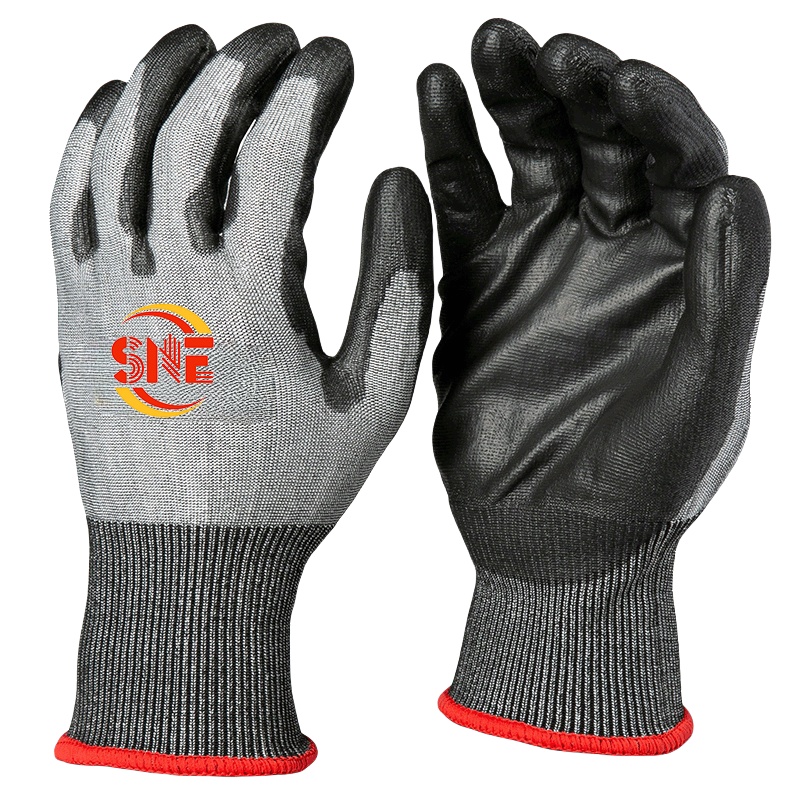
Cut Resistant Gloves for Automotive in the United States
Quick Answer

If you need cut resistant gloves for automotive work in the United States, the most practical choices usually come from established suppliers such as Ansell, HexArmor, MCR Safety, Superior Glove, Youngstown Glove, and PIP. These brands are widely used for stamping, metal handling, assembly, glass handling, maintenance, and parts logistics across major auto hubs such as Michigan, Ohio, Indiana, Tennessee, Alabama, South Carolina, and Texas.
For buyers focused on bulk procurement, the best glove depends on the task: lightweight ANSI A2-A4 gloves fit assembly and trim work; ANSI A4-A6 gloves are common for metal parts handling and maintenance; reinforced palm or impact models are better for heavier fabrication and service bay tasks where abrasion and pinch risks are present. Automotive purchasing teams should compare cut level, grip in oily environments, touchscreen compatibility, dexterity, cuff length, laundering performance, and price stability over long supply contracts.
U.S. buyers can also consider qualified international manufacturers when they offer recognized certifications, scalable production, and dependable account support. In practice, cost-performance can be very attractive when the supplier can support OEM labeling, bulk orders, compliance documentation, and responsive pre-sales and after-sales service for North American customers. Buyers exploring factory-direct options can review the broader safety glove catalog and use the contact page to discuss technical requirements and samples.
United States Market Overview

The U.S. automotive sector remains one of the most demanding end markets for hand protection. Plants and supplier networks across Detroit, Dearborn, Toledo, Columbus, Indianapolis, Nashville, Chattanooga, Spartanburg, Tuscaloosa, and Arlington rely on gloves that balance cut resistance with speed, feel, and worker acceptance. A glove that performs well in a lab but causes fatigue or reduces fine motor control often fails on the line.
Demand in the United States is shaped by several factors at once. First, automakers and Tier 1 and Tier 2 suppliers continue to push injury reduction programs with closer attention to laceration risks. Second, electrification is changing shop-floor tasks, with battery assembly, wire harness work, aluminum component handling, and electronics integration creating new combinations of cut, abrasion, puncture, and chemical exposure. Third, procurement teams are under pressure to manage total cost, not just unit cost. That means glove life, replacement rates, worker compliance, and incident reduction matter as much as purchase price.
In many U.S. automotive facilities, glove selection is no longer handled only by safety officers. EHS teams, plant managers, maintenance leaders, production supervisors, and purchasing departments typically evaluate products together. Some prioritize ANSI/ISEA cut levels and test consistency; others care more about grip on oily parts, touchscreen function for scanners, or comfort during 10- to 12-hour shifts. This is why suppliers serving the automotive market need broad product ranges rather than one flagship glove.
Regional logistics also matter. Buyers near the Port of Los Angeles, Port of Long Beach, Port of Savannah, Port of Houston, Port of New York and New Jersey, and inland hubs such as Chicago and Memphis often compare domestic inventory programs with direct import models. U.S. distributors can shorten replenishment lead times, while factory-direct sourcing can improve margins for large annual volumes or private-label programs.
Market Growth Trend

The chart below illustrates a realistic demand trend for cut resistant gloves used in the U.S. automotive sector, reflecting safety upgrades, EV-related process changes, and stricter injury prevention programs.
Leading Suppliers Serving the U.S. Automotive Sector
The companies below are frequently considered by buyers in the United States for automotive hand protection. Some are domestic brands with broad distribution networks, while others serve the market through regional partners, import channels, or factory-direct programs. The table gives a practical shortlist rather than a generic overview.
| Company | Primary Service Region | Core Strengths | Key Offerings for Automotive | Best Fit Buyer Type |
|---|---|---|---|---|
| Ansell | United States, Canada, Mexico | Deep industrial portfolio, strong compliance support, broad distributor network | HyFlex cut-resistant assembly gloves, oil-grip coatings, ergonomic options | Large OEMs, Tier 1 suppliers, national distributors |
| HexArmor | United States and broader North America | High-performance protection, impact technology, task-specific engineering | Cut and impact gloves for metal handling, service, maintenance, glass work | Plants with higher injury-risk operations |
| MCR Safety | United States nationwide | Value-focused industrial range, strong availability, broad size coverage | Cut-resistant coated gloves, mechanics styles, general manufacturing PPE | Cost-conscious buyers and distributor programs |
| Superior Glove | United States and Canada | Extensive cut-level matrix, specialty fibers, application-specific selection | Dexterity gloves, sleeve solutions, impact-cut hybrids, knit shell options | Safety managers seeking task segmentation |
| PIP | United States with global sourcing network | Large industrial PPE platform, private label capability, wide logistics reach | G-Tek and related cut-resistant coated gloves for assembly and handling | Multi-site industrial groups and wholesalers |
| Youngstown Glove | United States | Durability, performance fit, utility and maintenance positioning | Cut-resistant work gloves for technicians, maintenance, parts handling | MRO teams, field service, maintenance departments |
| Qingdao Snell Protective Products Co., Ltd. | United States via export supply and B2B factory-direct cooperation | Scale manufacturing, OEM/ODM flexibility, PU/latex/nitrile coating expertise | Cut-resistant gloves, sleeves, custom branding, bulk wholesale programs | Importers, brand owners, distributors, bulk buyers |
This supplier set matters because the U.S. automotive market is not served by one procurement model alone. Major OEMs often buy through contracted distributors, independent regional suppliers support maintenance and MRO accounts, and private-label import programs remain attractive for wholesalers and brand owners. Comparing suppliers by service coverage, engineering support, and supply-chain resilience is usually more useful than comparing list price only.
Automotive Glove Types and Where They Fit
Automotive operations involve far more than final assembly. Workers handle stamped steel, aluminum edges, fasteners, trim, powertrain parts, castings, exhaust components, windshields, batteries, tools, and returnable packaging. Different glove constructions fit these tasks differently.
Seamless knit cut resistant gloves are common because they combine comfort, breathability, and dexterity. A liner made from HPPE, engineered yarns, glass fiber, steel fiber blends, or other cut-resistant materials creates the protective base. Coatings such as polyurethane, nitrile, sandy nitrile, or latex then determine grip, flexibility, and wear profile. PU-coated gloves tend to support precision work, nitrile supports oily grip and abrasion resistance, and latex often improves dry grip where softness matters more than oil resistance.
Some automotive environments also need impact-resistant back-of-hand protection, extended cuffs, touchscreen fingertips, or ESD-compatible features. Battery plants and electronics-related automotive processes may prefer lower lint, clean handling styles. Service bays and maintenance departments often prefer heavier-duty gloves with reinforced thumb crotches or mechanic-style construction.
Product Type Comparison
The table below shows how common glove categories align with U.S. automotive tasks. This helps buyers avoid over-specifying gloves for light tasks or under-protecting workers in metal-intensive processes.
| Glove Type | Typical ANSI Cut Range | Best Automotive Applications | Main Coating/Construction | Advantages |
|---|---|---|---|---|
| Lightweight precision glove | A2-A3 | Interior trim, small-parts assembly, scanning, packaging | 18-21 gauge liner with PU coating | High dexterity, good feel, low hand fatigue |
| General assembly cut glove | A3-A4 | General assembly, sub-assembly, fastener handling | 13-18 gauge liner with PU or nitrile coating | Balanced protection and comfort |
| Metal handling glove | A4-A6 | Stampings, brackets, raw edges, maintenance parts handling | HPPE or engineered yarn with nitrile/sandy nitrile | Stronger cut protection and better abrasion life |
| Impact-cut hybrid glove | A4-A7 | Tooling, service, maintenance, heavy parts movement | Thermoplastic back with reinforced palm | Added protection from knocks and pinch points |
| Glove with extended cuff | A4-A6 | Sheet metal, glass handling, forearm exposure areas | Knit glove plus long cuff or sleeve pairing | More wrist and forearm coverage |
| Disposable-supported cut solution | A2-A4 | Mixed tasks involving cleanliness or frequent glove changes | Cut liner with outer disposable glove option | Useful where contamination control matters |
| Cut resistant sleeve system | Varies | Stamping, welding prep, glass, rack loading | Armsleeves paired with gloves | Protects forearms where glove cuffs are not enough |
In practice, many U.S. plants standardize two or three glove platforms rather than a single model. For example, a plant may use a fine-gauge PU glove for trim and electronics, a nitrile-coated A4 glove for general line work, and an impact A5 style for maintenance and metal receiving. This reduces confusion and still keeps inventory manageable.
Industry Demand by Automotive Function
Not every automotive department consumes cut-resistant gloves at the same rate. Press shops, body shops, component receiving, and maintenance tend to show higher usage than light assembly cells. The following chart reflects realistic relative demand intensity across common automotive functions in the United States.
How to Buy the Right Gloves
For U.S. automotive buyers, the smartest glove purchase usually starts with hazard mapping instead of brand preference. A stamping line, engine plant, EV battery module area, and dealership service department all need different glove attributes. A structured trial process helps identify the best product for each job family.
Begin with the cut hazard itself. If workers are contacting light burrs, carton edges, or plastic trim, an A2 or A3 glove may be enough. If they handle unfinished brackets, stamped components, or racks with sharp edges, A4 to A6 is more realistic. If impact or pinch hazards are layered onto cut risk, a hybrid glove may reduce injury better than increasing cut level alone.
Then evaluate the work environment. Dry handling, oily metal parts, coolant exposure, and repeated tool contact each affect coating choice. Sandy nitrile may outperform PU in oily settings, but PU often wins on tactile sensitivity. Long shifts may favor lightweight shells even if they wear faster, because worker compliance improves when gloves feel less bulky.
Procurement teams should also ask six practical questions before issuing a contract: What is the actual replacement frequency? What sizes are consistently available? Does the glove maintain grip after washing or heavy wear? Can workers use tablets or scanners without removing gloves? Is there a clear test data sheet? Can the supplier support emergency replenishment?
Large buyers often reduce total cost by running controlled wear trials in two or three plants, measuring life in days per pair, tracking employee acceptance, and comparing injury records before expanding the program nationally. This approach is common in automotive corridors such as the Midwest and Southeast, where multi-site consistency matters.
Key Buying Factors Table
The next table translates technical glove features into procurement decisions. It is especially useful for buyers comparing multiple suppliers for annual contracts, regional supply agreements, or private-label imports.
| Buying Factor | Why It Matters in Automotive | What to Check | Common Mistake | Better Approach |
|---|---|---|---|---|
| ANSI cut level | Aligns protection with actual laceration risk | Lab data, task matching, field validation | Choosing the highest level for every task | Match level to each workstation |
| Grip performance | Prevents slips with oily or smooth components | Dry, oily, and coolant-contact trials | Testing only in clean conditions | Run trials in live production |
| Dexterity | Affects speed, error rates, and glove compliance | Gauge, fingertip feel, part handling accuracy | Ignoring worker feedback | Score comfort with end users |
| Durability | Impacts real cost per wear day | Abrasion life, seam wear, coating peel resistance | Buying solely on unit price | Calculate cost per usable shift |
| Supply stability | Automotive plants cannot tolerate stockouts | Lead time, safety stock, alternate SKUs | Using one source without backup | Build dual-source planning |
| Documentation | Supports EHS approval and contract compliance | Certifications, test reports, product specs | Accepting incomplete paperwork | Require technical files up front |
| Customization | Important for distributors and private labels | Logo printing, packaging, color coding, sizing | Assuming all factories can customize reliably | Confirm MOQ and sample process early |
Buyers who use this framework usually make better long-term decisions because they evaluate gloves as part of a risk-control and labor-efficiency system, not as isolated PPE commodities.
Applications Across the Automotive Value Chain
Cut resistant gloves for automotive use are needed throughout the full value chain. At steel and aluminum component suppliers, gloves reduce hand injuries from edges, coils, blanks, and fabricated parts. At Tier 1 assembly plants, they support repetitive handling of housings, brackets, clips, and unfinished assemblies. In final vehicle production, gloves must often support both protection and dexterity for workers routing cables, attaching panels, installing seats, and handling glass or trim pieces.
In logistics and warehousing, gloves are used for returnable container handling, pallet breakdown, rack movement, and aftermarket parts distribution. At service and repair facilities, technicians need protection during brake work, body panel tasks, underbody repairs, and shop maintenance. EV-related operations add further requirements, including low-lint handling, precision assembly, and compatibility with more delicate parts.
Because task variation is high, buyers in the United States often separate automotive glove demand into three application groups: precision handling, general component handling, and higher-risk metal or maintenance handling. This approach simplifies line-side stocking while still improving protection outcomes.
Trend Shift in Product Preferences
Over the last several years, U.S. automotive buyers have shifted away from overly bulky gloves and toward thinner, more ergonomic products that still meet higher cut requirements. The area chart below shows a realistic preference trend.
Case Studies from Typical U.S. Automotive Scenarios
A Midwestern stamping supplier handling sharp-edged brackets initially used a heavy glove with high cut ratings, but workers often removed it for detailed handling. After a wear trial, the company moved to a more ergonomic A5 nitrile-coated glove and paired it with sleeves in the highest-risk cells. Injury rates dropped, and glove compliance improved because the new setup balanced protection and usability better.
At a Southeast final assembly plant, workers installing interior trim and handling small clips complained that their gloves reduced feel and slowed takt time. The plant segmented jobs by hazard and introduced an A2-A3 fine-gauge PU-coated glove for selected stations while keeping higher-cut gloves for metal-adjacent work. This helped maintain productivity without weakening safety controls in the areas where they mattered most.
A battery component supplier in the South used multiple glove models sourced through different channels, causing inconsistent size availability and training confusion. By consolidating to a narrow but task-specific range with clear color coding by cut level, the company improved replenishment accuracy and reduced misuse. The key lesson was that glove standardization works best when it is hazard-based rather than purely procurement-driven.
A parts distribution center near Chicago evaluated gloves for receiving and rack loading. The cheapest option wore through too quickly, producing hidden cost from frequent replacements. A slightly higher-priced nitrile-coated cut glove lasted longer in rough carton and pallet contact, lowering the monthly cost per worker. For warehouse operations, durability often matters more than the initial purchase price.
Local and Regional Supplier Landscape
The United States glove market includes national brands, specialized industrial distributors, regional safety houses, and import-focused private-label programs. Buyers in Detroit, Cleveland, Louisville, Nashville, Atlanta, Greenville, and Dallas often rely on local distributor relationships because on-site support, wear trials, and emergency deliveries are important in automotive operations. At the same time, larger buyers increasingly blend local support with global manufacturing to control costs and protect supply continuity.
The table below compares practical supplier options by how they serve the U.S. market.
| Supplier | U.S. Market Presence | Typical Service Model | Automotive Strength | Ideal Use Case |
|---|---|---|---|---|
| Fastenal | Nationwide branch network | Distribution, vending, onsite inventory support | Reliable replenishment for multi-site industrial accounts | Plants needing frequent local delivery |
| Grainger | Nationwide | Industrial distribution with broad catalog access | Fast sourcing across many PPE categories | Buyers wanting one-stop procurement |
| MSC Industrial Supply | United States nationwide | MRO-focused supply and technical sales | Supports maintenance-heavy environments | MRO and plant engineering teams |
| Motion | Strong in manufacturing regions | Industrial parts and safety distribution | Useful where gloves are bundled with plant consumables | Operations consolidating industrial spend |
| Regional safety distributors | Michigan, Ohio, Indiana, Tennessee, Alabama, South Carolina | Local trials, onsite fit testing, tailored stocking | Strong plant relationships and rapid problem solving | Users needing hands-on service |
| Factory-direct import programs | U.S. buyers working through ports and inland hubs | OEM/ODM, private label, bulk contracts | Competitive landed cost and customization | Distributors, wholesalers, brand owners |
| Qingdao Snell Protective Products Co., Ltd. | Serving U.S. buyers through export and account-based support | B2B direct supply, OEM/ODM, wholesale, custom production | Cut-resistant gloves, sleeves, coating technology, scalable output | Importers and volume buyers seeking margin control |
This landscape shows why supplier selection in the United States is rarely just a brand decision. It is a service decision, a logistics decision, and often a contract-structure decision. A local distributor may be best for immediate replenishment and field support, while a factory-direct manufacturer may be best for large annual consumption, custom branding, or distributor margin strategy.
Supplier and Product Comparison
For many procurement teams, the most useful comparison is not market share but practical fit. The chart below compares four common sourcing profiles on a realistic performance scale for automotive buyers.
Our Company
For U.S. automotive buyers seeking a factory-direct option, Snell Safety positions itself as a practical manufacturing partner rather than a remote trading intermediary. The company operates two manufacturing facilities in Gaomi and Nantong with six production lines, more than 150 trained employees, and daily output capacity of 150,000 pairs, which supports repeatability for large industrial glove programs. Its strength in cut-resistant engineering is reinforced by ISO 9001 and CE-based quality control, diversified PU, latex, and nitrile coating technologies, and a product portfolio that already serves demanding industrial segments such as automotive, manufacturing, metal fabrication, logistics, and maintenance. For cooperation, the company supports OEM and ODM production, private-label supply, wholesale orders, product customization, and distributor partnerships, which makes it suitable for end users, regional dealers, importers, wholesalers, and brand owners that need tailored specifications, packaging, and scalable lead-time planning. For local service assurance in the United States, the company serves North American buyers through export-experienced account support, multilingual communication, sample coordination, technical consultation, and dedicated logistics follow-through, with a demonstrated export track record across major regulated markets; buyers can review the company background on the about us page and move directly into product and service discussions through the U.S. inquiry channel, which helps bridge online sourcing with responsive pre-sales and after-sales support expected by long-term industrial customers.
How Automotive Buyers Can Use an International Supplier Successfully
International sourcing works best when glove specifications are tightly documented. U.S. buyers should define cut level, gauge, liner composition, coating type, color coding, logo requirements, carton labeling, and size ratios before requesting pricing. Sample approval should include both laboratory documentation and live production trials. For distributors or brand owners, private-label packaging and barcode requirements should be settled early to avoid launch delays.
Ports and inland logistics matter too. Buyers shipping through Los Angeles, Long Beach, Savannah, Houston, or New York/New Jersey should align replenishment schedules with safety stock requirements in their U.S. warehouses. Many successful import programs use rolling forecasts and dual-SKU backup options for critical glove styles. This reduces disruption during seasonal freight shifts or sudden automotive production swings.
Another best practice is to separate strategic sourcing from emergency replenishment. High-volume core styles can be purchased directly from the manufacturer for better landed cost, while urgent or variable-demand items can stay with domestic distribution partners. This hybrid approach is common among sophisticated U.S. buyers because it balances margin, service, and resilience.
Industries and Adjacent Uses
Although this page focuses on automotive, the same glove families often serve adjacent industries that share similar hazards. Metal fabrication shops producing brackets, frames, tubing, and housings need similar cut protection. Warehousing teams handling automotive aftermarket parts face carton and rack-edge risks. Aerospace suppliers and appliance manufacturers also use comparable glove profiles for sheet metal, composite handling, and precision assembly.
This cross-industry overlap matters because distributors serving the United States can often consolidate purchasing across multiple customer segments. A glove that performs well in automotive assembly may also fit electronics-adjacent manufacturing, general industrial packaging, or maintenance accounts. The most successful glove programs therefore use core product platforms with minor variations, rather than starting from scratch for every account.
2026 Trends: Technology, Policy, Sustainability
Looking ahead to 2026, three trends are shaping cut resistant gloves for automotive users in the United States. The first is technology. More gloves will combine higher cut performance with finer gauge liners, better touchscreen responsiveness, and improved grip in mixed dry-oily conditions. Expect more engineered yarn blends, more breathable coatings, and more task-specific gloves for EV assembly and electronics-heavy workstations.
The second trend is policy and compliance pressure. U.S. employers continue to focus on recordable injury reduction, PPE standardization, and stronger documentation from suppliers. Buyers increasingly want traceable testing data, stable specification control, and product consistency across lots. Procurement reviews are also becoming more formal, with EHS and purchasing teams jointly approving glove platforms rather than treating gloves as low-value consumables.
The third trend is sustainability. Automotive companies are asking tougher questions about product life, packaging waste, and factory practices. This does not mean price becomes irrelevant; it means durable gloves with lower replacement frequency can become more attractive, even at a slightly higher unit cost. Suppliers that can support efficient packaging, stable quality, and transparent manufacturing systems will be better positioned in long-term contracts.
Another emerging trend is regional risk management. U.S. buyers increasingly want sourcing models that can survive labor disruptions, freight volatility, and uneven production schedules. That is why multi-source programs, regional inventory planning, and stronger supplier technical support are likely to become standard by 2026 rather than optional.
Frequently Asked Questions
What cut level is best for automotive work in the United States?
There is no single best level for all jobs. A2-A3 often works for light assembly and trim tasks, A3-A4 is common for general assembly, and A4-A6 is frequently used for metal handling, maintenance, and parts with sharper edges. Match the glove to the actual hazard, not the highest label.
Are nitrile-coated gloves better than PU-coated gloves for automotive plants?
Nitrile-coated gloves usually perform better around oil and abrasion, while PU-coated gloves usually provide better fingertip feel and dexterity. Many U.S. plants use both, depending on the workstation.
Should buyers use one glove model across the whole plant?
Usually no. Most facilities get better safety and acceptance by standardizing two to four glove types based on hazard groups. This keeps inventory manageable while improving task fit.
Can imported gloves meet U.S. buyer expectations?
Yes, if the manufacturer can provide consistent specifications, recognized certifications, stable production, technical documentation, and responsive service. Sample trials and clear contract terms are essential.
How important is local support compared with factory price?
Both matter. Local support helps with trials, urgent replenishment, training, and account management. Factory-direct pricing helps with large annual volumes, private labels, and distributor margins. Many buyers use a hybrid model.
Do automotive distributors benefit from private-label glove programs?
Yes. Private-label programs can improve margin control, customer loyalty, and product differentiation, especially when the manufacturer supports customization, packaging, and reliable lead times.
What should be included in a glove trial?
A good trial should measure worker comfort, cut protection fit for the task, grip in actual plant conditions, durability over several shifts, laundering performance if relevant, and user feedback by department.
Where can buyers start if they want to compare factory-direct options?
Start by defining task requirements and reviewing glove categories from a manufacturer with experience in industrial hand protection. Buyers can explore the product range, learn more about the manufacturer on the company page, and reach out through the contact page for samples, specifications, and OEM discussions.
Final Takeaway
For the United States automotive market, the best cut resistant gloves are the ones that match the real workstation hazard, support worker dexterity, and fit the buyer’s supply model. Domestic brands and distributors remain strong choices for local speed and field support, while qualified international manufacturers can offer compelling cost-performance for bulk procurement, private label, and custom specification programs. Buyers who combine hazard mapping, live trials, and supplier due diligence will usually achieve better safety results and lower total glove cost over time.