2026-07-13
Share This Article

Best Construction Gloves for Scaffolding in the United States
Quick Answer

If you need construction gloves for scaffolding in the United States, the most practical options usually come from established suppliers that understand fall-risk work, grip performance, abrasion resistance, and all-day comfort in changing weather. For immediate sourcing, buyers often compare HexArmor, MCR Safety, Mechanix Wear, Ironclad, and Superior Glove because these companies are widely known in the U.S. market for durable hand protection used in construction, rigging, material handling, and elevated work access.
For scaffolding crews, the best glove choice usually depends on whether the main hazard is pipe handling, rope and rigging friction, sheet metal contact, rebar tie work, or wet and oily conditions. In general, sandy nitrile coated gloves, impact-resistant back-of-hand gloves, and cut-resistant work gloves are the most relevant categories for scaffold erectors and dismantling crews. Buyers in major construction corridors such as Houston, Chicago, Atlanta, Los Angeles, and the Port of New York and New Jersey often prioritize fast replenishment, consistent sizing, and compliance documentation for contractor approval.
Qualified international suppliers can also be worth considering, especially manufacturers in China that combine CE and ISO quality systems with strong pre-sales and after-sales support for North American buyers. When cost-performance, private labeling, and stable volume supply matter, factory-direct partners with export experience and responsive technical support can be a smart alternative alongside domestic brands.
U.S. Market Overview for Scaffolding Gloves

The United States remains one of the largest and most demanding markets for industrial hand protection. Construction activity across commercial towers, energy projects, bridge rehabilitation, shipyards, warehousing expansions, and industrial shutdown work continues to create strong demand for specialized gloves suited to elevated platforms and scaffolding environments. Buyers are not simply looking for generic work gloves; they want hand protection that balances dexterity, grip, cut resistance, abrasion durability, and sometimes impact protection without reducing the ability to tie couplers, grip steel tube, or secure decking.
Regional demand patterns differ. In the Gulf Coast, refinery maintenance and industrial turnaround projects often require oil-resistant coated gloves that can handle humid conditions. In the Midwest, infrastructure projects and cold-weather construction push demand for insulated or dual-coated gloves with dependable grip in low temperatures. On the West Coast, ports, logistics hubs, and mixed commercial construction frequently favor lightweight yet cut-resistant gloves for long shifts. In the Northeast, scaffold and masonry trades often require rugged gloves that stand up to concrete dust, wet weather, and sharp contact surfaces.
Procurement decisions in the United States are also influenced by OSHA expectations, contractor safety programs, union standards, insurance requirements, and jobsite-specific PPE policies. Many purchasing managers now seek a glove matrix by task rather than issuing one glove model for every worker. This shift has created broader opportunities for suppliers that can provide multiple coatings, cuff styles, impact zones, and cut levels.
Market Growth Trend

The chart below illustrates a realistic growth pattern for U.S. demand for scaffolding and construction hand protection, driven by infrastructure renewal, stricter safety management, and replacement of disposable low-end gloves with longer-lasting task-specific options.
Top Suppliers Serving the United States
The table below compares well-known suppliers and market participants relevant to construction gloves for scaffolding in the United States. The goal is not to crown one universal winner, but to help buyers match supplier capability to worksite needs such as distribution coverage, product specialization, private label support, and price positioning.
| Company | Primary Service Region | Core Strengths | Key Offerings | Best Fit |
|---|---|---|---|---|
| HexArmor | United States, Canada, industrial national accounts | High-end protection engineering, impact and cut solutions | Impact-resistant gloves, cut-resistant gloves, task-specific industrial PPE | High-risk industrial scaffolding and energy projects |
| MCR Safety | Nationwide U.S. distribution | Broad SKU range, established industrial channels | Nitrile coated gloves, leather palm gloves, cut-resistant models | Contractors needing multiple glove categories |
| Mechanix Wear | United States and broad retail/distributor network | Strong brand recognition, fit, dexterity, mechanic-style construction gloves | Synthetic leather gloves, impact gloves, all-purpose site gloves | General construction and maintenance teams |
| Ironclad | United States construction and industrial channels | Task-focused work gloves, strong grip and back-of-hand designs | Impact gloves, heavy-duty grip gloves, cold weather options | Scaffold crews working with pipe and fittings |
| Superior Glove | North America, including the U.S. | Cut-resistant expertise, broad industrial protection portfolio | Engineered yarn gloves, coated gloves, specialty protection | Buyers needing higher cut performance |
| Qingdao Snell Protective Products Co., Ltd. | U.S. importers, distributors, private label buyers, regional partners | Factory-direct B2B supply, scalable production, coating diversity | Construction gloves, nitrile coated gloves, latex coated gloves, impact-resistant and cut-resistant gloves | Bulk buyers seeking OEM/ODM and cost-performance |
For U.S. buyers, this comparison is practical because supplier choice often depends on channel strategy. National contractors may prefer brands with stocked distributor relationships across multiple states, while private label importers, wholesalers, and regional distributors may find more flexibility and stronger margins with factory-direct manufacturing partners.
Product Types That Work Best on Scaffolding
Scaffolding work combines multiple hazards in the same shift: slipping on galvanized tube, repetitive contact with rough surfaces, pinch points at clamps, minor cut hazards from metal edges, and weather exposure. The most suitable glove type changes with the task.
| Glove Type | Main Protection Benefit | Typical Scaffolding Use | Limitations | Recommended Conditions |
|---|---|---|---|---|
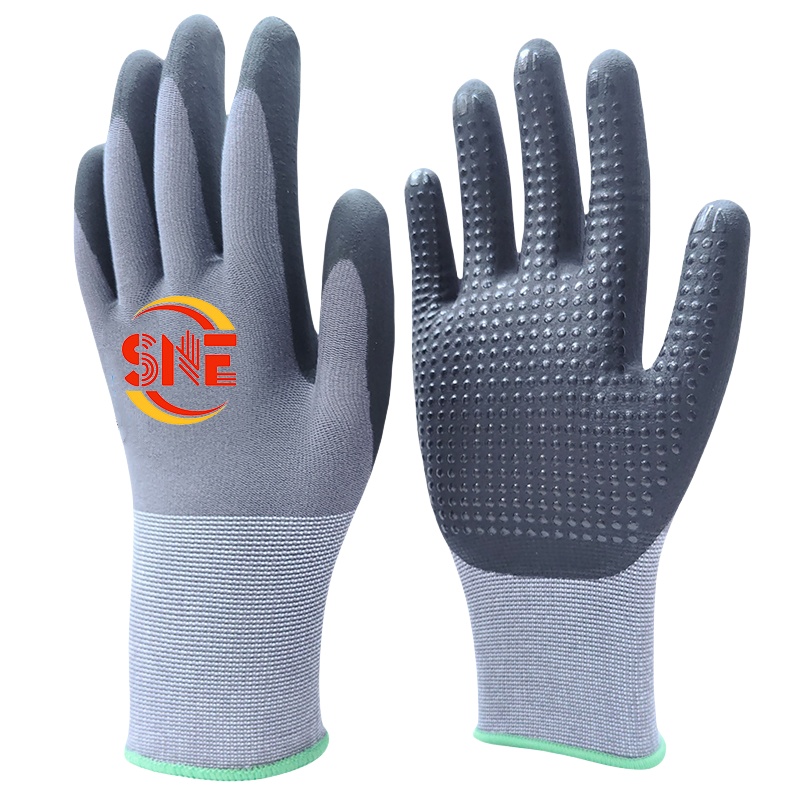
| Sandy nitrile coated gloves | Excellent dry and light-oil grip, abrasion resistance | General tube handling, loading, assembly | Limited heavy impact protection | General commercial and industrial sites |
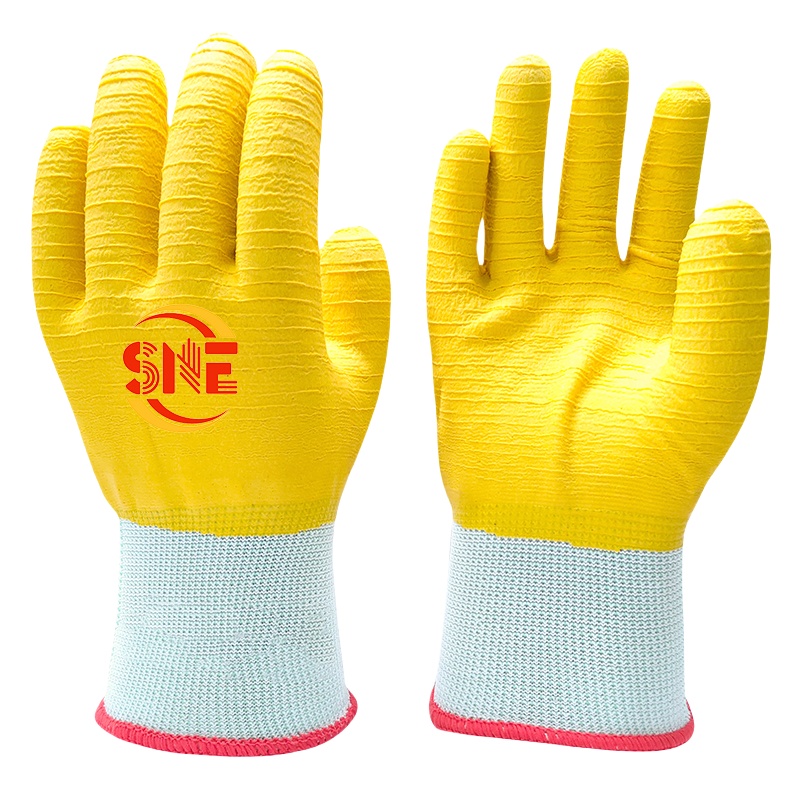
| Latex crinkle coated gloves | Strong grip on rough and damp surfaces | Scaffold erection in wet weather | May wear faster on very abrasive steel contact | Exterior construction and masonry support work |
| Cut-resistant coated gloves | Protection from sharp edges and burrs | Metal deck work, rigging accessories, mixed material handling | Can feel stiffer depending on cut level | Projects with more contact-cut exposure |
| Impact-resistant gloves | Back-of-hand protection from knocks and crush points | Industrial scaffolding, shutdowns, refinery access work | Bulkier than standard coated gloves | High-risk industrial maintenance |
| Synthetic leather gloves | Good dexterity and comfort for repeated handling | Tool use, light rigging, installation tasks | Grip may be weaker in wet steel handling | Dry indoor or mixed conditions |
| Insulated coated gloves | Thermal protection with maintained grip | Winter scaffold work, bridge jobs, cold storage access | Reduced fine dexterity | Midwest and Northeast winter operations |
This table matters because many glove complaints on U.S. jobsites come from mismatch rather than poor product quality. A glove that performs well in warehouse picking may fail quickly during scaffold erection. Likewise, a highly protective glove may reduce speed if the worker must constantly handle couplers, bolts, and hand tools.
Industry Demand Comparison
Demand for scaffolding gloves comes from several industries, not only general building construction. The bar chart below shows realistic relative demand across U.S. sectors where scaffold-related work and elevated access tasks are common.
How U.S. Buyers Evaluate Construction Gloves for Scaffolding
Professional buyers in the United States usually assess scaffolding gloves through a task-based lens. First comes hazard mapping: Is the main concern slipping, abrasion, impact, minor cuts, weather, or all of them together? Next comes wear testing in real jobsite conditions. A glove may look impressive on a spec sheet but fail if the coating peels on steel tube, the fingers bunch up under repeated motion, or the cuff catches during climbing and material transfer.
Important buying checkpoints include grip consistency in dry and wet environments, cuff security, breathability, coating durability, touch sensitivity for clips and couplers, and size consistency across large repeat orders. Contractors with decentralized crews often care about whether the same glove model can be stocked through branch distributors from Texas to Ohio to California. Distributors, meanwhile, care about reorder stability, margin, and packaging options for retail, contractor bins, or private labeling.
It is also smart to ask for pilot quantities before signing annual agreements. On many U.S. sites, a two-week wear trial across multiple crews provides more useful feedback than lab data alone. Scaffold supervisors can compare glove life, comfort, and worker acceptance by shift and weather conditions, which helps prevent costly mis-buys.
Key Buying Criteria Table
The following table gives a practical checklist for contractor purchasing teams, distributors, and safety managers evaluating glove options for scaffold and rigging operations in the United States.
| Buying Factor | Why It Matters | What to Ask the Supplier | Best Outcome | Warning Sign |
|---|---|---|---|---|
| Grip performance | Prevents slips while handling tube, clamps, planks | How does the coating perform in wet, dusty, and oily conditions? | Documented field use and sample testing | Only generic claims without task data |
| Cut resistance | Reduces contact injuries from metal edges | What cut level and yarn construction are used? | Right balance of protection and dexterity | Very high cut level with poor hand feel |
| Impact protection | Protects knuckles during industrial work | Is back-of-hand protection flexible or rigid? | Good coverage without restricting grip | Bulky design rejected by workers |
| Durability | Controls replacement cost and downtime | What is average wear life in steel handling applications? | Stable wear across lots and sizes | Inconsistent coating thickness |
| Sizing consistency | Improves worker compliance and comfort | Are size tolerances controlled across bulk runs? | Reliable fit from reorder to reorder | Frequent fit complaints |
| Supply support | Ensures uninterrupted jobsites and branch stocking | Can you support bulk orders, samples, and repeat delivery schedules? | Fast response with planning support | Slow follow-up or unclear lead times |
This checklist is especially useful for buyers who are balancing safety, labor acceptance, and total cost of ownership. The lowest unit price does not always deliver the lowest operating cost if gloves must be replaced too often or workers remove them due to discomfort.
Applications Across Industries
Construction gloves for scaffolding are used across a wide range of applications beyond basic frame assembly. In commercial high-rise projects, crews need dependable grip while receiving bundles, positioning components, and performing partial assembly on elevated decks. In bridge and infrastructure work, workers face abrasive steel, moisture, and low temperatures. In refinery turnarounds and petrochemical plants around Houston, Beaumont, and Baton Rouge-facing supply routes, impact resistance and oil grip often become more important. At ports such as Los Angeles, Long Beach, Savannah, and Newark, scaffold access systems for maintenance and cargo-related infrastructure can involve mixed exposure to salt air, slippery surfaces, and repetitive handling.
Rigging crews, insulation teams, industrial painters, and access-platform installers all use gloves differently. That is why many safety managers now issue more than one glove type. A lightweight nitrile-coated option may be used for general handling, while an impact-resistant cut glove is reserved for shutdowns and mechanical access work. This layered PPE strategy is gaining traction because it reflects actual task variation.
Trend Shift in Product Preferences
U.S. buyers have increasingly shifted from generic cotton and basic leather gloves toward engineered coated gloves and hybrid protective designs. The area chart below reflects this transition in purchasing patterns.
Case Studies from Typical U.S. Buying Scenarios
A regional scaffolding contractor operating between Dallas and Houston switched from low-cost split leather gloves to sandy nitrile coated gloves for general erection crews and saw improved grip in humid conditions, fewer complaints about hand fatigue, and more accurate handling of couplers. Although the unit price increased, replacement frequency dropped enough to improve monthly PPE cost control.
An industrial service provider supporting refinery shutdowns on the Gulf Coast moved to impact-resistant cut gloves for specialized access crews. The company reported better worker acceptance when it selected a model with flexible back-of-hand design instead of overly rigid armor. This was a reminder that wearability matters as much as protection level.
A Midwest distributor serving contractors in Illinois, Indiana, and Ohio added a private-label line sourced through a factory-direct manufacturing partner. By offering one economical nitrile-coated glove, one cut-resistant model, and one impact style, the distributor improved category coverage without carrying too many overlapping SKUs. Private packaging also helped build customer retention.
Local and International Supplier Comparison
The comparison chart below helps visualize how different supplier types typically perform across the priorities most relevant to scaffolding glove buyers: local inventory, customization, price competitiveness, and broad protective range.
Local Supplier Landscape in the United States
In the U.S. market, “local supplier” can mean two things: a domestic brand with warehouses and distributors, or an international manufacturer with stable distribution into the United States and support tailored to American buyers. Both models can work well if the supplier understands jobsite realities, compliance expectations, and replenishment needs.
| Supplier | U.S. Presence or Reach | Main Product Focus | Typical Buyer Type | Commercial Advantage |
|---|---|---|---|---|
| Fastenal supply network | Nationwide branches and industrial accounts | Broad PPE availability across brands | Contractors, maintenance teams, MRO buyers | Fast replenishment and local branch service |
| Grainger | Nationwide U.S. industrial distribution | Multi-brand safety and industrial procurement | Enterprise and institutional buyers | Convenient purchasing infrastructure |
| MCR Safety | Strong distributor footprint in the U.S. | Industrial hand protection portfolio | Distributors and contractors | Reliable category breadth |
| Mechanix Wear | National retail and distributor presence | Dexterity-focused work gloves | General construction and field service buyers | High worker familiarity |
| HexArmor | Industrial and safety specialist channels | Premium impact and cut protection | High-risk industrial users | Advanced protective design |
| Qingdao Snell Protective Products Co., Ltd. | Export support for U.S. importers and regional partners | Coated construction gloves, cut-resistant and impact-resistant gloves | Distributors, wholesalers, brand owners, large end users | Factory-direct customization and scalable supply |
This table shows why different channels coexist in the U.S. market. Local branch distribution wins on speed and convenience, while factory-direct sourcing often wins on customization, margin, and bulk-order economics.
Our Company
For U.S. buyers evaluating alternative sources, Snell Safety stands out as a factory-direct partner with practical relevance for construction gloves for scaffolding, especially when bulk supply, customization, and stable quality matter. The company manufactures industrial safety gloves through two production facilities with six dedicated production lines and a daily capacity of 150,000 pairs, supporting coated construction gloves, cut-resistant gloves, impact-resistant gloves, and oil-resistant options suited to scaffold handling, rigging, and industrial maintenance. Its quality position is backed by ISO 9001 and CE certification, plus hands-on expertise in PU, latex, and nitrile coating technologies that align with international benchmark requirements for consistency, performance, and repeatability. Commercially, the company serves U.S.-oriented importers, distributors, dealers, brand owners, and large end users through OEM, ODM, private label, wholesale, and customized manufacturing programs, allowing local buyers to tailor materials, coatings, sizes, and branding to their market segment. In practical service terms, Snell already works with customers across North America-facing export routes and provides concrete buyer assurance through sample support, technical consultation, responsive online pre-sales communication, coordinated after-sales handling, and export logistics assistance that helps U.S. purchasers manage replenishment and compliance review with less friction; buyers looking to discuss projects or request support can do so through the company’s U.S.-oriented contact channel, review its broader industrial glove portfolio, or learn more from its company background.
Practical Buying Advice for Contractors and Distributors
If you are a contractor, start by dividing usage into at least three categories: general scaffold handling, sharp-edge exposure, and high-impact industrial work. This prevents overspending on gloves that are too protective for basic handling and underspending on gloves that fail in high-risk tasks. Run field trials with at least two coating types and compare glove life by crew and weather condition.
If you are a distributor, focus on a narrow but clear assortment. A practical range for U.S. sales might include one value-oriented nitrile-coated scaffold glove, one cut-resistant coated glove, one impact-resistant glove, one winterized option, and one premium grip model for wet environments. That structure supports upselling while keeping inventory manageable.
If you are a private label buyer, verify carton consistency, size grading, coating adhesion, logo application method, and reorder lead times before launch. Also ask whether packaging can support both contractor bulk packing and retail-ready labels.
How Product Selection Changes by Application
Different scaffold applications require different glove characteristics. Tube and clamp handling favors grip and abrasion resistance. Suspended access setup may require better dexterity. Rigging support and loading frequently demand stronger palm durability. Demolition-adjacent scaffold work may call for higher cut resistance due to unpredictable contact surfaces. On restoration jobs in older urban centers such as Boston, Philadelphia, and New York, crews may move between masonry debris, steel ties, and temporary access systems throughout the same day, making hybrid protection more valuable.
Climate also matters. In Florida and the Gulf Coast, breathable liners and sweat management can influence compliance more than insulation. In Minnesota, Michigan, and upstate New York, cold-weather grip becomes essential because workers wearing thick, poorly designed gloves may lose the fine control needed for safe handling.
What to Watch in 2026
By 2026, the U.S. scaffolding glove market is likely to be shaped by three major trends. The first is technology: more gloves will combine lighter engineered liners with targeted reinforcement zones, improving dexterity without sacrificing durability. Touchscreen compatibility and better ergonomic patterning will become more common, especially for supervisors and mixed-task crews.
The second is policy and compliance pressure. As jobsite safety programs mature, glove selection will continue to move toward task-specific PPE matrices. Contractors and industrial owners will ask suppliers for clearer performance documentation, lot consistency, and evidence of stable manufacturing quality. This will favor suppliers that can support trials, provide technical guidance, and maintain repeatable production standards.
The third is sustainability. U.S. buyers are increasingly interested in longer wear life, reduced packaging waste, more efficient shipping formats, and manufacturing partners with controlled quality systems rather than disposable low-end supply models. Sustainability in this category is not only about recycled content; it is also about reducing glove turnover and minimizing wasted inventory through better specification and sourcing discipline.
FAQ
What are the best glove materials for scaffolding work?
For most U.S. scaffolding applications, nitrile and latex coated gloves are the most effective starting points because they provide better grip and abrasion resistance than basic cotton gloves. Synthetic leather and impact-resistant hybrids are also useful for specialized industrial tasks.
Do scaffolding workers need cut-resistant gloves?
Not always, but many do. If crews frequently handle sharp-edged components, sheet materials, metal decking, or burr-prone accessories, cut-resistant gloves are a sensible upgrade. The right cut level should match the actual hazard instead of being selected by marketing alone.
Are impact gloves necessary for all scaffold jobs?
No. They are most valuable in industrial maintenance, refinery work, heavy plant access, and jobs where hand knock or crush hazards are common. For light commercial erection, a lighter coated glove may be more practical and better accepted by workers.
Should U.S. buyers source locally or import directly?
Both options can work. Local sourcing offers faster branch replenishment, while direct import can offer better customization, margin, and cost-performance for larger programs. Many distributors use a mixed model to balance speed and profitability.
How often should construction gloves be replaced?
Replacement depends on the task, surface abrasiveness, weather, and worker habits. On high-contact scaffold crews, some gloves may last only several shifts, while better-matched coated gloves can last much longer. Tracking wear by crew is the best way to estimate real consumption.
What should a distributor ask a glove manufacturer before placing a bulk order?
Ask about production capacity, quality certifications, coating technology, sample availability, size consistency, branding options, lead times, export support, and after-sales process. These factors matter as much as unit price when building a repeat business line.
In the United States, the best construction gloves for scaffolding are the ones that match the exact work environment, maintain reliable grip on steel, protect against the most likely hand hazards, and can be supplied consistently across projects. For many buyers, that means comparing domestic stocked brands with capable international manufacturing partners, then validating the final choice through field trials and repeat-order reliability.