Best Sandy Grip Work Gloves Suppliers in Germany | 2026 Guide
2026-04-15
Share This Article
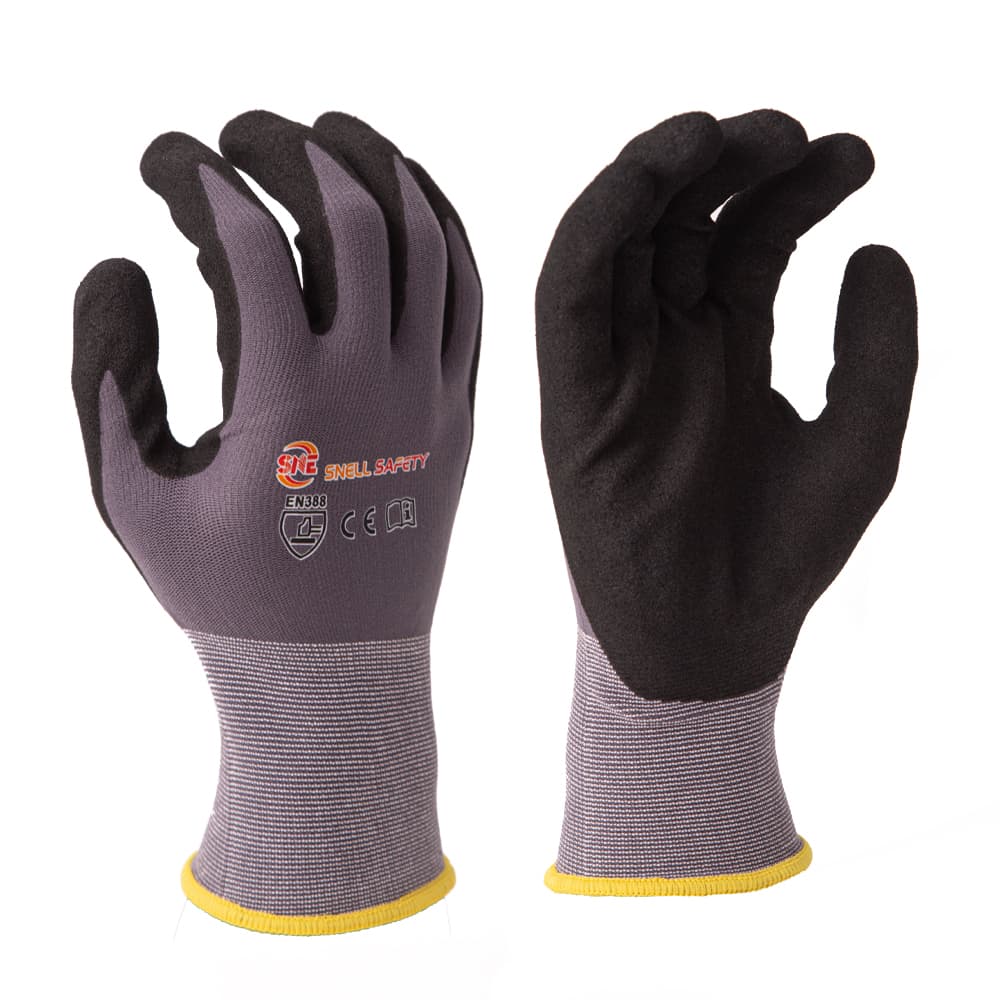
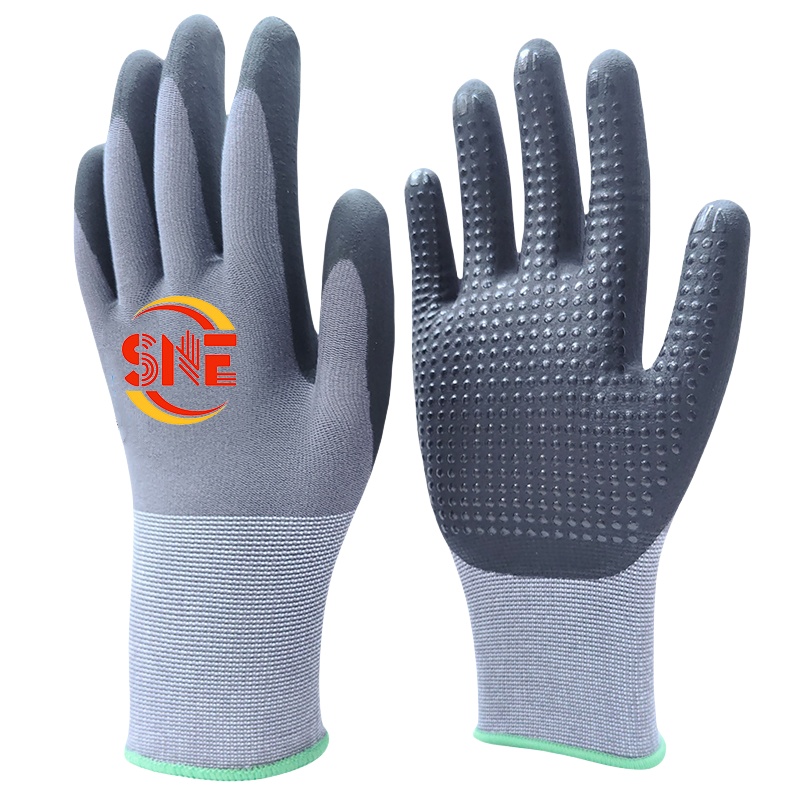
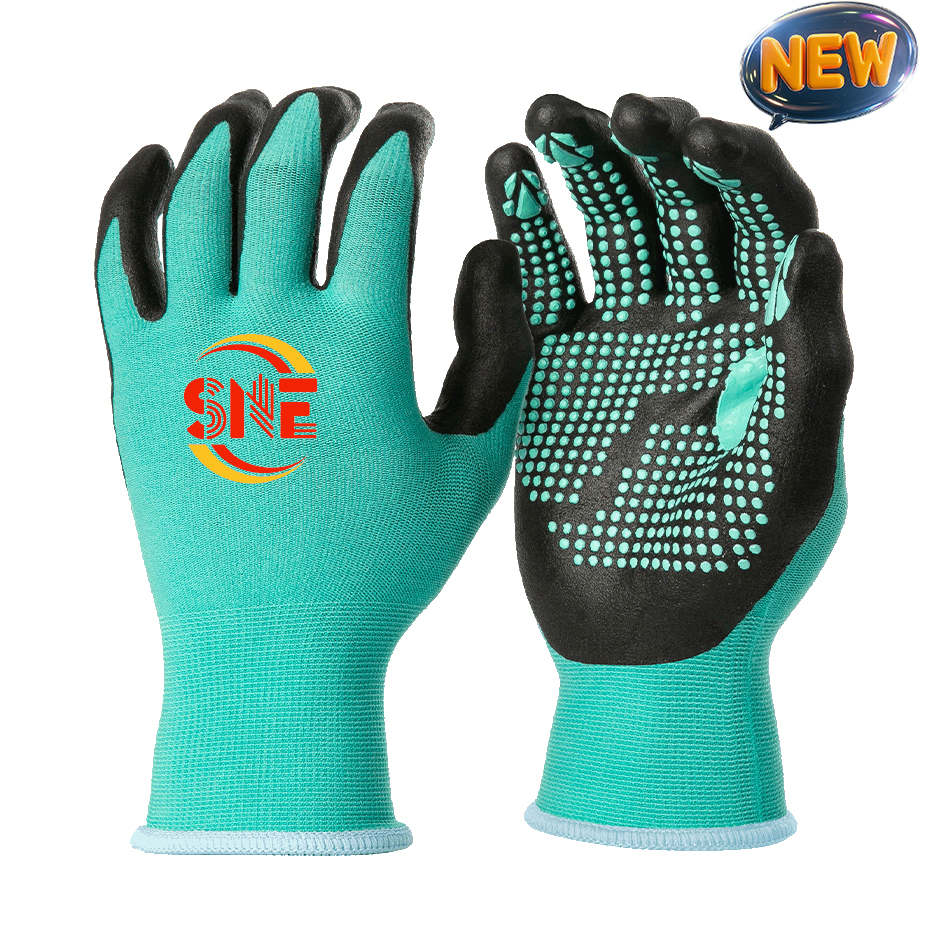
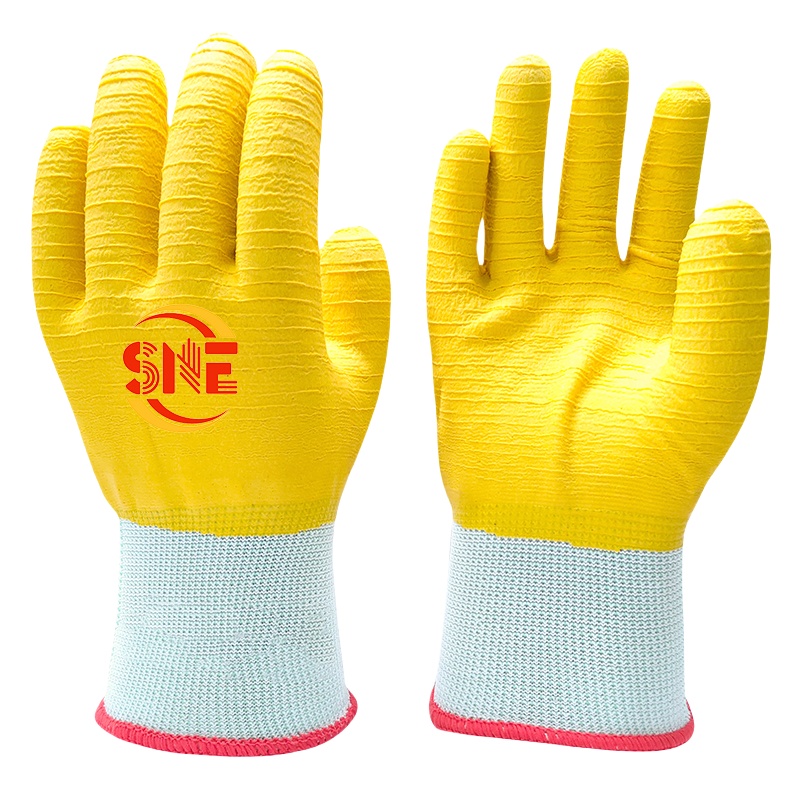
Sandy grip work gloves — featuring a textured sandy nitrile coating that delivers exceptional hold on oily, wet, and rough surfaces — have become one of the fastest-growing hand protection categories across German industry. Whether your workforce handles greased automotive components, oily metal stampings, or slippery construction materials, sandy nitrile coated gloves provide the aggressive grip, abrasion resistance, and durability that standard smooth or foam coatings cannot match. This guide helps B2B procurement professionals, PPE distributors, and HSE managers in Germany identify the best product configurations, evaluate suppliers, and source sandy grip work gloves that fully comply with EN 388:2016+A1:2018.
Need help selecting the right sandy grip work gloves for your German operations? Whether you require custom OEM/ODM development, private-label branding, or competitive bulk pricing, contact our team at Snell Safety. We have extensive experience serving German clients across automotive, manufacturing, oil & gas, and logistics sectors, and can recommend configurations precisely tailored to your local application scenarios.
Quick Answer
For sourcing sandy grip work gloves in Germany, consider established local PPE distributors with deep product portfolios serving key industrial regions like NRW, Bavaria, and Baden-Württemberg. Also evaluate Chinese manufacturers who specialize in customized sandy nitrile coated gloves with competitive factory-direct pricing and full international certifications (ISO 9001/CE). Combining local stock availability with Asia-based OEM capability gives buyers the best blend of responsiveness, customization, and cost efficiency.
Market Overview
The Germany safety gloves market is projected to grow from USD 1,068.97 million in 2023 to an estimated USD 2,100.86 million by 2032, reflecting a compound annual growth rate (CAGR) of 7.78%. Within this expanding market, nitrile gloves are expected to grow at the fastest CAGR of 8.3% over the forecast period, with sandy nitrile variants gaining particular traction in sectors demanding heavy-duty oily grip. In 2024, the number of reportable workplace accidents in Germany reached a historic low, with the accident rate being the lowest ever recorded at 18.0 per 1,000 full-time equivalents — yet hand injuries still constitute up to 30% of the total cases treated in emergency departments, underscoring the critical need for high-performance hand protection.
Germany’s robust framework for occupational safety regulations significantly drives the demand for safety gloves, with adherence to stringent EU directives such as Regulation (EU) 2016/425 on personal protective equipment mandating the use of high-quality safety gloves across industries. Germany’s robust automotive and chemical sectors are fueling demand for specialized gloves that boast a combination of protective features. Sandy grip work gloves, with their uniquely textured surface engineered for oily and wet environments, are positioned at the intersection of these market forces — delivering the grip performance and durability that German industry demands.
What Types of Sandy Grip Work Gloves Are Needed in Germany
The most in-demand sandy grip work gloves in Germany combine seamless-knit nylon, polyester, or HPPE liners with a sandy nitrile palm or 3/4 coating, offering EN 388-certified mechanical protection with outstanding grip in wet, oily, and dry conditions simultaneously.
Based on our experience serving German clients at Snell Safety, we have identified distinct purchasing patterns shaped by Germany’s powerhouse automotive sector, its extensive Mittelstand manufacturing base, and the country’s demanding quality expectations. German HSE procurement teams increasingly prefer sandy nitrile over smooth nitrile or PU coatings because the textured surface creates thousands of microscopic contact points that channel oils and liquids away from the grip zone — delivering measurably superior grip on greased metal parts, oily fasteners, and wet construction materials. Germany’s climate, with cold, damp winters and variable conditions year-round, further favors the sandy nitrile finish because it maintains consistent grip performance across a wide temperature and humidity range.
The following configurations represent the highest-volume sandy grip work gloves types we supply to the German market:
- 15G Nylon/Spandex Liner + Sandy Nitrile Palm Coating (EN 388: 4131A) — The premium dexterity variant for automotive assembly, precision component handling, and quality inspection. The 15G gauge delivers excellent tactile sensitivity while the sandy texture provides confident grip on lightly oiled parts. Touchscreen-compatible. Sizes S–XXL.
- 13G Polyester Liner + Sandy Nitrile Palm Coating (EN 388: 4121X) — The cost-effective general-purpose workhorse for warehousing, light manufacturing, and MRO tasks. The 13G polyester base offers a strong balance of protection and comfort for high-throughput procurement programs.
- 13G HPPE Liner + Sandy Nitrile Palm Coating (EN 388: 4X42C) — Cut-resistant sandy grip work gloves for metal stamping, glass handling, and automotive parts processing. EN 388 Cut Level C provides reliable protection against sharp edges while maintaining aggressive oily-surface grip.
- 13G HPPE/Glass Fiber/Steel Wire Liner + Sandy Nitrile Palm Coating (EN 388: 4X44E) — High-cut sandy grip work gloves for heavy sheet metal fabrication, metal recycling, and industrial applications where Cut Level E protection is required alongside maximum grip on oily steel surfaces.
- 15G Nylon Liner + Sandy Nitrile 3/4 Coating (EN 388: 4131X) — Extended-coverage variant for tasks involving fluid splash or knuckle-area abrasion, popular in maintenance, chemical handling, and oil & gas operations where additional hand coverage is needed.
Why These Sandy Grip Work Gloves Types Are Recommended
These configurations are recommended because the sandy nitrile finish addresses a specific and widespread challenge in German industry: maintaining secure grip on oily, greased, or wet materials without sacrificing comfort or dexterity during extended wear.
The technical advantage of sandy nitrile lies in its unique surface engineering. During the dip coating process, a controlled texturing stage creates a rough, sand-like surface pattern with thousands of microscopic peaks and valleys across the nitrile layer. This textured topography generates substantially higher frictional coefficient against oily surfaces compared to smooth nitrile, PU, or even micro-foam nitrile coatings. In heavy oil conditions — such as handling machined parts coated with cutting fluid or manipulating greased automotive components — the sandy finish physically channels liquid away from contact points, maintaining grip integrity where other coatings fail. Additionally, the sandy nitrile layer typically achieves EN 388 Level 4 abrasion resistance (8,000+ Martindale cycles), delivering longer service life in abrasive industrial environments. This means fewer glove changes per shift, lower per-worker annual costs, and less downtime — a significant factor for German manufacturers operating lean production systems.
From a standards compliance perspective, all recommended configurations meet or exceed EN 388:2016+A1:2018, which is mandatory for CE-marked PPE within the EU under Regulation 2016/425. Cut-resistant variants additionally carry ISO 13997 (TDM-100) cut ratings from Level C through Level E. For buyers also serving North American markets, equivalent ANSI/ISEA 105 ratings range from A2 to A6.
Key performance comparison of sandy nitrile versus alternative coating types:
- Oily Grip: Superior to smooth nitrile, PU, and micro-foam nitrile; the textured surface maintains friction on heavy oils, greases, and hydraulic fluids
- Abrasion Resistance: EN 388 Level 4 (8,000+ Martindale cycles); significantly outperforms PU palm coatings (typically Level 3) and comparable to or exceeding latex crinkle
- Durability: 20–40% longer service life than micro-foam or smooth nitrile coatings in abrasive environments, due to the denser, thicker nitrile deposit
- Chemical Resistance: Moderate resistance to oils, solvents, and greases; superior to PU and latex coatings for hydrocarbon contact
- Dexterity: Slightly lower tactile sensitivity than micro-foam nitrile but significantly better than latex crinkle or heavy rubber coatings; 15G sandy variants approach micro-foam dexterity
| Specification | Liner / Gauge | Coating Type | EN 388 Rating | Best Application | Approx. Cost (€/pair, bulk) |
|---|---|---|---|---|---|
| Sandy Grip Work Gloves — Precision | 15G Nylon/Spandex | Sandy Nitrile Palm | 4131A | Automotive assembly, QC inspection | €0.30–0.48 |
| Sandy Grip Work Gloves — General | 13G Polyester | Sandy Nitrile Palm | 4121X | Warehousing, light mfg., MRO | €0.20–0.35 |
| Cut-Resistant Sandy Grip (Level C) | 13G HPPE | Sandy Nitrile Palm | 4X42C | Metal/glass handling | €0.58–0.95 |
| Cut-Resistant Sandy Grip (Level E) | 13G HPPE/Glass/Steel | Sandy Nitrile Palm | 4X44E | Sheet metal, recycling | €0.85–1.35 |
| Extended Coverage 3/4 Coat | 15G Nylon | Sandy Nitrile 3/4 | 4131X | Oil & gas, maintenance | €0.35–0.55 |
Use this table to match your workplace hazards, grip requirements, and budget to the right sandy grip work gloves specification before requesting samples from suppliers.

Key Industries for Sandy Grip Work Gloves in Germany
Sandy grip work gloves serve the broadest range of applications wherever oily, wet, or abrasive handling conditions demand aggressive grip performance. In Germany, demand concentrates in industries where the sandy nitrile texture creates measurable safety and productivity advantages.
- Automotive Manufacturing: Germany’s automotive sector — Europe’s largest — is the primary consumer of sandy grip work gloves. Workers across Tier 1 and Tier 2 supplier plants handle machined parts, stamped components, and assemblies coated with cutting oils, lubricants, and anti-corrosion films. The sandy texture ensures confident part handling during assembly, torque fastening, and quality inspection, reducing drop incidents and repetitive-strain injuries.
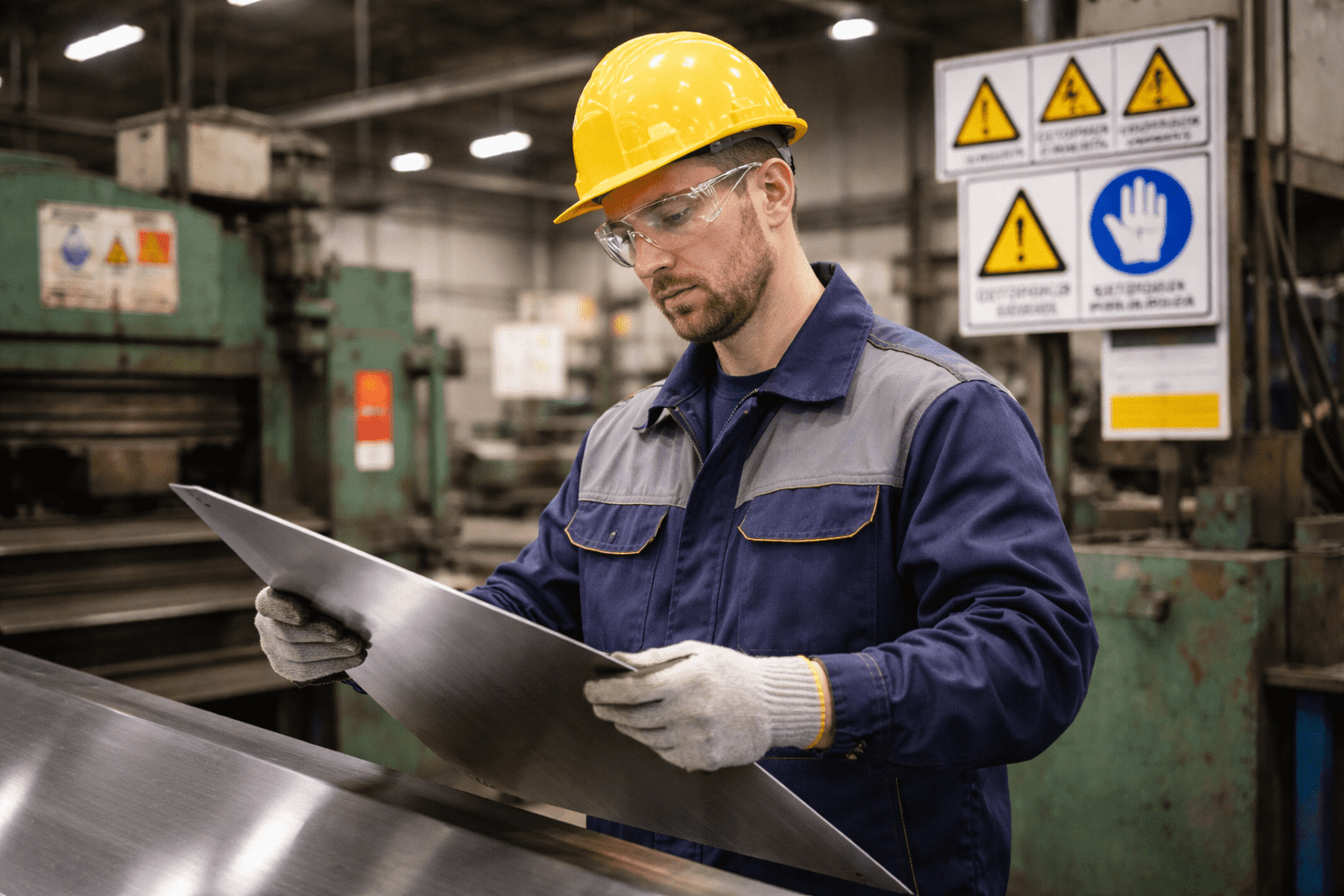
- Metal Fabrication & Engineering: Sheet metal workshops, CNC machining operations, and metal recycling facilities need cut-resistant sandy nitrile variants (EN 388 Cut Levels C–E) that deliver both sharp-edge protection and aggressive grip on oily steel blanks, aluminum extrusions, and machined components. This combination is difficult to achieve with PU or micro-foam coatings.
- Oil & Gas & Mining: German operations in petroleum processing, natural gas infrastructure, and mining require gloves that maintain grip on pipes, fittings, and tools covered in oils, hydraulic fluid, and drilling mud. The sandy nitrile 3/4 coating variant offers extended splash coverage while keeping the back of the hand breathable.
- Construction & Heavy Civil Engineering: Workers handling rebar, wet concrete forms, treated lumber, and oily construction hardware benefit from the aggressive grip profile of sandy nitrile. Germany’s ongoing infrastructure investment programs and energy transition projects sustain strong demand from this sector.
- Logistics & Warehousing: High-throughput distribution centers require durable gloves for handling shrink-wrapped pallets, oily machinery parts, and wet packaging. Sandy nitrile’s superior abrasion resistance extends glove life through thousands of pick cycles per shift, reducing replacement costs.
- General Manufacturing (Mittelstand): Germany’s extensive network of specialized SMEs in machinery, plastics, and precision engineering drives volume demand for 13G polyester sandy nitrile gloves — a versatile, cost-effective option for diverse shop-floor tasks.
Industrial hubs such as North Rhine-Westphalia, Baden-Württemberg, and Bavaria lead market penetration, supported by strong manufacturing and automotive sectors. Under DGUV (German Social Accident Insurance) guidelines and EU Regulation 2016/425, employers must conduct formal hazard assessments and provide appropriately certified hand protection. This regulatory framework creates stable, compliance-driven demand for sandy grip work gloves across all sectors, with enforcement ensuring consistent procurement cycles.
Specific Application Scenarios
Scenario 1: Automotive Transmission Plant near Stuttgart
At a Tier 1 automotive supplier producing gearbox housings and drivetrain components, 280 assembly workers handle machined aluminum and steel parts carrying heavy cutting oil residue throughout every stage of the production line. Workers perform press-fit assembly, torque fastening, and dimensional inspection using handheld gauges. The primary hazards include oily-surface slippage causing dropped parts (average weight 2–8 kg), minor abrasion from machined edges, and hand fatigue during 8-hour shifts. The recommended specification is 15G nylon/spandex liner with sandy nitrile palm coating (EN 388: 4131A). The 15G gauge preserves tactile sensitivity for torque tool feedback, while the aggressive sandy texture grips oil-filmed aluminum surfaces that would slip through PU or smooth nitrile coatings. Workers reported a 35% reduction in part-drop incidents after switching from micro-foam nitrile to sandy nitrile variants.
Scenario 2: Steel Service Center in North Rhine-Westphalia
A mid-sized steel service center employs 85 workers operating CNC plasma cutters, guillotine shears, and decoiling lines. Workers deburr, sort, and stack laser-cut and sheared steel panels that have sharp burrs, heavy edges, and a surface coating of machine oil and mill scale. Primary hazards include severe laceration risk from sharp metal edges, oil-film slippage when stacking panels weighing up to 25 kg, and puncture risk from steel slivers. The recommended specification is 13G HPPE liner with sandy nitrile palm coating (EN 388: 4X42C, Cut Level C) for general handling, with the HPPE/glass fiber/steel wire variant (EN 388: 4X44E, Cut Level E) deployed for the heaviest deburring and sorting tasks. The HPPE liner resists cuts from sheet metal edges while the sandy nitrile maintains firm grip on oily steel surfaces — a combination that proved decisive versus latex crinkle alternatives that degraded rapidly in oil exposure.
Scenario 3: Industrial Maintenance Operations across Bavaria
A facility management company deploys 120 maintenance technicians across 40+ manufacturing and logistics sites in southern Germany. Technicians perform diverse tasks including machine lubrication, bearing replacement, pipe fitting, conveyor belt repair, and hydraulic system maintenance. They encounter lubricants, hydraulic oils, solvents, and greases across every job. Key hazards include chemical splash, abrasion from rough metal surfaces, and grip loss on oil-covered tools and fittings. The recommended specification is 15G nylon liner with sandy nitrile 3/4 coating (EN 388: 4131X), providing extended knuckle coverage for splash protection while maintaining breathability on the back of the hand. The 3/4 coating guards against incidental oil and solvent contact across the finger and knuckle area, while the sandy texture ensures secure tool handling even with greased hands.
Case Studies
Case 1: National Automotive Parts Distributor
A German automotive aftermarket distributor with 18 regional warehouses standardized their hand protection using OEM-branded 13G sandy grip work gloves featuring the company logo and hi-vis orange cuff band. The program covered 650+ warehouse operatives handling oily brake discs, greased bearings, and shrink-wrapped pallets. After a 10-month rollout, product-drop incidents decreased by 32%, glove replacement frequency fell by 25% compared to the previous micro-foam variant, and per-pair procurement costs decreased 30% through factory-direct sourcing.
Case 2: Private-Label Range for NRW-Based PPE Distributor
A Düsseldorf-based safety distributor developed a 4-SKU private-label sandy grip work gloves line targeting metalworking and automotive clients across western Germany. The range included 15G precision, 13G general-purpose, Cut Level C, and Cut Level E variants — all with unified packaging and German-language EN 388 documentation. Initial order of 180,000 pairs across all SKUs was delivered within 28 days, with quarterly replenishment and seasonal volume adjustments built into the supply agreement.
Top 6 Recommended Local Suppliers in Germany
| Company Name | Core Strengths | Service Regions | Pre-sale Support | After-sale Support |
|---|---|---|---|---|
| RheinWerk Arbeitsschutz GmbH | Deep sandy nitrile portfolio for automotive and metalworking | NRW, Hessen, Rhineland-Palatinate | On-site glove trials, EN 388 hazard assessment | Quarterly usage audits, stock management |
| SüdGuard Industrieschutz | Premium cut-resistant sandy grip work gloves for metal fabrication | Bavaria, Baden-Württemberg | Ergonomic fit testing, certification documentation | Field quality monitoring, warranty processing |
| NordHansa Handschutz | Logistics and cold-chain optimized portfolios | Hamburg, Lower Saxony, Schleswig-Holstein | Product datasheets, import compliance consulting | Express replacement program, returns handling |
| OstWerk PPE Solutions | Cost-effective bulk sandy nitrile for Mittelstand manufacturers | Saxony, Brandenburg, Thuringia | Government tender support, flexible MOQ options | Inventory tracking, batch traceability |
| HansaGrip Schutzprodukte | E-commerce-optimized packaging for Amazon.de and B2B platforms | Nationwide (Hamburg fulfillment hub) | Listing content, certification packages | Consumer review management, fulfillment support |
| AlpenPro Arbeitsschutz | Specialized oil & gas and construction variants | Bavaria, Alpine and southern regions | Application-specific product recommendations | Seasonal stock planning, performance monitoring |
When evaluating local suppliers, always request EN 388 test reports from an EU-notified body along with physical samples — test the sandy nitrile coating quality, grip performance on oily surfaces, and comfort during extended wear before committing to volume purchases.
Why Choose Snell Safety as Your Global Sandy Grip Work Gloves Partner
Snell Safety brings deep German market expertise built through years of collaboration with automotive OEMs, metalworking enterprises, PPE distributors, and logistics operators across Germany’s key industrial regions. We understand precisely which liner gauges, sandy nitrile textures, coating thicknesses, and hand-feel profiles German workers prefer — from the fine 15G nylon/spandex variants favored by Stuttgart’s automotive assembly plants to the heavy-duty 13G HPPE cut-resistant sandy grip gloves demanded by NRW’s steel service centers. With established local partners and planned European warehouse capacity for stock-ready delivery, we provide truly localized service across both online and offline channels. We are actively recruiting new distributors, agents, and e-commerce brand owners — offering comprehensive pre-sale empowerment (product selection guidance, technical training, market intelligence), full after-sale support (quality assurance, replacement policies), dropshipping services, free samples, and marketing material support including professional product photography and listing content.
Our vertically integrated production system — spanning R&D, material sourcing, knitting, sandy nitrile dip coating, texturing, curing, quality inspection, packaging, and export — ensures consistent coating quality at factory-direct pricing. With over a decade of specialized coating expertise, 6 dedicated production lines producing 150,000 pairs per day, ISO 9001 and CE certification, and advanced sandy nitrile formulation technology, we deliver OEM/ODM sandy grip work gloves from concept to shipment with fast turnaround times. Browse our product catalog or contact our team to request free samples and a competitive quotation.
| Capability | Snell Safety Specification | Buyer Benefit |
|---|---|---|
| Daily Capacity | 150,000 pairs across 6 production lines | Scalable supply for large-volume orders |
| Coating Technologies | Sandy nitrile, nitrile foam, nitrile micro-foam, PU, latex crinkle | One-stop sourcing for complete glove range |
| Certifications | ISO 9001, CE marking, EN 388 test reports | Hassle-free EU import compliance |
| Customization | OEM/ODM, private label, custom branding/packaging | Full brand development support |
| Local Market Service | German partners, planned EU warehouse, dropshipping | Faster delivery, localized support |
Use this table to evaluate how Snell Safety’s manufacturing capabilities align with your specific sandy grip work gloves procurement requirements.
FAQ
What EN 388 rating should I expect for sandy grip work gloves?
Standard general-purpose sandy grip work gloves on a 13G polyester liner typically achieve EN 388 ratings of 4121X — Level 4 abrasion, Level 1 blade cut, Level 2 tear, and Level 1 puncture. Cut-resistant HPPE-lined variants achieve ratings like 4X42C or 4X44E, with ISO 13997 Cut Levels C through E for demanding metalworking applications.
Which coating type is best for heavy oil handling in Germany?
Sandy nitrile is the top choice for heavy oil, grease, and hydraulic fluid exposure. Its textured surface creates superior friction on slippery surfaces compared to smooth nitrile, PU, or micro-foam coatings. For light-to-moderate oil, micro-foam nitrile is also effective. For full immersion in oils, consider a fully coated sandy nitrile variant.
What certifications are required to import safety gloves into Germany?
All safety gloves sold in Germany must comply with EU Regulation 2016/425 and carry CE marking. Category II PPE requires EU Type Examination by a notified body, EN 388:2016+A1:2018 test certification, a German-language EU Declaration of Conformity, and REACH/SVHC compliance documentation.
How do I choose the right gauge for sandy grip work gloves?
Select 15G or 18G for maximum dexterity in precision assembly and inspection tasks. Choose 13G for the best balance of protection and comfort in general manufacturing, warehousing, and maintenance. Use 10G for heavier-duty applications requiring thicker liner protection, particularly in construction and heavy materials handling.
What is the price range for bulk sandy grip work gloves orders?
For factory-direct bulk orders (typical MOQ 5,000–10,000 pairs), 13G general-purpose sandy grip work gloves range from €0.20–€0.35 per pair. Premium 15G nylon/spandex variants cost €0.30–€0.48. Cut-resistant HPPE-lined versions range from €0.58–€1.35 depending on cut level. Custom branding adds approximately €0.03–€0.08 per pair.
How long do sandy grip work gloves typically last?
Sandy nitrile coatings typically last 20–40% longer than micro-foam or smooth nitrile due to the denser coating structure. In light warehousing, expect 5–8 weeks per pair. In automotive assembly with moderate oily-part handling, 3–4 weeks. In metal fabrication with sharp edges, 1–3 weeks. Replace when the sandy texture is worn smooth.
What is the difference between sandy nitrile and micro-foam nitrile coatings?
Sandy nitrile features a rougher, grittier surface texture optimized for maximum grip on heavily oiled or greased materials, with superior abrasion resistance. Micro-foam nitrile has a finer, softer open-cell structure that prioritizes breathability and tactile sensitivity. Choose sandy for heavy-oil grip and abrasion; choose micro-foam for comfort and light-oil dexterity.
Are sandy grip work gloves suitable for touchscreen use?
Many 15G and 18G sandy nitrile variants offer touchscreen compatibility when designed with conductive fingertip materials or thinner palm coating zones. However, the heavier coating texture of some sandy variants can reduce capacitive signal transfer. Verify touchscreen compatibility with the manufacturer before ordering.
What cut level do I need for construction work in Germany?
For general construction tasks like materials handling and formwork, EN 388 Cut Level A or B (ANSI A1–A2) is typically sufficient. For rebar tying, metal stud framing, or sheet metal ductwork, Cut Level C or D (ANSI A3–A4) is recommended. For heavy demolition or metal recycling, Cut Level E or F (ANSI A5–A7) should be specified.
Can sandy grip work gloves handle cold conditions in German winters?
Standard sandy nitrile maintains grip performance in cold conditions better than PU or smooth nitrile, but does not provide thermal insulation. For cold-weather outdoor work (construction sites, oil & gas operations), choose a sandy nitrile variant with a brushed acrylic or terry-loop thermal liner rated to EN 511 for cold protection down to -20°C.
Whether you are an end-user enterprise seeking factory-direct sandy grip work gloves supply, a PPE distributor building a hand protection portfolio for the German market, or an e-commerce brand developing a private-label range, Snell Safety is ready to support you with precisely engineered products and localized service. Submit your requirements or request a quote today — including free samples, custom OEM/ODM development, and dedicated technical consultation.
Content reviewed and updated: March 2026