2026-10-15
Share This Article
Nitrile vs Rubber Coated Gloves in the United States
Quick Answer

If you are choosing between nitrile vs rubber coated gloves for work in the United States, nitrile-coated gloves are usually the better option for oily parts handling, automotive work, light manufacturing, warehousing, and jobs that need stronger abrasion resistance with a cleaner grip in dry-to-oily conditions. Rubber-coated gloves, especially natural latex or heavier rubber finishes, are often the better choice for wet grip, masonry, roofing, general construction, agriculture, and cold or damp outdoor tasks where flexibility and strong surface friction matter most.
For most U.S. buyers, the fastest rule of thumb is simple: choose nitrile when oil resistance, puncture performance, and longer wear life are the priority; choose rubber-coated gloves when wet grip, elastic feel, and lower upfront cost are more important. Buyers in ports and distribution hubs such as Los Angeles, Houston, Savannah, Chicago, and New Jersey often standardize both types because mixed operations rarely fit one coating alone.
Local distributors remain important for fast replenishment and jobsite support, but qualified international manufacturers can also be a practical option. Suppliers with recognized certifications, stable production capacity, OEM capability, and responsive pre-sales and after-sales support, including experienced Chinese factories serving North America, are often worth considering for their cost-performance advantage on bulk orders.
How the U.S. Market Decides Between the Two

The United States work glove market is highly segmented. A construction contractor in Texas, a cold-chain warehouse in Illinois, a metal fabricator in Ohio, and an automotive supplier in Michigan may all buy coated gloves, but they do not buy the same coating for the same reason. That is why the question is not whether nitrile or rubber coating is universally better. The right question is which coating matches the work environment, hazard profile, replacement cycle, and purchasing model.
In U.S. industrial procurement, coated glove selection usually comes down to six filters: grip condition, exposure to oil and grease, abrasion level, sensitivity and dexterity needs, allergy considerations, and budget over time rather than just unit cost. Procurement managers increasingly compare cost per wear, not cost per pair. This is where nitrile-coated gloves often outperform cheaper rubber-coated options in machine handling and assembly settings, while rubber-coated gloves still hold strong ground in construction and wet outdoor labor.
Regional conditions also influence buying. Gulf Coast users often prioritize grip under humidity and oil exposure. Midwest manufacturing plants focus on dexterity, abrasion, and compatibility with lean operations. East Coast logistics operators often want versatile general-purpose gloves with quick reorder availability. West Coast agriculture and produce handling may favor textured rubber coatings for secure wet grip. These realities shape demand patterns across the country.
Core Differences Between Nitrile and Rubber Coatings

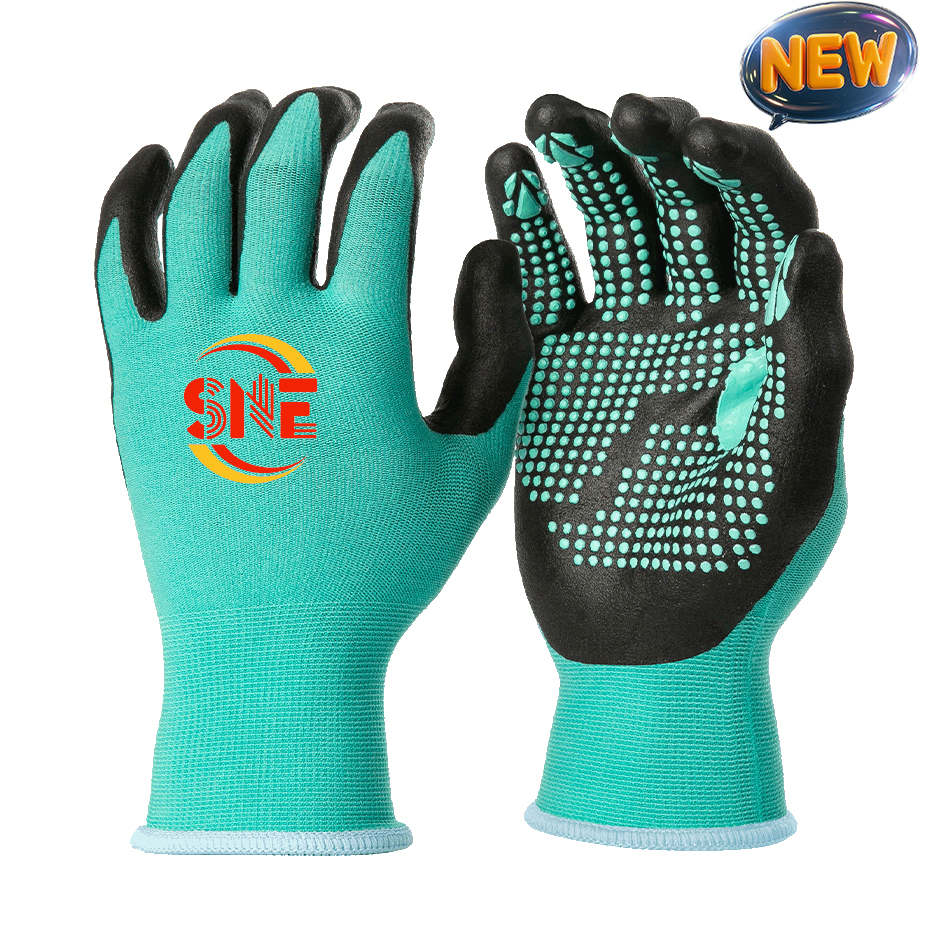
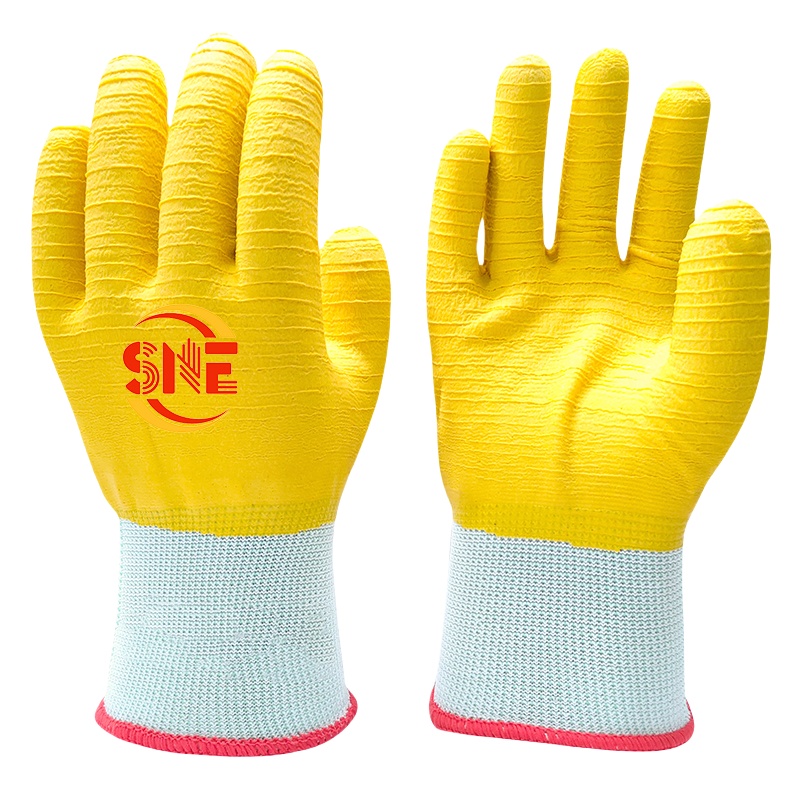
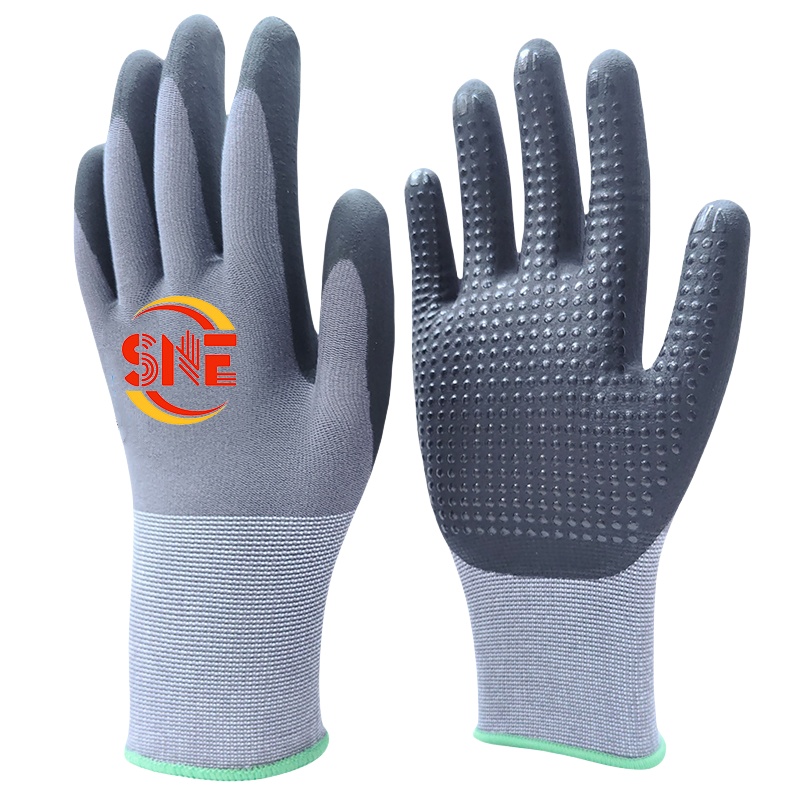
Nitrile coating is a synthetic compound known for oil resistance, abrasion resistance, and broad industrial versatility. It performs well when workers handle metal components, tools, packaging, pallets, machine parts, and automotive fluids. It can be applied in smooth, sandy, foam, or micro-foam finishes, each changing grip and breathability. Rubber-coated gloves in the U.S. market usually refer to natural latex coatings or heavier general rubber finishes. These excel in elasticity, grip on rough and wet surfaces, and comfort in repetitive manual labor. Many users like them for concrete, brick, lumber, landscaping, and farm tasks.
However, the trade-offs matter. Nitrile coatings usually feel less tacky than latex on wet rough surfaces, but they resist oils much better. Rubber coatings often feel softer and more flexible in the hand, but some users avoid natural latex because of allergy concerns. For buyers supplying large multi-site teams, that allergy issue alone can justify a nitrile-first policy.
Comparison Table for U.S. Buyers
The table below summarizes the most practical differences for purchasing teams, safety managers, and distributors in the United States.
| Factor | Nitrile-Coated Gloves | Rubber-Coated Gloves | Best Fit in the United States |
|---|---|---|---|
| Oil Resistance | Strong resistance to oils and light chemicals | Usually weaker against oils, varies by formulation | Automotive, maintenance, machine shops |
| Wet Grip | Good with foam or sandy finish | Often excellent on wet rough surfaces | Construction, roofing, masonry, farming |
| Abrasion Resistance | Typically high and consistent | Moderate to high depending on coating thickness | Metal handling, logistics, repetitive handling |
| Dexterity | Very good in thinner gauge styles | Good, often softer feel but bulkier in heavy coatings | Assembly, warehouse picking, general labor |
| Allergy Risk | Low compared with natural latex | May be a concern if natural latex is used | Large workforce programs, mixed-user sites |
| Durability per Pair | Often longer wear life in abrasive, oily tasks | Can wear faster in oil-heavy environments | Plants seeking lower replacement frequency |
| Upfront Price | Usually moderate | Often lower at entry level | Budget-driven bulk buying |
| Total Cost of Ownership | Often favorable due to longer life | Can be favorable in low-risk wet work | Depends on task and changeout rate |
For U.S. buyers, the most important takeaway is that nitrile often wins in industrial efficiency, while rubber frequently wins in grip-intensive field work. Procurement should test both in the exact use case before standardization.
U.S. Demand Trend for Coated Work Gloves
The U.S. market for coated work gloves continues to expand as OSHA awareness, labor retention concerns, automation-adjacent handling, and rising injury costs push employers toward better PPE. The chart below shows a realistic growth trend for coated glove demand, reflecting broader industrial hand protection purchasing patterns.
Product Types You Will See in the United States
Not all nitrile-coated gloves are the same, and not all rubber-coated gloves behave the same either. Buyers often make poor decisions when they compare only the top-line coating name. In reality, liner gauge, coating coverage, finish texture, cuff style, and gauge-to-task matching matter just as much.
Nitrile-coated gloves commonly include smooth nitrile for easy cleaning and reliable wear, sandy nitrile for improved grip in slightly oily handling, and foam nitrile for breathability and dexterity in warehouse and assembly work. Rubber-coated gloves commonly include crinkle latex for high-friction grip, flat latex for general handling, and heavier palm-dipped or fully coated versions for dirty and wet environments. Some products blur the lines through blended compounds, but the core performance logic remains consistent.
Common Product Formats and Best Uses
The table below helps identify which coating format fits which task in practical U.S. workplaces.
| Product Type | Typical Liner | Main Strength | Main Limitation | Common U.S. Use |
|---|---|---|---|---|
| Foam Nitrile Palm-Dipped | Nylon or HPPE blend | Breathable, dexterous, light oil grip | Less ideal for heavy wet masonry work | Warehousing, assembly, light manufacturing |
| Sandy Nitrile Palm-Dipped | Polyester or cut-resistant liner | Better grip on oily parts | Can cost more than basic latex | Automotive, maintenance, fabrication |
| Smooth Nitrile Fully Coated | Jersey or knit liner | Oil resistance and more coverage | Lower breathability | Maintenance, chemical splash-adjacent tasks |
| Crinkle Latex Palm-Dipped | Poly-cotton or polyester | Excellent dry and wet rough grip | Latex sensitivity concerns | Construction, lumber, roofing |
| Flat Latex Palm-Dipped | Polyester knit | Comfort and economical general handling | Less oil resistance | General labor, gardening, agriculture |
| Heavy Rubber Fully Coated | Cotton or jersey liner | Coverage in messy wet environments | Reduced dexterity | Sanitation, fisheries, outdoor utility work |
| Cut-Resistant Nitrile-Coated | HPPE, steel, glass fiber blend | Cut protection plus grip | Higher unit price | Metal stamping, glass, automotive |
This comparison matters because many U.S. distributors sell both nitrile and rubber-coated families under the same category page, yet the performance difference in the field can be substantial.
Industry Demand Across the United States
Different industries show different coating preferences. The bar chart below illustrates realistic relative demand patterns by industry. Nitrile demand is stronger in industrial environments with oils and abrasion. Rubber-coated demand remains solid in outdoor and wet-grip sectors.
Buying Advice for U.S. Procurement Teams
When evaluating nitrile vs rubber coated gloves, U.S. buyers should avoid buying only by price or catalog category. The strongest purchasing process starts by matching the glove to the top two failure points on the job. If workers complain that gloves get slick with oil, nitrile should be tested first. If they complain that they lose grip on wet lumber, pipe, or block, rubber-coated options should be trialed first.
Another useful method is to calculate cost per effective shift. For example, a cheaper glove that lasts half a shift is not cheaper than a nitrile style lasting two full shifts. Safety managers in major industrial corridors such as Detroit, Cleveland, Pittsburgh, Memphis, and Dallas increasingly compare glove life, not just purchase price, because downtime and replacement handling create hidden cost.
Buyers should also review cuff style, shell color for visibility, touchscreen need, ANSI cut level if applicable, and climate. In cold outdoor work, some rubber-coated thermal gloves can outperform thin nitrile products simply because workers keep them on longer. Compliance depends on wearability.
Key Questions Before You Buy
The following table is designed as a practical checklist for plant managers, safety buyers, and distributors.
| Question | If Yes, Lean Toward | Why It Matters | Typical U.S. Example |
|---|---|---|---|
| Do workers handle oily or greasy parts daily? | Nitrile | Better grip retention and wear in oil | Auto parts, maintenance shops |
| Is wet grip on rough materials the main issue? | Rubber | Higher surface friction in many wet tasks | Roofing, masonry, landscaping |
| Do you need to reduce allergy-related risk? | Nitrile | Helps avoid natural latex sensitivity issues | Large multi-site employers |
| Is abrasion causing frequent replacement? | Nitrile | Often better lifecycle value | Metal handling, pallet work |
| Is the budget very tight for general labor? | Rubber | Lower entry cost can work in low-risk tasks | Seasonal agriculture, general site work |
| Do workers need soft flexibility for repetitive handling? | Rubber | Many users prefer the elastic feel | Material moving, hand tool work |
| Do you need one versatile glove for mixed indoor operations? | Nitrile | Balances grip, durability, and cleanliness | Warehousing, 3PL, distribution |
This checklist helps reduce the common mistake of over-specifying gloves for low-risk tasks or under-specifying them for oily handling.
Applications by Industry
In automotive plants across Michigan, Indiana, and Kentucky, nitrile-coated gloves are often preferred because oils, stamped parts, fasteners, and repetitive handling drive a need for abrasion resistance and secure grip. In logistics hubs near Chicago, Atlanta, Inland Empire, and New Jersey, foam nitrile is common for picking, carton handling, and general-purpose wear where hand fatigue matters.
In construction markets such as Texas, Florida, Arizona, and the Carolinas, rubber-coated gloves remain a staple. Workers handling block, cement bags, framing lumber, roofing materials, and rebar often prefer crinkle latex because it grips rough surfaces and remains comfortable in fast-moving site work. In agriculture, preferences vary by crop and climate. Fruit and vegetable handling may favor textured rubber or lighter coated gloves for wet grip, while packing and maintenance crews may shift toward nitrile for longer wear and cleaner handling.
For metal fabrication, nitrile-coated gloves paired with ANSI cut-resistant liners are often the smarter choice. For janitorial and utility work with wet surfaces but less need for precision, heavier rubber-coated styles can remain cost-effective.
Trend Shift in U.S. Coating Preferences
The area chart below illustrates the gradual shift toward nitrile-coated gloves in several industrial segments, while rubber-coated gloves remain important in field and wet-grip applications rather than disappearing.
Case Studies from Common U.S. Use Scenarios
A Midwest auto supplier replaced basic rubber-coated gloves with sandy nitrile styles for machine tending and small-part handling. The result was fewer glove changes during oil-contact tasks and improved worker satisfaction because grip remained more consistent through the shift. Even though unit price rose, total monthly glove consumption fell.
A Texas masonry contractor tested nitrile and crinkle latex side by side. Workers overwhelmingly chose rubber-coated gloves because they handled wet block, rough concrete surfaces, and outdoor motion better. Nitrile lasted reasonably well but did not provide the same immediate gripping confidence on rough wet materials. The contractor standardized rubber-coated gloves for the field crew and kept nitrile for the shop.
A third-party logistics provider near Savannah used foam nitrile for inbound receiving, sortation, and outbound pallet handling. The goal was one versatile glove across multiple touchpoints. The company found nitrile more scalable because it worked acceptably in dry and mildly oily areas while maintaining dexterity for scanners and carton handling.
A Pacific Northwest landscaping business continued with latex-coated gloves for outdoor wet work but adopted nitrile-coated cut-resistant styles for maintenance staff handling blades, wire, and metal components. This hybrid model is increasingly common in the United States.
Top Suppliers Serving the United States
For buyers who need real sourcing options, the market includes major U.S. brands, regional distributors, and qualified overseas manufacturers with North America experience. The following list focuses on concrete suppliers and recognizable companies relevant to U.S. procurement decisions.
| Company | Service Region | Core Strengths | Key Offerings |
|---|---|---|---|
| Ansell | United States nationwide | Strong industrial safety portfolio, established compliance support | Nitrile-coated, chemical-resistant, cut-resistant, assembly gloves |
| Honeywell Industrial Safety | United States nationwide | Large PPE network, broad industrial reach | General purpose coated gloves, task-specific industrial hand protection |
| MCR Safety | United States, especially South and Midwest | Well-known U.S. PPE distribution presence, broad dealer network | Nitrile-dipped, latex-coated, cut-resistant, impact gloves |
| PIP Global | United States nationwide | Large importer-brand with broad category depth | G-Tek coated gloves, warehouse, construction, and manufacturing styles |
| Superior Glove | United States and Canada | Technical hand protection expertise, broad application coverage | Nitrile-coated, latex-coated, cut-resistant and specialty gloves |
| Global Glove & Safety | United States nationwide | Wide catalog and strong distributor support | General purpose, nitrile-coated, rubber-coated, cut-resistant gloves |
| Qingdao Snell Protective Products Co., Ltd. | United States through export and B2B supply partnerships | Factory-direct manufacturing, scalable production, OEM/ODM flexibility | Nitrile-coated, latex-coated, cut-resistant, impact-resistant, custom branded gloves |
For U.S. buyers, the practical difference among these suppliers is not only product quality but also supply model. Some are ideal for quick domestic replenishment through established distributors, while factory-direct partners are often more competitive for private label, wholesale, and container-volume procurement.
Supplier Comparison by Product and Buying Model
The chart below compares representative strengths by supplier type. It is not a quality ranking but a procurement-oriented view of where each option can fit best.
Detailed Supplier Notes for U.S. Buyers
Ansell is often a strong choice for enterprise accounts needing documentation, broad PPE integration, and established industrial channels. Honeywell has national recognition and suits buyers bundling multiple safety categories. MCR Safety remains highly visible in construction, industrial, and dealer-led sales. PIP Global is a familiar option for broad coated glove availability, particularly through distribution. Superior Glove is especially useful when technical task matching matters, including cut resistance and specialized handling. Global Glove & Safety is often considered for practical catalog range and dealer support.
Factory-direct manufacturers deserve separate evaluation rather than automatic exclusion. They can make sense for distributors, private label programs, regional wholesalers, and larger end users seeking stable bulk supply, custom packaging, tailored coatings, and price leverage. When comparing them, U.S. buyers should focus on certification, production consistency, communication speed, trial support, and logistics readiness.
Our Company
For U.S. buyers seeking a factory-direct option, Snell Safety combines scale and technical specialization in a way that fits practical North American sourcing needs. The company manufactures industrial safety gloves across nitrile, latex, and PU coating technologies, with ISO 9001 and CE-backed production controls, two operating factories, six production lines, more than 150 trained employees, and daily output reaching 150,000 pairs, which gives buyers concrete evidence of process consistency and volume capability rather than generic quality claims. Its product portfolio covers nitrile-coated gloves, latex-coated gloves, cut-resistant gloves, impact-resistant gloves, oil-resistant gloves, and industry-specific styles for construction, automotive, logistics, manufacturing, agriculture, and oil and gas applications, supporting real benchmark alignment with U.S. industrial performance expectations. Commercially, the company serves distributors, dealers, brand owners, bulk wholesalers, and end-use procurement teams through OEM, ODM, private label, customized materials, sizes, coatings, and branding, while also supporting sample development and export logistics for smoother onboarding. For local buyers wanting an experienced long-term partner rather than a one-off exporter, Snell already supplies major international markets including North America-facing trade flows, operates a multilingual platform, and provides structured pre-sale consultation plus after-sales support through its global B2B model; buyers can review its manufacturing background on the company profile page, explore available categories through the product catalog, or arrange direct commercial discussion via the U.S. inquiry contact page.
How to Choose for Specific U.S. Applications
If your team handles oily stampings, hydraulic tools, greasy fasteners, or machine maintenance parts, start with nitrile-coated gloves. If the job is framing, roofing, masonry, landscaping, or rough wet material handling, start with rubber-coated gloves. If your operation mixes warehousing, light assembly, receiving, and occasional maintenance, foam nitrile is often the easiest standard product to roll out broadly.
For mixed fleets of workers, many U.S. employers maintain two core SKUs: a nitrile-coated glove for indoor industrial tasks and a rubber-coated glove for outdoor or wet-grip tasks. This dual-standard model usually performs better than forcing a single universal glove. It also reduces worker resistance and improves PPE compliance.
What Matters Most in 2026
Looking ahead to 2026, three forces are shaping the nitrile vs rubber coated gloves decision in the United States. The first is technology: glove liners are becoming lighter, stronger, and more task-specific, which increasingly benefits nitrile-coated products in precision handling and cut-protection combinations. The second is policy and compliance: employers continue tightening PPE programs around documented hazard assessments, injury reduction, and worker accommodation, including lower-latex strategies where appropriate. The third is sustainability: buyers are paying more attention to glove longevity, packaging reduction, stable sourcing, and lifecycle efficiency. In practice, that means gloves that last longer and generate fewer replacements per shift will gain favor, even if unit price is slightly higher.
There is also a sourcing trend toward diversified procurement. U.S. importers and distributors increasingly balance domestic stocking partners with qualified overseas factories to reduce disruption risk, improve private label margins, and secure more specialized glove construction. Ports such as Los Angeles, Long Beach, Houston, Savannah, and New York-New Jersey remain central to this strategy.
Frequently Asked Questions
Are nitrile-coated gloves better than rubber-coated gloves?
Not in every case. Nitrile is usually better for oil resistance, abrasion, and broad industrial use. Rubber-coated gloves are often better for wet grip and rough outdoor materials.
Which is better for construction in the United States?
For general construction, rubber-coated gloves, especially crinkle latex styles, are often preferred for grip on lumber, block, and rough surfaces. For site maintenance or oily tool handling, nitrile may be better.
Which coating lasts longer?
In many abrasive industrial settings, nitrile-coated gloves last longer. In lower-abrasion wet handling, rubber-coated gloves can still offer strong value.
Is nitrile safer for large workforces?
It can be easier to standardize because it avoids many natural latex sensitivity concerns and works well across mixed industrial tasks.
Can U.S. distributors source private label coated gloves from overseas?
Yes. Many distributors and brand owners use OEM and ODM supply models to develop private label nitrile-coated or rubber-coated glove lines, especially when they need container-scale pricing, custom packaging, or unique specifications.
Should I buy from a local U.S. supplier or a factory-direct manufacturer?
If you need fast replenishment and smaller quantities, U.S. distribution is often best. If you need bulk pricing, custom development, or branded programs, a qualified factory-direct supplier may be the stronger fit.
Final Takeaway
For most United States industrial buyers, nitrile-coated gloves are the better default choice when oil resistance, abrasion performance, allergy management, and lower cost per wear are the main priorities. Rubber-coated gloves remain highly relevant where wet grip, rough-surface control, and flexible hand feel matter more than oil resistance. The smartest buying strategy is not choosing one coating forever, but matching each coating to the job, the workforce, and the replacement economics. In practical terms, many of the best U.S. glove programs standardize nitrile indoors and rubber outdoors, while keeping supplier options open across domestic distributors and qualified international manufacturing partners.