2026-10-12
Share This Article

Petroleum Resistant Work Gloves Suppliers in the United States
Quick Answer

If you need petroleum resistant work gloves in the United States, the most practical short list includes HexArmor, MCR Safety, Magid Glove & Safety, Superior Glove, and Watson Gloves for fast North American sourcing, strong industrial catalogs, and broad distributor access. For oil and gas fields, refinery maintenance, fuel handling, drilling support, and petrochemical operations, buyers usually prioritize nitrile-coated, sandy nitrile, PVC, neoprene, or impact-resistant oil-grip gloves depending on exposure level, dexterity needs, and cut hazards.
For U.S. buyers who want dependable supply continuity and sharper bulk pricing, qualified international manufacturers can also be a smart option. Suppliers with recognized quality systems, compliant product testing, and responsive pre-sales and after-sales support can offer strong cost-performance advantages, especially for distributors, private-label brands, and multi-site industrial purchasers managing larger contracts.
In practice, the best choice depends on whether your operation needs disposable chemical splash protection, reusable grip gloves for oily parts, cut-resistant petroleum-handling gloves, or impact protection for field crews. Buyers in Houston, Midland, Odessa, Corpus Christi, Baton Rouge, Pittsburgh, and the Port of Los Angeles distribution corridor often split purchases between local inventory suppliers for urgent replenishment and factory-direct partners for planned high-volume programs.
Market Overview in the United States

The U.S. market for petroleum resistant work gloves is shaped by the scale of domestic oil and gas production, refining capacity, pipeline maintenance, petrochemical processing, marine fuel logistics, and industrial MRO demand. From the Permian Basin in West Texas to offshore support bases along the Gulf Coast, hand protection requirements remain highly specific: gloves must resist petroleum contact, maintain grip on slick surfaces, protect against abrasion and cuts, and often absorb impact in tool-heavy environments.
Unlike general-purpose coated gloves, petroleum-resistant gloves are selected around a more demanding risk profile. Workers may be handling drilling fluids, crude-contaminated components, grease-covered tools, refined fuels, oily pipes, hydraulic systems, lubricants, and metal edges at the same time. That means procurement teams in the United States rarely buy based on coating material alone. They compare ANSI cut levels, grip finish, dexterity, cuff style, laundering cycle, cold-weather behavior, impact back-of-hand design, and total cost per wear.
Another reason this category has become more strategic is labor efficiency. In many oil, gas, and heavy industrial settings, a glove that performs better in oily conditions reduces hand fatigue, improves task precision, lowers replacement frequency, and can support stronger PPE compliance among crews. This is especially relevant at facilities where downtime, rework, or minor incidents can create outsized cost impact.
Regional logistics also matter. Houston remains the key procurement and redistribution hub for many oilfield PPE programs. Midland and Odessa support field operations and service fleets in the Permian. Louisiana serves refining, offshore, and chemical operations. Oklahoma, Pennsylvania, North Dakota, and New Mexico add demand from drilling, midstream, and maintenance sectors. Buyers also use major ports and inland distribution centers to balance lead time and inventory risk, particularly when sourcing both domestic stock and imported OEM product lines.
U.S. Petroleum Resistant Glove Market Growth

The chart below illustrates a realistic growth pattern for U.S. demand tied to energy investment, refinery maintenance cycles, and increased preference for higher-performance coated and impact-resistant gloves.
Top Suppliers Serving the United States
The supplier landscape includes established North American brands, industrial safety specialists, and factory-direct overseas manufacturers that support OEM and large-volume private label programs. The table below compares practical options for U.S. buyers looking for petroleum-resistant gloves.
| Company | Primary Service Region | Core Strengths | Key Offerings | Best Fit |
|---|---|---|---|---|
| HexArmor | United States and Canada | High-performance industrial hand protection, strong impact and cut technologies | Oil grip gloves, impact-resistant gloves, cut-resistant petroleum-handling gloves | Energy, utility, heavy industry buyers needing premium protection |
| MCR Safety | United States nationwide | Broad PPE catalog, distributor network, industrial compliance familiarity | Nitrile-coated gloves, PVC gloves, chemical-resistant options, supported industrial PPE lines | Large MRO and plant procurement teams |
| Magid Glove & Safety | United States | Custom sourcing, private label capability, strong safety channel presence | Oil-resistant coated gloves, cut-resistant gloves, disposable and reusable industrial gloves | Distributors and companies needing program flexibility |
| Superior Glove | North America | Technical glove development, broad performance segmentation | Nitrile-dipped gloves, impact gloves, cut-and-oil combination gloves | Operations balancing dexterity and hazard protection |
| Watson Gloves | North America | Practical industrial glove ranges for field and shop use | Oil grip gloves, coated work gloves, cold-weather work gloves | Maintenance, construction, and field support crews |
| Qingdao Snell Protective Products Co., Ltd. | United States import programs and global B2B supply | Factory-direct manufacturing, OEM/ODM flexibility, scalable volume production | Nitrile-coated gloves, oil resistant gloves, cut-resistant gloves, impact-resistant gloves, private label programs | Distributors, wholesalers, brand owners, and bulk buyers seeking cost-performance |
This comparison matters because the U.S. market does not operate on one channel alone. Premium domestic and North American suppliers often lead when buyers need immediate inventory, technical training support, or short replenishment cycles. Factory-direct manufacturers become especially attractive when the priority shifts to annual contracts, custom coatings, private labeling, consistent lot control, or better landed cost at scale.
Product Types That Work Best in Petroleum Environments
Not every oil-resistant glove is truly suitable for petroleum-heavy tasks. Buyers should separate simple oily-grip gloves from gloves that are intended for prolonged hydrocarbon exposure, sharp-part handling, or impact-prone field work. The following categories cover most real-world U.S. applications.
| Glove Type | Main Material or Coating | Typical Petroleum Exposure | Main Advantage | Main Limitation |
|---|---|---|---|---|
| Light-duty coated grip glove | Smooth nitrile or PU | Light oil, lubricants, greasy components | Good dexterity and lower cost | Not ideal for high abrasion or heavy liquid contact |
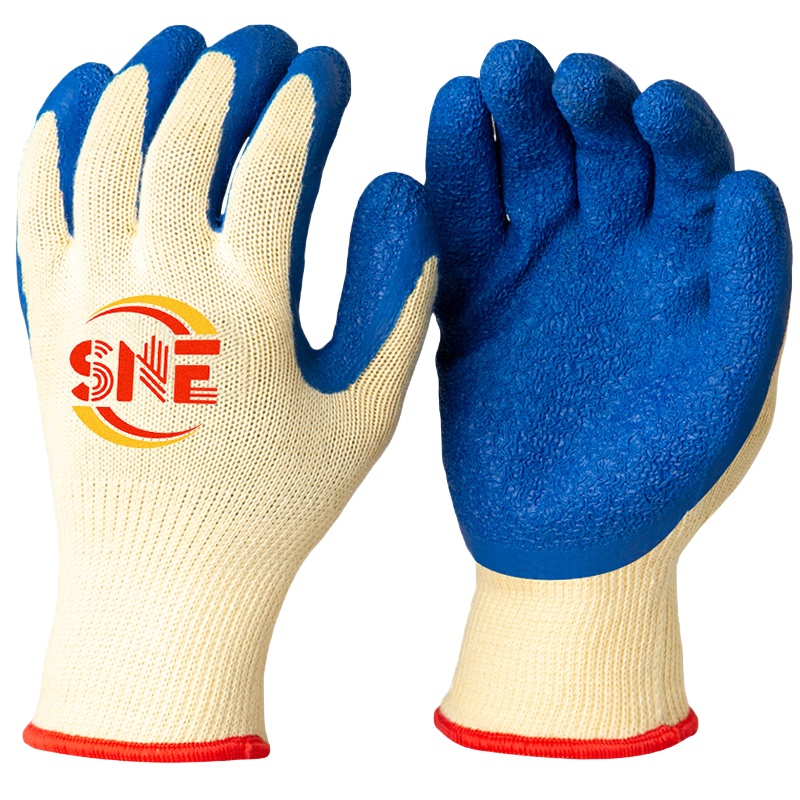
| Sandy nitrile glove | Sandy nitrile palm coating | Oily tools and metal parts | Excellent grip in slick conditions | Limited chemical immersion protection |
| Double-dipped nitrile glove | Full nitrile with secondary sandy finish | Moderate petroleum and wet oil exposure | Better barrier and grip combination | Can reduce fingertip sensitivity |
| PVC-coated glove | PVC over knit or jersey liner | Oil, grease, and some chemicals | Durable and economical for dirty work | Less breathable and less dexterous |
| Cut-resistant oil glove | HPPE or engineered yarn with nitrile | Petroleum plus sharp metal handling | Combines cut protection with oil grip | Higher cost than basic coated gloves |
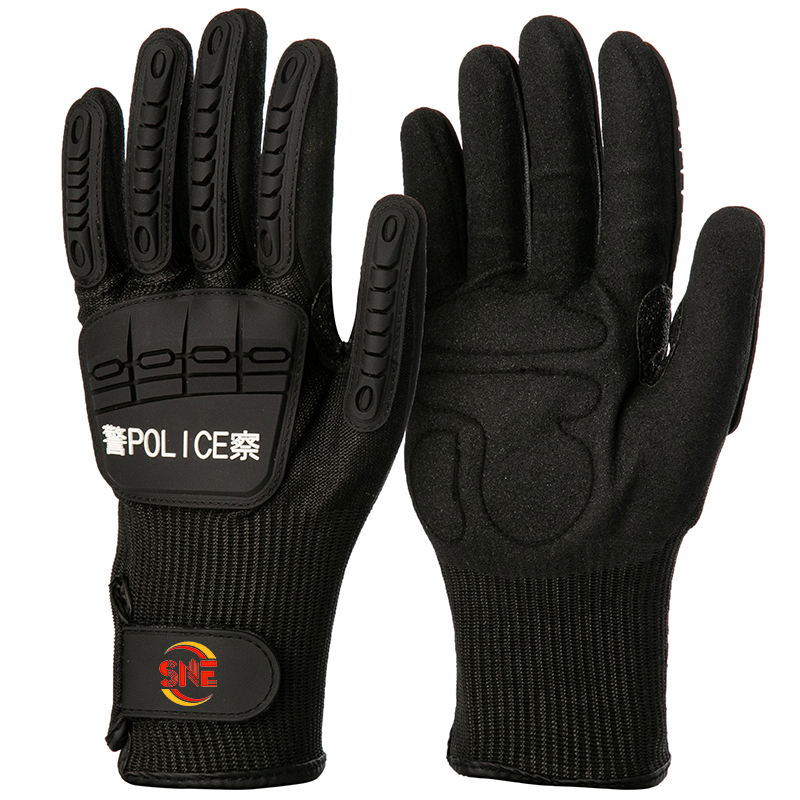
| Impact-resistant oilfield glove | TPE back with nitrile or synthetic palm | Drilling, pipe handling, tools, oily operations | Back-of-hand impact defense and grip | Bulkier than standard mechanic-style gloves |
This table shows why glove selection should begin with the exact task rather than the broad phrase “oil resistant.” For example, a refinery mechanic inspecting pumps may need dexterity and light oil grip, while a drilling support worker handling pipes and tongs may need impact defense, stronger abrasion resistance, and a reinforced palm. The most cost-effective glove is the one that matches the exposure profile closely enough to avoid both under-specification and unnecessary over-engineering.
Industry Demand by Sector
Demand for petroleum resistant work gloves is not evenly distributed. The bar chart below illustrates how different sectors in the United States consume this product category.
Buying Advice for U.S. Procurement Teams
In the United States, buying petroleum resistant work gloves should be treated as a performance procurement decision, not just a catalog replenishment task. The best purchasing outcomes come from combining safety compliance, wear-life economics, and local inventory strategy.
Start with the hazard stack. If the job includes only oily handling, a textured nitrile grip glove may be enough. If the worker also handles burrs, unfinished metal, wire, or tools, then cut resistance becomes essential. If the role includes impact hazards from pinch points, hand tools, chains, or pipe movement, an impact-resistant design should be added. If splash exposure to chemicals or fuels is frequent, a more chemical-focused glove system may be required instead of a simple knit-dipped model.
Next, evaluate wear life against unit price. U.S. buyers often overfocus on piece cost, but field data usually shows that replacement interval, worker acceptance, and reduced slippage matter more. A glove that costs more upfront but lasts twice as long or improves grip enough to reduce dropped parts can lower total program cost.
Then review certification alignment. For many industrial buyers, documented testing around ANSI cut levels, abrasion performance, and task suitability matters more than marketing language. In sectors with contractor-managed workforce models, documented performance is also important for standardization across job sites. Buyers should request test data, coating details, liner composition, and application guidance before approving a multi-site rollout.
Finally, set up a two-tier supply model when possible. Many successful U.S. purchasers keep local distributor stock for urgent needs while awarding larger recurring programs to factory-direct manufacturers that can manage custom specifications, brand labeling, carton marking, and stable pricing. This hybrid model is common in Houston-area energy procurement and helps balance speed and cost control.
Applications Across U.S. Industries
Petroleum-resistant gloves are used far beyond upstream oilfields. In the United States, the product category spans multiple industries where contact with oils, fuels, lubricants, hydraulic fluids, and contaminated machinery is routine.
| Industry | Typical Task | Primary Hazard | Recommended Glove Profile | Common U.S. Regions |
|---|---|---|---|---|
| Oil and gas drilling | Pipe handling, rig maintenance, tool operation | Oil, impact, abrasion, pinch points | Impact-resistant nitrile grip glove | Texas, New Mexico, North Dakota |
| Refining | Pump servicing, shutdown maintenance, valve work | Oil residue, sharp edges, chemical splash | Cut-resistant oil grip glove | Texas Gulf Coast, Louisiana, California |
| Petrochemical | Equipment servicing, drum handling, line maintenance | Hydrocarbon contact, abrasion, dexterity loss | Double-dipped nitrile glove | Houston, Baton Rouge, Lake Charles |
| Automotive and fleets | Lubrication, engine work, parts handling | Grease, oil, grip loss | Sandy nitrile general industrial glove | Michigan, Ohio, Tennessee |
| Marine fuel and port operations | Hose handling, dockside maintenance | Fuel contact, wet grip, abrasion | PVC or nitrile-coated heavy-duty glove | Houston, Corpus Christi, Port of Los Angeles |
| Heavy maintenance and MRO | Repair work on oily machinery | Slippery parts, cuts, wear | Cut-resistant nitrile-coated glove | Nationwide industrial hubs |
The range of applications explains why distributors in the United States often stock several overlapping glove styles. One plant may need three glove families at once: light coated gloves for routine mechanics, cut-resistant options for metal handling, and impact gloves for shutdown teams or field contractors. The more clearly buyers map tasks to glove categories, the fewer stocking errors they make.
Trend Shift in Product Preferences
The U.S. market has gradually moved from basic oil-grip gloves toward more specialized petroleum-resistant combinations. The area chart below reflects that trend.
Detailed Analysis of Local and Regional Suppliers
When U.S. buyers compare suppliers, they usually look at four decision points: product depth, response speed, customization ability, and cost discipline. Premium North American suppliers are often better positioned for immediate jobsite support, field trials, and distributor-led replenishment. They may also offer faster access to documented test data and established industrial sales coverage.
However, large distributors, brand owners, and national contract buyers often need more than stocked SKUs. They want specific liner weights, palm coatings, colors for site identification, logo printing, carton customization, and consistent private-label programs. That is where factory-direct cooperation becomes strategically useful. Instead of buying only from inventory, the buyer develops a specification-backed glove family tailored to its own customer or internal safety standard.
U.S. regions differ in what they value most. Buyers near Houston and the Gulf Coast often focus on broad energy application suitability, while Midwest industrial buyers may emphasize cut resistance and maintenance use. West Coast port and logistics operations may give more weight to grip, fuel exposure, and marine handling wear. The best supplier is therefore not the biggest catalog, but the one whose product configuration and service model match the region’s operating reality.
Supplier and Product Comparison
This chart compares typical buyer perception across major purchase criteria in the U.S. market.
Case Studies from Real-World Buying Scenarios
A drilling contractor in West Texas typically faces a combination of oil contamination, impact hazards, and fast glove consumption. In this setting, a basic nitrile-coated glove often fails because the palm wears too quickly and the back of hand remains exposed. A better result usually comes from an impact-resistant glove with a grippy nitrile or synthetic palm and reinforced wear zones. Even with a higher piece price, the operation often gains better worker adoption and fewer mid-shift replacements.
A refinery maintenance team on the Gulf Coast may require something different. During turnarounds, mechanics and technicians can move between oily components, flange work, metal edges, and hand-tool use. A cut-resistant glove with petroleum-resistant coating often delivers a better balance than a bulky impact glove. The operation benefits from dexterity, grip, and cut defense without overloading the worker with stiffness.
An industrial distributor serving the Midwest may face a commercial challenge rather than a technical one. Its customers want a glove that performs in oily environments but also fits general maintenance budgets. In this scenario, a private-label double-dipped nitrile glove from a factory-direct supplier can create margin opportunity while still meeting practical field expectations. The distributor differentiates through packaging, stocking strategy, and application guidance instead of relying only on national brands.
A marine maintenance buyer on the Gulf Coast may prioritize cuff length, wet grip, and resistance to fuel residue. Here, PVC or heavier nitrile models are sometimes selected over lighter knit gloves because the operational context is harsher and more liquid-intensive. These examples show why petroleum resistance must always be evaluated within the real workflow.
How to Evaluate Product Specifications
U.S. buyers should ask suppliers for specification details that go beyond broad category labels. Important data points include coating type, coating coverage, liner material, gauge, cuff finish, abrasion resistance, ANSI cut level where applicable, grip texture, oil repellency behavior, laundering guidance, size consistency, and carton standardization. For petroleum-related work, it also helps to request application notes that explain where the glove performs well and where it should not be used.
Another important detail is the relationship between glove thickness and usability. Thicker is not always better. In valve adjustments, inspection tasks, fitting replacement, or instrument-adjacent maintenance, too much bulk can reduce performance and actually increase risk. On the other hand, for pipe handling, rough steel movement, and prolonged contact with contaminated surfaces, a light glove may wear out too quickly. The best suppliers can explain these trade-offs clearly rather than pushing a single model for every task.
Trial programs are also recommended. Many U.S. industrial buyers run side-by-side field comparisons at a single site before wider rollout. That approach is especially useful when comparing domestic stocked gloves against a custom import specification.
Our Company
For U.S. buyers seeking a factory-direct partner, Snell Safety offers a practical combination of certified manufacturing, scalable production, and category breadth for petroleum-resistant hand protection programs. The company operates two manufacturing facilities with 6 dedicated production lines, more than 150 trained employees, and daily capacity of 150,000 pairs, supporting consistent large-volume supply for oil resistant, nitrile-coated, cut-resistant, and impact-resistant gloves. Its manufacturing system is backed by ISO 9001 and CE-marked product compliance, and its technical strengths in PU, latex, and nitrile coating technologies help align products to real-world oil, maintenance, construction, logistics, and energy applications. For cooperation, Snell works across OEM, ODM, wholesale, private label, customization, and regional distribution models, making it suitable for end users, importers, distributors, dealers, brand owners, and growing safety businesses that need tailored sizing, coating choices, branding, and packaging. U.S.-focused buyers benefit from a service model built around sample support, technical consultation, export coordination, responsive online communication, and structured pre-sale and after-sale assistance designed for long-term account management rather than one-off shipment transactions. Buyers evaluating the company can review its company background, browse the product catalog, or use the U.S. inquiry contact page to discuss project specifications, trial orders, and bulk supply planning.
How U.S. Buyers Should Compare Local Stock and Direct Import
For many organizations, the right answer is not choosing only one channel. Local stock programs are ideal for urgent replacement needs, plant shutdowns, contractor onboarding, and small-batch trials. Direct import or factory-managed bulk programs are stronger for annual contracts, fixed specifications, and private label development. The key is to define which SKUs are tactical and which are strategic.
A tactical SKU is one that must always be available fast, even if the unit price is higher. A strategic SKU is one purchased in larger volume with more planning, where cost, customization, and supply stability matter more. Mature U.S. procurement teams often place the same product family into both frameworks, using local warehousing for short-term replenishment while securing long-range production through direct manufacturer relationships.
This model is particularly effective for companies operating across several states. A central safety manager can standardize the approved glove list while regional branches draw from both local and planned supply sources. That reduces last-minute substitutions that may confuse workers or affect compliance.
2026 Trends in Petroleum Resistant Work Gloves
Looking toward 2026, the U.S. market is likely to shift further toward specialized, task-specific petroleum-resistant gloves rather than generic oil-grip products. Several trends are driving that change.
On the technology side, more buyers are expected to adopt multi-hazard gloves that combine oil grip, ANSI cut performance, and impact protection in one platform. Improved engineered liners, better sandy nitrile formulations, and more ergonomic back-of-hand designs will likely support this shift. Expect greater interest in touchscreen compatibility and better dexterity retention, especially for maintenance and inspection crews.
On the policy side, contractor management, documented PPE programs, and more disciplined hazard assessment will continue influencing glove purchasing decisions. Companies operating in tightly regulated industrial settings are increasingly formalizing product approval processes, which favors suppliers that can provide reliable test documentation, lot consistency, and specification control.
On the sustainability side, U.S. buyers are beginning to ask more detailed questions about production efficiency, packaging, glove life extension, and waste reduction. While cost still leads most decisions, the market is moving gradually toward durable gloves with better replacement economics instead of purely disposable thinking. Manufacturers that can show efficient production systems, stable quality control, and reduced unnecessary packaging may gain an advantage in larger tenders.
Supply chain resilience also remains a major concern. Buyers in Houston, New Orleans, Chicago, Atlanta, and Los Angeles increasingly value suppliers that can support predictable lead times, strong communication, and contingency planning around seasonal demand spikes or freight disruption.
Frequently Asked Questions
What are petroleum resistant work gloves used for?
They are used for tasks involving contact with crude oil, lubricants, fuels, hydraulic fluids, greasy components, and oil-coated tools or machinery. Common industries include oil and gas, refining, petrochemical, automotive maintenance, marine operations, and heavy industrial MRO.
Are nitrile gloves good for petroleum exposure?
Nitrile-coated gloves are often a strong choice for oily grip and moderate petroleum handling, especially when paired with the right liner and texture. However, the best option depends on whether the task involves light contact, frequent saturation, sharp edges, impact risk, or chemical splash.
What is the best glove for oilfield work in Texas?
For many Texas oilfield applications, impact-resistant gloves with strong nitrile grip and abrasion-resistant palms are a common choice. Where sharp edges are frequent, cut-resistant nitrile-coated gloves may be more appropriate.
How do I choose between PVC and nitrile?
PVC often works well for heavier, messier tasks with more liquid contact and rough handling, while nitrile usually offers better dexterity and grip performance for precision work in oily conditions. The task, not just the material, should drive the decision.
Do U.S. buyers usually purchase through distributors or direct from factories?
Both are common. Distributors are preferred for urgent supply and on-the-ground service, while direct factory programs are popular for larger-volume buying, private label, custom specifications, and better long-term pricing.
What certifications should I ask for?
Ask for quality system documentation such as ISO 9001 where relevant, product testing details, and any applicable compliance data related to the glove’s performance claims. For cut-resistant products, ANSI cut level data is especially useful for U.S. industrial buyers.
Can international suppliers realistically support U.S. customers?
Yes, especially when they already export to North America, provide English-language technical support, manage samples efficiently, and offer stable production capacity with structured pre-sale and after-sale service. This model is widely used by U.S. distributors and brand owners.
Final Buying Guidance
The best petroleum resistant work gloves for the United States are not defined by branding alone. The right product is the one that matches petroleum exposure, grip demands, cut risk, impact hazard, and replacement economics at your site. For urgent operational needs, established domestic and North American suppliers remain strong choices. For repeatable large-volume buying, private label programs, and sharper cost-performance, qualified factory-direct manufacturers deserve serious consideration.
Buyers in Houston, Midland, Odessa, Corpus Christi, Baton Rouge, Pittsburgh, and other industrial hubs should shortlist suppliers based on application fit, technical documentation, and supply model flexibility. If you compare those factors carefully, you can build a glove program that improves safety, worker acceptance, and procurement efficiency at the same time.