2026-10-14
Share This Article
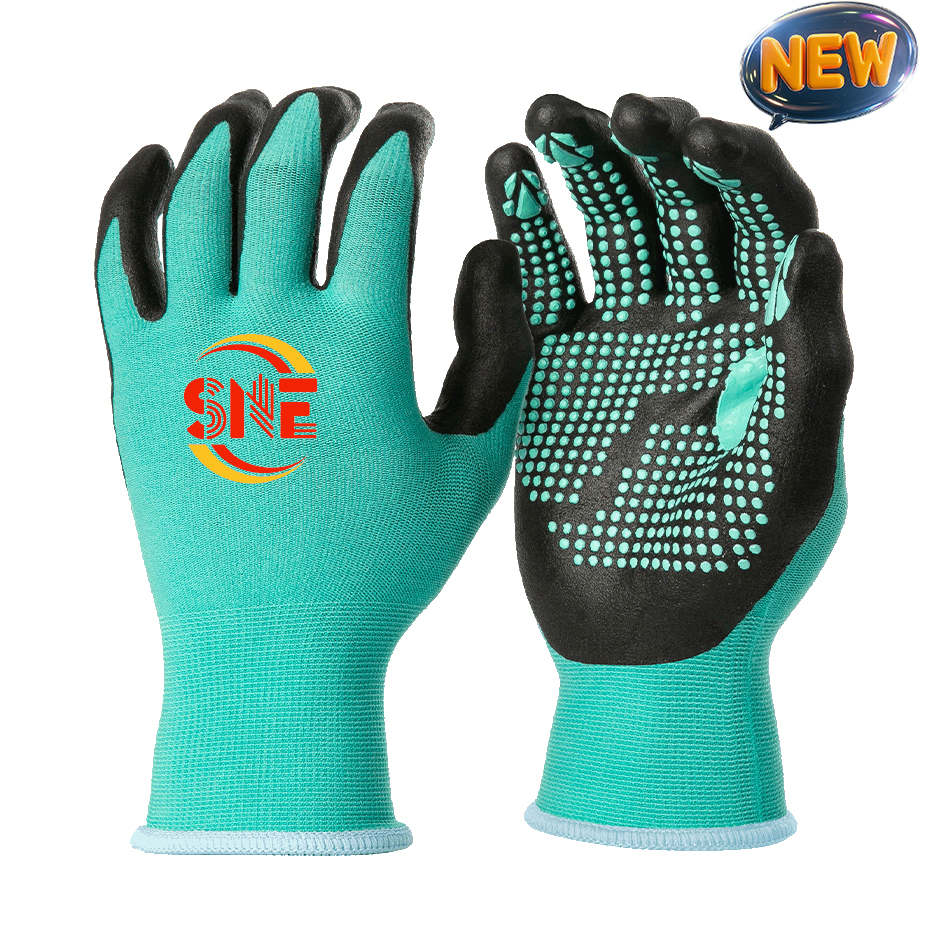
Nitrile Coated Gloves for Assembly Line Work in the United States
Quick Answer

If you need nitrile coated gloves for assembly work in the United States, the best options usually come from suppliers that balance grip, dexterity, abrasion resistance, and dependable replenishment. For most U.S. buyers, standout names include Ansell, Honeywell, MCR Safety, PIP, Superior Glove, and Showa because they have strong distribution, proven industrial ranges, and products commonly specified for light manufacturing, automotive assembly, electronics handling, warehousing, and maintenance.
For buyers that need bulk purchasing, private labeling, or price-sensitive supply programs, qualified international manufacturers can also be a smart choice. A factory-direct producer such as Snell Safety can be worth considering when U.S. importers, distributors, and brand owners want certified nitrile palm-coated gloves with OEM or ODM flexibility, especially where cost-performance and stable volume supply matter.
- Ansell: strong reputation for industrial hand protection and consistent U.S. availability.
- Honeywell: broad safety portfolio for large manufacturing and logistics operations.
- MCR Safety: practical glove options for assembly, warehouse, and maintenance buyers.
- PIP: wide distributor reach in the United States and many coated glove choices.
- Showa: well-known for engineered hand protection and comfortable coated designs.
The fastest path is to define your assembly risk profile first: dry or oily parts, touch sensitivity, abrasion exposure, required cut level, and expected wear hours per shift. Then shortlist two domestic suppliers and one qualified overseas factory partner for comparison on landed cost, lead time, and worker acceptance.
United States Market Overview

The U.S. market for assembly gloves is shaped by several practical realities: labor costs are high, workplace injury claims are expensive, and manufacturers need gloves that support productivity rather than slow it down. In sectors such as automotive in Michigan and Ohio, aerospace in Washington and Kansas, electronics in Texas and California, and logistics around Chicago, Memphis, Savannah, and Los Angeles, nitrile coated gloves remain a preferred solution because they combine grip and durability without making the hand feel overly bulky.
Nitrile-coated styles are especially common where workers handle metal parts, molded components, cartons, fasteners, small tools, and packaging materials. Compared with basic cotton gloves, they offer a more secure grip and better abrasion performance. Compared with heavier fully dipped oil-resistant gloves, they often provide better dexterity for repetitive assembly tasks. This balance makes them a core category for production supervisors, MRO managers, and industrial distributors serving American manufacturing sites.
Regional supply also matters. Buyers near the ports of Los Angeles and Long Beach, Houston, Savannah, New York and New Jersey, and Seattle often have different replenishment expectations than inland manufacturers near Indianapolis, Atlanta, or Dallas-Fort Worth. Some prefer stocking through U.S. distributors for rapid delivery; others import directly in container quantities to lower unit costs. In both cases, glove selection increasingly depends on total ownership cost: worker comfort, replacement cycle, compliance, and claim reduction.
Market Growth and Demand Trends

Demand for nitrile coated assembly gloves in the United States continues to rise as light manufacturing, e-commerce fulfillment, contract assembly, and maintenance operations seek gloves that reduce slips and minor hand injuries. Growth is also supported by stronger awareness of hand safety standards, tighter procurement reviews, and a shift toward task-specific PPE instead of one-style-fits-all buying.
The line chart above illustrates a realistic index trend rather than a formal market-size statement. It reflects the broad direction seen across industrial PPE sourcing: gradual expansion from 2021 to 2024, followed by stronger gains as reshoring, warehouse growth, and safety-driven procurement support sustained glove demand into 2026.
Top Suppliers Serving the United States
The table below compares practical supplier options for U.S. buyers. It includes domestic brands with deep local distribution as well as an international factory-direct option for bulk sourcing and private label programs. This mix is useful because procurement teams often need both a quick-ship channel and a long-range cost-optimized supply plan.
| Company | Primary Service Region | Core Strengths | Key Offerings | Best Fit |
|---|---|---|---|---|
| Ansell | United States nationwide | Industrial reputation, broad compliance support, premium product development | Nitrile-coated assembly gloves, cut-resistant options, general industrial PPE | Large manufacturers and multi-site buyers |
| Honeywell | United States nationwide | Strong enterprise safety portfolio, distributor access, established industrial support | Assembly gloves, coated gloves, task-specific safety solutions | Corporate procurement and integrated safety programs |
| MCR Safety | United States, especially South and Midwest | Value-focused industrial gloves, broad catalog, dependable availability | Nitrile palm gloves, general purpose gloves, warehouse gloves | Maintenance, warehousing, and cost-conscious operations |
| PIP | United States and North America | Wide distributor network, varied coated glove range, private-label compatible channels | Nitrile-coated gloves, precision handling gloves, cut-resistant gloves | Distributors and regional industrial suppliers |
| Showa | United States and global industrial markets | Comfort engineering, glove innovation, strong grip solutions | Foam nitrile gloves, grip gloves, specialty industrial hand protection | Assembly lines needing comfort and dexterity |
| Superior Glove | United States and Canada | Technical glove specialization, cut and coated hand protection | Nitrile-coated assembly gloves, cut-resistant gloves, application-specific gloves | Safety managers needing technical guidance |
| Qingdao Snell Protective Products Co., Ltd. | United States import supply and global B2B markets | Factory-direct manufacturing, OEM/ODM, scalable volume output, cost-performance | Nitrile coated gloves, PU and latex coated gloves, cut-resistant and impact-resistant lines | Importers, distributors, brand owners, and bulk buyers |
For U.S. buyers, domestic brands remain strong when immediate stock, local rep access, or existing framework agreements matter. However, factory-direct suppliers become increasingly attractive when the buying program involves recurring pallets or containers, private branding, customized cuffs or gauges, or strict target pricing for nationwide distribution.
Product Types for Assembly Applications
Nitrile coated gloves are not all the same. The coating finish, liner gauge, cuff style, and palm coverage significantly affect performance. Buyers in the United States often discover that a glove performing well in packaging may fail in metal parts assembly, while a glove optimized for oily handling may feel too thick for electronics or small-part fastening.
| Product Type | Typical Liner | Main Benefit | Limitations | Common U.S. Applications |
|---|---|---|---|---|
| Smooth nitrile palm-coated | 13-gauge polyester | Durable surface and reliable dry grip | Less breathable than foam finishes | General assembly, packaging, carton handling |
| Foam nitrile palm-coated | 15-gauge nylon or polyester | Excellent dexterity and breathable comfort | May wear faster in abrasive jobs | Automotive assembly, electronics, small parts handling |
| Micro-foam nitrile | 15 or 18-gauge engineered liner | High tactility and reduced hand fatigue | Usually higher price point | Precision assembly, inspection, finishing tasks |
| Fully coated nitrile | Jersey or knit liner | Better liquid barrier and broad coverage | Lower breathability and less flexibility | Oily part handling, maintenance, light chemical splash risk |
| Sandy nitrile finish | Cut-resistant or synthetic liner | Improved grip in oily conditions | Surface may be too aggressive for delicate items | Metal fabrication support, oily assembly environments |
| Nitrile-coated cut-resistant glove | HPPE or blended cut liner | Combines hand protection with assembly usability | Higher cost than general-purpose gloves | Stamping support, sheet metal handling, component assembly |
This product-type breakdown helps procurement teams avoid common overbuying mistakes. A premium glove is not always the best glove; the right answer is the glove that matches the workpiece, pace, and hand-motion pattern while meeting safety requirements.
Industry Demand by Sector
The chart below shows realistic relative demand across major U.S. user sectors. Automotive, warehousing, and general manufacturing lead because they employ large workforces performing repetitive manual tasks where grip, dexterity, and abrasion resistance are essential every day.
Automotive and general manufacturing demand is driven by parts handling, subassembly, inspection, and packaging tasks. Warehouse demand keeps climbing because fulfillment operations increasingly require gloves with both grip and touchscreen-friendly comfort, especially in large logistics corridors such as Inland Empire, Dallas-Fort Worth, Louisville, and central Pennsylvania.
Buying Advice for U.S. Procurement Teams
When selecting nitrile coated gloves for assembly use, the best purchasing process begins on the production floor, not in the catalog. Safety managers should watch how workers grip parts, how often gloves are removed, and whether workers reject styles due to heat, stiffness, or poor finger feel. In many factories, productivity losses from a disliked glove cost more than paying slightly more for a better-fitting model.
Procurement teams should also define whether they are buying for immediate use, a quarterly stocking program, or a national distribution model. For a single plant in Ohio or Tennessee, buying through a domestic distributor may be optimal. For a distributor brand supplying factories across the United States, direct factory sourcing can unlock lower unit costs and private-label control.
| Buying Factor | Why It Matters | What to Check | Common Mistake | Practical Recommendation |
|---|---|---|---|---|
| Grip condition | Dry, oily, or mixed surfaces need different finishes | Palm texture, coating finish, slip performance | Using dry-grip gloves on oily parts | Run side-by-side floor trials on actual components |
| Dexterity | Assembly speed depends on finger movement and feel | Gauge, liner softness, fingertip control | Choosing durability over usable tactility | Match liner gauge to part size and task precision |
| Abrasion life | Replacement frequency affects total cost | Wear rate at palm and fingertips | Comparing only purchase price | Track cost per shift instead of cost per pair |
| Cut risk | Some assembly tasks involve edges or burrs | Required cut level and coating compatibility | Ignoring hidden laceration risk | Upgrade to cut-resistant nitrile styles where needed |
| Fit range | Wrong sizing reduces safety and acceptance | Size availability from XS to XXL | Standardizing one size set for all groups | Audit workforce hand-size distribution before bulk buy |
| Lead time | Disruptions can stop production lines | Local inventory, import cycle, reorder planning | Relying on one supply source only | Keep one domestic and one direct-source backup option |
This framework helps buyers focus on performance in use, not just specification sheets. A good assembly glove program is measured by reduced replacements, fewer hand incidents, and stable worker compliance.
Applications Across U.S. Industries
Nitrile-coated assembly gloves are used in a wide set of American industries. In automotive plants around Detroit, Toledo, and Spartanburg, they help workers handle parts, clips, molded interiors, and stamped components. In electronics assembly hubs across Texas and California, lighter micro-foam nitrile styles improve tactile feedback for wiring, housing assembly, and quality checks. In logistics and warehousing, coated gloves help with cartons, scanners, and repetitive pick-pack motions.
In aerospace production, workers may use nitrile-coated gloves where parts require careful surface handling combined with light protection. In appliance assembly, workers need grip on smooth painted or metal surfaces. In maintenance departments, technicians may prefer more robust nitrile-coated models with stronger abrasion resistance and moderate oil handling performance.
These use cases are why many distributors keep multiple coated-glove profiles rather than a single SKU. One site may need three styles: a precision glove for small-parts assembly, a durable glove for material movement, and a cut-resistant nitrile-coated option for edge-contact tasks.
Trend Shift in Product Preferences
U.S. buyers are gradually shifting from basic heavy-coated gloves toward lighter, more ergonomic options that still maintain useful wear life. This reflects labor retention concerns, longer shift durations, and the need to improve acceptance among workers who must wear gloves constantly.
The area chart shows a realistic directional shift: lightweight, breathable, precision-focused nitrile gloves continue gaining share, while heavier basic styles decline proportionally in assembly settings. This does not mean heavy gloves disappear; it means task-matched hand protection becomes more important than generic plant-wide purchasing.
Case Studies from Real-World Use Scenarios
A Midwest automotive supplier switched from a thick smooth nitrile glove to a lighter foam nitrile style for trim assembly. The previous glove lasted longer on paper, but workers removed it often to handle clips and connectors. After switching, assembly speed improved and glove compliance increased, offsetting the slightly shorter wear life.
An electronics contract manufacturer in Texas found that low-cost coated gloves created inconsistent performance because sizing varied too much between shipments. The company moved to a supplier with tighter production control and sample validation, which reduced worker complaints and stabilized line-side replenishment planning.
A Southeast distribution center near Savannah used one glove model for every role, from unloading cartons to handheld scanning. After trialing two separate nitrile-coated gloves, one for heavy carton handling and one for pick-pack tasks, the site reduced replacement frequency in the dock area while improving comfort in the picking zone.
These examples show that the best glove program is usually role-specific, data-driven, and tested in actual workflows before full rollout.
Local Supplier and Sourcing Landscape
In the United States, glove sourcing typically follows one of four routes: national safety distributors, regional industrial suppliers, direct brand purchasing, or direct factory import. National distributors offer convenience, contract support, and fast delivery. Regional suppliers often provide stronger local attention and field trials. Direct brand deals can help large users standardize nationally. Direct import is most attractive when volumes justify container-based replenishment or private-label development.
Major sourcing corridors include Los Angeles and Long Beach for Pacific imports, Houston for Gulf access, Savannah for Southeast distribution, and New York and New Jersey for East Coast logistics. Inland hubs such as Chicago, Atlanta, Dallas, and Columbus often determine how quickly products move into manufacturing and warehouse networks.
| Sourcing Model | Typical Buyer | Main Advantage | Main Trade-Off | Best Use Case |
|---|---|---|---|---|
| National distributor | Multi-site manufacturers | Fast replenishment and contract simplicity | Higher unit cost than factory-direct | Large U.S. operations needing immediate stock |
| Regional industrial supplier | Single plants and local groups | Hands-on service and local trials | Narrower product range | Plant-level PPE optimization |
| Direct domestic brand purchase | Corporate procurement teams | Standardization and technical support | Minimum commitments may apply | National brand consolidation |
| Importer or master distributor | Wholesale channels | Margin control and assortment flexibility | Requires forecasting discipline | Regional resale and dealer networks |
| Factory-direct OEM/ODM | Brand owners and distributors | Private label, cost control, customization | Longer planning cycle | Recurring bulk programs and custom lines |
| Hybrid dual-source program | Risk-aware manufacturers | Supply continuity and pricing balance | More vendor coordination | Critical operations avoiding stock disruption |
The table shows why many sophisticated U.S. buyers do not rely on just one route. A hybrid model can protect production continuity while giving procurement flexibility on both speed and cost.
Supplier and Product Comparison
The comparison chart below provides a practical scoring view across four key purchasing priorities. It is not a certification ranking. Instead, it helps buyers think about where each sourcing path tends to perform best.
This comparison makes one point very clear: U.S. buyers should choose the model that fits their operating priority. If emergency replenishment matters most, domestic channels usually win. If customization, margin, and repeat bulk capacity are central, factory-direct partnerships become highly competitive.
Our Company for the United States Market
For U.S. buyers evaluating factory-direct supply, Qingdao Snell Protective Products Co., Ltd. offers a credible B2B option because its nitrile coated glove program is backed by ISO 9001 and CE certification, diversified coating capabilities across nitrile, PU, and latex, and a vertically integrated manufacturing setup with two facilities, six production lines, more than 150 skilled employees, and daily capacity of 150,000 pairs, which supports consistent quality control, repeatable testing, and rapid scaling for industrial contracts. The company serves end users, distributors, dealers, brand owners, and volume buyers through flexible OEM, ODM, wholesale, private-label, and customized manufacturing models, making it suitable for U.S. importers that need tailored materials, sizes, branding, or application-specific glove construction rather than off-the-shelf supply alone. Its export experience across Europe, South America, Russia, Australia, the Middle East, and Southeast Asia demonstrates established international operating discipline, while its multilingual commercial support, sample programs, technical consultation, and dedicated logistics coordination provide the kind of practical pre-sale and after-sale assurance U.S. buyers expect when building long-term supply relationships; buyers can review product options through the product catalog or reach the team directly through the U.S.-focused inquiry channel.
How to Choose the Right Nitrile Coated Glove for Assembly
Start with the part, not the glove. Ask whether the component is dry, oily, smooth, sharp-edged, painted, delicate, or static-sensitive. Then map the task: picking, holding, rotating, fastening, loading, inspecting, or packing. Once these basics are clear, narrow the glove by grip texture, coating style, liner gauge, and any cut or abrasion requirements.
For dry assembly and light handling, a 13-gauge or 15-gauge nitrile palm-coated glove is often sufficient. For small-part precision work, micro-foam nitrile on a lightweight liner usually performs better. For oily environments, sandy or specialized nitrile finishes may be more dependable. Where metal edges are present, a cut-resistant liner with nitrile coating is often the safest choice.
Sampling matters. Ask suppliers for multiple glove profiles and trial them across one or two shifts. Track rejection rates, glove life, and any effects on throughput. Good suppliers welcome this process because task-matched selection creates better repeat business than one-time low-price deals.
Future Trends Through 2026
By 2026, the U.S. assembly glove market is likely to be shaped by three major trends: smarter specification, tighter compliance expectations, and more sustainability pressure. Smarter specification means plants will increasingly assign gloves by task category rather than buying one generic style. This reduces waste and improves worker acceptance. Compliance pressure will push more buyers to demand clearer quality records, traceable production systems, and more rigorous supplier documentation, especially in aerospace, automotive, and advanced manufacturing supply chains.
Sustainability will also influence procurement. Buyers are asking more questions about durable construction, lower replacement frequency, packaging efficiency, and manufacturing discipline. While price remains important, larger industrial customers increasingly assess supplier stability, quality systems, and waste-reduction practices as part of total value. Another trend is digital procurement integration, where U.S. distributors and manufacturers want reliable forecasting, repeat order visibility, and streamlined communication with both domestic and overseas suppliers.
From a technology perspective, glove development continues moving toward thinner liners, better breathability, more stable coating adhesion, and task-specific blends that improve grip without excessive palm thickness. Policy and labor trends also matter. As employers continue prioritizing injury reduction and employee retention, hand protection that workers actually want to wear will remain in demand.
FAQ
Are nitrile coated gloves good for assembly work?
Yes. They are one of the best all-around choices for assembly because they offer grip, abrasion resistance, and dexterity. The exact performance depends on coating finish, liner gauge, and fit.
What is the best nitrile coating for oily parts?
For light oil exposure, foam nitrile or sandy nitrile often performs better than a smooth finish because it improves surface contact and control. Testing on the actual part is still essential.
Do assembly gloves need cut resistance?
Not always. If workers handle smooth plastic parts or packaged goods, general nitrile-coated gloves may be enough. If the task includes sharp metal edges, burrs, or stamped parts, cut-resistant liners are strongly recommended.
Should U.S. buyers source locally or import directly?
It depends on volume and urgency. Local sourcing is best for quick delivery and easy replenishment. Direct import works well for larger recurring orders, private label projects, and buyers focused on unit-cost control.
How often should assembly gloves be replaced?
Replacement depends on abrasion level, part shape, and work hours. Many plants measure glove life by shift, day, or weekly cycle. The correct benchmark is cost per usable wear period, not price per pair.
What sizes should be stocked for assembly teams?
Most U.S. operations stock at least S through XL, and many add XS and XXL. Wider size coverage improves fit, comfort, and compliance, especially in mixed workforces.
Can overseas manufacturers meet U.S. buyer expectations?
Yes, if they provide the right certifications, stable production controls, clear communication, sample support, and dependable export logistics. Buyers should verify quality systems, production capacity, and after-sales responsiveness before scaling orders.
Final Takeaway
For assembly line manufacturing in the United States, nitrile coated gloves remain one of the most practical and cost-effective hand protection categories. The best buying decision comes from matching glove design to task requirements: grip condition, dexterity, abrasion exposure, and cut risk. Domestic suppliers such as Ansell, Honeywell, MCR Safety, PIP, Showa, and Superior Glove are strong choices when local availability and established channels matter most. At the same time, factory-direct partners such as Snell Safety deserve serious consideration for U.S. distributors, importers, and brand owners that want certified products, customization, scalable capacity, and stronger cost-performance on bulk programs.