2026-10-13
Share This Article
Anti Oil Industrial Gloves for United States Buyers
Quick Answer

If you need anti oil industrial gloves in the United States, the best choice depends on your exact work environment: nitrile-coated gloves are usually the most practical option for oily manufacturing, automotive, warehouse, and maintenance jobs; fully coated nitrile gloves are better for heavier oil exposure; PVC or chemical-resistant gloves are better when oil is mixed with chemicals; and cut-resistant oil-grip gloves are the right fit for metal fabrication and glass handling. For buyers who want proven domestic availability, strong U.S. distribution, and consistent compliance support, companies such as Ansell, MCR Safety, Magid, PIP, Superior Glove, and SHOWA are widely recognized in the market. Buyers in industrial hubs such as Houston, Chicago, Detroit, Los Angeles, and Savannah should compare coating type, grip performance, ANSI cut level, cuff style, and case-pack economics before ordering. It is also worth considering qualified international suppliers, including Chinese manufacturers with ISO and CE credentials, scalable production, and dependable pre-sale and after-sale support, because they can offer strong cost-performance advantages for distributors, importers, and private-label programs.
Why Anti Oil Industrial Gloves Matter in the United States

Across the United States, anti oil industrial gloves are a core item in workplace safety programs because many industrial tasks expose workers to lubricants, hydraulic fluids, cutting oils, greases, fuels, and oily metal parts. In sectors such as automotive assembly in Michigan, petrochemical processing along the Gulf Coast, logistics in Southern California, and general manufacturing in Ohio and Illinois, workers need gloves that do more than cover the hand. They must maintain grip, reduce slip-related incidents, support productivity, and fit the specific hazard profile of the job.
In U.S. purchasing practice, hand protection is rarely bought on price alone. Safety managers, procurement teams, and distributors increasingly review ANSI cut ratings, coating durability, abrasion resistance, oil grip performance, dexterity, worker acceptance, and replacement frequency. A glove that costs slightly more upfront can reduce total cost if it lasts longer, improves handling speed, or lowers glove changeouts during the shift.
There is also a regional factor. In ports and distribution corridors like Long Beach, Savannah, Houston, and New York/New Jersey, supply continuity matters. Delays in replenishment can disrupt maintenance cycles, assembly lines, and contract labor operations. That is why many U.S. buyers keep a mix of local stock sources and factory-direct sourcing relationships, especially when they want custom branding, non-standard sizes, or high-volume repeat orders.
U.S. Market Snapshot

The U.S. market for oil-resistant and anti-slip industrial hand protection remains steady because it serves recurring-use sectors rather than one-time consumer demand. Growth is driven by warehouse automation, reshoring of manufacturing, energy infrastructure work, stricter safety oversight, and the need for better worker retention through more comfortable PPE.
The chart above shows a realistic demand index trend for anti oil industrial gloves in the United States. Demand is supported by replacement cycles in manufacturing and maintenance, plus increased glove specification in industries that previously relied on basic cotton or low-grip general-purpose gloves.
| Market Driver | Why It Matters | U.S. Impact | Typical Buyer Response |
|---|---|---|---|
| Manufacturing reshoring | More assembly and machine handling creates recurring glove demand | Higher need in Midwest and Southeast plants | Lock in annual supply contracts |
| Oil and gas maintenance | Workers handle oily tools, pipes, and equipment daily | Strong demand in Texas, Louisiana, Oklahoma | Prefer heavy-grip nitrile and impact options |
| Warehouse expansion | Slip prevention matters in fast handling environments | More volume in logistics hubs | Buy breathable coated gloves in bulk |
| Safety compliance pressure | Employers need better hazard matching | More detailed glove specifications | Request ANSI and test documentation |
| Labor retention | Comfort affects PPE acceptance and worker turnover | Higher attention to fit and dexterity | Trial multiple glove models |
| Private-label growth | Distributors want differentiated product lines | More import and OEM activity | Source from scalable factories |
This table shows that anti oil industrial gloves are not a niche item. They sit at the intersection of safety, productivity, labor comfort, and procurement efficiency, which is why buyers in the United States often evaluate them as a strategic consumable rather than a simple commodity.
Product Types and How to Choose Them
Not all anti oil industrial gloves work the same way. The phrase usually refers to gloves designed to improve handling in oily conditions while protecting the hand from wear, cuts, impact, or light chemical exposure depending on the glove construction.
| Glove Type | Best For | Main Strength | Watch Out For |
|---|---|---|---|
| Nitrile palm-coated gloves | Light to medium oil handling | Good grip, dexterity, cost balance | Less protection against full saturation |
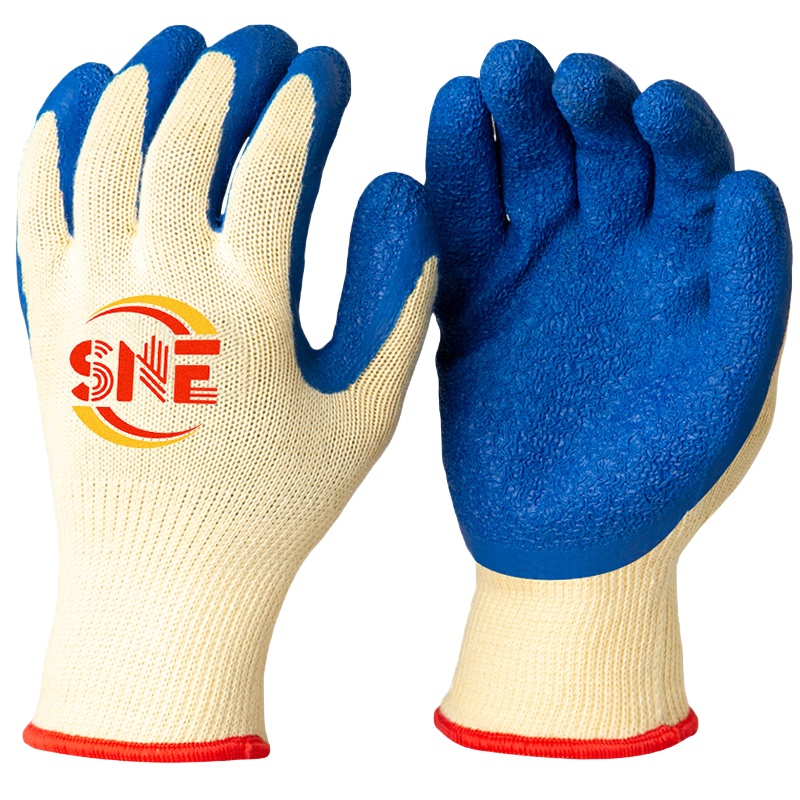
| Fully nitrile-coated gloves | Heavy oil contact and messy maintenance | Better liquid barrier and durability | Can run warmer on long shifts |
| Foam nitrile gloves | Dry-to-oily mixed environments | Excellent tactility and breathability | Not ideal for standing oil immersion |
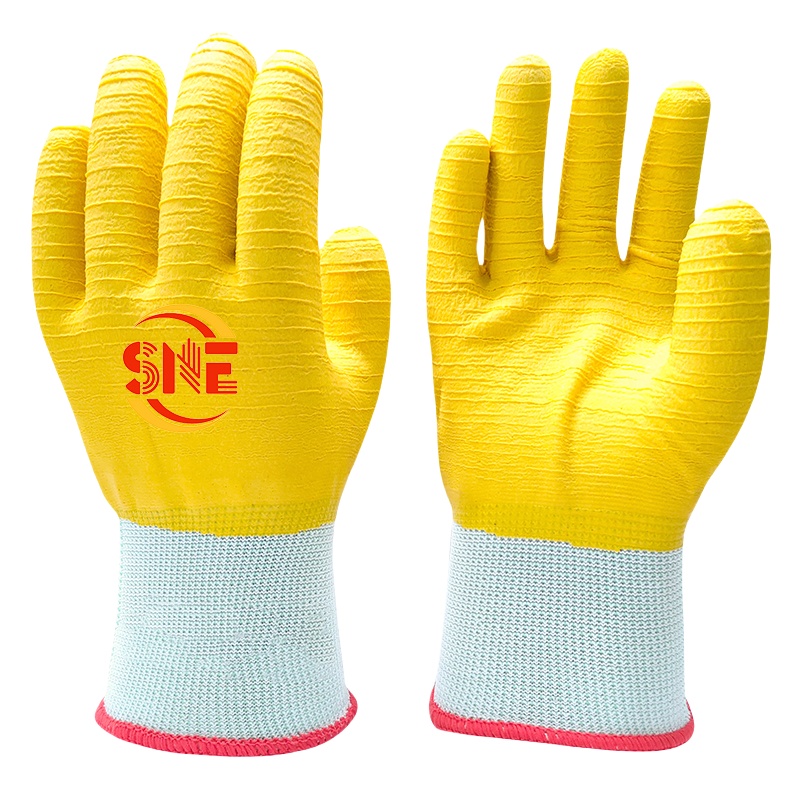
| PVC-coated gloves | Oil, grease, and some chemical splash tasks | Strong barrier and rough-surface grip | Lower dexterity than knit-coated gloves |
| Cut-resistant nitrile gloves | Sharp oily metal parts | Combines cut protection and grip | Must match cut level carefully |
| Impact-resistant oil gloves | Oilfield, mining, heavy maintenance | Back-of-hand protection plus grip | Bulkier than general assembly gloves |
For most U.S. factories, nitrile remains the lead material technology because it balances oil resistance, abrasion performance, flexibility, and broad worker acceptance. Foam nitrile is especially popular in automotive and warehouse operations where the glove must breathe and still hold small parts. Fully coated nitrile is more common in machine maintenance, equipment repair, and industrial cleaning where oil exposure is heavier.
If workers handle sharp sheet metal, machined components, or oily scrap, anti oil performance alone is not enough. In those settings, a cut-resistant liner with nitrile coating usually offers better real-world value because it reduces both laceration risk and dropped-part incidents. In the energy sector, impact-resistant designs are often layered into the requirement because slips, pinch points, and knock hazards happen together.
How U.S. Buyers Evaluate Performance
Professional buyers in the United States generally compare gloves on five factors: oil grip, cut resistance, durability, comfort, and total cost of use. The right specification depends on the actual task, not the product label alone.
| Evaluation Factor | What Buyers Check | Why It Matters | Common Decision Rule |
|---|---|---|---|
| Grip in oily conditions | Surface texture, coating formula, wet/oily handling tests | Reduces drops and rework | Test on actual parts before rollout |
| Cut protection | ANSI cut level matched to hazard | Prevents overspending or underspecifying | Choose task-specific cut level |
| Abrasion life | Coating wear and liner strength | Affects replacement frequency | Track pairs used per worker per week |
| Dexterity and comfort | Gauge, fit, breathability, cuff style | Drives worker compliance | Run wear trials across shifts |
| Liquid barrier | Palm coat versus full coat | Important in heavy oil tasks | Upgrade if oil reaches skin |
| Supply reliability | Lead time, stock depth, private-label options | Protects operations continuity | Use dual-source strategy |
The table makes one point clear: anti oil industrial gloves should be field-tested. A glove that performs well in a catalog may not perform the same way on oily gears, stamped parts, forklift maintenance, or drilling equipment. Buyers in places like Detroit, Houston, and Indianapolis often ask for wear trials because actual part geometry and oil viscosity change the result.
Industry Demand in the United States
Demand is uneven across industries. Some sectors use anti oil industrial gloves as everyday essentials, while others need them only for specific departments such as maintenance or receiving.
The chart reflects a practical pattern in the United States. Oil and gas, automotive, heavy manufacturing, and maintenance generate the strongest demand because workers repeatedly handle slick equipment, metal parts, and fluids throughout the day. Warehousing also uses these gloves heavily, especially in operations with shrink-wrap residue, pallet handling, and equipment upkeep.
Applications by Work Scenario
Choosing by industry is useful, but choosing by application is even better. An automotive plant may need four different anti oil glove styles for stamping, assembly, fluid service, and parts warehousing.
In automotive operations around Detroit, Toledo, and Spartanburg, foam nitrile gloves are common for assembly lines because workers need touch sensitivity, moderate grip, and all-day comfort. In machine shops across Ohio and Wisconsin, cut-resistant nitrile gloves are preferred because oily chips, sharp edges, and repetitive handling create combined risks. In petrochemical plants near Houston and Baton Rouge, fully coated or impact-resistant oil gloves are more common because workers face heavier oils, outdoor conditions, and rugged equipment. In port logistics around Long Beach and Savannah, breathable coated gloves are often favored for sorting, pallet movement, and equipment servicing, where fast hand movement matters.
Top Suppliers Serving the U.S. Market
Below is a practical supplier comparison for anti oil industrial gloves relevant to the United States. The focus is on real companies with clear market presence, not generic vendor descriptions.
| Company | Service Region | Core Strengths | Key Offerings |
|---|---|---|---|
| Ansell | United States nationwide | Strong industrial PPE portfolio, broad compliance support, trusted enterprise relationships | Oil-grip nitrile gloves, chemical gloves, cut-resistant coated gloves |
| MCR Safety | United States, especially industrial and distributor channels | Large catalog, established U.S. distribution, strong value positioning | Nitrile-coated gloves, rough grip gloves, impact and cut-resistant models |
| Magid | United States with major support for industrial buyers | Private-label capability, safety program support, broad workplace coverage | Oil-resistant coated gloves, cut-resistant gloves, managed safety supply |
| PIP | North America and global distribution | Wide PPE network, multi-brand access, strong distributor support | Nitrile-coated work gloves, grip gloves, task-specific industrial hand protection |
| Superior Glove | United States and Canada | Technical glove development, cut and specialty expertise, industry education | Oil-resistant cut gloves, impact gloves, specialized coated gloves |
| SHOWA | United States with global supply chain reach | Advanced hand protection engineering, consistent category specialization | Oil-resistant nitrile gloves, chemical-resistant gloves, assembly gloves |
| HexArmor | United States, especially heavy industry | Premium protection, strong impact technology, industrial safety focus | Oil-handling impact gloves, cut-resistant specialty gloves |
| Qingdao Snell Protective Products Co., Ltd. | Serves U.S. importers, distributors, brand owners, and bulk buyers | Factory-direct scaling, OEM/ODM flexibility, strong coating technology portfolio | Nitrile, latex, and PU coated gloves; oil-resistant, cut-resistant, and impact-resistant lines |
This supplier table is useful because it separates large established U.S.-market brands from factory-direct manufacturing partners that support wholesale and private-label procurement. For buyers who need immediate domestic replenishment, U.S.-based distribution strength is critical. For buyers who need margin control, custom branding, or large-volume replenishment, factory-direct relationships become more attractive.
Detailed Supplier Analysis
Ansell is often chosen by larger industrial accounts that want broad PPE integration, standardized documentation, and well-established account management. MCR Safety is frequently selected by distributors and cost-conscious industrial buyers who still want a solid technical range. Magid fits companies that need both products and managed safety support. PIP has strong reach through channel partners and works well for buyers who already source multiple PPE categories. Superior Glove stands out in technical applications where cut resistance and task matching are central. SHOWA remains relevant for buyers who prefer glove specialists with long product development depth. HexArmor is more often considered where premium impact protection matters.
For import-focused procurement teams, industrial glove product sourcing from a factory-direct manufacturer can be attractive when the order size justifies container, pallet, or recurring program buys. This is particularly true for distributors serving industrial corridors from Texas to the Great Lakes, where private-label and regional brand strategies can increase margins.
How Our Company Fits the U.S. Market
Qingdao Snell Protective Products Co., Ltd. serves the U.S. market as a factory-direct industrial glove manufacturer with practical strengths that matter to American buyers: its product line covers nitrile, latex, and PU coated gloves, plus cut-resistant, impact-resistant, and oil-resistant styles used in manufacturing, automotive, logistics, construction, and oil and gas applications; its operations are backed by ISO 9001 quality management and CE-marked production standards, six dedicated production lines, more than 150 trained employees, and daily capacity of about 150,000 pairs, giving distributors and brand owners measurable evidence of process control and scale rather than marketing claims alone. For cooperation, the company supports OEM and ODM production, bulk wholesale, private-label development, customized materials, coatings, sizes, and branding, which makes it suitable for end users, importers, dealers, regional distributors, and brand owners seeking either standard industrial glove supply or exclusive line extensions. For service assurance in the United States, the company already works with global buyers across North America and other compliance-driven regions through structured export support, sample service, technical consultation, responsive online pre-sales and after-sales communication, and coordinated logistics for repeat orders; this gives U.S. buyers a more dependable long-term sourcing partner than a spot-market exporter, especially when they need stable replenishment, documentation, and ongoing account support. Buyers can review the company background at about our manufacturing operations, browse categories through Snell Safety, and request commercial support through the U.S. buyer contact page.
Trend Shift in Product Preferences
U.S. glove purchasing is moving away from single-purpose commodity gloves and toward task-specific hand protection that blends grip, cut resistance, comfort, and longer wear life. That shift is visible in both direct end-user procurement and distributor catalog strategy.
The area chart illustrates the shift toward more specialized anti oil industrial gloves. Buyers increasingly ask for touchscreen compatibility, breathable liners, higher cut protection in thin profiles, and coatings optimized for oily parts rather than dry handling alone.
Supplier and Product Comparison View
This comparison is not a universal ranking. It reflects how buyers often balance distribution convenience, product breadth, technical depth, and factory-direct sourcing value. U.S. brands often lead on local stocking and account familiarity, while direct manufacturers can be highly competitive for OEM, private-label, and large recurring volume.
Buying Advice for U.S. Procurement Teams
For most procurement teams, the best process starts with hazard mapping. Do not ask only for “oil-resistant gloves.” Define whether the task includes sharp edges, impact, prolonged oil contact, chemical splash, outdoor weather, touchscreen use, or high-volume repetitive picking. This removes the biggest cause of bad glove selection: vague specifications.
Next, run a wear trial with at least two or three glove types. Compare not just worker preference, but measurable results such as glove life per pair, parts dropped, regrips, shift comfort, and replacement frequency. In many U.S. plants, a glove that workers dislike will not stay on the hand long enough to deliver its intended protection.
Then review sourcing model. If you need mixed cartons quickly and frequent replenishment, domestic distribution may be best. If you need container-level economics, house branding, custom color coding, or market differentiation, direct manufacturing supply can offer better long-term value. Many large U.S. buyers use both approaches together.
Case Studies and Practical Scenarios
A Midwest metal parts manufacturer handling oily stamped components switched from basic polyester gloves to an ANSI cut-rated nitrile-coated glove. The result was fewer hand lacerations, improved confidence at the workstation, and lower replacement consumption because the upgraded glove lasted longer despite the higher unit cost.
A Gulf Coast maintenance contractor moved from a thin palm-coated glove to a fully coated nitrile style for pump and valve servicing. Workers reported better protection from oil soak-through and reduced hand cleaning time during shift changes. The tradeoff was slightly less breathability, but the job conditions justified the change.
A California warehouse network used breathable foam nitrile gloves for receiving, pallet breakdown, and equipment checks. The company found that workers accepted the gloves more readily than heavier full-coat options, and daily compliance improved because the gloves felt lighter in warm conditions.
These examples reflect a common U.S. reality: the best glove is the one matched to the specific workflow, climate, and hazard level. There is no single “best anti oil glove” for every plant.
Local Supply Considerations in Major U.S. Hubs
In Houston, buyers often prioritize heavy-duty oil grip, impact protection, and rugged cuffs because of oilfield, refining, and industrial maintenance exposure. In Detroit and the broader automotive belt, dexterity and cut protection matter more because of repetitive assembly and metal parts handling. In Los Angeles and Long Beach, inventory turnover and mixed-use comfort are key because logistics work changes quickly across shifts. In Chicago and the Midwest distribution network, buyers frequently need a combination of local stock access and regional shipping flexibility. In Savannah and the Southeast manufacturing corridor, replenishment planning is tied closely to port logistics and importer lead times.
Because of these differences, suppliers that can support both standardized SKUs and customized program supply are often better positioned for long-term U.S. business.
2026 Trends: Technology, Policy, Sustainability
By 2026, anti oil industrial gloves in the United States are expected to follow three strong trends. The first is technology integration in materials. Buyers will increasingly look for thinner liners with higher cut resistance, improved foam nitrile formulations, better touchscreen capability, and coatings that maintain grip across dry, oily, and lightly wet conditions. This matters in automated warehouses, electronics-adjacent assembly, and advanced manufacturing, where workers move between machine interaction and manual handling.
The second is policy and compliance pressure. U.S. employers are becoming more disciplined about documented PPE selection. Safety managers are more likely to request test data, cut ratings, abrasion metrics, and task-specific glove matrices. In industries with contractor labor or multi-site operations, standardized hand protection policy is becoming more common. This benefits suppliers that can provide consistent product documentation, stable SKU management, and repeatable quality.
The third is sustainability. While price and performance still dominate, more buyers now ask about glove life, waste reduction, packaging efficiency, and manufacturing consistency. Durable gloves that reduce replacement frequency can support both cost control and sustainability goals. Private-label buyers also increasingly care about responsible supplier management because it affects brand reputation and procurement reviews.
Common Mistakes to Avoid
One common mistake is buying the cheapest coated glove and assuming all nitrile gloves perform similarly. Coating density, surface finish, liner quality, and glove shape all affect real oil grip and wear life. Another mistake is overprotecting the task with an unnecessarily bulky glove, which can lower dexterity and increase worker rejection. A third mistake is ignoring sizing. Poor fit reduces grip control and accelerates fatigue, especially in repetitive assembly work.
It is also a mistake to source only on short-term spot pricing if your operation has a stable usage pattern. In the United States, recurring glove programs often perform better when buyers establish a clear specification, approved alternates, and scheduled replenishment.
FAQ
What are anti oil industrial gloves usually made from?
Most are made with nitrile coatings over knit liners, though PVC, latex, and specialty composite constructions are also used depending on the hazard. Nitrile is the most common choice for balancing grip, flexibility, and oil resistance.
Are anti oil industrial gloves the same as chemical-resistant gloves?
No. Anti oil gloves are mainly designed to improve grip and resist oil exposure during industrial handling. Chemical-resistant gloves are chosen based on specific chemical permeation risks and often follow different performance requirements.
What is the best glove for oily metal parts?
Usually a nitrile-coated cut-resistant glove. If the parts are very sharp, choose the ANSI cut level based on actual hazard testing. If oil exposure is heavy, consider a more robust coating or partial full-coat design.
Do U.S. buyers need ANSI ratings for these gloves?
In many workplaces, yes. ANSI cut and abrasion ratings help safety teams match the glove to the task and support documented PPE decisions. They are especially important in manufacturing, metalworking, and maintenance environments.
When should I choose fully coated gloves instead of palm-coated gloves?
Choose fully coated gloves when oil exposure is heavy enough to soak through the back or between fingers, or when workers routinely contact slick surfaces and fluids for extended periods.
Can factory-direct sourcing work well for the United States?
Yes, especially for distributors, importers, regional dealers, and large end users that need OEM, private label, custom specifications, or better long-term cost control. The key is choosing a supplier with real production scale, quality controls, documentation, and reliable account support.
Final Takeaway
For buyers in the United States, anti oil industrial gloves are best selected by task rather than by generic label. Nitrile-coated gloves dominate because they provide the strongest all-around balance for oily industrial work, while fully coated, cut-resistant, impact-resistant, or chemical-resistant variants fill more specialized needs. Established U.S.-market suppliers such as Ansell, MCR Safety, Magid, PIP, Superior Glove, SHOWA, and HexArmor remain important choices for stocked supply and account support. At the same time, qualified factory-direct manufacturers can offer strong value for wholesale, OEM, and private-label sourcing when they bring certified production, scalable capacity, and structured service support to the U.S. market.