Beste Lieferanten von Sandy-Grip-Arbeitshandschuhen in Deutschland | 2026-Leitfaden
2026-04-15
Diesen Artikel teilen
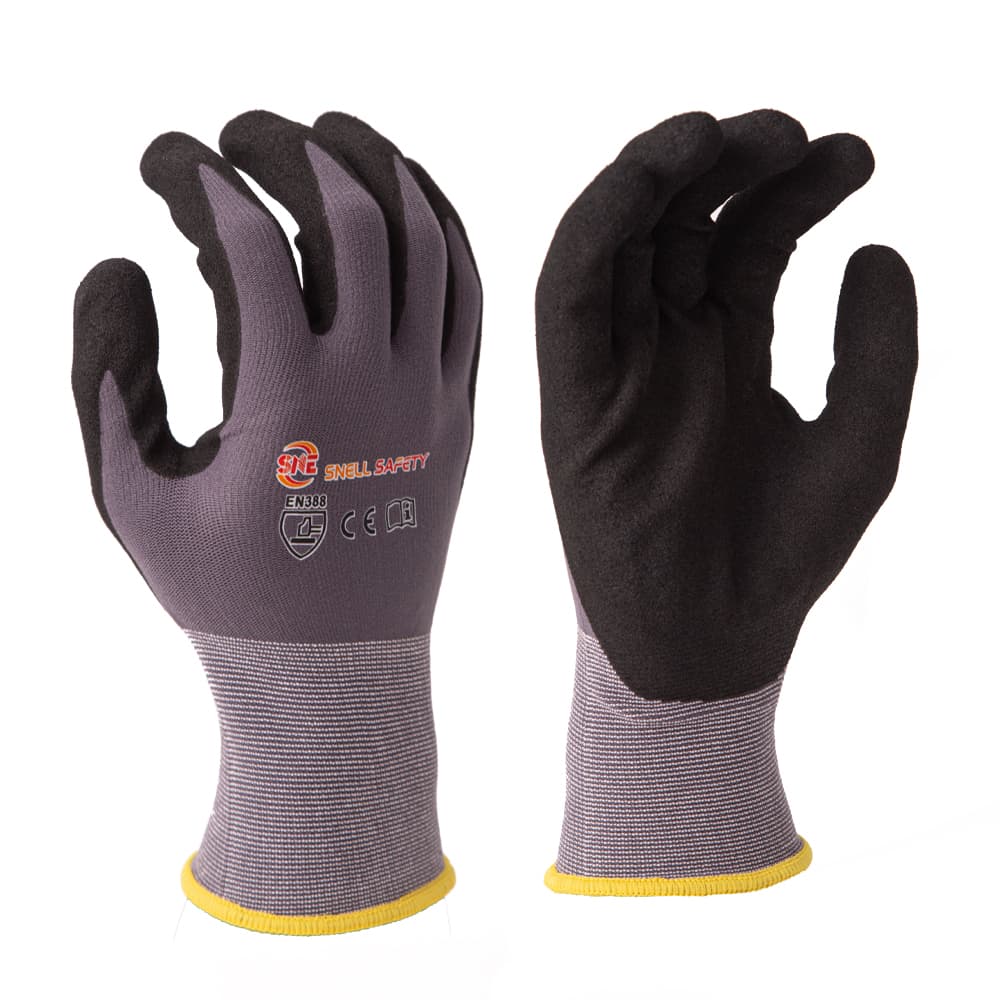
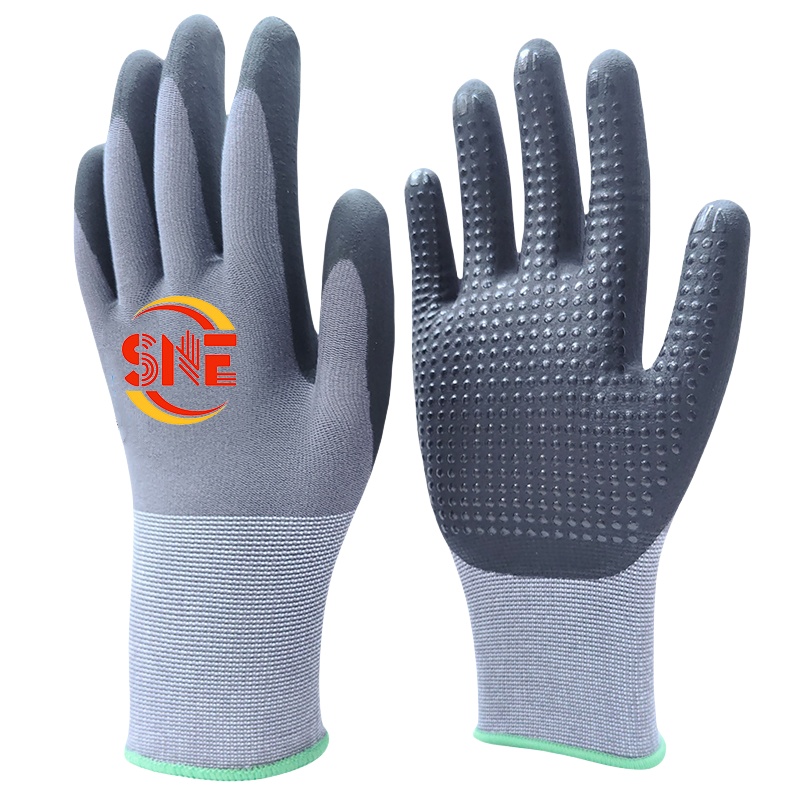
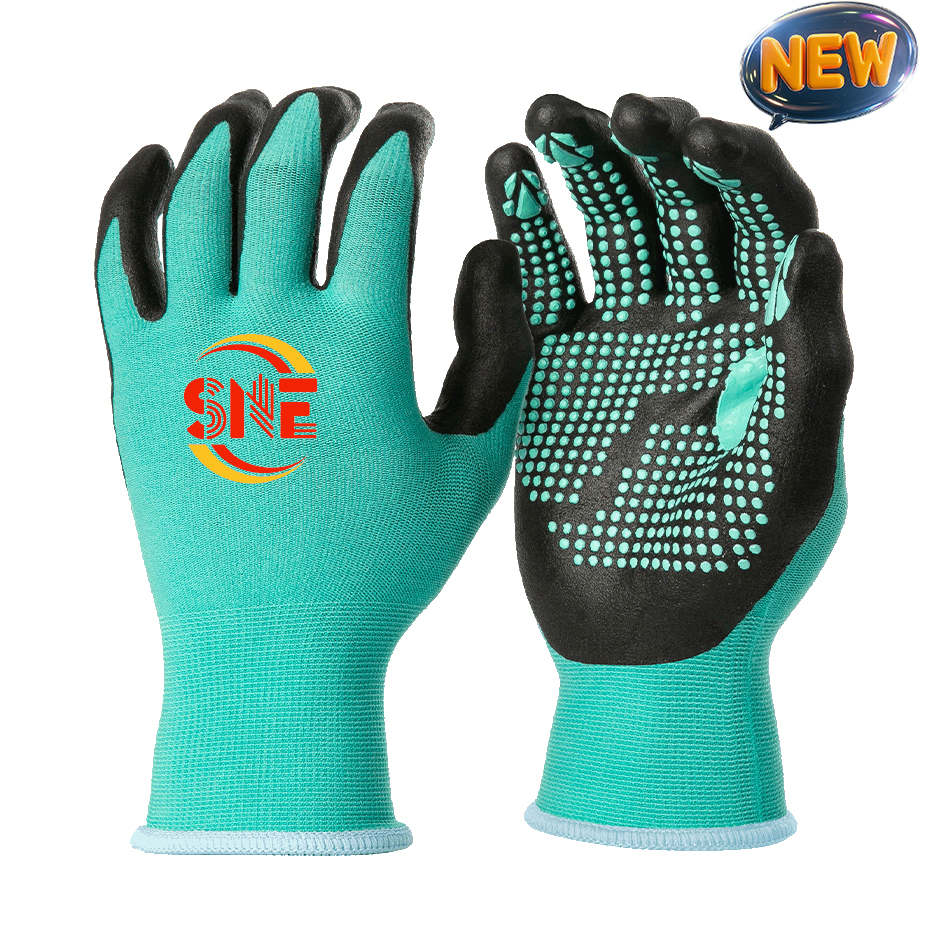
Sandy-Grip-Arbeitshandschuhe — mit einer texturierten Sandy-Nitril-Beschichtung, die außergewöhnlichen Halt auf öligen, nassen und rauen Oberflächen bietet — zählen zu den am schnellsten wachsenden Kategorien der Hand-Schutzausrüstung in der deutschen Industrie. Egal ob Ihr Team geölte Automobilkomponenten, ölige Metallstanzen oder rutschige Baustoffe bearbeitet, Sandy-Nitril-beschichtete Handschuhe bieten den aggressiven Halt, die Abriebfestigkeit und die Langlebigkeit, die glatte oder Schaum-Beschichtungen nicht erreichen können. Dieser Leitfaden hilft B2B-Einkäufern, PSA-Händlern und HSE-Managern in Deutschland, die besten Produktkonfigurationen zu identifizieren, Lieferanten zu bewerten und EN 388:2016+A1:2018-konforme Sandy-Grip-Arbeitshandschuhe zu beschaffen.
Benötigen Sie Unterstützung bei der Auswahl der passenden Sandy-Grip-Arbeitshandschuhe für Ihre deutschen Betriebe? Ob Sie kundenspezifische OEM/ODM-Entwicklung, Private-Label-Marken oder wettbewerbsfähige Großhandelspreise benötigen, Kontakt zu unserem Team bei Snell Safety. Wir verfügen über umfangreiche Erfahrung in der Betreuung deutscher Kunden aus Automobil-, Fertigungs-, Öl & Gas- und Logistiksektoren und können Konfigurationen empfehlen, die genau auf Ihre lokalen Anwendungsszenarien abgestimmt sind.
Schnelle Antwort
Für die Beschaffung von Sandy-Grip-Arbeitshandschuhen in Deutschland ziehen Sie etablierte lokale PSA-Händler mit umfassenden Sortimenten in Schlüsselin dustrieregionen wie NRW, Bayern und Baden-Württemberg in Betracht. Bewerten Sie zudem chinesische Hersteller, die sich auf maßgeschneiderte Sandy-Nitril-beschichtete Handschuhe mit wettbewerbsfähigen Direktpreisen und vollständigen internationalen Zertifizierungen (ISO 9001/CE) spezialisiert haben. Die Kombination aus lokaler Lagerverfügbarkeit und asiatischer OEM-Kapazität bietet Käufern die optimale Balance aus Reaktionsschnelligkeit, Anpassungsfähigkeit und Kosteneffizienz.
Marktübersicht
Der Markt für Sicherheitshandschuhe in Deutschland wird voraussichtlich von 1.068,97 Mio. USD im Jahr 2023 auf geschätzte 2.100,86 Mio. USD im Jahr 2032 wachsen, was einer durchschnittlichen jährlichen Wachstumsrate (CAGR) von 7,78% entspricht. In diesem wachsenden Markt werden Nitril-Handschuhe voraussichtlich das höchste CAGR von 8,3 % über den Prognosezeitraum aufweisen, wobei Sandy-Nitril-Varianten besonders in Sektoren mit hohem Bedarf an öligen Halt an Boden gewinnen. 2024 erreichte die Zahl der meldepflichtigen Arbeitsunfälle in Deutschland einen historischen Tiefststand, mit der niedrigsten je aufgezeichneten Unfallquote von 18,0 pro 1.000 Vollzeitäquivalente — dennoch machen Handverletzungen bis zu 30 % der Notaufnahmebehandlungen aus, was den dringenden Bedarf an leistungsstarker Hand-Schutzausrüstung unterstreicht.
Deutschlands robustes Regelwerk für Arbeitssicherheit treibt die Nachfrage nach Sicherheitshandschuhen maßgeblich voran, wobei die Einhaltung strenger EU-Richtlinien wie der Verordnung (EU) 2016/425 zu persönlicher Schutzausrüstung den Einsatz hochwertiger Sicherheitshandschuhe in allen Branchen vorschreibt. Deutschlands starke Automobil- und Chemiebranche treiben die Nachfrage nach spezialisierten Handschuhen voran, die eine Kombination schützender Eigenschaften bieten. Sandy-Grip-Arbeitshandschuhe mit ihrer einzigartigen, für ölige und nasse Umgebungen optimierten Oberflächenstruktur stehen an der Schnittstelle dieser Marktdynamiken — sie bieten die Halt- und Haltbarkeitsleistung, die die deutsche Industrie verlangt.
Welche Arten von Sandy-Grip-Arbitshandschuhen werden in Deutschland benötigt
Die gefragtesten Sandy-Grip-Arbeitshandschuhe in Deutschland kombinieren nahtgestrickte Nylon-, Polyester- oder HPPE-Futter mit Sandy-Nitril-Handflächen- oder 3/4-Beschichtung und bieten EN 388-zertifizierten mechanischen Schutz mit hervorragendem Halt unter nassen, öligen und trockenen Bedingungen zugleich.
Basierend auf unserer Erfahrung bei der Betreuung deutscher Kunden bei Snell Sicherheit, haben wir unterschiedliche Kaufmuster identifiziert, die von Deutschlands führender Automobilbranche, ihrer umfangreichen Mittelstandsfertigungsbase und den hohen Qualitätsansprüchen des Landes geprägt sind. Deutsche HSE-Einkaufsteams bevorzugen zunehmend Sandy-Nitril gegenüber glattem Nitril oder PU-Beschichtungen, da die texturierte Oberfläche Tausende mikroskopischer Kontaktpunkte schafft, die Öle und Flüssigkeiten aus der Griffzone ableiten — und so messbar überlegenen Halt auf geölten Metallteilen, öligen Befestigungen und nassen Baustoffen bieten. Deutschlands Klima mit kalten, feuchten Wintern und variablen Bedingungen das ganze Jahr über begünstigt die Sandy-Nitril-Oberfläche zusätzlich, da sie konstanten Halt über einen weiten Temperatur- und Feuchtigkeitsbereich hinweg gewährleistet.
Die folgenden Konfigurationen stellen die meistverkauften Sandy-Grip-Arbeitshandschuh-Typen dar, die wir auf dem deutschen Markt liefern:
- 15G Nylon/Spandex-Futter + Sandy-Nitril-Handflächenbeschichtung (EN 388: 4131A) — Die Premium-Fingerfertigkeitsvariante für Automobilmontage, Präzisionsteilehandhabung und Qualitätsinspektion. Die 15G-Stärke bietet exzellente haptische Empfindlichkeit, während die Sandy-Textur sicheren Halt auf leicht geölten Teilen gewährleistet. Touchscreen-kompatibel. Größen S–XXL.
- 13G Polyester-Futter + Sandy-Nitril-Handflächenbeschichtung (EN 388: 4121X) — Der kostengünstige Allrounder für Lagerhaltung, leichte Fertigung und MRO-Aufgaben. Das 13G-Polyester-Futter bietet ein starkes Gleichgewicht aus Schutz und Komfort für hochvolumige Beschaffungsprogramme.
- 13G HPPE-Futter + Sandy-Nitril-Handflächenbeschichtung (EN 388: 4X42C) — Schnittfeste Sandy-Grip-Arbeitshandschuhe für Metallstanzen, Glas-handhabung und Automobilteileverarbeitung. EN 388-Schnittstufe C bietet zuverlässigen Schutz vor scharfen Kanten bei aggressivem Halt auf öligen Oberflächen.
- 13G HPPE/Glasfaser/Stahl Draht-Futter + Sandy-Nitril-Handflächenbeschichtung (EN 388: 4X44E) — Hochschnittfeste Sandy-Grip-Arbeitshandschuhe für schwere Blechbearbeitung, Metallrecycling und industrielle Anwendungen, die Schnittstufe E neben maximalem Halt auf öligen Stahlsoberflächen erfordern.
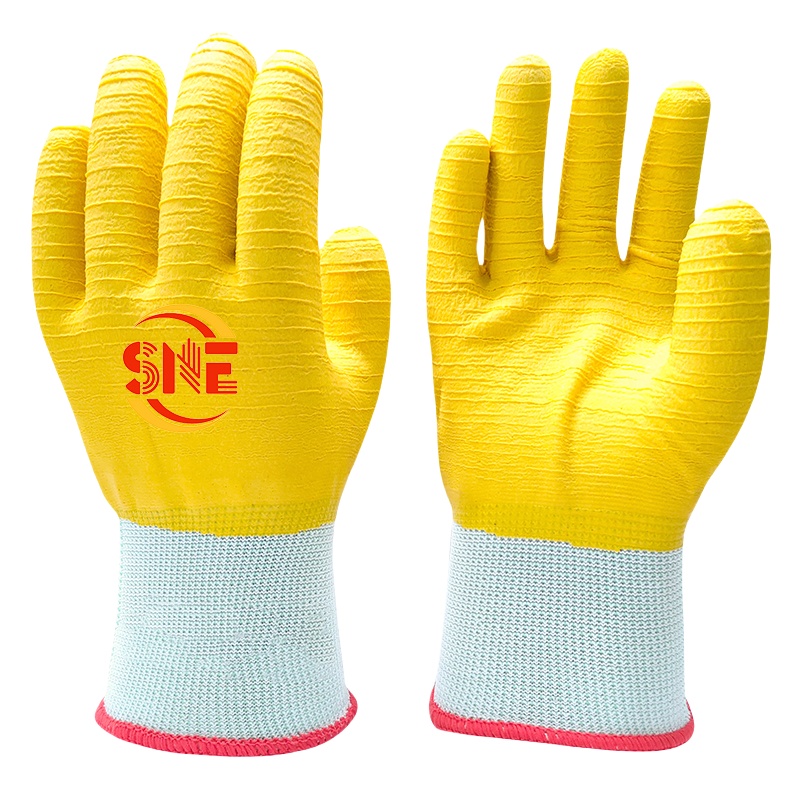
- 15G Nylon-Futter + Sandy-Nitril 3/4-Beschichtung (EN 388: 4131X) — Erweiterte Abdeckungsvariante für Aufgaben mit Flüssigkeitsbespritzung oder Knöchel-Abrieb, beliebt in Wartung, Chemikalienhandhabung und Öl & Gas-Betrieben, wo zusätzlicher Hand-Schutz benötigt wird.
Warum diese Sandy-Grip-Arbeitshandschuh-Typen empfohlen werden
Diese Konfigurationen werden empfohlen, weil die Sandy-Nitril-Oberfläche ein spezifisches und weit verbreitetes Problem in der deutschen Industrie löst: sicheren Halt auf öligen, gefetteten oder nassen Materialien ohne Einbußen bei Komfort oder Fingerfertigkeit über längere Tragezeiten.
Der technische Vorteil von Sandy-Nitril liegt in seiner einzigartigen Oberflächenstruktur. Beim Tauchbeschichtungsprozess erzeugt eine kontrollierte Texturierungsphase ein raues, sandartiges Muster mit Tausenden mikroskopischer Gipfel und Täler in der Nitrilschicht. Diese Struktur erzeugt einen deutlich höheren Reibungskoeffizienten auf öligen Oberflächen im Vergleich zu glattem Nitril, PU oder sogar Mikroschaum-Nitril. Unter schweren Ölbefall — wie beim Handhaben von mit Kühlmittel beschichteten Frästeilen oder geölten Automobilkomponenten — leitet die Sandy-Oberfläche Flüssigkeit physisch von den Kontaktpunkten ab und erhält den Halt, wo andere Beschichtungen versagen. Zudem erreicht die Sandy-Nitril-Schicht typischerweise EN 388-Abriebstufe 4 (über 8.000 Martindale-Zyklen) und bietet längere Lebensdauer in abrasiven Industrieumgebungen. Das bedeutet weniger Handschuhwechsel pro Schicht, niedrigere Jahreskosten pro Mitarbeiter und weniger Ausfälle — ein entscheidender Faktor für deutsche Hersteller mit schlanken Produktionssystemen.
Aus Sicht der Normkonformität erfüllen oder übertreffen alle empfohlenen Konfigurationen EN 388:2016+A1:2018, die für CE-gekennzeichnete PSA in der EU gemäß
Schlüsselvergleich der Leistungen von sandigem Nitril gegenüber alternativen Beschichtungstypen:
- Griff bei Ölen: Überlegen gegenüber glattem Nitril, PU und Mikroschaum-Nitril; die strukturierte Oberfläche erhält die Reibung bei schweren Ölen, Fetten und Hydraulikflüssigkeiten
- Abnutzungswiderstand: EN 388 Stufe 4 (über 8.000 Martindale-Zyklen); deutlich überlegen gegenüber PU-Handflächenbeschichtungen (typischerweise Stufe 3) und vergleichbar mit oder besser als Latexkörnchen
- Dauerhaftigkeit: 20–40 % längere Lebensdauer als Mikroschaum- oder glatte Nitrilbeschichtungen in abrasiven Umgebungen dank der dichteren, dickeren Nitrilauflage
- Chemische Beständigkeit: Mäßige Beständigkeit gegen Öle, Lösemittel und Fette; überlegen gegenüber PU- und Latexbeschichtungen bei Kontakt mit Kohlenwasserstoffen
- Geschicklichkeit: Etwas geringere Haptik als Mikroschaum-Nitril, aber deutlich besser als Latexkörnchen oder schwere Gummibeschichtungen; 15G-Sandy-Varianten erreichen die Dexterität von Mikroschaum
| Spezifikation | Liner / Spurweite | Art der Beschichtung | EN 388-Bewertung | Beste Anwendung | Ca. Kosten (€/Paar, Großpackung) |
|---|---|---|---|---|---|
| Sandy-Grip-Arbeitshandschuhe — Präzision | 15G Nylon/Spandex | Sandy Nitril Handfläche | 4131A | Automobilmontage, Qualitätskontrolle | €0,30–0,48 |
| Sandy-Grip-Arbeitshandschuhe — Allgemein | 13G Polyester | Sandy Nitril Handfläche | 4121X | Lager, leichte Fert., MRO | 0,20–0,35 € |
| Schnittschutz Sandy Grip (Stufe C) | 13G HPPE | Sandy Nitril Handfläche | 4X42C | Metall-/Glasumschlag | €0,58–0,95 |
| Schnittschutz Sandy Grip (Stufe E) | 13G HPPE/Glas/Stahl | Sandy Nitril Handfläche | 4X44E | Blech, Recycling | €0,85–1,35 |
| Erweiterte Abdeckung 3/4-Beschichtung | 15G Nylon | Sandy-Nitril 3/4 | 4131X | Öl & Gas, Wartung | €0,35–0,55 |
Verwenden Sie diese Tabelle, um Arbeitsplatzrisiken, Grifanforderungen und Budget mit der passenden Sandy-Grip-Arbeitshandschuh-Spezifikation abzustimmen, bevor Sie Muster bei Lieferanten anfordern.
Schlüsselbranchen für Sandy-Grip-Arbeitshandschuhe in Deutschland
Sandy-Grip-Arbeitshandschuhe decken das breiteste Spektrum an Anwendungen ab, wo ölige, nasse oder abrasive Handhabungsbedingungen einen aggressiven Grip erfordern. In Deutschland konzentriert sich die Nachfrage auf Branchen, in denen die sandige Nitrilstruktur messbare Vorteile in Sicherheit und Produktivität bietet.
- Automobilherstellung: Deutschlands Automobilsektor — der größte in Europa — ist der Hauptverbraucher von Sandy-Grip-Arbeitshandschuhen. Arbeiter in Zuliefererwerken der Stufe 1 und 2 bearbeiten maschinell gefertigte Teile, gestanzte Komponenten und Baugruppen, die mit Schnittölen, Schmiermitteln und Korrosionsschutzfolien beschichtet sind. Die sandige Struktur gewährleistet sicheres Handling bei Montage, Drehmomentbefestigung und Qualitätsprüfung und reduziert Absturzvorfälle sowie repetitive Belastungsverletzungen.
- Metallverarbeitung & Maschinenbau: Blechbearbeitungswerkstätten, CNC-Bearbeitungsbetriebe und Metallrecyclinganlagen benötigen schnittfeste Sandy-Nitril-Varianten (EN 388 Schnittstufen C–E), die sowohl Schutz vor scharfen Kanten als auch aggressiven Grip auf öligen Stahlrohlingen, Aluminiumprofilen und maschinell gefertigten Bauteilen bieten. Diese Kombination ist mit PU- oder Mikroschaum-Beschichtungen schwer erreichbar.
- Öl & Gas & Bergbau: Deutsche Betriebe in der Erdölverarbeitung, Erdgasinfrastruktur und im Bergbau erfordern Handschuhe, die den Grip auf Rohren, Armaturen und Werkzeugen bei Ölen, Hydraulikflüssigkeiten und Bohrschlamm erhalten. Die Sandy-Nitril-3/4-Beschichtung bietet erweiterte Spritzschutzabdeckung, während die Handrücken atmungsaktiv bleibt.
- Bauwesen & Schwere Tiefbauingenieurwesen: Arbeiter, die Bewehrungseisen, nasse Betonformen, behandeltes Holz und ölige Baubeschläge handhaben, profitieren vom aggressiven Grip-Profil des sandigen Nitrils. Deutschlands laufende Infrastrukturinvestitionsprogramme und Energiewendeprojekte sorgen für anhaltende Nachfrage aus diesem Sektor.
- Logistik und Lagerhaltung: Hochdurchsatz-Verteillager benötigen langlebige Handschuhe zum Handling von schrumpfgwickelten Paletten, öligen Maschinenteilen und nasser Verpackung. Die überlegene Abriebwiderstandsfähigkeit von Sandy-Nitril verlängert die Lebensdauer der Handschuhe über Tausende von Greifzyklen pro Schicht und senkt die Austauschkosten.
- Allgemeine Fertigung (Mittelstand): Deutschlands umfangreiches Netz spezialisierter Mittelstandsunternehmen in Maschinenbau, Kunststoffen und Feinmechanik treibt die Nachfrage nach 13G-Polyester-Sandy-Nitril-Handschuhen an — eine vielseitige, kostengünstige Option für vielfältige Werkstattaufgaben.
Industriestandorte wie Nordrhein-Westfalen, Baden-Württemberg und Bayern führen bei der Marktdurchdringung, gestützt durch starke Fertigungs- und Automobilsektoren. Nach den DGUV-Richtlinien (Deutsche Gesetzliche Unfallversicherung) und der EU-Verordnung 2016/425 müssen Arbeitgeber formelle Risikobewertungen durchführen und geeignete zertifizierte Hand-Schutzausrüstung bereitstellen. Dieser regulatorische Rahmen schafft stabile, compliancegetriebene Nachfrage nach Sandy-Grip-Arbeitshandschuhen in allen Sektoren, wobei die Durchsetzung für regelmäßige Beschaffungszyklen sorgt.
Spezifische Anwendungsszenarien
Szenario 1: Automobil-Getriebefertigung bei Stuttgart
Bei einem Zulieferer der Stufe 1 für Getriebegehäuse und Antriebsstrangkomponenten bearbeiten 280 Montagearbeiter maschinell gefertigte Aluminium- und Stahlteile mit starken Rückständen von Schnittöl in jeder Produktionslinienstufe. Arbeiter führen Presspassungen, Drehmomentbefestigungen und Maßprüfungen mit Handmessgeräten durch. Primäre Risiken umfassen Rutschen auf öligen Oberflächen mit fallenden Teilen (Durchschnittsgewicht 2–8 kg), leichte Abriebverletzungen durch maschinelle Kanten und Handermüdung während 8-Stunden-Schichten. Die empfohlene Spezifikation ist 15G-Nylon/Spandex-Futter mit sandiger Nitril-Handflächenbeschichtung (EN 388: 4131A). Die 15G-Stärke erhält die Haptik für Drehmomentwerkzeug-Rückmeldungen, während die aggressive sandige Struktur ölverschmierte Aluminiumoberflächen greift, die bei PU- oder glattem Nitril abrutschen würden. Arbeiter meldeten nach dem Wechsel von Mikroschaum-Nitril zu sandigem Nitril eine Reduktion von Absturzvorfällen um 35 %.
Szenario 2: Stahl-Service-Center in Nordrhein-Westfalen
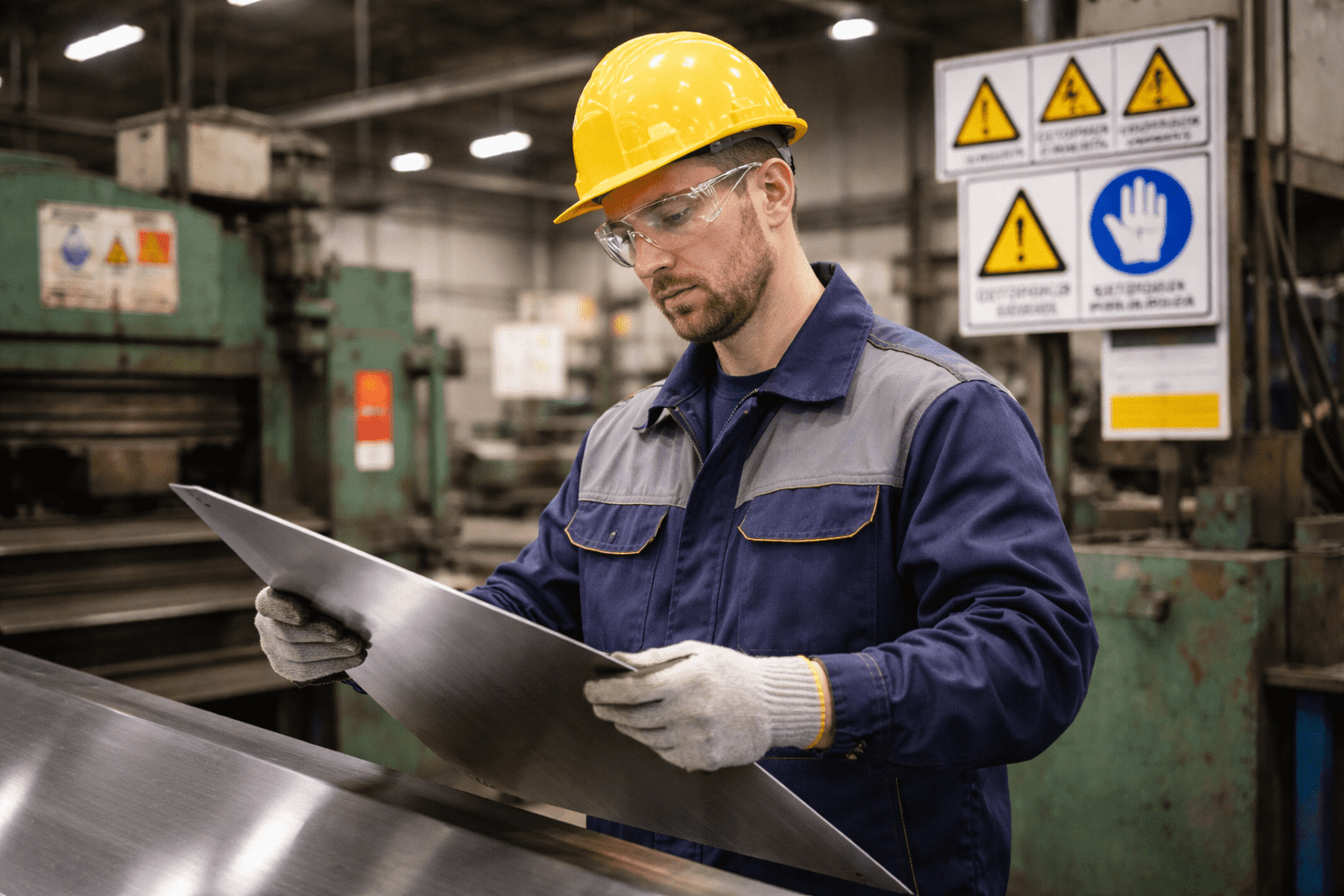
Ein mittelgroßes Stahl-Service-Center beschäftigt 85 Arbeiter an CNC-Plasmenschneidern, Stanzscheren und Entwickelstraßen. Arbeiter entgraten, sortieren und stapeln laser- und geschnittene Stahltäfel mit scharfen Graten, schweren Kanten und Oberflächenbelägen aus Maschinenöl und Walzschuppen. Primäre Risiken umfassen schwere Schnittverletzungen durch scharfe Metallschneiden, Rutschen auf Ölfilmen beim Stapeln von Paneelen bis 25 kg und Einstichgefahr durch Stahlsplitter. Die empfohlene Spezifikation ist 13G-HPPE-Futter mit sandiger Nitril-Handflächenbeschichtung (EN 388: 4X42C, Schnittstufe C) für allgemeines Handling, ergänzt durch die HPPE/Glasfaser/Stahl Draht-Variante (EN 388: 4X44E, Schnittstufe E) für die schwierigsten Entgratungs- und Sortieraufgaben. Das HPPE-Futter widersteht Schnitten durch Blechkanten, während das sandige Nitril festen Grip auf öligen Stahloberflächen bietet — eine Kombination, die gegenüber Latexkörnchen-Alternativen, die in Öl schnell nachließen, entscheidend war.
Szenario 3: Industrielle Wartungsbetriebe in Bayern
Ein Facility-Management-Unternehmen setzt 120 Wartungstechniker an über 40 Fertigungs- und Logistikstandorten in Süddeutschland ein. Techniker führen vielfältige Aufgaben wie Maschinenölung, Lagerwechsel, Rohrverlegung, Förderbandreparatur und Hydrauliksystemwartung durch. Sie begegnen Schmiermitteln, Hydraulikölen, Lösemitteln und Fetten bei jeder Aufgabe. Wichtige Risiken umfassen Chemiespritzer, Abrieb durch raue Metalloberflächen und Griffverlust bei ölverschmierten Werkzeugen und Armaturen. Die empfohlene Spezifikation ist 15G-Nylon-Futter mit sandiger Nitril-3/4-Beschichtung (EN 388: 4131X), die erweiterte Knöchelabdeckung für Spritzschutz bietet und die Atmungsaktivität am Handrücken erhält. Die 3/4-Beschichtung schützt vor zufälligem Öl- und Lösemittelkontakt über Finger- und Knöchelbereich, während die sandige Struktur sicheres Werkzeug-Handling auch mit gefetteten Händen gewährleistet.
Fallstudien
Fallstudie 1: Nationaler Automobil-Ersatzteillieferant
Ein deutscher Automobil-Nachmarkthändler mit 18 Regional lagern standardisierte seinen Hand-Schutz mit OEM-markierten 13G-Sandy-Grip-Arbeitshandshuhen mit Firmenlogo und hoch sichtbarer orangener Bündchen. Das Programm umfasste über 650 Lagerarbeiter, die ölige Bremsscheiben, gefettete Lager und schrumpfgwickelte Paletten handhabten. Nach einer 10-monatigen Einführung sanken Produktabstürze um 32 %, die Austauschhäufigkeit der Handschuhe um 25 % im Vergleich zur vorherigen Mikroschaum-Variante, und die Beschaffungskosten pro Paar um 30 % durch direkte Werksbeschaffung.
Fallstudie 2: Private-Label-Linie für NRW-basierten Arbeitsschutzhändler
Ein sicherheitsausstattender Händler in Düsseldorf entwickelte eine 4-SKU Private-Label-Linie Sandy-Grip-Arbeitshandschuhe für Metallverarbeitungs- und Automobilkunden in Westdeutschland. Das Sortiment umfasste 15G-Präzision, 13G-Allzweck, Schnittstufe C und Schnittstufe E — alles mit einheitlicher Verpackung und deutschsprachiger EN 388-Dokumentation. Die Erstanforderung von 180.000 Paaren aller SKUs wurde innerhalb von 28 Tagen geliefert, mit vierteljährlicher Nachschub und saisonalen Volumenanpassungen im Liefervertrag.
Top 6 der empfohlenen lokalen Anbieter in Deutschland
| Name des Unternehmens | Zentrale Stärken | Service-Regionen | Vorverkaufsunterstützung | After-Sale-Unterstützung |
|---|---|---|---|---|
| RheinWerk Arbeitsschutz GmbH | Umfassendes Sandy-Nitril-Portfolio für Automobil und Metallverarbeitung | NRW, Hessen, Rheinland Pfalz | Vor-Ort-Handschuh-Tests, EN-388-Gefahrenbewertung | Vierteljährliche Verbrauchsanalysen, Lagerbestandsmanagement |
| SüdGuard Industrieschutz | Premium-Schnittschutz-Sandy-Grip-Arbeitshandschuhe für Metallfertigung | Bayern, Baden-Württemberg | Ergonomische Passformtests, Zertifizierungsdokumentation | Feldqualitätsüberwachung, Garantieabwicklung |
| NordHansa Handschutz | Logistik- und Kühlketten-optimierte Portfolios | Hamburg, Niedersachsen, Schleswig-Holstein | Produktdatenblätter, Import-Compliance-Beratung | Express-Austauschprogramm, Retourenabwicklung |
| OstWerk PPE Solutions | Kostengünstiges Großvolumen-Sandy-Nitril für Mittelstandshersteller | Sachsen, Brandenburg, Thüringen | Unterstützung bei Ausschreibungen, flexible Mindestbestellmengen | Bestandsverfolgung, Chargenrückverfolgbarkeit |
| HansaGrip Schutzprodukte | E-Commerce-optimierte Verpackung für Amazon.de und B2B-Plattformen | Bundesweite Abdeckung (Erfüllungszentrum Hamburg) | Listing-Inhalte, Zertifizierungspakete | Bewaltungsmanagement für Kundenrezensionen, Erfüllungsunterstützung |
| AlpenPro Arbeitsschutz | Spezialisierte Öl & Gas- und Bauvarianten | Bayern, Alpen- und Süddeutschland | Anwendungsspezifische Produktempfehlungen | Saisonale Lagerplanung, Leistungsüberwachung |
Beim Bewerten lokaler Lieferanten immer EN 388-Testberichte von EU-notifizierten Stellen zusammen mit physischen Mustern anfordern — testen Sie die Qualität der sandigen Nitrilbeschichtung, die Grip-Leistung auf öligen Oberflächen und den Tragekomfort bei längerer Nutzung, bevor Sie Großabnahmen tätigen.
Warum Snell Safety als globaler Partner für Sandy-Grip-Arbeitshandschuhe wählen
Snell Sicherheit bringt fundierte Expertise zum deutschen Markt durch jahrelange Zusammenarbeit mit Automobil-OEMs, Metallverarbeitern, Arbeitsschutz händlern und Logistikbetreibern in Deutschlands Schlüsselindustrieregionen. Wir kennen genau, welche Futterstärken, sandigen Nitrilstrukturen, Beschichtungsdicken und Haptikprofile deutsche Arbeiter bevorzugen — von den feinen 15G-Nylon/Spandex-Varianten in Stuttgarts Automontagewerken bis zu den robusten 13G-HPPE-Schnittschutz-Sandy-Grip-Handschuhen, die NRWs Stahl-Service-Center fordern. Mit etablierten lokalen Partnern und geplanter europäischer Lagerkapazität für sofort lieferbare Bestände bieten wir wirklich lokalen Service über Online- und Offline-Kanäle. Wir gewinnen aktiv neue Händler, Agenten und E-Commerce-Markenbetreiber — mit umfassender Vorkaufsunterstützung (Produktauswahlberatung, technische Schulung, Markteinblicke), vollständiger Nachkaufsbetreuung (Qualitätssicherung, Austauschrichtlinien), Dropshipping-Diensten, kostenlosen Mustern und Marketingmaterialien inklusive professioneller Produktphotographie und Listing-Inhalten.
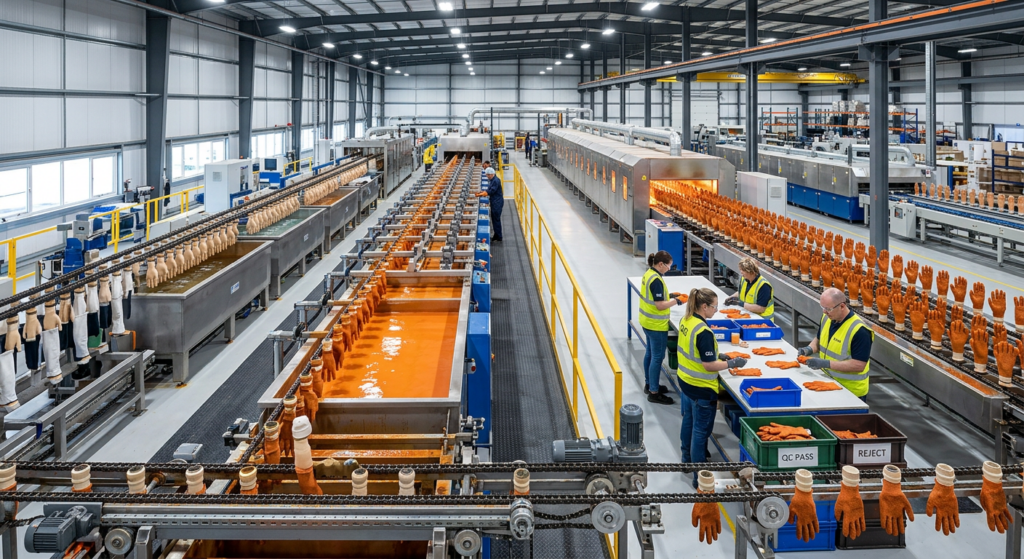
Unser vertikal integriertes Produktionssystem — von F&E über Materialbeschaffung, Stricken, Sandy-Nitril-Tauchbeschichtung, Strukturierung, Aushärtung, Qualitätskontrolle, Verpackung bis Export — gewährleistet konstante Beschichtungsqualität zu Werksabnahmepreisen. Mit über einem Jahrzehnt spezialisierter Beschichtungsexpertise, 6 dedizierten Produktionslinien mit 150.000 Paaren pro Tag, ISO 9001- und CE-Zertifizierung sowie fortschrittlicher Sandy-Nitril-Formulierungstechnologie liefern wir OEM/ODM-Sandy-Grip-Arbeitshandschuhe von der Idee bis zur Auslieferung mit schnellen Durchlaufzeiten. Entdecken Sie unser Produktkatalog oder Kontakt zu unserem Team Angebot, um kostenlose Muster und ein wettbewerbsfähiges Angebot anzufordern.
| Fähigkeit | Snell Safety Spezifikation | Vorteile für Käufer |
|---|---|---|
| Tageskapazität | 150.000 Paar in 6 Produktionslinien | Skalierbare Lieferung für Großbestellungen |
| Beschichtungstechnologien | Sandy-Nitril, Nitrilschaum, Nitril-Mikroschaum, PU, Latexkörnchen | One-Stop-Sourcing für vollständiges Handschuhsortiment |
| Zertifizierungen | ISO 9001, CE-Kennzeichnung, EN-388-Testberichte | Problemlose EU-Importkonformität |
| Personalisierung | OEM/ODM, Private Label, individuelle Markenführung/Verpackung | Umfassende Markenentwicklungshilfe |
| Lokaler Marktservice | Deutsche Partner, geplantes EU-Lager, Dropshipping | Schnellere Lieferung, lokalisierte Unterstützung |
Verwenden Sie diese Tabelle, um abzugleichen, wie Snell Safetys Fertigungskapazitäten mit Ihren spezifischen Anforderungen an Sandy-Grip-Arbeitshandschuhe übereinstimmen.
FAQ
Welche EN 388-Bewertung sollte ich für Sandy-Grip-Arbeitshandschuhe erwarten?
Standard-Sandy-Grip-Arbeitshandschuhe für allgemeine Zwecke mit 13G-Polyesterfutter erreichen typischerweise EN 388-Bewertungen von 4121X — Abriebstufe 4, Schnittstufe (Klinge) 1, Reißenstufe 2 und Durchstichstufe 1. Varianten mit schnittfestem HPPE-Futter erreichen Bewertungen wie 4X42C oder 4X44E mit ISO 13997-Schnittstufen C bis E für anspruchsvolle Metallverarbeitungsanwendungen.
Welcher Beschichtungstyp ist am besten für den Umgang mit schweren Ölen in Deutschland geeignet?
Sandy-Nitril ist die erste Wahl für den Kontakt mit schweren Ölen, Fetten und Hydraulikflüssigkeiten. Seine texturierte Oberfläche erzeugt überlegene Reibung auf rutschigen Flächen im Vergleich zu glattem Nitril, PU oder Mikroschaum-Beschichtungen. Für leichten bis mäßigen Ölkontakt ist Mikroschaum-Nitril ebenfalls effektiv. Für vollständige Ölimmersionsanwendungen eignen sich vollflächig beschichtete Sandy-Nitril-Varianten.
Welche Zertifizierungen sind für den Import von Sicherheits-Handschuhen nach Deutschland erforderlich?
Alle in Deutschland verkauften Sicherheitshandschuhe müssen der EU-Verordnung 2016/425 entsprechen und die CE-Kennzeichnung tragen. Kategorie-II-PSA erfordert eine EU-Typprüfung durch eine benannte Stelle, EN 388:2016+A1:2018-Testzertifizierung, eine EU-Konformitätserklärung in deutscher Sprache sowie REACH/SVHC-Konformitätsdokumentation.
Wie wähle ich die richtige Stärke für Sandy-Grip-Arbeitshandschuhe aus?
Wählen Sie 15G oder 18G für maximale Fingerfertigkeit bei Präzisionsmontage- und Inspektionsaufgaben. Entscheiden Sie sich für 13G für das beste Gleichgewicht aus Schutz und Komfort in der allgemeinen Fertigung, Lagerhaltung und Wartung. Verwenden Sie 10G für schwerere Anwendungen, die ein dickeres Futter erfordern, insbesondere im Bauwesen und beim Umgang mit schweren Materialien.
In welchem Preisbereich bewegen sich Großbestellungen von Sandy-Grip-Arbeitshandschuhen?
Bei direkten Fabrikabnahmemengen (übliche MOQ 5.000–10.000 Paar) kosten 13G-Sandy-Grip-Arbeitshandschuhe für allgemeine Zwecke 0,20–0,35 € pro Paar. Premium-15G-Nylon/Spandex-Varianten kosten 0,30–0,48 €. Schnittfeste HPPE-gefütterte Versionen liegen bei 0,58–1,35 € je nach Schnittstufe. Individuelle Markierungen erhöhen den Preis um ca. 0,03–0,08 € pro Paar.
Wie lange halten Sandy-Grip-Arbeitshandschuhe typischerweise?
Sandy-Nitril-Beschichtungen halten in der Regel 20–40 % länger als Mikroschaum- oder glattes Nitril dank der dichteren Beschichtungsstruktur. In der leichten Lagerhaltung rechnen Sie mit 5–8 Wochen pro Paar. In der Automobilmontage mit mäßigem Umgang mit öligen Teilen 3–4 Wochen. In der Metallbearbeitung mit scharfen Kanten 1–3 Wochen. Ersetzen Sie die Handschuhe, sobald die Sandy-Textur abgenutzt ist.
Was ist der Unterschied zwischen Sandy-Nitril- und Mikroschaum-Nitril-Beschichtungen?
Sandy-Nitril weist eine rauere, körnigere Oberflächenstruktur auf, die für maximalen Halt auf stark geölten oder gefetteten Materialien optimiert ist und überlegene Abriebfestigkeit bietet. Mikroschaum-Nitril hat eine feinere, weichere Offenzellstruktur, die Atmungsaktivität und haptische Empfindlichkeit priorisiert. Wählen Sie Sandy für öligen Halt und Abrieb; Mikroschaum für Komfort und Fingerfertigkeit bei leichtem Öl.
Eignen sich Sandy-Grip-Arbeitshandschuhe für Touchscreen-Bedienung?
Viele 15G- und 18G-Sandy-Nitril-Varianten sind touchscreensicher, wenn sie mit leitfähigen Fingerkuppenmaterialien oder dünneren Handflächenbeschichtungen ausgestattet sind. Die dickere Textur mancher Sandy-Varianten kann jedoch die kapazitive Signalübertragung beeinträchtigen. Überprüfen Sie die Touchscreen-Kompatibilität beim Hersteller vor der Bestellung.
Welchen Schnittschutzniveau brauche ich für Bauarbeiten in Deutschland?
Für allgemeine Baumaßnahmen wie Materialhandhabung und Schalungsarbeit reicht in der Regel EN 388-Schnittstufe A oder B (ANSI A1–A2). Für Armierungsbindungen, Metallrahmenbau oder Blechkanalverlegung wird Schnittstufe C oder D (ANSI A3–A4) empfohlen. Für Abrissarbeiten oder Metallrecycling sollten Schnittstufen E oder F (ANSI A5–A7) spezifiziert werden.
Können Sandy-Grip-Arbeitshandschuhe kalte Bedingungen im deutschen Winter bewältigen?
Standard-Sandy-Nitril erhält die Grip-Leistung bei Kälte besser als PU oder glattes Nitril, bietet jedoch keine Wärmedämmung. Für kalte Außenarbeiten (Baustellen, Öl & Gas) wählen Sie eine Sandy-Nitril-Variante mit gebürstetem Acryl- oder Terry-Schleifen-Wärmefutter nach EN 511 für Kälteschutz bis -20 °C.
Egal, ob Sie als Endnutzerunternehmen direkte Werkslieferung von Sandy-Grip-Arbeitshandschuhen suchen, ein PSE Händler, der ein Hand-Schutz-Portfolio für den deutschen Markt aufbaut, oder eine E-Commerce-Marke, die eine Private-Label-Linie entwickelt, Snell Sicherheit ist bereit, Sie mit präzise konzipierten Produkten und lokalen Services zu unterstützen. Reichen Sie Ihre Anforderungen ein oder fordern Sie noch heute ein Angebot an – inklusive Gratisproben, custom OEM/ODM-Entwicklung und dedizierter technischer Beratung.
Inhalt überprüft und aktualisiert: März 2026