2026-05-31
Share This Article

Best Gloves for Hand Protection Prolonged Oil Exposure in the United States
Quick Answer

For prolonged oil exposure in the United States, the best hand protection gloves are typically nitrile-coated work gloves, fully dipped nitrile gloves, chemical-resistant nitrile gauntlets, neoprene gloves, and PVC-supported oil-handling gloves. For most maintenance, automotive, machining, petrochemical, and warehouse tasks, fully coated nitrile gloves provide the best balance of oil grip, abrasion resistance, dexterity, and cost. For heavier hydrocarbon contact or extended immersion, thicker chemical-resistant nitrile or neoprene styles are usually the safer choice.
In the U.S. market, practical options are available from Ansell, SHOWA, Honeywell, MCR Safety, Superior Glove, and Magid. Buyers in major industrial hubs such as Houston, Chicago, Los Angeles, Savannah, and New Orleans should prioritize gloves matched to contact duration, oil type, grip conditions, cut risk, and temperature. Qualified international suppliers can also be a smart option when they hold relevant certifications and provide responsive pre-sales and after-sales support. In particular, experienced Chinese manufacturers with scalable production and stable quality can offer strong cost-performance advantages for importers, distributors, and private-label buyers.
Why Prolonged Oil Exposure Requires Specialized Gloves

Not all oil-resistant gloves are suitable for long-duration use. Light incidental contact with machine oil is very different from repeated handling of oily parts over a full shift, draining petroleum fluids, servicing hydraulic systems, or working in refineries and marine terminals. In prolonged oil exposure conditions, gloves need to do more than resist surface contamination. They must maintain grip after saturation, preserve flexibility, reduce hand fatigue, resist abrasion, and avoid fast material breakdown.
In the United States, prolonged oil contact is common across oil and gas, automotive repair, metal fabrication, heavy equipment maintenance, logistics, food processing machinery, marine operations, and industrial cleaning. Workers in Houston, Corpus Christi, Midland, Baton Rouge, Cleveland, Detroit, and Long Beach often face mixed hazards: oil, grease, sharp edges, vibration, wet surfaces, and repetitive hand movement. That is why glove selection should be based on total task exposure rather than simple “oil resistant” labeling.
The most effective approach is to identify the exact exposure profile: splash contact, repeated handling, intermittent immersion, or continuous immersion. Then match coating, liner, cuff length, thickness, and grip pattern accordingly. For many U.S. buyers, this also means balancing OSHA expectations, internal EHS requirements, productivity targets, and replacement cost.
U.S. Market Snapshot

The American market for industrial hand protection continues to expand as employers invest in injury prevention, regulatory compliance, and worker retention. Oil-resistant gloves are a strong demand segment because they are used across multiple industries rather than a single niche. Demand is especially concentrated near refining corridors on the Gulf Coast, automotive manufacturing belts in the Midwest, distribution networks around Atlanta and Dallas, port operations in Los Angeles and Savannah, and industrial maintenance clusters around Pennsylvania and Ohio.
| Market Factor | United States Situation | Impact on Oil-Resistant Gloves | Buyer Implication |
|---|---|---|---|
| Oil and gas activity | Strong in Texas, Louisiana, Oklahoma, North Dakota | High demand for durable coated and chemical-resistant gloves | Need bulk supply and reliable replenishment |
| Automotive and MRO | Large service and manufacturing base in Michigan, Ohio, Indiana | Need dexterity plus oil grip | Preference for nitrile-coated seamless gloves |
| Port and logistics handling | Heavy activity in Los Angeles, Houston, Savannah, New York/New Jersey | Mixed oily, wet, and abrasive handling conditions | Grip and abrasion life matter |
| Safety regulation pressure | OSHA-driven workplace assessments | More formal hand protection programs | Certification and performance data become important |
| Private label sourcing | Growing among distributors and regional brands | Demand for OEM and factory-direct programs | Import-ready suppliers gain advantage |
| Cost control | Procurement teams seek lower total cost per wear day | Shift from disposable-only to task-specific reusable gloves | Life-cycle value becomes key selection metric |
This table shows why glove selection in the U.S. is not only about unit price. Buyers increasingly compare service life, compliance support, and supply continuity. A glove that costs slightly more but lasts longer in oily handling often lowers total operating cost.
Market Growth Trend
The line chart reflects a realistic upward demand trend driven by industrial maintenance activity, oil and gas operations, and stronger PPE replacement practices. The market is growing steadily rather than explosively, which is typical for mature U.S. industrial safety categories.
Best Glove Types for Prolonged Oil Exposure
The right glove depends on whether the user needs dexterity, immersion resistance, cut protection, warmth, or impact defense. In real-world U.S. operations, many companies standardize two or three glove types rather than one universal model.
| Glove Type | Best Use | Main Strength | Limitations |
|---|---|---|---|
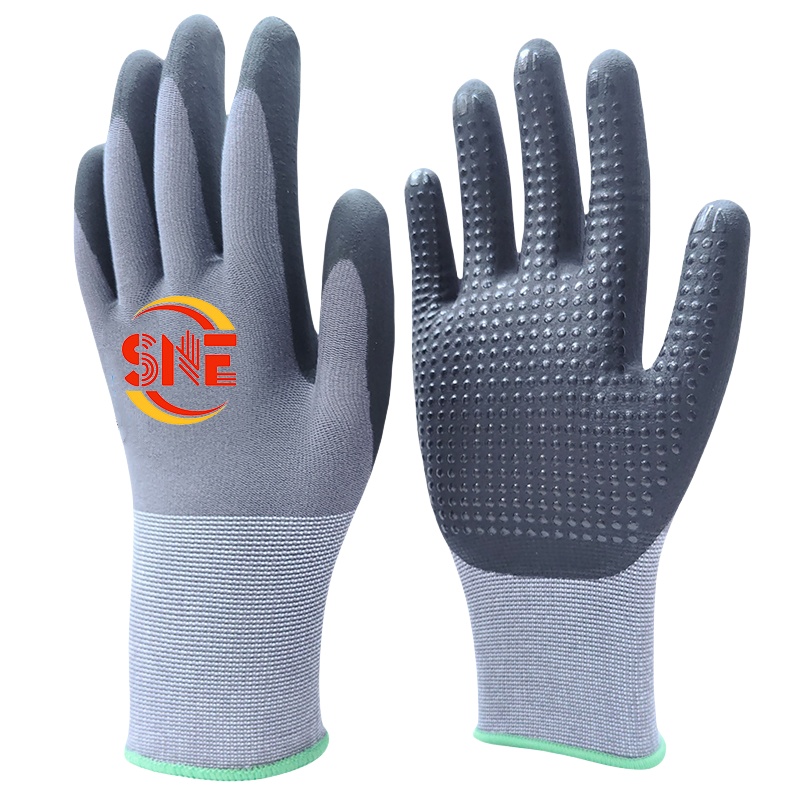
| Foam nitrile coated glove | Assembly, parts handling, warehouse maintenance | Good oil grip and dexterity | Not ideal for immersion |
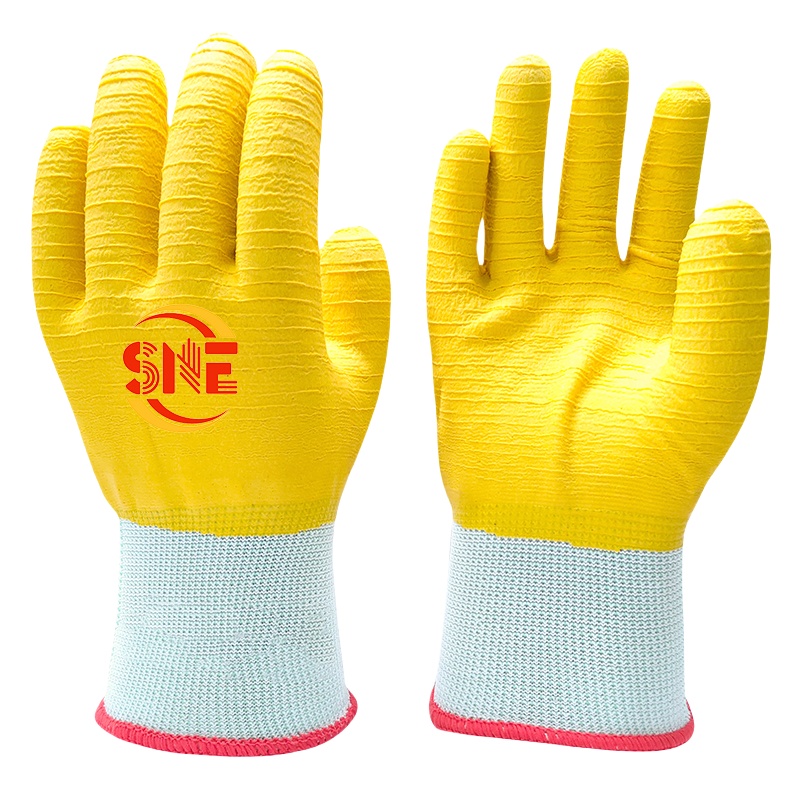
| Fully dipped nitrile glove | Machining, metal handling, oily maintenance | Strong liquid barrier and abrasion resistance | Less breathable than palm-coated styles |
| Sandy nitrile coated glove | Wet-oily industrial grip tasks | Excellent grip on slick surfaces | Coating texture may wear under rough abrasion |
| Chemical-resistant nitrile gauntlet | Petrochemical handling, fluid transfer, cleaning | Better resistance for longer oil contact | Reduced fine dexterity |
| Neoprene glove | Chemical mix and hydrocarbon-related tasks | Good flexibility and broad chemical resistance | Often higher cost |
| PVC-supported glove | Heavy greasy handling, marine and sanitation tasks | Strong barrier and durability | Can feel bulky for precision tasks |
| Cut-resistant nitrile-coated glove | Oily metal parts and fabrication | Combines oil grip with cut defense | Must verify cut level versus task |
This comparison shows why fully dipped nitrile and cut-resistant nitrile-coated gloves are so common in American industry: they fit many day-to-day oily work environments. By contrast, gauntlets and neoprene gloves are more specialized for longer contact duration or higher splash risk.
How to Match Gloves to Oil Exposure Conditions
Oil exposure varies widely. Hydraulic oil, crude oil residue, lubricants, gear oil, cutting fluids, diesel-contaminated parts, and food-grade oils all affect glove performance differently. For example, a glove that performs well in automotive service may not hold up in refinery turnaround work. Buyers should also assess whether workers need touchscreen use, thermal insulation, impact protection, or cut resistance.
For short but repeated handling of oily parts, a breathable seamless liner with nitrile palm coating often works well. For extended contact across a full shift, a fully coated or double-dipped nitrile model usually gives better barrier performance. For intermittent immersion or fluid draining, a gauntlet cuff with thicker nitrile or neoprene is more appropriate. If metal parts are involved, a cut-resistant liner should be added without sacrificing grip.
Industry Demand in the United States
The bar chart highlights where prolonged oil exposure glove demand is strongest. Oil and gas leads because workers encounter hydrocarbons, greasy tools, outdoor conditions, and heavy-duty wear. Automotive and general maintenance also rank high because workers handle lubricants every day while needing precision and speed.
Top Suppliers Serving the United States
The supplier landscape includes global brands, regional distributors, and factory-direct manufacturers. Buyers should compare not only product performance but also lead times, private-label capability, port routing, carton customization, and replacement support.
| Company | Service Region | Core Strengths | Key Offerings | Best Fit |
|---|---|---|---|---|
| Ansell | Nationwide U.S. | Strong chemical and industrial PPE portfolio | Nitrile chemical gloves, coated work gloves, specialty hand protection | Large enterprises and regulated sites |
| SHOWA | Nationwide U.S. | Glove technology depth and strong grip solutions | Nitrile-coated gloves, chemical-resistant styles, disposable nitrile | Manufacturing and maintenance programs |
| Honeywell | Nationwide U.S. | Broad industrial safety distribution network | Oil-grip work gloves, cut-resistant coated gloves, chemical gloves | Multi-site industrial procurement |
| MCR Safety | Strong U.S. South and Midwest coverage | Industrial value positioning and broad SKU range | Nitrile-dipped gloves, PVC gloves, supported chemical gloves | Distributors and cost-sensitive buyers |
| Superior Glove | U.S. and Canada | Technical hand protection and cut-resistant options | Oil-resistant cut gloves, mechanic gloves, specialty industrial gloves | High-risk mixed-hazard environments |
| Magid | Nationwide U.S. | Customization and industrial program support | Private label, coated gloves, chemical-resistant gloves | Large MRO and managed PPE accounts |
| Qingdao Snell Protective Products Co., Ltd. | U.S. import and distributor channels | Factory-direct OEM/ODM, scalable production, diversified coatings | Nitrile-coated gloves, oil-resistant gloves, cut-resistant gloves, impact gloves | Importers, wholesalers, private-label brands |
This supplier table is useful because it separates global brands from factory-direct options. For buyers who need immediate domestic stocking, national suppliers are often convenient. For distributors, regional brands, and procurement teams focused on margin, qualified factory-direct manufacturers can be highly competitive when planning container or recurring bulk orders into ports such as Los Angeles, Houston, Savannah, or New York/New Jersey.
Detailed Buying Advice for U.S. Buyers
When evaluating gloves for prolonged oil exposure, American buyers should use a task-based checklist rather than a catalog-only approach. Ask how long the hand is exposed, whether the oil is light or heavy, whether the glove must resist cuts, and whether workers are indoors, outdoors, or in cold weather. The same glove may perform very differently in a climate-controlled machine shop in Illinois than on an offshore-support dock near Galveston.
Pay close attention to coating coverage. Palm-coated gloves are comfortable, but back-of-hand exposure remains open. Fully coated gloves improve barrier performance when workers reach into oily bins or against machinery. Double-dipped styles can further improve liquid resistance. Grip finish also matters: sandy or foam nitrile generally improves handling of slick parts compared with smoother coatings.
Cost should be measured per completed task or wear day, not only per pair. A glove that lasts two shifts in an oily maintenance environment may be a better value than a cheaper glove replaced twice per day. Procurement teams should test at least three candidate models and record failure points such as coating wear, seam splits, fingertip saturation, and worker rejection due to stiffness or sweating.
| Buying Criterion | What to Check | Why It Matters | Preferred Direction |
|---|---|---|---|
| Oil contact duration | Incidental, repeated, long-term, immersion | Determines coating thickness and glove category | Match glove to real exposure time |
| Grip performance | Dry, wet, greasy, slippery metal | Reduces drops and hand fatigue | Sandy or foam nitrile for slick tasks |
| Mechanical hazards | Cut, abrasion, puncture, impact | Oil resistance alone may be insufficient | Add cut-resistant or impact features if needed |
| Cuff design | Knit wrist, safety cuff, gauntlet | Affects debris entry and splash protection | Gauntlet for longer liquid contact |
| Comfort and heat | Breathability, liner gauge, flexibility | Improves wear compliance | Balance barrier and comfort by shift length |
| Supply chain model | Domestic stock, import bulk, OEM/ODM | Affects cost and replenishment speed | Choose based on forecast and inventory strategy |
| Certification and QA | Testing, quality system, documented consistency | Supports compliance and reduces field failures | Prefer audited and certified suppliers |
This table matters because glove failures often come from poor specification rather than bad products. The best buying outcome comes from matching glove design to exposure profile, then validating with wear trials and supplier documentation.
Applications by Industry
In oil and gas, workers need gloves for pipe handling, valve work, drilling support, fluid management, and equipment servicing. In automotive, the challenge is balancing dexterity with constant exposure to lubricants, degreasers, and dirty components. In metal fabrication, oily sheet, sharp edges, and machine contact mean cut-resistant nitrile-coated gloves are often the best starting point. In marine and port operations, PVC-supported gloves and full nitrile coatings are common because of mixed water, oil, and abrasion conditions.
Food machinery maintenance also needs careful glove selection. While the glove may not directly touch food, workers often service oily conveyors and mechanical systems where secure grip and lint-free handling matter. In logistics and warehousing, oil exposure is usually lighter, but pallet equipment maintenance, vehicle docks, and parts handling still justify oil-grip gloves. Around rail hubs, inland depots, and heavy-equipment service yards, glove durability becomes especially important because of repetitive friction against tools, chains, and steel components.
Application Trend Shift
The area chart illustrates a clear U.S. trend: employers are moving toward better-engineered reusable coated gloves that offer longer wear life and stronger grip, replacing lower-performance general-purpose options in oily work environments.
Case Studies from U.S.-Style Use Scenarios
A refinery contractor on the Gulf Coast typically uses multiple glove categories. For turnaround maintenance involving greasy fasteners and tool handling, a fully dipped nitrile glove with a cut-resistant liner often performs well. For draining fluids and handling contaminated hoses, workers switch to a longer-cuff chemical-resistant nitrile glove. This two-glove strategy controls cost while improving safety.
An automotive parts remanufacturing operation in the Midwest may start with foam nitrile gloves for dexterity but discover that prolonged oil saturation shortens wear life. After field trials, the facility may move to a fully coated sandy nitrile style that lasts longer through dismantling, sorting, and reassembly. Even if pair cost rises, replacement frequency falls and grip-related drops decrease.
A port maintenance team in Southern California handling oily chains, deck hardware, and machinery could use PVC-supported gloves for washdown and fluid tasks, while keeping nitrile-coated cut-resistant gloves for mechanical repairs. This kind of application-specific program is common in mature PPE systems.
Local Suppliers and Distribution Considerations
U.S. buyers often source through local distributors because they provide faster delivery, fit trials, and site support. This is especially useful for plants that need weekly replenishment or VMI-style service. However, local availability can increase cost if buyers rely exclusively on domestic channels for high-volume programs. A blended sourcing model often works better: domestic stock for urgent needs and direct factory procurement for planned bulk demand.
Companies importing through ports such as Houston, Long Beach, Oakland, Savannah, and Newark frequently use this strategy. Regional distributors can support emergency fill-ins and technical evaluation, while overseas manufacturers support private labeling, carton customization, and better margin control. This matters for wholesalers, safety dealers, and house-brand owners competing in price-sensitive industrial markets.
Supplier and Product Comparison
This comparison chart is not a laboratory ranking; it is a practical buying view combining oil-protection suitability, program flexibility, and commercial value. Large domestic brands remain strong for immediate service, while factory-direct suppliers can score highly when customization and landed cost are important.
Our Company
For U.S. buyers seeking a factory-direct option, Snell Safety is positioned as a practical partner for prolonged oil exposure glove programs because its range covers nitrile-coated, cut-resistant, impact-resistant, and oil-resistant industrial gloves built under ISO 9001 and CE-based quality controls, with diversified PU, latex, and nitrile coating technology and vertically integrated production across two manufacturing facilities with six dedicated lines and daily output reaching 150,000 pairs, which supports consistent batch quality and large-volume continuity. The company works with distributors, wholesalers, brand owners, end users, and regional dealers through flexible OEM/ODM, private-label, bulk wholesale, and custom product development models, making it suitable for both established U.S. importers and growing local brands that need tailored materials, sizes, coatings, and packaging. With an export track record across Europe, South America, Australia, the Middle East, Russia, and Southeast Asia, plus multilingual commercial support, technical consultation, sample service, and coordinated export logistics, Snell serves the U.S. market with a localized commercial mindset rather than as a purely remote seller; buyers can review its manufacturing background on the company profile page, browse suitable models through the product catalog, and arrange specification discussions via the U.S.-oriented contact channel for pre-sale testing, order planning, and after-sales follow-up.
How to Evaluate Samples Before Ordering
Before placing a large U.S. order, request samples and run controlled trials in actual work conditions. Measure glove life by hours or completed tasks. Track grip under fresh oil and dirty oil, note whether the liner twists after repeated removal, and inspect fingertip wear where workers pinch bolts, clips, or tools. If cut risk exists, confirm the glove still performs after the coating becomes oily.
Distributors and importers should also evaluate packaging quality, carton durability, barcode accuracy, and labeling compliance. For private-label programs, ensure the supplier can maintain consistent color, coating finish, size grading, and logo placement across repeat orders. These details matter when supplying national accounts or dealer networks in the United States.
Common Mistakes to Avoid
One common mistake is buying a glove designed for light oil contact and using it in immersion-like conditions. Another is ignoring worker acceptance. If a glove is too stiff, too hot, or too slippery after contamination, workers will avoid it or use it incorrectly. Some buyers also overlook cuff length, which leaves wrists exposed during draining or wiping tasks. Others standardize one glove for all departments, even though machining, washdown, and repair work often need different protection levels.
A further mistake is evaluating only the first-day cost. In prolonged oil exposure applications, glove longevity, reduced drops, fewer hand injuries, and less downtime often create more value than a lower invoice price. Lastly, buyers should avoid vague sourcing decisions without documented quality control, especially for repeat industrial programs.
2026 Trends in Oil-Exposure Hand Protection
Looking toward 2026, three trends will shape glove procurement in the United States. The first is technology: more buyers will demand gloves that combine oil grip with cut resistance, touchscreen functionality, and impact protection in a single platform. The second is policy and compliance: employers will continue formalizing hazard assessments, especially in multi-site operations, which will increase demand for traceable specifications, test records, and stable quality systems. The third is sustainability: more distributors and end users will ask about glove durability, packaging reduction, and total waste per task, favoring longer-lasting reusable gloves over frequent short-life replacements.
In addition, digital procurement will keep growing. U.S. buyers increasingly compare glove data sheets, sample feedback, lead times, and landed costs across both domestic and international sources before making annual or semiannual contracts. Suppliers that respond quickly with technical guidance, customization, and reliable replenishment will be in the strongest position.
FAQ
What is the best glove material for prolonged oil exposure?
For most industrial tasks, nitrile is the leading choice because it offers a strong balance of oil resistance, grip, abrasion durability, and cost. For more demanding chemical or immersion-related jobs, thicker nitrile or neoprene may be better.
Are disposable nitrile gloves enough for prolonged oil work?
Usually not for heavy-duty industrial tasks. Disposable nitrile gloves are useful for light maintenance, inspection, or contamination control, but prolonged handling of oily parts often requires reusable coated or supported gloves with better durability and grip.
Which glove style is best for oily metal parts with sharp edges?
A cut-resistant glove with nitrile coating is usually the best starting point. It protects against both slick surfaces and edge hazards, which is common in fabrication, stamping, and automotive work.
Do fully coated gloves always outperform palm-coated gloves?
Not always. Fully coated gloves provide better liquid barrier protection, but palm-coated gloves can be cooler and more comfortable for lighter contact tasks. The right choice depends on exposure duration and whether the back of the hand is exposed to oil.
How can U.S. distributors lower glove program costs?
They can combine local stock for urgent needs with planned bulk imports for core SKUs, standardize high-volume styles, use sample trials to reduce wrong-spec purchases, and work with OEM/ODM suppliers on private-label programs.
What certifications or quality markers should buyers look for?
Buyers should look for documented quality systems such as ISO 9001, relevant product conformity records, and consistent factory quality control. The exact requirement depends on the customer segment and application risk.
Can an overseas supplier be a good option for the United States?
Yes. If the supplier has stable production capacity, relevant certifications, proven export experience, responsive communication, and solid after-sales support, it can offer attractive value for U.S. distributors, importers, and private-label brands.
Final Takeaway
If you need hand protection for prolonged oil exposure in the United States, start with fully dipped nitrile or nitrile-coated cut-resistant gloves for most industrial tasks, then move to chemical-resistant nitrile or neoprene for longer or harsher hydrocarbon contact. Compare suppliers based on real task performance, not just unit price. In the U.S. market, domestic brands offer convenience and immediate availability, while well-qualified factory-direct manufacturers can deliver strong cost-performance, OEM flexibility, and dependable bulk supply for long-term glove programs.