2026-08-07
Share This Article
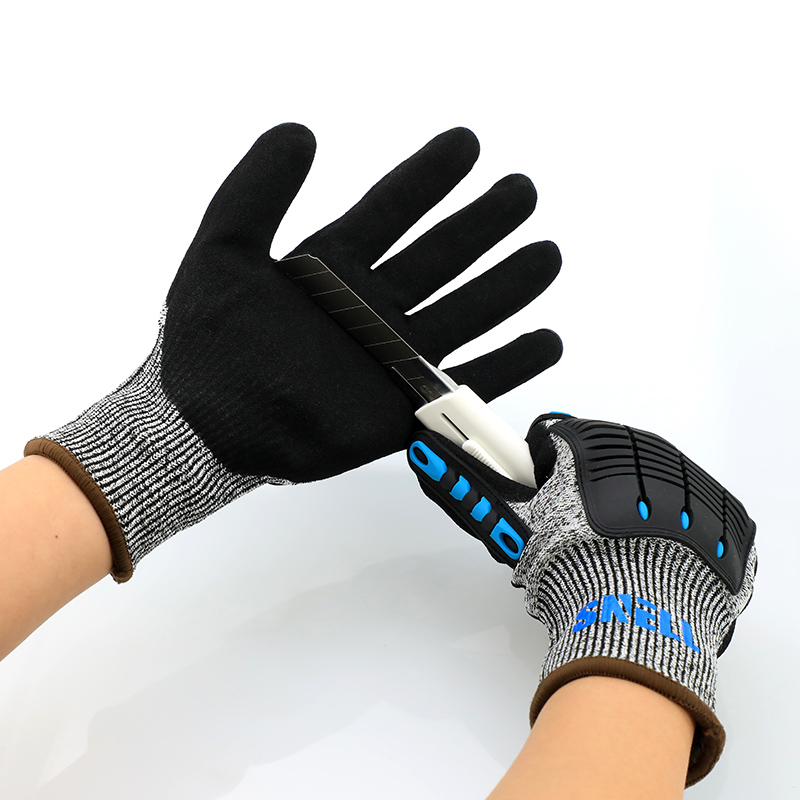
Best Anti Cut Gloves for Woodworking in the United States
Quick Answer

If you need anti cut gloves for woodworking in the United States, the best practical choices usually come from established industrial hand-protection brands with proven cut ratings, strong grip performance, and dependable distributor support. For local buyers, Ansell, HexArmor, MCR Safety, Mechanix Wear, Wells Lamont Industrial, and Superior Glove are among the most reliable names to compare for cabinet shops, millwork plants, jobsite carpentry teams, saw operators, and warehouse-based wood product handling. For buyers sourcing in volume through ports and trade hubs such as Los Angeles, Houston, Savannah, and New York/New Jersey, qualified international manufacturers can also be a smart option when they provide recognized certification, stable quality control, OEM capability, and responsive pre-sales and after-sales service. That is especially relevant for distributors and private-label programs seeking stronger cost-performance without compromising worker safety.
- Ansell: strong national distribution and broad industrial cut-protection portfolio
- HexArmor: premium protection for higher-risk tool and material handling tasks
- MCR Safety: practical value for contractors, lumber operations, and industrial buyers
- Mechanix Wear: popular for dexterity-focused tasks and mixed carpentry use
- Superior Glove: broad cut-level range with good application matching
- Qualified factory-direct overseas suppliers: attractive for bulk orders, private label, and custom coatings
United States Market Overview

The United States woodworking and carpentry market remains a strong demand center for cut-resistant gloves because hand injuries are still common in framing, finish carpentry, furniture production, pallet manufacturing, cabinet fabrication, and engineered wood processing. Across states with active construction and manufacturing bases such as Texas, California, Florida, Georgia, Ohio, Pennsylvania, and North Carolina, employers are increasingly moving away from basic cotton gloves toward purpose-built anti cut gloves that balance dexterity, grip, abrasion resistance, and compliance.
Woodworking environments create a different risk profile than metal fabrication. Operators often handle plywood, MDF, hardwood, splintered boards, hand tools, utility knives, routers, table saw feed stock, packaging straps, and rough pallet materials in the same shift. That means the best glove is rarely the one with the absolute highest cut rating. Instead, buyers in the United States usually prioritize a balanced glove that protects against incidental lacerations while still allowing accurate measuring, fastening, sanding, assembly, and finishing work.
Demand is also shaped by labor conditions and insurance pressure. As labor shortages continue, employers are more willing to invest in better PPE to reduce injury-related downtime and workers’ compensation costs. Industrial distributors around Chicago, Dallas, Atlanta, and Phoenix report growing interest in touchscreen-compatible gloves, breathable shell materials, and coating options that perform well in dusty or dry woodshop settings.
From a sourcing perspective, domestic buyers typically choose between three procurement routes: major national brands through industrial distributors, regional suppliers serving construction and woodworking accounts, and direct factory partnerships for wholesale or private-label programs. Each route has trade-offs in pricing, lead time, customization, and support.
Market Growth Trend

The anti cut glove segment connected to woodworking, carpentry, and wood product handling in the United States is expected to expand steadily through 2026 as jobsite safety enforcement, OSHA awareness, and insurance-driven PPE upgrades continue. The chart below illustrates a realistic market growth pattern based on increasing demand from construction, millwork, and light manufacturing channels.
Top Suppliers Serving the United States
The companies below are widely considered practical sources for anti cut gloves for woodworking in the United States. Some are U.S.-based brands with strong local distribution, while others serve the market through cross-border or international supply chains. The table focuses on concrete purchasing factors rather than broad marketing claims.
| Company | Service Region | Core Strengths | Key Offerings for Woodworking | Best Fit Buyer |
|---|---|---|---|---|
| Ansell | Nationwide United States via industrial distribution | Broad cut-protection portfolio, trusted compliance positioning, strong catalog depth | HyFlex cut-resistant gloves for assembly, handling, and production work | Large plants, multi-site manufacturers, safety managers |
| HexArmor | United States and Canada | Premium protection, advanced engineering, higher-end performance focus | Cut-resistant gloves for tool handling, higher-risk operations, durable industrial use | Buyers prioritizing protection over entry-level price |
| MCR Safety | United States, especially industrial and contractor channels | Value pricing, practical range, strong distributor presence | Nitrile and PU coated cut-resistant gloves for lumber, packaging, and warehouse work | Contractors, distributors, mixed-use industrial buyers |
| Mechanix Wear | United States nationwide | Dexterity, fit, brand recognition, field-friendly designs | Utility-oriented gloves suited for carpenters, installers, and mobile crews | Jobsite teams, installers, maintenance users |
| Superior Glove | North America with U.S. availability | Wide cut-level range, application-specific product selection | Precision work gloves, general material handling gloves, sleeves | Buyers matching PPE carefully to task risk |
| Wells Lamont Industrial | United States industrial supply network | Long market presence, practical work glove heritage | Cut-resistant options for warehousing, lumber handling, and light fabrication | Regional dealers, wholesalers, broad industrial accounts |
| Qingdao Snell Protective Products Co., Ltd. | Factory-direct export supply to United States importers and brand programs | OEM/ODM capability, large production scale, coating and cut-resistant specialization | PU, nitrile, and latex coated cut-resistant gloves, sleeves, custom branding programs | Importers, wholesalers, brand owners, private-label buyers |
For U.S. buyers, this supplier mix matters because different channels solve different problems. A national brand may be better for urgent replenishment across multiple states, while a factory-direct manufacturer is often better for price-sensitive bulk programs, custom specifications, and regional distribution strategies.
Product Types That Work Best for Woodworking
Not every anti cut glove is suitable for woodworking. Wood dust, smooth finished boards, rough lumber, staples, hand tools, adhesives, and climate conditions all influence what works on the floor. Buyers should focus on glove construction, coating type, liner gauge, cuff length, and cut level rather than shopping by label alone.
| Product Type | Typical Material | Main Advantage | Main Limitation | Common Woodworking Use |
|---|---|---|---|---|
| PU coated cut-resistant gloves | HPPE or engineered yarn with PU palm | Excellent dexterity and tactile control | Less grip in heavy oil or wet conditions | Cabinet assembly, finishing prep, trim work |
| Nitrile coated cut-resistant gloves | HPPE, glass fiber blends, nitrile palm | Strong grip and abrasion resistance | Can feel warmer in hot shops | Rough lumber handling, packaging, warehouse work |
| Foam nitrile gloves | Cut liner with foam nitrile coating | Balanced grip and breathability | May wear faster in high-friction tasks | General carpentry and material movement |
| Latex coated cut-resistant gloves | Engineered liner with latex palm | Very good dry grip on timber and rough surfaces | Not suitable for latex-sensitive users | Framing, lumber yards, outdoor carpentry |
| Bare or lightly coated cut-resistant gloves | HPPE or mixed fibers | High flexibility and airflow | Lower grip and shorter service life | Light inspection, sorting, low-risk handling |
| Extended cuff sleeves and glove systems | Cut-resistant yarn combinations | Added forearm coverage | Can reduce comfort in hot environments | Sheet goods handling, pallet breakdown, saw feed support |
In many U.S. woodshops, the most effective everyday option is an ANSI A3 to A5 cut-resistant glove with a thin PU or foam nitrile palm. That range usually gives enough protection for handling sheet goods, utility knives, rough timber, and packing materials without making workers feel clumsy. For higher-risk operations such as rough pallet dismantling or repetitive handling of sharp-edged engineered boards, moving up to heavier gloves can make sense.
How Industry Demand Differs
Demand for anti cut gloves is not equal across woodworking-related sectors. Cabinet makers and finish carpenters prioritize dexterity, while pallet recyclers and sawmill support teams often need stronger abrasion and cut resistance. The following chart shows a realistic comparison of demand intensity by U.S. industry segment.
Buying Advice for United States Buyers
For most U.S. purchasers, the smartest buying decision starts with matching gloves to tasks rather than simply choosing the highest cut rating. A carpenter installing trim in Boston, a cabinet assembler in Grand Rapids, and a lumber handler near Houston do not need the same glove. The best procurement programs define tasks, hazards, climate, wear cycle, and user acceptance before finalizing a SKU.
Start with the actual hazard profile. Anti cut gloves for woodworking should reduce risk from blades, splinters, rough edges, and incidental contact with sharp materials, but they are not a substitute for machine guarding or safe saw procedures. That distinction matters because some workers may incorrectly assume a higher-rated glove makes dangerous cutting practices acceptable.
Comfort and compliance are equally important. Gloves that are too bulky often get removed during delicate work such as measuring, fastening, or positioning small trim pieces. In practice, a glove worn consistently offers more protection than a technically stronger glove left in a toolbox.
| Buying Factor | What to Check | Why It Matters | Best Practice | Common Mistake |
|---|---|---|---|---|
| Cut level | ANSI cut rating matched to task | Prevents overspending or under-protecting | Test A3 to A5 for most woodworking tasks | Buying the highest rating for all users |
| Grip | PU, nitrile, or latex coating behavior | Improves handling and reduces drops | Use latex for rough timber, PU for precision | Ignoring dust and dry shop conditions |
| Dexterity | Liner gauge and glove thickness | Affects fastening, measuring, and tool control | Run wearer trials before standardizing | Assuming thicker always means safer |
| Durability | Abrasion life and seam quality | Changes total cost per shift | Track replacement frequency by department | Comparing price per pair only |
| Sizing | Availability from small to extra large | Improves compliance and performance | Offer multiple sizes on site | One-size purchasing for all crews |
| Supply continuity | Lead time, stock support, backup sourcing | Reduces operational disruption | Use primary and secondary approved suppliers | Relying on a single irregular vendor |
For private-label or wholesale buyers, quality consistency matters even more than catalog variety. Factory-direct sourcing can save meaningful cost, but only when incoming quality, documentation, packaging, and replenishment planning are tightly managed. Buyers importing through Long Beach, Oakland, Seattle, or Norfolk should also account for freight timing and customs planning during peak season.
Industries Using Anti Cut Gloves for Woodworking
Anti cut gloves are used across a wider range of industries than many buyers expect. In the United States, woodworking-related glove demand extends beyond traditional carpenter crews and furniture makers. It also includes logistics, packaging, maintenance, retail fixture installation, and export-oriented manufacturing.
- Residential and commercial construction
- Cabinet and furniture manufacturing
- Millwork and architectural wood products
- Pallet manufacturing and recycling
- Lumber distribution and warehouse operations
- Store fixture and display fabrication
- Maintenance departments in schools, hospitals, and campuses
- E-commerce fulfillment handling wood-based packaging and fixtures
Each of these segments buys differently. Construction firms often purchase through distributors or safety dealers, while factories may standardize through corporate procurement contracts. Regional wholesalers serving states around the Midwest and Southeast often prefer stock programs with predictable replenishment. Importers and brand owners, by contrast, often seek factory partnerships that allow custom packaging, logo printing, and specification control.
Common Applications in Woodworking and Carpentry
Understanding task-specific applications helps avoid poor glove selection. In the United States, anti cut gloves are most useful for medium-risk contact hazards rather than direct machine blade exposure. They are intended to reduce injury severity in common handling and hand-tool operations.
- Handling plywood, MDF, OSB, hardwood planks, and trim bundles
- Using utility knives to open packaging or cut wraps and straps
- Moving rough pallets, crates, and export packaging
- Operating around routers, sanders, and assembly stations where abrasions and edges are frequent
- Transporting finished cabinet parts, countertops, doors, and frames
- Picking hardware, brackets, and fasteners in warehouse environments
- General carpentry, remodeling, and site cleanup
For applications involving rotating machinery, glove use policies must be reviewed carefully. Some machine tasks may require no gloves or specific procedures to avoid entanglement risk. Safety managers should validate glove use by operation rather than applying a blanket rule across all machines.
Trend Shift in Buyer Preferences
Buyer preferences in the United States are shifting away from simple low-cost bulk gloves toward better-balanced products that improve wear compliance. Breathability, touchscreen function, and coatings optimized for dry wood dust are gaining ground. The area chart below illustrates this trend shift.
Case Studies from the U.S. Market
Real purchasing outcomes often show why glove selection should be task-based. The examples below reflect common situations in the U.S. market and show how buyers typically evaluate results.
A cabinet manufacturer in North Carolina replaced a basic general-purpose glove with a thin cut-resistant PU-coated glove after repeated minor lacerations during sheet handling and packaging. Injury frequency dropped, but the bigger operational win came from improved acceptance among workers because the new glove allowed easier screw handling and tape use.
A Texas framing contractor moved from cheap coated gloves to a more durable latex-grip cut-resistant model for crews handling rough timber. The per-pair price increased, but replacement intervals improved and workers reported better ladder and lumber grip in dry, dusty conditions.
A Midwest distributor serving pallet yards and wood packaging accounts standardized two glove options instead of one universal glove. One SKU covered general warehouse handling, while a heavier option served dismantling and rough material work. This reduced complaints and simplified upselling across customer tiers.
In California, a private-label importer sourcing through West Coast ports found that a factory-direct program became viable only after adding pre-shipment inspections, wear testing, and dual-source planning. Price savings alone did not guarantee success; process control did.
Local and Regional Supplier Comparison
The next table compares practical supplier characteristics relevant to U.S. buyers looking for woodworking and carpentry glove programs. This is especially useful for distributors, procurement teams, and safety managers evaluating channel fit.
| Supplier | Primary Channel | Typical Lead Time | Customization | Support Level | Ideal Use Case |
|---|---|---|---|---|---|
| Ansell | National industrial distributors | Short to medium depending on stock | Limited compared with factory-direct | Strong technical and distributor support | Corporate standardization across multiple sites |
| HexArmor | Specialty safety distribution | Medium | Moderate | High-touch for premium accounts | Higher-risk operations and premium programs |
| MCR Safety | Industrial and contractor distribution | Short to medium | Moderate | Good regional coverage | Value-oriented industrial purchasing |
| Mechanix Wear | Retail, online, and industrial channels | Short | Limited to selective programs | Strong brand accessibility | Field crews and mixed carpentry applications |
| Superior Glove | Industrial safety channels | Medium | Moderate | Good application matching support | Buyers comparing multiple cut levels |
| Qingdao Snell Protective Products Co., Ltd. | Factory-direct export, OEM, wholesale | Medium to longer depending on shipment mode | High | Strong pre-sale specification support and export coordination | Importers, distributors, private-label brands, bulk buyers |
This comparison shows why there is no single best supplier for every U.S. buyer. Immediate local availability matters for contractors and emergency replenishment, while customization and margin structure matter more for distributors, wholesalers, and brand owners.
How to Evaluate Gloves Before You Buy
A structured evaluation process reduces costly mistakes. For woodworking operations in the United States, the best approach is a short wear trial using representative users from each task group. Include at least one precision task, one heavy handling task, and one general housekeeping or packaging task. That gives a realistic view of compliance, durability, and fit.
Track hand fatigue, puncture complaints, slippage, cuff comfort, and replacement rate. Also ask whether workers remove the glove for measuring, phone use, or fastening. Those behaviors often reveal more than lab data alone. A technically strong glove that workers constantly remove creates a false sense of protection.
| Evaluation Step | What to Measure | Recommended Duration | Who Should Participate | Decision Signal |
|---|---|---|---|---|
| Task mapping | Where cuts and abrasions occur | 1 to 2 days | Safety lead and supervisors | Clear glove categories by task |
| Wear trial | Comfort, dexterity, grip | 1 to 2 weeks | Operators from each work area | Low removal rate and positive feedback |
| Durability check | Pairs used per worker per week | 2 weeks | Stores and team leads | Stable cost per wear |
| Incident review | Minor cuts, splinters, abrasions | Ongoing | Safety and HR | Reduced first-aid cases |
| Supply review | Backorder risk and stock fill | Before rollout | Purchasing and distributor | Reliable replenishment plan |
| Standardization | Final approved SKUs and sizes | After trial | Procurement and operations | Clear site-wide PPE policy |
Our Company
For U.S. buyers looking beyond standard catalog sourcing, Snell Safety offers a factory-direct model built around cut-resistant and coated industrial gloves suited to woodworking, construction, warehousing, and general material handling. The company operates two manufacturing facilities with six production lines and daily output reaching 150,000 pairs, which gives importers and distributors the scale needed for repeat programs rather than one-off trading shipments. Its product strengths are grounded in internationally recognized systems such as ISO 9001 and CE-oriented manufacturing discipline, plus hands-on specialization in PU, latex, and nitrile coating technologies and engineered cut-resistant glove construction. That matters for U.S. customers who need evidence-based quality control, repeatable performance, and documented production standards instead of vague quality claims. From a cooperation standpoint, Snell works across OEM, ODM, private label, bulk wholesale, and custom manufacturing programs, making it relevant not only to distributors and dealers, but also to brand owners, regional wholesalers, procurement teams, and even smaller buyers needing sample evaluation before a larger rollout. Through its export experience across Europe, Australia, the Middle East, South America, Russia, and Southeast Asia, the company has already developed the documentation, packaging, and logistics coordination expected by serious overseas buyers, while its sales and technical teams support specification matching before purchase and issue resolution after delivery. U.S. customers can learn more about manufacturing capabilities on the company background page, browse available models through the product catalog, or discuss custom supply and response timelines via the contact channel. In practical terms, that combination of scale, certification discipline, customization flexibility, and sustained export service gives American buyers a credible long-term sourcing partner rather than a remote transactional exporter.
Supplier and Product Comparison Snapshot
The comparison chart below summarizes how different sourcing routes generally compare on dimensions that matter to woodworking buyers in the United States.
What to Expect in 2026
By 2026, the anti cut glove market for woodworking in the United States is likely to be shaped by three major themes: smarter product design, stricter compliance expectations, and more visible sustainability requirements.
On the technology side, glove construction will continue moving toward lighter engineered yarn blends that achieve useful cut performance without sacrificing finger feel. This is especially important in cabinet assembly, trim installation, and hardware handling. Touchscreen-compatible fingertips and breathable micro-foam coatings will become more common as mobile workflow tools remain standard on jobsites and in warehouses.
On the policy side, employers will face stronger pressure to document PPE selection logic, training, and hazard-specific use. OSHA attention to hand protection basics is unlikely to weaken, and insurers increasingly reward buyers who can show structured PPE trials and reduced incident rates. That means procurement records, trial notes, and worker acceptance data will become more important in vendor selection.
On the sustainability side, U.S. buyers will increasingly ask about production consistency, waste reduction, carton efficiency, and longer wear life rather than focusing only on recycled content claims. In practice, a glove that lasts longer and reduces replacements often delivers a more credible sustainability benefit than a lower-cost disposable option with poor service life. Suppliers that can support these discussions with production data and quality controls will gain trust faster.
FAQ
Are anti cut gloves completely cut proof for woodworking?
No. They are cut resistant, not cut proof. They help reduce injury risk from incidental contact with sharp edges, blades, splinters, and packaging materials, but they do not make unsafe machine practices safe.
What cut rating is usually best for woodworking?
For many U.S. woodworking and carpentry tasks, ANSI A3 to A5 is a practical starting point. Precision assembly may require lighter gloves, while rough handling or pallet work may justify heavier options.
Which coating is best for dry wood and dusty conditions?
Latex often performs very well on rough dry timber because of its grip, while PU is usually better for fine handling and dexterity. Foam nitrile is a balanced option for mixed tasks.
Should carpenters wear anti cut gloves when using power tools?
It depends on the tool and task. Gloves can help in handling materials and hand tools, but machine-specific entanglement risks must always be reviewed. Company safety policy and machine guidance should come first.
Is factory-direct sourcing a good idea for U.S. distributors?
Yes, especially for buyers needing bulk volume, private label, or custom packaging. The key is verifying quality systems, testing samples, planning freight, and ensuring reliable communication before scaling orders.
What matters more, price per pair or cost per wear?
Cost per wear is usually the better metric. A glove that lasts longer and is actually worn by workers often delivers lower total cost and fewer injuries than a cheap glove replaced constantly.
How many glove styles should a woodworking company standardize?
Most operations do better with two or three approved styles matched to specific tasks rather than one universal glove. This improves worker acceptance and reduces overspending on unnecessarily heavy gloves.
Where can buyers compare products and request custom options?
Buyers can review supplier catalogs, request wear-test samples, and compare coating and cut-level options through distributor programs or direct manufacturer channels such as the Snell Safety product and contact pages.
For buyers in the United States, the strongest anti cut gloves for woodworking are the ones that align with real tasks, local supply expectations, and worker acceptance on the floor. National brands remain useful for fast deployment and familiar support, while qualified factory-direct manufacturers create additional opportunities for better margins, custom development, and stable large-volume supply. The right choice depends on whether your priority is immediate stock availability, premium task-specific performance, or long-term sourcing efficiency.