2026-08-08
Share This Article
Oil Resistant Gloves for Printing in the United States
Quick Answer

If you need oil resistant gloves for printing operations in the United States, the most practical choices are nitrile-coated knit gloves, fully dipped nitrile gloves, disposable nitrile gloves for ink handling, and cut-resistant oil-grip gloves for press maintenance. For U.S. buyers, reputable names commonly considered include Ansell, Superior Glove, MCR Safety, PIP, HexArmor, and Magid. These suppliers are widely used by printers, packaging plants, label manufacturers, and industrial maintenance teams because they offer combinations of oil grip, dexterity, abrasion resistance, and compliance support for workplace safety programs.
For fast sourcing, buyers in printing hubs such as Chicago, Los Angeles, Atlanta, Dallas, and New Jersey typically shortlist suppliers based on coating type, ANSI cut level, palm grip performance, lint control, and comfort during long shifts. For large-volume programs, qualified international manufacturers can also be a smart option. Suppliers such as Snell Safety can be worth considering when they provide the right certifications, stable production, responsive pre-sales support, and dependable after-sales follow-up for U.S. importers, distributors, and private-label glove programs.
U.S. Market Overview for Printing Gloves

The U.S. printing industry still relies heavily on manual handling in commercial printing, packaging printing, flexographic production, offset pressrooms, screen printing, and finishing lines. Even with automation, workers regularly touch oily machine parts, solvent-contaminated surfaces, rollers, plates, ink containers, cleaning cloths, and bundled paper or film. That makes hand protection a purchasing category where durability and dexterity matter just as much as basic chemical contact resistance.
Demand is concentrated in industrial corridors with strong printing and packaging activity, including Illinois, Ohio, Pennsylvania, Texas, California, Georgia, and the Carolinas. Ports and trade gateways such as Los Angeles, Long Beach, Savannah, Houston, and New York-New Jersey also influence supply availability because many glove programs depend on imported PPE alongside domestic distribution.
In the United States, the buying conversation has changed in recent years. Printers are no longer asking only whether a glove resists oil. They want to know whether it affects tactile feel when aligning substrates, whether it sheds lint onto printed surfaces, whether it can support touchscreen devices on the floor, and whether it helps reduce minor hand injuries during cleaning and maintenance tasks. Procurement managers also want backup supply options after repeated disruptions in freight and raw material markets.
The chart shows a realistic upward demand pattern rather than explosive growth. The market is mature, but glove use is expanding through stricter safety enforcement, broader maintenance routines, and the growth of packaging and label production tied to e-commerce and consumer goods.
Top Suppliers Serving the United States

The suppliers below are frequently relevant for U.S. printing-related glove sourcing. Some are large North American brands with nationwide distribution, while others are strong manufacturing partners suitable for import, OEM, or distributor programs.
| Company | Primary Service Region | Core Strengths | Key Offerings for Printing | Best Fit |
|---|---|---|---|---|
| Ansell | United States and global industrial markets | Broad PPE portfolio, strong compliance documentation, premium chemical and industrial hand protection | Nitrile disposable gloves, coated work gloves, chemical-resistant options | Large printing plants and corporate safety programs |
| Superior Glove | United States and Canada | Wide range of cut, grip, and specialty gloves with strong technical product segmentation | Nitrile-coated gloves, cut-resistant gloves, oil-grip styles | Printers needing task-specific glove selection |
| MCR Safety | United States | Strong industrial distribution presence and practical value-oriented product range | Coated knit gloves, nitrile gloves, maintenance gloves | Regional distributors and mid-size print shops |
| PIP | United States and international | Large catalog, broad stocking network, support for industrial PPE categories | G-Tek style coated gloves, assembly gloves, liquid-resistant gloves | Multi-site packaging and print operations |
| HexArmor | United States | Premium engineered protection, high-performance hand safety specialization | Cut-resistant and abrasion-resistant gloves with grip | High-risk press maintenance and converting lines |
| Magid | United States | Private label support, vending compatibility, industrial safety expertise | Nitrile disposables, coated grip gloves, custom safety programs | National account buyers and PPE program managers |
| Qingdao Snell Protective Products Co., Ltd. | United States import supply and global B2B markets | Factory-direct pricing, OEM/ODM, scalable production, multiple coating technologies | Oil resistant gloves, nitrile-coated gloves, cut-resistant gloves, custom glove programs | Importers, wholesalers, brand owners, and bulk buyers |
This comparison matters because printing buyers often use more than one glove class within the same facility. A commercial pressroom may buy disposable nitrile for ink technicians, foam nitrile grip gloves for operators, and stronger cut-resistant nitrile gloves for maintenance mechanics. A supplier with a broad glove family reduces complexity and improves consistency across locations.
What Makes a Glove Suitable for Printing Applications
Printing environments are different from metal shops or food plants. The ideal glove has to balance grip, tactile feedback, contamination control, and comfort under repetitive work. Too thick, and operators lose precision when feeding paper, film, plates, or labels. Too thin, and the glove may fail quickly around rollers, lubricants, and oily machine components.
For pressroom use, buyers usually assess the following performance factors:
- Resistance to oils, inks, and greasy residues on machinery
- Dry and light-wet grip for paper, cartons, film, and tools
- Low lint and low surface shedding for print quality protection
- Comfort during long shifts and in warm production areas
- Compatibility with maintenance tasks, wash-up routines, and cleaning chemicals
- Appropriate ANSI cut level if workers handle blades, plates, or metal edges
Main Product Types Used in Printing Facilities
There is no single best glove for every print task. The right choice depends on the level of oil exposure, the type of ink and cleaning agents used, and whether the worker is operating a press, packing printed goods, or servicing the machine.
| Glove Type | Oil Resistance | Dexterity | Typical Printing Tasks | Advantages |
|---|---|---|---|---|
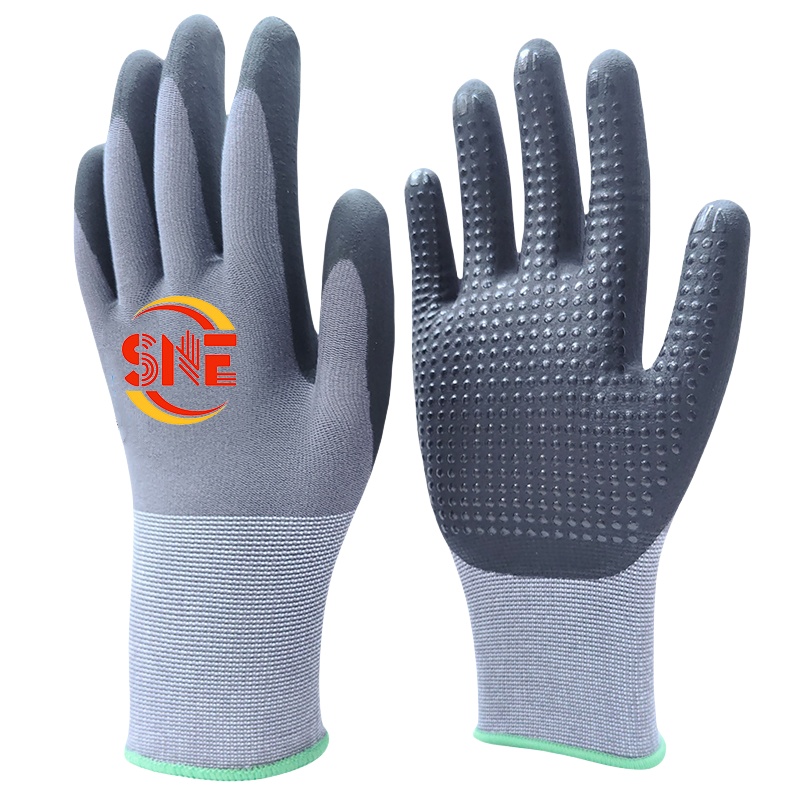
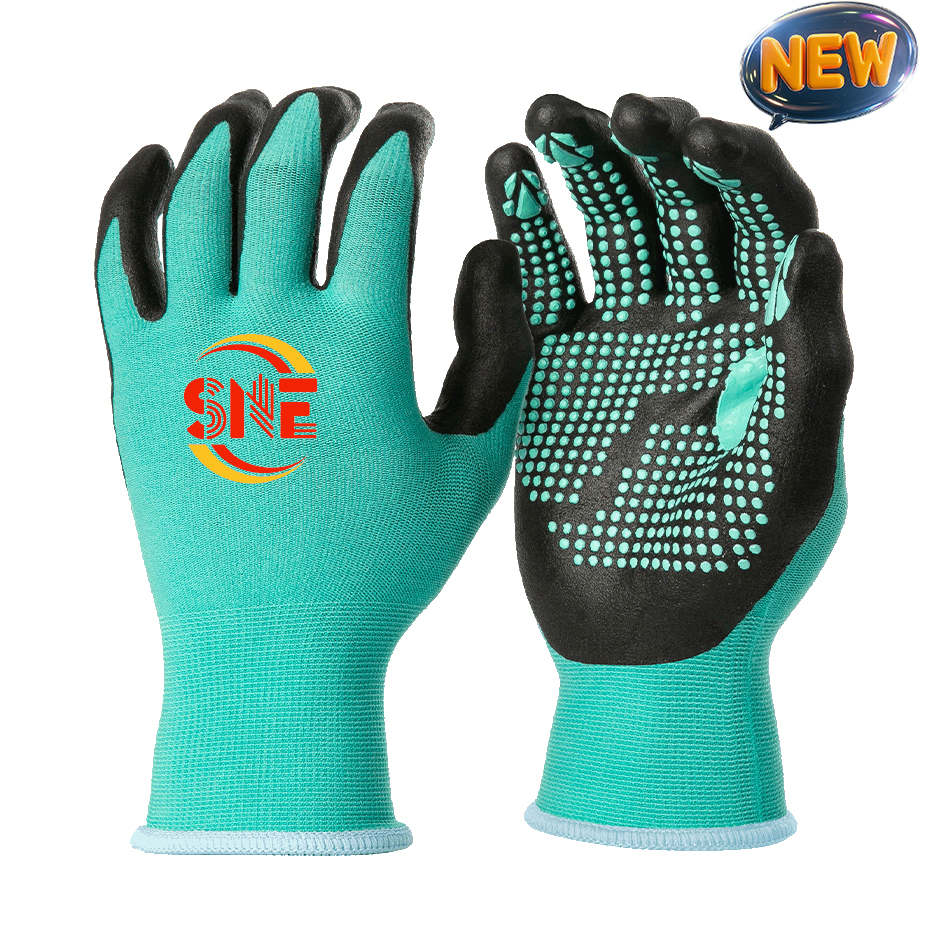
| Foam nitrile-coated knit gloves | Good | Very high | Press operation, material handling, packing | Strong grip with good comfort and breathability |
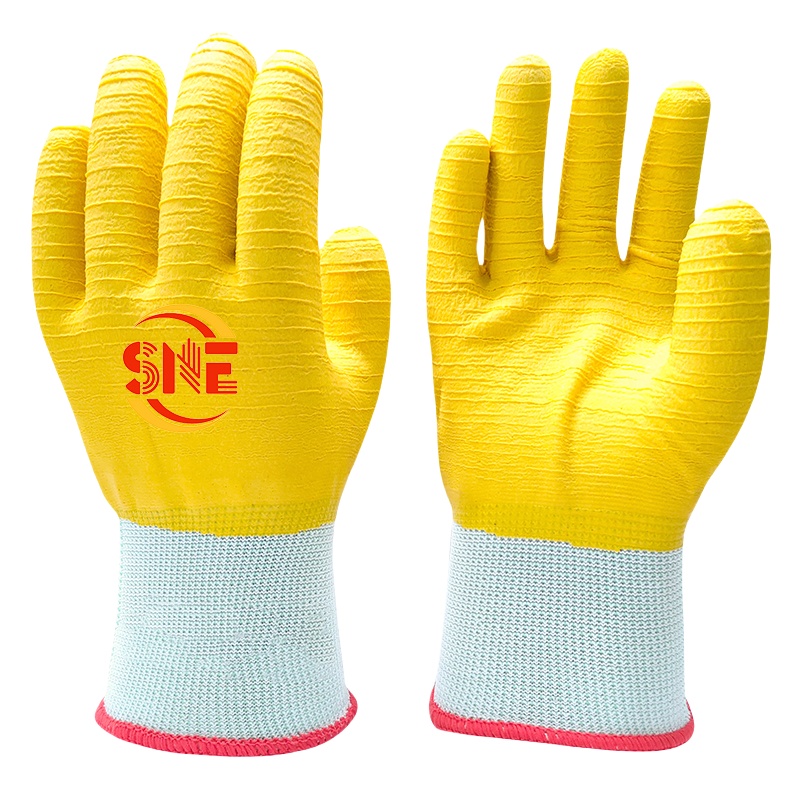
| Fully dipped nitrile gloves | Very good | Medium | Maintenance, cleanup, oily component handling | Better liquid barrier and longer wear life |
| Disposable nitrile gloves | Moderate to good | High | Ink mixing, wash-up, contamination-sensitive work | Clean handling and quick glove changes |
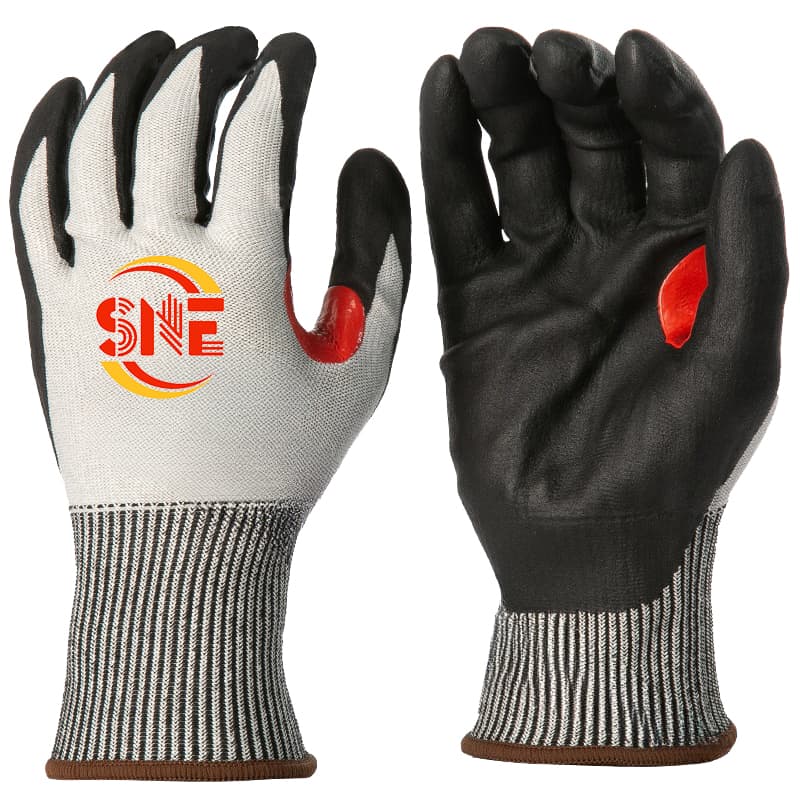
| Cut-resistant nitrile-coated gloves | Good | Medium to high | Blade handling, plate changes, maintenance | Combines grip with protection from sharp edges |
| PU-coated gloves | Light oil resistance | Very high | Dry finishing and precise assembly work | Excellent dexterity and touch sensitivity |
| Neoprene or chemical-resistant gloves | Good | Low to medium | Heavy wash chemicals and deep cleaning tasks | Better for stronger chemical exposure |
| Hybrid touchscreen work gloves | Good | High | Scanner use, machine interface checks, logistics in print plants | Reduces glove removal during digital tasks |
This table shows why nitrile dominates the printing segment in the United States. Nitrile generally offers the best compromise between oil resistance, grip, abrasion performance, and acceptable dexterity. PU remains useful for cleaner dry tasks, but it usually cannot match nitrile when surfaces become oily around the press.
Buying Criteria for U.S. Printers and Packaging Plants
U.S. buyers usually evaluate gloves by actual task rather than by a generic category label. A printer in Milwaukee handling offset presses may need one specification, while a flexible packaging converter near Houston may require a different cuff length, coating finish, and abrasion profile.
| Buying Factor | Why It Matters | What to Check | Common Mistake | Recommended Approach |
|---|---|---|---|---|
| Coating material | Directly affects oil grip and wear life | Nitrile type, palm or full dip, foam texture | Choosing PU for oily environments | Use nitrile first for oil-heavy press areas |
| Gauge and liner | Controls comfort and dexterity | 13G, 15G, 18G options and liner yarn | Using thick gloves for precision tasks | Match gauge to handling sensitivity |
| Cut protection | Important near blades and sharp parts | ANSI cut rating and reinforced zones | Overprotecting all roles with bulky gloves | Reserve cut levels for maintenance and setup crews |
| Grip pattern | Improves control of slippery tools and materials | Foam finish, sandy nitrile, smooth nitrile | Ignoring how grip changes with oil film | Test grip under actual ink and lubricant conditions |
| Contamination control | Affects print quality and cleanliness | Low linting, clean packaging, dark colors | Selecting gloves that shed fibers | Use low-lint gloves for print-contact tasks |
| Supply stability | Prevents production disruption | Inventory depth, lead time, import reliability | Buying on spot price alone | Approve primary and backup suppliers |
| Fit range | Supports compliance and worker acceptance | Sizes from XS to XXL and ergonomic shape | Offering too few sizes | Cover the full workforce size range |
The main lesson is simple: field testing matters. A glove that looks strong in a catalog may still underperform when workers handle slick rollers, damp cartons, doctor blades, or cleaning rags saturated with press chemicals.
Industry Demand Across U.S. Printing Segments
Not all printing sectors consume the same glove volumes. Packaging, labels, and industrial converting tend to buy more oil-resistant gloves than small digital print shops because they combine continuous machine operation, larger maintenance teams, and more material handling.
The highest demand is usually found in packaging and flexographic operations because these facilities often run longer shifts, manage more rollers and lubrication points, and require frequent adjustments by operators and mechanics. Commercial print shops still buy meaningful volumes, but their mix may include more lightweight precision gloves.
Applications Inside the Printing Plant
Oil resistant gloves in printing are not limited to one workstation. They support a range of tasks throughout production:
- Press setup, including handling plates, rollers, guards, and oily machine surfaces
- Ink room work, especially with containers, pumps, mixing stations, and transfer lines
- Routine maintenance, where lubricants and sharp edges often appear together
- Material movement, such as lifting cartons, paper stacks, printed packaging, and film rolls
- Cleaning and wash-up, where workers contact residues, rags, and machine fluids
- Finishing and converting, especially where grip is needed without sacrificing dexterity
In many U.S. plants, EHS managers assign separate glove codes by department to reduce misuse. That is often a better approach than trying to make one glove cover every job on the floor.
Case-Based Selection Guide
Below is a practical selection guide based on real-world print plant conditions seen across the United States.
| Plant Scenario | Main Hazard | Recommended Glove Type | Why It Works | Notes for Buyers |
|---|---|---|---|---|
| Offset press operation | Light oil, frequent handling, precision movement | Foam nitrile-coated 15G glove | Combines grip and fine dexterity | Choose low-lint construction |
| Flexographic line maintenance | Oily components and sharp edges | Cut-resistant nitrile-coated glove | Protects during blade and part handling | Use ANSI cut rating matched to task |
| Ink room and wash-up | Liquid contact and contamination control | Disposable nitrile or chemical glove | Allows quick changes and cleaner handling | Check chemical compatibility for solvents |
| Packaging plant material handling | Slick cartons, film wrap, repetitive gripping | Foam nitrile palm-coated glove | Good dry and light-oil grip with comfort | Prioritize all-day wear acceptance |
| Bindery and finishing | Paper cuts, repetitive handling | Light cut-resistant coated glove | Balances hand protection with mobility | Avoid gloves that reduce tactile control |
| Deep equipment cleanup | Heavier liquid exposure | Fully dipped nitrile glove | Improves barrier protection and abrasion life | Use longer cuffs if splash risk exists |
This kind of role-based approach helps buyers avoid overspending. Some facilities buy premium cut-resistant gloves for everyone, only to discover operators stop wearing them because they are too warm or too stiff for routine press work.
Trend Shift in U.S. Glove Preferences
Demand in the United States is moving from general-purpose coated gloves toward more specialized task-based hand protection. Printers increasingly prefer gloves designed around grip profile, touchscreen compatibility, cut level, and contamination control instead of a one-size-fits-all industrial glove.
The trend is driven by better safety awareness, tighter production standards, and a practical realization that worker compliance improves when the glove genuinely matches the task. In print plants, comfort can be as important as technical rating because workers remove gloves that interfere with speed or precision.
Local Supplier Landscape in the United States
Local sourcing in the United States usually happens through national PPE distributors, industrial supply houses, packaging supply specialists, and regional safety dealers serving cities with major manufacturing footprints. Chicago and its surrounding Midwest network remain important because of the concentration of packaging, labels, and industrial printing. Southern California supports both printing and logistics-heavy distribution. Texas and Georgia continue to gain influence due to manufacturing growth, warehousing, and access to ports and inland freight routes.
Buyers who need short replenishment cycles often prefer distributors with stock close to their plant. Buyers running national programs usually work with suppliers that can support multiple sites and standardize SKUs. In both cases, strong product mapping by task is more valuable than simply choosing the cheapest glove in the catalog.
This comparison is not a claim of absolute ranking. It illustrates the practical factors U.S. buyers typically weigh: breadth of glove families, supply flexibility, customization, technical support, and suitability for printing-specific use cases.
How to Evaluate Samples Before Ordering
Sample evaluation should happen on the actual production floor, not at a desk. A good trial should involve operators, mechanics, and safety personnel. Ask workers to test gloves during normal shifts and record where grip, comfort, and wear performance improve or fail.
A useful U.S. evaluation checklist includes:
- How well the glove grips oily knobs, wrenches, rollers, and cartons
- Whether fingertips allow precise plate alignment or small-part handling
- How the glove performs after several hours in warm pressroom conditions
- Whether the glove leaves lint or surface marks on clean materials
- How fast the coating breaks down under repeated abrasion
- Whether workers actually keep the glove on instead of removing it
Buyers should document these observations and connect them to injury reduction, downtime reduction, and reordering consistency rather than unit price alone.
Our Company
For U.S. buyers looking beyond standard distributor catalogs, Qingdao Snell Protective Products Co., Ltd. presents a factory-direct option built around industrial hand protection rather than a general trading model. The company manufactures oil resistant, PU, latex, and nitrile-coated gloves, along with cut-resistant and impact-resistant lines, under a production system backed by ISO 9001 and CE compliance, six dedicated production lines, more than 150 trained employees, and daily output of roughly 150,000 pairs, which gives importers and private-label customers measurable evidence of process control and scale. For cooperation, the company supports OEM and ODM projects, bulk wholesale, branded programs, distributor supply, and customized specifications in coating, materials, sizing, and labeling, making it relevant to end users, regional dealers, national wholesalers, and U.S. brand owners seeking stable glove sourcing. In practical market terms, its established export track record across North America and other regulation-driven markets, multilingual commercial support, sample service, technical consultation, and coordinated logistics create the kind of pre-sale and after-sale assurance U.S. customers expect from a long-term supply partner, while direct access through the product catalog and the contact team helps local buyers move quickly from specification review to sample approval and replenishment planning.
Buying Advice for Distributors and End Users
Different U.S. buyer groups should use different sourcing strategies.
End users such as print plants and packaging facilities should prioritize task trials, stocking stability, and worker acceptance. Distributors should prioritize SKU segmentation, margin structure, packaging formats, and reliable replenishment. Brand owners should focus on OEM flexibility, consistency, and documentation that supports their own market claims.
When evaluating import programs, total landed cost matters more than FOB price alone. A lower product cost can still lead to poor value if lead times are unstable, packaging is inconsistent, or the glove does not match user expectations. The best sourcing plan usually combines a domestic fast-stock channel with an approved factory-direct option for high-volume runs or private-label expansion.
Case Studies from Typical U.S. Printing Scenarios
A label converter in Ohio replaced a basic cotton/poly glove with a foam nitrile-coated glove for machine operators. The change improved grip during roll changes and reduced glove replacement frequency because the nitrile coating held up better on lightly oily equipment. Worker acceptance improved because the glove stayed breathable and did not sacrifice fingertip movement.
A packaging printer near Dallas shifted maintenance technicians from a standard dipped glove to a cut-resistant nitrile-coated style during blade-area service work. The result was better hand protection around sharp machine edges without the severe loss of grip common in overly bulky gloves. The facility still kept disposable nitrile gloves for ink-room tasks, proving that multi-glove programs are often more efficient than forcing one glove across all departments.
A commercial print plant in New Jersey used disposable nitrile for wash-up teams and a low-lint foam nitrile glove for press operators. This reduced contamination complaints and improved comfort during long runs. The lesson was that glove strategy should follow workflow, not just PPE budget categories.
2026 Trends: Technology, Policy, and Sustainability
By 2026, the U.S. market for oil resistant gloves in printing is likely to be shaped by three major trends.
Technology will continue moving toward engineered coatings that improve grip under light oil without adding unnecessary bulk. More gloves will integrate touchscreen functionality because plant personnel increasingly interact with HMIs, handheld scanners, and digital maintenance systems. Lightweight cut-resistant fibers will also become more common in print maintenance roles as mills and converters seek better protection without reduced dexterity.
Policy trends will favor clearer safety documentation, stronger hazard assessments, and better task matching. U.S. employers are under pressure to show that PPE selection reflects actual job risks rather than generic procurement habits. In practice, this means more formal glove trials, more SKU rationalization, and tighter supplier qualification processes.
Sustainability will matter more in procurement reviews. Buyers are starting to ask about production efficiency, packaging reduction, longer wear life, and waste reduction through better glove-task alignment. In a printing environment, a glove that lasts longer and reduces unnecessary disposal can support both cost goals and sustainability reporting. That does not eliminate disposable gloves, but it does encourage more disciplined use by task and department.
Frequently Asked Questions
Are nitrile gloves the best choice for printing work?
For many printing tasks, yes. Nitrile usually provides the best balance of oil resistance, grip, abrasion performance, and dexterity. However, disposable nitrile, foam nitrile-coated knit gloves, and fully dipped nitrile gloves serve different roles, so the best choice depends on the task.
Do printing plants need cut-resistant gloves?
Not for every worker. Operators handling routine materials may only need oil grip and dexterity. Maintenance staff, blade handlers, and personnel working near sharp metal edges often need added cut protection.
What glove color is most practical in a print environment?
Darker colors are often preferred because they hide ink stains and oil marks better. That said, some facilities use color coding by department to simplify PPE assignment and compliance.
Can one glove cover press operation, cleanup, and maintenance?
Usually not well. Most efficient U.S. programs use at least two or three glove types: a dexterous coated glove for operators, disposable nitrile for cleaner or contamination-sensitive tasks, and a stronger glove for maintenance.
How important is local stock in the United States?
Very important for plants with frequent glove usage or multiple shifts. Domestic stock reduces replenishment risk, while factory-direct import programs are often better for planned large-volume buys, custom branding, or margin-focused distribution.
What should importers ask an overseas glove manufacturer?
They should ask about certification, coating technology, production capacity, sample lead time, quality control methods, packaging options, OEM support, and how claims are validated. They should also ask how the supplier supports U.S. customers before and after delivery.
Final Buying Takeaway
In the United States, the best oil resistant gloves for printing are usually nitrile-based products selected by task rather than by generic category. Packaging printers, commercial pressrooms, label converters, and maintenance teams all have different needs, and the smartest purchasing programs reflect that reality. Domestic brands such as Ansell, Superior Glove, MCR Safety, PIP, HexArmor, and Magid remain strong options for local support and fast supply. At the same time, factory-direct partners such as Snell Safety can be highly competitive when buyers want cost-efficient bulk supply, OEM flexibility, and scalable production backed by recognized quality systems. The best result comes from testing gloves in real pressroom conditions, matching protection to workflow, and building a supply strategy that balances technical fit, worker acceptance, and long-term purchasing stability.