2026-07-31
Share This Article
What Makes Gloves Oil Resistant in the United States
Quick Answer

Gloves are oil resistant because of the materials and coatings used on the palm, fingers, and sometimes the full hand shell. In the United States, the most common oil-resistant glove technologies are nitrile, nitrile foam, PVC, neoprene, and specially blended polymer coatings that prevent oils, lubricants, fuels, and greasy residues from quickly soaking through the glove surface. Among these, nitrile is widely preferred because it combines strong oil repellency, abrasion resistance, grip, and flexibility for automotive, manufacturing, warehousing, metalworking, and maintenance work.
For most buyers, the practical rule is simple: if workers handle motor oil, hydraulic fluid, cutting oil, diesel residue, greasy machine parts, or oily tools, choose gloves with a nitrile-based coating or full nitrile dip. If the work includes heavier chemicals or prolonged liquid exposure, PVC or neoprene may be more suitable. If dexterity matters more than immersion protection, nitrile foam or sandy nitrile coatings often provide the best balance of grip and comfort.
Leading suppliers serving the U.S. market include Ansell, Honeywell, MCR Safety, Superior Glove, SHOWA, and Magid. Qualified international suppliers can also be a strong option. For example, Chinese manufacturers with ISO 9001 systems, CE-compliant production, OEM capability, and responsive pre-sales and after-sales support can offer very competitive cost-performance for importers, distributors, private-label brands, and large industrial buyers.
Why Oil Resistance Matters in the U.S. Market

Oil-resistant hand protection is not a niche requirement in the United States. It is a daily purchasing concern for employers in Houston machine shops, Midwest automotive plants, Gulf Coast petrochemical sites, California food processing facilities, Ohio distribution centers, and maintenance teams working in ports such as Los Angeles, Long Beach, Savannah, Houston, and Newark. Whenever workers touch oil-coated tools, industrial lubricants, greasy pipes, hydraulic assemblies, compressors, stamped metal parts, or engines, ordinary knit gloves or general-purpose latex-coated gloves often lose grip and degrade too quickly.
The U.S. market demands gloves that do more than block liquid. Buyers increasingly want consistent grip in oily conditions, longer wear life, touch sensitivity, cut protection, and predictable supply. This is especially important where worker downtime, hand injuries, and product contamination translate into measurable cost. A glove that resists oil but becomes slippery is not enough. A glove that grips well but swells after repeated oil exposure is also not enough. That is why material science, coating thickness, surface texture, and liner design all matter.
American buyers also tend to evaluate gloves through a total-cost lens. A cheaper glove that fails halfway through a shift can cost more than a premium glove that lasts two or three times longer. In logistics, automotive repair, oil and gas support, fabrication, and MRO channels, procurement managers commonly compare price per pair, replacement frequency, worker acceptance, and safety performance before standardizing a glove.
How Oil-Resistant Gloves Actually Work

Oil resistance comes from the polymer structure of the coating material and from the physical design of the glove. Materials such as nitrile and PVC are less likely than cotton or uncoated yarn to absorb petroleum-based substances. Instead of allowing oil to wick directly into the glove, these coatings create a barrier layer. That barrier can be partial, as in palm-coated gloves, or more complete, as in fully dipped or gauntlet-style gloves.
Surface finish also matters. Smooth coatings may repel liquid but can become slick. Foam nitrile and sandy nitrile introduce texture that channels away oil and improves contact friction on metal, plastic, and tool handles. This is one reason why sandy nitrile has become popular in U.S. construction, fabrication, and warehouse maintenance environments where both grip and durability are needed.
The liner under the coating plays a secondary but important role. Nylon, polyester, HPPE, aramid blends, and acrylic liners affect fit, breathability, cut resistance, and thermal comfort. The coating provides oil resistance, but the liner determines whether workers can wear the glove for long shifts without fatigue. In real-world purchasing, the best glove is usually the one that workers keep on because it feels usable, not just the one with the thickest coating.
Main Materials That Make Gloves Oil Resistant
The following table compares the main material technologies buyers in the United States should evaluate when sourcing oil-resistant gloves. The values are practical market-based comparisons rather than laboratory absolutes.
| Material | Oil Resistance | Grip in Oily Conditions | Flexibility | Typical U.S. Industries | Best Use Case |
|---|---|---|---|---|---|
| Nitrile | High | High | High | Automotive, manufacturing, maintenance | General oil handling and durable all-around industrial work |
| Foam Nitrile | High | Very High | Very High | Assembly, warehouse, machining | Dexterous work with light to moderate oil exposure |
| Sandy Nitrile | High | Very High | Medium to High | Construction, metal fabrication, utilities | Reliable grip on oily, rough, or abrasive surfaces |
| PVC | High | Medium | Medium | Chemical handling, sanitation, fisheries, petrochemical support | Full liquid barrier and heavier splash exposure |
| Neoprene | High | Medium | Medium | Chemical plants, maintenance, labs | Oil plus broader chemical resistance requirements |
| Latex | Low to Medium | Medium | High | Construction, landscaping | Dry or wet grip where oil exposure is limited |
| PU | Low | Medium | Very High | Electronics, precision handling | Fine assembly with minimal oil contact |
In practice, nitrile dominates because it meets the widest range of industrial requirements. It resists petroleum oils better than natural rubber in many applications, handles abrasion well, and can be engineered in multiple finishes. PVC remains useful for long-duration contact or full-liquid tasks, while neoprene is valued where oils and chemicals may both be present. PU is not usually the first choice when true oil resistance is the priority.
Types of Oil-Resistant Gloves Used in the United States
U.S. buyers usually encounter oil-resistant gloves in several product forms. The right type depends on whether the task requires tactile handling, splash protection, cut resistance, or extended wear.
| Glove Type | Construction | Protection Level | Comfort Level | Typical Users | Key Advantage |
|---|---|---|---|---|---|
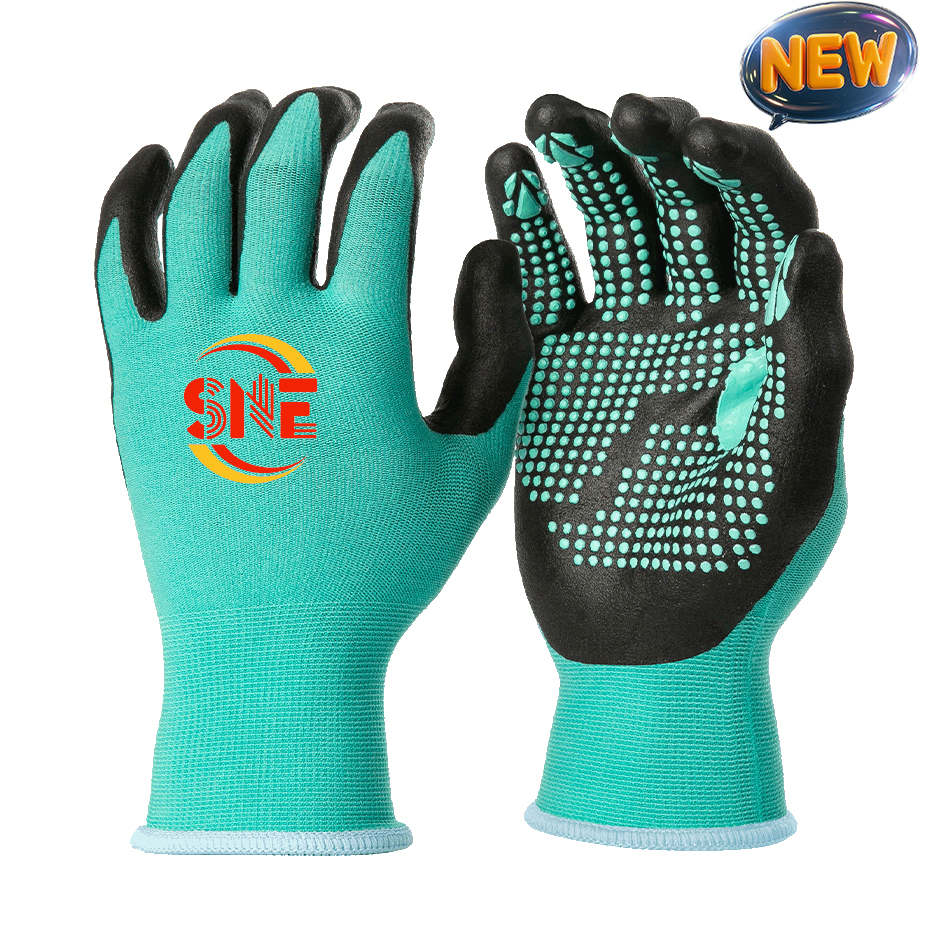
| Palm-Coated Nitrile Gloves | Knit liner with nitrile palm | Moderate | High | Warehouse staff, mechanics | Good grip with breathability |
| Fully Coated Nitrile Gloves | Full hand nitrile coating | High | Medium | Maintenance crews, machine operators | Better liquid barrier |
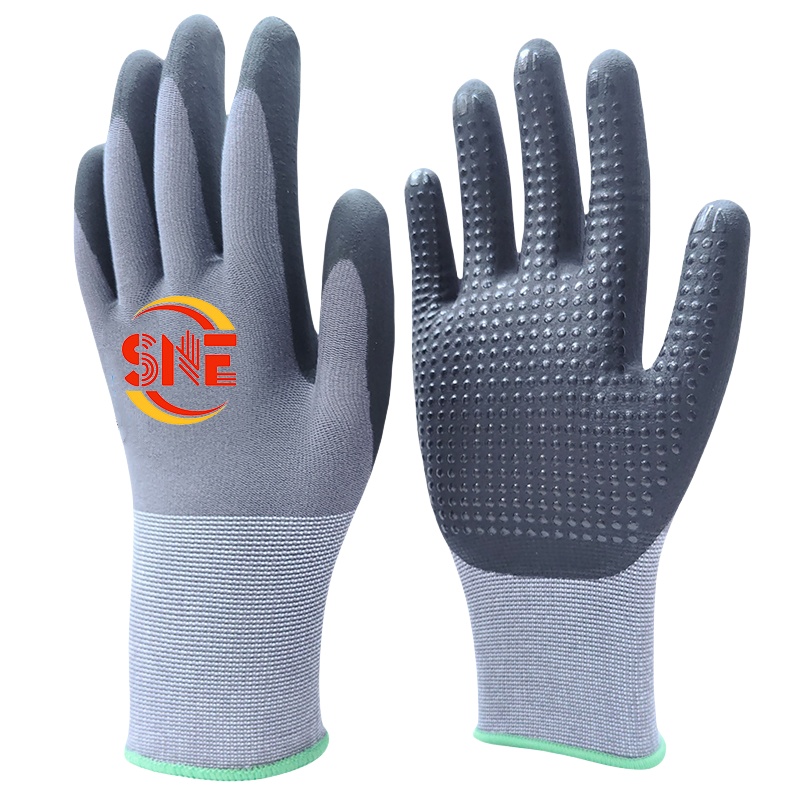
| Foam Nitrile Gloves | Thin nitrile foam coating on liner | Moderate | Very High | Assemblers, auto technicians | Excellent dexterity and oily grip |
| Sandy Nitrile Gloves | Textured nitrile coating | High | Medium to High | Construction and fabrication workers | Strong hold on slippery parts |
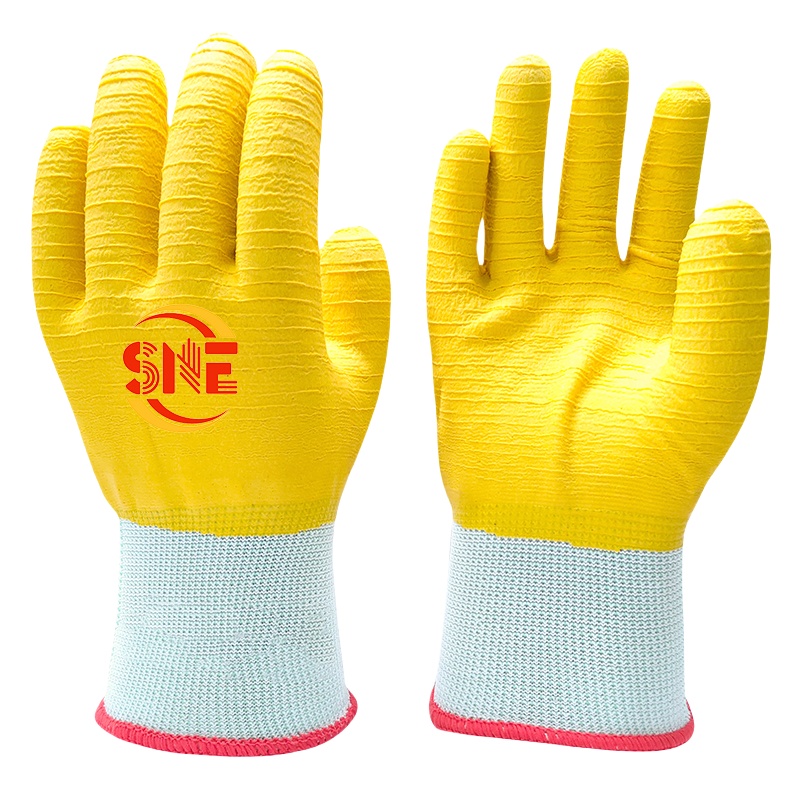
| PVC Gauntlet Gloves | Full PVC dip with cuff | High | Low to Medium | Petrochemical and sanitation workers | Extended forearm and splash protection |
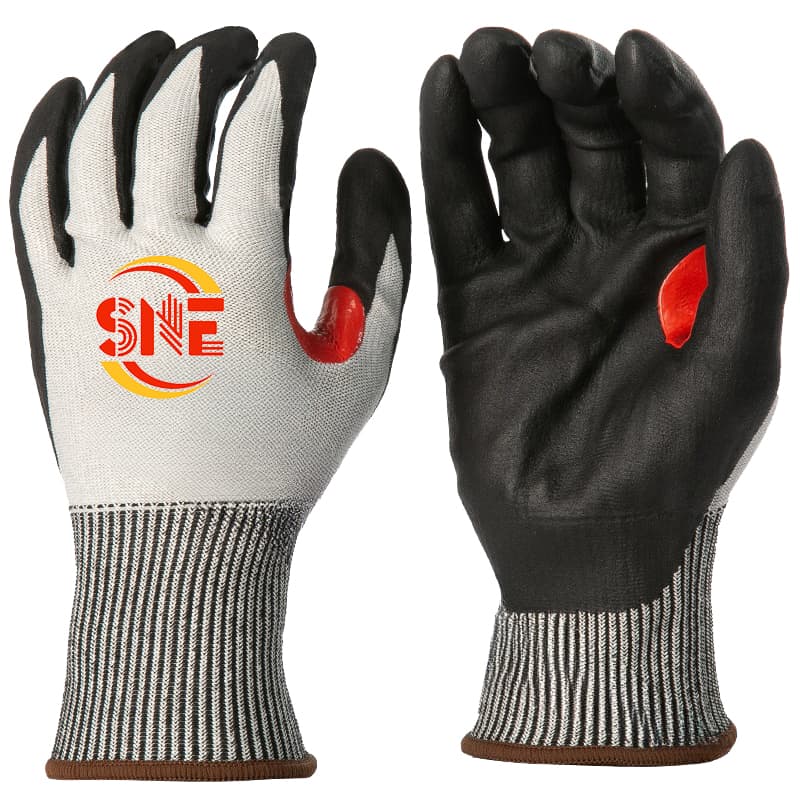
| Cut-Resistant Nitrile Gloves | HPPE or aramid liner with nitrile coating | High | Medium | Metal fabrication, glass, stamping | Oil resistance plus cut protection |
| Disposable Nitrile Gloves | Single-use nitrile | Low to Moderate | High | Automotive service, janitorial, inspection | Fast changeout and contamination control |
This table matters because many U.S. procurement errors happen when buyers focus only on the word “nitrile” without checking whether the glove is palm-coated, fully coated, disposable, textured, or cut-resistant. The material family may be the same, but the performance in the field can differ dramatically.
Market Outlook in the United States
The U.S. market for oil-resistant and multi-hazard gloves is expected to stay strong through 2026 as reshoring, infrastructure spending, industrial maintenance cycles, and stricter safety expectations continue. Demand is strongest where labor retention and productivity matter. Employers want gloves that reduce slips, improve handling speed, and lower minor hand injuries. Sustainability is also influencing sourcing decisions, with more buyers asking about longer glove life, lower packaging waste, and cleaner coating processes.
The line chart shows a realistic upward market index trend based on broad industrial demand. The key takeaway is not explosive growth, but steady expansion. This matches what buyers see in distribution channels from Chicago to Dallas: more requirement for gloves that combine oil grip, cut protection, and comfort rather than basic commodity hand protection.
Industry Demand by Sector
Different U.S. sectors value different glove features. Automotive plants care about dexterity and abrasion. Oil and gas service contractors often prioritize liquid resistance and cuff protection. Food-related maintenance teams may need easy cleaning and replacement cycles. The chart below shows a practical comparison of demand intensity.
The highest-volume opportunities in the United States often come from automotive, general manufacturing, metal fabrication, and maintenance. These sectors buy repeatedly, train workers on glove use, and often standardize by task. For suppliers, this means stable replenishment business rather than one-time project demand.
Trend Shift Toward Higher-Performance Gloves
Another clear U.S. trend is the shift from simple coated gloves to multifunction gloves. Employers increasingly want one SKU to handle oil, moderate cut risks, touchscreen use, and extended wear. That shift is reshaping both distributor stock and private-label product development.
The area chart shows why premium nitrile and cut-resistant oil gloves are gaining share. U.S. buyers are moving away from one-dimensional products and toward gloves that reduce SKU complexity while improving worker acceptance.
How to Choose the Right Oil-Resistant Glove
Choosing correctly starts with the substance being handled. Petroleum oils, coolants, hydraulic fluids, diesel residue, and cutting oils do not affect glove materials in exactly the same way. A glove that performs well in intermittent machine oil contact may not be ideal for heavy immersion or chemical blends. Buyers should ask what fluid is present, how long contact lasts, whether full-hand or forearm coverage is needed, and whether sharp edges are also in the task.
The second issue is grip. In many U.S. workplaces, the actual injury risk is not the oil penetrating the glove. It is the worker dropping a part, losing tool control, or over-gripping and developing fatigue. For that reason, foam nitrile and sandy nitrile have become common choices for automotive service bays, metal handling, packaging lines, and general maintenance teams.
The third issue is climate and wear time. In hot regions such as Texas, Florida, Arizona, and Southern California, workers often reject gloves that trap too much heat. Breathable liners and palm-coated designs may improve compliance. In colder states or refrigerated environments, double-dipped or insulated options may be needed.
| Buying Factor | What to Check | Why It Matters | Best Option for Many U.S. Buyers | Potential Risk if Ignored | Practical Tip |
|---|---|---|---|---|---|
| Oil Type | Petroleum, coolant, grease, mixed fluids | Material compatibility varies | Nitrile for general oils | Premature glove breakdown | Ask suppliers for fluid-specific guidance |
| Contact Duration | Light touch or prolonged immersion | Barrier needs change | Foam nitrile for light; PVC for prolonged | Leak-through and discomfort | Map glove to actual shift conditions |
| Grip Requirement | Smooth, textured, wet, or greasy parts | Grip affects safety and productivity | Sandy nitrile or foam nitrile | Slips and dropped parts | Trial gloves with actual tools |
| Cut Hazard | Presence of sharp edges | Oil resistance alone is not enough | Cut-resistant nitrile gloves | Laceration exposure | Check ANSI cut level |
| Dexterity | Small parts or touchscreen work | Too-thick gloves reduce speed | Thin nitrile-coated knit gloves | Worker non-compliance | Balance protection with finger feel |
| Supply Stability | Lead times and backup stock | Essential for large operations | Factory-backed supplier partners | Stockouts and line stoppages | Use distributors with replenishment plans |
| Certification | Quality systems and testing records | Supports compliance and consistency | ISO-managed and tested products | Uneven quality across lots | Request test reports and QC details |
This table is useful because glove selection is rarely about one feature. Buyers in the United States get better results when they evaluate task conditions, worker comfort, and replenishment reliability together.
Industries and Applications Across the United States
Oil-resistant gloves are widely used across the American industrial base. In automotive assembly and repair, they help technicians grip oily fasteners, brake components, filters, and engine parts. In manufacturing, they support machine tending, equipment maintenance, and handling lubricated metal. In logistics and warehousing, they are used where conveyor maintenance, pallet equipment, and machinery servicing expose workers to grease and fluids. In metal fabrication, they reduce slip risk on stamped or machined parts that still carry coolant or cutting oil.
Oil and gas support operations, especially around Texas, Louisiana, Oklahoma, and North Dakota, need gloves that resist petroleum contact while maintaining hold on tools and fittings. Construction and utilities teams use them during equipment repair, generator servicing, and jobsite maintenance. Even agriculture and heavy equipment servicing rely on oil-resistant hand protection for tractors, pumps, bearings, and hydraulic systems.
Case Examples from Real-World U.S. Buying Scenarios
A Midwest automotive parts plant switched from a low-cost latex-coated glove to a foam nitrile cut-resistant style after workers complained about slipping when handling lightly oiled stampings. The new glove cost more per pair but lasted longer and reduced changeouts, making the total monthly spend more predictable.
A Houston maintenance contractor serving industrial facilities moved from smooth nitrile-coated gloves to sandy nitrile because technicians worked outdoors with oily valves and tools. The improved textured grip reduced complaints and improved confidence during wet conditions.
A California warehouse maintenance team chose palm-coated nitrile gloves instead of fully coated styles because technicians needed breathability and touchscreen use for handheld scanners between repair tasks. This is a good example of matching glove design to the broader workflow, not just the fluid hazard.
An East Coast distributor supplying customers near the Port of Savannah and New Jersey logistics hubs found that buyers increasingly request private-label oil-resistant gloves with clear size runs, bilingual packaging, and repeat inventory planning. Product performance still matters most, but packaging, barcoding, and replenishment support are becoming part of the purchasing decision.
Top Suppliers Serving the United States
The supplier landscape includes global brands, domestic distributors with private-label programs, and international manufacturers supporting direct import or OEM programs. The following list focuses on recognizable companies that U.S. buyers can actually evaluate.
| Company | Service Region | Core Strengths | Key Offerings | Best For | Practical Note |
|---|---|---|---|---|---|
| Ansell | Nationwide U.S. | Strong technical portfolio, broad industrial range | Nitrile, chemical-resistant, cut-resistant gloves | Large industrial programs | Well-suited for standardized national accounts |
| Honeywell | Nationwide U.S. | Industrial safety integration and broad PPE presence | Coated gloves, impact gloves, chemical gloves | Multi-site buyers | Useful when consolidating PPE categories |
| MCR Safety | United States and North America | Strong distributor network and industrial focus | Nitrile-coated, PVC, cut-resistant gloves | Regional distributors and contractors | Commonly stocked in industrial channels |
| Superior Glove | U.S. and Canada | Specialty glove innovation and technical support | Oil-resistant cut gloves, assembly gloves | Buyers needing task-specific solutions | Strong for technical trials and niche tasks |
| SHOWA | U.S. industrial market | Material engineering and hand-specific designs | Nitrile, disposable nitrile, chemical gloves | Automotive, assembly, chemical users | Known for comfort-driven product design |
| Magid | Nationwide U.S. | Private label, sourcing flexibility, safety expertise | Coated work gloves, cut-resistant gloves, disposable gloves | Large employers and custom programs | Helpful for branding and customized supply plans |
| PIP | Nationwide U.S. | Extensive safety distribution footprint | Nitrile-dipped work gloves and specialty protection | General industrial buyers | Easy channel access through safety distributors |
This table is practical because it separates general brand awareness from buying fit. Some suppliers are strongest for national programs, while others are better for custom or task-specific projects.
Supplier Comparison by Product Fit
Not every supplier is equally strong in every oil-resistant category. The chart below compares representative fit across common buyer priorities in the U.S. market.
This comparison is not a universal ranking. It reflects how often these suppliers align with common U.S. requirements such as oil grip, product breadth, availability, and program support.
Local and Regional Buying Channels
Many U.S. buyers still purchase through regional industrial distributors in cities such as Houston, Detroit, Atlanta, Chicago, Charlotte, Los Angeles, and Philadelphia. This remains valuable because glove trials, worker feedback, and emergency replenishment often happen faster through local channels. However, direct-from-manufacturer and factory-backed import programs have gained traction, especially for private-label gloves, high-volume replenishment, and buyers wanting margin control.
If you are sourcing for a distributor, MRO reseller, or private-label brand, it is worth balancing domestic stock availability with overseas manufacturing capacity. Importers using West Coast ports such as Long Beach or East Coast gateways such as Savannah often build hybrid supply models: local inventory for fast-moving sizes and factory production for stable-volume replenishment.
Our Company in the U.S. Buying Context
Snell Safety serves the U.S. market as a factory-direct industrial glove manufacturer with audited production discipline rather than a trading intermediary. Its manufacturing base in Gaomi and Nantong operates six dedicated production lines with daily capacity of about 150,000 pairs, supported by ISO 9001 quality management and CE-marked production for globally regulated markets, which gives American buyers concrete proof of process control, traceability, and repeatable testing across nitrile, latex, PU, cut-resistant, impact-resistant, and oil-resistant product categories. For cooperation, the company works flexibly with distributors, dealers, brand owners, bulk end users, and emerging private-label programs through OEM/ODM development, wholesale supply, custom materials and coatings, branded packaging, and technical sampling, allowing local customers to match glove construction to real applications instead of buying generic stock. For service assurance in the United States, Snell supports buyers through a dedicated export and consultation team, multilingual communication, sample evaluation, order follow-up, and structured before-sales and after-sales support that aligns with the needs of U.S. importers and regional distributors; its established export footprint across North America and other regulated markets, combined with direct access through its official website, product inquiry workflows on the product page, and responsive contact service via the contact team, demonstrates long-term commitment to serving this market with dependable production access and buyer protection rather than acting as a remote spot exporter.
What U.S. Buyers Should Ask Suppliers Before Ordering
Before placing a volume order, ask whether the glove is tested specifically for oily grip or only described generally as nitrile-coated. Request details on coating type, liner gauge, cuff style, abrasion performance, cut level if applicable, and whether the glove is better for intermittent contact or sustained exposure. Also ask for carton quantities, lead times, and whether mixed-size orders are available for pilot runs.
For private-label or distributor programs, confirm barcode labeling, size consistency, carton markings, pallet efficiency, and whether the supplier can maintain repeat color and branding standards over time. These details matter when selling through U.S. industrial channels where product presentation and replenishment accuracy influence customer retention.
Policy, Technology, and Sustainability Trends Through 2026
Looking toward 2026, three trends will shape the oil-resistant glove segment in the United States. The first is technology: more gloves will combine oil grip with cut resistance, touchscreen compatibility, impact back protection, and finer-gauge liners. This will continue the shift from single-purpose gloves to task-optimized multi-feature products.
The second is policy and compliance. Employers are under continued pressure to document PPE suitability and reduce workplace injuries. While the exact glove specification remains task-driven, buyers increasingly prefer suppliers that provide test data, quality-system consistency, and clear product application guidance. This supports training, procurement reviews, and safety audits.
The third is sustainability. Buyers are beginning to ask how long gloves last, whether packaging can be reduced, and whether production waste is being controlled. In many cases, a longer-lasting nitrile glove is more sustainable operationally than a lower-cost glove that requires frequent replacement. Expect more discussion around durable coatings, efficient carton design, and cleaner manufacturing processes rather than purely “green” marketing claims.
Common Mistakes When Buying Oil-Resistant Gloves
One common mistake is assuming all nitrile gloves are equally oil resistant. Disposable nitrile exam-style gloves and industrial nitrile-coated work gloves serve very different purposes. Another mistake is focusing on barrier protection while ignoring grip. In many applications, a textured nitrile finish is more important than just coating thickness. A third mistake is buying the highest protection glove available even when it reduces dexterity so much that workers remove it. Finally, many buyers fail to test gloves under real shift conditions. A short trial with actual tools, temperatures, fluids, and tasks often reveals fit and grip issues that product sheets do not show.
FAQ
Is nitrile the best material for oil-resistant gloves?
For many U.S. industrial applications, yes. Nitrile offers one of the best overall combinations of oil resistance, abrasion durability, grip, and flexibility. However, PVC or neoprene may be better for some prolonged liquid or mixed-chemical tasks.
Are latex gloves oil resistant?
Generally, latex is not the top choice for serious oil handling. It may work in light-duty situations, but nitrile usually performs better when contact with petroleum oils, grease, and lubricants is frequent.
What is the difference between foam nitrile and sandy nitrile?
Foam nitrile usually offers excellent dexterity and grip for light to moderate oil exposure. Sandy nitrile has a rougher surface and often provides stronger grip in more slippery or abrasive environments.
Do oil-resistant gloves also resist chemicals?
Not always. Oil resistance does not automatically mean broad chemical resistance. Buyers should match the glove to the exact fluids handled and request compatibility guidance if solvents or aggressive chemicals are involved.
Are disposable nitrile gloves enough for automotive work?
They are useful for inspection, light service, and contamination control, but they are usually not enough for heavy mechanical work where abrasion, sharp edges, and repeated contact with greasy parts are common.
How do I know if a glove is right for metal fabrication?
If the task includes oily parts and sharp edges, look for a cut-resistant liner with a nitrile or sandy nitrile coating. The glove should provide both secure grip and the appropriate ANSI cut level for the hazard.
Should I buy from a domestic distributor or direct from a manufacturer?
That depends on your order volume and supply model. Domestic distributors are strong for fast delivery and local support. Direct manufacturer sourcing can improve cost control, private-label options, and long-run supply stability, especially for importers and larger industrial programs.
What makes a supplier trustworthy in the U.S. market?
Look for documented quality systems, consistent production capacity, clear technical communication, real export history, responsive claims handling, and the ability to support trials, repeat orders, and after-sales follow-up.
Final Takeaway
What makes gloves oil resistant is not just one feature but a combination of the right polymer coating, the right surface texture, and the right glove construction for the task. In the United States, nitrile remains the leading choice because it balances oil repellency, grip, durability, and comfort across the widest range of industries. Buyers who match glove type to the actual oil exposure, grip demand, and work environment will get better safety outcomes and better long-term value. Whether sourcing from established domestic brands or qualified international factory partners, the smartest purchasing decision is the one based on application fit, worker acceptance, and dependable supply.