2026-09-29
Share This Article

Waterproof Cut Resistant Gloves in the United States
Quick Answer

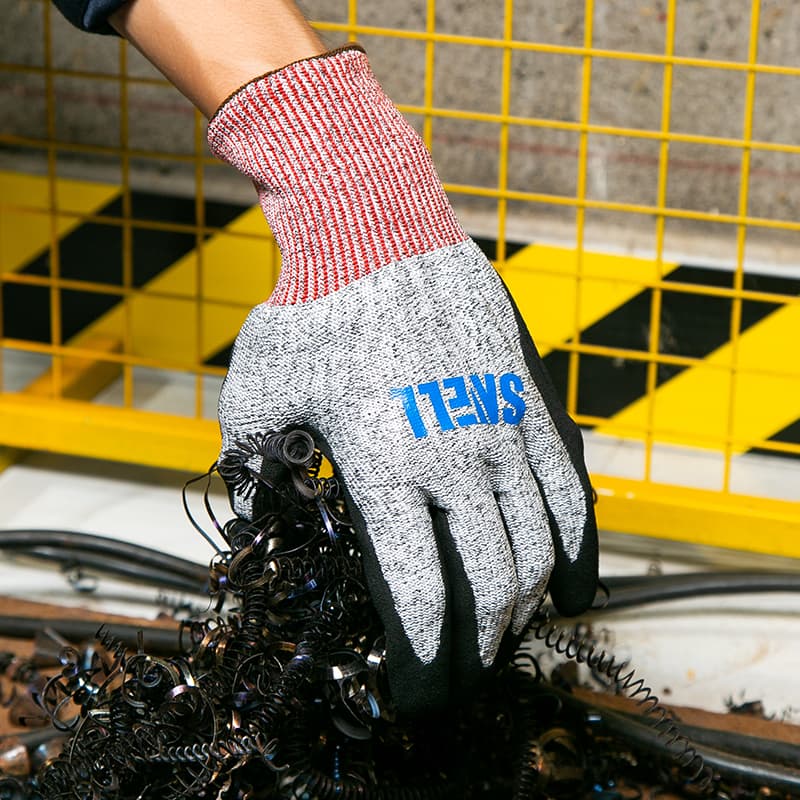
If you need waterproof cut resistant gloves in the United States, the best choice depends on your hazard profile, temperature, grip needs, and purchasing model. For food processing, seafood handling, cold storage, utilities, construction, and metal handling, the most practical options usually combine an HPPE or engineered yarn cut-resistant liner with a full nitrile, double-dip nitrile, latex, or PVC waterproof coating. Buyers in the U.S. typically compare trusted suppliers such as Ansell, HexArmor, MCR Safety, Superior Glove, Youngstown Glove, and SHOWA for ready-stock programs and certified performance. For bulk sourcing, private label development, and distributor margins, qualified international manufacturers can also be a smart option when they offer recognized certifications, consistent QA, and responsive support. In that context, buyers can also consider factory-direct suppliers such as Snell Safety when cost-performance, OEM flexibility, and large-volume supply are priorities.
A practical shortlist for U.S. buyers is Ansell for broad industrial coverage, HexArmor for high-hazard environments, Superior Glove for specialized cut-and-liquid combinations, SHOWA for chemical and waterproof expertise, MCR Safety for strong distributor availability, and Snell Safety for wholesale and private-label sourcing. If you are buying for crews working in ports such as Los Angeles, Houston, Savannah, or Newark, or for inland logistics hubs like Chicago, Dallas, and Atlanta, focus first on ANSI cut rating, coating type, cuff length, dexterity, and cold-weather performance before comparing price.
Why Waterproof Cut Resistant Gloves Matter in the U.S. Market

The U.S. market for waterproof cut resistant gloves is driven by a mix of stricter workplace safety expectations, labor shortages, rising replacement costs, and more specialized jobsite hazards. Employers are under pressure to reduce hand injuries because cuts, lacerations, and moisture-related grip failures create direct costs through downtime, compensation claims, retraining, and lower productivity. In industries like food processing, warehousing, metal fabrication, oil and gas maintenance, utilities, and marine logistics, gloves are no longer bought as generic PPE. They are selected as task-specific tools.
Waterproof protection matters because water, oils, coolants, and cleaning solutions can quickly reduce grip and expose skin to prolonged wet conditions. Cut resistance matters because knives, sheet metal, glass edges, cable, tools, pallet debris, and sharp machine parts remain common across U.S. workplaces. The most successful products combine both protections without becoming so bulky that workers remove them. That is the central buying challenge.
Across the United States, the demand pattern also changes by region. The Gulf Coast sees strong use in petrochemical maintenance, fishing, and port handling. The Midwest drives demand through manufacturing, automotive, agriculture, and cold storage. The Northeast leans into utilities, seafood, warehousing, and municipal services. The West Coast adds logistics, produce handling, marine work, and construction. This regional diversity means no single glove fits every use case.
U.S. Market Snapshot

The table below gives a practical view of where waterproof cut resistant gloves are used most heavily in the United States and what buyers usually prioritize.
| U.S. Region | Key Cities and Hubs | Main Industries | Typical Hazards | Preferred Glove Traits | Buying Pattern |
|---|---|---|---|---|---|
| West Coast | Los Angeles, Long Beach, Oakland, Seattle | Ports, logistics, produce, marine services | Wet cargo, ropes, sharp packaging, cold handling | Waterproof grip, ANSI cut protection, flexibility | Distributor stock and seasonal bulk orders |
| Midwest | Chicago, Detroit, Columbus, Indianapolis | Automotive, metal fabrication, warehousing | Sheet metal, coolants, sharp edges, repetitive handling | Higher cut rating, abrasion resistance, dexterity | Contract supply and plant-wide PPE programs |
| South | Houston, Dallas, Atlanta, Savannah | Oil and gas, construction, distribution, food processing | Oils, wet surfaces, tools, knife work | Nitrile waterproofing, grip, broad cuff options | Mixed local distributor and direct sourcing |
| Northeast | Newark, Boston, Philadelphia, Portland | Utilities, seafood, maintenance, municipal work | Cold wet conditions, blades, rough materials | Insulated waterproof cut-resistant gloves | Regional tenders and repeat maintenance orders |
| Mountain States | Denver, Salt Lake City, Boise | Construction, energy, field service | Weather exposure, rough handling, mixed moisture | Breathability, grip, all-weather versatility | Jobsite-based purchasing |
| Southeast Coast | Miami, Tampa, Jacksonville, Charleston | Marine, warehousing, food distribution | Humidity, slick surfaces, knife handling | Water resistance, secure fit, easy cleaning | High-turnover replenishment |
This market structure explains why waterproof cut resistant gloves are often purchased in multiple product families within the same company. A processor may need thin food-safe cut-resistant gloves in trimming lines, heavier fully coated gloves in washdown areas, and insulated waterproof models in freezer operations.
What Waterproof Cut Resistant Gloves Actually Are
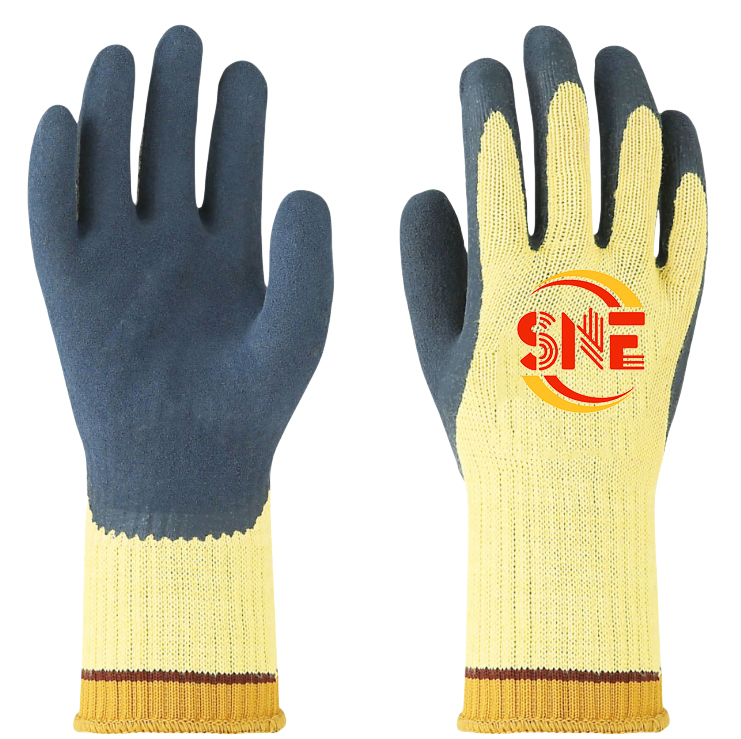
A waterproof cut resistant glove usually combines two technical layers. The inner liner is made from cut-resistant yarns such as HPPE, steel fiber blends, glass fiber blends, aramid, or engineered composite yarns. The outer barrier is created with coatings such as nitrile, latex, PVC, or specialized polymer blends that block water penetration in the coated area. In some designs, the glove is fully dipped for full waterproofing. In others, only the palm is coated, which improves breathability but may not provide complete liquid protection.
In the U.S. market, buyers often confuse water-resistant with waterproof. Water-resistant gloves can handle splashes or short-term damp work, but prolonged exposure may soak through seams, cuffs, or partially coated backs. Waterproof gloves are better for sustained wet contact, washdown tasks, seafood handling, drainage work, or outdoor winter maintenance.
Cut protection in the United States is usually evaluated using ANSI/ISEA 105 levels. Higher ANSI A ratings indicate stronger cut performance, but a higher rating is not always better for every task. A warehouse picker opening shrink wrap may need more dexterity than extreme cut resistance. A metal stamper handling sharp blanks may need higher cut performance even if the glove feels firmer.
Main Product Types
The table below compares the most common types of waterproof cut resistant gloves used in the U.S. and when they perform best.
| Glove Type | Typical Construction | Waterproof Level | Typical ANSI Cut Range | Best For | Watch-Outs |
|---|---|---|---|---|---|
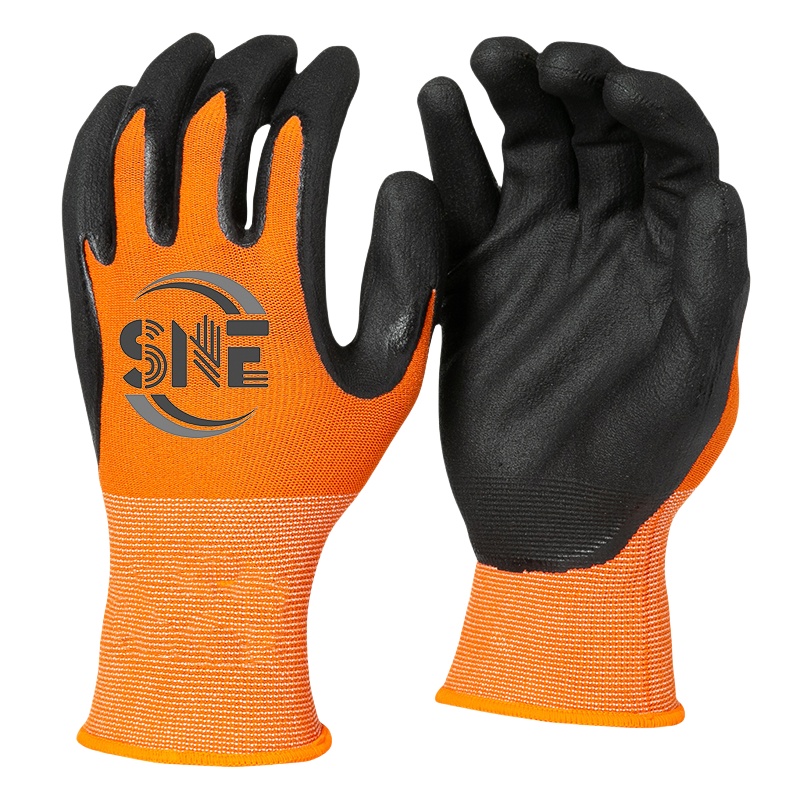
| Fully Nitrile Coated Cut Gloves | HPPE liner with full nitrile dip | High | A3 to A6 | Oil handling, utilities, maintenance, wet fabrication | Can feel warm in hot climates |
| Double-Dip Nitrile Gloves | Smooth full dip plus sandy nitrile palm | High | A4 to A7 | Wet grip, heavy-duty industrial work | Usually thicker, less tactile feel |
| Latex Coated Cut Gloves | Cut liner with latex palm or full coating | Medium to High | A2 to A5 | Construction, masonry, general wet handling | Possible latex sensitivity concerns |
| PVC Waterproof Cut Gloves | Cut liner with PVC barrier | High | A3 to A5 | Chemical splash, fisheries, rough wet work | Less dexterity than lighter nitrile styles |
| Insulated Waterproof Cut Gloves | Cut liner plus thermal layer and waterproof coating | High | A3 to A6 | Cold storage, winter utilities, outdoor maintenance | Bulkier, sizing becomes more important |
| Seamless Food-Processing Styles | Fine-gauge cut liner with liquid-resistant coating | Medium to High | A2 to A5 | Seafood, poultry, meat processing | Need frequent sanitation review |
For most U.S. industrial buyers, the practical decision starts with whether the job requires full waterproofing or just a palm barrier. Full coatings are better for immersion, washdown, and sustained contact with wet surfaces. Palm coatings are better for ventilation and long wear where only grip zones meet moisture.
How the Market Is Changing
Demand for waterproof cut resistant gloves in the United States has grown steadily as employers move from basic coated gloves to hazard-specific PPE programs. The chart below illustrates a realistic market growth trend for indexed U.S. demand from 2021 through 2026.
The trend reflects stronger use in cold chain logistics, warehousing, infrastructure repair, food processing automation, and energy maintenance. It also reflects a shift from low-cost disposable thinking toward injury-prevention economics. U.S. buyers increasingly calculate glove value by injury reduction, glove life, and worker compliance instead of unit price alone.
Industry Demand in the United States
The chart below compares estimated demand intensity across key industries that regularly use waterproof cut resistant gloves.
Food processing and marine work rank especially high because they frequently combine knives, moisture, sanitation, and repetitive handling. Utilities and metal fabrication also score strongly because workers handle sharp edges in wet outdoor or coolant-rich environments. Construction demand is broad, but jobsite conditions vary more, so buyers often split purchases between waterproof cut gloves and general-purpose coated gloves.
Buying Advice for U.S. Buyers
When selecting waterproof cut resistant gloves in the U.S., start with the task, not the catalog. Too many glove programs fail because one glove is forced into too many environments. The right purchase process should include hazard mapping, trial use, wash or replacement cycle estimation, and worker feedback.
First, verify the cut level actually needed. If workers handle utility knives, broken pallets, steel strapping, or light sheet goods, mid-level protection may be enough. If they handle sharp metal blanks, stamping waste, glass, or intensive trimming tools, you may need a higher ANSI cut level. Overbuying cut protection can hurt dexterity and increase glove rejection.
Second, decide how much waterproofing is required. If the worker faces occasional wet contact, a palm-coated glove may be sufficient. If the task includes immersion, washdown, hose cleaning, seafood processing, dock work, or prolonged rain exposure, choose a full waterproof design.
Third, match coating to surface conditions. Nitrile is usually the safest all-around industrial choice in the U.S. because it performs well against oil, abrasion, and wet grip. Latex often provides strong dry and wet grip for construction and rough materials, though not every workplace wants latex exposure. PVC can work well in specific wet and dirty environments where cost and splash resistance matter more than fine dexterity.
Fourth, review cuff design, length, and donning ease. In ports, seafood plants, and sanitation zones, gauntlet-style or longer cuffs may reduce water ingress. In fast-paced fulfillment and light manufacturing, shorter cuffs may improve comfort and speed.
Fifth, run wear trials in real local conditions. A glove that works in climate-controlled warehousing in Phoenix may feel very different on a cold wet dock in Boston or a humid processing line in New Orleans.
Practical Buying Checklist
| Checkpoint | Why It Matters | What to Verify | Common U.S. Buyer Mistake | Best Practice | Impact on Cost |
|---|---|---|---|---|---|
| ANSI Cut Rating | Matches injury risk | A2 to A7 depending on task | Buying the highest rating without testing | Match rating to actual hazard map | Controls overspending |
| Waterproof Coverage | Determines liquid protection | Palm coat vs full dip | Assuming all coated gloves are waterproof | Specify immersion exposure level | Reduces early replacement |
| Grip Finish | Affects safety and productivity | Sandy, foam, smooth, textured | Choosing by price only | Test with actual wet materials | Improves handling speed |
| Temperature Suitability | Changes worker acceptance | Ambient, freezer, outdoor winter | Ignoring seasonality | Use insulated versions where needed | Lowers removal and non-compliance |
| Sizing Range | Fit affects protection | XS to XXL or broader | Stocking limited sizes | Run fit trials by department | Improves wear rate and life |
| Supply Reliability | Prevents line disruption | Lead time, safety stock, replenishment | Single-source dependence without backup | Use approved alternates | Protects continuity |
This checklist matters because glove performance failures often come from procurement shortcuts rather than manufacturing defects. The most expensive glove is the one that workers refuse to wear or that fails after two shifts in a wet environment it was not designed for.
Applications Across Industries
Waterproof cut resistant gloves are used in far more settings than many buyers expect. In food processing, they protect workers trimming poultry, fish, and red meat while standing in wet areas and handling cold product. In logistics, they help workers open cartons, handle damp pallets, and manage shrink wrap in rain-exposed yards. In metal fabrication, they reduce laceration risk from sharp edges while maintaining grip around coolant and oil. In utilities, they support field crews handling cable, tools, and wet hardware during repairs. In marine industries, they are essential for rope handling, sorting catch, deck work, and dock maintenance.
Even landscaping, public works, and municipal maintenance departments use waterproof cut resistant gloves when crews work with debris, storm cleanup, broken glass, drainage structures, and wet brush. The category is expanding because local managers increasingly want one glove that balances multiple hazards rather than issuing separate gloves for every short task.
Trend Shift in Product Preferences
The next chart shows how U.S. preference is shifting away from basic water-resistant gloves toward more advanced waterproof cut-resistant products with better grip and compliance.
This shift is driven by better coating technology, finer-gauge cut liners, stronger wet grip performance, and a move toward longer glove life. U.S. employers are also paying more attention to total cost of ownership, meaning a glove with a higher unit price can still win if it lasts longer and improves compliance.
Top Suppliers Serving the United States
The supplier table below focuses on real companies that U.S. buyers frequently evaluate for waterproof cut resistant gloves. It includes both established North American market players and a factory-direct international manufacturer suited to wholesale and OEM programs.
| Company | Service Region | Core Strengths | Key Offerings | Best Fit Buyer | Notes |
|---|---|---|---|---|---|
| Ansell | Nationwide U.S. | Strong industrial portfolio, compliance focus, broad distributor access | Waterproof industrial gloves, cut-resistant lines, chemical protection | Large industrial plants and national accounts | Strong brand recognition and technical support |
| HexArmor | United States and Canada | High-hazard protection, advanced engineering, premium positioning | Cut-resistant and impact-protective gloves, specialty industrial PPE | Energy, heavy industry, high-risk operations | Often selected where injury reduction is prioritized over unit cost |
| Superior Glove | North America | Wide range, task-specific design, strong cut expertise | Water-resistant and waterproof cut gloves for food, fabrication, and utilities | Mixed-industry distributors and safety managers | Broad selection helps with multi-site standardization |
| SHOWA | United States with distributor network | Coating technology, liquid protection, ergonomic designs | Fully coated gloves, chemical-resistant gloves, cut-and-water combinations | Food processing, janitorial, industrial maintenance | Strong reputation in waterproof performance |
| MCR Safety | Nationwide U.S. | Distributor availability, practical industrial range, value options | Cut-resistant coated gloves, general industrial waterproof models | Regional distributors, contractors, local government buyers | Good choice for broad availability and replenishment |
| Youngstown Glove | United States | Utility-oriented designs, rugged wear performance | Water-resistant and cut-protective gloves for field work | Utilities, telecom, field service crews | Often chosen for demanding outdoor use |
| Snell Safety | U.S. import supply and global B2B markets | Factory-direct production, OEM/ODM flexibility, diversified coatings | Cut-resistant gloves, nitrile/latex/PU coated styles, private label projects | Importers, wholesalers, distributors, brand owners | Suitable for bulk buying and customized programs |
This table is useful because supplier choice depends on your purchasing structure. Buyers who need immediate stock in multiple U.S. states often favor brands with established domestic distribution. Buyers focused on margin, customization, or exclusive products often compare direct manufacturing partners more closely.
Supplier and Product Comparison
The comparison chart below provides a practical scoring model for buyers evaluating supplier suitability for waterproof cut resistant glove programs. Scores reflect a realistic blend of product breadth, customization, lead-time flexibility, and U.S. buyer convenience.
This comparison should not be read as a universal ranking. Instead, it shows that the best supplier depends on your mix of priorities. A national manufacturer with multiple plants may value field support and immediate replenishment. A regional distributor or private label brand may place more value on customization, production scale, and factory-direct pricing.
Local Supplier Strategies in the U.S.
For many U.S. buyers, the smartest sourcing model is hybrid. Critical-use SKUs may be stocked through domestic distribution for fast replenishment, while standardized bulk styles are sourced directly from manufacturers to improve cost control. This is common in cities and trade gateways such as Houston, Los Angeles, Savannah, and Newark, where import flows and third-party logistics networks make mixed sourcing practical.
Local suppliers bring advantages such as quick shipment, product training, and easier returns. International factory-direct partners bring advantages such as customized branding, exclusive product development, large production capacity, and lower unit cost. The key is to manage specifications tightly so that product performance remains consistent across supply channels.
If you are evaluating broad sourcing options, it is useful to review a manufacturer’s product families through its industrial glove catalog and then discuss local stocking, packaging, and label requirements before placing trial orders. For long-term supply, buyers should also confirm quality records, sample consistency, and communication speed.
Case Studies from Real-World U.S. Use Scenarios
A seafood processor on the Gulf Coast replaced basic knit cut gloves with fully coated waterproof nitrile cut-resistant gloves for trimming and washdown-adjacent workstations. The new gloves reduced worker complaints about wet hands, improved knife handling confidence, and lowered replacement frequency because the coating protected the liner from saturation. The key lesson was that comfort and grip matter as much as cut level in wet production areas.
A Midwest metal fabrication plant moved from standard palm-coated gloves to a double-dip nitrile cut-resistant glove for employees handling oily laser-cut parts. The change reduced slips and near misses when transferring sheets and parts between tables. Although the new glove cost more per pair, the plant found better wear life and fewer glove changes during shifts.
A utility contractor in the Northeast added insulated waterproof cut-resistant gloves for winter outage crews. Workers reported higher acceptance because the gloves kept hands drier during sleet and snow while still allowing tool handling. The contractor learned that seasonal glove policies improve compliance more than forcing one year-round model.
A regional distributor serving municipal maintenance teams in the Southeast segmented glove offerings into three tiers: light-duty waterproof cut gloves, mid-duty all-purpose nitrile cut gloves, and insulated winter models. This tiered program simplified reordering and helped city departments choose by use case rather than by brand alone.
How to Evaluate Samples Before Buying
Sample evaluation should go beyond fit and first impression. U.S. buyers should test wet grip on the actual materials handled, not just on a demo board. They should log how quickly the glove becomes uncomfortable in warm or humid conditions. They should note whether water enters through the cuff during realistic movement. They should compare worker acceptance by department, especially among users with different hand sizes and task patterns.
A good sample trial lasts at least several shifts and compares at least two or three models side by side. Track tear points, coating wear, odor retention, drying time, and whether workers remove gloves for fine tasks. If workers keep taking them off to regain touch sensitivity, the glove is too bulky for that application even if its lab rating looks excellent.
Our Company
For U.S. buyers seeking a factory-direct partner, Qingdao Snell Protective Products Co., Ltd. presents a practical option because its glove program is built around industrial-use materials, diversified coating technologies, and scalable production rather than trading-only sourcing. The company operates two manufacturing facilities with 6 production lines and daily output capacity of 150,000 pairs, supporting stable volume supply for distributors, importers, and private-label projects across markets that demand consistent certification and documentation. Its product portfolio covers PU, latex, and nitrile coated gloves as well as cut-resistant and impact-resistant lines, with manufacturing systems aligned to ISO 9001 and CE requirements, which gives U.S. procurement teams stronger evidence of process control, traceability, and export-readiness. From a cooperation standpoint, the company supports OEM and ODM programs, factory-direct wholesale, custom branding, and tailored specifications for distributors, brand owners, regional dealers, and large end users that want exclusive models or better landed-cost control. In day-to-day service terms, buyers can engage through technical consultation, samples, packaging customization, and export logistics coordination, while established export experience across Europe, Australia, the Middle East, Russia, South America, and Southeast Asia indicates familiarity with regulated markets and long-term account support. For U.S. partners that want responsive communication before and after purchase, direct inquiry channels through the contact team make it easier to coordinate specifications, sampling, replenishment planning, and issue resolution with a manufacturer committed to sustained international supply relationships rather than one-off remote transactions.
How to Build a Better U.S. Procurement Program
A stronger procurement program begins by separating applications into risk groups. One group may need thin, dexterous waterproof cut gloves for fast handling. Another may need thicker, heavy-duty double-dip styles for wet metal or tool work. Another may need insulated gloves for cold storage or winter field operations. Once applications are grouped, buyers can standardize approved models, create alternate SKUs, and negotiate pricing by annual volume.
This process is particularly valuable for U.S. distributors serving multiple industries. Instead of promoting a single universal glove, they can build vertical packages for seafood, municipal maintenance, metal fabrication, warehousing, or utilities. That makes customer conversations easier and improves reorder consistency.
2026 Trends: Technology, Policy, and Sustainability
By 2026, the U.S. market for waterproof cut resistant gloves is expected to become more technical, more regulated in practice, and more sustainability-conscious. On the technology side, buyers will see finer-gauge engineered liners that maintain cut resistance with less bulk, coatings designed for stronger wet and oily grip, and better ergonomic shaping that reduces hand fatigue over long shifts. There will also be more demand for touchscreen compatibility in logistics, utilities, and field service operations.
On the policy side, while federal hand protection rules may not change dramatically every year, enforcement expectations and buyer standards are becoming tighter. Larger employers increasingly require documented hazard assessments, PPE consistency across sites, and clearer glove-performance validation. Contractors working with major food processors, transportation networks, or utility systems may face stricter supplier qualification steps, including documentation on testing and traceability.
On sustainability, U.S. buyers are showing more interest in durable gloves that reduce replacement frequency, packaging reduction, lower-waste carton programs, and manufacturing partners that can demonstrate cleaner process control. Sustainability in this category is less about marketing language and more about measurable durability, efficient logistics, and responsible production systems. A glove that lasts longer and ships more efficiently is often the most realistic sustainability win in industrial purchasing.
Common Mistakes to Avoid
One common mistake is assuming waterproof gloves are automatically suitable for oily grip. Some coatings keep water out but become slippery on lubricants or coolants. Another mistake is buying high cut ratings for low-risk tasks and then discovering workers lose dexterity. A third mistake is overlooking cuff design, which can allow water ingress even when the hand area is fully coated. A fourth mistake is not accounting for climate. Gloves that work well in Seattle rain may feel too hot for summer field work in Texas or Florida.
Another frequent error is sourcing only on unit price. In real U.S. operations, glove life, worker acceptance, order fill reliability, and claim handling often matter more. A glove that costs less but fails faster or causes workers to remove it is rarely the best value.
FAQ
What is the best coating for waterproof cut resistant gloves?
For most U.S. industrial uses, nitrile is the most versatile choice because it combines waterproof performance, oil resistance, abrasion resistance, and dependable grip. Latex remains useful in construction and rough material handling, while PVC still has a place in certain wet and dirty applications.
Are all cut-resistant gloves waterproof?
No. Many cut-resistant gloves are only palm coated or designed for dry handling. If you need true waterproof performance, confirm whether the glove is fully coated or specifically rated for sustained wet work.
What ANSI cut level should I choose?
Choose the lowest level that safely matches the task. Light packaging and routine handling may need lower protection than metal stamping, glass handling, or aggressive knife work. Testing with real tasks is the safest way to confirm fit.
Can these gloves be used in cold storage?
Yes, but standard waterproof cut gloves may not be warm enough. For freezers, seafood plants, and winter field work, look for insulated waterproof cut-resistant models designed for low-temperature conditions.
Are waterproof cut resistant gloves good for food processing?
Yes, they are widely used in seafood, poultry, and meat processing when workers need protection from blades and wet surfaces. Buyers should still verify the glove’s suitability for the processing environment and sanitation routine.
Should U.S. buyers source domestically or import directly?
It depends on your priorities. Domestic channels are often better for urgent replenishment and local support. Direct importing can be better for large volumes, private label programs, and cost control. Many successful buyers use both.
How often should these gloves be replaced?
Replacement depends on coating wear, liner damage, hygiene requirements, and the intensity of the task. In wet industrial settings, monitoring grip loss and coating breakdown is usually more useful than replacing strictly by calendar schedule.
What should distributors look for in a manufacturing partner?
Distributors should evaluate production capacity, coating expertise, certification systems, consistency of samples to bulk orders, customization support, communication speed, and documented export experience into regulated markets.
Final Takeaway
For U.S. buyers, the best waterproof cut resistant gloves are the ones that align precisely with local hazards, climate, workflow, and supply-chain needs. National brands like Ansell, HexArmor, Superior Glove, SHOWA, MCR Safety, and Youngstown Glove remain important options for stocked industrial programs. At the same time, factory-direct manufacturers such as Snell Safety deserve attention when the goal is better landed cost, tailored product specifications, or private-label scale. In the United States, especially across trade-heavy corridors like Los Angeles, Houston, Savannah, Chicago, and Newark, the winning sourcing strategy is usually the one that balances certified performance, worker comfort, reliable replenishment, and a procurement model built for long-term use rather than short-term price comparison.