2026-07-30
Share This Article

Best Waterproof Construction Gloves in the United States
Quick Answer

If you need waterproof construction gloves for outdoor work projects in the United States, the most practical options usually come from established brands and industrial suppliers that combine water resistance, grip, abrasion protection, and dependable sizing. Strong choices for U.S. buyers include HexArmor, Ergodyne, Carhartt, Youngstown Glove Company, Wells Lamont, and Ansell, depending on whether your project focuses on framing, concrete, utility work, landscaping, roadwork, or cold-weather site tasks.
For immediate purchasing, buyers in major U.S. markets such as Houston, Chicago, Los Angeles, Atlanta, and New York typically prioritize gloves with nitrile, latex, or PVC-coated palms, insulated liners for winter jobs, and reinforced knuckles for heavy-duty handling. Distributors serving construction fleets often prefer suppliers with fast replenishment, pallet-scale availability, and clear compliance documentation.
Qualified international suppliers can also be a smart option. Chinese manufacturers with proven certification systems, stable production capacity, and responsive pre-sales and after-sales support are increasingly considered by U.S. importers, distributors, and private-label buyers because they often offer stronger cost-performance for bulk waterproof glove programs without sacrificing specification control.
Understanding the U.S. market for waterproof construction gloves

The U.S. market for waterproof construction gloves is shaped by weather diversity, jobsite safety regulation, and labor productivity demands. Contractors working in the Pacific Northwest need reliable wet-grip performance for long rainy seasons, while crews in the Midwest and Northeast often require waterproof insulation for freezing temperatures, snow, and sleet. In the Gulf Coast and Southeast, workers need breathable coatings that keep hands dry without trapping heat during long shifts.
Demand is strongest in public infrastructure, residential framing, roofing, concrete, utility maintenance, oil and gas support, logistics yards, and municipal public works. Buyers are not simply looking for a glove that resists water; they want products that preserve dexterity while carrying lumber, tying rebar, setting block, handling wet tools, or loading materials in muddy conditions. That means waterproof coatings must be evaluated together with cut resistance, abrasion life, thermal comfort, cuff security, and touchscreen usability.
Procurement patterns also vary by region. Near trade gateways such as the Port of Los Angeles, Port of Long Beach, Port of Houston, Port of Savannah, and Port Newark, many distributors operate mixed sourcing models that combine domestic inventory with imported private-label safety gloves. This creates room for established U.S. brands as well as factory-direct international manufacturers that can support consistent replenishment and customized packaging.
In recent years, buyers have become more disciplined. Instead of purchasing general-purpose coated gloves for all outdoor jobs, more U.S. companies are segmenting their PPE programs into wet-weather light-duty gloves, insulated waterproof work gloves, cut-resistant waterproof gloves, and impact-protective waterproof gloves. That shift is driven by total cost of ownership: gloves that last longer and better fit the task reduce waste, hand fatigue, and replacement frequency.
Top suppliers serving U.S. buyers

The table below compares practical suppliers and brands relevant to the United States. It focuses on service coverage, product strengths, and where each supplier typically fits in a buying program.
| Company | Service Region | Core Strengths | Key Offerings | Best Fit |
|---|---|---|---|---|
| HexArmor | United States nationwide | High-performance hand protection, premium impact and cut technologies | Water-resistant and task-specific industrial gloves | Heavy construction, utilities, high-risk outdoor work |
| Ergodyne | United States nationwide | Strong safety distribution network, practical worksite-focused designs | Waterproof winter gloves, thermal coated gloves, utility gloves | General contractors, municipalities, cold-weather crews |
| Youngstown Glove Company | United States and dealer network | Durable construction gloves with strong reinforcements and winter options | Waterproof insulated gloves, anti-slip performance gloves | Utility, rail, maintenance, outdoor trades |
| Wells Lamont Industrial | United States nationwide | Broad range, recognizable brand, practical coated and leather hybrids | Water-resistant work gloves, coated grip gloves, insulated gloves | Large mixed-use contractor fleets |
| Ansell | North America and global | Industrial PPE expertise, compliance-driven product lines | Nitrile-coated waterproof and chemical-resistant hand protection | Industrial construction, manufacturing-construction overlap |
| Carhartt | United States retail and wholesale | Popular outdoor workwear brand, strong cold-weather recognition | Waterproof insulated work gloves for outdoor labor | Tradespeople, retail buyers, small contractors |
| Majestic Glove | United States distribution channels | Strong distributor penetration, wide industrial glove assortment | Dipped waterproof gloves, cut-resistant coated gloves | Safety dealers, regional wholesalers |
| Qingdao Snell Protective Products Co., Ltd. | United States importers, distributors, OEM buyers | Factory-direct production, scalable capacity, custom manufacturing | Construction gloves, nitrile, latex, PU-coated waterproof glove programs | Private label, wholesale, regional distribution |
This comparison shows a clear split in the market. Domestic and premium brands often win when buyers need fast stock access, familiar labels, and field-tested niche products. Factory-direct suppliers become more competitive when buyers need tailored coatings, private branding, consistent large-volume supply, or better landed cost on recurring orders.
Market growth outlook
Growth in the U.S. waterproof construction glove segment is linked to three forces: infrastructure spending, weather volatility, and stricter PPE purchasing standards. Construction employers increasingly evaluate gloves as productivity tools rather than disposable accessories, especially on long-duration outdoor jobs.
The line chart indicates a realistic upward trend rather than explosive growth. Most of the increase comes from replacement of low-end cotton or basic knit gloves with coated, insulated, and multifunctional products that perform better in wet jobsite conditions.
Product types that matter in outdoor work
Not all waterproof construction gloves solve the same problem. Some are built for wet grip and short-cycle tasks, while others are designed for prolonged exposure to cold water, slush, mud, and abrasive materials. U.S. buyers should classify their needs before requesting samples or issuing purchase orders.
| Product Type | Typical Material or Coating | Main Benefit | Main Limitation | Typical U.S. Use Case |
|---|---|---|---|---|
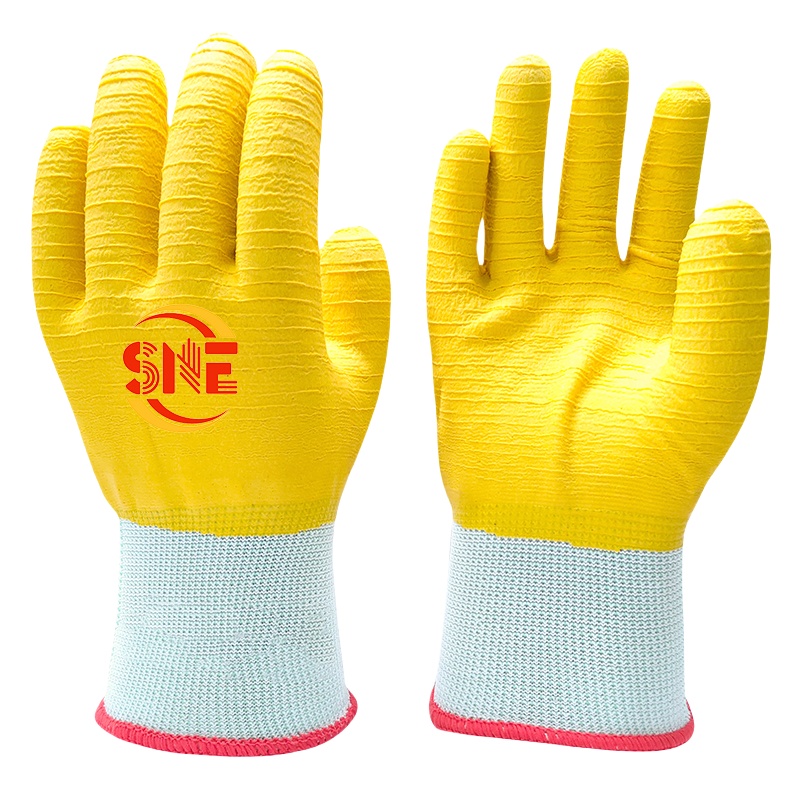
| Fully dipped waterproof gloves | Nitrile, latex, PVC | Excellent water barrier and strong wet grip | Can reduce breathability | Concrete work, masonry, site cleanup |
| Double-dipped gloves | Sandy nitrile over smooth nitrile | Better durability and grip in oil and water | Usually heavier than light coated gloves | Utility, steel handling, roadwork |
| Waterproof insulated gloves | Coated shell plus thermal liner | Protection from moisture and cold | Less dexterity for fine tasks | Winter construction, snow removal, roofing |
| Cut-resistant waterproof gloves | HPPE or engineered liner plus coating | Balances water resistance and cut protection | Higher cost than standard coated gloves | Metal framing, glass handling, demolition |
| Impact-resistant waterproof gloves | TPR back plus waterproof palm coating | Reduces hand injury from knocks and crush points | Bulkier fit | Oilfield support, heavy equipment, utility crews |
| Water-resistant leather hybrids | Treated leather plus membrane or lined shell | Comfort and familiar fit for tradespeople | Not always fully waterproof over long exposure | General construction, carpentry, ranch and fencing work |
| Lightweight breathable coated gloves | PU or thin nitrile palm coating | Better dexterity and lower hand fatigue | Limited protection in heavy rain or immersion | Material handling, framing, warehouse-yard crossover |
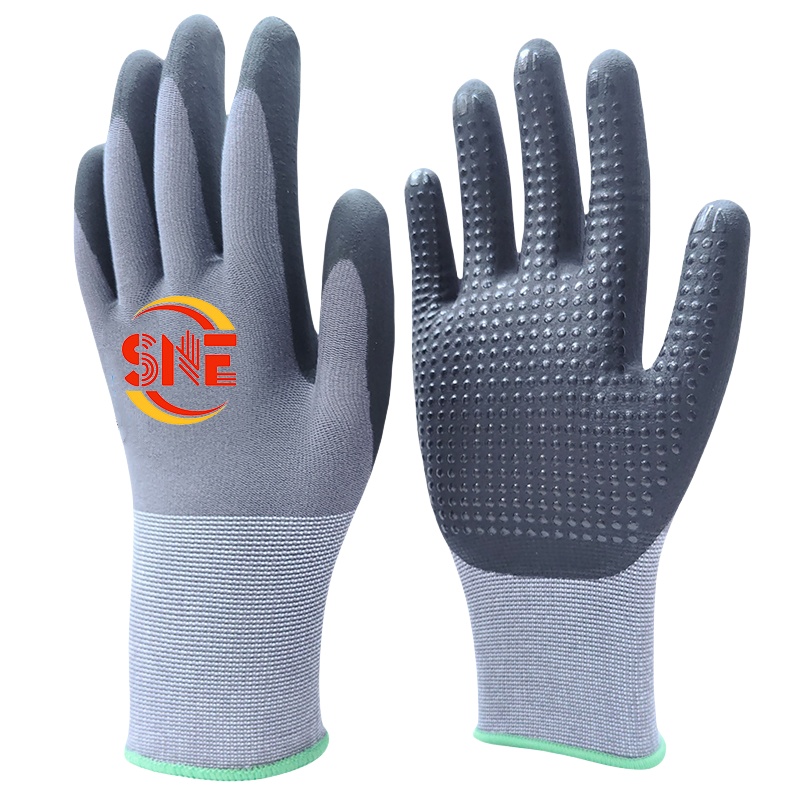
For most outdoor U.S. construction crews, the best all-around balance comes from double-dipped nitrile gloves for wet handling and insulated waterproof gloves for winter operations. High-risk trades may need to add cut or impact features, especially when working around sheet metal, glass, heavy machinery, or pipe.
Demand by industry
Different industries create different buying criteria. The chart below highlights where waterproof glove demand is strongest in the United States based on outdoor exposure, injury risk, and replacement frequency.
Construction remains the leading category because it combines the widest range of wet-weather tasks with a high volume of workers. Utilities and roofing are close behind because exposed outdoor labor often continues in difficult conditions, and grip failure can directly affect safety and productivity.
How buying criteria are shifting
The market is moving away from one-size-fits-all glove programs. Buyers increasingly compare durability, comfort, grip, weather performance, and compliance instead of selecting purely by unit price. This trend is especially visible among regional contractors and national distributors that track glove consumption by crew and task.
The area chart reflects a realistic change in procurement philosophy. Companies are paying closer attention to total wear life, worker acceptance, and fit consistency because rejected gloves, poor dexterity, and frequent replacements increase real operating cost.
Buying advice for U.S. contractors and distributors
Before buying waterproof construction gloves, define the exact exposure profile. Is the glove needed for light rain, continuous wet handling, cold and wet conditions, or occasional contact with mud and slurry? A framing crew in Dallas, a municipal road crew in Minneapolis, and a roofing subcontractor in Seattle should not be buying the same glove specification.
Second, match coating technology to the task. Nitrile tends to perform well for abrasion and wet-oily grip, latex can provide strong elasticity and tactile handling, and PVC is often selected when stronger liquid barrier properties are needed. For colder climates, thermal liners and longer cuffs matter as much as the coating itself.
Third, review sizing and cuff design carefully. Many glove programs fail because the product is technically protective but disliked by workers. Gloves that are too stiff, too hot, or too loose at the wrist are often removed during critical tasks. Field trials with mixed crews are more reliable than desk-only specification reviews.
Fourth, ask suppliers for evidence. U.S. buyers should request test data, coating details, liner gauge information, abrasion performance, cut levels where applicable, and packaging consistency. Import buyers should also confirm carton marks, lead times, and replenishment planning before scaling a private-label program.
Finally, think in cost bands, not just unit cost. A glove that costs more but lasts two shifts longer and improves wet grip may be the cheaper option over a quarter. This is especially true on roadwork, precast handling, utilities, and infrastructure maintenance jobs.
Common applications across outdoor projects
Waterproof construction gloves are used across a wide mix of U.S. outdoor jobs. The most common application is material handling during wet weather, but performance expectations vary sharply by task. For example, concrete and masonry crews need resistance to slurry, abrasion, and repetitive gripping. Utility crews need secure hold on tools, cable, and hardware in rain and mud. Landscaping and public works teams often want a lighter glove because tasks shift from digging to lifting to equipment use within the same shift.
Roofing crews often prioritize grip on wet surfaces and sufficient flexibility for fastening. General contractors handling winter schedules look for insulated waterproof gloves that still allow tool use. Demolition and metal framing crews usually need cut resistance integrated with waterproof protection. In ports and inland trade hubs such as Houston, Savannah, Newark, and Los Angeles, labor teams managing outdoor loading areas may also use waterproof industrial gloves when yard operations overlap with construction or maintenance work.
Supplier and product comparison
This comparison chart highlights how typical supplier groups are perceived by U.S. buyers across key purchasing criteria. The values are directional and intended to help buyers think through tradeoffs.
The chart makes one point very clear: domestic channels are strongest for immediate stock access, while factory-direct manufacturers are especially competitive in customization, private label development, and bulk price efficiency. Many U.S. importers now combine both models to balance risk and margin.
Industries that rely on waterproof gloves
| Industry | Why Waterproofing Matters | Preferred Features | Typical Purchase Pattern | Regional Hotspots |
|---|---|---|---|---|
| General Construction | Rain, mud, wet materials, daily outdoor exposure | Grip, abrasion resistance, flexible fit | Recurring distributor orders | Texas, Florida, California |
| Utilities | Emergency response in all weather | Wet grip, visibility, insulated options | Contract-based fleet purchasing | Midwest, Northeast, Southeast |
| Roofing | Slip-sensitive work in damp conditions | Grip, dexterity, weather resistance | Seasonal and project-based orders | Pacific Northwest, Midwest |
| Landscaping | Soil, water, plant handling, frequent washing | Comfort, flexibility, moderate waterproofing | Mixed retail and distributor buying | Sun Belt, Mid-Atlantic |
| Oil & Gas Support | Wet, oily, abrasive environments | Nitrile grip, impact resistance, durability | Bulk industrial procurement | Texas, Louisiana, North Dakota |
| Municipal Public Works | Road maintenance, drainage, snow, debris work | Cold protection, wet grip, value pricing | Annual contract purchasing | Great Lakes, Northeast |
| Warehousing and Yards | Outdoor loading and rainy dock conditions | Dexterity, coated palms, all-day comfort | High-volume replenishment | Port cities and inland hubs |
This table shows why the phrase waterproof construction gloves covers several adjacent sectors. Many U.S. buyers are not pure construction companies; they are mixed-service operators working across maintenance, logistics, utilities, and site support.
Local supplier landscape in the United States
U.S. buyers generally source through three channels: national safety distributors, regional industrial dealers, and direct manufacturers or import programs. National distributors are efficient for standard SKUs and rapid delivery. Regional dealers often have better local market knowledge and can advise on weather-specific applications. Direct factory sourcing is most effective for importers, brand owners, and large-volume contractors willing to forecast demand.
In cities such as Chicago, Houston, Atlanta, and Phoenix, regional PPE distributors often influence glove selection more than national advertising does. Their role matters because they collect worker feedback from real jobsites and understand whether a glove fails due to soaked liners, split coatings, short wear life, or poor fit. For buyers entering a new sourcing program, this local feedback loop is valuable.
| Supplier | Region Served | Core Offering | Strength for U.S. Buyers | Typical Buyer Type |
|---|---|---|---|---|
| Fastenal | Nationwide United States | Industrial supply and PPE distribution | Fast branch access and integrated procurement | Contractors, maintenance fleets |
| Grainger | Nationwide United States | Broad industrial catalog including safety gloves | Reliable replenishment and account purchasing tools | Enterprise and public-sector buyers |
| Airgas | Nationwide United States | Safety products for industrial and jobsite use | Good fit for customers already buying welding and gas supplies | Industrial contractors, fabricators |
| MSC Industrial Supply | Nationwide United States | MRO and industrial safety sourcing | Strong catalog depth for mixed operations | Factories with construction and maintenance needs |
| Motion | United States industrial regions | Industrial products and PPE access | Useful for buyers bundling gloves with maintenance supply programs | Utilities, industrial service firms |
| Regional PPE dealers | City and state-level markets | Local glove stocking and site recommendations | Closer field support and sampling flexibility | Mid-sized contractors and municipalities |
The key takeaway is that supplier selection depends on buying intent. If the objective is immediate replacement stock, local and national distributors are the fastest route. If the objective is margin improvement, custom branding, or glove standardization across branches, direct manufacturing partnerships usually become more attractive.
Case studies from practical jobsite use
A civil contractor in the Midwest operating bridge repair crews changed from basic knit latex-dipped gloves to double-dipped nitrile waterproof gloves with insulated liners for shoulder-season work. The initial unit cost increased, but the company reported fewer glove changes during wet shifts and better crew acceptance in near-freezing rain. The result was lower consumption per worker and fewer complaints about cold hands affecting tool handling.
A Texas-based utility subcontractor servicing outdoor installations used impact-resistant waterproof gloves for crews handling cable, hardware, and powered tools in muddy rights-of-way. By switching from general-purpose gloves to task-matched products, the firm reduced glove failures caused by abrasion and snagging. Supervisors also noted better compliance because workers perceived the gloves as job-specific rather than generic issue items.
A distributor serving municipalities in the Northeast developed a two-tier glove program: lightweight waterproof coated gloves for wet spring and fall maintenance, plus insulated waterproof gloves for winter operations. This segmented approach improved reorder accuracy because customers no longer tried to use one glove across all weather conditions. Seasonal stocking became more predictable and customer retention improved.
What a strong waterproof glove specification looks like
A robust U.S. specification usually includes the coating type, liner composition, gauge, cuff length, palm texture, temperature use range, target application, and any cut or impact requirements. Buyers should also confirm carton quantities, barcode options, branding layout, and whether each size maintains the same protection profile.
For importer and private-label programs, practical specification discipline prevents costly mismatch. Many sourcing problems come from broad terms such as waterproof or heavy duty without defining whether the glove is fully dipped, partially coated, insulated, or suitable for repeated wet gripping. A clean technical brief reduces claims, delays, and rejected shipments.
Our company
Qingdao Snell Protective Products Co., Ltd. serves U.S. buyers as a factory-direct industrial glove manufacturer with practical strength in waterproof construction glove programs built around nitrile, latex, and PU coating technologies, supported by ISO 9001 quality management and CE-marked production standards that help distributors and brand owners benchmark products against internationally recognized safety and consistency requirements. With two manufacturing facilities in Gaomi and Nantong, six dedicated production lines, more than 150 skilled employees, and daily capacity reaching 150,000 pairs, Snell can support stable large-volume supply, rapid OEM/ODM development, wholesale orders, private-label programs, and regional distribution partnerships for contractors, importers, dealers, brand owners, and even smaller buyers testing market entry. U.S.-focused customers evaluating products through the company’s industrial glove catalog benefit from vertically integrated production control, diversified coating expertise across construction, cut-resistant, impact-resistant, and cold-protection gloves, and export experience across North America and other compliance-sensitive regions. Buyers can engage through the company’s official website and contact channel for sample support, technical consultation, branding customization, export logistics coordination, and responsive pre-sales and after-sales communication that give U.S. distributors and wholesalers the confidence of dealing with an experienced supplier committed to long-term cooperation rather than one-off remote transactions.
How to evaluate suppliers before placing bulk orders
| Evaluation Point | What to Ask | Why It Matters | Warning Sign | Best Practice |
|---|---|---|---|---|
| Certification and quality system | Which standards and factory controls are documented? | Confirms consistency and compliance discipline | Vague answers without records | Request copies and batch-level quality details |
| Material and coating details | What liner, gauge, and coating formula are used? | Determines grip, comfort, and wear life | Only generic terms like premium coating | Match specification to job task |
| Production capacity | Can the supplier handle recurring volume? | Protects against stockouts and long replenishment cycles | Inconsistent lead-time commitments | Review monthly output and backup planning |
| Sampling process | Can multiple prototypes be tested by crews? | Improves acceptance and reduces rollout failure | One-size sample process only | Test across regions and weather conditions |
| Packaging and labeling | Are private label and carton details customizable? | Important for distributors and brand owners | Limited branding flexibility | Confirm artwork approval and carton marks early |
| After-sales support | How are claims, replacements, and feedback handled? | Reduces risk after rollout | No clear claim-response process | Agree on service timelines in writing |
| Regional experience | What history exists serving U.S. customers? | Shows market understanding and practical fit | No familiarity with U.S. buying expectations | Review past export and product adaptation history |
This framework is useful for both domestic and imported sourcing. It pushes the discussion beyond price and helps procurement teams compare suppliers on the factors that actually determine long-term value.
2026 trends to watch
By 2026, waterproof construction gloves in the United States are likely to move in three major directions. First is smarter material engineering. Expect wider use of breathable waterproof barriers, more flexible double coatings, and blended liners that improve cold-weather dexterity. Buyers increasingly want gloves that feel lighter without losing wear life.
Second is policy and compliance pressure. As contractors strengthen PPE documentation and training, procurement teams will place more emphasis on measurable glove performance, traceable production controls, and clearer application-based selection policies. Public infrastructure and utility-related contracts are especially likely to formalize hand protection requirements.
Third is sustainability. Large buyers are beginning to ask about packaging reduction, production efficiency, glove durability, and waste minimization rather than relying only on recycled-content claims. A glove that lasts meaningfully longer on site can become a sustainability advantage because it reduces disposal volume and purchasing frequency. Suppliers able to show process control, consistent quality, and lower failure rates will have a stronger position.
Another likely trend is the growth of hybrid sourcing models. U.S. buyers will continue using local stock for urgent replenishment while developing direct-import programs for stable high-volume SKUs. This approach gives them better cost control without sacrificing operational continuity.
FAQ
What are the best waterproof construction gloves for cold outdoor work?
For cold and wet conditions, insulated waterproof gloves with nitrile or latex coatings are usually the best option. In very cold climates, buyers should prioritize thermal liners, secure cuffs, and enough dexterity to use tools without frequent glove removal.
Are waterproof gloves the same as water-resistant gloves?
No. Water-resistant gloves can handle light exposure or short contact, while waterproof gloves are designed to prevent water penetration more effectively during sustained wet work. Buyers should confirm whether the glove is fully dipped or only palm coated.
Which coating is better for construction, nitrile or latex?
Nitrile is often preferred for abrasion resistance, durability, and performance in wet or slightly oily handling. Latex offers flexibility and good grip, especially for general wet tasks. The better choice depends on the application, climate, and worker preference.
Can U.S. distributors import waterproof construction gloves directly from manufacturers?
Yes. Many U.S. distributors, wholesalers, and brand owners use direct-import models for private label or cost-controlled recurring programs. This is especially effective when carton quantities, lead times, and product specifications are defined clearly in advance.
What industries besides construction use these gloves?
Utilities, municipal public works, landscaping, oil and gas support, warehousing yards, maintenance, and logistics operations all use waterproof industrial gloves for outdoor labor in wet conditions.
How many glove samples should a buyer test before placing a bulk order?
At minimum, buyers should test several glove types across multiple crew roles and weather conditions. A controlled field trial with feedback from workers, supervisors, and safety managers usually leads to better long-term purchasing decisions than selecting from catalog descriptions alone.