2026-08-11
Share This Article
Solvent Resistant vs Oil Resistant Gloves: What Buyers in the United States Should Choose
Quick Answer

If you are choosing between solvent resistant vs oil resistant gloves in the United States, the right answer is simple: pick solvent-resistant gloves when workers handle chemicals such as ketones, aromatics, degreasers, paints, adhesives, and industrial cleaners; pick oil-resistant gloves when the main hazard is petroleum oils, lubricants, diesel, grease, hydraulic fluids, or oily parts. Oil-resistant gloves help maintain grip and reduce contamination in automotive, maintenance, warehousing, metalworking, and general manufacturing. Solvent-resistant gloves are the better option for chemical processing, laboratory work, painting, printing, aerospace maintenance, and aggressive industrial cleaning.
For most U.S. buyers, nitrile-coated gloves work well for light to moderate oil contact, while fully dipped nitrile, neoprene, butyl, PVC, or laminated chemical gloves are often needed for higher solvent exposure. If workers face both splash chemicals and oily handling, a layered approach or task-specific glove program is usually safer than trying to force one glove type to do everything.
U.S. distributors often source from established domestic brands, but qualified international suppliers can also be a practical option. Manufacturers with ISO 9001 systems, CE-marked products, scalable production, and strong pre-sales and after-sales support can offer a strong cost-performance advantage for American importers, private-label buyers, and regional distributors.
The U.S. Market: Why This Distinction Matters

In the United States, glove selection is not just a purchasing issue; it is a safety, compliance, productivity, and liability issue. Facilities from Houston refineries to Detroit auto plants and from Los Angeles port warehouses to Midwest machine shops regularly face mixed exposure environments. Workers may handle oily components during one task and solvent-based cleaners during the next. That creates confusion when procurement teams rely on broad labels like “chemical resistant” or “industrial nitrile gloves” without checking the actual chemical challenge.
The U.S. market is also highly segmented. Oil and gas buyers near the Gulf Coast often prioritize grip, abrasion resistance, and protection from hydrocarbons. Pharmaceutical and specialty chemical buyers in New Jersey, Pennsylvania, and North Carolina focus more on permeation data, breakthrough time, and glove length. Automotive and MRO buyers around Michigan, Ohio, Indiana, and Tennessee need a practical balance: grip on oily components, dexterity for assembly, and enough resistance for occasional contact with cleaners and shop chemicals.
Another reason the distinction matters is OSHA-driven workplace risk management. While OSHA does not approve specific glove brands, employers are expected to assess hazards and select hand protection that matches the real exposure. In practice, that means a glove suitable for handling lubricated bearings may fail quickly when exposed to lacquer thinner or MEK. A glove that performs well in petroleum environments may swell, harden, crack, or allow chemical permeation when exposed to aggressive solvents.
U.S. buyers are also under pressure to control total cost, not just unit cost. The cheapest glove can become expensive if it causes short wear life, poor grip, worker rejection, contamination, or frequent replacement. That is why many buyers now ask for trial samples, permeation guidance, and support with private labeling or customized coating designs.
The line chart shows a realistic demand growth pattern in the U.S. specialty glove market, reflecting expansion in logistics, infrastructure, reshoring, EV production, energy maintenance, and stricter safety purchasing standards. Buyers are increasingly moving from generic work gloves to task-specific solutions, which benefits both oil-resistant and solvent-resistant glove categories.
Core Difference Between Solvent-Resistant and Oil-Resistant Gloves

The difference comes down to chemical behavior. Oils and greases are usually hydrocarbon-based substances that affect grip, surface contamination, and long-term material degradation. Solvents are more aggressive liquids designed to dissolve, thin, clean, strip, or carry other chemicals. Because solvents can break down glove materials faster, resistance requirements are normally much higher.
Oil-resistant gloves are typically designed to resist swelling, softening, and grip loss from contact with motor oil, cutting oil, transmission fluid, hydraulic oil, diesel residue, and grease. They are commonly made with nitrile coatings, PVC, or specialty synthetic blends. Their major value is maintaining control, comfort, and wear life in slippery industrial environments.
Solvent-resistant gloves, by contrast, need to handle chemicals that can penetrate glove materials at a molecular level. That is why they often use heavier nitrile, neoprene, butyl rubber, Viton blends, PVA for specialty chemical use, or multilayer laminate constructions. These gloves are selected based on chemical compatibility charts, breakthrough time, permeation rate, and specific task duration.
A common buyer mistake in the United States is assuming “nitrile” always means solvent-safe. Disposable nitrile exam gloves may resist some oils and mild chemicals for short tasks, but that does not mean they are suitable for acetone, toluene, xylene, or prolonged degreasing exposure. Thickness, formulation, glove construction, and contact duration all matter.
| Factor | Oil-Resistant Gloves | Solvent-Resistant Gloves | Why It Matters in U.S. Workplaces |
|---|---|---|---|
| Main hazard | Petroleum oils, grease, lubricants | Industrial solvents, cleaners, thinners, chemicals | Different hazards require different material chemistry |
| Typical industries | Automotive, maintenance, warehousing, machining | Painting, chemical processing, labs, aerospace maintenance | Industry use strongly affects glove selection |
| Common materials | Nitrile coating, PVC, synthetic blends | Heavy nitrile, neoprene, butyl, laminate, specialty rubber | Material choice determines breakthrough resistance |
| Primary benefit | Grip, wear life, contamination control | Chemical barrier protection | Buying decisions should match the real exposure type |
| Dexterity level | Often higher for assembly and handling | Can be lower depending on thickness and cuff length | Worker acceptance impacts compliance |
| Selection method | Task, grip, abrasion, oil contact frequency | Chemical compatibility and exposure duration | Solvent use demands more technical review |
| Typical mistake | Using light gloves for heavy oil saturation | Assuming any nitrile glove blocks all solvents | Can lead to injuries, downtime, and waste |
This table is useful because it separates performance expectations. Many purchasing teams compare gloves by coating type alone, but the correct evaluation method is hazard-first. In U.S. plants, especially multi-task sites, glove programs work best when the employer identifies whether the real issue is contamination and grip from oils or actual permeation from solvents.
Product Types Buyers Should Know
There is no single “best” glove. The correct glove depends on exposure, duration, abrasion, dexterity requirements, and whether workers need cut protection as well.
Nitrile-Coated Work Gloves
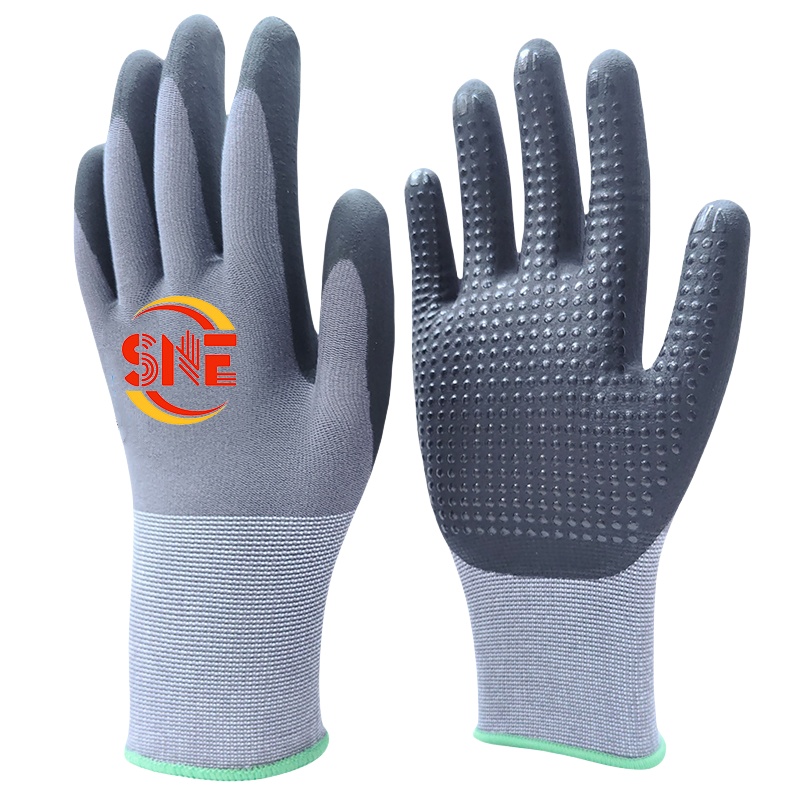
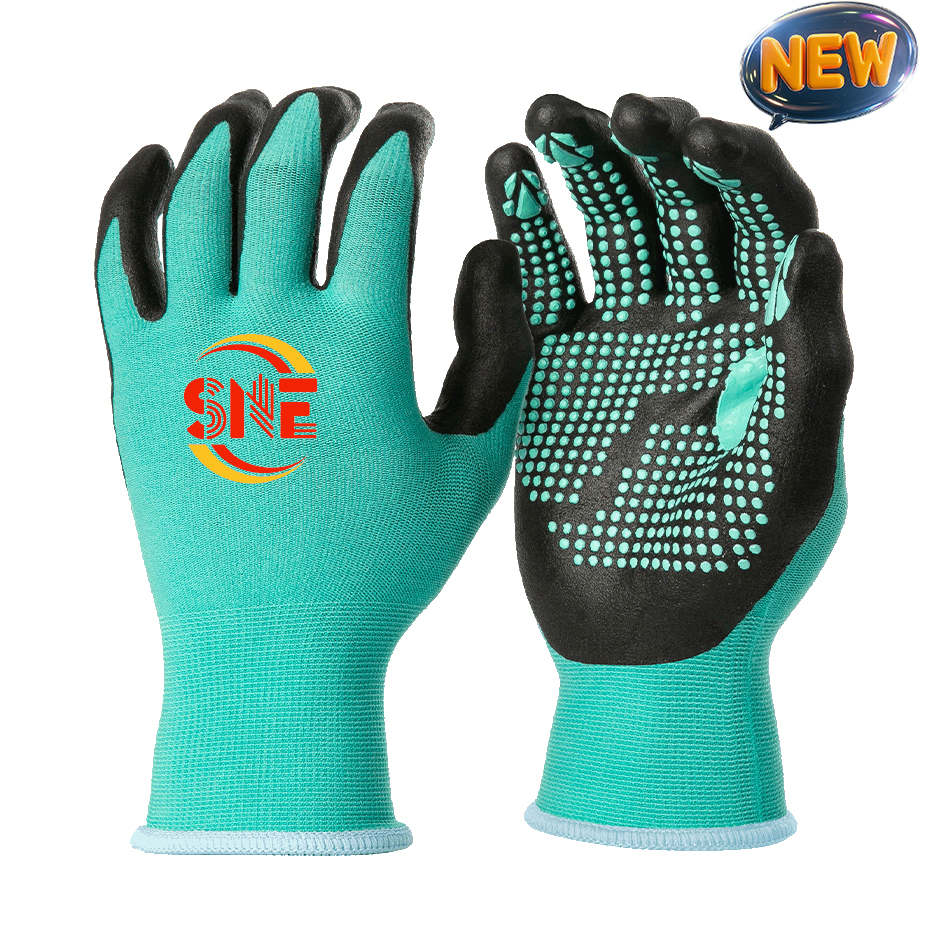
These are among the most common oil-resistant gloves in the United States. They are widely used in automotive assembly, warehouse handling, mechanical maintenance, and light manufacturing. Sandy nitrile, foam nitrile, and smooth nitrile finishes offer different levels of grip and flexibility. These gloves are excellent when oil contact is frequent but not highly aggressive from a chemical standpoint.
Fully Dipped Nitrile Gloves
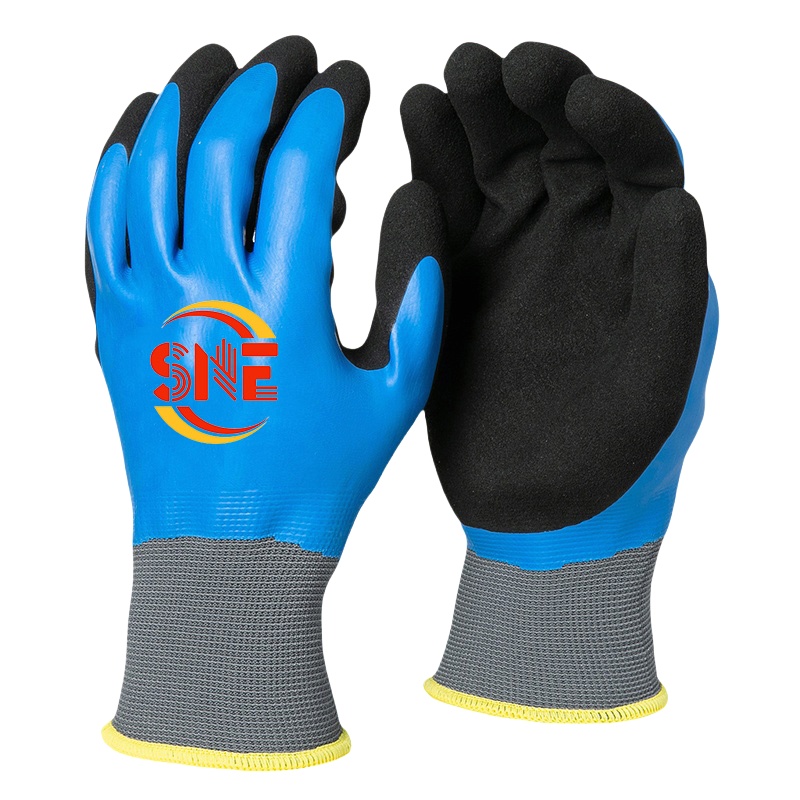
These are a step up for workers exposed to heavier oils, wet grime, and partial liquid contact. The full coating increases liquid resistance and glove life. They are common in maintenance, machinery servicing, and oil change work.
PVC Gloves
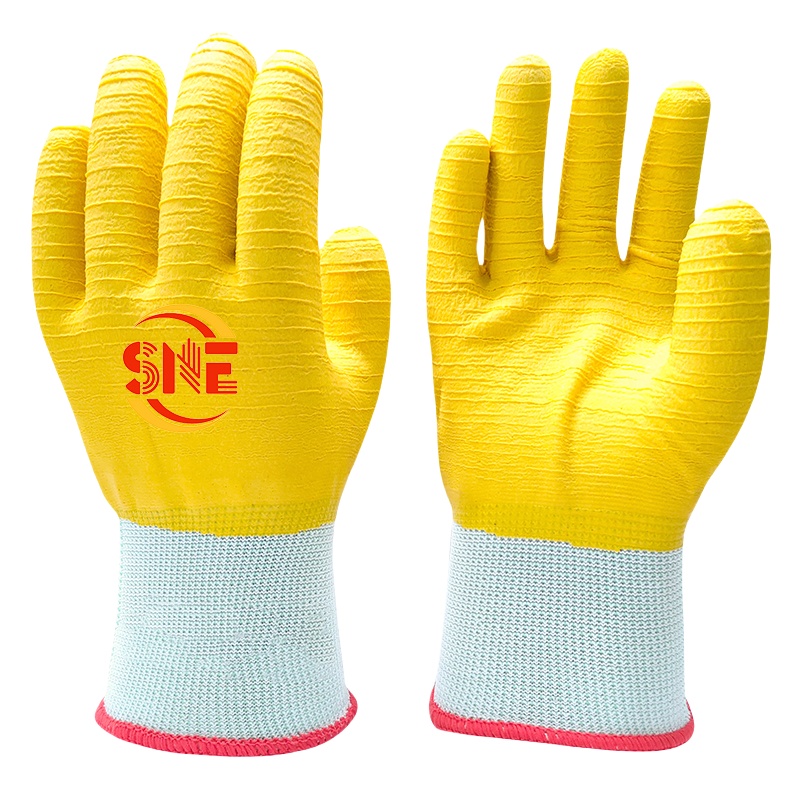
PVC gloves are often selected for petroleum handling, janitorial tasks, and some chemical splash environments. They can perform well for certain oils and chemicals, though they are not universally suitable for all solvents. In cold conditions, flexibility may drop.
Neoprene Gloves
Neoprene is a strong option for many acids, caustics, alcohols, and some solvents. It is often used in chemical plants, sanitation, and industrial cleaning. Buyers like it because it balances chemical performance and flexibility better than some heavier specialty materials.
Butyl Rubber Gloves
Butyl offers strong performance against ketones and aggressive solvents. It is more specialized and generally used where chemical exposure is the primary hazard. Cost is higher, but for the right application it can prevent failures that cheaper gloves cannot.
Laminated Chemical Gloves
These multilayer gloves can provide broad-spectrum resistance, making them useful for highly uncertain chemical mixtures. However, dexterity can be limited, so they are often used as over-gloves or in controlled chemical handling tasks rather than fine assembly.
Cut-Resistant Oil-Handling Gloves
In U.S. metal fabrication and automotive sectors, workers often need cut protection and oil resistance together. These products combine engineered liners with nitrile coatings. They are not the same as solvent-resistant gloves, but they solve a very common industrial problem.
How Material Choice Changes Performance
Material compatibility is where many glove programs succeed or fail. Nitrile is highly popular because it offers strong puncture resistance, good oil performance, and useful resistance to many chemicals. But even within nitrile, thickness and formulation vary widely. Thin disposable nitrile gloves and heavy industrial nitrile gloves should never be treated as equivalent.
Natural latex has excellent elasticity and comfort, but it is not the first choice for petroleum oils or many solvents. Polyurethane is valued for tactile sensitivity and dry grip, but it is generally not selected for meaningful liquid chemical exposure. PVC is cost-effective in many oil-handling environments, though comfort and flexibility depend on temperature and plasticizer formulation. Neoprene and butyl are better aligned with solvent-intensive tasks, while multilayer laminate products provide broader chemical defense when specific exposure data is incomplete.
American buyers should also think about cuff length, lining, and finish. A glove that resists a solvent chemically may still underperform if the cuff is too short for splash protection or if workers remove it because it is too stiff for the task.
This bar chart highlights where demand is strongest. Automotive, oil and gas, and chemical processing lead because they combine repeated hand exposure with strict uptime requirements. For glove suppliers and distributors in the United States, these are the sectors where product differentiation and technical support matter most.
Buying Advice for U.S. Procurement Teams
Start with the chemical, not the glove catalog. List the actual substances workers touch, the duration of contact, whether it is splash or immersion, and whether sharp edges or hot surfaces are present. Then compare glove materials against those hazards.
Second, define task reality. A maintenance technician in a Dallas equipment yard, a painter in New Jersey, and a CNC operator in Ohio do not need the same glove even if all three say they work with “chemicals.” The first may need durable oil-resistant grip gloves, the second a solvent-resistant gauntlet, and the third a cut-resistant nitrile-coated handling glove.
Third, request wear trials. In the U.S., the best purchasing teams run side-by-side tests with workers. They compare donning ease, grip on oily surfaces, tactile sensitivity, cuff security, wear life, and worker preference. A glove that scores well in the lab but poorly on comfort often fails in practice.
Fourth, check compliance support and documentation. Reliable suppliers should be able to discuss test methods, coating technology, liner design, and suitable use cases. For import programs, buyers should also confirm packaging, carton markings, labeling support, and consistency across production batches.
Fifth, consider total landed cost. Importing directly through a qualified factory can lower cost for bulk U.S. buyers, especially private-label distributors and regional wholesalers. But consistency, logistics reliability, and service response matter just as much as purchase price.
| Buying Question | What to Ask Internally | Best Fit if Answer Is Yes | Procurement Risk if Ignored |
|---|---|---|---|
| Are workers handling petroleum oils all shift? | Is grip loss the main problem? | Oil-resistant nitrile-coated or fully dipped nitrile gloves | Slip, dropped parts, frequent glove changes |
| Are solvents used for cleaning or stripping? | Which specific chemical is used? | Solvent-resistant neoprene, butyl, laminate, or heavy nitrile | Chemical permeation and skin exposure |
| Is cut protection required? | Are metal edges or sharp parts present? | Cut-resistant oil-handling gloves or layered solution | Hand lacerations from choosing chemistry only |
| Is dexterity critical? | Do workers assemble small components? | Thin coated oil-resistant gloves for handling tasks | Low productivity and worker rejection |
| Is the exposure only occasional splash? | How long is contact each time? | Task-based glove rotation may be enough | Overspending on overbuilt gloves or underprotecting staff |
| Do you buy at scale? | Can you standardize sizes and packaging? | OEM/ODM or bulk direct factory sourcing | Higher unit cost and inconsistent supply |
| Do you serve multiple branches? | Need private label or regional stock planning? | Distributor partnership with custom supply program | Brand inconsistency and replenishment gaps |
This table helps U.S. purchasing teams turn a broad glove inquiry into a decision framework. It reduces trial-and-error buying and helps align EHS, operations, and procurement around the same selection criteria.
Industries and Typical Applications in the United States
Automotive plants across Michigan, Indiana, and the Southeast often prioritize oil-resistant gloves for transmission components, engine parts, stamping operations, and maintenance tasks. Workers need grip on oily steel, moderate abrasion resistance, and enough tactile feel for repetitive assembly.
Oil and gas operations along the Gulf Coast, including Texas and Louisiana, use oil-resistant gloves for drilling support, equipment servicing, pipe handling, and maintenance. If chemical treatment fluids or solvents are involved, task separation becomes essential.
Chemical manufacturing in New Jersey, Texas, Louisiana, and Pennsylvania relies more heavily on true solvent-resistant products. Here, permeation data matters far more than just surface grip. Gloves must match the actual solvent family and contact duration.
Aerospace maintenance around Wichita, Seattle, and Southern California frequently combines solvent cleaning, sealant application, and precision handling. Workers may need multiple glove types during the same shift.
Printing, painting, and coating operations need gloves that resist inks, reducers, thinners, and cleanup fluids. In these settings, solvent resistance usually dominates over oil performance.
Metal fabrication shops throughout Ohio, Illinois, and Pennsylvania often choose nitrile-coated cut-resistant gloves for oily sheet metal handling. However, if solvent wash stations are part of the process, separate solvent-rated gloves are needed nearby.
Real-World Application Scenarios
A heavy-duty truck maintenance facility in Illinois may use foam nitrile gloves for routine parts handling, brake service, and oil changes. These gloves keep grip stable and reduce hand fatigue. But when technicians switch to brake cleaner or solvent degreaser, they should change to chemical-resistant gloves rather than continue with the same pair.
A metal finishing line in Ohio may require workers to move oily components between machining and cleaning stages. In the machining zone, oil-resistant gloves are the practical choice. In the cleaning zone, especially if acetone or strong solvent baths are used, the risk profile changes completely.
A shipyard supplier near the Port of Houston may need a glove program with three categories: general oil-handling gloves, cut-resistant oily-grip gloves, and solvent-resistant gauntlets for coatings and cleaning crews. This layered system is more effective than one “universal” glove.
Case Studies
A Midwest auto supplier reduced glove consumption by standardizing on nitrile-coated gloves for oily parts handling and reserving solvent-resistant gloves only for wash stations and paint-prep teams. That lowered misuse and improved worker comfort.
A Gulf Coast maintenance contractor initially purchased cheap PVC gloves for mixed chemical work because they performed reasonably well with oils. After several complaints during solvent cleaning tasks, the company shifted to a two-glove program with dedicated chemical gloves. Reported hand irritation dropped and glove replacement became more predictable.
A California aerospace subcontractor moved from generic disposable nitrile gloves to a task matrix that matched glove type to solvents, sealants, and oily hardware handling. The result was better process discipline and lower cross-task contamination.
The area chart reflects an important market trend: U.S. workplaces are moving away from single-glove standardization and toward task-specific selection. This is especially relevant when comparing solvent resistant vs oil resistant gloves, because mixed environments are becoming more common in advanced manufacturing and maintenance.
Top Suppliers Serving the United States
The supplier landscape in the United States includes major domestic brands, specialty chemical-protection companies, and international factory-direct manufacturers that support importers and private-label programs. Buyers should compare chemical suitability, product breadth, fulfillment reliability, and after-sales responsiveness, not just price.
| Company | Service Region | Core Strengths | Key Offerings |
|---|---|---|---|
| Ansell | Nationwide U.S. | Strong chemical protection portfolio, broad industrial presence | Chemical-resistant gloves, disposable nitrile, oil-grip industrial gloves |
| SHOWA | Nationwide U.S. | Engineered hand protection, coated glove expertise | Nitrile-coated gloves, chemical gloves, single-use nitrile products |
| Honeywell Industrial Safety | Nationwide U.S. | Large safety distribution reach, industrial compliance support | Oil-handling gloves, chemical-resistant gloves, cut-resistant products |
| Superior Glove | U.S. and Canada | Specialty industrial hand protection, strong technical range | Oil-resistant cut gloves, chemical gloves, impact options |
| HexArmor | United States, major industrial hubs | High-performance industrial protection, premium niche products | Oil-handling gloves, cut and impact gloves, specialty industrial gloves |
| MAPA Professional | Nationwide via distributors | Chemical resistance focus, industrial and janitorial applications | Solvent-resistant gloves, neoprene and nitrile chemical gloves |
| Qingdao Snell Protective Products Co., Ltd. | U.S. importers, distributors, private-label buyers | Factory-direct manufacturing, scalable OEM/ODM, broad coated glove range | Oil-resistant gloves, cut-resistant coated gloves, custom industrial glove programs |
This supplier table is practical because it shows how the U.S. market is served through different models. Large domestic brands are often strong for stocked programs and technical references, while factory-direct manufacturers can be highly competitive for wholesalers, distributors, and brand owners that need custom packaging, price control, and stable volume supply.
Supplier Comparison for Different Buyer Needs
If you are a national industrial buyer with many branches, Ansell, Honeywell, and SHOWA are often easy to integrate into existing distributor channels. If your business needs more specialized combinations such as cut plus oil grip or premium impact protection, Superior Glove and HexArmor can be attractive. If you are a brand owner, regional distributor, or importer looking for OEM or private-label opportunity, factory-direct manufacturers can offer better flexibility and margin structure.
The comparison chart illustrates a common U.S. sourcing reality. Established brands usually lead in stocked chemical range and market familiarity, while factory-direct manufacturers often stand out in OEM flexibility, branding support, and bulk price competitiveness. Buyers should choose according to channel strategy, not just product category.
Detailed Supplier Notes
| Company | Best For | Typical U.S. Sectors | Potential Limitation |
|---|---|---|---|
| Ansell | Large enterprises needing broad catalog coverage | Chemical, pharma, automotive, manufacturing | May be less cost-efficient for private-label bulk programs |
| SHOWA | Buyers needing reliable coated glove technology | Automotive, food, industrial handling, maintenance | Not every model is designed for strong solvent exposure |
| Honeywell Industrial Safety | Integrated safety sourcing across categories | Warehousing, construction, manufacturing, energy | Product selection may depend on distributor channel availability |
| Superior Glove | Technical users with complex hazard combinations | Metal fabrication, utilities, heavy industry | Premium models can raise average spend |
| HexArmor | High-risk industrial environments | Oil and gas, extraction, severe-duty maintenance | May be overbuilt for routine light-duty work |
| MAPA Professional | Chemical and cleaning tasks | Janitorial, chemical processing, sanitation | Less focused on broad cut-resistant oily handling lines |
| Qingdao Snell Protective Products Co., Ltd. | Distributors, wholesalers, importers, brand owners | Automotive, construction, logistics, manufacturing, oil and gas support | Requires planned import and forecasting rather than emergency spot buys |
This table helps distinguish between stocked-brand purchasing and strategic sourcing. For many American buyers, the best solution is not choosing one supplier for all tasks, but building a portfolio: stocked domestic channels for immediate replenishment and factory-direct programs for standardized high-volume items.
Our Company
For U.S. buyers looking beyond off-the-shelf sourcing, Qingdao Snell Protective Products Co., Ltd. offers a factory-direct model built around coated industrial gloves for real production environments. The company operates two manufacturing facilities with 6 dedicated production lines, more than 150 trained employees, and daily capacity of 150,000 pairs, which supports consistent volume supply for distributors and large end users in the United States. Its product range covers PU, latex, and nitrile coating technologies, along with cut-resistant and impact-resistant engineering, making it particularly relevant for buyers who need oil-resistant handling gloves, cut-resistant nitrile-coated lines, and customized industrial hand protection. The manufacturing system is backed by ISO 9001 and CE certification, with export experience across Europe, Australia, Russia, the Middle East, South America, and Southeast Asia, which gives U.S. importers confidence in standardized quality control, documented production, and repeatable batch consistency. In practical terms, the company supports multiple cooperation models, including OEM, ODM, private label, wholesale supply, distributor programs, and custom specification development for end users, dealers, regional importers, and brand owners. Through its product catalog, U.S. buyers can review core categories and discuss task-matched configurations, while the team also supports sample requests, technical consultation, packaging customization, and export logistics planning. For American customers who value responsiveness as much as unit economics, the company provides direct pre-sale communication, project-based recommendation support, and after-sales follow-up through its online team and export service structure, giving buyers a more stable long-term sourcing relationship than a purely transactional remote exporter. Companies interested in discussing specifications, private-label development, or regional distribution can reach the team through the U.S.-focused contact channel or start at the main Snell Safety website.
How U.S. Buyers Can Build a Better Glove Program
The most effective glove programs in the United States use task mapping. That means listing each work cell, each liquid or chemical involved, contact frequency, cut hazard, dexterity need, and replacement interval. Once this is done, buyers usually discover that some jobs only need oil-resistant coated gloves, while others require true chemical protection.
Training also matters. Workers should know that a glove good for oily bearings is not automatically safe for solvent wiping. Supervisors should store chemical gloves near the exact point of use, not in a remote storeroom where convenience encourages shortcuts.
Stock planning is another issue. Sites near major logistics hubs such as Chicago, Savannah, Los Angeles, and Newark often manage multiple facilities and subcontractors. Standardized glove coding, consistent packaging labels, and supplier support with replenishment planning can reduce confusion and emergency purchasing.
2026 Trends in Solvent-Resistant and Oil-Resistant Gloves
Looking toward 2026, three trends are shaping the U.S. market. The first is technology. Buyers increasingly want coating designs that improve grip in light oil without sacrificing dexterity, along with engineered liners that combine cut protection and comfort. There is also growing interest in data-backed glove testing, digital product matching tools, and QR-linked safety documentation.
The second trend is policy and compliance pressure. As U.S. employers strengthen PPE hazard assessments and supply chain traceability, glove selection is becoming more evidence-driven. Customers want clearer material disclosure, lot consistency, and better documentation for procurement audits, EHS reviews, and customer quality systems.
The third trend is sustainability. While durability still matters more than marketing claims in industrial settings, buyers increasingly ask about longer wear life, optimized packaging, waste reduction, and manufacturing efficiency. For importers and distributors, durable gloves that reduce replacement frequency can support both sustainability goals and lower total cost per wear.
Reshoring and advanced manufacturing expansion will also influence the market. More U.S. production in EV batteries, precision components, aerospace maintenance, and specialized chemical processing means more mixed-exposure tasks. That will continue to increase demand for clearer differentiation between oil-resistant and solvent-resistant gloves rather than generic purchasing categories.
FAQ
Are oil-resistant gloves also solvent-resistant?
No. Some gloves that resist oils may tolerate certain mild chemicals, but many are not suitable for aggressive solvents. Always check the chemical involved and the glove’s intended use.
Is nitrile the best material for both applications?
Nitrile is excellent for many oil-handling tasks and useful for some chemical applications, but it is not universally best. For stronger solvents, neoprene, butyl, or laminate gloves may be safer.
What glove is best for automotive mechanics in the United States?
For oily parts handling and general repair work, nitrile-coated or fully dipped nitrile gloves are often the best balance of grip and durability. For brake cleaner, solvent degreasing, or paint-related work, separate solvent-resistant gloves should be available.
Can one glove handle oil, solvents, cut risk, and dexterity at the same time?
Usually not at an optimal level. In real U.S. industrial settings, the safer solution is often a task-specific glove system or at least two glove categories for different processes.
How should distributors choose between domestic brands and factory-direct suppliers?
Domestic brands are strong for stocked availability and familiar market support. Factory-direct suppliers can be highly competitive for bulk orders, private labeling, customized coatings, and margin control. Many distributors use both models.
What is the biggest purchasing mistake?
The biggest mistake is buying based on a general label like “chemical glove” or “nitrile glove” without matching the glove to the exact liquid exposure, task duration, and worker need.
Final Takeaway
For buyers in the United States, the answer to solvent resistant vs oil resistant gloves is not a branding question but a hazard question. If the job involves lubrication, greasy parts, and petroleum fluids, oil-resistant gloves are usually the practical choice. If the job involves degreasers, thinners, ketones, aromatics, or stronger cleaning chemicals, solvent-resistant gloves are the safer option. In many modern facilities, the smartest solution is a structured glove program that uses both.
Whether you buy from major domestic suppliers or work with factory-direct manufacturing partners, success comes from matching the glove to the process, validating it in the field, and building a supply strategy that supports worker safety, productivity, and cost control over the long term.