2026-11-11
Share This Article

Smooth vs Sandy Nitrile Gloves in the United States
Quick Answer

For most workplaces in the United States, sandy nitrile gloves deliver better grip than smooth nitrile gloves, especially when hands, tools, or parts are exposed to oil, coolant, moisture, dust, or changing temperatures. Smooth nitrile coated gloves are usually the better choice when the job demands easier wipe-clean performance, lighter tactile feel, and efficient handling of dry materials in packaging, light assembly, inspection, and warehouse work. If your team handles oily metal, automotive parts, maintenance fluids, or slippery construction materials, sandy nitrile is typically the safer and more dependable option. If your operation is focused on dry picking, carton movement, general logistics, or budget-sensitive daily use, smooth nitrile often provides the best balance of cost and dexterity.
U.S. buyers commonly compare suppliers such as Ansell, MCR Safety, PIP, Magid, Showa, and Superior Glove when sourcing nitrile coated gloves for factories, distributors, and contractor fleets. At the same time, qualified international manufacturers can also be a practical option when they offer recognized certifications, consistent production controls, and strong pre-sale and after-sale support. For importers and private-label buyers in the United States, cost-performance advantages from established Chinese glove factories can be compelling when quality verification, logistics planning, and service responsiveness are in place.
Why the Difference Matters in the United States

In the United States, glove selection is rarely just about comfort. It affects injury rates, productivity, replacement frequency, and procurement cost across major industrial hubs such as Houston, Chicago, Los Angeles, Savannah, Charleston, Long Beach, and New Jersey distribution corridors. A buyer for an automotive stamping plant in Michigan, a building products distributor in Texas, and a warehouse operator near the Port of Los Angeles may all buy nitrile coated gloves, but they need different surface finishes because their risk profiles and work surfaces are not the same.
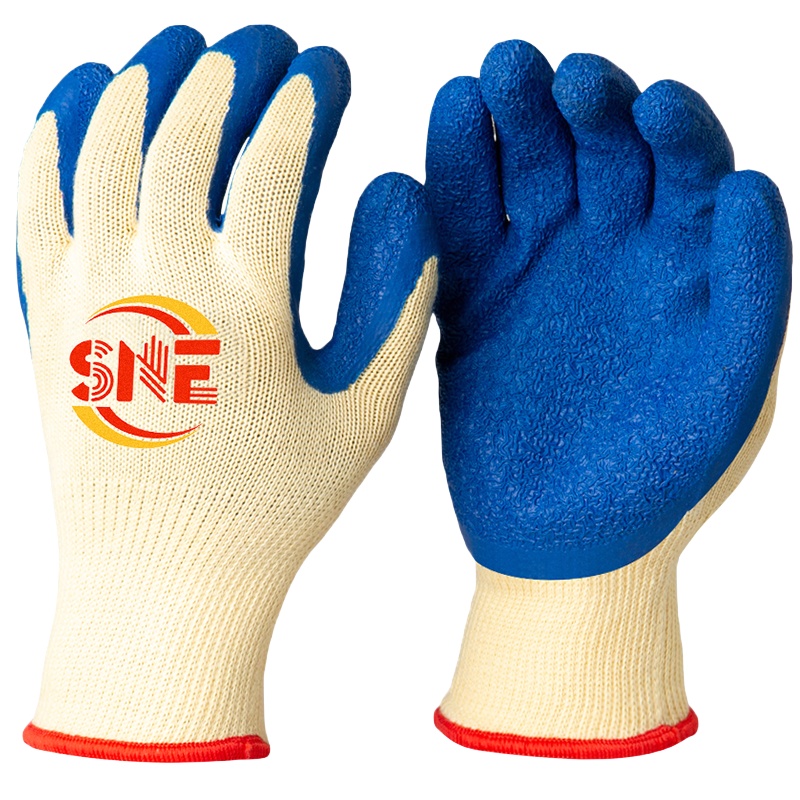
Smooth nitrile and sandy nitrile are both nitrile coated glove categories, but the coating texture changes friction behavior. Smooth nitrile coatings are flatter and more uniform. Sandy nitrile coatings introduce a roughened outer texture designed to increase contact friction, especially on oily or wet surfaces. In practice, that means the choice influences not just worker preference but also grip stability, hand fatigue, dropped-part incidents, and glove life.
For U.S. employers operating under strict safety expectations, especially in manufacturing, logistics, maintenance, and construction, the wrong coating finish can create hidden cost. A glove that looks acceptable in a catalog may fail in real handling conditions if bolts are oily, steel is dusty, cartons are wrapped, or temperatures fluctuate between indoor and outdoor work zones.
Core Comparison of Smooth and Sandy Nitrile Gloves

The table below summarizes the practical performance differences buyers in the United States usually care about most. The values reflect common market behavior rather than a single model, since liner gauge, coating thickness, and cuff design also influence results.
| Feature | Smooth Nitrile Gloves | Sandy Nitrile Gloves | Why It Matters for U.S. Buyers |
|---|---|---|---|
| Grip on dry surfaces | Good | Good to very good | Both work well for general dry handling, but sandy textures often hold better on mixed surfaces. |
| Grip on oily surfaces | Fair to good | Very good | Important in automotive, metal fabrication, machinery maintenance, and oil service. |
| Grip on wet surfaces | Fair | Good to very good | Useful in outdoor construction, utilities, and maintenance cleaning tasks. |
| Dexterity and touch feel | Usually slightly better | Usually good | Inspection, light assembly, and package sorting often favor smoother coatings. |
| Abrasion resistance | Good | Good to very good | Depends on coating build, but sandy finishes often wear better in rough handling. |
| Ease of cleaning | Easier to wipe | Less easy to wipe | Relevant for repeated contact with dust, soot, or residues. |
| Typical cost | Usually lower | Usually slightly higher | Budget-sensitive distributors often compare this closely in bulk tenders. |
In simple terms, smooth nitrile is often chosen for value, clean handling, and tactile control, while sandy nitrile is chosen for traction and confidence in more demanding environments. The decision becomes clearer when the user environment is defined by oil, moisture, or repeated gripping of hard-to-control items.
How the U.S. Market Is Evolving
The U.S. hand protection market continues to move toward task-specific gloves rather than one-glove-for-all programs. Procurement teams are also under pressure to reduce total cost of ownership rather than only chasing the lowest unit price. That shift has helped sandy nitrile gain traction in sectors where dropped components, tool slips, and glove replacement rates cost more than a small increase in purchase price.
Another major factor is supply chain diversification. Since buyers in the United States source through domestic brands, importers, distributors, and direct factories, the comparison between smooth and sandy nitrile now includes lead times, private-label options, and consistency across batches. Regional ports such as Los Angeles, Long Beach, Houston, Savannah, and Newark remain critical gateways for glove imports, while domestic distributors help shorten fulfillment cycles for contractors and industrial plants.
This market growth trend reflects a realistic rise in industrial demand, stronger safety compliance expectations, and continued substitution away from lower-performing general-purpose gloves. By 2026, buyers are expected to prioritize grip performance, sustainability data, and supplier resilience more heavily than before.
Product Types and How Surface Finish Changes Performance
Not all nitrile coated gloves are built the same. Even within smooth and sandy categories, a buyer must assess full coating, palm coating, foam nitrile hybrids, liner material, gauge, cuff length, and any added cut resistance. A 13-gauge polyester smooth nitrile palm glove for warehousing behaves very differently from a 15-gauge HPPE sandy nitrile glove for metal handling.
Smooth nitrile is commonly used in lightweight general purpose gloves, assembly gloves, and value-driven industrial gloves. Sandy nitrile is often paired with stronger abrasion and grip positioning, and it appears more frequently in applications where the glove must maintain hold under contamination or dynamic handling.
| Glove Type | Common Liner | Typical Finish | Best Fit Applications | Main Trade-Off |
|---|---|---|---|---|
| Light-duty smooth nitrile palm coat | Polyester 13 gauge | Smooth | Warehouse picking, packaging, carton handling | Less secure on oil |
| General-purpose smooth full coat | Polyester or cotton blend | Smooth | Maintenance, light construction, janitorial support | Can feel less breathable |
| Sandy nitrile palm coat | Nylon or polyester 13–15 gauge | Sandy | Automotive, fabrication, tools, hardware handling | Slightly higher unit price |
| Sandy nitrile cut-resistant glove | HPPE or engineered yarn | Sandy | Sheet metal, stamping, glass-adjacent tasks | Higher specification may raise cost |
| Foam nitrile glove | Nylon or mixed fibers | Micro-foam | Precision assembly, electronics, dry to light oil handling | Not as robust for harsh abrasion |
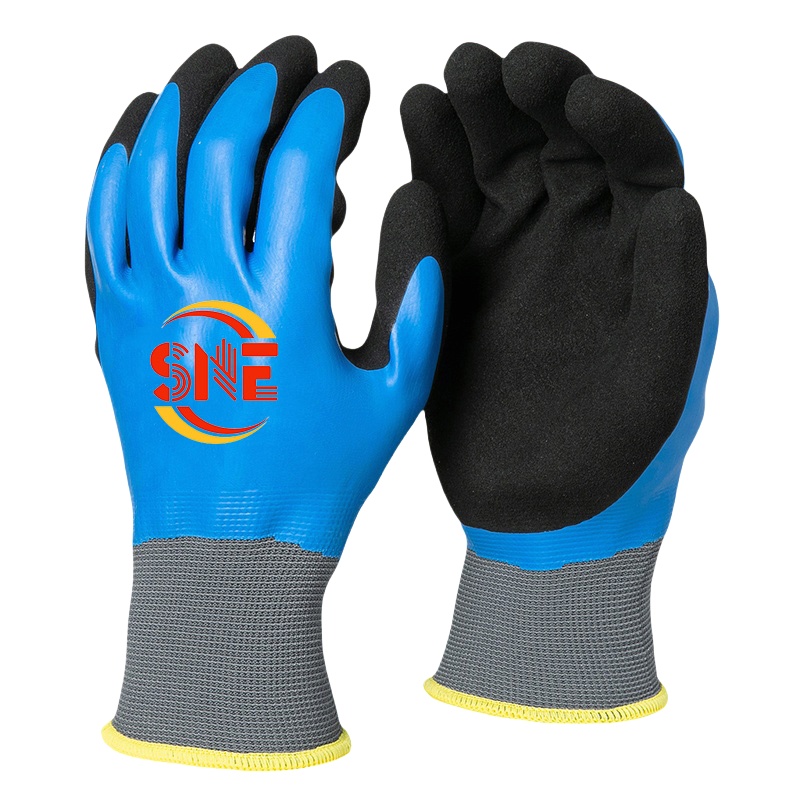
| Double-coated nitrile glove | Seamless liner, often cut-resistant | Base smooth plus sandy outer | Wet oil environments, heavy maintenance, utilities | Can reduce fine tactile sensitivity |
This table shows that “smooth vs sandy nitrile gloves” is not only a question of texture. It is a decision framework about task conditions, worker feel, and the total specification of the glove. Smart U.S. buyers test at least two competing constructions in the real work environment before standardizing.
Buying Advice for U.S. Importers, Distributors, and Safety Managers
A practical buying process starts with identifying the most common failure point in the current glove program. If workers complain about slipping parts, dropped tools, or poor confidence around coolant and lubricants, sandy nitrile is usually the first category to trial. If users complain about stiffness, over-specification, or excessive replacement cost in mostly dry applications, smooth nitrile is often the better direction.
For distributors serving contractors and industrial end users across the United States, a two-tier assortment often works best: smooth nitrile for price-sensitive, dry-use customers and sandy nitrile for premium grip applications. This reduces stock complexity while still aligning with real customer needs.
When issuing RFQs, buyers should ask for abrasion data, coating consistency details, available gauge options, cuff sizes, packing methods, logo customization capability, carton dimensions, and port lead times. It is also helpful to test gloves in multiple regional climates, especially when supplying across the Midwest, Gulf Coast, and Southeast, where humidity and work conditions vary significantly.
Industries That Usually Prefer Smooth Nitrile
Smooth nitrile gloves remain highly relevant in the United States because many industrial environments still prioritize speed, dexterity, and cost control over extreme grip performance. They are common in distribution centers, light manufacturing, appliance assembly, general maintenance support, and dry parts handling.
Warehouse operators around Inland Empire logistics centers in California, Midwest e-commerce hubs, and East Coast fulfillment corridors often choose smooth nitrile for repetitive picking and carton movement. The coating is usually sufficient for dry corrugate, plastic-wrapped goods, and routine scanning tasks while keeping cost manageable for large headcount programs.
Industries That Usually Prefer Sandy Nitrile
Sandy nitrile gains a clear advantage in automotive, machine shops, steel service centers, oilfield support, building materials, utilities, and maintenance environments. In these sectors, contact surfaces are often oily, dusty, abrasive, or unpredictable. A glove that grips more confidently reduces hand strain and can improve throughput because workers spend less effort controlling the object.
Automotive suppliers in Michigan, metalworking firms in Ohio and Indiana, fabrication shops in Texas, and maintenance contractors across petrochemical corridors often favor sandy nitrile because the performance difference is obvious during repetitive handling of slick parts, hand tools, and equipment surfaces.
The bar chart highlights a realistic pattern in the United States: sectors dealing with oil, metal, and demanding outdoor conditions show stronger preference for sandy nitrile, while warehousing remains more mixed.
Applications: Where Each Finish Performs Best
To make the comparison actionable, buyers should map glove finish to exact work tasks instead of broad department labels. “Maintenance” is too broad; “handling oil-coated chain components” is specific enough to make the right decision.
| Application | Recommended Finish | Reason | Typical U.S. End User |
|---|---|---|---|
| Carton picking and order fulfillment | Smooth nitrile | Good dry grip and lower cost for high-volume use | 3PLs, e-commerce warehouses |
| Oily auto parts handling | Sandy nitrile | Improved traction on lubricated metal surfaces | Tier suppliers, repair shops |
| Light assembly and inspection | Smooth nitrile | Better tactile control and easier movement | Electronics, appliances, small parts assembly |
| Tool use in maintenance | Sandy nitrile | More secure grip under variable conditions | Plant maintenance teams |
| Construction material handling | Sandy nitrile | Better hold on dusty, rough, or damp surfaces | Contractors and building supply crews |
| General-purpose daily stock work | Smooth nitrile | Efficient and economical for mostly dry workflows | Retail backrooms, local distributors |
| Metal fabrication support | Sandy nitrile | Reduces slips on parts and tools, especially with residue | Machine shops and steel processors |
This application table is useful because it converts the texture debate into real purchasing logic. Most companies in the United States do not need one universal glove. They need a practical split based on job conditions.
Case Studies from Typical U.S. Buying Scenarios
A Midwest automotive supplier running two shifts tested smooth nitrile gloves against sandy nitrile palm-coated gloves for operators handling lightly oiled stamped parts. The smooth glove offered acceptable comfort, but workers reported frequent repositioning of parts during transfer. After switching to sandy nitrile in the affected cells, supervisors observed fewer handling interruptions and better worker acceptance, even though the glove price increased slightly. Replacement intervals remained stable, making the total cost difference smaller than expected.
A Southeast distribution company near Savannah, focused on dry packaged consumer goods, compared the same two finishes for pickers. In this case, smooth nitrile performed well and was preferred by the team because it felt easier for scanning, label handling, and long-shift picking. The added grip of sandy nitrile did not create enough value to justify the premium in that environment.
A Texas maintenance contractor serving industrial sites needed one glove for crews moving between dry inspection tasks and occasional fluid-exposed repairs. Their trial showed that sandy nitrile handled mixed environments more reliably, reducing the need for workers to switch gloves during the day. For them, operational flexibility mattered more than unit cost alone.
Local Suppliers and Major Brands in the United States
The U.S. market has a broad supplier base, from global brands to regional distributors and import specialists. The table below focuses on recognized names that buyers commonly encounter when searching for smooth vs sandy nitrile gloves in the United States. These companies vary in manufacturing model, channel strategy, and product depth, so buyers should compare actual SKUs and not just brand reputation.
| Company | Service Region | Core Strengths | Key Offerings | Fit for Smooth vs Sandy Nitrile Sourcing |
|---|---|---|---|---|
| Ansell | Nationwide U.S. industrial market | Strong brand trust, technical hand protection range, broad compliance support | Industrial gloves, chemical gloves, cut protection | Good for buyers seeking premium technical benchmarking |
| PIP | United States and North America | Wide distributor network, strong portfolio coverage, industrial PPE bundling | General purpose, coated gloves, cut-resistant gloves | Useful for multi-category distributors and contractor supply |
| MCR Safety | United States, especially industrial and contractor channels | Established safety focus, broad coated glove selection, strong channel familiarity | Nitrile coated gloves, cut protection, safety eyewear | Good practical option for standard industrial programs |
| Magid | Nationwide with strong industrial distribution reach | Private label capability, industrial customization, large catalog depth | Hand protection, PPE programs, managed supply support | Good for buyers needing sourcing flexibility and account support |
| Showa | United States and global industrial users | Technical glove engineering, performance reputation, coating expertise | Grip gloves, cut-resistant gloves, chemical protection | Strong for demanding applications where performance is prioritized |
| Superior Glove | United States and Canada distribution coverage | Technical knowledge, broad task-specific hand protection, industrial credibility | Coated gloves, cut-resistant gloves, impact protection | Useful for side-by-side specification comparison |
| Grainger | Nationwide branch and fulfillment network | Availability, fast procurement, easy replenishment | Multi-brand glove access, MRO support | Best for buyers prioritizing convenience and quick supply |
This supplier table helps U.S. buyers distinguish between manufacturers, technical brands, and distribution-led sellers. For many purchasing teams, the best approach is to benchmark one premium brand, one value-oriented domestic channel option, and one qualified direct-factory source before committing.
Supplier Comparison by Use Case
Choosing a supplier in the United States depends on what matters most: fast stock availability, premium technical support, private label, import cost control, or a mix of these. The comparison chart below illustrates a practical scoring model for buyers evaluating glove sourcing paths.
The comparison shows a common trade-off in the United States. Domestic channels are usually stronger on immediate availability, while qualified direct-factory imports often perform better on private label flexibility and bulk price competitiveness. That is why many distributors use a blended sourcing model.
Trend Shift in Surface Preference
Buyer preference is gradually shifting toward more specialized grip solutions. This does not mean smooth nitrile is disappearing. Instead, it means purchasing teams are becoming more selective and are assigning sandy nitrile to applications where grip directly affects productivity and safety outcomes.
This area chart reflects a realistic trend shift in the United States: sandy nitrile is gaining share in mixed industrial programs as employers focus more on task-specific grip performance, while smooth nitrile remains important in large-volume dry applications.
What to Ask Before You Place a Bulk Order
Before choosing between smooth and sandy nitrile gloves, U.S. buyers should request documented product details and structured samples. A smart evaluation process saves far more money than chasing a low quote without testing.
Key questions include whether the glove is palm-coated or fully coated, what liner gauge and yarn blend are used, whether the glove has been tested for abrasion and tear performance, how consistent the coating texture is from lot to lot, and whether the supplier can maintain carton labeling and packaging standards required by U.S. warehouses and distributors. Buyers should also ask about container optimization, reorder lead times, and whether the supplier can support seasonal demand spikes around construction and holiday logistics cycles.
Our Company in the United States Market
For U.S. buyers comparing direct-factory options, Snell Safety presents a practical sourcing model built around industrial glove specialization rather than trading-only supply. The company manufactures nitrile, PU, and latex coated gloves through two production facilities with six production lines and daily output of about 150,000 pairs, supporting stable large-volume programs for distributors, wholesalers, brand owners, and end-use industrial accounts. Its hand protection range aligns with high-demand U.S. sectors including construction, logistics, automotive, manufacturing, oil and gas, and metal fabrication, while internationally recognized systems such as ISO 9001 and CE-backed production discipline provide evidence of controlled manufacturing and quality verification against globally accepted benchmarks. For cooperation, the business supports OEM, ODM, private label, bulk wholesale, customized materials, sizes, branding, and regional distribution partnerships, which helps U.S. importers, dealers, and brand owners build differentiated glove lines instead of buying generic stock only. For market assurance, the company is not positioned simply as a remote exporter; it already serves major overseas markets and backs U.S.-facing business with structured pre-sales consultation, sample support, export logistics coordination, and responsive after-sales communication, giving American buyers a more grounded and lower-risk path to factory-direct procurement. Buyers interested in factory discussion can review the main Snell Safety website, browse the product catalog, or reach the team through the U.S. inquiry contact page.
How to Decide Between Smooth and Sandy Nitrile for Your Industry
If your workers handle dry cartons, consumer packaging, plastic totes, or light components most of the day, start with smooth nitrile. If they handle oily fittings, metal stock, tools, damp surfaces, rough lumber, concrete accessories, or outdoor maintenance tasks, start with sandy nitrile. If your environment changes from dry to oily during the same shift, test sandy nitrile first because that category usually offers more stable all-around control.
For distributors in the United States, the most effective assortment strategy is often simple: carry a dependable entry smooth nitrile glove, a mid-tier sandy nitrile glove, and a premium sandy nitrile cut-resistant option. This structure covers most customer requests without creating excessive SKU complexity.
2026 Trends Shaping the Category
Looking ahead to 2026, several trends are expected to influence how smooth and sandy nitrile gloves are bought and specified in the United States. First, more buyers will request measurable grip and wear data tied to real-use environments rather than generic catalog language. Second, sustainability pressure will continue to grow, pushing suppliers to improve packaging efficiency, manufacturing waste control, and material transparency. Third, public and private procurement standards are likely to place more weight on traceability, factory quality systems, and supplier resilience.
On the technology side, glove development is moving toward thinner liners with improved cut performance, more breathable coatings, and texture engineering that delivers grip without excessive stiffness. On the policy side, workplace safety expectations remain strong, especially in sectors with high turnover or elevated injury risk. On the sourcing side, U.S. buyers are expected to maintain a dual strategy that combines domestic inventory availability with selective direct-factory import relationships for cost control and private-label growth.
Frequently Asked Questions
Are sandy nitrile gloves always better than smooth nitrile gloves?
No. Sandy nitrile is usually better for oily, slippery, or mixed-condition work, but smooth nitrile is often better for dry handling, tactile tasks, and lower-cost high-volume use.
Do sandy nitrile gloves last longer?
Often, but not always. Durability depends on liner quality, coating thickness, abrasion exposure, and how the glove is used. Many sandy nitrile gloves perform very well in rough environments, but construction details matter more than texture alone.
Which is more popular in U.S. warehouses?
Smooth nitrile remains common in dry warehouse and fulfillment operations, while sandy nitrile is gaining share where workers handle mixed-surface loads or equipment in more demanding conditions.
Are smooth nitrile gloves cheaper?
In many cases, yes. Smooth nitrile gloves are often priced slightly lower, especially in basic general-purpose specifications. However, the lower unit price may not equal lower total cost if grip issues cause more waste or faster replacement.
Should importers in the United States source direct from factories?
That can be a strong option for buyers with volume, private-label needs, and clear quality controls. The best results come from working with qualified manufacturers that provide certifications, sample validation, packaging consistency, and dependable communication.
What is the best way to test the right glove finish?
Run side-by-side field trials in the exact application, with the same worker group, over several shifts. Measure grip confidence, replacement rate, user preference, and any dropped-part or productivity differences before standardizing.