2026-11-07
Share This Article
Flexible Oil Resistant Gloves Suppliers in the United States
Quick Answer

If you need flexible oil resistant gloves in the United States, the most practical options are established industrial safety brands with strong domestic distribution and fast replenishment, especially Ansell, MCR Safety, Superior Glove, SHOWA, PIP, and Magid. These suppliers are widely used across manufacturing, automotive, warehousing, maintenance, and oil-related work because they combine oil grip, abrasion resistance, and hand dexterity for repetitive tasks. Buyers in major logistics and industrial hubs such as Houston, Chicago, Los Angeles, Savannah, and New Jersey often prioritize nitrile-coated or fully dipped gloves for oily handling, while precision assembly teams usually prefer lighter 15-gauge or 18-gauge shell constructions with sandy or foam nitrile finishes. For distributors, wholesalers, and private-label buyers, qualified international suppliers can also be a smart option when they hold relevant certifications and provide dependable pre-sales and after-sales support. In that context, cost-competitive factory-direct manufacturers with proven export experience, documented compliance, and responsive service can be worth evaluating alongside local suppliers.
- Ansell: strong U.S. industrial presence, broad chemical and oil-handling portfolio
- MCR Safety: practical range for construction, warehousing, utilities, and industrial maintenance
- Superior Glove: strong cut-resistant and coated glove selection for mixed hazards
- SHOWA: recognized for ergonomic hand fit and durable coated glove technologies
- PIP and Magid: broad U.S. distribution and fast procurement support for bulk accounts
United States Market Overview

The United States market for flexible oil resistant gloves is driven by a mix of heavy industry, advanced manufacturing, logistics growth, and stricter workplace safety expectations. Demand remains especially strong in Gulf Coast energy corridors, Midwest manufacturing centers, Southern automotive plants, and coastal warehouse clusters tied to the ports of Los Angeles, Long Beach, Houston, Savannah, New York, and New Jersey. In practical buying terms, U.S. customers are not only looking for resistance to oils and lubricants; they also expect glove flexibility, touchscreen usability in some roles, breathability for long shifts, and dependable consistency across large orders.
Oil resistant hand protection is no longer treated as a simple commodity in the U.S. market. Purchasing teams increasingly compare coating type, palm finish, grip behavior in wet and oily conditions, cuff style, liner gauge, ANSI cut performance, and cost per wear cycle. A glove that is slightly more expensive per pair can still be the better purchasing decision if it reduces replacement frequency, supports safer handling, and improves worker compliance because employees actually like wearing it.
Another important factor is regional supply chain reliability. U.S. buyers often prefer suppliers with domestic inventory, predictable lead times, and transparent import planning. This is particularly important for large contract users in automotive, food-adjacent industrial maintenance, oilfield support, and third-party logistics. During peak production cycles, delayed glove deliveries can interrupt line work, raise safety risk, and force expensive spot purchases from secondary distributors.
The chart above shows a realistic demand index trend for the U.S. market. Growth is supported by warehouse expansion, manufacturing reshoring, infrastructure investment, and broader safety standard adoption. The 2026 outlook remains positive as companies continue shifting away from low-dexterity gloves toward models that improve both protection and productivity.
Why Flexibility Matters in Oil Resistant Gloves

Oil resistance alone is not enough for many U.S. workplaces. Workers in assembly, equipment maintenance, fleet service, machine operation, and logistics frequently handle small parts, tools, packaging, hoses, valves, scanners, and fasteners. A glove that resists oil but feels stiff can lower productivity, reduce tactile control, and encourage unsafe glove removal. Flexible oil resistant gloves address this by balancing coating performance with liner comfort and ergonomic fit.
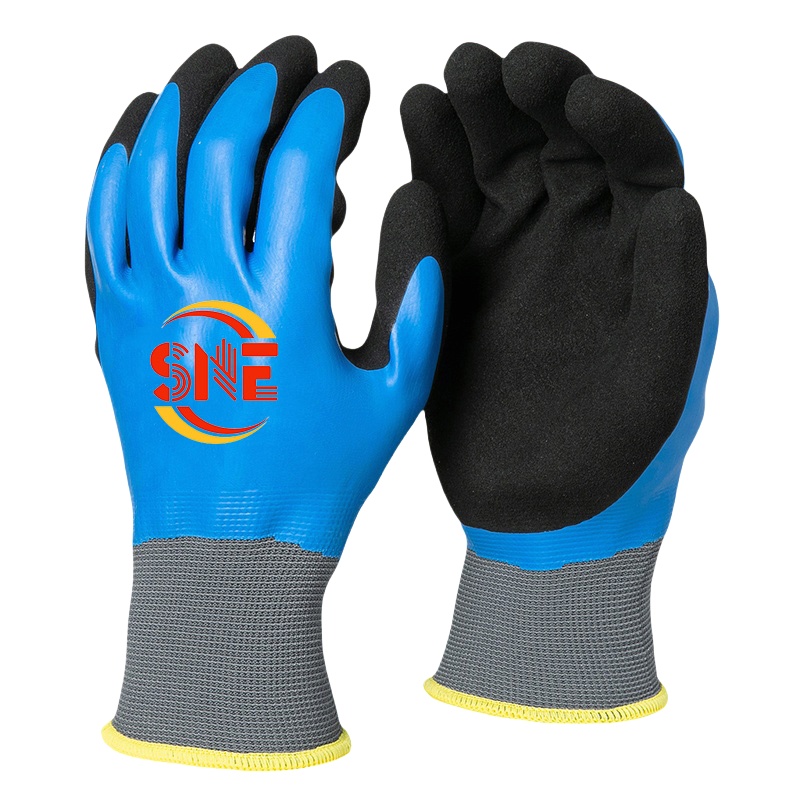
In the U.S. market, flexibility is commonly influenced by shell gauge, yarn blend, coating thickness, and dipping method. Thin and lightweight liners improve dexterity, while foam nitrile or sandy nitrile coatings often help maintain grip with less hand fatigue. Full nitrile dip designs may offer stronger liquid barrier performance, but some workers prefer palm-coated constructions when breathability matters more than splash protection. This tradeoff should be evaluated by job task, not marketing language alone.
Product Types and How They Differ
Flexible oil resistant gloves sold in the United States generally fall into several practical categories. Each category serves a different balance of oil resistance, tactile sensitivity, durability, and cost.
| Glove Type | Typical Coating | Flexibility Level | Oil Grip Performance | Best Use | Common U.S. Buyers |
|---|---|---|---|---|---|
| Lightweight palm-coated glove | Foam nitrile | High | Good | Assembly and light maintenance | Electronics, warehousing, packaging |
| Sandy nitrile coated glove | Sandy nitrile | High | Very good | General industrial handling | Manufacturing, automotive, logistics |
| Fully dipped knit glove | Smooth nitrile | Medium | Excellent | Oily parts and splash exposure | Maintenance, utilities, machine shops |
| Double-dipped glove | Nitrile over nitrile | Medium | Excellent | Heavy oil contact and abrasive work | Oilfield support, metal fabrication |
| Cut-resistant oil glove | Nitrile on HPPE liner | Medium to high | Very good | Sharp oily components | Automotive, stamping, glass handling |
| Impact oil resistant glove | Nitrile with TPR back | Medium | Very good | Heavy-duty industrial tasks | Energy, mining, field service |
This table helps clarify that “best” depends on task conditions. For example, a distribution center in New Jersey handling oily packaged machine parts may prefer lightweight sandy nitrile gloves, while a maintenance contractor near Houston may need fully dipped or double-dipped gloves for longer exposure to lubricants and hydraulic residues.
Top Suppliers in the United States
The U.S. market includes global brands, domestic safety distributors, and specialist glove manufacturers. The companies below are real and relevant choices for sourcing flexible oil resistant gloves in the United States.
| Company | Service Region | Core Strengths | Key Offerings | Best Fit | Notes |
|---|---|---|---|---|---|
| Ansell | Nationwide U.S. | Broad industrial and chemical hand protection portfolio | Nitrile-coated, oil-grip, chemical resistant gloves | Large industrial buyers | Strong compliance-oriented purchasing appeal |
| MCR Safety | Nationwide U.S. | High-availability industrial PPE range | Coated work gloves, cut-resistant oil-handling gloves | Distributors and contractors | Common in construction and general industry |
| Superior Glove | U.S. and Canada | Technical glove specialization and cut protection options | Oil-resistant coated gloves, advanced knit liners | Mixed-hazard industrial users | Strong application guidance |
| SHOWA | Nationwide U.S. | Ergonomic design and coated glove engineering | Nitrile-coated gloves, disposable nitrile, specialty grip gloves | Manufacturing and food-adjacent industrial roles | Well-known for fit consistency |
| PIP | Nationwide U.S. | Extensive safety distribution network | General purpose and oil resistant coated gloves | Multi-site buyers | Easy to source through many channels |
| Magid | Nationwide U.S. | Private label, industrial supply, custom support | Grip gloves, nitrile-coated gloves, safety programs | Large employers and resellers | Strong account service model |
| Radians | Broad U.S. coverage | PPE portfolio with practical industrial pricing | Coated gloves for warehouse and industrial work | Value-focused buyers | Good for routine replenishment |
This comparison shows that the U.S. buyer has both premium and value-driven paths. Ansell and SHOWA often appeal to buyers with rigorous specification needs, while MCR Safety, PIP, Magid, and Radians are frequently evaluated for broad availability, distributor support, and practical stocking programs. Superior Glove is especially relevant where oil resistance must be combined with cut protection.
Industry Demand in the United States
Demand is not evenly distributed across industries. The best glove selection depends heavily on the tools, surfaces, contaminants, and pace of work in each sector.
The bar chart reflects current U.S. demand patterns. Manufacturing and automotive remain especially strong users due to high repetition, oily parts handling, and strict ergonomic expectations. Oil and gas also remain important, though glove specifications there are often more specialized and may include impact protection or higher liquid resistance.
Applications by Work Environment
Flexible oil resistant gloves are used in a wide range of U.S. job settings. The following applications are among the most common.
- Automotive assembly lines handling greased components and small fasteners
- Warehouse receiving and kitting of lubricated replacement parts
- Machine shops dealing with coolants, oils, and sharp-edged metal items
- Fleet and heavy equipment maintenance with exposure to hydraulic fluids
- Oilfield support operations where grip and wear resistance matter
- Metal fabrication where oily sheet, tubing, or finished parts are moved repeatedly
- Port and inland logistics operations near Houston, Savannah, and Los Angeles handling industrial cargo
In all these settings, a glove that combines secure oil grip and comfortable flexibility can reduce dropped items, shorten task time, and improve compliance. Workers are more likely to keep gloves on when the fit is natural and the coating does not feel bulky or slippery.
How Buyers Should Evaluate Product Performance
U.S. procurement teams should avoid judging gloves only by a short product description. Practical evaluation should combine performance claims, certification review, wear testing, and total cost analysis. The best vendor discussions focus on measurable criteria.
| Evaluation Factor | Why It Matters | What to Ask Suppliers | Common Tradeoff | Recommended Buyer Action | Typical Outcome |
|---|---|---|---|---|---|
| Grip in oily conditions | Directly affects handling safety | What coating finish is used? | More grip can mean higher coating cost | Run task-specific field trials | Better operator acceptance |
| Dexterity | Supports speed and precision | What liner gauge and fit profile? | Thinner gloves may wear faster | Test with actual tools and parts | Improved productivity |
| Abrasion resistance | Affects replacement frequency | What wear-life data is available? | Heavier coatings may reduce feel | Track cost per wear day | Lower total usage cost |
| Cut protection | Important in mixed-hazard jobs | Is there an ANSI cut rating? | Higher cut levels can increase stiffness | Match to actual hazard level | Safer material handling |
| Liquid barrier level | Needed for splash or prolonged contact | Is it palm-coated or fully dipped? | More barrier may reduce breathability | Separate dry and wet task SKUs | More accurate glove assignment |
| Supply stability | Prevents line interruptions | Where is stock held and how fast is replenishment? | Domestic stock can cost more | Confirm reorder lead times | Better inventory planning |
This table shows why product selection should be evidence-based. A buyer in Detroit may need a different glove than a warehouse operator near the Port of Savannah, even if both describe the requirement simply as “oil resistant gloves.” Good suppliers help buyers narrow specifications by actual work conditions, not generic labels.
Case Studies from Typical U.S. Buying Scenarios
A Midwest automotive parts assembler switched from a thicker general-purpose dipped glove to a lighter sandy nitrile style with a flexible knit liner. The result was fewer glove removals during small-part handling and a measurable reduction in rejected parts caused by grip slips. While unit price increased moderately, usage efficiency improved because operators used fewer pairs per week.
A Texas maintenance contractor working on pumps, filters, and rotating equipment trialed fully dipped nitrile gloves for oil-heavy tasks and palm-coated foam nitrile gloves for inspection and tool work. By splitting the application instead of forcing one glove across all tasks, the contractor improved worker satisfaction and reduced complaints about sweaty hands and poor tactile feedback.
A third-party logistics company near the Inland Empire in California needed gloves for repeated carton opening and handling of oily machine components. Their final selection combined moderate cut resistance with foam nitrile grip, which reduced both minor hand injuries and dropped-item incidents. The company also benefited from easier SKU standardization across two sites.
These examples show a recurring lesson in the U.S. market: successful glove programs are usually application-specific rather than one-size-fits-all.
Trend Shift in the U.S. Glove Market
The market is shifting from purely protective buying toward productivity-focused protective buying. That means buyers increasingly value gloves that help workers move faster, stay comfortable longer, and maintain control in oily conditions.
The area chart illustrates a realistic adoption curve for higher-dexterity oil resistant glove designs. This trend is especially visible in advanced manufacturing, automated warehousing, and service-heavy industrial sectors where the worker must alternate between handling greasy items and interacting with tools, labels, scanners, and small controls.
Local Supplier Considerations
For U.S. buyers, local availability often matters almost as much as the glove specification itself. A supplier with domestic warehousing, technical sales support, and predictable freight handling can reduce procurement friction. This matters for both single-site buyers and multi-state operations.
When comparing suppliers, buyers should ask where inventory is stored, whether replenishment is domestic or imported to order, how often product specs are updated, and whether wearer trials can be supported on site or through distributor partners. In major U.S. buying regions such as Illinois, Texas, California, Georgia, and New Jersey, distributors often influence final glove choice because they manage site visits, wear trials, and stocking programs.
Supplier and Product Comparison
This comparison highlights a common U.S. sourcing reality. Local brands usually lead on immediate availability and easier domestic stocking, while factory-direct international suppliers can be especially competitive on customization and bulk pricing. For many distributors and private-label programs, the best strategy is not either-or, but a dual-source model combining domestic continuity with direct-import margin optimization.
Our Company in the U.S. Buying Context
For U.S. buyers evaluating an international partner, Snell Safety presents a factory-direct model built around practical industrial demand rather than generic export trading. The company manufactures protective gloves across multiple coating technologies including PU, latex, and nitrile, with a strong fit for oil resistant and task-specific hand protection, and it operates under ISO 9001 and CE-backed quality controls that support consistent specification management for buyers who need documented manufacturing discipline. With two production facilities, six dedicated production lines, more than 150 trained employees, and daily capacity of 150,000 pairs, the company has the scale to support U.S. distributors, regional dealers, brand owners, and large end users through OEM, ODM, private label, wholesale, and custom manufacturing programs. Its export record across Europe, South America, Australia, Russia, the Middle East, and Southeast Asia demonstrates sustained cross-border operating experience, while multilingual sales support, sample service, technical consultation, and dedicated logistics coordination make it easier for American buyers to manage specification reviews, pre-shipment communication, and replenishment planning with less uncertainty. U.S. customers exploring industrial glove product options or requesting tailored support through the U.S.-oriented contact channel can treat the company as a long-term supply partner focused on repeat business, quality traceability, and responsive before- and after-sales service rather than as a remote spot-market exporter.
Buying Advice for Distributors and End Users
Distributors in the United States should consider whether they want open-line branded products, private-label programs, or a mixed portfolio. Open-line products from established U.S. brands may be easier to launch quickly through existing catalogs and end-user familiarity. Private-label sourcing, by contrast, can provide stronger margin control and differentiated product positioning when supported by a capable factory.
End users should focus on wear trials with actual tasks and real crews. In many cases, the right solution is to narrow the field to two or three gloves, assign them by application, and compare not just hand feel but also contamination behavior, replacement rate, and worker acceptance over one to two weeks. Procurement success often comes from assigning the right glove to the right workstation instead of forcing a single glove across every department.
For large plants or logistics groups, supplier scorecards can be very effective. These should cover quality consistency, packaging accuracy, lead time reliability, technical support, and claim handling. Cost per pair matters, but operational reliability matters more when missed shipments or inconsistent glove fit can disrupt production.
Industries That Rely on Flexible Oil Resistant Gloves
| Industry | Main Hazard | Preferred Glove Style | Why Flexibility Matters | Typical U.S. Locations | Buyer Priority |
|---|---|---|---|---|---|
| Automotive | Grease, sharp edges, repetitive handling | Cut-resistant sandy nitrile glove | Supports small-part assembly | Michigan, Ohio, Tennessee | Dexterity with protection |
| Warehousing | Oily cartons, repetitive picking | Foam nitrile palm-coated glove | Reduces hand fatigue | California, New Jersey, Georgia | Comfort and grip |
| Oil and gas support | Lubricants, abrasion, rough surfaces | Double-dipped or impact nitrile glove | Maintains control in field tasks | Texas, Louisiana, Oklahoma | Grip and durability |
| General manufacturing | Machine oils, components, repetitive work | Sandy nitrile glove | Improves pace and control | Illinois, Indiana, Wisconsin | Balanced performance |
| Maintenance | Hydraulic fluid, tools, dirty surfaces | Fully dipped nitrile glove | Allows handling without removal | Nationwide | Barrier and versatility |
| Metal fabrication | Oily metal parts, edge exposure | Cut-resistant nitrile glove | Improves hold on slick parts | Pennsylvania, Texas, Alabama | Safety and wear life |
| Construction equipment service | Grease, wear, outdoor conditions | Heavy-duty nitrile glove | Supports tool control | Florida, Arizona, Nevada | Toughness |
This industry table shows why end-use context matters. The same glove program rarely fits automotive, warehousing, and field maintenance equally well. Buyers who align glove construction with task conditions usually see better safety compliance and lower real operating cost.
What Makes a Supplier Credible
In the U.S. market, credibility depends on more than a catalog. Buyers look for documented standards, transparent product positioning, and service capability. A credible supplier can explain why a specific nitrile finish works better in oily handling, provide realistic wear-life expectations, and offer alternatives when a glove is over-specified or under-specified for the job.
Credibility also comes from supply chain discipline. That includes consistent lot quality, practical packaging, timely communication, and the ability to support both trial quantities and recurring volume. For larger buyers, local inventory planning and demand forecasting support are often more valuable than broad marketing claims.
2026 Trends to Watch
By 2026, several trends are expected to shape the U.S. market for flexible oil resistant gloves. First, higher-dexterity engineered liners will continue gaining share, especially 18-gauge and advanced blended yarn constructions designed to reduce hand fatigue. Second, sustainability pressure will increase, with more buyers asking about packaging reduction, manufacturing efficiency, and longer wear life as part of ESG-oriented procurement reviews. Third, policy and compliance expectations will remain strong as employers continue emphasizing injury prevention, ergonomic productivity, and standardized PPE programs across multi-site operations.
Technology will also influence buying behavior. More manufacturers are expected to improve coating consistency, glove fit mapping, and application-specific design, while distributors will increasingly use digital procurement tools and usage reporting to manage glove programs. In practical terms, the market is moving toward data-backed selection rather than broad category buying. This favors suppliers that can explain performance in detail and support trials with measurable outcomes.
How to Build a Smart U.S. Sourcing Strategy
A strong sourcing strategy often combines local speed with global cost efficiency. For urgent replenishment and shorter trial cycles, local U.S. inventory remains valuable. For custom branding, line extensions, or margin-sensitive large-volume programs, direct factory sourcing can provide stronger economics. Many successful distributors and industrial groups now use both methods at once.
If you are evaluating a factory-direct path, review production capacity, quality systems, coating capability, export history, and communication responsiveness. It is also wise to request samples representing different grip finishes and liner gauges, especially if your target applications vary across assembly, maintenance, and oily material handling. Buyers can start at the manufacturer homepage to review supply capabilities and then move into more detailed technical discussions.
FAQ
Are nitrile-coated gloves the best choice for oily work?
In many U.S. industrial settings, yes. Nitrile coatings generally provide a strong combination of oil resistance, abrasion performance, and grip. However, the best result depends on whether the glove is foam nitrile, sandy nitrile, smooth nitrile, palm-coated, or fully dipped.
What is the best glove for oily parts with small components?
For many applications, a high-dexterity sandy or foam nitrile glove with a lightweight liner works well. If sharp edges are present, a cut-resistant version is often the better choice.
Should I buy local U.S. brands or import directly?
That depends on your priorities. Local U.S. brands usually offer faster immediate availability and easier domestic replenishment. Factory-direct imports can be very competitive for bulk orders, private label, and customization. Many buyers use both strategies.
How important is certification?
Certification is important because it supports trust in manufacturing controls and product consistency. It should not replace field testing, but it does help buyers screen suppliers more effectively.
What regions in the United States buy the most oil resistant gloves?
High-demand regions include Texas and Louisiana for energy and maintenance, the Midwest for manufacturing and automotive, California and Georgia for logistics, and New Jersey for distribution and industrial import-related operations.
How can I reduce glove replacement cost?
Measure cost per wear cycle instead of cost per pair. A slightly more expensive glove that lasts longer and improves worker acceptance often reduces total program cost.
Final Takeaway
The best flexible oil resistant gloves for the United States are those that match actual job conditions while balancing oil grip, dexterity, durability, and supply reliability. Established suppliers such as Ansell, MCR Safety, Superior Glove, SHOWA, PIP, and Magid remain strong choices for domestic procurement. At the same time, experienced factory-direct partners can create meaningful value for distributors, private-label programs, and large bulk users that want better customization and stronger cost control. The most successful U.S. buyers evaluate gloves by application, test them in real work conditions, and build sourcing plans that align performance with long-term supply stability.