2026-11-08
Share This Article

Nitrile Coated Gloves for Safer Material Handling in the United States
Quick Answer

If you need the most practical nitrile coated gloves for material handling operations in the United States, focus on suppliers that combine reliable grip, abrasion resistance, flexible liners, and consistent bulk availability. For U.S. buyers, strong options include Ansell, Honeywell, MCR Safety, PIP, Superior Glove, and Magid. These companies are widely used across logistics hubs such as Chicago, Houston, Los Angeles, Savannah, and New Jersey, where warehouse handling, pallet movement, automotive supply, and general manufacturing demand dependable hand protection every day.
For buyers that need large-volume procurement, custom branding, or a broader cost-performance range, qualified international manufacturers can also be a smart option. Suppliers such as Snell Safety can be considered when they offer recognized certifications, stable production capacity, OEM support, and responsive pre-sale and after-sale service for U.S. importers, distributors, and private-label programs.
The most suitable glove usually has a 13-gauge or 15-gauge liner, sandy or foam nitrile palm coating, breathable back, and sizing consistency from small through extra-large. For dry warehouses, light assembly, and carton handling, lighter foam nitrile styles usually work best. For oily parts, metal components, and rough surfaces, buyers should move toward stronger palm coatings, higher abrasion performance, and optional cut protection.
United States Market Overview

The U.S. market for nitrile coated gloves used in material handling is shaped by three powerful forces: warehouse expansion, labor retention, and stricter safety purchasing standards. Distribution centers from Inland Empire to Dallas-Fort Worth, Atlanta, Memphis, and central Pennsylvania increasingly require gloves that reduce hand fatigue without sacrificing grip. At the same time, manufacturers in Michigan, Ohio, Tennessee, and the Carolinas need durable gloves that can transition between part handling, line work, packaging, and shipping.
Material handling in the United States covers far more than simple box moving. It includes unloading containers at ports such as Los Angeles, Long Beach, Savannah, Newark, and Houston; order fulfillment in e-commerce warehouses; replenishment in retail logistics networks; and repetitive parts movement inside automotive, food packaging, machinery, and appliance plants. In all of these settings, nitrile-coated work gloves remain one of the most common glove categories because they balance dexterity, grip, cost control, and broad task suitability.
American buyers are also becoming more data-driven. Safety managers now compare gloves not only on unit price, but on wear life, injury reduction, worker acceptance, grip performance on corrugated cartons and plastic wrap, and fit consistency across shifts. This is why nitrile dipped gloves continue to replace lower-performance general-purpose gloves in many facilities. Nitrile coatings offer a good compromise between dry grip and moderate oil resistance, while breathable knit liners help workers stay productive over long shifts.
There is also a growing split between buyers who need premium branded gloves with well-established U.S. support and those who want factory-direct sourcing with private-label flexibility. This creates room in the market for both major domestic brands and globally experienced manufacturers that understand U.S. compliance expectations and shipping requirements.
The line chart above shows a realistic growth trajectory for U.S. demand, driven by e-commerce fulfillment, reshoring activity, and increased replacement of low-end cotton or latex gloves in warehouse and industrial environments.
How Nitrile Coated Gloves Fit Material Handling Work

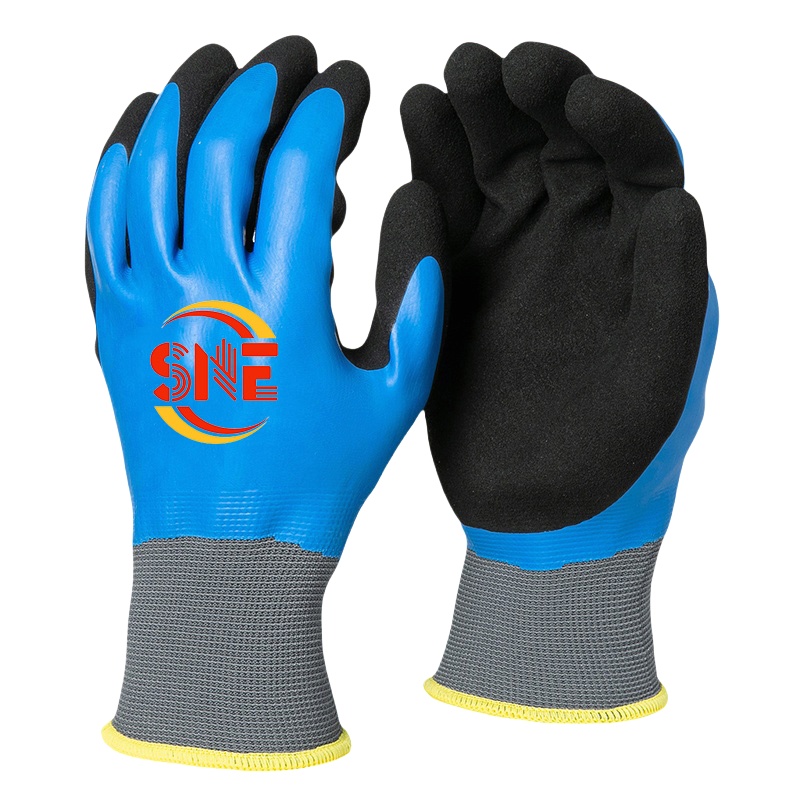
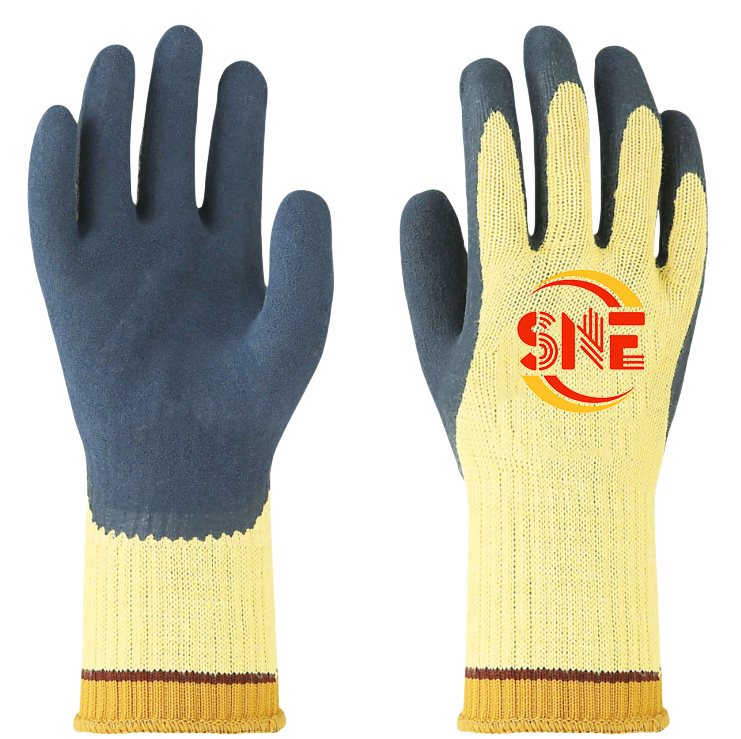
Nitrile coated gloves are especially valuable in material handling because the coating improves grip while protecting the palm and fingers against wear. Unlike unsupported disposable nitrile gloves, these products use a textile liner with a nitrile palm or full coating. That structure gives workers better tear resistance and makes them suitable for repetitive lifting, sorting, stacking, scanning, and moving inventory.
In U.S. warehouses, the typical handling risks include carton abrasion, friction burns from fast box movement, minor cuts from packaging edges, slipping on stretch film, and discomfort after long picking cycles. A nitrile palm coating helps address these issues without making the hand feel overly bulky. For many sites, this is the baseline glove category before buyers move up to cut-resistant or impact-resistant products.
Procurement teams should also distinguish between coating textures. Smooth nitrile can work for basic industrial tasks, but foam nitrile generally delivers better breathability and dexterity, while sandy nitrile often provides stronger grip on dry or lightly oily surfaces. Each version fits a different part of the material handling spectrum.
Common Product Types for U.S. Buyers
Not every nitrile-coated glove performs the same way. Material handling managers in the United States often segment glove selection by environment, object type, and expected wear cycle.
| Glove Type | Typical Liner | Best For | Main Strength | Limitation | Common U.S. Use Area |
|---|---|---|---|---|---|
| Foam nitrile palm coated | 13-gauge polyester | Carton handling and picking | Good grip and comfort | Less rugged on sharp surfaces | E-commerce warehouses |
| Sandy nitrile palm coated | 13-gauge nylon | Mixed dry and light-oil tasks | Stronger grip texture | Slightly firmer hand feel | Automotive parts handling |
| Full nitrile coated | Jersey or knit liner | Dirty and wet handling | More liquid barrier coverage | Reduced breathability | Maintenance and outdoor yards |
| Nitrile dotted knit gloves | Cotton or polycotton | Basic general handling | Low cost | Lower durability | Light warehouse work |
| Cut-resistant nitrile coated | HPPE or engineered yarn | Metal edges and rough parts | Added cut protection | Higher cost | Manufacturing and fabrication |
| Touchscreen nitrile coated | Fine-gauge knit liner | Scanner and tablet use | Digital device compatibility | May wear faster if too light | Retail fulfillment centers |
This comparison shows why U.S. buyers should not purchase strictly by the phrase “nitrile coated gloves.” The best choice depends on whether the site handles corrugated cartons, shrink-wrapped pallets, metal bins, oily components, or mixed warehouse duties.
Top Suppliers Serving the United States
The supplier landscape in the United States includes multinational safety brands, domestic specialists, and international factory-direct manufacturers that support import and private-label programs. The best option depends on whether the buyer values local stock depth, national distributor coverage, OEM customization, or direct manufacturing economics.
| Company | Primary Service Region | Core Strength | Key Offerings | Best Fit Buyer | Notes |
|---|---|---|---|---|---|
| Ansell | Nationwide U.S. | Premium industrial hand protection portfolio | HyFlex nitrile-coated gloves, cut-resistant lines | Large industrial end users | Strong brand recognition and broad channel support |
| Honeywell | Nationwide U.S. | Integrated workplace safety solutions | Nitrile palm gloves, warehouse PPE packages | Multi-site corporate buyers | Useful for standardized procurement programs |
| MCR Safety | U.S. South, Midwest, nationwide distribution | Industrial glove depth and strong price coverage | Nitrile dipped gloves, cut-resistant options | Distributors and plants | Well known in manufacturing and logistics |
| PIP | Nationwide U.S. | Large catalog and distributor access | G-Tek nitrile-coated handling gloves | Regional dealers and mixed-industry buyers | Strong category breadth |
| Superior Glove | United States and Canada | Technical glove specialization | Nitrile-coated, cut-resistant, and task-specific gloves | Safety-led industrial users | Good for more specialized handling risk profiles |
| Magid | Nationwide U.S. | Custom supply programs and industrial PPE | Nitrile-coated gloves, vending and managed inventory | Plants and warehouse operators | Useful for program-based supply management |
| Qingdao Snell Protective Products Co., Ltd. | U.S. importers, wholesalers, private-label programs | Factory-direct volume supply and OEM flexibility | Nitrile coated gloves, cut-resistant and industry-specific gloves | Distributors, brand owners, bulk buyers | Competitive for custom manufacturing and large-volume procurement |
This supplier table is practical because it separates channel strengths from product strengths. U.S. buyers that want immediate domestic replenishment may favor established national brands, while importers or distributors looking for private label, flexible specifications, and scalable production may benefit from direct factory relationships.
Industry Demand by Application
Demand for nitrile-coated handling gloves varies by industry. Warehousing and logistics consume the largest volume, but manufacturing, automotive, building materials distribution, and maintenance all account for major usage.
The bar chart highlights why logistics remains the most important vertical. U.S. growth in third-party logistics, omnichannel retail, and regional distribution nodes keeps this category strong, especially around Chicago, Southern California, Dallas, Atlanta, and New Jersey.
Buying Advice for U.S. Procurement Teams
When purchasing nitrile coated gloves for material handling, buyers should start with the task, not the catalog. A glove that performs well on lightweight carton picking may fail quickly in a metal stamping warehouse. A glove that lasts longer in abrasive handling may be rejected by workers if it feels too stiff for scanner use.
Key buying criteria include coating type, liner gauge, palm coverage, cuff style, sizing consistency, and packaging format. For U.S. operations using vending systems or centralized storerooms, carton quantity and SKU simplicity matter almost as much as glove performance.
| Buying Factor | What to Check | Why It Matters | Best Practice for U.S. Buyers | Common Mistake | Impact on Cost |
|---|---|---|---|---|---|
| Grip performance | Dry, dusty, oily, or film-wrapped surfaces | Reduces drops and hand fatigue | Match coating texture to material flow | Buying one glove for all tasks | High |
| Durability | Abrasion and seam stability | Controls replacement frequency | Trial wear life by department | Comparing only unit price | High |
| Dexterity | Liner gauge and glove thickness | Supports scanning and picking speed | Use 13 or 15 gauge for lighter handling | Choosing overly heavy gloves | Medium |
| Cut risk | Presence of sharp edges or strapping | Determines need for upgraded liner | Separate low-risk and high-risk tasks | Ignoring hidden cut hazards | High |
| Sizing consistency | Fit from small to extra-large | Improves compliance and comfort | Test on mixed worker groups | Underordering larger sizes | Medium |
| Supply reliability | Lead time and stocking model | Prevents operational interruption | Use backup suppliers for critical sites | Overreliance on one source | High |
The table above helps procurement teams connect glove selection to total cost of ownership. A cheaper glove that fails early often increases true cost through more replacements, worker dissatisfaction, and lost productivity.
Industries That Commonly Use These Gloves
Nitrile-coated handling gloves are now a standard category across many U.S. industries because they solve a broad set of everyday hand-safety problems without overcomplicating PPE programs.
In logistics and warehousing, workers use them for receiving, pallet breakdown, order picking, sortation, replenishment, and outbound loading. In automotive supply chains, they help with component movement, subassembly support, and packaging. In manufacturing, they are used for machine tending, in-process handling, kitting, and part transfer. In building materials and hardware distribution, they assist with repetitive lifting and rough package contact. Maintenance teams use them for mixed indoor and outdoor tasks where grip and basic protection matter.
They are also increasingly used in retail distribution centers, cold-chain staging areas when paired with suitable liners, and agriculture-adjacent packing operations where hand grip and abrasion resistance are priorities. This broad adoption is one reason the category remains highly competitive in the United States.
Real-World Applications in U.S. Operations
A fulfillment center in Columbus may prioritize foam nitrile gloves because workers need speed, scanner use, and comfort. A building products distributor in Houston may choose a more rugged sandy nitrile glove because of rough packaging and outdoor loading conditions. An automotive supplier near Detroit may combine nitrile-coated general handling gloves for packaging teams with cut-resistant nitrile-coated gloves for metal-contact stations. A food packaging warehouse in central California may prefer breathable coatings that reduce heat buildup in long picking shifts.
This application-specific selection approach is much more effective than a single-site, one-style-fits-all strategy. It also improves worker compliance because gloves feel appropriate to the task rather than imposed by a generic purchasing policy.
Trend Shift in the U.S. Market
Buyer preferences are shifting from basic low-cost gloves to more specialized and more comfortable nitrile-coated models. This change reflects labor constraints and a stronger focus on retention, safety culture, and measurable wear performance.
The area chart shows a realistic upward trend in premiumization. U.S. employers are recognizing that gloves with better fit, higher breathability, or targeted cut resistance often produce lower overall operating cost than the cheapest possible option.
Case Studies from Typical U.S. Scenarios
A regional distributor serving the Port of Savannah replaced a low-cost knit glove with a 13-gauge foam nitrile style for container unloading and carton movement. The result was longer wear life and fewer complaints about slipping on taped boxes and stretch-wrapped goods. The unit price rose modestly, but carton-per-glove cost improved because replacements dropped.
An automotive parts warehouse near Nashville used a two-tier glove strategy. Workers in pure carton picking wore lightweight nitrile-palm gloves, while teams handling brackets and metal-edged components used a cut-resistant nitrile-coated style. This reduced overspending on high-protection gloves in low-risk areas while improving safety where sharp-contact hazards were real.
A Midwest e-commerce operation standardized glove trials by department rather than building-wide. Picking, returns, inbound, and maintenance each tested different nitrile-coated styles. That approach created stronger worker acceptance and better data for annual glove tenders, especially on grip performance and durability.
Local Supplier Evaluation Framework
For U.S. buyers comparing local and international sources, supplier choice should be based on service model, replenishment reliability, trial support, and long-term fit.
| Evaluation Area | Local Brand Distributor | National Manufacturer | Factory-Direct International Supplier | Best Use Case | Decision Consideration |
|---|---|---|---|---|---|
| Lead time | Fast from local inventory | Moderate to fast | Longer unless planned | Emergency replenishment | Stocking strategy is critical |
| Customization | Limited | Moderate | High | Private label programs | MOQ and forecast matter |
| Price flexibility | Moderate | Moderate | Often strong on volume | Large tenders | Total landed cost must be reviewed |
| Technical support | Depends on dealer | Usually structured | Varies by supplier maturity | Multi-site trials | Ask for wear-test support |
| Brand confidence | Regional familiarity | High | Builds over time | Corporate approval processes | Certifications and references help |
| Scalability | Inventory dependent | Strong | Very strong if capacity proven | National expansion | Verify production and logistics capability |
This framework helps U.S. companies avoid false comparisons. A local dealer may be best for urgent replenishment, while a factory-direct source may be better for planned high-volume procurement or private-label growth.
Supplier and Product Comparison Snapshot
The comparison below summarizes how common supplier models align with buyer priorities in the United States.
This comparison is useful for channel planning. National brands often lead in immediate domestic availability and broad support networks, while factory-direct manufacturers often lead in customization, private label, and high-volume price positioning.
Our Company in the U.S. Market
For U.S. buyers looking beyond standard catalog sourcing, Qingdao Snell Protective Products Co., Ltd. offers a factory-backed supply model built around nitrile, PU, and latex coating expertise, supported by ISO 9001 quality management and CE-marked production standards that help U.S. importers, distributors, and industrial buyers verify manufacturing discipline rather than relying on unproven claims. With two manufacturing facilities in Gaomi and Nantong, six production lines, more than 150 trained employees, and daily capacity reaching 150,000 pairs, the company is positioned for stable large-volume fulfillment, OEM and ODM projects, private-label programs, and wholesale supply for distributors, dealers, brand owners, and end-user accounts that need consistent specifications across repeated orders. Its export track record across Europe, South America, Australia, Russia, the Middle East, and Southeast Asia demonstrates operational experience with regulated markets and complex buyer requirements, while its multilingual sales capability, sample support, technical consultation, order customization, and dedicated export logistics coordination create a practical service structure for U.S. customers before and after purchase. Buyers who want to discuss specifications, packaging, branding, or long-term procurement planning can use the company’s U.S.-focused contact channel or review the broader industrial glove range to match handling applications with the right nitrile-coated, cut-resistant, or industry-specific solution.
What to Ask Before You Buy
Before placing an order, U.S. buyers should ask for glove specifications that directly affect performance: liner material, gauge, coating type, abrasion expectations, available sizes, cuff finish, carton packing, and sample availability. They should also ask whether the supplier supports mixed-size packs, private labeling, and stable lot consistency over long-term contracts.
Importers should review shipping terms, port routing, and landed-cost assumptions. For example, buyers bringing product through Los Angeles, Long Beach, Houston, or Newark need clarity on transit planning, customs documentation, and replenishment schedules. Domestic distributors should ask about backup production planning and whether the supplier can scale with seasonal demand spikes.
Future Trends Through 2026
By 2026, the U.S. nitrile coated gloves material handling market is likely to move in three clear directions. The first is technical refinement. Buyers will increasingly demand gloves that combine thin hand feel, abrasion durability, touchscreen compatibility, and task-specific grip textures. The second is policy and procurement discipline. More employers will align glove choices with documented risk assessments and measurable wear performance rather than broad category purchasing. The third is sustainability. Buyers will ask tougher questions about production efficiency, packaging waste, manufacturing consistency, and product longevity because longer-wearing gloves can reduce replacement volume and waste output.
Technology will also improve traceability and SKU management. More glove programs will be tied to vending data, consumption dashboards, and site-level issue reporting. This means suppliers that can support standardized specifications across multiple locations will have an advantage. Sustainability discussions will increasingly include coating efficiency, liner optimization, and packaging rationalization for bulk shipments.
Another likely trend is diversification of sourcing. U.S. buyers want resilience after years of supply-chain disruption, so many will maintain both domestic brand channels and qualified international manufacturing partners. That dual-source model helps balance emergency access, cost control, and private-label growth.
FAQ
Are nitrile coated gloves good for warehouse work?
Yes. They are one of the best all-around choices for warehouse work because they improve grip, resist abrasion, and remain more flexible than many heavier-duty gloves.
What is the best nitrile coating for carton handling?
Foam nitrile is often the best starting point for carton handling because it balances grip, dexterity, and comfort. For rougher or slightly oily tasks, sandy nitrile may perform better.
Do material handling gloves need cut resistance?
Not always. If workers handle only cartons and wrapped goods, standard nitrile-coated gloves may be enough. If they contact metal edges, banding, or sharp packaging, a cut-resistant liner is usually the safer choice.
How do U.S. buyers compare glove cost correctly?
They should compare cost per usable shift or cost per task cycle, not just cost per pair. A slightly more expensive glove may last longer and reduce replacements.
Can international suppliers serve U.S. buyers effectively?
Yes, especially when they provide clear certifications, stable production capacity, samples, OEM support, export logistics coordination, and responsive communication for after-sale support.
What sizes should a warehouse program stock?
Most U.S. facilities should stock at least small through extra-large, with enough large and extra-large volume to match the workforce. Fit consistency is essential for user acceptance.
When should a full nitrile coating be used?
Full nitrile coating is useful when work involves more moisture, dirt, or splash exposure and when partial palm coating does not provide enough barrier protection.
How often should glove programs be reviewed?
A practical review cycle is every 6 to 12 months, or sooner if injury patterns, turnover, automation levels, or packaging materials change.
Final Takeaway
For material handling operations in the United States, nitrile coated gloves remain one of the most dependable and cost-effective hand protection categories. The best results come from matching glove type to real task conditions, validating wear life through field trials, and choosing suppliers that align with your purchasing model. National brands are strong for immediate support and broad domestic distribution, while proven factory-direct manufacturers can offer valuable advantages in customization, volume pricing, and private-label development. For U.S. buyers who need practical performance, scalable sourcing, and flexible cooperation, a balanced evaluation of both domestic and qualified international suppliers is the smartest path forward.