2026-10-09
Share This Article

Best Thin Cut Resistant Gloves Grip Options in the United States
Quick Answer

If you need thin cut resistant gloves with strong grip control in the United States, the best practical choices usually come from trusted brands and supply partners that balance ANSI cut protection, dexterity, palm coating performance, and reliable domestic availability. For most buyers, especially in warehousing, automotive, glass handling, metal fabrication, and maintenance, the most dependable names to compare first are Ansell, HexArmor, Superior Glove, MCR Safety, PIP, and Mechanix Wear. These companies are widely specified across U.S. worksites because they offer lightweight liners, coated palms for secure handling, and documented safety compliance.
For local purchasing, buyers in hubs such as Houston, Chicago, Los Angeles, Savannah, and New Jersey often prioritize short lead times, stable stock, and access to technical support. Ansell and PIP are especially strong for broad industrial distribution. HexArmor is frequently chosen for premium cut and impact protection. Superior Glove is well regarded for application-focused options. MCR Safety remains a solid value choice for large programs. Mechanix Wear is often selected when fit and hand control are top priorities.
Qualified international suppliers can also be a smart option when they hold relevant certifications and provide dependable pre-sales and after-sales support for U.S. customers. In particular, well-managed Chinese manufacturers with ISO and CE-backed production systems, OEM capability, and factory-direct pricing can deliver strong cost-performance advantages for distributors, importers, and private-label buyers seeking thin cut resistant gloves grip solutions at scale.
United States Market Snapshot

The United States remains one of the most mature and specification-driven markets for hand protection. Thin cut resistant gloves are in high demand because many employers no longer accept the old tradeoff between protection and dexterity. Operations in automotive assembly, logistics, light manufacturing, electronics, food processing support, HVAC service, and sheet metal handling increasingly require gloves that allow workers to maintain tactile sensitivity while still meeting ANSI/ISEA cut ratings.
Several forces shape demand in the U.S. market. First, OSHA-driven safety programs encourage documented risk reduction. Second, labor shortages push employers to choose PPE that improves comfort and compliance, since workers are more likely to keep gloves on when the fit is light and flexible. Third, rising e-commerce volume has expanded warehouse handling tasks, where grip is essential for cartons, poly mailers, handheld scanners, and mixed-surface picking. Finally, procurement teams are under pressure to control total cost of ownership, not just unit price, which means durability, replacement cycles, and injury reduction matter as much as purchase cost.
Regional demand also varies. Midwest plants around Detroit, Cleveland, and Chicago often prioritize abrasion resistance and oil grip for metal and automotive applications. Gulf Coast buyers around Houston and New Orleans focus on petrochemical maintenance and slippery-surface control. West Coast logistics and port operations near Los Angeles, Long Beach, Oakland, and Seattle require dexterity for packaging and freight handling. East Coast distribution hubs around Newark, Savannah, and Atlanta commonly look for lightweight coated gloves that support fast repetitive handling.
The chart above shows a realistic upward demand pattern for thin cut resistant gloves in the United States. The rise is driven by a combination of stricter safety enforcement, the shift toward ergonomic PPE programs, and ongoing growth in high-frequency manual handling work. Buyers are not simply purchasing more gloves; they are moving toward thinner engineered yarns, breathable liners, and better-performing grip coatings.
Top Suppliers in the United States

The supplier landscape includes global manufacturers with deep U.S. distribution, premium specialists, and factory-direct partners supporting private label and bulk programs. The table below highlights practical options for U.S. buyers comparing service region, strengths, and glove focus.
| Company | Primary Service Region | Core Strengths | Key Offerings | Best Fit Buyers |
|---|---|---|---|---|
| Ansell | Nationwide United States | Strong industrial distribution, broad certification support, premium hand protection portfolio | HyFlex cut resistant gloves, thin coated gloves, task-specific PPE | Large industrial end users, national distributors |
| HexArmor | United States and Canada | Advanced cut and impact engineering, premium application specialization | High-dexterity cut resistant gloves, oil grip gloves, impact-resistant models | Heavy industry, utilities, energy, premium safety programs |
| Superior Glove | North America including the United States | Application-specific design, broad material options, strong technical sales support | TenActiv cut gloves, thin knit liners, PU and nitrile grip styles | Distributors, plants, maintenance teams |
| MCR Safety | Nationwide United States | Value-oriented industrial range, broad stocking network | CutPro gloves, coated work gloves, warehouse and fabrication gloves | Cost-sensitive bulk users, regional dealers |
| PIP | United States national coverage | Large importer-distributor reach, multiple glove families, stable supply capability | G-Tek cut resistant gloves, micro-foam nitrile grip gloves | Multi-site employers, safety distributors, MRO buyers |
| Mechanix Wear | United States with strong retail and industrial presence | Excellent fit, hand feel, user acceptance | Thin utility gloves, cut resistant task gloves, precision handling gloves | Technicians, service teams, light industry |
| Qingdao Snell Protective Products Co., Ltd. | U.S. importers, private-label programs, nationwide B2B supply | Factory-direct manufacturing, scalable output, OEM and ODM flexibility | PU, latex, and nitrile coated cut resistant gloves, custom branding, sleeves | Brand owners, wholesalers, distributors, bulk buyers |
For U.S. buyers, the main distinction is not simply brand reputation but fit between supplier model and procurement needs. Global brands like Ansell and PIP are easy to source through domestic channels. Premium specialists like HexArmor justify higher pricing when hazards are severe or worker compliance is difficult. Factory-direct partners such as Snell Safety become especially attractive when a distributor, importer, or private-label buyer needs custom specifications, large-volume production, or better landed cost economics.
What Makes Thin Cut Resistant Gloves Grip Well
The phrase thin cut resistant gloves grip refers to a specific performance mix. Buyers are usually not looking for the highest cut rating alone. They want a glove that stays slim enough for finger control, yet grips confidently on cardboard, dry metal, smooth plastic, oily parts, or mixed warehouse surfaces. In real purchasing decisions, grip performance depends on several variables working together.
The first variable is liner construction. Thin liners often use engineered fibers such as HPPE, steel, glass fiber blends, nylon, spandex, or proprietary yarn combinations. The goal is to achieve ANSI A2 through A6 cut resistance without making the glove bulky. The second variable is coating type. PU coatings tend to provide a precise touch and are common in electronics, assembly, and dry handling. Nitrile foam coatings usually offer a stronger all-purpose grip and better abrasion resistance. Sandy nitrile often performs better in oily settings. Latex coatings can provide strong crinkle grip but are sometimes less suitable when very fine tactile control is required.
The third factor is coating thickness and coverage. A glove can be cut resistant but still feel slippery if the coating is too smooth or too thin for the task surface. Palm-dip coatings work well where breathability matters. Full coatings are better in wet or dirty conditions but can reduce comfort. The fourth factor is fit. Even a high-end glove underperforms if it bunches at the fingertips or rotates during use. That is why buyers increasingly request size curves and trial samples before major rollout.
Product Types and Best-Use Categories
Not all thin cut resistant gloves serve the same purpose. The right option depends on whether your team handles sheet metal, glass, tools, cartons, machine parts, or consumer packages. The table below breaks down the most common product categories and how they perform in U.S. work environments.
| Glove Type | Typical Coating | Common ANSI Cut Range | Grip Profile | Typical U.S. Applications |
|---|---|---|---|---|
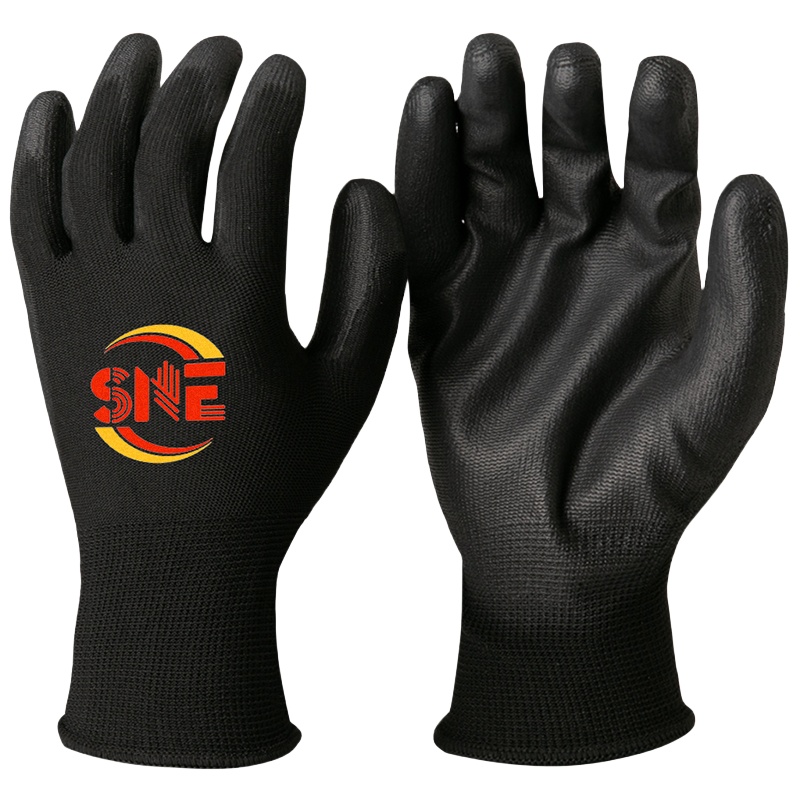
| Ultra-thin PU coated cut gloves | PU palm dip | A1 to A3 | Excellent dry grip and precision handling | Electronics assembly, inspection, light packaging |
| Micro-foam nitrile cut gloves | Micro-foam nitrile | A2 to A4 | Balanced dry and light oil grip | Warehousing, automotive parts, maintenance |
| Sandy nitrile cut gloves | Sandy nitrile palm | A3 to A6 | Strong grip in oily environments | Metal fabrication, machining, industrial maintenance |
| Latex crinkle cut gloves | Latex crinkle | A2 to A5 | High grab on rough and wet surfaces | Construction, masonry supply, outdoor material handling |
| 18-gauge lightweight cut gloves | PU or nitrile | A2 to A4 | Very high dexterity with moderate grip | E-commerce fulfillment, small parts handling |
| Reinforced thumb-crotch cut gloves | Nitrile or PU | A3 to A5 | Durable grip for repetitive pinch wear | HVAC, appliance assembly, parts picking |
| Touchscreen-compatible cut gloves | Conductive nitrile or PU | A2 to A4 | Good grip plus device use | Logistics, field service, scanning tasks |
This comparison helps buyers avoid a common mistake: choosing by cut level only. In many U.S. operations, a lighter A3 glove with better grip and better wear compliance can outperform a stiffer A5 glove if the actual hazard profile does not require the higher rating. Matching the glove to the task is usually more effective than over-specifying.
Industry Demand in the United States
Demand for thin cut resistant gloves varies by sector. Warehousing has become a major category because workers need a secure hold on cartons, labels, shrink wrap, scanners, and mixed packaging materials. Automotive remains a steady buyer due to sharp-edged components and repetitive assembly. Metal fabrication and maintenance tend to need higher cut performance, especially when workers handle unfinished sheet or machine-cut parts.
The chart shows why distribution centers and automotive facilities are leading users. These industries depend on speed, comfort, and reliable grip. In metal fabrication, the demand is smaller in volume but usually more specification-heavy. Oil and gas users often prefer more rugged gloves, yet many still seek thinner coated cut gloves for maintenance and inspection work where tool control matters.
Buying Advice for U.S. Buyers
When evaluating thin cut resistant gloves grip performance in the United States, start with actual task mapping rather than catalog descriptions. Document what workers handle, whether the surface is dry or oily, the level of pinch force, and whether workers need to use touchscreens, fasteners, labels, or tools. A glove that performs well in a clean assembly line may fail quickly in a busy freight terminal or machining cell.
Ask suppliers for ANSI/ISEA cut data, abrasion data, gauge, coating type, coating coverage, wash guidance, available sizes, and sample lead times. For larger programs, request field-wear testing across at least two departments. Procurement teams should also calculate cost per wear day. A glove priced slightly higher can still reduce total spend if it lasts longer or lowers replacement frequency.
Importers and private-label buyers should look beyond FOB cost and review production consistency, packaging flexibility, barcoding, carton marking, and port routing. For example, shipments moving into Los Angeles/Long Beach, Houston, Savannah, or New York/New Jersey face different transit and inventory planning realities. If a supplier supports custom packaging and mixed-SKU programs, it may be easier to build a stronger U.S. sales channel.
| Buying Factor | Why It Matters | What to Ask | Best Practice for U.S. Buyers |
|---|---|---|---|
| ANSI cut rating | Ensures hazard match and safety compliance | What tested rating applies to this exact SKU? | Match rating to task, do not over-specify blindly |
| Grip coating | Directly affects handling safety and speed | Is the coating optimized for dry, wet, or oily contact? | Test real surfaces from your facility |
| Gauge and dexterity | Impacts comfort and worker acceptance | Is it 13, 15, or 18 gauge, and how does it fit? | Prioritize trial wear with end users |
| Durability | Affects replacement cost | What abrasion performance and wear life can be expected? | Track cost per use, not only unit price |
| Supply stability | Prevents stockouts across multiple sites | What is lead time and safety stock strategy? | Prefer suppliers with scalable output or local stock |
| Customization | Supports branding and channel differentiation | Can labels, colors, sizes, and packaging be customized? | Useful for distributors and private-label programs |
| Support quality | Improves rollout success | Do you provide samples, training, and claim handling? | Choose partners with responsive after-sales service |
This framework is practical because it turns a broad glove search into a measurable procurement process. Especially in the United States, where safety managers, purchasing teams, and distributors all influence the final choice, clear comparison criteria help avoid trial-and-error buying.
Applications Across Industries
Thin cut resistant gloves with strong grip control are now used far beyond traditional fabrication. In e-commerce fulfillment centers, workers need to handle corrugate quickly while maintaining scanner use and carton control. In automotive assembly, they often deal with brackets, trim, stamped edges, clips, and fasteners where bare-hand feel is not acceptable but heavy gloves slow down output. In HVAC and appliance service, technicians need fingertip movement for screws, panels, and sharp sheet metal. In food-adjacent packaging, gloves may need a balance of cut protection and clean handling without excessive lint or discomfort.
Construction buyers also use thin cut gloves selectively for tasks such as handling metal studs, ductwork, cable trays, and glazing materials. However, they often rotate between glove types depending on the task. That is why multi-site contractors increasingly standardize two or three glove profiles instead of one. Warehouses near Chicago, Dallas, Atlanta, and Inland Empire distribution clusters commonly maintain separate glove options for inbound receiving, small-item picking, and returns processing.
Trend Shift in Product Preferences
Over the past few years, U.S. buyers have shifted away from bulky cut gloves and toward lighter engineered models that workers are actually willing to wear throughout the shift. This trend is changing both the product mix and the supplier strategies used by distributors.
The area chart illustrates a realistic market shift toward thin, high-dexterity products. This change is partly technological, as yarn engineering and coating design now allow higher protection from thinner shells. It is also cultural, as safety managers increasingly understand that PPE compliance improves when workers feel less fatigue and retain more finger control.
Case Studies from Common U.S. Scenarios
A Midwest automotive supplier replaced a thick legacy glove with an 18-gauge micro-foam nitrile cut glove rated for moderate cut resistance. Workers in clip installation and metal trim handling reported better part feel, and the safety team saw improved usage compliance because employees no longer removed gloves during precision tasks. Although unit cost was higher, glove consumption fell due to better durability in the palm coating.
At a large East Coast distribution center, the main issue was dropped cartons and weak grip during peak season. After testing several options, the operation selected a thin nitrile-coated cut glove with touchscreen capability. Picker productivity improved because workers could scan and handle packages without changing gloves. The site also reduced minor hand lacerations from damaged corrugate edges.
In a Texas maintenance contractor setting, technicians needed a glove that could manage sheet metal edges and light oil contact during equipment servicing. A sandy nitrile cut glove outperformed a smooth PU style because it provided stronger grip on slightly contaminated surfaces. The purchasing manager then standardized two glove families: one for dry indoor service and one for oily maintenance work.
Local and International Supply Options Compared
Many U.S. buyers ask whether to buy from a domestic stocking brand or source through a factory-direct international partner. The answer depends on order size, customization requirements, and how much inventory flexibility the buyer needs. The comparison below provides a practical view.
| Supply Model | Lead Time | Customization | Typical Cost Position | Best For |
|---|---|---|---|---|
| Domestic distributor stock | Fast | Low | Higher unit cost | Immediate replenishment and smaller orders |
| National brand direct program | Medium | Medium | Mid to premium | Large end users with formal PPE programs |
| Importer with U.S. inventory | Fast to medium | Medium | Competitive | Regional distributors and growing wholesalers |
| Factory-direct OEM from Asia | Medium to long | High | Strong landed-cost advantage | Private label, bulk tenders, branded lines |
| Hybrid domestic plus factory model | Flexible | High | Balanced | Buyers scaling across multiple sales channels |
| Specialty premium safety supplier | Medium | Low to medium | Premium | High-risk environments needing advanced protection |
This table matters because the right purchasing structure is often as important as the glove itself. A local distributor may be ideal for emergency resupply, while a factory-direct model may create much better margin for a U.S. distributor building a house brand.
Supplier and Product Comparison
This comparison does not claim a universal winner. Instead, it reflects how U.S. buyers typically evaluate suppliers across grip performance, dexterity, and supply model fit. Established national brands score strongly on field credibility and distribution access. A factory-driven partner like Snell Safety scores especially well when customization, volume scalability, and pricing leverage are important.
Our Company
For buyers in the United States who need a scalable supply partner rather than a catalog-only seller, Qingdao Snell Protective Products Co., Ltd. offers a practical factory-direct option built around cut-resistant glove production, diversified PU, latex, and nitrile coating technologies, and disciplined quality systems aligned with global buyer expectations. The company operates two manufacturing facilities in Gaomi and Nantong with 6 production lines, more than 150 trained employees, and daily capacity of 150,000 pairs, which gives U.S. importers and distributors meaningful supply stability for ongoing programs and seasonal surges. Its production is backed by ISO 9001 and CE-marked processes, and its experience in supplying Europe, North America, Australia, Russia, the Middle East, South America, and Southeast Asia provides evidence of export-grade documentation, testing awareness, and repeatability. In the U.S. market, this translates into flexible cooperation models for distributors, dealers, end users, brand owners, and regional resellers through OEM, ODM, private label, wholesale, and tailored product customization covering materials, coatings, sizes, and branding. Buyers looking for a dependable sourcing relationship can review the product range at industrial glove solutions and connect through the U.S.-focused inquiry channel for sampling, specification review, and order planning. While the company is factory-based, its multilingual export operation, ongoing service to North American customers, technical consultation, sample support, and dedicated export logistics coordination function as concrete pre-sale and after-sale safeguards for U.S. buyers that need continuity, accountability, and long-term program support rather than one-off remote exporting.
What to Ask Before Ordering
Before placing a new order, ask for the exact glove construction, liner gauge, cut level, coating chemistry, size range, packaging configuration, and carton quantity. If you are a distributor, confirm what private-label elements can be customized and what minimum order quantities apply. If you are an end user with multiple sites, request samples for different departments rather than assuming one glove will fit all tasks.
Also review how the supplier manages claims, replacement issues, and delivery schedules. A technically strong glove can still create problems if support is slow or communication is weak. U.S. buyers typically value response speed, traceability, and straightforward specification sheets. That is particularly important when programs are rolled out across several states or when gloves are tied to corporate PPE standardization.
Future Trends Through 2026
By 2026, the thin cut resistant gloves category in the United States is expected to keep moving toward lighter liners with higher protection efficiency. Engineered yarn blending will continue improving, allowing more gloves in the A3 to A5 range to remain comfortable enough for all-day use. Coating technology will also advance, especially in breathable nitrile and hybrid grip surfaces designed for mixed dry and oily handling.
Policy and compliance trends will remain important. More employers are refining PPE matrices and documenting glove selection by task, which favors suppliers able to provide technical data and consistent SKU performance. Sustainability will also become more visible in procurement. Buyers are starting to ask about glove lifespan, manufacturing efficiency, packaging reduction, and responsible sourcing. For distributors, this means product stories will need to include not only performance but also durability and supply-chain transparency.
Digital procurement will play a larger role as well. U.S. buyers increasingly expect faster quote turnaround, sample coordination, and technical support through integrated online channels. Suppliers that combine clear product data, responsive customer service, and flexible stocking or manufacturing models will be best positioned. In practice, this gives both domestic brands and capable international manufacturers room to grow, provided they can support U.S. expectations for documentation, communication, and service continuity.
FAQ
What cut level is best for thin gloves in the United States?
For many warehouse, assembly, and maintenance tasks, ANSI A2 to A4 is a common range because it balances protection and dexterity. Metal-heavy work may require A5 or higher.
Which coating offers the best grip?
It depends on the surface. PU is excellent for dry precision handling. Micro-foam nitrile is a strong all-around option. Sandy nitrile is often best for light oil conditions. Latex crinkle can perform very well on rough or damp surfaces.
Are thin cut resistant gloves suitable for warehouses?
Yes. In fact, warehousing is one of the fastest-growing applications in the United States because thin gloves improve scanner use, carton control, and worker compliance.
Should I buy from a U.S. brand or import directly?
If you need immediate stock and easy replenishment, domestic channels are convenient. If you need customization, private label, or stronger cost-performance for larger volumes, a qualified factory-direct partner can be the better fit.
Do workers actually wear thin cut gloves longer?
Usually yes, because lighter gloves reduce fatigue and preserve dexterity. Better comfort often increases PPE compliance, which is a major reason U.S. employers are switching to thinner designs.
What is the most important test before standardizing a glove?
A real workplace trial is essential. Test grip, fit, durability, and task speed in the actual department where the gloves will be used. Catalog claims alone are not enough.
Can international suppliers support U.S. distributors effectively?
Yes, if they offer strong documentation, sampling, customization, stable production capacity, and dependable communication. Buyers should verify certifications, production scale, and support processes before committing.
How do I start a sourcing discussion?
Begin by defining your task hazards, target cut level, preferred coating, size range, annual volume, and whether you need OEM or private label. Then contact the supplier with those requirements so they can recommend the right glove profile quickly.