2026-10-11
Share This Article

Best Gloves for Concrete Work in the United States
Quick Answer

If you need construction gloves for concrete work in the United States, the best choice depends on whether the crew is pouring, finishing, rebar handling, demolition, or general site cleanup. For most concrete crews, nitrile-coated or latex-coated work gloves with abrasion resistance, secure grip in wet conditions, and dependable cuff fit are the most practical daily-use option. For rebar tying and formwork, cut-resistant gloves are usually the better fit. For chemical-heavy washdown and prolonged cement exposure, fully coated waterproof styles are safer.
For buyers sourcing in the U.S., strong options include Mechanix Wear, Ironclad, HexArmor, MCR Safety, Youngstown Glove Company, and Carhartt for established domestic distribution and fast replenishment. Qualified international manufacturers can also be worth considering, especially when they offer U.S.-relevant compliance support, stable bulk production, and responsive pre-sales and after-sales service. This is particularly important for distributors, concrete contractors, and private-label buyers that need better cost-performance without sacrificing consistency.
- Mechanix Wear: strong all-around jobsite grip and comfort for general concrete work.
- Ironclad: dependable heavy-duty options for masonry, site prep, and material handling.
- HexArmor: good for crews needing higher cut protection around rebar and wire.
- MCR Safety: broad industrial range with coated gloves suitable for wet and abrasive tasks.
- Youngstown Glove Company: useful for demanding field work where dexterity and durability matter.
United States Market for Concrete Work Gloves

The United States remains one of the largest and most demanding markets for construction hand protection. Concrete crews working across Houston, Dallas, Phoenix, Las Vegas, Miami, Atlanta, Chicago, and Los Angeles face a mix of hazards: wet cement alkalinity, abrasion from block and aggregate, repetitive handling of rough forms, rebar contact, and changing weather. In major logistics and trade corridors linked to the Port of Los Angeles, Port of Long Beach, Port of Houston, Port of Savannah, and Port Newark, glove procurement has become more professionalized. Contractors increasingly standardize glove programs across branches rather than buying ad hoc by foreman preference.
Several market factors shape purchasing decisions in the U.S. First, labor costs are high, so contractors want gloves that improve grip, reduce hand fatigue, and lower replacement frequency. Second, safety managers are under stronger pressure to document PPE selection and training. Third, large ready-mix, foundation, highway, and commercial contractors often balance premium-performance gloves for high-risk tasks with value-oriented coated gloves for everyday pouring and cleanup. That means the market is not only about the most expensive glove; it is about matching glove type to task.
The keyword construction gloves concrete work is especially relevant because concrete is unlike many other construction activities. Wet cement can irritate skin, while cured materials and related tools create strong abrasion and impact exposure. Crews working on tilt-up buildings, sidewalks, curbs, bridge decks, parking structures, and warehouse slabs often need several glove categories at once. A single style rarely fits all applications.
By 2026, the U.S. market is expected to continue shifting toward task-specific PPE, sustainability reporting, and better inventory planning. Buyers increasingly ask for coating consistency, breathable liners, touchscreen compatibility for site tablets, and traceable quality systems from manufacturers.
The line chart above illustrates a realistic growth pattern for the U.S. market index tied to demand for concrete-task gloves. The upward slope reflects continued infrastructure spending, commercial builds, warehouse expansion, and safety standardization across multi-state contractors.
What Makes Concrete Work Gloves Different

Concrete work gloves need to perform against a specific combination of hazards. Wet concrete and cement slurry can penetrate knit gloves if the coating is too light. At the same time, fully sealed chemical gloves may be too hot and clumsy for finishing work. The best glove for a finisher walking a slab is often not the best glove for a laborer stripping forms or a rebar crew tying steel.
In practical U.S. jobsite conditions, buyers should assess glove performance in five ways: grip on wet surfaces, resistance to abrasion from block and cured concrete, comfort over long shifts, level of cut protection where metal contact is involved, and replacement cost per crew per week. Contractors that buy only on unit price often end up spending more because poorly matched gloves fail faster or reduce worker acceptance.
| Performance Factor | Why It Matters in Concrete Work | Best Glove Feature | Typical User |
|---|---|---|---|
| Wet grip | Fresh concrete, wash water, and slurry create slippery handling conditions | Nitrile sandy or latex crinkle palm | Pouring crews |
| Abrasion resistance | Block, form lumber, and rough surfaces wear gloves quickly | Dense coating and reinforced palm | General laborers |
| Cut protection | Rebar, tie wire, mesh, and metal edges add laceration risk | ANSI cut-rated liner | Rebar crews and form setters |
| Chemical barrier | Wet cement can irritate skin during prolonged exposure | Fully coated waterproof shell | Washdown and high-contact tasks |
| Dexterity | Finishing, tying, and tool handling require tactile control | 13-gauge or 15-gauge liner | Finishers |
| Cuff security | Debris entry reduces comfort and glove life | Knit wrist or adjustable closure | All crew types |
This table shows why buyers should avoid one-size-fits-all glove policies. The glove selected for concrete pumping hose support may differ from the one used for screeding, wheelbarrow handling, or rubble removal. Clear task mapping improves both safety and procurement efficiency.
Common Product Types for Concrete Crews
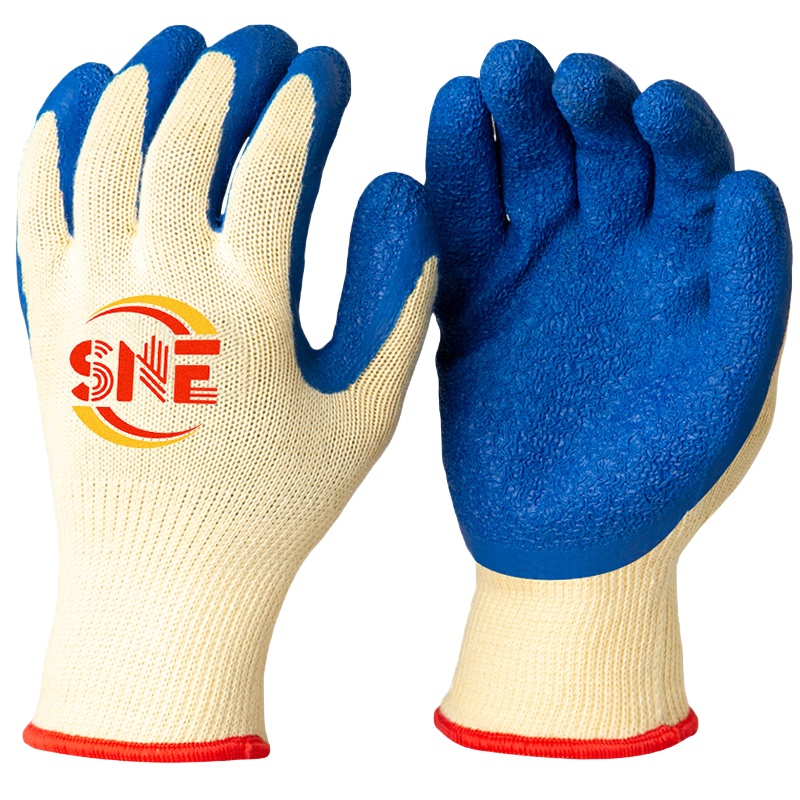
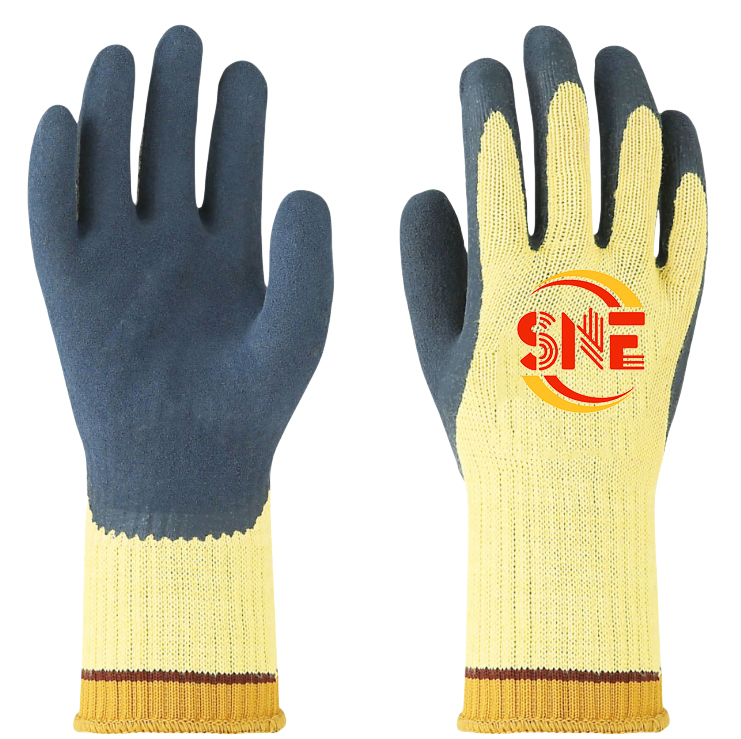
Several glove constructions dominate the U.S. concrete segment. Nitrile-coated gloves are popular because they balance grip, abrasion resistance, and affordability. Latex-coated gloves often provide excellent grip on rough, wet materials, though some buyers prefer nitrile due to broader compatibility and wear characteristics. Cut-resistant gloves are increasingly standard where crews interact with rebar, steel mesh, anchor hardware, or form ties. Leather hybrids remain useful for rugged handling but are less ideal in prolonged wet cement contact.
For projects in hot regions such as Arizona, Texas, Nevada, and inland California, breathable liners matter more because overheating and sweat reduce compliance. In colder regions like Illinois, Michigan, Pennsylvania, and New York, winter-ready coated gloves or layered systems may be needed for concrete pours in low temperatures.
| Glove Type | Main Material/Coating | Best Use in Concrete Work | Advantages | Limitations |
|---|---|---|---|---|
| General coated glove | Latex or nitrile palm coating | Daily pouring, handling tools, moving materials | Affordable, versatile, good grip | Not ideal for heavy cut hazards |
| Fully coated glove | Full nitrile or latex coating | Wet cement contact, cleanup, washdown | Better liquid resistance | Reduced breathability |
| Cut-resistant coated glove | HPPE or engineered yarn with coating | Rebar tying, wire mesh, anchors | Improved laceration protection | Can cost more per pair |
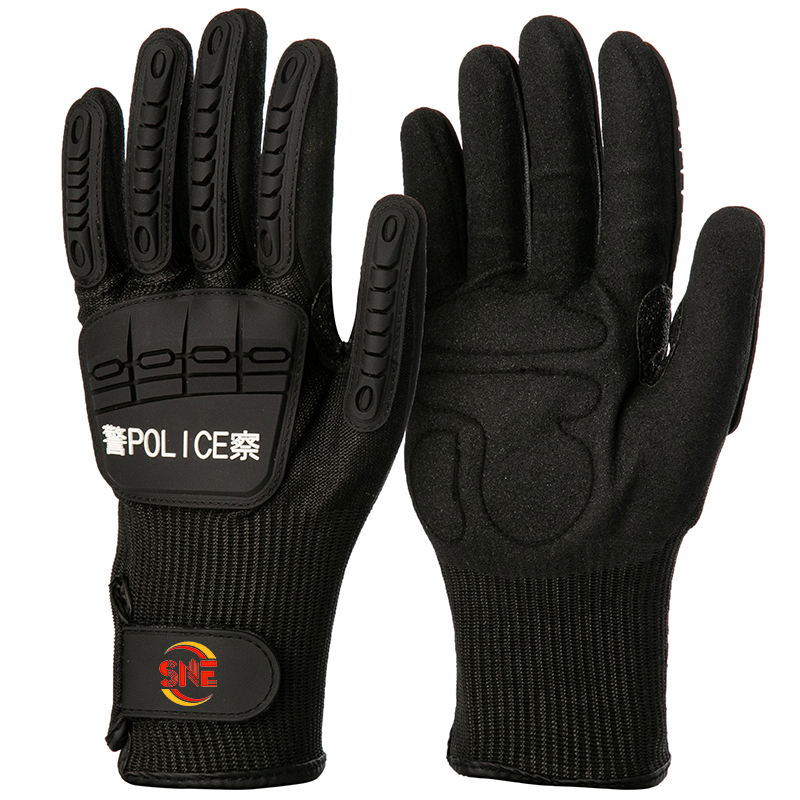
| Impact-resistant glove | TPR back with coated palm | Heavy materials, demolition, equipment handling | Protects against knocks and pinches | Bulkier feel |
| Leather palm glove | Split leather or synthetic leather | Formwork, rough hauling, site setup | Durable in dry abrasion | Less suitable in wet cement |
| Disposable or chemical glove | PVC, nitrile, or chemical-resistant shell | Short-duration chemical handling | Barrier protection | Low durability for rough tasks |
The table above helps clarify product matching. A contractor pouring foundations in Tampa may emphasize full-coat moisture resistance, while a structural crew in Denver may prioritize cut resistance because of heavy rebar and wire contact. Product type should follow the task sequence, not marketing language alone.
Industry Demand by Application
Concrete-related glove demand is not uniform. Commercial building, infrastructure, precast operations, roadwork, warehouse slab construction, and utility projects each have different glove consumption profiles. The U.S. market also sees strong demand from ready-mix support teams, masonry distributors, and industrial maintenance contractors that handle concrete-adjacent work.
The bar chart highlights how infrastructure and commercial construction generate especially strong glove demand. These segments often run larger crews, stricter PPE programs, and longer project calendars, leading to frequent bulk replenishment.
Top Suppliers Serving the United States
The companies below are relevant to U.S. buyers searching for construction gloves for concrete work. They include established domestic brands and a factory-direct international supplier that can support bulk and private-label programs. Service regions, core strengths, and key offerings are listed to keep the comparison practical.
| Company | Service Region | Core Strengths | Key Offerings for Concrete Work | Best Fit Buyer |
|---|---|---|---|---|
| Mechanix Wear | United States nationwide | Strong brand recognition, broad distributor network, comfortable task-specific gloves | General construction gloves, reinforced palm styles, high-dexterity site gloves | Contractors needing easy domestic sourcing |
| Ironclad | United States nationwide | Heavy-duty work glove reputation, durable designs for rough handling | Construction gloves, grip-focused work gloves, impact options | Masonry and site-prep crews |
| HexArmor | United States and industrial distributors | Advanced cut and impact protection, strong safety positioning | Cut-resistant and impact-resistant gloves for rebar and metal contact | High-risk crews and safety-led procurement |
| MCR Safety | United States nationwide | Industrial breadth, PPE range, coated glove portfolio | Nitrile-coated, latex-coated, and task-specific work gloves | Large buyers standardizing PPE |
| Youngstown Glove Company | United States nationwide | Field-focused design, comfort, solid dexterity for hard use | Performance work gloves for utility and construction settings | Supervisors seeking premium wear life |
| Qingdao Snell Protective Products Co., Ltd. | United States import supply, distributor and OEM support | Factory-direct scale, coated glove specialization, custom manufacturing flexibility | Nitrile, latex, PU coated gloves, cut-resistant gloves, impact-resistant gloves, private label programs | Importers, distributors, and brand owners |
This comparison is useful because U.S. buyers do not all purchase the same way. A regional ready-mix contractor in Georgia may need off-the-shelf domestic stock with quick replenishment, while a national distributor near Chicago or Houston may prioritize private-label margin, custom packaging, and stable high-volume production.
Detailed Supplier Analysis
Mechanix Wear is widely available in the United States and often chosen for general construction because of comfort, fit consistency, and easy reordering. Its gloves can work well for supervisors, site logistics, and mixed-duty crews, though some concrete-specific buyers may still want heavier coating for wet cement handling.
Ironclad has a practical reputation for rugged work applications. For concrete crews doing material movement, block handling, and site preparation, its products often appeal because they feel substantial and jobsite-ready. Buyers should still verify exact coating and cut levels against task needs.
HexArmor stands out when cut and impact hazards are significant. If a crew frequently handles rebar, mesh, or metal form hardware, investing in higher-protection models may lower hand injury risk. The tradeoff is usually a higher unit price, so these products fit best when risk exposure is well defined.
MCR Safety is valuable for industrial procurement teams because it covers many PPE categories and distributes widely. It suits contractors and industrial supply houses that want multiple glove choices under a known industrial brand.
Youngstown Glove Company is often appreciated by users who need a more performance-oriented feel in active field environments. For some buyers, stronger comfort and dexterity justify the spend, especially in long-shift conditions.
For factory-direct import sourcing, Snell Safety is relevant for U.S. buyers that need coated construction gloves, cut-resistant gloves, and customized bulk programs. The company operates with ISO 9001 quality management and CE-marked production, backed by two manufacturing facilities, six production lines, and daily output reaching about 150,000 pairs, which gives distributors and private-label buyers credible scale for replenishment. Its strengths are especially relevant to concrete work because nitrile, latex, and PU coating technologies support different grip and wear requirements, while cut-resistant and impact-resistant ranges cover adjacent tasks such as rebar handling and site maintenance. In the U.S. market, the company supports flexible cooperation models including OEM, ODM, wholesale supply, private label, and regional distributor partnerships, allowing contractors, dealers, importers, brand owners, and specialized safety sellers to build fit-for-purpose glove programs instead of relying only on generic stock. For local buyer assurance, its export track record across North America and other regulated markets, multilingual sales coordination, sample support, technical consultation, and dedicated logistics follow-through create a service model that feels structured for long-term U.S. business rather than one-off remote exporting; buyers can review product options through the product catalog, learn more on the company page, or arrange direct discussions via the U.S.-focused contact channel.
How to Buy the Right Gloves for Concrete Work
In the United States, the best procurement process starts with hazard mapping by crew activity. Separate pouring, finishing, form stripping, rebar work, material handling, and washdown. Then assign the minimum glove specification needed for each. This lowers waste and avoids overspending on premium gloves where standard coated gloves perform adequately.
Buyers should also test gloves by season and geography. A glove that works well in Seattle winter rain may feel too heavy on a summer slab crew in Orlando. Regional climate matters. So does crew preference. If workers reject the glove because it feels stiff, hot, or slippery, the PPE program fails even when the technical spec looks good on paper.
| Buying Question | Why It Matters | What Good Suppliers Provide | Warning Sign |
|---|---|---|---|
| What task is this glove for? | Concrete work includes very different hazards | Task-based recommendations | One glove pitched for every application |
| How is grip tested? | Wet handling is common in pours and cleanup | Clear coating and use-case guidance | Only general marketing claims |
| What is the wear life? | Replacement frequency affects real cost | Field feedback and sample trials | No performance benchmarks |
| Is cut protection needed? | Rebar and wire create separate injury risks | ANSI cut options explained | No distinction between pouring and steel work |
| Can you support bulk orders? | Large projects need replenishment certainty | Stable capacity and lead-time clarity | Vague delivery commitments |
| Can branding or packaging be customized? | Distributors and private-label buyers need flexibility | OEM/ODM support | No customization pathway |
This table is important because glove sourcing mistakes usually come from unclear application planning rather than lack of available brands. A disciplined supplier should ask detailed questions before recommending a product.
Applications Across Concrete and Construction Industries
Concrete gloves are used across a broad U.S. project landscape. In commercial construction, workers need gloves for slab pours, block work, tilt-up panels, and cleanup. In transportation infrastructure, crews on bridges, roads, and barriers face rough aggregate, tie wire, and extended outdoor exposure. In precast plants, repetitive handling and abrasion drive demand for durable coated gloves. Utility and telecom contractors use similar gloves for vaults, pads, and surrounding site restoration.
In residential work, the glove profile is slightly different. Smaller crews often want one versatile glove that can move from forming to mixing to light cleanup. In industrial settings such as distribution centers and manufacturing expansions, general contractors may buy multiple glove tiers to align with subcontractor tasks and site rules.
Demand is especially concentrated in active building corridors around Dallas-Fort Worth, Austin, Houston, Phoenix, Nashville, Charlotte, Orlando, Tampa, Atlanta, Columbus, and Inland Empire logistics zones in Southern California. These regions combine new builds, infrastructure programs, and fast material throughput from major ports and rail hubs.
Trend Shift Toward Smarter Glove Selection
The U.S. market is moving away from generic bulk buying and toward data-backed glove selection. Contractors increasingly review incident records, replacement rates, worker acceptance, and task segmentation. By 2026, policy pressure, sustainability goals, and digital procurement are likely to push glove programs further toward traceability and standardization.
The area chart shows the realistic rise of task-specific glove adoption. This trend is driven by better safety management, more specialized product ranges, and contractor focus on total cost rather than simple pair price.
Case Studies from Typical U.S. Buying Scenarios
A concrete subcontractor in Houston managing parking structure pours may use a two-tier glove program: standard nitrile-coated gloves for pouring and cleanup, plus cut-resistant gloves for crews working around mesh, anchors, and metal edge details. This reduces overspecification while keeping the higher-risk tasks covered.
A highway contractor in Florida may prioritize fully coated waterproof gloves during rainy-season work where slurry and washdown are frequent. The gloves do not need the highest cut level, but they must resist saturation and maintain grip when handling barriers, hoses, and hand tools.
A precast yard in Ohio may select abrasion-resistant coated gloves with reinforced palms because repeated lifting, stacking, and edge contact wear gloves out quickly. Here, durability and replacement cycle matter more than brand visibility.
A safety distributor near the Port of Savannah may combine domestic stock brands for urgent customer needs with factory-direct imports for private-label margins and annual contract business. This hybrid sourcing model is increasingly common in the United States, especially among regional wholesalers.
Comparison of Product Priorities
The chart below compares major buying priorities for gloves used in concrete work. The values reflect a realistic weighted view of what many U.S. contractors and distributors evaluate when deciding between supplier programs.
The comparison confirms a common U.S. purchasing reality: wet grip and abrasion resistance usually sit at the top for concrete work, while customization matters more for distributors and private-label programs than for small direct-use crews.
Local Supplier Strategy in the United States
Many U.S. buyers still prefer domestic distribution because it simplifies freight, replenishment, and returns. That makes sense for urgent project supply. However, large buyers in Chicago, Houston, Los Angeles, Savannah, and New Jersey often build a mixed strategy. They keep fast-moving stock from domestic brands while developing import programs for stable-volume SKUs. This can improve margin and protect supply continuity.
For example, a dealer serving commercial contractors in Atlanta may stock known U.S. brands for immediate dispatch but work with an overseas manufacturer for custom-packed nitrile-coated gloves under its own brand. A contractor with multiple branches may also run pilot tests with one imported glove model to see if it reduces weekly replacement cost.
The best local strategy depends on order size, tolerance for lead time, need for branding, and importance of field-level product support. In every case, supplier responsiveness matters. Buyers should expect clear sample policies, transparent technical communication, and dependable reorder planning.
How Our Company Fits U.S. Concrete Glove Demand
For buyers that need scalable supply rather than only off-the-shelf domestic stock, Snell Safety fits well into the U.S. concrete glove market because its manufacturing strengths align with practical jobsite needs. Its coated glove expertise in nitrile, latex, and PU supports the core categories used by concrete crews, while cut-resistant and impact-resistant development extends coverage to rebar, formwork, and mixed-duty construction tasks. The company’s ISO 9001 system and CE-marked production show a documented quality framework rather than informal manufacturing, and its two factories, six production lines, workforce of more than 150, and daily capacity of around 150,000 pairs provide evidence that bulk orders can be supported consistently. For U.S. buyers, this matters most when annual contracts, dealer programs, or private-label construction lines require repeatable product quality and shorter decision cycles.
Its cooperation model is also relevant to the diverse U.S. market. Some customers are end users such as contractors and maintenance teams; others are distributors, importers, hardware chains, safety dealers, and brand owners. Snell Safety supports these channels through wholesale supply, OEM/ODM manufacturing, private-label packaging, technical consultation, and sampling. That flexibility is useful in the United States, where a national distributor may need branded carton programs while a regional contractor may only want a standard coated glove with stable supply economics.
From a service-assurance perspective, what U.S. buyers need most is not just production capacity but dependable coordination. The company’s export experience across regulated overseas markets, multilingual business support, and structured pre-sales and after-sales processes help reduce the risk usually associated with remote sourcing. In practical terms, that means buyers can evaluate specifications, request samples, discuss customization, and coordinate logistics with a supplier already accustomed to international compliance expectations and long-term account management.
Future Trends Through 2026
Three trends will shape construction gloves for concrete work in the United States through 2026. The first is technology. Expect more breathable engineered liners, improved sandy nitrile and textured latex coatings, and better touchscreen compatibility so supervisors and foremen can use tablets and mobile field apps without removing gloves. Some premium categories may also integrate more ergonomic shaping to reduce fatigue during repetitive handling.
The second trend is policy and procurement discipline. More contractors are formalizing PPE specifications by task and documenting their glove selection logic. Large projects funded through public infrastructure programs may tighten purchasing records, safety training, and supplier qualification processes. That will benefit manufacturers and distributors that can provide consistent documentation and technical clarity.
The third trend is sustainability. Buyers increasingly ask how long gloves last, whether packaging can be optimized, and whether supply chains are stable enough to reduce urgent freight and overordering. Sustainability in this segment is not only about recycled claims; it is also about durable gloves, less waste, and better inventory planning. Suppliers that combine practical durability with efficient packaging and repeatable production will gain ground.
FAQ
What are the best construction gloves for concrete work?
For most U.S. crews, nitrile-coated or latex-coated gloves with strong abrasion resistance and wet grip are the best daily option. For rebar and wire contact, cut-resistant coated gloves are usually better.
Are waterproof gloves necessary for wet concrete?
Not always. They are most useful for prolonged wet cement exposure, washdown, and slurry-heavy work. For general pouring and handling, partial-coated breathable gloves may be more comfortable and productive.
Should contractors buy one glove for all concrete tasks?
No. Concrete work includes pouring, finishing, forming, rebar tying, cleanup, and demolition. A two-tier or three-tier glove program usually performs better than one universal style.
Do U.S. buyers still benefit from overseas glove manufacturers?
Yes, especially when they need bulk volume, private label, or better cost-performance. The key is choosing suppliers that provide documented quality systems, responsive communication, and reliable logistics support.
Which industries use concrete work gloves most heavily?
Commercial construction, road and bridge infrastructure, precast yards, utility construction, warehouse slab contractors, and masonry-related trades are major users in the United States.
How often should concrete gloves be replaced?
Replacement depends on coating type, task severity, weather, and user habits. High-abrasion applications may require frequent changes, while better-matched gloves can materially extend wear life.
What should distributors ask before adding a glove line?
They should ask about coating consistency, cut levels, size range, carton configuration, branding options, lead time, sample support, and the supplier’s ability to maintain quality across repeat orders.