2026-08-15
Share This Article
Padded Palm Construction Gloves in the United States
Quick Answer

If you need padded palm construction gloves in the United States, the most practical approach is to compare established safety suppliers with strong construction distribution networks, proven anti-vibration or impact-reduction models, and reliable stock support in major markets such as Texas, California, Illinois, Georgia, and the Northeast. Buyers looking for fast fulfillment often start with Magid, MCR Safety, HexArmor, Ergodyne, Mechanix Wear, and Ironclad because these brands are widely recognized by contractors, industrial distributors, and municipal procurement teams.
For direct sourcing, the most relevant options for U.S. buyers include:
- Magid: broad industrial glove catalog, strong distributor access, suitable for contractors and facility buyers.
- MCR Safety: wide national reach, dependable PPE distribution, good fit for construction and heavy industry.
- HexArmor: premium protection engineering, favored where vibration, impact, and hand injury reduction matter.
- Ergodyne: jobsite-focused designs, practical for utility, maintenance, and public works crews.
- Mechanix Wear: popular with construction trades needing dexterity plus padded protection.
- Ironclad Performance Wear: known for task-specific work gloves and reinforcement in high-wear zones.
Qualified international suppliers can also be a smart choice for U.S. importers, distributors, and private-label buyers. Factory-direct manufacturers with certifications, stable production, and responsive pre-sales and after-sales support often offer better cost-performance, especially for bulk orders, OEM programs, and custom branding.
United States Market Overview

The U.S. market for padded palm construction gloves is shaped by a mix of OSHA compliance pressure, rising labor costs, stronger contractor awareness of repetitive strain injuries, and demand for gloves that balance grip, abrasion resistance, dexterity, and cushioning. In practical terms, buyers are no longer selecting gloves only for basic hand coverage. They increasingly want targeted palm padding for vibration reduction, reduced hand fatigue during repetitive tool use, and compatibility with power tools, demolition work, framing, rebar handling, concrete placement, and material transport.
Demand is strongest in metro areas and trade corridors where construction activity remains high, including Houston, Dallas-Fort Worth, Atlanta, Chicago, Los Angeles, Phoenix, Miami, Seattle, and New York. Distribution also clusters around logistics and port hubs such as Los Angeles/Long Beach, Savannah, Houston, Newark, and Norfolk, which matters for import lead time and inventory planning. Large contractors typically buy through national PPE distributors, while mid-sized firms may source from regional dealers, online industrial platforms, or directly from manufacturers for better unit economics.
Another important market dynamic is the shift from generic leather gloves to engineered synthetic gloves with reinforced palms, TPR impact zones, anti-slip coatings, touchscreen support, and ergonomic shaping. In many U.S. jobsite categories, buyers now look for padded work gloves that can handle all-day use without compromising tool control. This makes palm padding design, stitching quality, wash durability, and cuff construction key decision factors.
Buyers visiting Snell Safety or browsing the broader industrial glove catalog will notice that the international supply side has also become more specialized. Instead of one-size-fits-all work gloves, many manufacturers now develop segmented product lines for construction, anti-vibration, cut resistance, and oil handling, which better matches modern U.S. procurement requirements.
Market Growth Trend

The chart below illustrates a realistic estimate of U.S. demand growth for padded palm construction gloves, driven by increased infrastructure spending, stricter PPE procurement standards, and higher replacement frequency on active jobsites.
Top Suppliers Serving the United States
The supplier landscape in the United States includes domestic brands, global PPE companies with U.S. warehousing, and factory-direct manufacturers that support importer and private-label programs. The table below focuses on suppliers relevant to buyers seeking padded palm construction gloves for commercial use.
| Company | Primary Service Region | Core Strengths | Key Offerings | Best Fit |
|---|---|---|---|---|
| Magid | United States nationwide | Broad industrial safety portfolio, strong stocking network, distributor support | Padded work gloves, mechanics gloves, cut-resistant gloves, custom PPE programs | Contractors, distributors, facility procurement teams |
| MCR Safety | United States and North America | Large PPE range, dependable compliance support, wide industrial channel coverage | Construction gloves, anti-impact gloves, coated gloves, general purpose hand protection | Industrial buyers and regional dealers |
| HexArmor | United States, Canada, global industrial markets | Premium engineering, high protection performance, advanced hazard-specific designs | Impact gloves, vibration-reducing gloves, cut-resistant gloves, specialized construction PPE | High-risk jobsite users and premium-spec buyers |
| Ergodyne | United States nationwide | Worksite-focused design, strong utility and public works penetration | ProFlex gloves, anti-vibration gloves, utility gloves, cold-weather jobsite PPE | Utilities, municipalities, maintenance teams |
| Mechanix Wear | United States nationwide | High brand recognition, dexterity-focused glove engineering, strong trade adoption | Padded synthetic leather gloves, reinforced palm gloves, task-specific work gloves | General contractors and skilled trades |
| Ironclad Performance Wear | United States and selected export markets | Task-driven product design, durable reinforcements, strong user familiarity | Construction gloves, vibration gloves, grip gloves, heavy-duty work gloves | Trade crews and field service teams |
| Qingdao Snell Protective Products Co., Ltd. | United States import market, Europe, Australia, Middle East, Southeast Asia, South America | Factory-direct supply, OEM/ODM flexibility, scaled production, certified manufacturing | Anti-vibration gloves, construction gloves, nitrile, PU and latex coated gloves, private-label programs | Importers, wholesalers, brand owners, bulk project buyers |
This supplier mix matters because U.S. buyers do not all purchase in the same way. National contractors may favor stocked U.S. brands for immediate deployment, while distributors and private-label buyers often add factory-direct partners to improve gross margin, product customization, and replenishment planning.
Product Types and Technical Differences
Padded palm construction gloves are not a single product category. The term may refer to gloves designed for vibration damping, shock absorption, pressure-point relief, or extended wear comfort. The right specification depends on the tool, the work cycle, and the injury risks involved.
| Product Type | Palm Construction | Main Benefit | Typical U.S. Use Case | Buying Notes |
|---|---|---|---|---|
| Foam padded palm gloves | Foam inserts under synthetic palm layers | Lightweight comfort and fatigue reduction | Framing, material handling, punch-list work | Best where dexterity matters more than heavy vibration control |
| Gel padded palm gloves | Gel zones in pressure points | Better shock absorption for repetitive tool use | Concrete tools, demolition cleanup, jackhammer support work | Check heat retention and flexibility before bulk purchase |
| Anti-vibration gloves | Engineered padding mapped to palm and fingers | Reduces transmitted tool vibration | Road crews, heavy equipment support, metalworking, utility maintenance | Review actual task suitability because not every model performs equally across tools |
| Reinforced synthetic leather gloves | Padded synthetic palm with overlays | Abrasion resistance plus comfort | General construction, carpentry, roofing, landscaping | Strong all-around option for mixed tasks |
| Impact plus padded gloves | Palm padding with TPR back-of-hand protection | Combined shock and strike protection | Oilfield construction, steel erection, heavy material handling | Useful where crush and pinch risks are present |
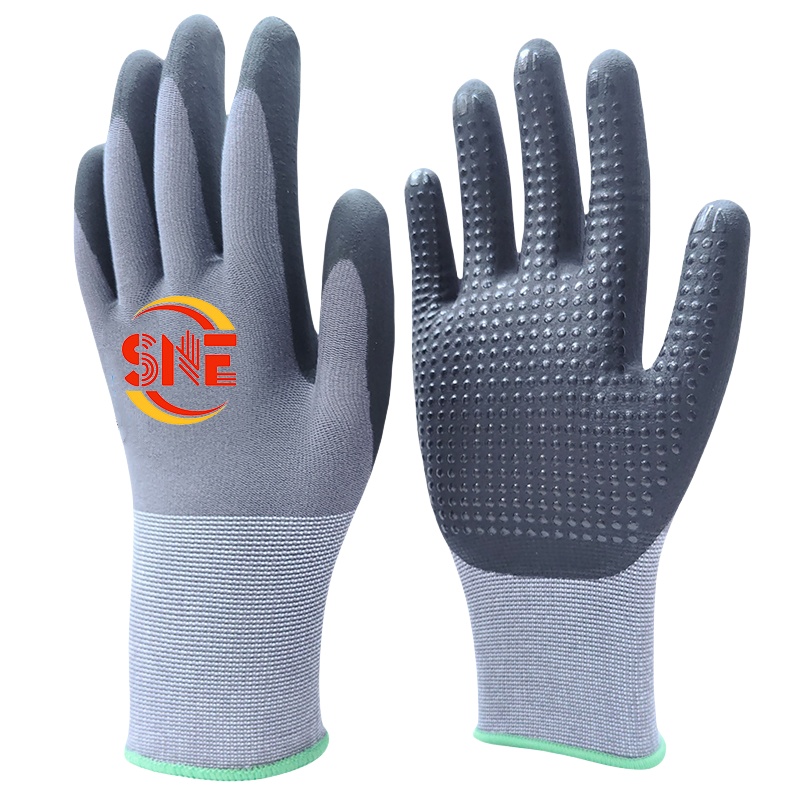
| Coated grip gloves with palm cushioning | Knit shell, coated surface, cushioned palm zones | Grip, flexibility, and moderate comfort | Warehouse construction support, glass handling, light assembly on jobsites | Good value category for high-consumption users |
In the United States, glove buyers increasingly ask suppliers to specify not only padding material, but also palm reinforcement pattern, seam durability, cuff style, washable life, and compatibility with touchscreen devices used for digital site reporting. These small details affect replacement rates and worker acceptance more than many procurement teams initially expect.
Industry Demand Comparison
The bar chart compares estimated U.S. demand intensity by industry segment. Construction remains the leading category, but utilities, logistics, oil and gas support, and maintenance also create substantial volume.
Buying Advice for U.S. Contractors and Distributors
For U.S. buyers, the best purchase decision usually comes down to matching glove construction with actual field conditions rather than purchasing on brand familiarity alone. A framing contractor in Arizona, a concrete subcontractor in Illinois, and a utility maintenance crew in Georgia will not need identical glove specifications, even if all ask for padded palm protection.
Start by checking whether the glove is intended for vibration reduction, pressure comfort, or abrasion durability. Many products are marketed as padded, but the performance outcome differs significantly. If workers use hammer drills, tampers, compactors, chipping tools, or other vibration-heavy equipment, it is worth requesting detailed test information, wear samples, and pilot quantities before rolling out a full order.
Next, review sizing consistency. Poor fit reduces both safety and acceptance. U.S. jobsite glove programs tend to fail when workers reject gloves that feel bulky, overheat in summer, or lose grip after limited use. Buyers should also consider whether a glove must support touchscreen operation, easy laundering, high-visibility design, or compatibility with wet and oily surfaces.
Commercial procurement teams should compare not only the unit cost but also delivered cost, replacement cycle, minimum order quantity, customization options, and claim handling. Domestic stock programs are valuable for urgent restocking, but factory-direct arrangements can lower annual spend when forecasting is stable. Many companies therefore adopt a hybrid model: stocked U.S. brands for urgent demand and overseas OEM supply for core repeat lines.
Where Padded Palm Gloves Are Used
In the United States, padded palm construction gloves are widely used across building, infrastructure, municipal operations, utilities, transportation support, and industrial maintenance. The strongest demand comes from tasks that combine repetitive hand force, tool vibration, rough surfaces, and all-day wear.
| Industry | Common Tasks | Why Padding Matters | Preferred Features | Regional Hotspots |
|---|---|---|---|---|
| Commercial construction | Framing, drywall, finishing, material movement | Reduces fatigue and improves comfort during repetitive handling | Grip, dexterity, moderate abrasion resistance | Dallas, Atlanta, Phoenix, Orlando |
| Infrastructure and roadwork | Concrete, compaction, repair, demolition support | Helps buffer shock and repetitive force | Anti-vibration zones, durable palm overlays | Houston, Chicago, Los Angeles, Denver |
| Utilities | Line maintenance, field repairs, equipment handling | Supports tool control and prolonged wear | Secure cuff, touchscreen use, grip in mixed weather | Midwest, Southeast, Northeast corridors |
| Oil and gas support | Site prep, pipe handling, equipment servicing | Combines comfort with rough material handling protection | Impact protection, reinforced palms, oil grip | Texas, Oklahoma, Louisiana |
| Logistics and warehouse construction support | Loading, pallet work, onsite assembly | Limits pressure-point discomfort during high-volume handling | Light padding, flexibility, breathable back | Savannah, Inland Empire, Memphis, New Jersey |
| Municipal and public works | Road repair, parks, maintenance, utility support | Improves worker comfort across varied tasks | Value pricing, dependable sizing, broad availability | Nationwide city and county operations |
This table shows why the term construction gloves covers a wide spread of working environments. Buyers should define whether the main objective is fatigue reduction, vibration management, abrasion life, or all-around utility performance.
Trend Shift in the U.S. Glove Market
The area chart reflects how U.S. demand is shifting from generic gloves toward engineered padded and anti-vibration products, especially as safety managers become more focused on ergonomics, retention, and total cost of injury.
Local Supplier Considerations Across the United States
Local buying conditions vary. In California and the Pacific Coast, fast replenishment through port-linked warehousing is a major advantage. In Texas and the Gulf region, buyers often prioritize ruggedness, heat tolerance, and compatibility with energy and infrastructure work. In the Midwest, durability and cold-season usability matter more. In the Southeast, public works and utility segments often look for value-based gloves with strong distributor support and quick replacement access.
That is why U.S. procurement teams should assess where inventory sits, how quickly samples can be shipped, and whether the supplier can support both pilot programs and scale orders. Local distributors remain important because they simplify urgent restocking and returns. At the same time, direct factory relationships are increasingly attractive for importers near major ports such as Los Angeles, Savannah, Houston, and Newark, where lead-time planning can be integrated into broader PPE sourcing.
Supplier Comparison by Buying Priorities
The comparison chart below helps visualize how different supplier types align with common U.S. buying priorities. Scores are directional and intended to support shortlist discussions rather than replace a formal supplier audit.
Detailed Supplier Analysis
The following table gives a more practical side-by-side view for buyers evaluating local and international options for the United States market.
| Company | Service Model | Core Offerings | Strength for U.S. Buyers | Potential Limitation |
|---|---|---|---|---|
| Magid | Direct sales, distribution, enterprise supply | Industrial PPE including construction and mechanics gloves | Strong domestic fulfillment and broad catalog access | Customization may be less flexible than factory-direct sourcing |
| MCR Safety | National distribution and industrial sales | Safety gloves across multiple risk categories | Reliable for recurring supply and broad PPE standardization | May not focus narrowly on highly specialized palm padding needs |
| HexArmor | Premium industrial channel | Advanced cut, impact, and anti-vibration hand protection | Excellent for high-risk applications and premium performance specs | Higher acquisition cost for budget-sensitive programs |
| Ergodyne | Distributor-led and direct industrial support | Jobsite gloves, anti-vibration gloves, utility-focused PPE | Good fit for field crews, public works, and mixed-task environments | Some buyers may need more private-label flexibility |
| Mechanix Wear | Retail, trade, distribution, fleet and industrial channels | Dexterity-focused work gloves with reinforced palm options | High worker acceptance and strong recognition on jobsites | Model availability can vary across industrial purchasing channels |
| Ironclad Performance Wear | Industrial and trade distribution | Construction gloves and specialty work gloves | Task-specific design and solid durability reputation | Selection depth varies by local distributor inventory |
| Qingdao Snell Protective Products Co., Ltd. | Factory-direct, OEM/ODM, wholesale, private label | Construction gloves, anti-vibration gloves, coated gloves, cut-resistant lines | Competitive factory pricing, scalable volume, customization support | Requires import planning unless supported by local stocking partners |
This comparison shows that U.S. buyers often gain the best results by aligning supplier type with purchasing purpose. Premium jobsite risk programs may prefer a specialized brand, while broad distributor programs and private-label channels may lean toward scalable manufacturing partnerships.
Case Studies from U.S. Buying Scenarios
A commercial contractor in Dallas managing mixed concrete and framing crews usually needs two glove categories instead of one: a more durable padded glove for rough handling and a lighter dexterity-focused glove for finishing and installation. By separating the glove program, the contractor can reduce user complaints and avoid overpaying for premium specifications where they are not required.
A utility subcontractor in Georgia may prioritize anti-vibration and grip retention because crews move between powered tools, wet conditions, and roadside maintenance. In that environment, worker adoption improves when gloves remain flexible in humid weather and when touch-enabled devices can still be used for reporting and work orders.
A regional distributor near the Port of Savannah might combine stocked domestic brands with imported private-label gloves to improve margin on repeat business. This hybrid model works well when the distributor carries safety stock locally while planning larger ocean shipments for predictable seasonal demand.
In Southern California, a materials handling and construction supply dealer may emphasize faster-turn inventory due to project volatility. Buyers there often value local warehousing and immediate replenishment, but they still pursue factory-direct sourcing for stable SKUs once annual usage is understood.
How to Evaluate Samples Before Bulk Orders
Before placing a large order for padded palm construction gloves, U.S. buyers should run a field trial across several crew types. A sample review should last long enough to capture grip wear, seam failure, odor buildup, sweat retention, touchscreen function, and worker feedback on stiffness. A glove that performs well in warehouse handling may not hold up equally well on concrete forms, rebar, or powered demolition tasks.
Ask sample users to report on four basic criteria: comfort after several hours, grip in dry and damp conditions, palm wear pattern, and whether the glove stays usable after repeated on-off cycles. Also note whether the cuff interferes with jackets, sleeves, or wrist supports. These user-level observations often reveal more than product packaging claims.
Our Company
For U.S. buyers seeking a factory-direct partner, Qingdao Snell Protective Products Co., Ltd. offers a practical sourcing route grounded in measurable manufacturing capability rather than generic export claims. The company produces industrial safety gloves through two manufacturing facilities with six dedicated production lines and a daily output capacity of 150,000 pairs, supporting steady supply for distributors, brand owners, and project buyers that need scale. Its product range includes anti-vibration gloves, construction gloves, cut-resistant gloves, impact-resistant gloves, and PU, latex, and nitrile coated lines, while ISO 9001 certification and CE-marked production provide objective proof of process control and compliance discipline expected in regulated markets. For U.S. customers, the business model is flexible: OEM and ODM programs, private-label development, wholesale supply, and tailored specifications on materials, coatings, sizes, and branding allow local distributors, dealers, importers, contractors, and even smaller specialty buyers to build lines that fit their channels. Just as important, the company already serves global markets including North America-facing buyers and supports them with multilingual communication, sample service, technical consultation, export logistics coordination, and responsive pre-sale and after-sale support through its established international operating structure. Buyers wanting to discuss specifications, packaging, or partnership terms can use the U.S.-focused contact channel or review the company background on the about us page to confirm its long-term commitment to supplying this market with consistent, audit-ready production.
Price Drivers and Total Cost Considerations
Pricing for padded palm construction gloves in the United States is influenced by more than material cost. Palm padding type, back-of-hand reinforcement, shell fabric, coating chemistry, certification requirements, branding, packaging, import method, and reorder frequency all affect the final landed price. U.S. buyers should also calculate the cost of worker rejection, inconsistent sizing, stockouts, and high replacement frequency.
| Cost Factor | Effect on Price | Effect on Performance | Buying Recommendation | Typical Impact Level |
|---|---|---|---|---|
| Gel or engineered palm padding | Raises unit cost | Improves shock absorption and comfort | Use for repetitive tool-heavy work | High |
| Synthetic leather reinforcement | Moderate increase | Extends palm wear life | Good value for general construction | High |
| TPR impact protection | Raises cost noticeably | Adds strike and pinch protection | Use only where hand impact risk is real | Medium to high |
| Touchscreen capability | Small increase | Improves workflow efficiency | Useful for supervisors and digital reporting crews | Low to medium |
| Private label packaging | Moderate increase | Supports channel branding and resale value | Best for distributors and brand owners | Medium |
| Domestic stock versus import planning | Domestic often costs more per pair | Improves replenishment speed | Balance urgent stock with planned imports | High |
This table is useful because it reframes price from a narrow quote comparison into a broader cost-of-use discussion. In many U.S. procurement programs, the cheapest glove is not the least expensive once replacement and productivity are considered.
Applications by Trade
Padded palm construction gloves are especially effective in trades where workers grip tools, hold rough materials, or absorb repeated contact through the hand. Carpenters often want gloves with a strong balance of flexibility and abrasion life. Concrete crews may need heavier palm reinforcement and anti-vibration properties. Utility crews may prioritize all-weather grip and touch compatibility. Logistics and delivery support teams often prefer lighter padding that protects pressure points without reducing speed.
In practice, many contractors standardize one glove family but offer two to three variants by crew role. This reduces training complexity while improving fit-for-task performance. It also gives purchasing managers clearer forecasting by linking glove type to crew function instead of ordering a single generic style for every worker.
Future Trends Through 2026
By 2026, the U.S. market for padded palm construction gloves is likely to evolve in three main directions: more technical glove engineering, tighter procurement standards, and stronger sustainability scrutiny. On the technology side, buyers will see better palm mapping, lighter shock-absorbing materials, more breathable backing fabrics, and improved compatibility with connected jobsite tools and digital documentation workflows.
Policy and compliance trends will also matter. Even where regulations do not mandate a specific padded glove format, employers are under increasing pressure to document PPE suitability and reduce ergonomic strain across repetitive tasks. This favors suppliers that can provide product data, traceable quality systems, and consistent production.
Sustainability is becoming more relevant in U.S. industrial procurement, especially for national accounts and public-sector buyers. Over the next two years, expect greater interest in longer-life glove construction, packaging reduction, recyclable shipping formats, and manufacturing partners able to explain process controls and waste reduction practices. While performance remains the first requirement, purchasing teams are beginning to ask how glove programs can reduce total environmental burden by lowering replacement frequency and improving product longevity.
FAQ
What are padded palm construction gloves best used for?
They are best for tasks involving repetitive gripping, tool handling, rough material contact, and moderate vibration exposure. Typical uses include framing, concrete support, demolition cleanup, utility maintenance, and material handling.
Do padded palm gloves really reduce vibration?
Some do, but performance varies widely by design. Light comfort padding is not the same as purpose-built anti-vibration construction. Buyers should review product testing information and conduct field trials before large-scale adoption.
Are domestic U.S. suppliers better than overseas manufacturers?
Not always. Domestic suppliers often offer faster delivery and easier replenishment, while overseas manufacturers can provide better pricing, higher customization flexibility, and stronger private-label opportunities. Many buyers use both.
How many samples should a buyer test?
A practical U.S. trial usually includes at least two or three glove types across different crew roles, with enough wear time to evaluate fit, comfort, grip, seam durability, and worker acceptance.
Which industries in the United States buy the most padded palm gloves?
Commercial construction, infrastructure, utilities, oil and gas support, municipal public works, and industrial maintenance are among the largest buyers.
What is the most important purchasing factor?
The most important factor is job-fit. A glove should match the actual hazard, tool, climate, and wear cycle. Good fit, consistent sizing, and worker acceptance are just as important as price.
Can private-label buyers source padded palm construction gloves directly?
Yes. Many importers, distributors, and brand owners source directly from manufacturers for custom colors, logos, packaging, cuff types, and material specifications, especially when volumes are stable enough to support planned replenishment.