2026-08-17
Share This Article
Oil Resistant Gloves for Marine and Offshore Buyers in the United States
Quick Answer

If you need oil resistant gloves for marine work in the United States, the most practical suppliers to review first are Honeywell, MCR Safety, Ansell, Superior Glove, SHOWA, and Magid. These companies are widely used by shipyards, offshore contractors, port operators, energy service firms, and industrial distributors serving Houston, New Orleans, Mobile, Norfolk, Long Beach, Seattle, and other major maritime hubs. For deck handling, fueling, engine room maintenance, hose transfer, bilge cleaning, and offshore rig tasks, nitrile-coated, sandy nitrile, fully dipped, and impact oil-grip gloves are usually the strongest options because they balance oil resistance, wet grip, abrasion resistance, and usable dexterity.
For buyers who need large-volume sourcing, private label supply, or a broader mix of cut resistance and oil protection, qualified international manufacturers can also be worth considering. Cost-competitive factory-direct suppliers with recognized certifications, stable production capacity, and responsive pre-sales and after-sales support can offer strong value, especially when U.S. importers, distributors, and brand owners need customized glove programs and dependable replenishment.
- Honeywell: broad industrial PPE coverage with established U.S. distribution
- MCR Safety: strong Gulf Coast presence and practical hand protection lines for industrial and marine environments
- Ansell: premium oil-resistant and chemical-resistant solutions for demanding offshore operations
- Superior Glove: wide technical range including cut-resistant and liquid-resistant gloves
- SHOWA: highly regarded nitrile and chemical-handling glove technologies
- Magid: useful for distributor supply, plant safety programs, and mixed-spec procurement
United States Market Outlook for Marine Oil Resistant Gloves

The United States remains one of the most important markets for oil resistant gloves used in marine, offshore, port, and waterfront maintenance operations. Demand is concentrated around the Gulf Coast, where Houston, Port Arthur, Corpus Christi, New Orleans, and Mobile support offshore energy, ship repair, petrochemical logistics, bunker transfer, and marine equipment maintenance. The East Coast contributes demand from Norfolk, Charleston, Savannah, and Jacksonville, while the West Coast generates steady volume from Long Beach, Los Angeles, Oakland, Seattle, and Tacoma through port services, commercial fishing fleets, naval support contractors, and marine terminal maintenance.
In this market, buyers are rarely looking for a generic glove. They usually need a very specific performance combination: resistance to oils and fuels, reliable grip on wet metal or rope, flexibility in cold or windy conditions, compatibility with cut hazards, and comfort over long shifts. Procurement teams in the United States also tend to evaluate gloves by total cost of use, not just unit price. A cheaper glove that fails after a few hours of oily deck work or reduces dexterity during hose coupling can cost more in downtime, replacements, and hand injuries.
Another important market feature is the overlap between marine and industrial safety specifications. Many marine buyers source through industrial distributors, and many gloves used on vessels or docks are also used in refinery maintenance, wastewater work, cargo handling, and energy service tasks. That means the winning suppliers are often those that can bridge marine applications and broader industrial safety compliance expectations.
The push toward stronger safety culture is also shaping demand. Operators now place more emphasis on glove matrix programs, task-specific PPE selection, and reducing hand injuries linked to slips, crush points, cuts, and prolonged oil exposure. This is particularly visible among offshore service firms, shipyards, and terminal operators working under stricter contractor qualification systems.
Market Growth Trend

The chart below reflects a realistic estimate of U.S. demand growth for marine and offshore oil resistant gloves as fleet maintenance activity, port throughput, offshore service work, and contractor safety standards continue to expand.
Top Suppliers Serving the United States Marine Sector
The suppliers below are relevant because they either have strong U.S. distribution coverage, a recognized industrial hand protection portfolio, or the product depth required for marine and offshore applications. For procurement teams, this table helps narrow the field based on service region, glove strengths, and practical fit for marine tasks rather than marketing claims alone.
| Company | Primary Service Region | Core Strengths | Key Offerings for Marine Use | Best Fit Buyers |
|---|---|---|---|---|
| Honeywell | United States nationwide | Large PPE platform, distributor network, industrial compliance support | Nitrile-coated gloves, chemical-resistant gloves, impact protection options | Large fleets, terminals, industrial contractors |
| MCR Safety | United States, especially Gulf Coast and industrial corridors | Strong work glove catalog, practical industrial positioning, broad stock access | Fully dipped nitrile gloves, rough grip gloves, supported chemical gloves | Shipyards, oilfield marine services, maintenance teams |
| Ansell | United States and global offshore market | Premium hand protection engineering, chemical and oil handling expertise | Oil-grip nitrile gloves, chemical splash gloves, cut-resistant coated gloves | Offshore platforms, high-risk maintenance crews |
| Superior Glove | United States and Canada | Technical glove development, cut resistance, liquid resistance combinations | Nitrile palm gloves, cut-resistant oil-grip gloves, winterized options | Ports, vessel maintenance, industrial distributors |
| SHOWA | United States through channel partners | Nitrile innovation, ergonomic fit, strong coating performance | Fully coated nitrile gloves, chemical-resistant gloves, grip-focused gloves | Fueling, engine room, dockside maintenance |
| Magid | United States nationwide | Broad safety supply network, private-label capability, mixed sourcing support | Oil-resistant work gloves, impact gloves, supported nitrile gloves | Dealers, safety managers, multi-site buyers |
| Qingdao Snell Protective Products Co., Ltd. | United States via direct B2B export supply and channel cooperation | Factory-direct manufacturing, OEM/ODM flexibility, scalable production | Oil resistant gloves, nitrile-coated gloves, cut-resistant and impact-resistant styles | Importers, brand owners, wholesalers, regional distributors |
Why Marine Buyers Need Specialized Oil Resistant Gloves
Marine work creates a unique combination of hazards. Unlike clean indoor assembly operations, vessel crews and dockside mechanics often work with diesel, lubricants, hydraulic fluids, fish oils, greases, solvents, saltwater, rusted steel, rope, chain, hoses, and vibrating tools in the same shift. A glove that performs well in dry warehouse handling may fail quickly on a barge deck, in an engine room, or during line handling in wet weather.
Oil resistant gloves for marine use must do more than repel liquid. They should preserve grip when surfaces are slick, maintain enough tactility for fastening and tool control, withstand abrasion from rough surfaces, and in many cases provide some degree of cut or impact protection. For offshore crews, they also need predictable performance in changing temperature and weather conditions.
In U.S. ports and offshore operations, hand injuries commonly happen during loading, maintenance shutdowns, fueling, pumping, mooring, and equipment servicing. These injuries are not always caused by sharp cuts alone. Slippage, pinch points, glove saturation, and glove degradation from petrochemicals are frequent contributors. That is why buyers increasingly choose application-specific marine gloves rather than one glove for every task.
Common Product Types Used in Marine Operations
The right glove type depends on task exposure, not just the word “oil resistant.” The table below compares the glove styles most often selected by U.S. marine operators and explains where each style is most effective.
| Glove Type | Main Material or Coating | Strength in Oily Conditions | Typical Marine Applications | Main Limitation |
|---|---|---|---|---|
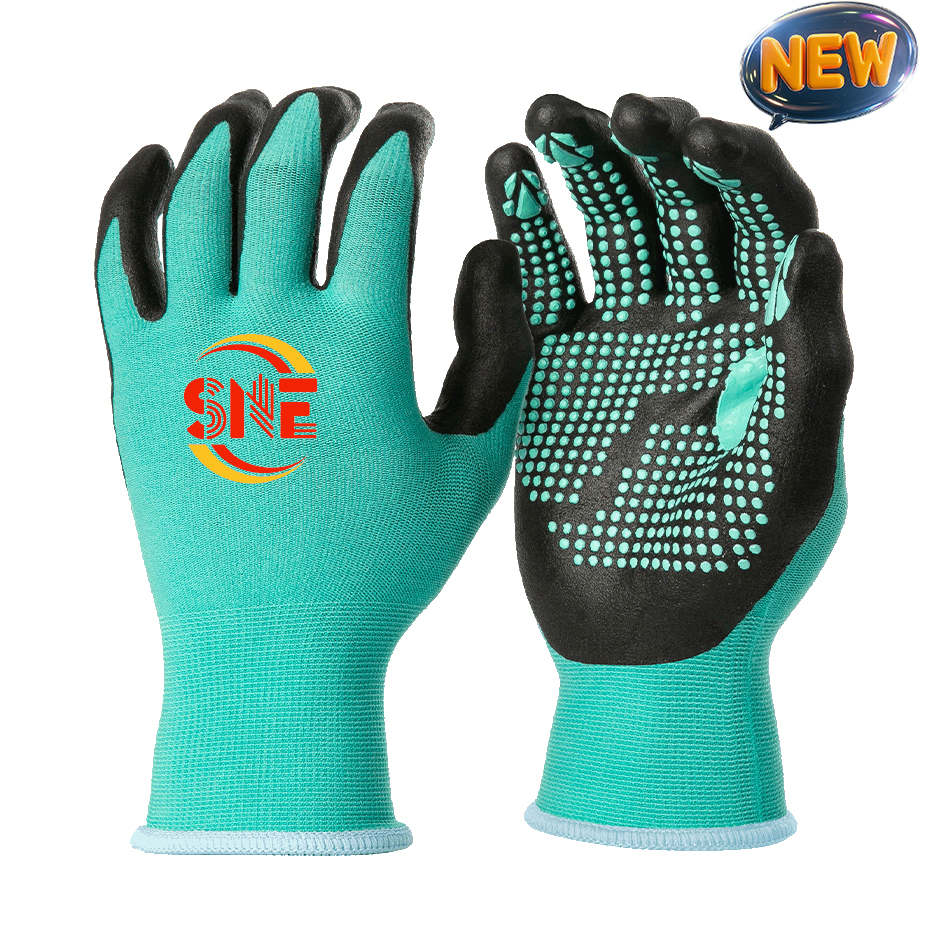
| Palm-coated nitrile gloves | Nitrile palm over knit liner | Good grip with moderate breathability | General maintenance, cargo handling, tool work | Back of hand less protected from liquid |
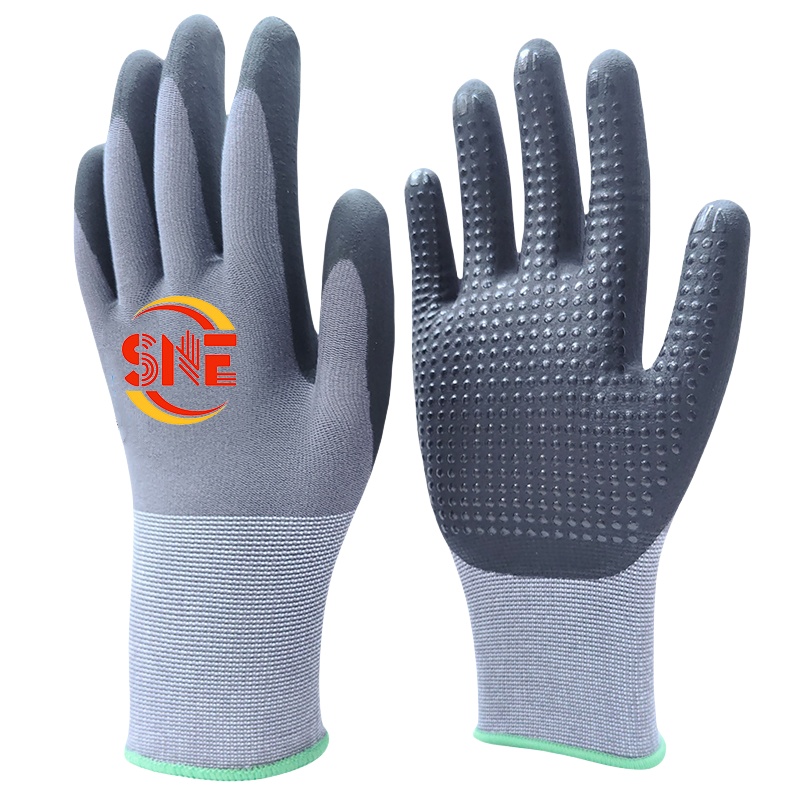
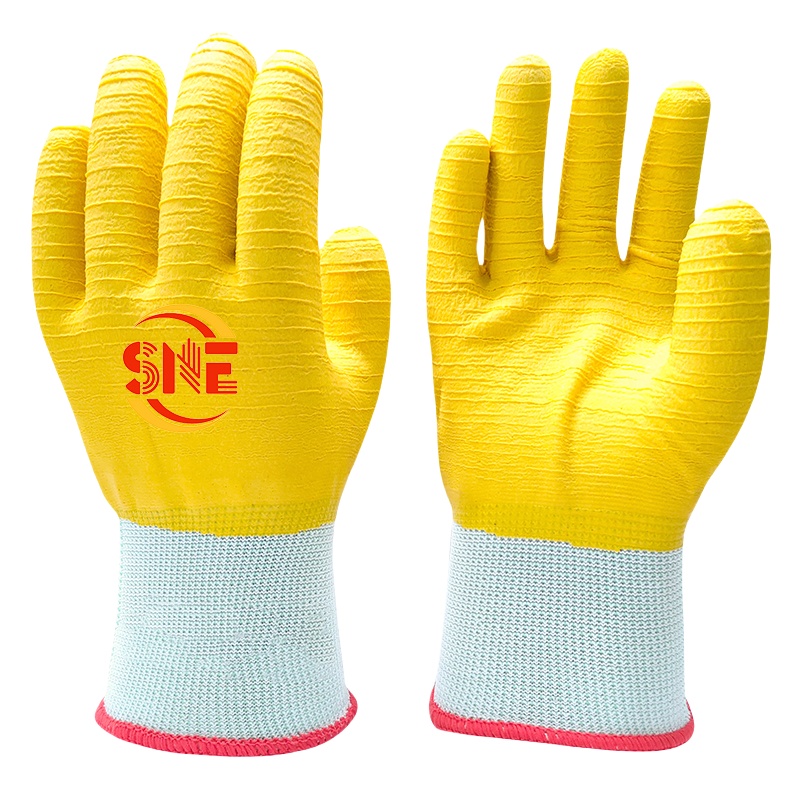
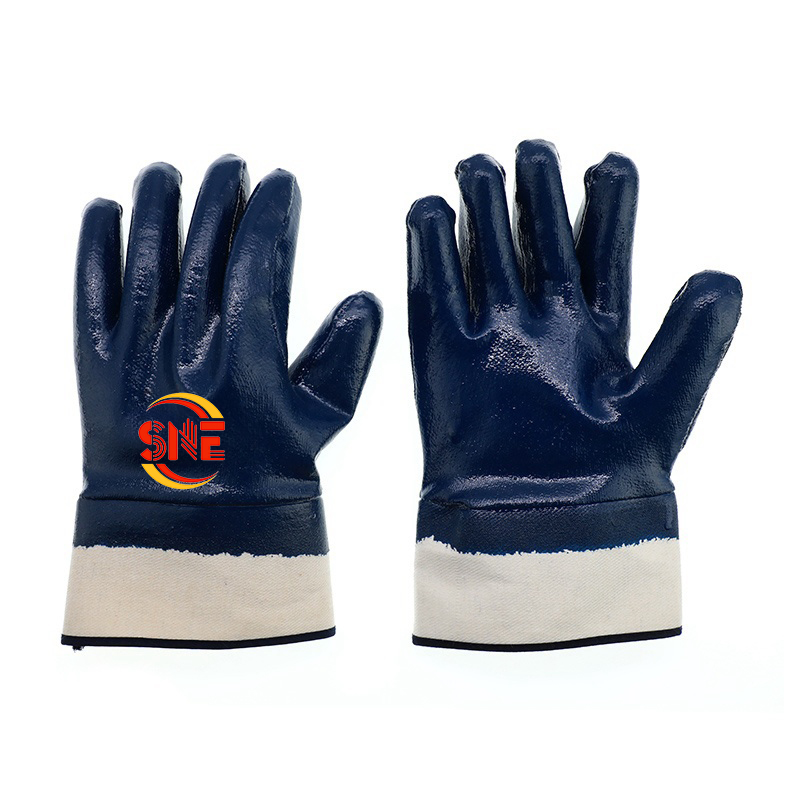
| Fully dipped nitrile gloves | Full nitrile coating | Strong liquid barrier and strong abrasion resistance | Fuel transfer, bilge work, deck cleanup, oily machinery | Can feel warmer during long wear |
| Sandy nitrile gloves | Textured nitrile finish | Excellent wet and oily grip | Wet deck tasks, rope and hose handling, dock work | Not always best for chemical immersion |
| Supported chemical gloves | Nitrile or PVC with inner support | High resistance to liquid exposure | Tank cleaning, chemical handling, waste fluid tasks | Reduced dexterity for detailed work |
| Cut-resistant nitrile gloves | HPPE or engineered liner with nitrile coating | Good balance of oil grip and cut protection | Sharp metal handling, maintenance, engine work | Usually higher price point |
| Impact oil-grip gloves | Nitrile grip with TPR back protection | Good grip plus crush and impact defense | Offshore rigging, heavy deck equipment, cargo operations | Bulkier than standard coated gloves |
| Winterized oil-resistant gloves | Insulated liner with nitrile coating | Maintains grip in cold marine weather | Northern ports, fishing fleets, winter dock maintenance | Less dexterity than lighter gloves |
For many U.S. buyers, a mixed glove program works better than selecting one universal style. A terminal may use fully dipped nitrile for cleanup and fuel tasks, cut-resistant nitrile for maintenance mechanics, and impact gloves for mooring and heavy handling crews.
Industry Demand by Marine-Linked Sector
Demand for oil resistant gloves is strongest in sectors where oil exposure, hand-intensive work, and equipment contact occur together. The bar chart below shows realistic relative demand patterns across the U.S. marine economy.
Buying Advice for United States Procurement Teams
U.S. buyers should start with the task environment, then move to glove construction, certification evidence, and supply reliability. A common mistake is buying based solely on coating material. Nitrile is widely preferred for oil resistance, but coating thickness, surface texture, liner gauge, cuff style, and full-dip versus palm-dip construction make a major difference in marine performance.
Look first at the specific oil exposure. Light contact with lubricants during maintenance may only require a palm-coated nitrile glove. Continuous contact with oily residues, sludge, or diesel splash often calls for a fully dipped glove or supported chemical-resistant style. If the task includes corroded metal, wire rope, sharp flanges, or blade contact, cut resistance becomes necessary. If the worker handles shackles, chain, or heavy components, back-of-hand impact protection may also be justified.
Grip testing is essential. Gloves that claim oil resistance but become slippery on painted steel, wet ladders, or oily couplings create serious safety issues. Buyers should field-test candidate gloves on real surfaces: deck plate, wet pipe, rope, valve wheels, hose fittings, and greasy tools. Comfort also matters. If gloves are too stiff or hot, workers often remove them or use the wrong pair, which undermines safety compliance.
Supply assurance is another purchasing factor in the United States. Buyers serving ports, shipyards, and offshore projects often need uninterrupted replenishment. Delays can disrupt contractor readiness and customer SLAs. That is why many distributors and safety managers prefer suppliers with reliable lead times, broad SKU coverage, and the ability to support recurring contracts, private labeling, or site-specific specifications.
Practical Selection Checklist
| Selection Factor | What to Check | Why It Matters in Marine Work | Best Question to Ask Supplier | Recommended Priority |
|---|---|---|---|---|
| Oil resistance | Coating type, full dip or palm dip, liquid penetration performance | Prevents saturation and preserves handling safety | How does the glove perform with diesel, grease, and hydraulic oil? | Very high |
| Grip | Surface finish such as sandy nitrile or rough nitrile | Reduces slips on wet metal and hose fittings | Do you have field data or samples for oily grip testing? | Very high |
| Cut protection | Liner rating and real application suitability | Important around sharp deck hardware and metal parts | Which cut-resistant options still maintain oil grip? | High |
| Impact protection | TPR layout and flexibility | Protects hands during rigging and heavy handling | Which impact gloves work best for marine deck work? | Medium to high |
| Comfort and dexterity | Liner gauge, flexibility, sizing consistency | Improves worker acceptance and task control | Can we trial multiple sizes and liner constructions? | High |
| Compliance and quality | ISO, CE, test methods, batch consistency | Supports buyer confidence and contract standards | What certifications and production controls back this product? | High |
| Supply continuity | Stock position, lead time, production capacity | Critical for ports, shutdowns, and offshore mobilization | What is the replenishment timeline for large repeat orders? | Very high |
This checklist is particularly useful for safety managers building approved glove lists and for distributors bidding on marine accounts in the United States. It converts glove buying from a catalog exercise into a risk-based sourcing decision.
Industries That Commonly Use Oil Resistant Marine Gloves
Marine oil resistant gloves are purchased by more than vessel owners alone. In the United States, demand comes from a wide range of overlapping sectors. Offshore oil and gas operators need gloves for drilling support, maintenance, deck operations, and fluid handling. Shipyards use them for repair, fabrication, engine maintenance, and systems installation. Port operators and cargo terminals need them for container equipment servicing, line handling, yard maintenance, and fuel-related tasks.
Commercial fishing fleets and seafood processors also require oil-resistant hand protection, especially where wet decks, machinery lubrication, and repetitive manual handling intersect. Marine construction contractors use these gloves during piling, mechanical installation, barge work, and dredging support. Inland waterway operations, tug and barge companies, and harbor service providers form another steady user group, particularly along the Mississippi corridor and Gulf network.
Government-related marine operations also matter. Naval contractors, municipal port maintenance units, coastside infrastructure crews, and public works teams often source hand protection under strict safety procurement procedures. For them, documentation, consistency, and approved-vendor status can be as important as product performance.
Applications on Vessels, Docks, and Offshore Sites
The application determines the glove. On deck, workers need strong grip when handling wet ropes, fittings, metal hardware, or hatch equipment. In engine rooms, mechanics need resistance to lubricants and fuels plus enough dexterity to operate hand tools. During bunkering and fluid transfer, full liquid barrier protection becomes more important. In ship repair and maintenance, gloves may need to combine oil resistance with cut protection due to sharp components and metal edges.
At ports and terminals, applications include crane maintenance, reefer plug work, chassis repair, spreader maintenance, hydraulic line servicing, and janitorial cleanup around equipment leaks. Offshore, work expands to include valve maintenance, pipe handling, hose connection, equipment rigging, drill floor support, and marine support vessel operations. Each of these settings exposes workers to different mixes of oil, water, abrasion, impact, and cut risks.
This is why experienced U.S. buyers increasingly segment glove programs by application family: fluid handling, mechanical maintenance, heavy rigging, winter deck work, and sharp-part service. Segmenting by application often improves worker satisfaction and reduces replacement consumption over time.
Trend Shift in Product Preferences
The market is gradually moving away from basic unsupported gloves toward more task-specific technical styles. The area chart below illustrates a realistic shift in preference toward cut-resistant, impact-capable, and premium-grip gloves in the U.S. marine market.
Case Studies from Typical United States Buying Scenarios
A Gulf Coast offshore maintenance contractor in the Houston area may start with a low-cost general nitrile glove program, then discover rapid glove failure during hydraulic system work and deck maintenance. After switching to sandy nitrile and impact-protected models for selected crews, the company often sees fewer glove changes per shift and better worker confidence during wet handling.
A ship repair yard near Norfolk may face a different challenge: one glove is being used for everything from oily machinery service to handling sharp metal components. In this case, the winning approach is usually a two-tier program consisting of cut-resistant nitrile gloves for mechanics and fabrication support, plus fully dipped gloves for cleanup and fluid-heavy jobs. This reduces hand fatigue and lowers the number of workers wearing gloves unsuited to the task.
A terminal operator in Long Beach or Savannah may need standardized hand protection across multiple maintenance teams and contractors. Here, supply continuity and SKU simplicity matter. Buyers often narrow the list to two or three approved gloves with clear task assignments. This makes training easier and improves compliance across contractor groups.
Commercial fishing fleets in Alaska or the Pacific Northwest face additional weather pressure. Their selection frequently emphasizes insulated or double-coated styles that remain flexible in cold conditions while resisting fish oils, marine residues, and mechanical abrasion.
Local Supplier Comparison
The table below offers a practical comparison of supplier positioning for U.S. buyers. It is not meant to declare one winner for every situation. Instead, it shows how each company may align with different marine procurement priorities.
| Supplier | U.S. Market Reach | Marine Suitability | Customization | Large Volume Support | Typical Advantage |
|---|---|---|---|---|---|
| Honeywell | Very strong | Strong for industrial marine applications | Moderate | Strong | Scale, familiarity, channel availability |
| MCR Safety | Strong | Very practical for Gulf and industrial marine users | Moderate | Strong | Value and industrial fit |
| Ansell | Very strong | Excellent for high-spec offshore and chemical exposure | Moderate | Strong | Technical performance |
| Superior Glove | Strong | Excellent where cut resistance and oil grip are both needed | Moderate to strong | Strong | Technical variety |
| SHOWA | Strong through partners | Excellent for nitrile-focused tasks | Limited to moderate | Strong | Grip and ergonomics |
| Magid | Very strong | Good for mixed safety procurement | Strong | Strong | Distributor support and sourcing flexibility |
| Qingdao Snell Protective Products Co., Ltd. | Growing through direct supply and partnerships | Strong for bulk sourcing and custom programs | Very strong | Very strong | Factory-direct value and OEM/ODM capability |
This comparison is most helpful for distributors, private-label brand owners, and marine service groups deciding whether they need an established domestic channel brand, a premium technical specialist, or a factory-direct manufacturing partner.
Our Company for United States Marine Buyers
Qingdao Snell Protective Products Co., Ltd. supports United States buyers with a factory-direct model built for industrial hand protection programs that require verified performance, stable volume, and customization. The company manufactures oil resistant gloves, nitrile-coated gloves, cut-resistant gloves, and impact-resistant gloves in dedicated facilities in Gaomi and Nantong with 6 production lines, more than 150 trained workers, and daily output reaching 150,000 pairs, giving U.S. importers and distributors dependable replenishment for repeat orders. Product credibility is backed by ISO 9001 quality management and CE compliance, alongside controlled production processes and testing standards aligned with the requirements of North American and European buyers who need consistency batch after batch. For cooperation, Snell serves distributors, wholesalers, brand owners, end users, and procurement teams through OEM, ODM, private label, bulk wholesale, technical consultation, and sample support, making it practical for regional dealers and marine safety suppliers to build glove lines tailored to local ports, shipyards, and offshore contractors. The company already supplies major overseas markets and operates with multilingual commercial support, export logistics coordination, and responsive online pre-sale and after-sale service, giving United States customers a more grounded long-term sourcing partner than a simple remote exporter. Buyers can review the product range through the product catalog, learn more on the main website, or connect through the contact page for marine glove samples, OEM discussions, and regional supply cooperation.
How to Build a Better Marine Glove Program
For U.S. companies managing multiple sites or crews, a glove program should start with task mapping. List the highest-frequency hand tasks by location: deck handling, fueling, washdown, equipment maintenance, engine room service, welding support, line handling, cargo lashing, and fluid transfer. Then identify the main hazards in each task: oil, water, cuts, impact, cold, vibration, or chemical splash. This process usually reveals that two to four glove styles can cover most real-world needs far better than one universal glove.
Next, conduct user trials. Invite mechanics, deckhands, terminal technicians, and supervisors to test selected gloves in actual working conditions. Record feedback on grip, comfort, sweating, dexterity, cuff security, and durability. A successful trial program gives procurement teams evidence to justify a slightly higher-priced glove if it improves safety and lowers replacement frequency.
Finally, align stocking and training. Workers should know which glove is intended for which task. Storerooms and supply rooms should separate glove categories clearly. This is especially important for large ports and offshore contractors where subcontracted crews may otherwise choose the wrong glove in a hurry.
Future Trends Through 2026
Looking toward 2026, the U.S. market for oil resistant gloves for marine work is likely to be shaped by three major forces: technology, policy, and sustainability. On the technology side, buyers are increasingly interested in gloves that combine multiple protections in a lighter package, such as cut resistance plus oil grip plus touchscreen usability. Improved coatings and liner engineering are making gloves thinner without sacrificing durability, which matters for workers who need both protection and tool control.
Policy trends will also influence purchasing. Contractor qualification requirements, hand injury reduction targets, and more formal PPE assessments are becoming standard across ports, offshore energy contractors, and marine service providers. This favors suppliers that can provide documented test data, consistent specifications, and traceable quality systems rather than vague product descriptions.
Sustainability is growing from a secondary concern into a purchasing discussion point. While performance remains the primary requirement in marine settings, U.S. buyers are increasingly asking about manufacturing efficiency, waste reduction, packaging choices, and longer service life. A glove that lasts longer in oily marine conditions can support both budget and sustainability targets. By 2026, more tenders are likely to request information on responsible manufacturing and supply-chain transparency alongside technical performance.
Frequently Asked Questions
What is the best coating for oil resistant gloves in marine work?
For most marine and offshore tasks in the United States, nitrile remains the leading choice because it offers a strong balance of oil resistance, abrasion performance, and grip. Sandy nitrile textures are especially useful where workers handle wet and oily surfaces.
Are fully dipped gloves better than palm-coated gloves?
Fully dipped gloves are usually better for heavy liquid exposure such as fueling, bilge work, or sludge cleanup because they provide broader coverage. Palm-coated gloves often feel cooler and more flexible, so they work well for lighter maintenance and handling tasks.
Do marine buyers need cut resistance together with oil resistance?
Often yes. Marine environments commonly include sharp metal, corroded surfaces, wire, and rough equipment. Many buyers choose cut-resistant nitrile gloves for maintenance and repair work so they do not have to trade one hazard for another.
Which United States regions have the strongest demand?
The Gulf Coast leads, especially Houston, Corpus Christi, Port Arthur, New Orleans, and Mobile. Strong demand also comes from Norfolk, Savannah, Jacksonville, Long Beach, Los Angeles, Oakland, Seattle, Tacoma, and major inland marine corridors.
Can overseas manufacturers supply U.S. marine distributors effectively?
Yes, especially when they offer recognized certifications, stable production capacity, clear specifications, and responsive communication. For distributors and brand owners, factory-direct cooperation can improve cost performance and support private-label programs.
How many glove types should a marine operation keep in stock?
Most sites benefit from at least two to four core styles: a general oil-grip maintenance glove, a fully dipped liquid-resistant glove, a cut-resistant oil-grip glove, and where necessary an impact-protected glove for heavier handling.
What should buyers request before approving a supplier?
Ask for technical datasheets, certification details, field samples, sizing information, lead times, and references to similar applications. A practical wear trial in real marine conditions is one of the best ways to validate performance.
Why do glove programs fail in marine operations?
They usually fail because one glove is expected to cover every task, user comfort is ignored, or replenishment is inconsistent. Better results come from task-based selection, worker testing, and dependable supply planning.