2026-07-26
Share This Article
Oil Resistant Gloves for Manufacturing in the United States
Quick Answer

If you need oil resistant gloves for manufacturing plant operations in the United States, the most practical starting point is to compare proven industrial suppliers with broad domestic distribution, reliable certification support, and product lines built for oily parts handling, machine maintenance, assembly, stamping, and metalworking. Strong options include Ansell, MCR Safety, PIP, Superior Glove, SHOWA, and Honeywell. These companies are widely specified across U.S. manufacturing hubs such as Detroit, Chicago, Houston, Charlotte, and Los Angeles because they offer nitrile-coated, fully dipped, cut-resistant, and impact-resistant gloves suitable for wet and oily shop-floor conditions. Buyers should also consider qualified international manufacturers with documented quality systems, relevant certifications, and responsive pre-sales and after-sales support, because factory-direct sourcing can deliver meaningful cost-performance advantages for U.S. distributors, OEM buyers, and private-label programs.
- Ansell: broad U.S. industrial availability, strong chemical and oil grip portfolio
- MCR Safety: practical oil-resistant and cut-resistant gloves for manufacturing and maintenance
- PIP: wide dealer network in the United States and strong coated glove selection
- Superior Glove: strong engineering support for cut protection plus oil grip applications
- SHOWA: durable nitrile technologies and strong options for precision handling in oily settings
United States Market Overview

The United States remains one of the largest and most technically demanding markets for industrial hand protection. Manufacturing buyers are rarely looking for a generic glove. They usually need a specific balance of oil resistance, abrasion resistance, dexterity, touchscreen functionality, cut protection, grip consistency, and worker comfort across long shifts. In automotive corridors around Michigan and Ohio, gloves must handle lubricants, metal edges, and repetitive assembly tasks. In Texas and the Gulf Coast, oil-resistant gloves are often required for maintenance, fabrication, equipment service, and plant operations where contact with hydraulic fluids and greases is common. In California and the Southeast, electronics assembly, food equipment manufacturing, plastics processing, and warehousing add different performance expectations around tactility and contamination control.
Procurement behavior in the United States is also shaped by compliance, labor availability, and total cost of ownership. A glove that costs slightly more but lasts longer, reduces hand fatigue, or lowers replacement rates often wins the bid. Distributors serving Chicago, Atlanta, Dallas, and New Jersey frequently look for dependable stocking programs, mixed-size availability, and rapid replenishment through major ports such as Los Angeles/Long Beach, Houston, Savannah, and New York/New Jersey. Because of this, suppliers that can combine manufacturing scale, stable quality, and technical sales support are in a better position than companies offering price alone.
Another clear market pattern is segmentation by hazard level. Light-duty assembly may need a thin palm-coated nitrile glove. Heavy fabrication may require a fully dipped oil-resistant glove with ANSI cut protection. Maintenance teams may need impact protection in addition to oil resistance. This is why U.S. buyers increasingly favor suppliers able to provide a family of gloves rather than one model. They want to standardize vendor relationships while still matching gloves to workstation hazards.
The line chart reflects a realistic growth pattern driven by reshoring, stricter safety management, and rising demand from automotive, metal fabrication, logistics equipment, and general industrial maintenance. While growth is not explosive, it is durable and supported by recurring replacement cycles. This matters for both end users and distributors: reliable glove supply is not a one-time requirement but a continuing purchasing category.
Why Oil Resistance Matters in Manufacturing

Oil on a glove surface changes everything. It reduces friction, weakens grip confidence, increases dropped-part risk, and can compromise fine motor control. In manufacturing plants, these effects can slow throughput and increase ergonomic strain because workers squeeze harder to hold parts. The right oil-resistant glove helps maintain control when handling machined components, stampings, tools, hoses, dies, bearings, and finished assemblies coated with lubricants or coolants.
Oil resistance also affects glove service life. Some low-grade coatings lose integrity quickly in contact with petroleum-based fluids, while better nitrile formulations maintain grip and coating stability over longer use. For U.S. buyers concerned about cost per wear rather than invoice price alone, this distinction is important. A glove that lasts 20 to 30 percent longer in oily environments may produce meaningful savings across large workforces.
In practice, oil-resistant gloves are chosen not only for wet conditions but also for mixed environments where oil, sharp edges, and repetitive handling occur together. This is why buyers often combine oil resistance with ANSI cut ratings, reinforced thumb crotches, breathable liners, or impact back protection. The best glove is the one that matches the full task, not just the presence of oil.
Common Product Types for Manufacturing Plants
Oil-resistant gloves used in U.S. manufacturing generally fall into several practical categories. Each category fits different production environments, from precision assembly to heavy maintenance.
| Glove Type | Typical Coating | Best For | Main Advantage | Typical Limitation | Common U.S. Plant Use |
|---|---|---|---|---|---|
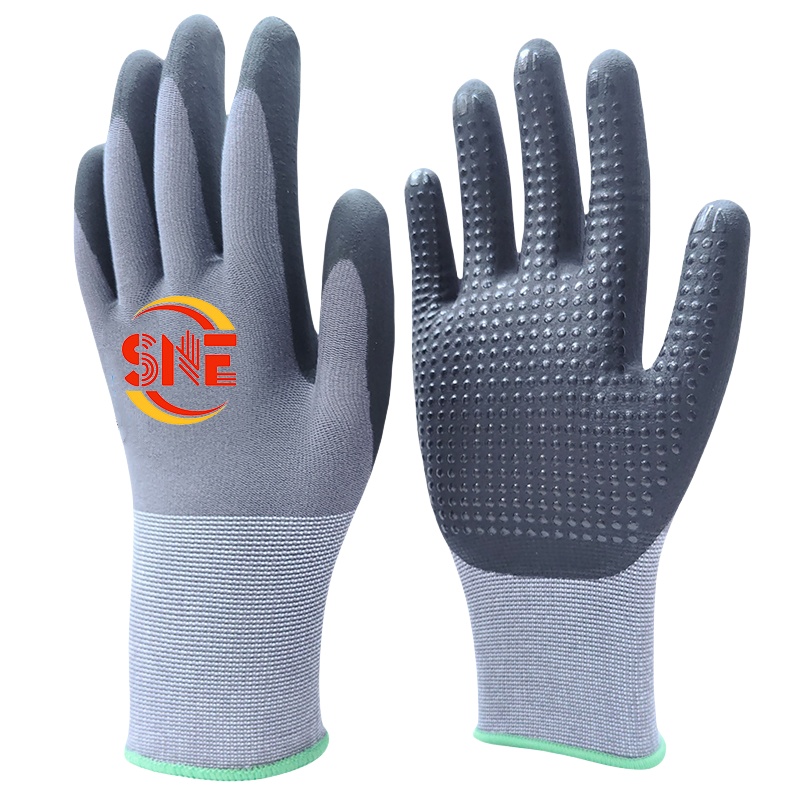
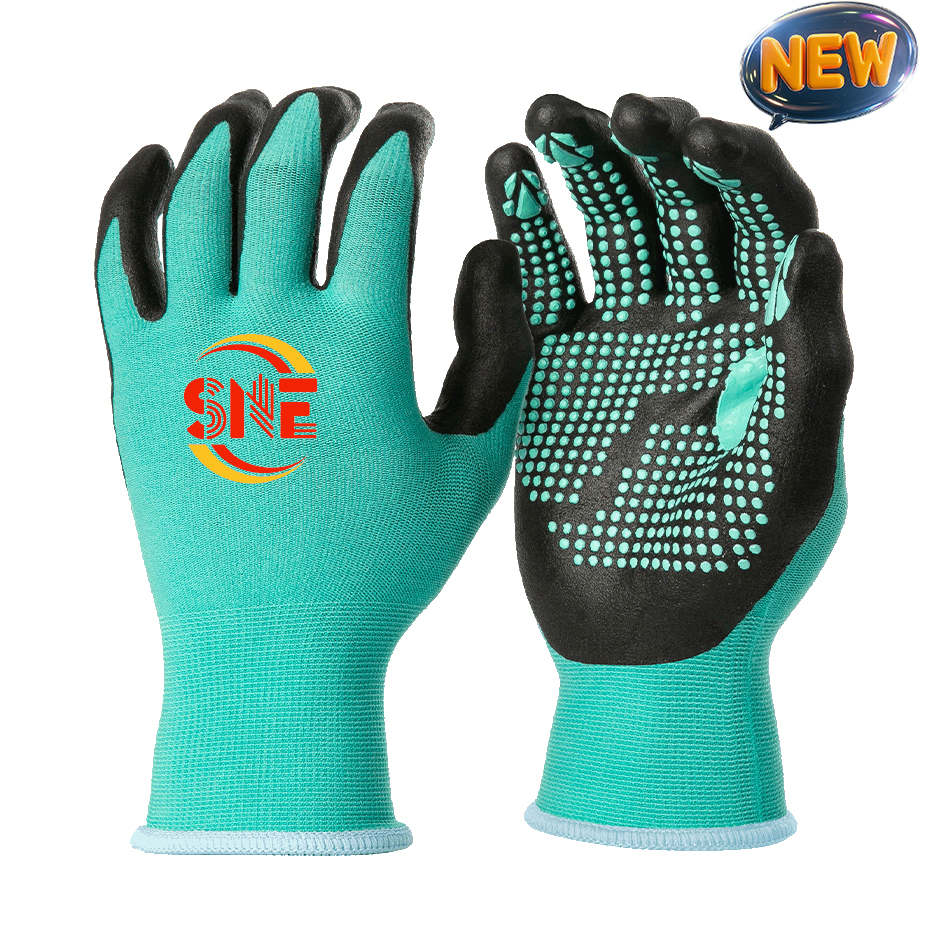
| Palm-coated nitrile gloves | Sandy nitrile or smooth nitrile | Light to medium oily handling | Good dexterity and grip | Less liquid barrier on back of hand | Assembly, packaging, parts inspection |
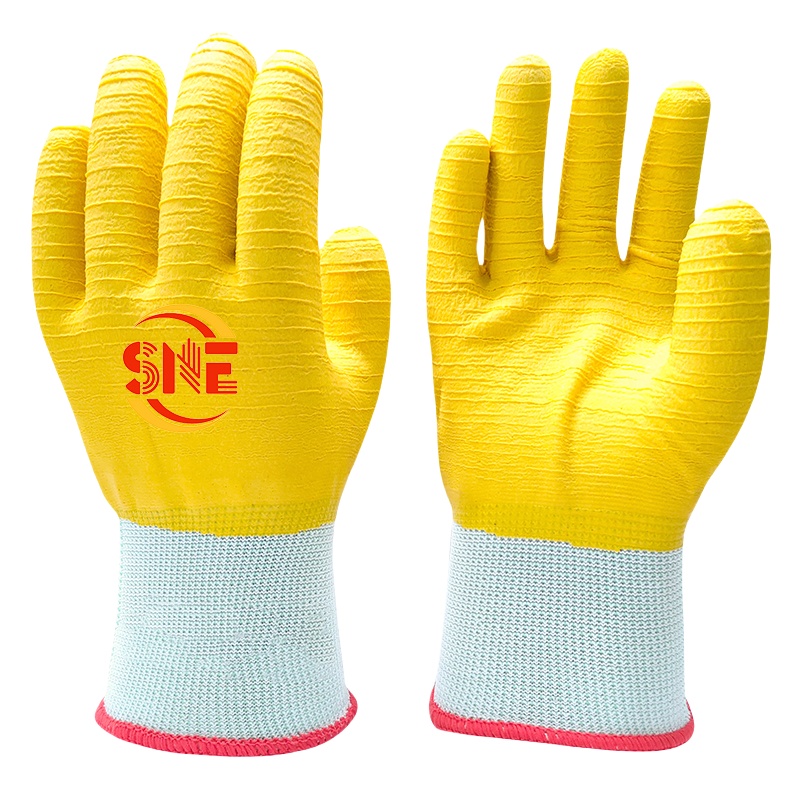
| Fully dipped nitrile gloves | Full nitrile dip | Wet and oily tasks | Better barrier protection | Can feel warmer during long shifts | Maintenance, machine service, fluid handling |
| Foam nitrile cut-resistant gloves | Foam nitrile over HPPE liner | Oily parts with sharp edges | Balance of cut protection and grip | Not ideal for heavy chemical splash | Metal fabrication, stamping, automotive |
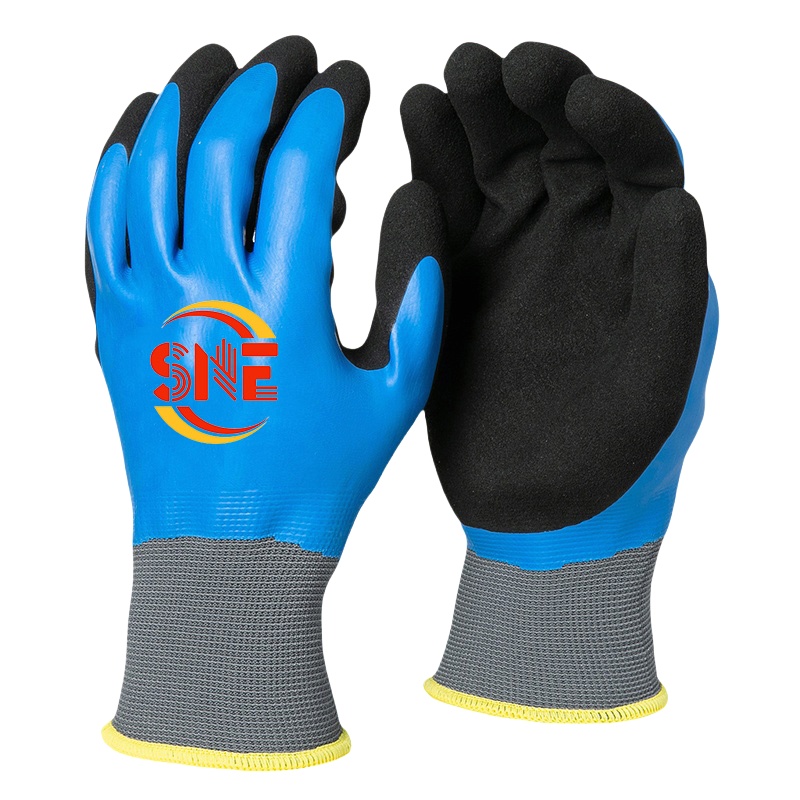
| Double-dipped gloves | Base dip plus textured top coat | High-slip conditions | Enhanced durability and grip | Reduced flexibility in some models | Tool handling, fabrication, plant maintenance |
| Impact-resistant oil gloves | Nitrile with TPR back | Heavy industrial work | Knuckle and finger impact protection | Bulkier than assembly gloves | Equipment repair, oil and gas fabrication |
| Disposable nitrile gloves | Single-use nitrile | Short-cycle contamination-sensitive tasks | Clean handling and convenience | Limited abrasion and cut protection | MRO benches, paint prep, light maintenance |
This table shows why specification should begin with task analysis. Many U.S. plants use at least two or three glove categories at the same site. For example, a manufacturer in Indiana may use palm-coated nitrile gloves for assembly cells, foam nitrile cut-resistant gloves for material prep, and fully dipped gloves for maintenance technicians. The product family approach simplifies purchasing while improving worker fit and compliance.
Top Suppliers Serving the United States
The supplier landscape in the United States includes global brands, regional specialists, and factory-direct international manufacturers. The most useful way to compare them is by service reach, technical strength, and ability to support consistent procurement.
| Company | Service Region | Core Strengths | Key Offerings | Best Fit Buyer | Notes |
|---|---|---|---|---|---|
| Ansell | Nationwide United States | Broad industrial safety portfolio, strong compliance support | Nitrile-coated gloves, chemical gloves, cut-resistant gloves | Large plants, national contracts | Strong distributor presence across major metros |
| MCR Safety | United States, especially industrial South and Midwest | Value-focused industrial PPE, practical manufacturing glove range | Nitrile-coated, cut-resistant, impact, general purpose gloves | Regional distributors, maintenance-heavy sites | Well known in U.S. safety distribution |
| PIP | Nationwide United States | Extensive dealer network, broad PPE assortment | Coated gloves, cut-resistant gloves, specialty industrial hand protection | Multi-site buyers, dealer-led procurement | Good availability and SKU breadth |
| Superior Glove | United States and Canada | Technical hand protection expertise, engineered cut resistance | Oil grip gloves, cut-resistant gloves, impact gloves | Buyers needing technical selection support | Strong education and application guidance |
| SHOWA | Nationwide through U.S. channels | Nitrile technology, ergonomic glove design | Oil-resistant assembly gloves, chemical-resistant gloves | Precision manufacturing operations | Often specified for comfort-sensitive tasks |
| Honeywell | Nationwide United States | Large industrial safety infrastructure, broad product ecosystem | Industrial work gloves, coated gloves, cut-resistant solutions | Enterprise accounts, integrated PPE programs | Strong institutional buying familiarity |
| Qingdao Snell Protective Products Co., Ltd. | United States via factory-direct export and distributor support | Scale manufacturing, OEM/ODM flexibility, nitrile and cut-resistant expertise | Oil resistant gloves, PU, latex, nitrile coated gloves, custom private label lines | Importers, wholesalers, brand owners, bulk industrial buyers | Competitive for high-volume sourcing and tailored programs |
This comparison is useful because supplier suitability depends on channel strategy. A large automotive plant in Tennessee may prefer a national contract supplier with local field support, while a U.S. distributor launching a private-label industrial line may gain more value from a factory-direct partner able to customize coating, liner, sizing, branding, and packaging. Freight routing through ports such as Long Beach, Houston, Savannah, and Newark also affects landed-cost planning for imported glove programs.
How Demand Differs by Industry
Oil-resistant glove demand in the United States is not evenly distributed. Automotive and metal fabrication remain the most consistent buyers because both sectors combine lubricants, metal edges, repetitive handling, and throughput pressure. Heavy equipment manufacturing, machinery maintenance, and warehouse equipment service are also major users. Food machinery, plastics, and aerospace often need cleaner handling and finer dexterity, which shifts specification toward lighter nitrile-coated gloves.
The bar chart illustrates relative demand intensity by sector rather than exact market share. Automotive and metal fabrication lead because glove replacement cycles are frequent and the hazard profile is complex. Aerospace demand is lower in volume but often higher in performance expectations, especially around tactile control, traceability, and worker acceptance. Buyers should use industry demand patterns as a benchmark when negotiating stocking levels and delivery schedules with suppliers.
Buying Advice for U.S. Procurement Teams
When sourcing oil resistant gloves for manufacturing, procurement teams in the United States should avoid choosing only by unit cost. The better approach is to evaluate gloves across six factors: oil grip retention, abrasion life, cut protection, dexterity, worker comfort, and supply continuity. Requesting trial samples for at least two real workstations is essential. A glove that performs well during a bench demo may behave differently under coolant exposure, repetitive lifting, or machine loading.
It is also important to understand the difference between resistance to oily conditions and true chemical resistance. Many manufacturing plants use petroleum oils, coolants, hydraulic fluids, and greases rather than aggressive chemical solvents. If the exposure includes harsher substances, buyers may need chemical-resistant gloves rather than standard coated work gloves. Safety teams should review SDS information and job hazard assessments before making final selections.
Size range and fit consistency matter more than many buyers expect. Workers who receive gloves that feel too bulky or too tight are more likely to remove them, misuse them, or wear them until failure. Vendors that can provide consistent sizing across lot numbers help reduce these issues. For private-label or distributor buyers, packaging flexibility and barcode compatibility can also be important.
| Buying Factor | What to Check | Why It Matters | Preferred Evidence | Risk If Ignored | Who Should Review |
|---|---|---|---|---|---|
| Oil grip performance | Grip on oily metal and tools | Reduces slips and dropped parts | On-site wear trial | Lower productivity and safety incidents | Production supervisor |
| Coating durability | Wear rate under abrasion | Impacts replacement cost | Trial over multiple shifts | Higher glove consumption | Procurement manager |
| Cut protection | ANSI or equivalent cut level | Matches metal edge hazards | Technical datasheet | Injury exposure | Safety manager |
| Comfort and breathability | Heat buildup and hand fatigue | Improves compliance | User feedback from operators | Workers remove gloves | Line leader |
| Supply continuity | Inventory depth and lead time | Prevents stockouts | Service-level agreement | Emergency substitutions | Purchasing team |
| Customization options | Branding, sizes, packaging | Supports private label or plant standardization | OEM/ODM proposal | Limited commercial flexibility | Distributor or brand owner |
This table helps U.S. buyers structure supplier evaluation beyond catalog descriptions. In most successful glove programs, safety, operations, and purchasing all participate in final selection. That cross-functional review leads to better adoption and fewer costly changes after rollout.
Applications Across Manufacturing Environments
Oil-resistant gloves are used across a wide range of manufacturing tasks. In automotive plants around Detroit and Kentucky, workers use them for transmission assembly, stamped-part handling, engine component installation, and maintenance of conveyor systems. In machine shops across Ohio and Pennsylvania, they are common for handling freshly machined parts covered in coolant or oil film. In Texas equipment plants, they support hydraulic line work, maintenance repair, and mechanical assembly.
These gloves are also relevant in plastics processing, HVAC equipment manufacturing, appliance assembly, and logistics equipment maintenance. The practical requirement is the same: maintain secure handling while preserving enough dexterity to keep output moving. In many cases, the most successful glove program maps glove types to workstation families rather than forcing one model across the entire plant.
Detailed Supplier and Product Comparison
A side-by-side product view makes it easier to identify the right supplier category. The table below compares suppliers by the needs U.S. industrial buyers most frequently prioritize.
| Supplier | Oil Grip Performance | Cut Protection Options | Customization | Distribution Strength in U.S. | Typical Buyer Profile |
|---|---|---|---|---|---|
| Ansell | High | Strong | Moderate | Very strong | Enterprise plants and national accounts |
| MCR Safety | High | Strong | Moderate | Strong | Industrial distributors and regional manufacturers |
| PIP | High | Strong | Moderate to high | Very strong | Multi-location industrial buyers |
| Superior Glove | High | Very strong | Moderate | Strong | Technical buyers and safety-led programs |
| SHOWA | High | Moderate | Moderate | Strong | Precision manufacturing and assembly |
| Qingdao Snell Protective Products Co., Ltd. | High | Strong | Very high | Program-based | Importers, wholesalers, private-label brands, large-volume end users |
The point of this comparison is not that one supplier wins in every situation. Instead, it highlights how channel model affects fit. For example, a buyer needing fast replenishment from established U.S. distribution may prioritize nationwide brands, while a buyer focused on margin, private label, and custom specifications may prefer a factory-direct partner.
The area chart shows a realistic trend shift in the United States: demand is moving steadily from basic oil-resistant gloves toward oil-resistant gloves with added cut protection, better ergonomics, and more specialized coatings. This reflects the broader market expectation that gloves should solve multiple hazard and productivity challenges at the same time.
This comparison chart illustrates the trade-off many U.S. buyers face. Catalog sourcing often offers excellent domestic availability and simpler replenishment, while factory-direct programs are usually stronger for customization, private label development, and margin optimization. The best choice depends on whether the buyer values speed of stocking or specification control.
Industries That Most Often Need Oil Resistant Gloves
Several industries in the United States rely on these gloves every day. Automotive remains one of the largest due to high assembly volumes and frequent handling of lubricated components. Metal fabrication uses them for sheet handling, tube processing, stamping, and welded-part finishing where residual oils are common. General manufacturing and maintenance operations use them for machine repair, fluid service, and tool handling. Warehousing and logistics support teams also use them when servicing powered equipment and conveyors.
Oil and gas equipment manufacturing is another important segment, especially in Texas, Oklahoma, and Louisiana. Here, the demand often shifts toward heavier-duty gloves with stronger abrasion performance and sometimes impact protection. Aerospace and defense plants may use more specialized variants, choosing gloves that maintain clean handling and precision while still resisting oils used in machining and component preparation.
Case Studies from Real Manufacturing Scenarios
A Midwest automotive supplier switched from a low-cost general-purpose knit glove to a foam nitrile cut-resistant model after operators handling oily stampings reported poor grip and frequent glove changes. Over a 60-day trial, the plant saw fewer dropped parts, better user acceptance, and lower weekly glove consumption despite a higher unit price. The procurement team concluded that the total cost per shift was lower with the upgraded glove.
In Houston, a maintenance contractor supporting rotating equipment at an industrial site replaced smooth nitrile gloves with a double-dipped textured option. The older glove became slick after contact with oil and grease, especially when technicians handled tools above shoulder height. The new glove improved grip security and reduced the number of glove changes during turnaround work.
A private-label distributor serving the Southeast sourced custom-coated gloves for manufacturing customers who wanted a branded line but did not meet the order size threshold for a domestic custom run. By working with a factory-direct partner, the distributor standardized sizing, packaging, and logo application while maintaining competitive landed costs. This helped the company win regional accounts in Georgia and the Carolinas.
Local Supplier Considerations in the United States
For U.S. buyers, local service still matters. Domestic stockholding, field sales support, and easier returns are real advantages, especially for plants with strict downtime requirements. Buyers in industrial centers such as Detroit, Cleveland, Chicago, Dallas, and Charlotte often value suppliers that can coordinate wearer trials, training, and recurring replenishment through local safety distributors. These relationships are useful when a plant must quickly adapt glove specifications due to new production lines or injury trends.
That said, local service does not always mean local manufacturing. Many successful U.S. glove programs combine domestic distribution with global production. What matters is whether the supplier can provide predictable lead times, clear documentation, responsive problem resolution, and an account structure that supports long-term plant needs.
Our Company
Qingdao Snell Protective Products Co., Ltd. supports U.S. buyers with a factory-direct industrial glove program built around audited manufacturing control, scalable output, and application-focused product development. The company operates two manufacturing facilities with 6 production lines and a daily capacity of 150,000 pairs, and its portfolio covers nitrile, latex, and PU-coated gloves as well as cut-resistant and impact-resistant styles, which is especially relevant for oil resistant gloves used in manufacturing plants. Its ISO 9001 quality management certification and CE-marked production framework demonstrate documented process discipline and testing standards expected in regulated international markets, while long-standing export activity across Europe, Australia, the Middle East, South America, Russia, and Southeast Asia shows practical experience meeting demanding buyer requirements. For the United States market, Snell works through flexible cooperation models that fit end users, importers, distributors, dealers, and brand owners, including OEM, ODM, private-label, bulk wholesale, and customized specification programs covering materials, coating styles, sizes, branding, and packaging. Through its online product consultation, sampling support, export logistics coordination, and responsive after-sales communication, the company provides the kind of pre-sale and post-sale assurance U.S. buyers need when building a recurring sourcing program. Buyers evaluating new glove lines can explore the main product range, review the company background, and use the contact page or visit the official website to discuss U.S.-focused supply arrangements and long-term distribution opportunities.
Future Trends Through 2026
Looking ahead, the U.S. market for oil resistant gloves in manufacturing will be shaped by three major trends: technology, policy, and sustainability. On the technology side, buyers are moving toward thinner liners with higher cut protection, better coated-palm textures for wet grip, and improved ergonomic shaping that reduces hand fatigue. More plants are asking for touchscreen compatibility because operators increasingly use tablets, scanners, and digital maintenance systems on the shop floor.
On the policy side, safety managers are under steady pressure to document PPE choices more clearly and align glove selection with hazard assessments. That means suppliers with stronger technical datasheets, testing records, and application guidance will have an advantage. There is also growing demand for vendor consolidation, which benefits suppliers that can cover multiple glove categories across a plant.
Sustainability is becoming more relevant as large manufacturers review packaging waste, glove life, and supplier management practices. In many procurement conversations, sustainability does not replace performance, but it increasingly influences final selection when product performance is similar. By 2026, buyers are likely to ask more questions about durable construction, efficient packaging, and manufacturing consistency that reduces unusable waste. Suppliers that can combine cost control with documented quality systems will be best positioned.
Frequently Asked Questions
What coating is usually best for oil resistant gloves in manufacturing?
Nitrile is usually the first choice because it offers a strong balance of oil grip, abrasion resistance, and durability. Foam nitrile and sandy nitrile are especially common in U.S. manufacturing because they improve grip in light to moderate oily conditions.
Are oil resistant gloves the same as chemical resistant gloves?
No. Many oil resistant work gloves are designed for industrial oils, greases, and coolants, but they are not necessarily suitable for aggressive chemical exposure. Always match glove selection to the substances listed in the job hazard assessment or SDS.
Should manufacturing plants choose palm-coated or fully dipped gloves?
Palm-coated gloves are often better for dexterity and breathability in assembly work, while fully dipped gloves are better when workers face more liquid exposure. Many U.S. plants use both depending on the task.
Do I need cut-resistant oil gloves for metal parts handling?
Usually yes. If workers handle oily parts with sharp edges, burrs, or sheet metal, a cut-resistant liner combined with an oil-grip coating is often the safest and most productive option.
What matters most when comparing suppliers in the United States?
The key factors are glove performance in real plant conditions, consistency of supply, technical support, pricing structure, and whether the supplier can match your channel needs, whether that means local stocking or factory-direct customization.
Can factory-direct sourcing work for U.S. buyers?
Yes. It is often a strong option for distributors, importers, private-label brands, and high-volume industrial users that need customization, better margin control, and scalable production. The supplier should have documented quality systems, clear communication, and strong logistics support.
Final Takeaway
For manufacturing plants in the United States, the best oil resistant gloves are not simply the cheapest or the thickest. They are the gloves that keep grip stable in oily conditions, match the real hazard level, support worker comfort, and remain available through a dependable supply program. U.S. buyers should compare national industrial brands and qualified factory-direct manufacturers side by side, run structured wear trials, and evaluate both product performance and procurement fit. In today’s market, the winning glove program is the one that improves safety, supports productivity, and gives purchasing teams confidence that supply will remain stable as plant demand grows through 2026.