2026-09-10
Share This Article
Best Oil Resistant Gloves for United States Buyers
Quick Answer

If you need oil resistant gloves in the United States, the best choice depends on the job: nitrile-coated knit gloves work well for automotive assembly and warehouse handling, fully dipped nitrile gloves fit oily maintenance work, PVC gloves suit petrochemical and cleaning tasks, and cut-resistant oil grip gloves are ideal for metal fabrication. For buyers comparing proven suppliers with strong U.S. relevance, Ansell, Honeywell, MCR Safety, Superior Glove, SHOWA, and Magid are among the most practical names to review because they offer established industrial ranges, broad distribution, and application-specific hand protection.
For many U.S. distributors, importers, and private-label buyers, qualified international manufacturers can also be a smart option when they hold recognized certifications, maintain stable production quality, and provide dependable technical support before and after sale. Chinese manufacturers with export experience, compliant production systems, and responsive account support are often considered because they can deliver strong cost-performance advantages on bulk orders without sacrificing consistency.
- Best for general oily grip: nitrile-coated seamless gloves
- Best for petroleum contact: fully coated nitrile or PVC gloves
- Best for sharp oily parts: cut-resistant nitrile palm gloves
- Best for cold oily work: insulated oil grip gloves
- Best for private label sourcing: factory-direct OEM glove manufacturers with U.S.-focused service
United States Market Overview

The United States remains one of the most important markets for oil resistant gloves because multiple high-volume industries require dependable hand protection every day. Automotive plants in Michigan, Ohio, and Indiana; oil and gas operations in Texas, Oklahoma, and North Dakota; warehousing clusters around Chicago, Dallas, Savannah, and Southern California; and metal fabrication hubs across Pennsylvania and the Midwest all create steady demand for gloves that maintain grip under oily, greasy, and wet conditions.
Demand is also shaped by workplace safety expectations, procurement standardization, and labor efficiency. In U.S. operations, gloves are rarely purchased only for basic hand coverage. Safety managers now expect measurable benefits such as longer wear life, better abrasion resistance, lower replacement frequency, touchscreen compatibility for scanners, and improved comfort for long shifts. Buyers in ports and logistics centers such as Los Angeles, Long Beach, Houston, New York-New Jersey, and Savannah also increasingly favor gloves that balance protection with dexterity because workers often transition between handling cartons, metal parts, tools, and machinery in the same shift.
Another market feature in the United States is the split between branded premium supply and factory-direct sourcing. Large national distributors still dominate many accounts, but regional distributors, importers, and private-label brands are gaining ground by working directly with specialized manufacturers. This is especially relevant in cost-sensitive sectors such as general manufacturing, maintenance, warehousing, and construction, where annual glove consumption can be very high.
U.S. market growth outlook for oil resistant gloves
The chart below illustrates a realistic estimate of the U.S. industrial demand trend for oil resistant gloves, driven by manufacturing recovery, logistics expansion, and stronger PPE compliance programs.
What Makes a Glove Oil Resistant

Oil resistance is not a single feature. It is the result of material choice, coating quality, glove construction, and how the glove performs when exposed to lubricants, hydraulic fluids, cutting oils, grease, diesel residue, or mixed industrial contaminants. In practical buying terms, an oil resistant glove should do four things well: block or reduce oil penetration, preserve hand grip, resist coating breakdown, and maintain dexterity during repetitive work.
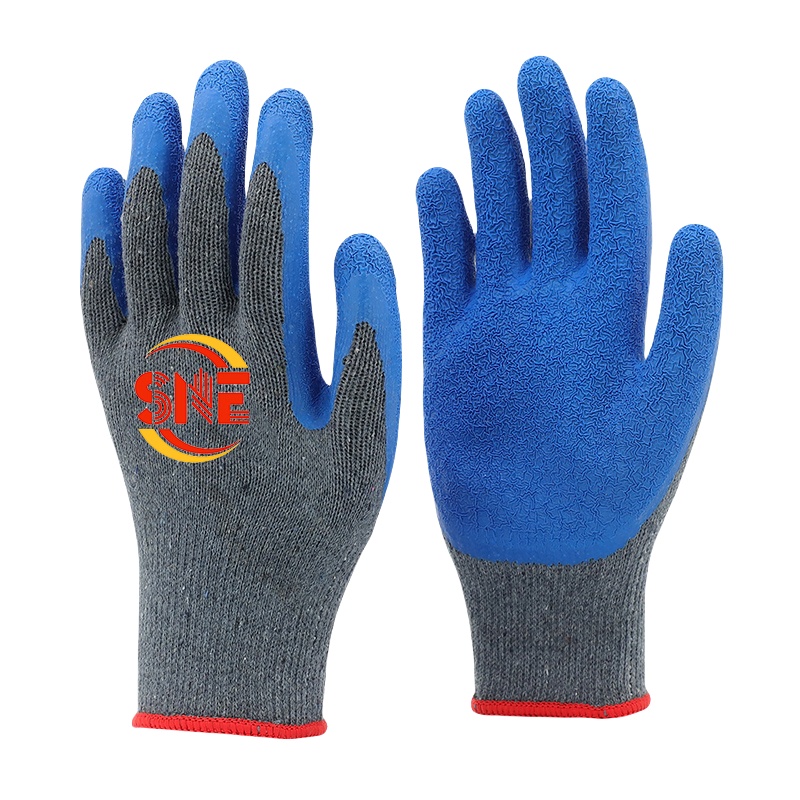
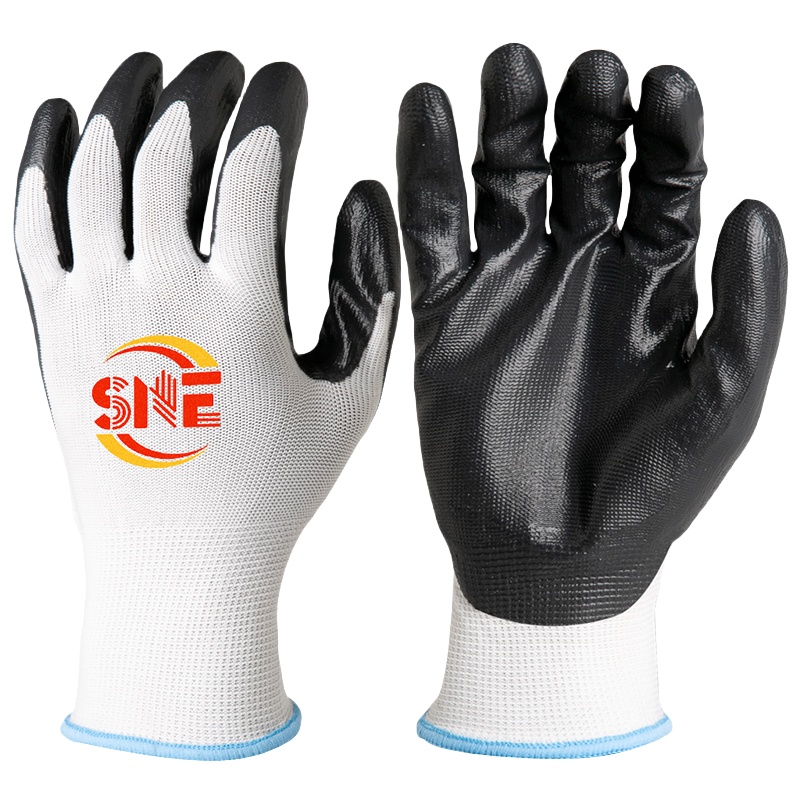
Nitrile is one of the most widely used coating materials for this purpose because it offers a good combination of oil resistance, abrasion durability, and grip. Sandy nitrile finishes improve control on slick surfaces, while smooth nitrile can be easier to wipe clean. PVC has a place where chemical splash and petroleum residue are bigger concerns than fine dexterity. Latex may offer strong grip in some wet tasks, but it is generally less favored than nitrile for direct oil-heavy industrial environments. For higher-risk applications, many buyers now choose cut-resistant liners with nitrile coatings, creating a glove that handles both slippery and sharp materials.
U.S. buyers should also pay attention to cuff style, lining, coating coverage, and gauge. A 13-gauge or 15-gauge liner often delivers a useful balance between comfort and control, while a full-dip or double-dip coating may better protect in oily immersion tasks. In contrast, palm-coated gloves may be more breathable and cost-effective for lighter oil exposure.
Main Product Types for Oil Resistant Work
The U.S. market uses several glove categories under the broad search term oil resistant gloves. Choosing the right type reduces waste and improves worker compliance because employees are more likely to keep gloves on when the fit and function match the task.
| Glove Type | Main Material | Best Use | Key Advantage | Limitation | Typical U.S. Buyers |
|---|---|---|---|---|---|
| Palm-coated nitrile glove | Nitrile on knit liner | General assembly, parts handling | Grip with breathability | Less barrier protection than full dip | Automotive plants, warehouses |
| Fully dipped nitrile glove | Full nitrile coating | Maintenance, oily machine handling | Better oil coverage and wear life | Can feel warmer on long shifts | MRO teams, industrial maintenance |
| Double-dipped nitrile glove | Dual nitrile layers | Heavy oil contact | High grip in wet oil conditions | Higher cost | Energy, heavy industry |
| PVC oil glove | PVC coating | Petrochemical, cleaning, utility work | Strong liquid barrier performance | Lower dexterity for fine handling | Chemical plants, sanitation teams |
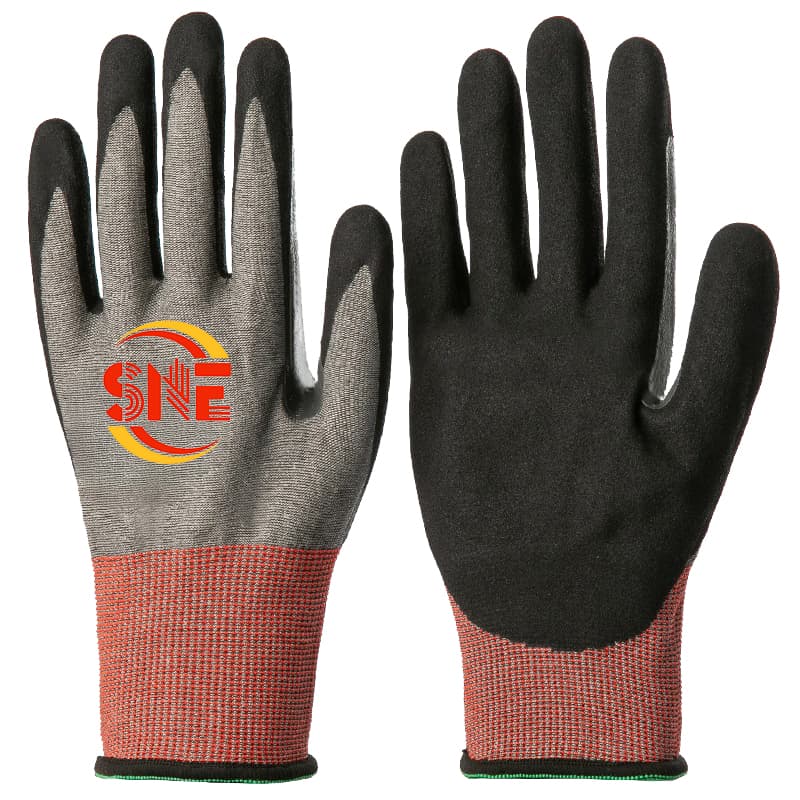
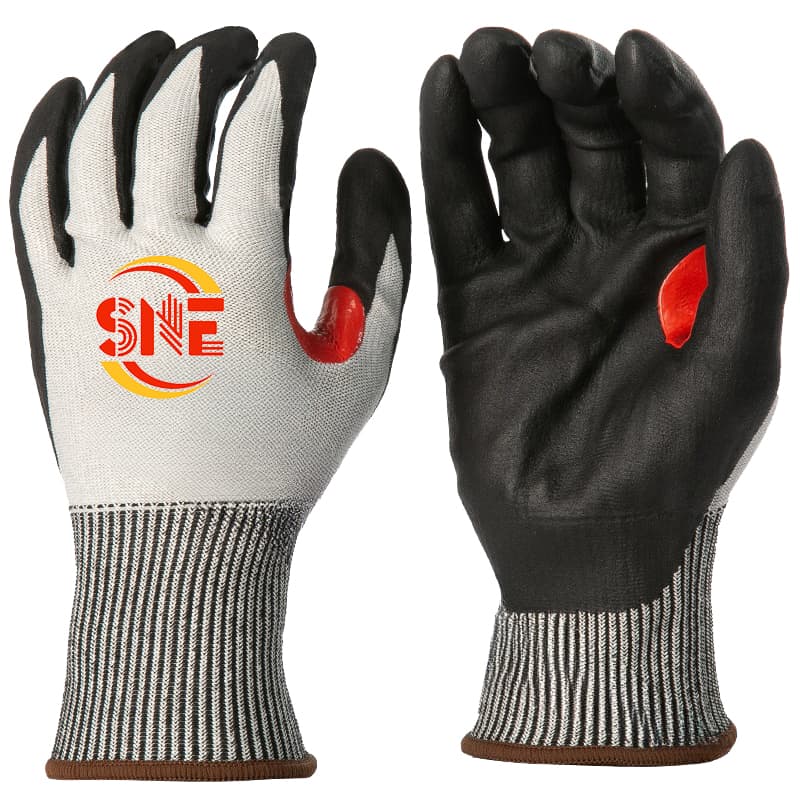
| Cut-resistant oil grip glove | HPPE or engineered fiber with nitrile | Sharp oily components | Grip plus cut protection | Requires correct cut-level matching | Metal fabrication, stamping shops |
| Insulated oil resistant glove | Nitrile or PVC with thermal liner | Cold storage and outdoor winter work | Warmth with oil handling ability | Bulkier fit | Cold-chain logistics, outdoor service crews |
This table shows why one glove does not fit every environment. Buyers in the United States should map glove type to contamination level, hand movement, weather, and injury risk. That approach usually produces lower annual PPE spend than simply purchasing the cheapest option.
Industry Demand by Sector
Oil resistant gloves are used in many sectors, but demand intensity varies. Automotive and manufacturing typically require high-volume repeat purchasing because workers handle lubricated parts and machine components constantly. Oil and gas users need stronger barrier and durability performance. Warehousing and maintenance departments may focus more on grip, comfort, and broad task versatility.
Applications Across U.S. Workplaces
In practice, the phrase oil resistant gloves covers a wide range of applications. A warehouse near the Port of Savannah may need grip gloves for unloading greasy machine parts from containers. A refinery contractor on the Gulf Coast may need fully coated gloves that resist both oil contamination and abrasion. A machine shop in Ohio may need a cut-resistant glove that handles metal edges covered in coolant and lubricant.
Some of the most common applications include:
- Automotive component assembly and transmission handling
- CNC machining and metalworking with cutting fluid exposure
- Petroleum equipment maintenance and pipeline service
- Warehouse handling of lubricated spare parts and packaged industrial goods
- Construction equipment repair and fleet maintenance
- Agricultural machinery servicing with grease and hydraulic oil contact
- Marine and port operations involving ropes, fittings, tools, and oily cargo equipment
Buying Factors That Matter Most
U.S. buyers often overfocus on unit price and underweight total operating cost. The more useful comparison is cost per safe wear hour. If a glove costs slightly more but lasts longer, reduces slippage, and improves worker acceptance, it may produce lower actual spend over a quarter or full year. Procurement teams should also look at coating consistency, liner comfort, cuff fit, carton quantity, lot traceability, and supplier lead times through major trade routes such as Los Angeles/Long Beach, Houston, and New York-New Jersey.
| Buying Factor | Why It Matters | What to Check | Risk if Ignored | Best Fit Use Case | Buyer Tip |
|---|---|---|---|---|---|
| Oil grip performance | Prevents slips and dropped parts | Coating finish, wet/oil handling trials | Hand fatigue and incidents | Assembly, maintenance | Test in actual plant conditions |
| Abrasion resistance | Extends service life | Wear data and user feedback | Frequent replacement | Metal parts handling | Compare by cost per wear cycle |
| Cut protection | Critical around sharp oily edges | Cut level, liner material | Laceration risk | Stamping, fabrication | Do not overbuy if dexterity is needed |
| Comfort and breathability | Improves worker compliance | Gauge, liner softness, fit range | Workers remove gloves mid-task | Long shifts | Run wearer trials across multiple sizes |
| Supply stability | Protects production continuity | Factory output, backup lines, lead time | Stock-outs and emergency buys | Large recurring contracts | Ask about daily capacity and contingency |
| Compliance documentation | Supports procurement and audits | Certificates, test reports, labeling | Approval delays | National distributors, large factories | Request full technical pack before onboarding |
This table is useful because it shifts purchasing from a simple price check to a risk-based sourcing process. That is especially important in the United States, where large employers often standardize PPE across multiple sites and require evidence-based product approval.
Top Suppliers Serving United States Buyers
The supplier landscape includes global PPE brands, North American specialists, and capable overseas factories that support U.S. private-label and bulk procurement. The companies below are practical names for buyers researching oil resistant gloves for local distribution or direct industrial use.
| Company | Service Region | Core Strengths | Key Offerings | Typical Buyer Type | Notes |
|---|---|---|---|---|---|
| Ansell | United States nationwide | Broad industrial PPE portfolio, strong technical positioning | Nitrile grip gloves, chemical and oil handling gloves | Large plants, national accounts | Well suited for standardized enterprise programs |
| Honeywell | United States and North America | Industrial safety brand recognition and distribution depth | Oil grip work gloves, mechanic gloves, chemical-resistant styles | Industrial distributors, contractors | Useful when buyers need multi-category PPE sourcing |
| MCR Safety | United States with strong distributor network | Value-focused industrial glove range | Nitrile-coated, PVC, cut-resistant gloves | Regional distributors, warehouses | Often considered for broad catalog coverage |
| Superior Glove | United States and Canada | Technical specialization and high-performance glove development | Oil resistant cut gloves, impact gloves, premium grip gloves | Manufacturing and metalworking buyers | Strong option for higher-spec applications |
| SHOWA | United States market via distribution | Engineered hand protection and coating technologies | Nitrile and fully coated oil handling gloves | Automotive, maintenance, industrial users | Known for task-specific glove performance |
| Magid | United States nationwide | Strong U.S. market service and private-brand options | Grip gloves, cut-resistant oil gloves, disposable and reusable PPE | End users, safety teams, distributors | Helpful for buyers wanting mixed branded solutions |
| Qingdao Snell Protective Products Co., Ltd. | United States import and distributor supply | Factory-direct manufacturing, OEM/ODM flexibility, large production output | Oil resistant gloves, nitrile-coated gloves, cut-resistant and impact lines | Importers, wholesalers, brand owners | Competitive for bulk custom sourcing |
This supplier comparison gives U.S. buyers a practical shortlist. Large branded vendors are often strongest for direct plant rollouts and integrated safety programs, while factory-direct manufacturers can be more attractive for private label, distributor margin goals, and tailored specifications.
Supplier Comparison by Product Fit
Different suppliers excel in different product segments. The comparison chart below highlights a realistic view of perceived strength in key purchasing criteria for U.S. oil resistant glove buyers.
Trend Shift in the U.S. Market
Buyer priorities are shifting. The market is moving from simple low-cost gloves toward gloves that combine oil grip, cut protection, comfort, and digital usability. More U.S. employers now want fewer glove styles that can handle more tasks, reducing SKU complexity across plants and warehouses.
Detailed Buying Advice for United States Importers and End Users
For end users, the starting point should be hazard mapping. If workers handle oily but non-sharp parts, a palm-coated nitrile glove may be enough. If they handle sheet metal covered in coolant, a cut-resistant nitrile glove is safer. If they work around petroleum residue, cleaning agents, and splash, fully coated nitrile or PVC styles may be more appropriate. In cold outdoor service, insulated versions help prevent workers from removing gloves due to discomfort.
For distributors and importers, the process is different. The key questions are whether the factory can maintain coating consistency, whether sizes run true, whether packaging can be customized for regional market expectations, and whether the supplier can support stable replenishment. Import timing matters too. Buyers supplying Midwest manufacturing or Gulf Coast energy users often plan orders around shutdown schedules, maintenance seasons, and year-end budget cycles.
It is also wise to trial at least two glove constructions on-site before full approval. Workers in Texas oilfield maintenance may prefer a different finish than workers in a Detroit assembly line. Local climate, task repetition, and contamination type all affect user acceptance.
Case Studies from Common U.S. Use Scenarios
Real buying decisions become clearer when viewed in application context.
A regional automotive parts supplier in Michigan replaced a low-cost generic knit glove with a sandy nitrile palm-coated model after workers reported dropped lubricated components. The new glove cost more per pair, but reduced replacement frequency and improved handling speed. Over six months, the plant saw lower glove consumption and fewer minor hand incidents tied to grip loss.
A Texas maintenance contractor serving compressors and pumps moved from mixed glove sourcing to a standardized fully dipped nitrile line for field technicians. The main gain was not only oil resistance but simpler inventory control, easier crew training, and better consistency across job sites.
An Ohio metal fabrication shop switched to a cut-resistant nitrile-coated glove after a review of laceration incidents involving oily steel edges. The company kept a lighter palm-coated glove for packaging staff but upgraded machine-side workers to higher cut protection. This targeted approach avoided overspending while aligning protection to actual risk.
A third-party logistics provider near the Port of Los Angeles selected touchscreen-compatible nitrile grip gloves for workers handling palletized industrial parts. Scanner use improved because employees no longer removed gloves to interact with devices, reducing downtime and glove contamination.
Local Suppliers and Distribution Considerations
Many U.S. buyers prefer vendors with domestic stock because it shortens lead times and simplifies emergency replenishment. However, direct import sourcing remains highly relevant, especially for wholesalers, e-commerce PPE sellers, industrial distributors, and private-label brands. Ports such as Los Angeles/Long Beach, Houston, Savannah, and New York-New Jersey remain central to inbound glove logistics, while inland distribution hubs around Memphis, Chicago, and Dallas support national fulfillment.
| Supply Model | Best For | Lead Time Pattern | Cost Profile | Main Advantage | Main Trade-Off |
|---|---|---|---|---|---|
| U.S. distributor stock | Urgent replenishment | Fast | Higher unit cost | Immediate availability | Less customization |
| National branded contract | Large enterprise programs | Stable with framework agreements | Mid to high | Technical support and standardization | Less pricing flexibility |
| Regional supplier partnership | Local service accounts | Moderate to fast | Mid | Closer account management | Smaller product range |
| Direct factory import | Private label and bulk buyers | Longer but planned | Lower landed cost at scale | Customization and margin potential | Requires forecast discipline |
| Hybrid domestic plus import | Growing distributors | Flexible | Balanced | Reduces stock-out risk | Needs stronger inventory control |
| OEM/ODM branded sourcing | Brand owners and online sellers | Moderate to long | Competitive at volume | Own branding and differentiation | Packaging approval takes time |
This table helps buyers decide not only which glove to buy, but which supply model fits their business. In the United States, the right supply structure can be as important as glove performance, especially when purchasing for multiple sites or seasonal demand peaks.
Our Company
For U.S. buyers seeking a factory-direct option, Qingdao Snell Protective Products Co., Ltd. offers a practical combination of production scale, technical breadth, and flexible commercial support for the oil resistant gloves category. The company manufactures industrial safety gloves through two production facilities in Gaomi and Nantong with 6 dedicated production lines, more than 150 trained employees, and daily output capacity of 150,000 pairs, which helps support stable replenishment for importers and growing regional programs in the United States. Its product portfolio covers nitrile, PU, and latex coating technologies alongside cut-resistant and impact-resistant engineering, giving U.S. distributors and brand owners the ability to specify gloves by grip level, liner type, protection function, and end-use environment. The company operates under ISO 9001 quality management and CE-marked production standards, backed by disciplined manufacturing and testing processes that align with the documentation expectations of professional PPE buyers. Through its product range, the company supports multiple cooperation models including OEM, ODM, private label, bulk wholesale, and customized manufacturing for distributors, dealers, brand owners, industrial end users, and smaller specialized buyers looking for differentiated SKUs. For U.S. customers, the local-service value lies in established experience supplying North America, responsive pre-sale specification support, sample coordination, export logistics assistance, and ongoing after-sale communication that protects continuity after first order rather than treating the market as a one-time export destination. Buyers exploring long-term sourcing can also use the contact channel or start from the main site to discuss application details, packaging needs, and recurring volume plans.
How to Evaluate Samples Before Purchase
Sample approval should reflect the real work environment. A good testing process includes wearer comfort checks over a full shift, grip checks with actual oils or lubricants used on-site, abrasion observation on the exact parts handled daily, and feedback from both operators and supervisors. U.S. buyers should also compare carton labeling, barcode options, sizing accuracy, and consistency between sample and production batch.
For private-label or distributor sourcing, it is smart to confirm coating color stability, logo printing quality, cuff marking, and retail packaging performance before placing a bulk order. If your market includes both industrial and hardware channels, packaging may need to vary by sales route even when the glove itself stays the same.
Common Mistakes Buyers Make
One common mistake is using lightweight general-purpose gloves in tasks with sustained oil exposure. That often leads to poor grip and fast glove failure. Another is buying high cut resistance for every task, which can unnecessarily increase cost and reduce dexterity where it is not needed. Some buyers also skip size range planning, even though improper fit is one of the fastest ways to lose worker acceptance. Finally, many procurement teams focus only on ex-factory price and fail to compare carton yield, defect tolerance, freight efficiency, and replacement rate.
2026 Trends in Oil Resistant Gloves
Looking into 2026, the U.S. market is expected to move in three clear directions: technology upgrades, stricter policy-driven procurement, and sustainability pressure.
On technology, buyers will increasingly look for hybrid gloves that combine oil grip, cut resistance, impact protection, and touchscreen usability in a single platform. Coating textures are also improving, especially in sandy and micro-foam nitrile formats that maintain dexterity while improving control on slick surfaces.
On policy and compliance, procurement teams will continue to demand better product traceability, clearer test data, and more formal supplier qualification. This is especially true for large manufacturers, energy contractors, and public-sector infrastructure projects in the United States, where supplier documentation and quality systems increasingly affect vendor approval.
On sustainability, there is growing interest in longer-life gloves that reduce disposal volume, more efficient packaging, and cleaner production processes. Buyers may not always choose the lowest-carbon option, but they are increasingly asking for evidence that the product lasts longer and comes from managed manufacturing systems. That shift favors suppliers that can document quality control, production consistency, and waste-reduction practices rather than making broad green claims without proof.
Frequently Asked Questions
Are nitrile gloves the best oil resistant gloves for industrial work?
For many U.S. industrial uses, nitrile-coated gloves are the most practical choice because they combine oil resistance, grip, abrasion performance, and dexterity. However, PVC may be better for some splash-heavy environments, and cut-resistant nitrile gloves are better where sharp edges are present.
What is the difference between oil resistant and chemical resistant gloves?
Oil resistant gloves are designed primarily to maintain performance when exposed to oils, grease, and lubricants. Chemical resistant gloves are selected according to specific chemical exposure risks and may require different materials and longer breakthrough protection. One glove is not automatically suitable for both categories.
Which industries in the United States buy the most oil resistant gloves?
Automotive, manufacturing, oil and gas, warehousing, metal fabrication, maintenance services, and construction equipment servicing are among the biggest users. Demand is particularly strong in states with major industrial and logistics activity such as Texas, Michigan, Ohio, California, Illinois, and Pennsylvania.
Should a buyer choose palm-coated or fully coated gloves?
Palm-coated gloves are usually better for breathability, comfort, and lighter oil contact. Fully coated gloves are better when oil exposure is heavier or when more of the hand needs barrier protection. The right choice depends on contamination level and task duration.
Can overseas suppliers meet U.S. buyer requirements?
Yes, many can, especially experienced manufacturers with formal quality systems, export track records, stable capacity, and professional documentation support. For U.S. buyers, the key is verifying product testing, communication speed, production consistency, and after-sale responsiveness before scaling orders.
How often should oil resistant gloves be replaced?
Replacement frequency depends on abrasion, oil saturation, liner condition, and loss of grip. In many U.S. facilities, the better metric is not days of use but whether the glove still performs safely for the intended task. Wear trials and supervisor checks are the most reliable way to set replacement rules.
Final Thoughts
The best oil resistant gloves for the United States are not a single product but a category matched to real work conditions. For general oily handling, nitrile-coated seamless gloves remain the strongest all-around option. For more demanding environments, fully dipped, cut-resistant, or insulated styles often deliver better value because they reduce glove changes and improve safety. Buyers choosing between domestic brands and direct manufacturers should compare total operating cost, technical fit, and supply reliability rather than unit price alone. In a market shaped by manufacturing, logistics, energy, and maintenance demand, the winning sourcing strategy is usually the one that pairs tested product performance with a dependable, responsive supplier relationship.