2026-09-09
Share This Article
Best Construction Gloves in the United States
Quick Answer

The best construction gloves for buyers in the United States depend on the jobsite risk, but the most reliable choices usually come from established brands and manufacturers with strong cut protection, grip performance, impact shielding, and consistent sizing. For general building work, Ironclad, Mechanix Wear, HexArmor, MCR Safety, Superior Glove, and Youngstown Glove are among the strongest names to compare. If your crews work in concrete, steel, demolition, highway maintenance, framing, roofing, or utility construction, the right glove should match the actual hazard rather than promise one universal solution.
For fast purchasing decisions, focus on gloves with ANSI cut ratings that fit the task, reinforced palms for abrasion, breathable backs for long shifts, and nitrile, latex, or PU coatings selected for dry, wet, oily, or mixed-site conditions. U.S. contractors in major markets such as Houston, Chicago, Los Angeles, Atlanta, and New York often buy through regional safety distributors for quick replenishment, but qualified international suppliers can also be worth considering. In particular, Chinese manufacturers that hold relevant certifications and provide dependable pre-sales consultation, OEM options, and responsive after-sales support can offer strong cost-performance value for bulk programs and private-label construction glove lines.
United States Construction Glove Market Overview

The United States remains one of the largest and most demanding markets for construction hand protection. Contractors across commercial, residential, civil engineering, energy, and public infrastructure projects are buying more specialized gloves than in previous years because labor safety enforcement is stronger, project timelines are tighter, and workers increasingly expect comfort alongside protection. Construction hubs such as Dallas-Fort Worth, Phoenix, Miami, Seattle, and Boston show distinct differences in glove demand: hot climates prioritize breathable back materials and flexible coatings, while colder regions require layered thermal options that still preserve dexterity.
Another major market shift is procurement sophistication. Instead of buying one glove across all crews, purchasing managers now separate products by task: rebar handling, scaffolding, concrete work, sheet material handling, demolition, site cleanup, MEP installation, and heavy equipment operation. This creates demand for multi-tier product portfolios rather than single bestsellers. Ports and logistics corridors including Los Angeles/Long Beach, Savannah, Houston, and New York/New Jersey also influence supply reliability, especially for importers and private-label distributors that need predictable lead times.
Pricing pressure is also reshaping the category. Buyers want premium safety outcomes, but they still need durable gloves that reduce cost per wear. That is why many U.S. distributors compare domestic inventory programs with factory-direct sourcing models. The winning suppliers are those that combine compliance, stable quality, and operational support instead of competing only on headline pricing.
Top Construction Glove Suppliers Serving the United States

The suppliers below are relevant because they either have strong U.S. distribution, clear construction-focused product lines, or meaningful appeal for B2B buyers looking for OEM, wholesale, and large-volume sourcing. This table is designed as a practical shortlist, not a generic directory.
| Company | Service Region | Core Strengths | Key Offerings | Best Fit |
|---|---|---|---|---|
| Mechanix Wear | Nationwide United States | Strong brand recognition, dexterity, mechanics-style construction gloves | Synthetic leather gloves, impact gloves, cold-weather options | General contractors, utility, equipment operators |
| Ironclad | United States and North America | Task-specific construction gloves, durable palm reinforcements | Framing, demolition, grip, cold condition gloves | Commercial building and site crews |
| HexArmor | United States with broad industrial distribution | Advanced cut and impact protection, premium engineered designs | High-cut gloves, back-of-hand protection, specialty safety lines | High-risk construction and infrastructure projects |
| MCR Safety | United States nationwide | Wide product range, distributor-friendly supply, value tiers | Coated gloves, leather gloves, cut-resistant options | Large buyers needing assortment depth |
| Superior Glove | United States and Canada | Technical hand protection, broad cut-resistant portfolio | Coated knit gloves, mechanics gloves, high-visibility styles | Safety managers and specialized applications |
| Youngstown Glove | United States | Heavy-duty performance, utility and field-focused construction durability | Impact gloves, lined gloves, anti-slip performance gloves | Field crews, utility contractors, rugged environments |
| Qingdao Snell Protective Products Co., Ltd. | United States bulk supply via export channels and distributor cooperation | Factory-direct B2B model, OEM/ODM flexibility, scalable output | Construction gloves, cut-resistant gloves, impact-resistant gloves, PU, latex, and nitrile coated lines | Importers, brand owners, distributors, bulk buyers |
For U.S. buyers, this comparison shows why supplier selection should go beyond brand awareness. Mechanix Wear and Ironclad are strong for fast-moving general construction categories. HexArmor typically stands out where injury severity and compliance risk are higher. MCR Safety and Superior Glove offer breadth that works well for distributor catalogs and mixed-industry accounts. Youngstown Glove performs well in rugged utility and field conditions. For buyers building private-label programs or trying to improve margin on repeat bulk orders, factory-direct partners such as Snell Safety are increasingly relevant, especially when buyers want custom branding, coating adjustments, or program-level supply planning.
What Makes a Construction Glove the Best
The phrase best construction gloves only becomes meaningful when it is tied to risk exposure, wear time, and jobsite conditions. A framing crew working with dry lumber does not need the same glove profile as a rebar crew handling sharp steel, and a utility contractor in a wet winter environment needs a different palm coating than a subcontractor doing interior finishing in Arizona.
The best gloves usually combine five performance factors. First is protection level, especially abrasion, puncture, and cut resistance. Second is grip under the real jobsite condition, whether dry, wet, dusty, muddy, or oily. Third is fit and dexterity, which influences worker acceptance more than many procurement teams expect. Fourth is durability, because cheap gloves can become expensive if replacement frequency is too high. Fifth is climate suitability, since heat stress and sweat buildup reduce both comfort and compliance.
In the United States, ANSI ratings matter because they provide a more consistent way to specify gloves across large crews and multiple sites. Buyers should also assess cuff style, touchscreen compatibility, laundering behavior, seam placement, and whether the glove remains flexible after repeated use.
Main Product Types for Construction Use
Construction glove categories can be mapped to site activities. Each type below supports different user priorities, and the explanation helps avoid overbuying or underprotecting.
| Glove Type | Typical Material or Coating | Main Protection Focus | Common Construction Use | Buyer Note |
|---|---|---|---|---|
| General purpose coated gloves | PU, latex, nitrile on knit liner | Grip, light abrasion, basic handling | Material movement, site prep, light trade work | Best for high-volume daily use programs |
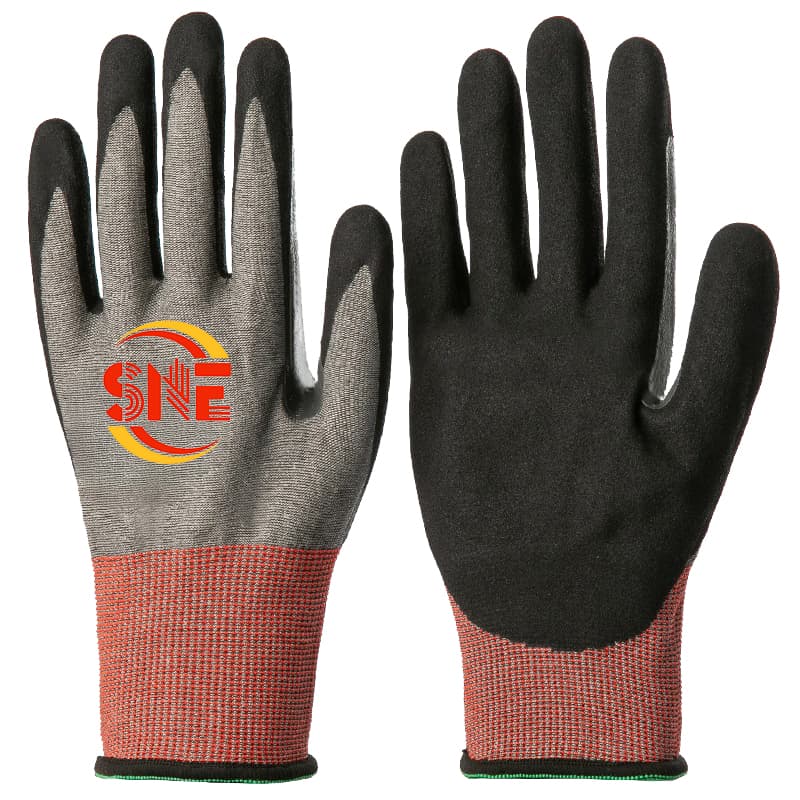
| Cut-resistant gloves | HPPE or engineered yarn with coating | Blade and edge hazard reduction | Metal studs, glass, sheet material, sharp components | Choose ANSI level based on actual hazard |
| Impact-resistant gloves | TPR back-of-hand with coated palm | Knuckle and finger impact protection | Demolition, heavy equipment, oil and gas-related construction | Useful where crush and strike risks are frequent |
| Leather construction gloves | Cowhide, goatskin, split leather | Durability, heat tolerance, abrasion | Heavy handling, masonry, rough outdoor work | Good lifespan but less dexterity in some styles |
| Cold-weather work gloves | Insulated liner with coated or leather shell | Cold protection and grip retention | Winter projects, utility, road crews | Balance warmth with hand mobility |
| Anti-vibration gloves | Padded palm construction | Shock dampening | Jackhammers, compactors, repetitive tool use | Best for targeted tool tasks, not all-day universal wear |
| Water-resistant or oil-resistant gloves | Nitrile-heavy coating systems | Liquid resistance and wet grip | Concrete, utilities, industrial construction maintenance | Important for mixed indoor-outdoor environments |
These glove categories often overlap. For example, a nitrile-coated cut-resistant glove may serve both metal framing and HVAC installation. That is why many contractors now build glove matrices instead of choosing one product for every worker.
Buying Advice for Contractors, Distributors, and Brand Owners
Buyers in the United States should begin with a task audit. Identify the top ten hand-intensive activities across the project or account, then assign required protection levels. This avoids the common mistake of buying premium gloves for low-risk tasks or, worse, buying low-cost gloves for high-risk work and paying later through waste, complaints, and injury exposure.
Contractors should test at least three glove styles on site before making a full rollout. The trial should include worker feedback on grip, heat buildup, seam irritation, cuff interference, and fit consistency. Construction workers will quickly reject gloves that reduce feel when tying rebar, climbing ladders, handling fasteners, or operating touch-enabled devices.
Distributors need to think beyond one product. Customers increasingly want a tiered assortment: opening price point, mid-range all-purpose, and premium task-specific options. Brand owners and importers should also review packaging, carton efficiency, private-label requirements, replenishment lead times, and whether the manufacturing partner can keep construction lines stable during seasonal demand spikes.
Construction Industries and Their Glove Needs
Different U.S. industries create distinct glove performance requirements. Understanding this helps spec the right product and reduce user complaints.
| Industry Segment | Typical Hazards | Recommended Glove Features | Common U.S. Regions | Procurement Priority |
|---|---|---|---|---|
| Commercial construction | Abrasion, pinch points, sharp edges | Durable palms, flexible fit, medium cut resistance | New York, Chicago, Atlanta, Dallas | High-volume replenishment |
| Residential building | Lumber splinters, light cuts, repetitive handling | Breathable coated gloves, good dexterity | Phoenix, Tampa, Charlotte, Nashville | Cost per wear |
| Road and bridge work | Concrete exposure, rebar, impact, weather | Impact protection, strong grip, cut resistance | Midwest, Northeast, Gulf Coast | Durability under outdoor use |
| Utility and telecom | Tool handling, weather shifts, climbing tasks | Dexterity, all-weather grip, reinforced fingertips | Nationwide | Worker acceptance |
| Oil, gas, and energy construction | Impact, oil, abrasion, crush hazards | TPR impact guards, oil-resistant nitrile, secure cuff | Texas, Louisiana, Oklahoma | Safety compliance |
| Metal building and fabrication-related installation | Sharp edges, sheet handling, puncture risk | High cut resistance, snug fit, durable coating | Ohio, Indiana, Pennsylvania | Higher ANSI cut rating |
| Municipal maintenance and public works | Mixed hazards across seasons | Versatile glove programs with multiple SKUs | Large metro areas nationwide | Contract flexibility |
For example, road and bridge contractors often buy heavier gloves because workers handle rebar, forms, tools, and rough concrete surfaces in changing weather. Residential builders usually need lightweight dexterity-driven gloves for repetitive handling of fasteners, framing members, and general jobsite movement. Utility contractors demand gloves that support grip and control without excessive bulk, especially when moving between hand tools, ladders, and service equipment.
How Coatings Change Performance
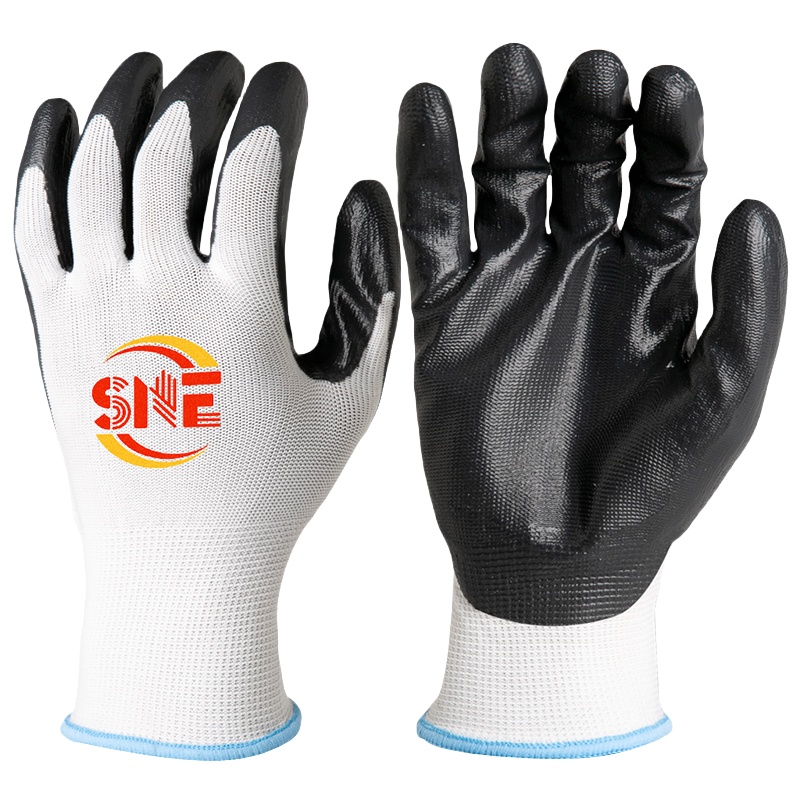
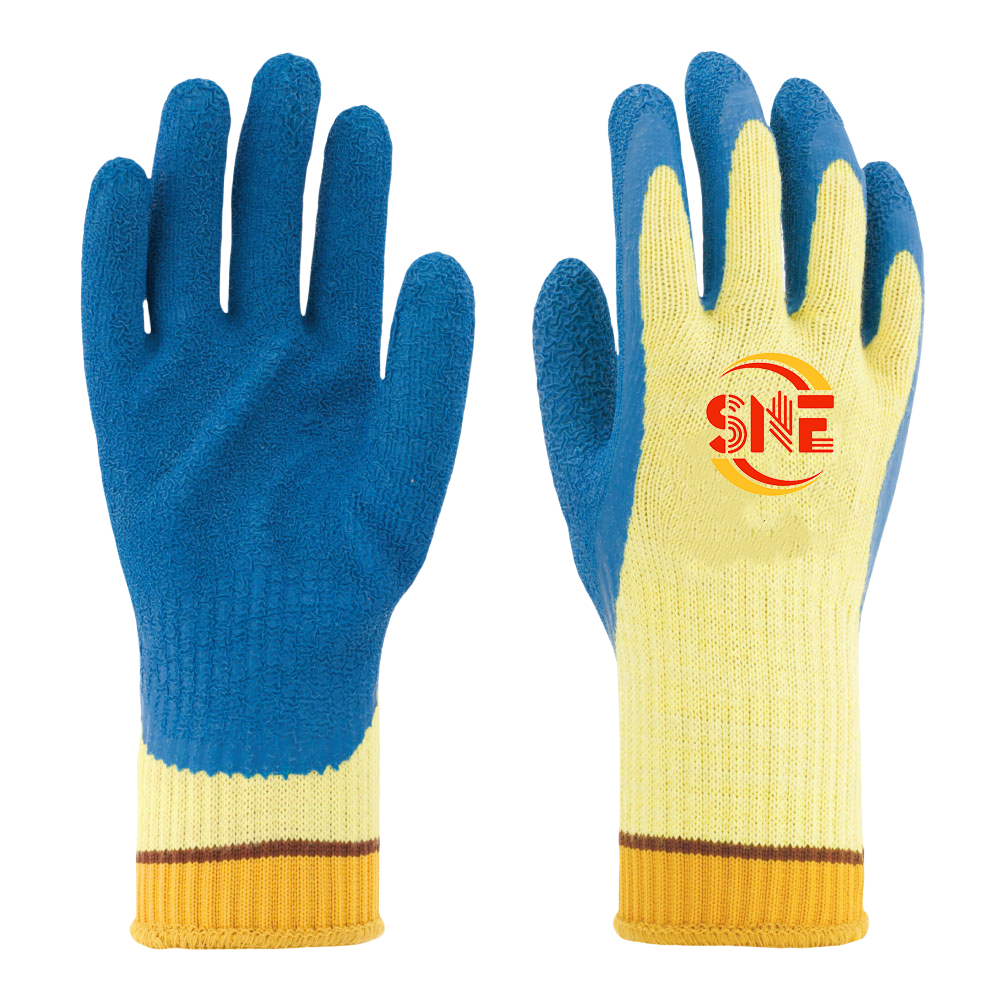
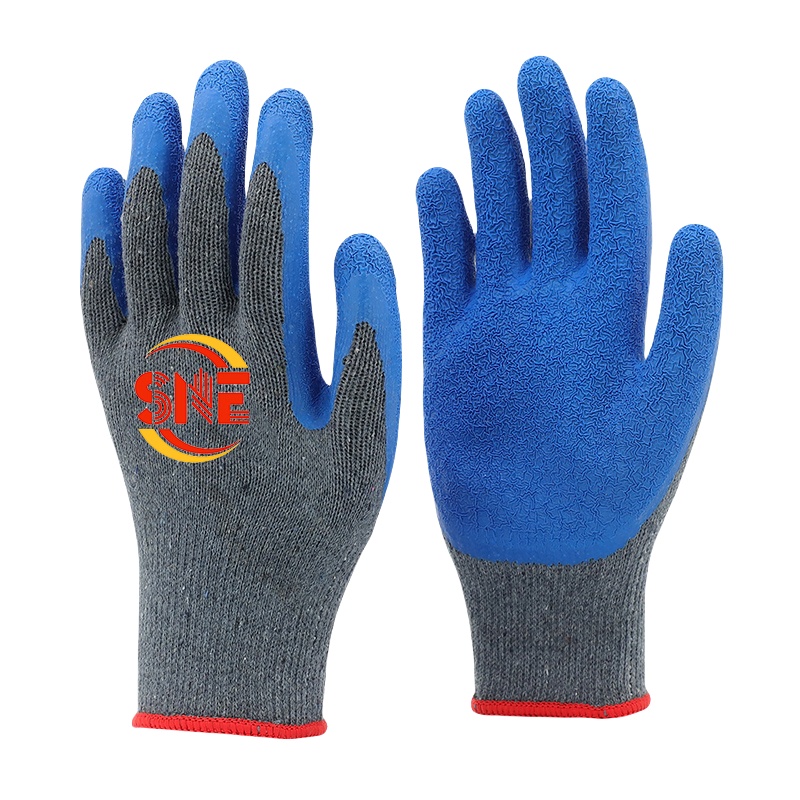
Coating selection often determines whether a glove succeeds or fails in construction. PU-coated gloves are usually chosen for dexterity and tactile feel. They work well for precision handling, interior build-outs, and lighter trade work. Latex-coated gloves generally offer stronger dry and wet grip, which is useful for masonry, landscaping, and rough material handling, though some users prefer to avoid latex depending on site policy. Nitrile-coated gloves are highly popular because they perform well in oily or mixed conditions and generally resist wear effectively.
In practical terms, a contractor in Houston managing mixed concrete and utility tasks may choose nitrile-coated gloves as the standard issue, while an interior build team in Los Angeles may choose thin PU-coated gloves for better touch and flexibility. On infrastructure sites in the Midwest, latex palm coatings can still be attractive where secure grip on rough materials is critical.
Case Studies from Real-World Buying Situations
Consider a general contractor managing a mixed-use tower project in Chicago. The company initially issued one economy glove across all trades. Workers handling metal studs and sheet components reported frequent glove damage and reduced confidence around sharp edges. After switching to a two-tier system with a standard coated glove for general handling and a higher cut-rated glove for framing and mechanical installation, replacement rates dropped and worker satisfaction improved.
On a highway rehabilitation project in Texas, the procurement team faced frequent palm wear due to concrete contact, gravel handling, and constant tool use. The solution was not simply buying the most expensive glove. Instead, they used a nitrile-coated cut-resistant model for rebar and material handling crews, while assigning impact gloves only to heavy equipment support and demolition workers. That segmentation reduced waste and improved cost control.
Another example comes from a distributor serving municipal maintenance accounts in the Northeast. Their customers needed gloves for snow season, roadside repair, utilities, and public works. By building a compact assortment of six construction-focused SKUs instead of carrying dozens of overlapping products, the distributor simplified inventory management and raised fill rates across local accounts.
Local Suppliers, Regional Distribution, and Logistics in the United States
Regional logistics matter almost as much as glove performance. Contractors in the United States often need replacement stock quickly, especially on large projects with labor turnover or unexpectedly harsh wear conditions. Buyers in California and the Pacific Northwest often rely on West Coast distribution linked to the ports of Los Angeles and Long Beach. East Coast and Southeast accounts may prioritize availability through Savannah, Charleston, or New Jersey-linked channels. Gulf Coast buyers frequently value access through Houston because of its role in industrial, infrastructure, and energy project supply.
Local distributors remain critical because they support emergency deliveries, size exchanges, and field testing. But factory-direct global sourcing is also growing when programs are stable and volumes justify direct import planning. For long-term contracts, importers and wholesalers can lower landed cost while preserving quality if they work with manufacturers that can document compliance, maintain production consistency, and communicate clearly on lead times.
| Supplier | Primary U.S. Access Model | Typical Lead Time Profile | Best Known For | Suitable Buyer Type |
|---|---|---|---|---|
| Mechanix Wear | Distributor and retail network | Fast domestic replenishment | Brand pull and user familiarity | Contractors, retailers |
| Ironclad | Distributor-based sales | Strong domestic availability | Construction-specific product segmentation | Commercial and industrial contractors |
| HexArmor | Industrial safety distribution | Application-driven quoting | Premium engineered protection | Safety-led procurement teams |
| MCR Safety | Large distributor network | Consistent broad-channel supply | Range depth and value options | Distributors, large fleets |
| Superior Glove | Industrial and specialty distribution | Reliable North American service | Technical glove specialization | Industrial contractors, specialized users |
| Qingdao Snell Protective Products Co., Ltd. | Factory-direct export, OEM, wholesale, regional distributor cooperation | Planned import cycles for bulk orders | Custom manufacturing and scalable coated glove production | Importers, brand owners, distributors |
| Youngstown Glove | Direct and distributor channels | Domestic account support | Rugged utility-focused gloves | Field service and utility buyers |
This table shows a key buying reality: domestic and imported supply are not mutually exclusive. Many successful U.S. buyers use domestic stock for urgent needs and factory-planned sourcing for program business. That hybrid model works especially well for distributors and private-label brands trying to protect margin while keeping service levels high.
Our Company
For U.S. buyers looking beyond off-the-shelf catalog options, Qingdao Snell Protective Products Co., Ltd. offers a construction glove sourcing model built around certified, production-scale manufacturing rather than opportunistic trading. The company operates two manufacturing facilities in Gaomi and Nantong with 6 dedicated production lines, more than 150 skilled employees, and daily capacity of 150,000 pairs, supporting consistent output for construction, cut-resistant, impact-resistant, and coated glove programs. Its product strength is tied to internationally recognized quality systems including ISO 9001 and CE compliance, plus practical expertise in PU, latex, and nitrile coating technologies that align with the performance requirements of U.S. construction buyers. In cooperation terms, the company serves distributors, wholesalers, brand owners, project buyers, and other channel partners through factory-direct wholesale supply, OEM/ODM development, private label projects, product customization by material, coating, size, and branding, as well as sample support and technical consultation; this makes it useful for both established glove brands and buyers launching regional programs. For local service assurance, the company already has export experience across major global markets, including North America-facing business, and supports buyers through structured online pre-sale consultation, specification alignment, production follow-up, and after-sales communication coordinated for long-term distributor and importer relationships rather than one-off shipments. U.S. buyers seeking detailed product options can review the broader range on the product page or reach the team directly through the contact page to discuss bulk supply, private-label construction gloves, and regional distribution planning.
Supplier and Product Comparison Factors
When comparing suppliers, buyers should score them on more than glove features. A useful evaluation model includes compliance documentation, quality consistency by batch, lead-time reliability, ability to customize, communication speed, and issue resolution after delivery. This is especially important for U.S. distributors that serve contractors in fast-moving metro markets and cannot afford uncertainty during peak construction seasons.
Common Applications Across U.S. Jobsites
Construction gloves are used in far more situations than many catalogs imply. Typical applications include unloading block and brick, carrying rebar bundles, setting forms, tying wire, handling scaffolding components, feeding pipe and conduit, installing roofing panels, carrying drywall, managing demolition debris, operating compact equipment, and performing cleanup after pours or structural work.
Some jobs require frequent glove changes during the same shift. A worker unloading materials in the morning may need an abrasion-focused glove, then switch to a cut-resistant coated glove for sheet material handling, then move to an impact glove for afternoon demolition support. This is why glove programs that map products to tasks are outperforming one-SKU approaches across many U.S. sites.
2026 Trends Shaping Construction Gloves
Looking into 2026, three major trends are shaping the best construction gloves category in the United States: technology, policy, and sustainability.
On the technology side, gloves are becoming more application-specific. Manufacturers are improving engineered yarn blends for cut resistance without the stiffness that workers used to dislike. Back-of-hand impact designs are becoming more ergonomic, and palm coatings are being tuned for narrower task ranges such as wet concrete handling, mixed oil exposure, and cold-weather dexterity. Touchscreen capability is also becoming standard in many mid-tier and premium products because foremen, inspectors, and skilled trades increasingly rely on mobile devices on site.
Policy and compliance will remain strong demand drivers. Contractors and insurers are paying closer attention to injury prevention metrics, especially on large public and infrastructure jobs funded through federal and state investment. This means more formal PPE selection, more documented glove standards, and more pressure on suppliers to provide reliable specification data. Buyers should expect procurement teams to ask for better product traceability, test records, and clearer performance labeling.
Sustainability is also moving from marketing language to purchasing criteria. U.S. buyers are beginning to ask about packaging efficiency, manufacturing consistency that reduces waste, and product lifespan rather than just unit price. Durable gloves that last longer can reduce both replacement cost and disposal volume. For large distributors and private-label brands, supply chain stability and responsible manufacturing practices are becoming part of the sales conversation, especially in coastal metro markets and among national contractor groups.
How to Build the Right Glove Program
A strong glove program in the United States usually includes a core range of four to six SKUs. One lightweight coated glove covers general handling. One medium cut-resistant glove supports sharp-edge exposure. One impact glove protects higher-risk crews. One insulated or weather-resistant glove supports winter and wet conditions. Depending on the account, buyers may add a leather heavy-duty option and a touchscreen-friendly precision glove for MEP or finishing trades.
Size range also matters. If glove programs stop at common middle sizes, actual worker use drops. Contractors should support a practical size spread and track reorder patterns by crew type. In many cases, wastage comes not from glove failure but from poor fit, especially when workers self-select the wrong size because inventory is inconsistent.
Another smart strategy is to review glove consumption by project phase. Early structural phases usually need more abrasion and cut resistance. Interior phases often shift toward dexterity and tactile control. Procurement should align glove inventory with these transitions so crews are not stuck using the wrong protection simply because it is what remains in stock.
Questions Buyers Should Ask Suppliers
Before placing a large order, U.S. buyers should ask whether the supplier can provide test data, whether the glove performance is consistent across production lots, what the realistic replenishment timeline is, and how complaints are handled. For OEM or private-label programs, buyers should also ask about MOQ, packaging customization, carton loading efficiency, logo methods, and whether samples can be adjusted based on field trial feedback.
It is also useful to ask how the supplier supports mixed customer types. A distributor may need stock-friendly SKUs and straightforward labeling, while a brand owner may need exclusive designs. Contractors focused on immediate use may prioritize speed, but a long-term importer may value process control and product consistency more than short-term spot pricing.
FAQ
What are the best construction gloves for general use?
For general use, coated knit gloves with good grip, comfort, and abrasion resistance are usually the best starting point. Nitrile-coated and latex-coated options are common choices for broad construction tasks.
Are impact gloves necessary for every construction worker?
No. Impact gloves are best for crews exposed to crush, strike, or heavy material handling risks. They are often essential for demolition, energy construction, and some equipment support roles, but they are not always ideal for precision tasks.
How important are ANSI cut ratings?
They are very important when workers handle sharp materials such as sheet metal, studs, glass, or rough fabricated components. ANSI ratings help standardize buying decisions and support clearer PPE policies across multiple sites.
Should U.S. buyers choose domestic brands or import directly?
It depends on purchasing goals. Domestic brands are useful for fast replenishment and easy field support. Direct import can make sense for distributors, wholesalers, and private-label programs that need better cost control, custom designs, and bulk planning.
Which glove coating is best for construction?
There is no single best coating for every site. PU works well for dexterity, latex performs strongly for grip on rough materials, and nitrile is often preferred for abrasion resistance and mixed wet or oily environments.
Can international manufacturers meet U.S. buyer expectations?
Yes, if they provide proven certifications, clear quality systems, stable production, and responsive support. Buyers should verify capacity, compliance, customization ability, and communication discipline before committing to long-term supply.
What is the best buying model for distributors?
A hybrid model is often strongest: use domestic channels for urgent replenishment and partner with factory-direct manufacturers for planned-volume business, private label development, or margin-sensitive product lines.
For buyers evaluating the best construction gloves in the United States, the smartest choice is rarely a single glove or a single source. The strongest programs combine real hazard matching, worker acceptance, reliable supply, and supplier support that holds up after the order ships. That is why leading contractors and distributors compare premium domestic brands with scalable international manufacturing partners, then build a glove assortment that fits the realities of modern U.S. construction.