2026-09-07
Share This Article
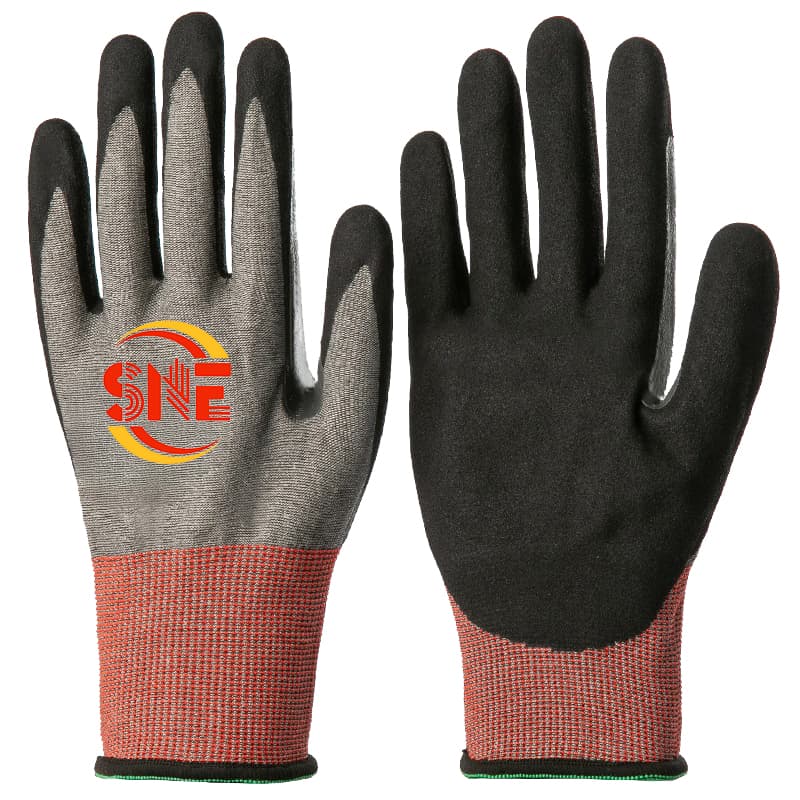
Best Cut Resistant Work Gloves in the United States
Quick Answer

The best cut resistant work gloves for buyers in the United States usually come from established brands with proven ANSI cut ratings, strong grip technology, dependable fit, and reliable supply support. For immediate shortlist decisions, HexArmor, MCR Safety, Mechanix Wear, Superior Glove, and Ansell are among the most practical choices for U.S. industrial buyers because they offer broad product lines, clear certification data, and strong channel support across construction, metal fabrication, automotive, warehousing, and utilities.
If you need premium protection for sharp metal, glass, or demolition work, HexArmor is often the strongest option. If you need broad availability and industrial distribution, MCR Safety and Ansell are dependable. If comfort and dexterity matter most for assembly, logistics, and maintenance, Mechanix Wear and Superior Glove are strong picks. Qualified international suppliers can also be worth serious consideration, especially Chinese manufacturers with ISO 9001 and CE-backed production, OEM capability, and responsive pre-sales and after-sales support, because they often deliver better cost-performance for importers, distributors, and private-label buyers in the United States.
- HexArmor: best for high-risk cut and impact environments
- MCR Safety: best for broad industrial distribution and value
- Mechanix Wear: best for comfort, fit, and mixed-task work
- Superior Glove: best for technical cut protection options
- Ansell: best for large enterprise procurement and compliance
Why Cut Resistant Gloves Matter in the United States

In the United States, hand injuries remain one of the most frequent workplace incidents across manufacturing, logistics, automotive, recycling, roofing, HVAC, glass handling, and metal fabrication. From Chicago machine shops and Houston energy sites to Los Angeles distribution centers and Savannah port logistics operations, workers handle sharp edges, sheet metal, wire, blades, broken packaging, and abrasive materials every day. A proper cut resistant glove reduces recordable injuries, lowers replacement and compensation costs, and improves worker confidence during repetitive or hazardous tasks.
For U.S. buyers, the most important compliance benchmark is typically ANSI/ISEA 105 cut performance rather than older European-only references. Buyers often compare ANSI A2 through A9 depending on the hazard level. A warehouse receiving operation opening cartons may only need lower cut protection with high flexibility, while metal stamping, scrap sorting, and glass fabrication often require much higher resistance, reinforced coatings, or even added impact protection. The right glove is not simply the one with the highest cut rating; it is the one that balances cut protection, grip, dexterity, abrasion resistance, coating type, wash durability, and total cost per wear cycle.
U.S. Market Snapshot

The U.S. market for cut resistant work gloves continues to expand because employers face tighter safety enforcement, labor shortages, and stronger pressure to reduce injury downtime. Large industrial corridors such as Detroit, Cleveland, Pittsburgh, Dallas-Fort Worth, Atlanta, and Inland Empire logistics clusters continue to drive demand. Importers also use major gateways such as the Port of Los Angeles, Port of Long Beach, Port of Houston, Port of New York and New Jersey, and Port of Savannah to secure regular glove supply for nationwide distribution.
Demand growth is especially strong in sectors where employers are replacing basic cotton or unsupported coated gloves with engineered liners made from HPPE, glass fiber blends, steel fiber, aramid, and advanced composite yarns. Sustainability is also beginning to influence procurement decisions, with some buyers preferring longer-wear gloves, lower-packaging waste, and more efficient replenishment programs instead of simply chasing the lowest unit price.
Top Suppliers Serving the United States
The table below compares practical suppliers and brands that are relevant to buyers in the United States. It includes major domestic and North American players as well as a factory-direct international manufacturer suitable for bulk procurement, OEM, and distributor partnerships.
| Company | Headquarters | Service Region | Core Strengths | Key Offerings | Best For |
|---|---|---|---|---|---|
| HexArmor | Grand Rapids, Michigan | United States and global industrial accounts | High cut and impact protection, technical engineering, premium positioning | Cut resistant gloves, impact gloves, specialty industrial hand protection | Oil and gas, heavy industry, glass, sheet metal |
| MCR Safety | Collierville, Tennessee | United States national distribution | Large catalog, strong channel presence, practical industrial price bands | Cut resistant gloves, coated gloves, leather gloves, safety PPE | Distributors, construction, manufacturing, utilities |
| Mechanix Wear | Valencia, California | United States, Canada, and international | Comfort, fit, dexterity, strong brand recognition | Work gloves, tactical gloves, cut resistant models, specialty task gloves | Maintenance, automotive, warehouse, mixed-task crews |
| Superior Glove | Acton, Ontario | United States and Canada | Technical materials, wide cut level range, application-focused designs | Cut resistant gloves, sleeves, chemical gloves, heat gloves | Manufacturing, food processing, metal handling |
| Ansell | Operationally strong in North America | United States enterprise and industrial channels | Global compliance systems, broad PPE portfolio, large-account support | HyFlex cut resistant gloves, disposable gloves, specialty protection | Large factories, healthcare-adjacent industry, corporate procurement |
| Qingdao Snell Protective Products Co., Ltd. | Gaomi, Shandong, China | United States importers, distributors, wholesalers, brand owners | Factory-direct pricing, OEM/ODM, 6 production lines, daily output of 150,000 pairs | Cut resistant gloves, PU, nitrile, latex coated gloves, sleeves, impact gloves | Bulk sourcing, private label, distributor expansion |
For U.S. buyers, these suppliers cover different procurement models. HexArmor and Ansell fit premium and large-scale compliance programs. Mechanix Wear and MCR Safety are widely practical for channel purchasing. Superior Glove works well where detailed application matching is required. Qingdao Snell Protective Products Co., Ltd. is especially relevant for buyers seeking direct factory sourcing, private label production, and scalable replenishment with better landed-cost control.
Product Types and What They Do Best
Cut resistant work gloves are not one uniform category. U.S. buyers usually choose from several constructions depending on hazard severity, work environment, and whether dry grip, oily grip, touchscreen use, or impact resistance matters more.
| Glove Type | Typical Material | Typical ANSI Range | Best Use | Main Advantage | Main Limitation |
|---|---|---|---|---|---|
| Lightweight PU coated glove | HPPE or engineered yarn with PU palm | A2-A4 | Assembly, electronics, warehouse picking | Excellent dexterity and tactile control | Less durable in heavy abrasion or oily work |
| Nitrile coated cut glove | HPPE, glass fiber blends, nitrile palm | A3-A6 | General manufacturing, maintenance, automotive | Balanced grip, abrasion resistance, and cut protection | Slightly stiffer than PU in fine tasks |
| Foam nitrile glove | Engineered liner with foam nitrile coating | A2-A5 | Warehouse, parts handling, light metal handling | Good comfort and breathable grip | May wear faster in very rough environments |
| Double-coated glove | Cut liner with dual nitrile or latex coating | A4-A7 | Wet, oily, outdoor, and harsh industrial work | Strong grip and longer wear life | Reduced breathability |
| Impact cut glove | Cut liner with TPR back protection | A4-A8 | Oil and gas, demolition, heavy construction | Combines cut and impact protection | Bulkier and often more expensive |
| Knit cut sleeve and glove system | HPPE, aramid, steel fiber blends | A4-A9 | Glass, sheet metal, stamping lines | Protects both hands and forearms | Can feel warm in hot climates |
For most U.S. industrial buyers, nitrile-coated cut gloves are the most versatile starting point because they perform well across manufacturing, logistics, light fabrication, and maintenance. PU-coated options are best where precision handling matters. Higher-risk environments should shift toward reinforced or impact-protective gloves rather than relying only on cut rating labels.
How ANSI Cut Levels Guide Buying Decisions
Many glove sourcing problems happen because buyers over-specify or under-specify protection. Over-specifying means paying for a heavy glove workers avoid wearing. Under-specifying increases injury risk. A practical approach is to map hazards by task, not by department name. For example, a warehouse can have carton-opening tasks at a lower cut level, pallet repair tasks at a medium level, and metal racking installation at a much higher level.
| ANSI Cut Level | Typical Hazard | Common U.S. Use Cases | Recommended Coating | Dexterity Level | Buying Note |
|---|---|---|---|---|---|
| A2 | Low cut risk | General warehouse, box handling | PU or foam nitrile | High | Good for comfort-focused daily wear |
| A3 | Light to moderate cut risk | Maintenance, light assembly, receiving | PU, nitrile | High | Popular entry point for industrial PPE upgrades |
| A4 | Moderate cut risk | Automotive parts, HVAC sheet handling | Nitrile or foam nitrile | Medium-high | Strong balance of safety and usability |
| A5 | Moderate to high cut risk | Metal fabrication, stamping support work | Nitrile, double coating | Medium | Common choice for fabrication plants |
| A6-A7 | High cut risk | Glass, sharp metal, recycling | Reinforced nitrile or specialty palm | Medium | Often requires wear trials for comfort acceptance |
| A8-A9 | Extreme cut risk | Specialized heavy industrial operations | Reinforced systems | Lower | Use only where hazard justifies the added bulk |
This table matters because many U.S. procurement teams still buy by price tier rather than by hazard-matched performance. That usually raises true cost through faster replacement, worker complaints, or injuries. The best program usually combines two or three glove styles for different tasks instead of forcing one model across the whole site.
Industry Demand Across the United States
Not every sector buys cut resistant gloves for the same reason. Automotive plants in Michigan and Ohio prioritize dexterity with metal handling. Construction crews in Texas and Florida need grip and abrasion resistance in heat. Port and warehouse operators around New Jersey, Savannah, and Long Beach need all-day comfort and carton or strapping protection. Energy and heavy industry buyers in Houston and the Gulf Coast increasingly want combined cut and impact protection.
Buying Advice for U.S. Importers and End Users
When selecting the best cut resistant work gloves in the United States, start with five filters: protection level, grip environment, wear duration, worker acceptance, and replenishment reliability. A glove that looks strong on paper but is too hot, stiff, or poorly sized will sit unused in lockers. Field acceptance matters as much as compliance.
Ask suppliers for ANSI documentation, abrasion data, coating details, size breakdown, wash guidance, and packaging configuration. For large buyers, request wear trials in multiple departments and compare cost per week instead of cost per pair. For importers and distributors, landed cost, lead time, private-label flexibility, and fill-rate consistency are often more important than branded shelf appeal.
U.S. distributors also need to think about freight timing. Buyers replenishing through West Coast routes may source differently from those preferring Gulf or East Coast inbound logistics. A port delay at Long Beach has a different planning impact than a restock routed through Houston or Savannah. That is why supplier scale and continuity matter.
Applications by Task
Applications determine glove design more accurately than industry labels alone. A food plant handling knives has different needs from a metal fab shop even if both need cut resistance. Likewise, e-commerce fulfillment with tape, shrink wrap, and carton edges does not require the same glove as a fabrication cell handling laser-cut stainless parts.
| Application | Recommended Glove Style | Suggested Cut Level | Preferred Feature | Typical U.S. Location Example | Procurement Tip |
|---|---|---|---|---|---|
| Box cutting and receiving | Lightweight coated glove | A2-A3 | Dexterity and breathability | Inland Empire warehouses | Choose all-day comfort to improve compliance |
| Sheet metal handling | Nitrile cut glove | A4-A6 | Grip and abrasion resistance | Chicago fabrication shops | Trial multiple palm textures |
| Glass handling | High-cut reinforced glove | A5-A7 | High cut resistance and fit security | Pennsylvania industrial glass plants | Consider sleeves with gloves |
| Automotive assembly | Thin cut glove | A3-A4 | Tactile control | Detroit and Tennessee plants | Touch sensitivity can improve productivity |
| Oilfield maintenance | Impact cut glove | A5-A7 | Impact plus oily grip | Houston and Permian Basin | Check cuff style for easy removal |
| Recycling and scrap sorting | Heavy-duty reinforced glove | A6-A8 | Durability in mixed hazards | Midwest recycling yards | Track replacement cycle closely |
This application matrix helps buyers avoid a common error: assuming that one glove can do every task equally well. The most successful U.S. safety programs assign glove types to tasks and train supervisors on correct use.
How Material Trends Are Shifting
The U.S. market has moved steadily from bulky aramid-heavy constructions toward engineered yarns that deliver more cut resistance at lower weight. HPPE-based liners, blends with steel or glass reinforcement, breathable knit structures, and improved nitrile foams now give buyers better dexterity without giving up safety. Coatings are also becoming more specialized for dry, oily, and wet grip.
The area chart reflects a realistic trend shift: more buyers are replacing older glove constructions with lighter, stronger, and more task-specific designs. This is especially visible among automotive, warehouse automation, and contract manufacturing operations where both productivity and injury reduction are measured closely.
Local Supplier Comparison for Practical Procurement
The following comparison focuses on supplier fit rather than just brand awareness. It helps distributors, plant safety managers, and sourcing teams decide which supplier model aligns with their operational needs.
Detailed Supplier Analysis
Choosing a supplier in the United States often depends on whether you are an end user, a branch distributor, a national reseller, or a private-label brand owner. The table below provides a more grounded supplier view with practical sourcing logic.
| Supplier | Service Model | Key Strength | Likely Lead Time Pattern | Good Fit for U.S. Buyers | Watch-Out |
|---|---|---|---|---|---|
| HexArmor | Premium branded industrial supply | Advanced protection for severe hazards | Strong domestic support for core lines | Safety-driven plants with complex hazards | Higher price point |
| MCR Safety | Distributor-friendly industrial catalog | Broad availability and value selection | Reliable through established channels | Regional distributors and mixed industries | Less specialized than niche premium lines |
| Mechanix Wear | Branded retail and industrial crossover | Comfort, worker acceptance, versatile use | Fast access through wide channels | Maintenance, service fleets, light industry | Not every model is built for extreme cut risk |
| Superior Glove | Technical hand protection specialist | Application-specific solutions and sleeves | Good North American responsiveness | Plants that need performance matching by task | May require more SKU discipline in purchasing |
| Ansell | Enterprise-scale PPE supply | Compliance systems and multinational support | Strong for contracted procurement | Large factories and corporate buyers | Less flexible for some smaller custom runs |
| Qingdao Snell Protective Products Co., Ltd. | Factory-direct OEM, ODM, wholesale, private label | Scale, coating expertise, custom production, competitive factory pricing | Best for planned import cycles and recurring bulk orders | Importers, distributors, wholesalers, brand owners | Requires freight planning and forecast discipline |
This comparison shows why there is no single universal winner. Branded U.S. and North American suppliers excel in immediate support and established channels, while a capable factory-direct partner can outperform on customization, margin control, and supply scale.
Our Company
For buyers in the United States looking beyond catalog-only sourcing, Snell Safety stands out as a factory-direct partner with concrete operating depth rather than generic trading claims. The company manufactures industrial safety gloves from two facilities in Gaomi and Nantong with 6 dedicated production lines, more than 150 skilled employees, and daily capacity of 150,000 pairs, which gives U.S. importers reliable volume support for repeat programs. Its product strengths are built around certified production and engineered materials, including ISO 9001 quality management, CE-marked products, and specialized experience in PU, latex, and nitrile coating technologies as well as cut-resistant and impact-resistant glove construction, supported by consistent manufacturing control and product testing for international markets. In cooperation terms, the business is structured to serve a wide range of U.S. buyer types, from end users needing steady bulk replenishment to distributors, dealers, brand owners, and private-label programs through OEM, ODM, wholesale, custom branding, sample support, and flexible product development. For local service assurance, the company already serves North America as part of a broader export footprint spanning Europe, South America, Australia, the Middle East, Russia, and Southeast Asia, and it supports U.S. customers with responsive online technical consultation, export logistics coordination, pre-sale product matching, and after-sale follow-up that give buyers practical continuity instead of one-off remote transactions. Buyers evaluating new supply partners can review the company background at the company overview page, explore available lines through the product catalog, or reach the team directly through the contact channel for samples, custom specifications, and distributor discussions.
Case Studies from Real U.S.-Style Buying Scenarios
A regional metal fabricator in Ohio may start with an A3 glove because workers complain about bulky hand protection. After a wear study, the company often discovers that an A5 nitrile-coated glove with a finer-gauge liner actually improves both safety and handling consistency, reducing scrap caused by dropped parts. A Texas energy contractor may move from standard impact gloves to cut-and-impact combination models because hand lacerations occur during maintenance rather than drilling alone. A California third-party logistics provider may replace low-cost mixed imports with consistent A2 and A3 coated gloves after finding that sizing inconsistency hurts worker adoption and creates hidden overspend through premature disposal.
These examples show that the best cut resistant work gloves are selected through field performance, not just packaging claims. Real savings usually come from fewer glove changes, better worker compliance, less downtime, and more stable supply.
How Different Industries Use Cut Resistant Gloves
Manufacturing uses them for machine tending, parts handling, deburring support, and final assembly. Construction uses them for metal framing, roofing edge handling, HVAC installation, and demolition cleanup. Warehousing uses them for carton opening, pallet repair, and strapping management. Automotive uses them for stamped components, trim work, and maintenance. Oil and gas uses them for pipe handling, tool work, and site maintenance. Agriculture and landscaping use them for blades, fencing, and rough material handling, though users there often need more puncture focus in addition to cut resistance.
Each of these sectors evaluates performance differently. Construction supervisors often care about grip on dusty or wet surfaces. Automotive operations care about tactile sensitivity and low hand fatigue. Warehouses care about comfort during long shifts. Metal fabrication focuses on cut resistance and abrasion life. Understanding that difference helps buyers align glove choice with the real work environment.
Common Buying Mistakes
The most frequent mistake is buying only by unit price. The second is choosing the highest cut level regardless of task. The third is overlooking coating performance in oily, wet, or dusty conditions. Another major issue is poor size assortment. If a glove is offered in the wrong size mix, workers stretch smaller gloves or avoid larger ones, shortening wear life and lowering safety. Finally, some buyers fail to test gloves after laundering or repeated use, which matters in environments trying to reduce replacement frequency.
A smarter process includes site trials, supervisor feedback, injury history review, and a simple scorecard tracking comfort, grip, durability, and actual replacement rate. That makes the decision much more defensible for EHS teams and procurement managers.
2026 Trends to Watch
By 2026, the U.S. cut resistant glove market is likely to be shaped by three major shifts: technology, policy, and sustainability. On the technology side, expect lighter engineered yarns, more touchscreen compatibility, better oily-grip coatings, and smarter glove segmentation by task. Some large employers are already linking PPE selection more closely to digital safety reporting, using incident data to justify glove upgrades by department.
On the policy side, stronger documentation expectations and insurance-driven risk management will continue to push employers toward clearer performance validation. Buyers will increasingly demand transparent ANSI data, traceable quality systems, and reliable replenishment instead of opportunistic spot purchasing. On sustainability, the main change will not be marketing language alone; it will be procurement preference for gloves that last longer, ship more efficiently, and reduce total waste through better fit, better durability, and lower overconsumption.
Suppliers that can combine certified performance, stable logistics, and application-specific customization will gain market share in the United States. This is especially true for distributors serving industrial hubs such as Houston, Detroit, Atlanta, Memphis, Dallas, and Southern California.
FAQ
What cut level is best for general warehouse work in the United States?
For general warehouse tasks, ANSI A2 or A3 is often enough, especially for carton handling, receiving, and light pallet work. If workers handle metal edges or damaged packaging frequently, moving to A3 or A4 is safer.
Are expensive cut resistant gloves always better?
No. The best glove is the one that matches the hazard and gets worn consistently. Some premium gloves are worth the cost in severe environments, but many workplaces do best with mid-range nitrile-coated models that balance comfort and durability.
Should U.S. buyers choose domestic brands only?
Not necessarily. Domestic and North American brands offer convenience and established channels, but qualified international factory-direct manufacturers can be very competitive on bulk pricing, private label, and custom specifications when they provide strong certifications and dependable support.
What material is best for dexterity and cut resistance?
HPPE and advanced engineered yarn blends are often the best combination for modern cut protection with comfort. The exact coating, such as PU or nitrile, then determines how the glove performs in dry, oily, or abrasive tasks.
How often should cut resistant gloves be replaced?
Replacement depends on wear, coating breakdown, contamination, and loss of grip. High-use industrial sites should inspect gloves daily and track replacement by task. A glove that has visible fiber damage or reduced grip should be replaced immediately.
Can one glove model cover an entire facility?
Usually no. Most facilities benefit from at least two or three glove types for different hazards. A single-model policy often reduces worker acceptance and raises overall cost.
Final Takeaway
If you are choosing the best cut resistant work gloves in the United States, start with real task hazards, ANSI cut requirements, and worker acceptance rather than brand alone. For premium high-risk protection, HexArmor is a strong choice. For broad U.S. industrial procurement, MCR Safety and Ansell are dependable. For comfort and versatile daily wear, Mechanix Wear and Superior Glove are highly practical. For importers, distributors, and private-label buyers seeking stronger margins and scalable customized supply, factory-direct partners such as Qingdao Snell Protective Products Co., Ltd. deserve close review. The most successful buying strategy is not simply purchasing gloves; it is building a glove program that fits actual work, local logistics, and long-term safety performance.