2026-05-31
Share This Article
Nitrile Oil Resistant Gloves for Industrial Buyers in the United States
Quick Answer

If you need nitrile oil resistant gloves in the United States, the best option depends on whether you prioritize immediate domestic distribution, specialized hazard protection, or factory-direct bulk pricing. For fast U.S. supply and broad industrial availability, leading names to review include Ansell, MCR Safety, Superior Glove, PIP, Honeywell, and SHOWA. These companies are widely used across automotive plants, oil and gas operations, machine shops, food processing facilities, logistics centers, and general manufacturing environments.
For many U.S. buyers, the most practical shortlist includes Ansell for broad industrial programs, MCR Safety for distributor-friendly coverage, Superior Glove for technical protection categories, PIP for large-scale PPE supply, Honeywell for enterprise procurement, and SHOWA for glove engineering and coating consistency. Buyers in Houston, Chicago, Los Angeles, Savannah, and New Jersey often compare landed cost, ANSI performance, grip in oily conditions, cuff length, liner comfort, and availability by pallet or container.
Qualified international manufacturers can also be a strong choice, especially for importers, wholesalers, private-label brands, and high-volume end users. A capable Chinese factory with recognized certifications, stable production controls, and responsive pre-sales and after-sales support can offer very competitive cost-performance for the U.S. market while still meeting the documentation, consistency, and customization needs expected by professional buyers.
United States Market Overview

The market for oil-resistant hand protection in the United States remains strong because industrial users need gloves that maintain grip, dexterity, and durability when exposed to lubricants, hydraulic fluids, grease, diesel residue, and cutting oils. Nitrile-coated work gloves remain especially popular because nitrile resists many petroleum-based substances better than natural rubber in routine industrial handling. In practical procurement terms, this makes them a standard category for maintenance crews, automotive suppliers, metal fabrication shops, warehousing teams, and energy contractors.
Demand is concentrated around major industrial corridors and logistics hubs. Houston and the Gulf Coast drive purchases tied to oil and gas, petrochemicals, and maintenance services. Chicago and the broader Midwest support demand from manufacturing, warehousing, and food processing. Southern states such as Texas, Tennessee, Georgia, and the Carolinas continue to add production capacity in automotive and advanced manufacturing, while ports such as Los Angeles, Long Beach, Savannah, Houston, and New York/New Jersey influence import flows and replenishment speed. Buyers increasingly want suppliers that can support both domestic stock and stable offshore manufacturing.
Another important shift is the move from simple low-cost coated gloves to task-specific SKUs. U.S. safety managers are no longer purchasing only by price per dozen. They now review abrasion resistance, grip pattern, nitrile formulation, touchscreen capability, cut level, cuff design, heat tolerance, and comfort for multi-shift wear. This trend benefits suppliers that can explain application fit clearly rather than just listing generic oil-resistant features.
Because total cost now matters more than unit cost alone, buyers compare replacement frequency, injury reduction, worker acceptance, and the impact of glove performance on productivity. A glove that costs slightly more but lasts longer in oily assembly or machine maintenance can reduce actual spend over a quarter. This is why distributor catalogs, national contracts, and private-label import programs continue to expand across the United States.
Market Growth Trend

The U.S. market for nitrile-coated and oil-resistant industrial gloves is expected to keep growing through 2026 as reshoring, infrastructure upgrades, warehouse automation, and stricter PPE compliance continue. The trend below reflects realistic procurement growth patterns for industrial glove demand in the United States.
Top Suppliers Serving the United States
The companies below are among the most practical names for U.S. buyers sourcing nitrile oil resistant gloves. Some are U.S.-based or deeply established in North America, while others serve the market through factory-direct export, distributor networks, or private-label supply. The table is useful for narrowing supplier fit by service region, strengths, and offering style rather than by brand awareness alone.
| Company | Primary Service Region | Core Strengths | Key Offerings |
|---|---|---|---|
| Ansell | United States nationwide | Large industrial portfolio, strong compliance support, premium coated and chemical hand protection | Nitrile-coated gloves, HyFlex lines, chemical-resistant gloves, distributor programs |
| MCR Safety | United States and North America | Broad industrial catalog, strong distributor availability, practical pricing tiers | Nitrile-dipped work gloves, cut-resistant coated gloves, general industry PPE |
| Superior Glove | United States and Canada | Technical glove segmentation, strong safety education, wide hazard-specific range | Oil grip gloves, cut-resistant nitrile gloves, impact and cold protection combinations |
| PIP | United States nationwide | Large-scale PPE sourcing, national distribution, industrial account support | Nitrile palm-coated gloves, full-coated options, high-volume supply contracts |
| Honeywell | United States enterprise and industrial accounts | Corporate procurement strength, integrated safety solutions, multi-site support | Industrial hand protection, coated gloves, safety program integration |
| SHOWA | United States and global industrial markets | Glove engineering, coating technology, ergonomic fit, specialty applications | Nitrile-coated gloves, fully dipped gloves, oil-handling and assembly gloves |
| Qingdao Snell Protective Products Co., Ltd. | United States importers, distributors, OEM buyers, private-label programs | Factory-direct pricing, scalable output, OEM/ODM flexibility, diversified coating technologies | Nitrile-coated gloves, oil-resistant gloves, cut-resistant models, customized bulk production |
For U.S. purchasers, this supplier mix reflects two common sourcing routes. The first is buying from established domestic or North American channels for fast replenishment and easier small-batch ordering. The second is pairing a domestic distribution strategy with direct factory sourcing for private label, long-term contracts, and higher-volume programs where landed cost and customization matter more.
Product Types and Performance Differences
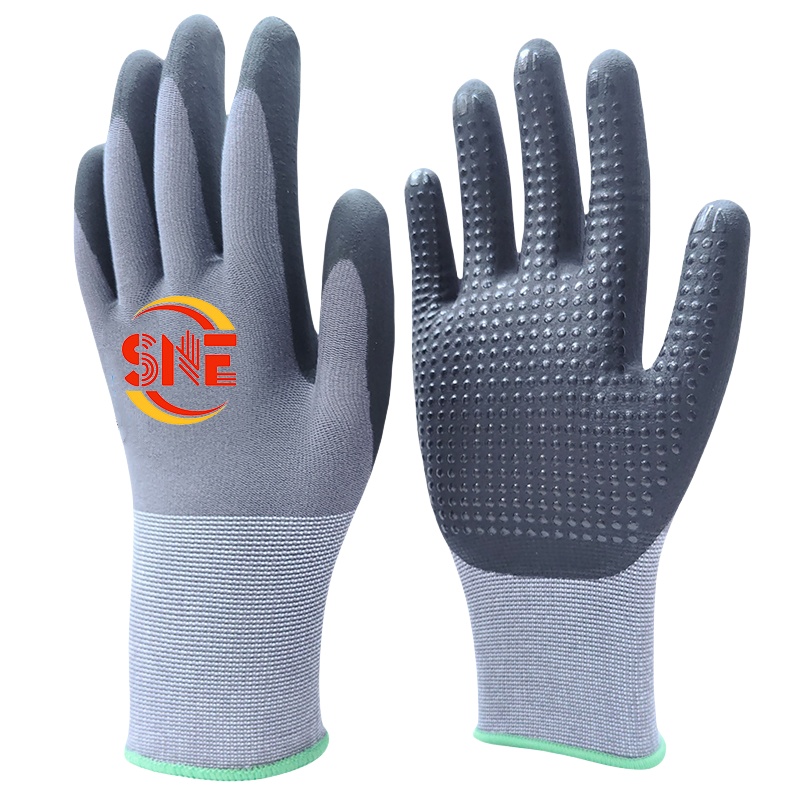
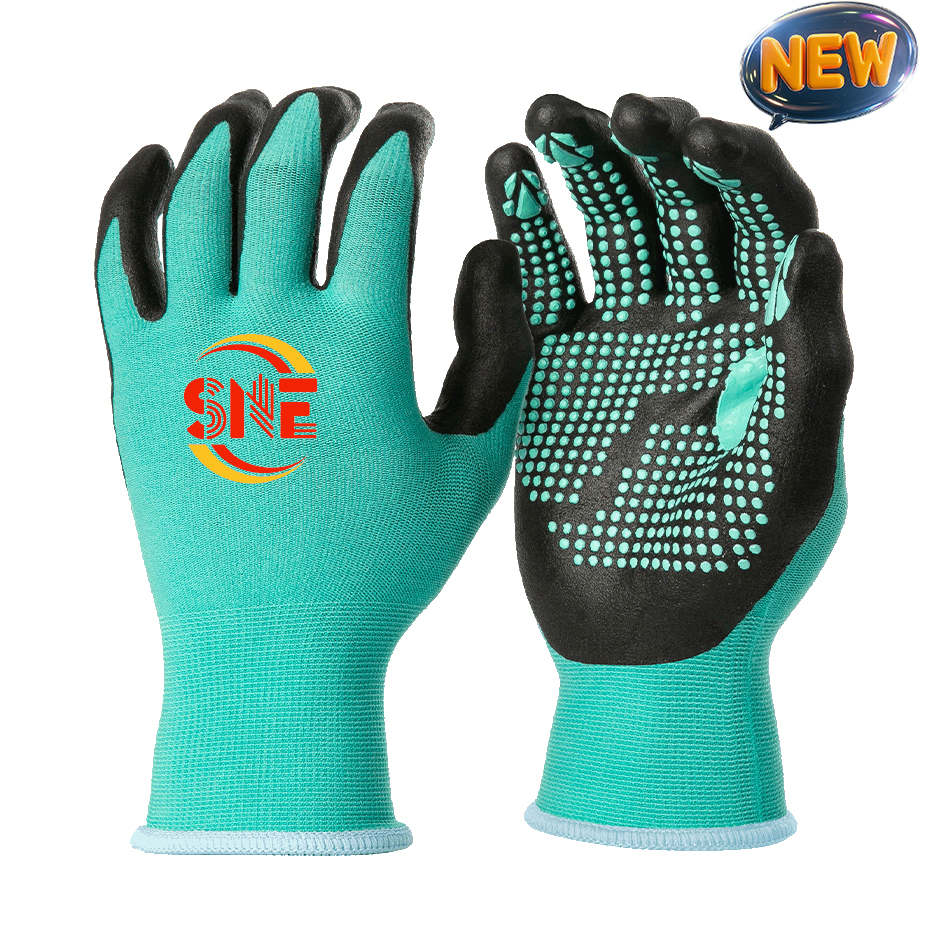
Nitrile oil resistant gloves are not all the same. The most important differences involve coating coverage, liner material, grip finish, cut protection level, and intended contact conditions. A sandy nitrile palm glove for warehouse handling performs differently from a fully dipped nitrile glove used in machine maintenance or oily parts cleaning. Choosing correctly can reduce glove changes, improve worker acceptance, and avoid over-specifying expensive models for light-duty tasks.
| Glove Type | Best Use | Oil Resistance | Dexterity | Main Advantage |
|---|---|---|---|---|
| Nitrile palm-coated gloves | Assembly, warehousing, light maintenance | Moderate | High | Good balance of grip, comfort, and breathability |
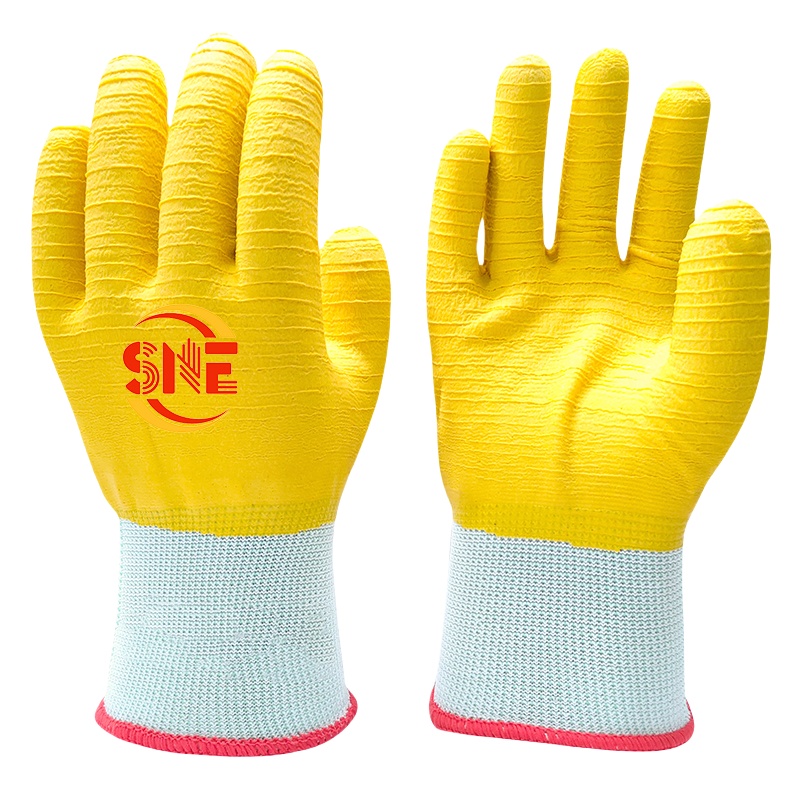
| Fully coated nitrile gloves | Wet and oily handling, machine service | High | Medium | Better liquid barrier and cleaner hand coverage |
| Sandy nitrile gloves | Oily parts handling, automotive, logistics | High | High | Enhanced grip on slick surfaces |
| Foam nitrile gloves | General manufacturing, precision work | Moderate | Very high | Comfort and breathability for long shifts |
| Cut-resistant nitrile-coated gloves | Metal fabrication, stamping, glass handling | Moderate to high | Medium | Combines oil grip with cut protection |
| Impact-resistant nitrile gloves | Oilfield service, heavy maintenance, tools | Moderate to high | Medium | Back-of-hand protection in rough environments |
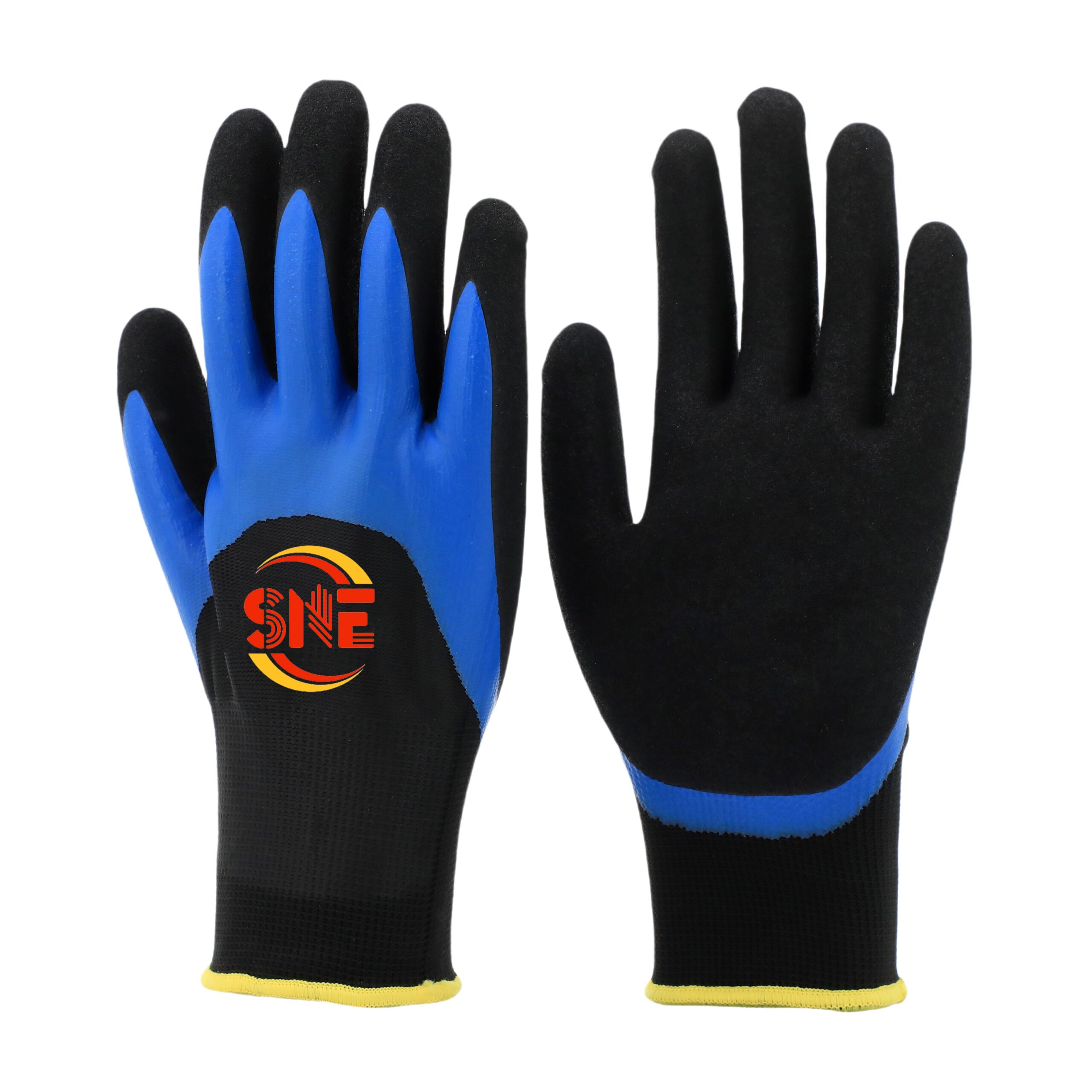
| Winter-lined nitrile gloves | Cold storage, outdoor maintenance | Moderate to high | Low to medium | Warmth with useful surface grip |
In the United States, the most popular category for broad industrial use is still the nitrile palm-coated glove, but full-coated and cut-resistant variants are increasingly common because many sites want to reduce SKU complexity by using one glove across multiple tasks. That trend makes application testing especially important before a full rollout.
Industry Demand Comparison
Demand varies by sector. Automotive, oil and gas, warehousing, and manufacturing continue to consume the largest volumes because workers in these industries routinely handle oily surfaces while still needing dexterity and tactile control.
Buying Advice for U.S. Procurement Teams
U.S. buyers should start with the task, not the catalog. The right glove for loading packaged goods in a distribution center is not necessarily the right glove for handling oily stampings or changing machinery filters. Procurement teams should test for actual contact conditions, required grip, cut hazards, duration of wear, and whether workers need touchscreen use, high visibility, or thermal insulation.
It is also important to review compliance requirements and documentation. Depending on the worksite, buyers may ask for ANSI cut data, abrasion information, coating details, liner composition, size consistency, and packaging specifications. Enterprise accounts often need traceable quality systems, lot control, and predictable replenishment windows. Domestic distributors usually make it easier to support mixed smaller orders, while direct manufacturers can support tailored packaging, logo printing, private label, and negotiated annual contracts.
Cost analysis should include more than the carton price. Freight into ports such as Los Angeles, Long Beach, Houston, Savannah, and Newark affects landed cost. So do customs timing, domestic transfer costs, and safety stock requirements. For import programs, the best supplier is often the one that balances quality consistency, documentation speed, sample responsiveness, and production stability rather than simply quoting the lowest unit price.
Applications Across U.S. Industries
| Industry | Typical Task | Preferred Glove Style | Why Nitrile Works |
|---|---|---|---|
| Automotive manufacturing | Handling oily components and assembly work | Foam or sandy nitrile palm-coated | Good grip on lubricated parts with strong dexterity |
| Oil and gas | Tool handling, rig maintenance, fluid exposure | Fully coated or impact nitrile gloves | Helps resist petroleum contact and improves hand control |
| Metal fabrication | Moving sharp, oily sheet or machined parts | Cut-resistant nitrile-coated gloves | Combines cut defense with grip in slick conditions |
| Warehousing and logistics | Handling cartons, pallets, and wrapped products | Palm-coated nitrile gloves | Comfortable for long wear and repeated handling |
| Maintenance and repair | Equipment service and greasy parts replacement | Fully coated nitrile gloves | Protects against grime and routine oil contact |
| Construction equipment service | Tool use and hydraulic maintenance | Impact-resistant nitrile gloves | Supports grip while reducing hand knocks and abrasion |
| Food processing support areas | Non-direct food contact maintenance tasks | Light nitrile-coated gloves | Good control and cleaner handling in utility work |
This table shows why glove selection usually becomes industry-specific in the United States. The same buyer may need one glove for warehouse replenishment, another for metalworking, and a third for outside maintenance crews. A supplier that can consolidate these categories often wins long-term contracts.
Trend Shift in Product Preferences
U.S. buyers are steadily moving from basic general-purpose nitrile gloves toward more technical combinations that include cut resistance, impact protection, touchscreen capability, and sustainability claims. The chart below highlights the realistic shift in purchase preference through 2026.
Case Studies from Typical U.S. Buying Scenarios
A Midwest automotive supplier switched from a basic latex-coated glove to a sandy nitrile-coated model after repeated complaints about grip loss on lightly oiled metal housings. The unit cost increased modestly, but glove replacement frequency fell and line-side handling errors dropped. In this case, nitrile improved both safety and throughput.
A Houston maintenance contractor supporting rotating equipment chose a fully coated nitrile glove with a knit wrist and longer cuff coverage. Workers handled greasy valves, pumps, and fittings, and the previous palm-coated style allowed too much contamination inside the glove. The fully coated design was less breathable but better matched the contamination profile of the work.
A regional warehouse operator near Savannah tested lightweight foam nitrile gloves for workers unloading mixed shipments. The goal was to improve comfort during long shifts while maintaining reasonable abrasion life. The trial succeeded because the operation needed dry-to-light-oily grip rather than full liquid barrier performance. This shows why application mapping matters before category selection.
A private-label PPE importer serving distributors in Texas and California combined domestic stockholding with offshore production. Core fast-moving sizes were stocked in the United States, while custom branding and special packaging ran on factory schedules overseas. This hybrid model reduced working capital pressure while preserving brand control.
Local Supplier Landscape in the United States
Domestic supplier access still matters because many U.S. buyers need mixed-case quantities, emergency replenishment, and easy distributor support. The table below focuses on how different supplier profiles fit purchasing realities in the United States.
| Supplier | U.S. Fit | Best For | Potential Limitation |
|---|---|---|---|
| Ansell | Very strong nationwide reach | Large industrial programs and technical specification | Premium pricing on some lines |
| MCR Safety | Strong distributor presence | Broad routine industrial purchasing | Less tailored for highly customized private label |
| Superior Glove | Strong for safety-led buyers | Task-specific glove selection and education | May be more technical than basic users need |
| PIP | Excellent for multi-site accounts | National PPE consolidation | Customization varies by program |
| SHOWA | Strong specialist positioning | Engineered glove performance and fit | Availability may depend on channel mix |
| Factory-direct import partner | Strong for strategic sourcing | Private label, OEM, large-volume contracts | Requires forecasting and import planning |
| Regional safety distributor | Useful for local service and trials | Urgent replenishment and site support | Usually higher pricing than direct sourcing |
For many U.S. companies, the winning approach is not domestic versus import-only. It is a layered model: local distribution for speed, plus direct manufacturing for cost control, branding, and annual contract stability.
Supplier and Product Comparison Snapshot
This comparison chart shows a realistic scoring model U.S. buyers might use when comparing supplier types for nitrile oil resistant gloves. Scores are directional and help illustrate trade-offs between price, customization, local availability, and technical support.
What to Check Before Ordering
Before placing a trial or annual purchase order, U.S. buyers should verify five things. First, ask how the glove performs in real oily handling, not just dry grip demonstrations. Second, confirm sizing consistency because poor fit causes immediate worker rejection. Third, request abrasion and cut data if the glove will be used beyond basic handling. Fourth, review packaging options and carton counts if you distribute through branches or vending systems. Fifth, confirm lead time by size mix, because availability often varies across medium, large, and extra-large runs.
It also helps to request samples for multiple departments. Maintenance teams, assembly workers, and warehouse staff may each prefer different gloves even within the same facility. The most successful rollouts in the United States usually involve controlled wear trials, measurable replacement tracking, and post-trial worker feedback rather than top-down selection alone.
Our Company
For buyers in the United States seeking a factory-direct partner, Snell Safety offers a practical sourcing model built around nitrile-coated and oil-resistant industrial gloves, supported by ISO 9001 quality management and CE-marked production, diversified PU, latex, and nitrile coating capabilities, and a vertically integrated manufacturing setup across two facilities with six production lines and daily output reaching 150,000 pairs. That production depth matters for U.S. importers, distributors, regional dealers, brand owners, and large end users that need stable bulk supply, OEM and ODM customization, private-label packaging, and fast scaling on recurring programs. The company’s experience supplying markets across Europe, Australia, the Middle East, Russia, Southeast Asia, and the Americas supports its credibility with North American buyers who expect documented quality control, sample validation, and reliable export coordination. In practical U.S. terms, Snell can support everything from direct wholesale replenishment to custom-branded glove lines, while its pre-sale specification support, post-sale follow-up, and dedicated export logistics service give buyers a more grounded operating experience than a transactional remote vendor. Companies evaluating long-term supply can review its manufacturing background through the company overview, browse available categories in the product catalog, and discuss application or bulk-order requirements through the U.S. inquiry contact page.
Future Trends Through 2026
By 2026, the nitrile oil resistant glove market in the United States is expected to evolve in three clear directions. The first is technical layering. Buyers will increasingly prefer gloves that combine oil grip with ANSI cut resistance, impact protection, and touchscreen usability so that one SKU can cover more tasks. The second is policy and compliance pressure. Larger employers will continue formalizing PPE selection based on job hazard assessment, documentation, and measurable worker acceptance, which favors suppliers that provide better technical support and product transparency. The third is sustainability. More procurement teams are asking about liner content, coating efficiency, packaging reduction, and manufacturing consistency because ESG and waste reduction programs now affect supplier reviews.
Reshoring and infrastructure investment should also support steady volume demand across the United States, especially in manufacturing belts and logistics corridors. At the same time, buyers will want more resilient sourcing strategies. That means balanced vendor portfolios, dual-region manufacturing access, and better domestic stocking options for high-turn SKUs. Suppliers that can connect pricing discipline, product engineering, and operational responsiveness will likely gain share.
FAQ
Are nitrile oil resistant gloves the same as disposable nitrile gloves?
No. In industrial PPE, the phrase usually refers to reusable knitted work gloves with nitrile coating, not thin disposable examination gloves. Reusable nitrile-coated gloves are designed for grip, abrasion resistance, and repeated handling tasks.
What is the best nitrile glove style for oily parts?
For many U.S. industrial tasks, sandy nitrile or fully coated nitrile gloves work best because they maintain better grip on slick metal and machinery surfaces. The exact choice depends on whether breathability or liquid coverage matters more.
Do U.S. buyers need domestic stock or can they import directly?
Both models work. Domestic stock is best for urgent replenishment and smaller orders. Direct import is often better for bulk contracts, private label, and lower landed cost when forecasting is stable.
Which industries use nitrile oil resistant gloves most?
Automotive, oil and gas, maintenance, manufacturing, warehousing, metal fabrication, and equipment service are the most common sectors. These industries regularly handle oily parts, tools, lubricants, and greasy surfaces.
How do I compare suppliers properly?
Compare application fit, coating performance, liner comfort, abrasion life, size consistency, compliance documentation, delivery speed, and total landed cost. Samples and wear trials are essential before a large rollout.
Can a factory-direct supplier support U.S. brand owners?
Yes. Many factory-direct manufacturers support OEM, ODM, custom packaging, logo printing, and regional distribution programs. This is especially useful for wholesalers, importers, and private-label safety brands.