2026-09-03
Share This Article
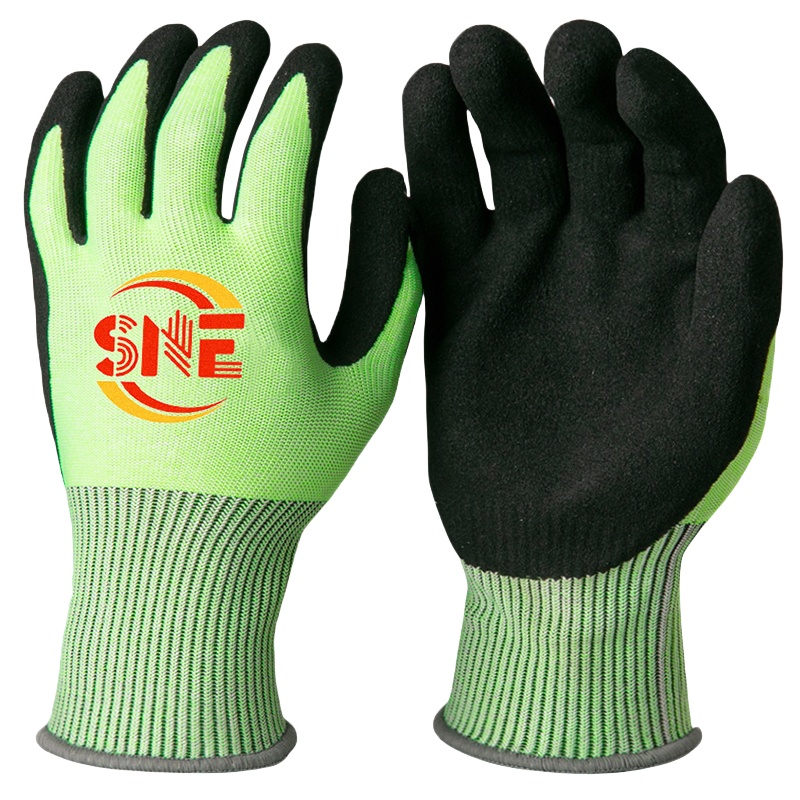
Nitrile Coated Gloves in the United States
Quick Answer

If you are buying nitrile coated gloves in the United States, the most practical choice depends on your work environment, order volume, and compliance requirements. For local and regional sourcing, strong options include Ansell, Honeywell, MCR Safety, PIP, Showa, and Magid because they have established U.S. distribution, broad industrial catalogs, and support for sectors such as construction, warehousing, automotive, manufacturing, and oil and gas. Buyers that need fast replenishment, lower freight risk, and straightforward account management often prefer suppliers with warehouse coverage near major logistics hubs such as Houston, Chicago, Los Angeles, Savannah, and New Jersey. If your priority is private labeling, custom cuff colors, coating formulas, or factory-direct pricing for larger orders, qualified international manufacturers can also be a smart option. In particular, Chinese suppliers with recognized certifications, strong quality systems, and responsive pre-sales and after-sales support can offer a compelling cost-performance advantage for U.S. importers, distributors, and brand owners.
Why Nitrile Coated Gloves Matter in the United States Market

Nitrile coated gloves are a core part of industrial hand protection in the United States because they balance grip, abrasion resistance, oil handling, dexterity, and cost better than many general-purpose glove types. Across U.S. workplaces, employers are under pressure to reduce hand injuries, maintain productivity, and comply with workplace safety rules. Whether the operation is a warehouse outside Atlanta, a fabrication shop in Ohio, a construction site in Texas, or an automotive supplier in Michigan, hand protection buyers increasingly want gloves that are task-specific rather than generic.
Nitrile coatings are especially valuable when workers handle oily parts, metal components, packaging, tools, palletized goods, or machinery. Compared with basic cotton gloves or lightly dipped alternatives, nitrile palm and full-coated models generally provide a stronger grip in mixed dry and light-oil environments. Foam nitrile options improve breathability and comfort, while sandy nitrile finishes are often chosen for better control in slippery settings. This is why U.S. procurement teams often compare not just price per pair, but also glove life, replacement frequency, worker acceptance, and injury reduction.
The market is also shaped by supply chain realism. U.S. buyers want dependable lead times, access to samples, clear testing documentation, and confidence that large repeat orders will match the first shipment. Ports such as Los Angeles, Long Beach, Savannah, Houston, and New York remain important entry points for imported gloves, while domestic warehousing helps shorten delivery times to industrial regions in the Midwest, Southeast, Gulf Coast, and West Coast.
United States Market Overview

The U.S. market for industrial coated gloves remains resilient because demand comes from diverse sectors rather than a single industry. Warehousing and e-commerce fulfillment continue to support large-volume consumption, while infrastructure projects, reshoring in manufacturing, and maintenance activity across utilities and transportation also contribute. Buyers are becoming more analytical: instead of ordering one glove for all tasks, they segment purchasing into assembly gloves, oil-resistant handling gloves, cut-resistant coated gloves, freezer and cold storage gloves, and touchscreen-compatible models.
Another major trend is the move toward total-cost purchasing. A glove that costs slightly more but lasts longer through repetitive handling or rough material contact can reduce annual spend. U.S. safety managers increasingly request wear tests, abrasion data, coating consistency, liner gauge information, and size run accuracy before approving a supplier. This is particularly common among large distributors, integrated supply providers, and private-label brands.
The line chart above illustrates a realistic growth trajectory for the U.S. industrial nitrile coated glove market. The growth pattern reflects expansion in warehousing, logistics automation, light manufacturing, maintenance operations, and stricter safety purchasing. The projected increase into 2026 is also supported by demand for more specialized gloves, including cut-resistant nitrile-coated styles and touchscreen-compatible models used in modern facilities.
Top Suppliers Serving the United States
The supplier landscape in the United States includes multinational brands, domestic distributors with private-label capacity, and factory-direct overseas manufacturers supporting importers and brand owners. The table below gives a practical view of companies that are relevant to U.S. buyers.
| Company | Service Region | Core Strengths | Key Offerings | Best Fit |
|---|---|---|---|---|
| Ansell | Nationwide United States | Strong industrial safety portfolio, broad compliance support, recognized brand | Nitrile dipped gloves, cut-resistant gloves, chemical protection | Large industrial accounts and regulated sectors |
| Honeywell Industrial Safety | Nationwide United States | Established enterprise sales channels, broad PPE integration | General-purpose coated gloves, task-specific hand protection | Multi-site employers and integrated PPE buyers |
| MCR Safety | United States with distributor network | Industrial focus, practical product segmentation, strong distributor reach | Nitrile palm gloves, foam nitrile gloves, cut-resistant coated gloves | Construction, fabrication, utilities, warehouse buyers |
| PIP | United States and North America | Large catalog, private-label capability, broad regional distribution | Coated gloves for assembly, logistics, maintenance, manufacturing | Distributors and high-volume replenishment programs |
| Showa | United States industrial market | Technical glove development, specialty grip and ergonomic performance | Foam nitrile, fully coated nitrile, engineered work gloves | Users prioritizing comfort and task-specific performance |
| Magid | United States with strong Midwest presence | Industrial supply expertise, customization options, account support | Private-label and branded work gloves, coated gloves, cut-resistant options | Regional distributors and industrial end users |
| Qingdao Snell Protective Products Co., Ltd. | United States import market through factory-direct B2B supply | OEM and ODM flexibility, scalable production, coating specialization | Nitrile coated gloves, PU and latex coated gloves, cut-resistant and impact gloves | Importers, wholesalers, private-label brands, regional distributors |
This supplier table is useful because U.S. buyers rarely purchase only on unit cost. They look at delivery reliability, documentation, product range, after-sales support, and the ability to scale from a trial order into a long-term supply agreement. Companies such as Ansell and Honeywell are often selected for enterprise procurement, while buyers that need stronger customization and direct factory economics may compare options like Snell alongside local distribution partners.
Common Product Types
Not all nitrile coated gloves perform the same way. The right style depends on surface conditions, object weight, worker sensitivity to heat and sweat, and whether cut resistance is also required. Understanding these differences helps buyers avoid overpaying for unnecessary features or under-specifying gloves for hazardous tasks.
| Glove Type | Typical Coating Style | Main Advantage | Typical U.S. Use Case | Buyer Note |
|---|---|---|---|---|
| Palm-Coated Nitrile Gloves | Smooth or foam nitrile on palm | Good grip with breathability on the back | Warehousing, general handling, packaging | Popular for balance of cost and comfort |
| Full-Coated Nitrile Gloves | Complete nitrile coverage | Better liquid and dirt resistance | Maintenance, oily parts handling, industrial cleaning | Useful when hands contact fluids regularly |
| Foam Nitrile Gloves | Micro-foam finish | Breathable feel and dexterity | Assembly, logistics, light manufacturing | Often preferred for all-day wear |
| Sandy Nitrile Gloves | Textured sandy grip | Strong grip in oily environments | Metal fabrication, automotive, machinery handling | Higher traction where slip risk is critical |
| Cut-Resistant Nitrile-Coated Gloves | Nitrile over HPPE or engineered liner | Cut protection plus grip | Sheet metal, glass handling, stamping, fabrication | Need to verify cut level and dexterity balance |
| Cold-Condition Nitrile Gloves | Nitrile coating with insulated liner | Grip retention in cold settings | Cold chain, outdoor winter work, freezer operations | Important in northern U.S. climates |
This table matters because many procurement mistakes happen when one glove style is used across too many jobs. Palm-coated foam nitrile gloves may work well in a distribution center, but a full-coated or sandy nitrile model could perform much better in a machine shop or maintenance department. Matching glove type to actual work conditions improves worker acceptance and reduces replacement cycles.
Industry Demand Across the United States
Demand for nitrile coated gloves varies by industry, but several sectors consistently account for the highest volume. Logistics and warehousing use large quantities because workers handle cartons, pallets, scanners, shrink wrap, and racking throughout each shift. Manufacturing and automotive operations need a mix of grip, abrasion resistance, and precision. Construction and utilities use more rugged styles, often combining nitrile coatings with cut-resistant liners.
The bar chart shows how demand tends to concentrate in warehousing, manufacturing, maintenance, and automotive sectors. These industries require durable gloves for repetitive handling tasks, making nitrile-coated products attractive because they can deliver both grip and wear resistance. Oil and gas and agriculture remain important niche segments, especially in Texas, Oklahoma, North Dakota, California, and parts of the Southeast, but buying criteria in those markets often include added chemical, impact, or weather considerations.
Where Nitrile Coated Gloves Are Used
In the United States, coated work gloves are rarely bought as abstract PPE categories. They are purchased for specific tasks. A distribution center in Inland Empire may need thin foam nitrile gloves to support speed and scanner use. A machine shop in Indiana may prioritize abrasion resistance and oil grip. A contractor in Florida may choose a more rugged palm coating that can handle rebar, block, or rough materials.
Common applications include carton handling, assembly lines, part sorting, metal stamping, machine operation, tool handling, preventive maintenance, loading docks, landscaping, municipal work, automotive repair, tire service, drilling support, and general manufacturing. In food-adjacent industrial settings, buyers may also request lower-linting liners, consistent sizing, and traceable packaging.
The reason nitrile remains so common is that it is versatile. It can be tuned through coating thickness, finish, and liner pairing to fit a wide range of tasks. This makes it a favorite for distributors that want to cover multiple verticals without carrying an overly fragmented inventory.
Buying Advice for U.S. Importers and Industrial Users
U.S. buyers should evaluate nitrile coated gloves using a decision framework that goes beyond price. A low unit price can become expensive if gloves tear early, workers reject the fit, or reorders are delayed. The strongest sourcing decisions usually come from combining technical review with trial wear testing on the actual job.
| Buying Factor | What to Check | Why It Matters in the U.S. | Typical Risk if Ignored | Recommended Action |
|---|---|---|---|---|
| Grip Performance | Dry, light oil, wet handling conditions | Directly affects productivity and drop risk | Worker complaints and lower efficiency | Run side-by-side task trials |
| Abrasion Life | Expected wear cycle and coating durability | Impacts replacement cost | Higher annual glove spend | Measure pairs used per worker per month |
| Fit and Sizing | Size consistency from S to XXL | Important for labor acceptance and safety | Loose gloves, fatigue, reduced dexterity | Request size set samples before ordering |
| Compliance and Documentation | Testing data, certifications, quality records | Supports procurement review and liability control | Approval delays or rejected shipments | Collect technical files during quoting |
| Supply Continuity | Lead time, capacity, alternate SKUs | Critical for large U.S. operations | Stockouts and emergency spot buying | Confirm production and warehouse plans |
| Branding and Packaging | Private label, carton marks, barcodes | Important for distributors and retailers | Extra relabeling cost | Align packaging specs before production |
This table helps buyers structure vendor comparisons in a more practical way. Instead of asking only for a quote, procurement teams should request wear-life data, liner specifications, coating type, carton loading details, and sample sets for field evaluation. U.S. distributors especially benefit from confirming barcode placement, private-label artwork support, and mixed-size pack options before final approval.
How Buyers Compare Nitrile Coated Gloves with Other Coatings
U.S. end users often compare nitrile with latex-coated and PU-coated gloves. PU-coated styles are generally favored for precise, dry handling work because they offer excellent dexterity and touch sensitivity. Latex-coated gloves tend to provide very strong grip, particularly in construction and rough material handling. Nitrile sits in a highly practical middle position, especially where oil resistance and abrasion life matter.
That is why many large distributors offer all three coating families. A warehouse account might standardize on foam nitrile, while a masonry contractor prefers crinkle latex and an electronics assembler chooses PU. Smart glove programs are based on task fit, not brand preference alone. Buyers exploring broader coated glove categories can review suitable factory-direct options on the product range page when comparing nitrile, PU, latex, cut-resistant, and impact-oriented models for private-label or wholesale sourcing.
Trend Shift in Product Preferences
The U.S. market is moving from single-purpose economy gloves toward more specialized and comfort-focused products. Buyers still care about price, but they increasingly prioritize worker compliance, better grip in mixed conditions, and gloves that support touchscreen use or higher cut protection without excessive bulk.
The area chart highlights a realistic shift in U.S. buying behavior. Basic low-cost nitrile-coated gloves still have an important role, especially in high-turnover tasks, but specialized performance gloves are gaining share. This includes gloves with better fit, thinner but stronger liners, touchscreen functionality, cut resistance, and coatings engineered for oily handling. The change reflects broader trends in worker retention, ergonomics, and injury prevention.
Case Studies from Typical U.S. Buying Scenarios
A Midwest auto parts distributor replaced a generic economy glove with a foam nitrile palm-coated glove for picking, returns processing, and carton breakdown. The unit cost was slightly higher, but the company reduced glove consumption per employee because the coating lasted longer and workers were less likely to remove the gloves during shifts. The result was better hand protection compliance and lower annual spend.
A Texas maintenance contractor serving industrial clients near Houston tested sandy nitrile gloves against standard smooth nitrile options. The sandy finish improved control when handling oily valves, hand tools, and metal fittings. Although the gloves were not the cheapest option, the contractor standardized them for field crews because they performed better in humid outdoor conditions and reduced dropped parts.
A private-label safety distributor on the East Coast needed a factory partner capable of customizing cuff colors, carton branding, and size assortments for customers in New Jersey, Pennsylvania, and the Carolinas. The distributor selected an overseas manufacturer with stable production capacity and documented quality controls, then used domestic warehouse inventory to support faster replenishment. This hybrid model gave the distributor stronger margins while still meeting local service expectations.
Local Supplier Considerations in Major U.S. Regions
Supplier suitability also depends on where your operations are located. Buyers in California and the Pacific Northwest often prioritize port access, importer inventory, and shorter transit through Los Angeles or Long Beach. Southeast buyers may benefit from shipments routed through Savannah or Charleston. Gulf Coast industrial customers often work through Houston because it is a major energy and logistics hub. Midwest operations usually depend more on national warehousing and ground distribution networks than direct port proximity.
When reviewing suppliers, ask where inventory is stocked, how replacement orders are handled, and whether technical support is available during U.S. business hours. Large national brands usually have stronger field coverage, but factory-direct suppliers can be highly competitive if they pair export experience with responsive account management and reliable logistics planning.
Supplier Comparison by Buying Priorities
This comparison chart does not rank one named company over another; instead, it shows the trade-off many U.S. buyers see between large national brands and factory-direct specialists. National brands often score higher on immediate stock availability and enterprise account structure. Factory-direct specialists typically perform better on customization, private label readiness, and price efficiency. The best sourcing model depends on whether your priority is fast replenishment, technical consistency, or competitive margin improvement.
How to Evaluate Samples Before a Bulk Order
Sample evaluation should reflect actual use conditions. U.S. buyers often make the mistake of checking only comfort and first impression. A more effective sample process includes a one- to two-week field test in real workflows. Measure grip on dry and oily surfaces, coating wear, seam stability, heat buildup, touchscreen function if relevant, and user preference across different hand sizes.
Procurement teams should also compare packaging quality, carton labeling, and consistency across sample sizes. If the supplier offers private labeling, request a mockup of the inner pack and master carton. For importers, it is wise to confirm pallet quantities, shipping marks, and documentation flow before approving mass production. These details matter just as much as glove performance when you are building a repeatable supply program.
Industries That Most Commonly Buy These Gloves
Construction firms buy nitrile-coated gloves for gripping tools, block, pipe, fittings, and rough materials. Warehouses use them for picking, packing, dock work, and inventory movement. Automotive operations rely on nitrile-coated styles for part handling, maintenance, and subassembly work. Manufacturing plants deploy them across stamping, sorting, machine tending, and general material movement. Oil and gas sites may use them in lighter maintenance tasks alongside higher-protection specialty gloves.
Gardening, landscaping, municipal public works, and agriculture also create steady demand, especially for palm-coated gloves that need to hold up against abrasion without sacrificing flexibility. Cold storage, seafood logistics, and outdoor winter operations often combine nitrile coatings with insulated liners so workers maintain grip while exposed to lower temperatures.
Our Company
For U.S. buyers looking beyond catalog sourcing, Qingdao Snell Protective Products Co., Ltd. presents a factory-direct option built around the exact factors industrial glove programs require: certified manufacturing, coating specialization, and scalable output. Snell operates under ISO 9001 and CE-based quality controls, with dedicated expertise in nitrile, PU, and latex coating technologies, plus cut-resistant and impact-resistant glove engineering that aligns with international industrial benchmarks. Its two manufacturing facilities in Gaomi and Nantong, six production lines, more than 150 trained employees, and daily output of 150,000 pairs provide the production stability that U.S. distributors, wholesalers, brand owners, and end users need for repeat programs and seasonal volume spikes. The company supports OEM, ODM, private label, wholesale, and regional distribution models, which is especially relevant for American importers that need custom branding, packaging, material selection, and size planning instead of off-the-shelf-only supply. With export experience across Europe, Australia, the Middle East, Russia, Southeast Asia, and South America, and multilingual commercial support that reflects structured international operations rather than opportunistic trading, Snell serves the U.S. market with practical pre-sale sampling, technical consultation, order tracking, and after-sales coordination designed for long-term buyers. Companies that want to discuss specifications, samples, or account setup can use the U.S.-oriented contact channel here, while broader sourcing and factory information is available on the company website.
What Makes a Good U.S. Supplier Relationship
The strongest glove supplier relationships are built on repeatability. Buyers want each shipment to match the approved sample, with stable coating coverage, consistent liner gauge, and predictable packaging. Communication also matters. If your warehouse in Chicago or Dallas has an urgent size shortage, you need to know whether the supplier can split shipments, substitute approved equivalents, or release reserve stock quickly.
Good suppliers also help you manage cost swings. They explain raw material trends, provide reorder planning, and recommend alternate constructions when one style becomes expensive or constrained. This is where experienced manufacturers and well-organized national distributors create real value beyond the unit price on a quotation sheet.
Future Trends Through 2026
By 2026, the U.S. nitrile coated glove market is likely to be shaped by three powerful trends: technology, policy, and sustainability. On the technology side, buyers will continue moving toward lighter, stronger liners, improved nitrile formulations, and gloves that integrate touchscreen functionality without losing grip. Automation in warehouses and production sites will also influence demand toward thinner gloves that support fast scanning, picking, and assembly.
Policy will remain important as employers continue to strengthen hand safety programs and formalize PPE selection. Procurement teams are expected to demand clearer technical files, better consistency from production lots, and stronger evidence of fit-for-task performance. This will favor suppliers that can document testing, maintain quality systems, and support larger account reviews.
Sustainability will become more visible in both public and private procurement. U.S. buyers are increasingly asking about material efficiency, packaging reduction, longer wear life, and cleaner manufacturing controls. While price remains central, many industrial customers now treat durability as a sustainability metric because longer-lasting gloves reduce waste and replacement frequency. Suppliers that can show efficient production, responsible packaging, and optimized logistics will gain attention, especially among national distributors and large employers with ESG reporting pressure.
Frequently Asked Questions
Are nitrile coated gloves good for oily work?
Yes, especially foam nitrile and sandy nitrile styles. They are commonly chosen for light to moderate oil exposure because they usually offer better grip than basic smooth coatings in slippery handling tasks.
What industries in the United States buy the most nitrile coated gloves?
Warehousing, manufacturing, maintenance, automotive, and construction are usually the largest users. These sectors value the balance of grip, abrasion resistance, dexterity, and cost.
How do I choose between foam nitrile and full-coated nitrile?
Foam nitrile is generally better for breathability, dexterity, and all-day wear in dry or lightly oily work. Full-coated nitrile is better when workers regularly contact dirt, fluids, or messy surfaces and need more coverage.
Can I import private-label nitrile coated gloves into the United States?
Yes. Many U.S. distributors and brand owners import factory-direct gloves with custom cuffs, logos, packaging, barcodes, and size runs. Before placing a large order, confirm testing documents, labeling details, and shipping arrangements.
Do local U.S. suppliers always cost less than imported gloves?
Not always. Local sourcing can reduce freight uncertainty and improve replenishment speed, but factory-direct imports often provide better cost-performance for larger orders, especially when customization or private labeling is required.
What should I ask a supplier before approving a bulk order?
Ask about coating type, liner material, sample consistency, abrasion life, cut protection if relevant, available sizes, lead time, carton configuration, labeling, warehouse support, and after-sales handling for quality claims.
Is nitrile better than latex or PU for every job?
No. PU is often better for very fine dry handling, while latex can be stronger for certain rough-grip tasks. Nitrile is often preferred when you need a practical balance of oil resistance, durability, and dexterity.
Where can I start if I want both standard and custom glove options?
A good starting point is to compare established U.S. brands for stocked products and review factory-direct manufacturing options through industrial glove collections if you also need OEM, wholesale, or private-label supply.