2026-09-01
Share This Article
Best Construction Gloves for Painting in the United States
Quick Answer

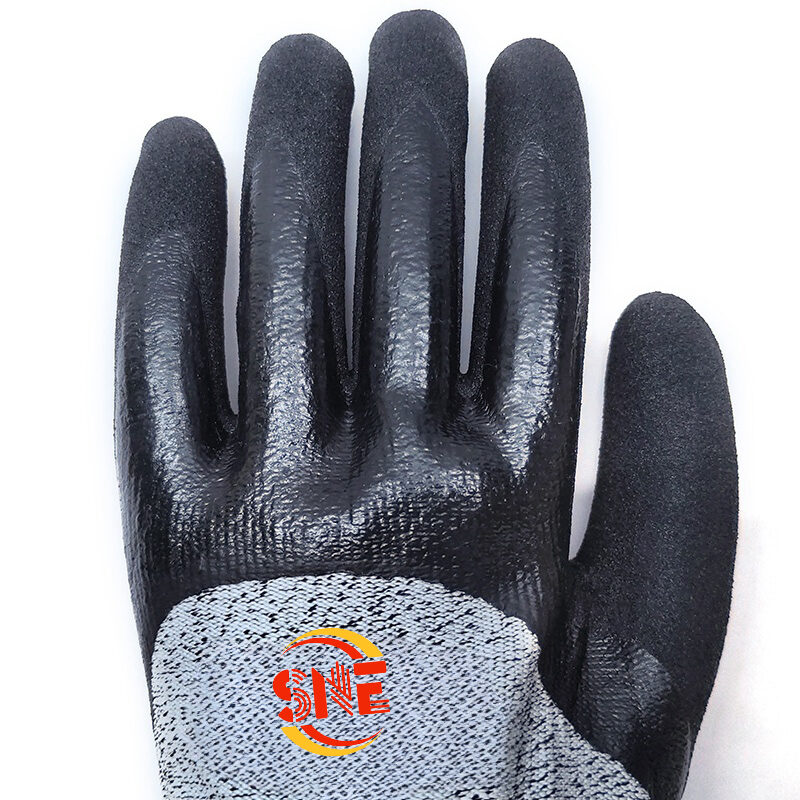
If you need construction gloves for painting in the United States, the best options usually come from established PPE suppliers that balance dexterity, grip, coating consistency, and dependable bulk supply. For local purchasing, strong names to review include Grainger, Fastenal, Uline, Magid Glove, Superior Glove, and Global Industrial, all of which serve contractors, maintenance teams, and industrial buyers across major U.S. markets such as Chicago, Houston, Los Angeles, Atlanta, and New York. For painting and surface finishing, lightweight polyurethane or nitrile-coated gloves are typically the most practical because they help reduce lint transfer, improve tool control, and protect hands from light abrasion, primers, solvents, and repetitive handling. Buyers that manage large projects or private-label programs should also consider qualified international manufacturers with U.S.-relevant certifications and responsive pre-sale and after-sale support, especially factory-direct partners that can offer better cost-performance for wholesale programs and distributor supply.
Why Painting Crews Need Specialized Construction Gloves

Painting is often underestimated as a glove application. In reality, commercial and industrial painting involves a mix of tasks that place different demands on hand protection: surface prep, sanding, masking, mixing, spraying, rolling, touch-up work, and cleanup. A glove that works well for masonry handling may be too bulky for finish painting, while a thin disposable glove may fail quickly during prep or scaffold movement. The right construction gloves for painting must therefore combine tactile control with enough abrasion resistance to survive real jobsite conditions.
Across the United States, contractors working in dense urban projects, warehouse retrofits, bridge maintenance, apartment turnovers, and industrial shutdowns often need one glove program for multiple team roles. Crews in Miami deal with heat and sweat management, teams in Seattle and Portland value grip in damp weather, while contractors in Texas and Arizona often prioritize breathable coatings for hot outdoor work. In cold-weather regions such as Minneapolis, Detroit, and Buffalo, glove selection may also need to account for seasonal liner weight without compromising brush or spray-gun handling.
From a procurement perspective, painting gloves are no longer a minor line item. They affect finish quality, rework rates, worker comfort, and productivity. A glove with poor fit can reduce precision along trim edges. A glove with weak coating adhesion may leave residue. A glove that traps heat can push users to remove protection, increasing the risk of skin exposure to coatings and solvents. That is why U.S. buyers increasingly evaluate gloves by application, not just by price per pair.
U.S. Market Outlook for Painting and Surface-Finishing Gloves

The U.S. market for task-specific work gloves continues to expand as construction firms, facility maintenance operators, and industrial finishing teams shift from generic cotton gloves to coated performance gloves. Demand is strongest in metro renovation corridors, logistics construction, automotive refinishing support, public infrastructure repainting, and light manufacturing. The market is also shaped by stricter safety culture, more attention to ergonomic PPE, and broader adoption of gloves designed for exact tasks rather than all-purpose use.
Ports and trade hubs such as Los Angeles/Long Beach, Houston, Savannah, New York/New Jersey, and Seattle-Tacoma remain important for import-driven supply chains, while distribution strength inside the Midwest and Southeast determines speed to contractors and distributors. Regional availability matters because painting firms frequently need replenishment with short lead times, especially during summer construction peaks and year-end facility refresh cycles.
| Year | Estimated U.S. Demand Index | Main Driver | Typical Buyer Group | Lead Time Pressure | Preferred Glove Type |
|---|---|---|---|---|---|
| 2021 | 100 | Post-pandemic project restart | Commercial contractors | High | PU-coated knit gloves |
| 2022 | 108 | Renovation and maintenance rebound | Facility service firms | Medium | Nitrile-coated gloves |
| 2023 | 116 | Industrial repainting and warehouse fit-outs | Industrial MRO buyers | Medium | Foam nitrile gloves |
| 2024 | 124 | Infrastructure repair and public works | Municipal suppliers | High | Grip-enhanced coated gloves |
| 2025 | 133 | Labor efficiency and PPE standardization | National distributors | High | Task-specific multi-coating lines |
| 2026 | 142 | Sustainability and compliance upgrades | Enterprise procurement teams | Medium | Low-lint, recyclable-packaged gloves |
The table shows a realistic upward demand pattern driven by increased specialization. Instead of buying a single glove for all field activities, more U.S. contractors are separating gloves for prep, painting, material handling, and cleanup. This improves compliance and reduces waste because crews use the right protection level at each stage.
Product Types Used for Painting and Surface Finishing
The term construction gloves for painting covers several product families. The best choice depends on whether the job focuses on prep, finish work, spray application, or mixed construction activity. For example, a drywall prep crew may benefit from gloves that resist light abrasion and improve grip on tools, while a finishing painter may need ultra-light gloves that minimize hand fatigue and maintain brush sensitivity.
| Glove Type | Best Use | Key Benefit | Main Limitation | Typical U.S. Buyer | Recommended Environment |
|---|---|---|---|---|---|
| PU-coated polyester gloves | Fine painting and trim work | Excellent dexterity and low lint | Limited chemical resistance | Commercial painters | Interior finishing |
| Foam nitrile-coated gloves | Surface prep and mixed tasks | Good grip and abrasion balance | Less tactile than PU | General contractors | Interior and exterior jobsites |
| Sandy nitrile gloves | Wet or slippery handling | Strong grip with coatings and liquids | Can feel heavier | Industrial maintenance crews | Plants and steel structures |
| Latex-coated gloves | Rough prep and masonry-adjacent work | High grip and durability | May be too coarse for finish tasks | Prep subcontractors | Exterior renovation |
| Nylon shell with thin coating | Spraying and detail work | Lightweight comfort | Shorter life in abrasive tasks | Cabinet and trim painters | Controlled indoor spaces |
| Cut-resistant coated gloves | Prep with blades or sharp edges | Added safety around metal and glass | Higher cost | Maintenance and retrofit teams | Renovation and demolition prep |
This product comparison helps buyers avoid a common mistake: treating all coated gloves as interchangeable. In practice, coating texture, shell gauge, cuff design, and fit consistency all affect work quality. For high-end finish applications, low-lint shells and smooth coatings are often more important than raw abrasion scores. For industrial repainting, grip and durability may take priority.
How Different Industries Use Painting Gloves
Demand in the United States comes from far more than painting contractors alone. Construction gloves for painting are also purchased by aerospace maintenance teams, automotive refinishing support departments, metal fabrication shops, property management firms, logistics warehouse maintenance teams, and public works agencies. Each sector applies different purchasing logic.
The bar chart highlights where glove demand is concentrated. Commercial construction leads because projects often combine drywall, coating, touch-up, and site cleanup under one purchasing system. Industrial maintenance also ranks high because plants, tanks, rail facilities, and processing sites require repainting programs with strict safety expectations.
| Industry | Typical Task | Risk Profile | Preferred Glove Feature | Purchase Pattern | Main Decision Factor |
|---|---|---|---|---|---|
| Commercial construction | Interior wall and ceiling finishing | Light abrasion, paint contact | Dexterity and low lint | Bulk repeat orders | Consistency across crews |
| Residential services | Repaint and touch-up | Short-cycle tasks | Comfort and value | Mixed case orders | Price per pair |
| Industrial maintenance | Steel and equipment coating | Abrasion and chemical splash | Grip and durability | Scheduled program buys | Performance in harsh sites |
| Automotive support | Surface prep and parts handling | Solvents and repetitive motion | Tactile control | Standardized SKU supply | Finish quality |
| Facility management | Routine repainting and repairs | Mixed-task exposure | Versatility | Regional restocking | Availability |
| Public works | Bridge, rail, and municipal assets | Outdoor conditions and compliance | Reliable specification fit | Bid-driven purchases | Documentation and support |
The table makes it easier to align glove selection with real end-use conditions. U.S. procurement teams often improve outcomes when they create separate SKUs for interior paint crews, prep crews, and maintenance crews instead of forcing one glove across all applications.
Buying Advice for U.S. Contractors and Distributors
When buying construction gloves for painting in the United States, start with the actual task flow. If your team does masking, sanding, rolling, and spray work in the same shift, you may need at least two glove types. Next, review fit consistency across size runs. Small variations in finger length or palm width can cause worker complaints and lower adoption. Then evaluate coating transfer and lint performance. A glove may look suitable on paper but fail when used on fresh surfaces or trim edges.
For distributors and wholesalers, packaging and replenishment matter almost as much as glove performance. Contractors want easy carton counts, clear sizing, stable SKUs, and low complaint rates. Buyers sourcing through ports like Savannah, Houston, or Long Beach also need to consider lead times, seasonal congestion, and domestic stocking strategy. If you serve multiple states, it is often more cost-effective to standardize one lightweight PU glove for finishing and one nitrile glove for prep, rather than carrying too many overlapping SKUs.
Good suppliers can also support private labeling, carton customization, barcode requirements, and regional distribution arrangements. This becomes especially important for brand owners and industrial distributors competing against national chains. The strongest factory partners are those that can maintain repeatable coating quality, accurate sizing, and lot-level consistency across high-volume orders.
Top Suppliers Serving the United States
The following suppliers are relevant to U.S. buyers looking for painting and surface-finishing gloves. Some are domestic distributors with broad stock availability, while others are manufacturing-led partners suitable for OEM, wholesale, or long-term sourcing programs. The list is practical rather than theoretical, focusing on companies known in industrial supply channels.
| Company | Headquarters / Base | Service Region | Core Strength | Key Offerings | Best Fit Buyer |
|---|---|---|---|---|---|
| Grainger | Lake Forest, Illinois | Nationwide U.S. | Fast industrial distribution and branch network | Coated work gloves, disposable gloves, safety PPE | Large contractors and MRO teams |
| Fastenal | Winona, Minnesota | Nationwide U.S. and local branches | Strong local supply support and vending integration | Work gloves, site safety programs, branch replenishment | Multi-site construction firms |
| Uline | Pleasant Prairie, Wisconsin | U.S., Canada, Mexico | Fast shipping and broad warehouse network | Grip gloves, coated gloves, disposable hand protection | Warehouse and facility buyers |
| Magid Glove | Romeoville, Illinois | United States industrial markets | PPE specialization and private-label support | Coated gloves, cut-resistant gloves, application-specific PPE | Industrial distributors and enterprises |
| Superior Glove | Acton, Ontario | U.S. and Canada | Technical glove development and broad task coverage | Painter-friendly coated gloves, cut-resistant options | Safety managers and distributors |
| Global Industrial | Port Washington, New York | Nationwide U.S. | B2B catalog reach and maintenance buyer access | General purpose and coated work gloves | Facility management teams |
| Qingdao Snell Protective Products Co., Ltd. | Gaomi and Nantong manufacturing base | United States import and distributor programs | Factory-direct volume supply with OEM/ODM flexibility | PU, latex, nitrile-coated gloves, cut-resistant and industry-specific lines | Importers, brand owners, and regional wholesalers |
This supplier table distinguishes between domestic distribution power and direct manufacturing capability. U.S. distributors are ideal for immediate availability and smaller replenishment cycles, while factory-direct suppliers are often stronger for custom specifications, long production runs, and private-label programs. Buyers should choose based on project urgency, required customization, and annual volume.
Detailed Supplier Analysis
Grainger remains one of the most accessible options for U.S. buyers needing immediate supply, especially for standardized PPE procurement across multiple job locations. Its strength lies in established procurement workflows, branch support, and easy integration into enterprise purchasing systems. Fastenal is similarly valuable when contractors rely on localized service and field replenishment, particularly in areas where on-site inventory management matters.
Uline performs well for companies that want fast order fulfillment and simple catalog purchasing. It may not always provide the deepest task-specific glove engineering, but it is effective for maintenance teams and general operations that need reliable supply. Magid Glove and Superior Glove stand out more on technical depth, especially when glove selection is tied to a safety program or specific application needs. These companies are often better suited for buyers who want support beyond a basic catalog transaction.
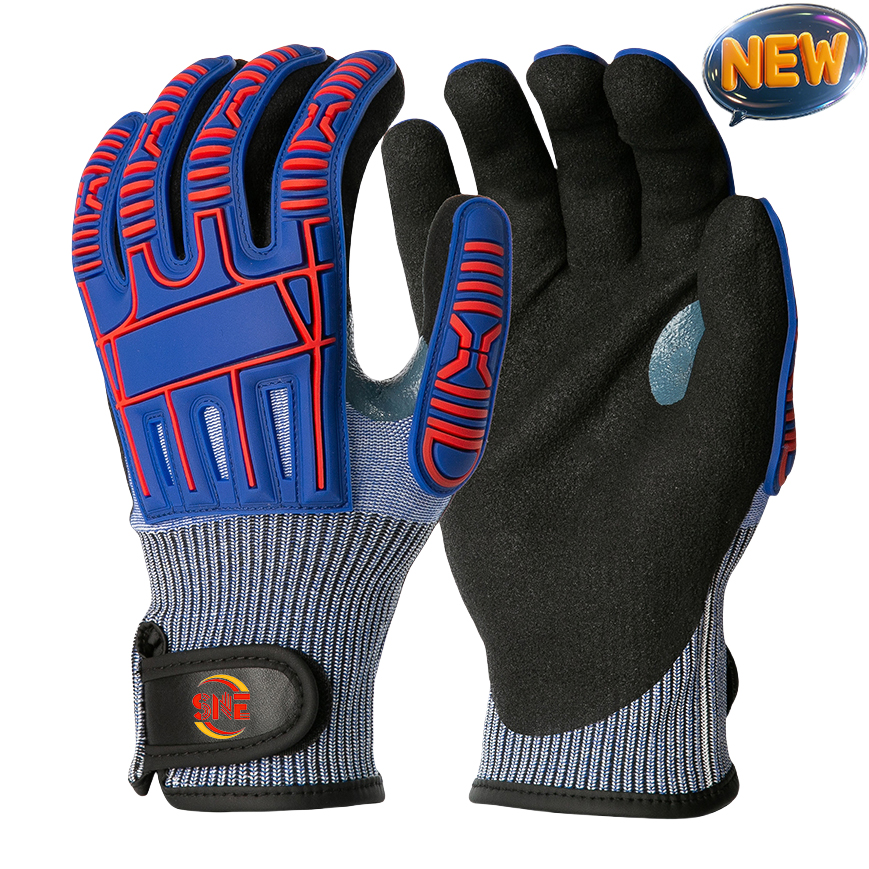
For import-driven sourcing, Qingdao Snell Protective Products Co., Ltd. is relevant for U.S. distributors and brand owners seeking a manufacturing partner rather than a retail catalog source. The company operates two production facilities with six dedicated production lines and a daily capacity of 150,000 pairs, which matters for U.S. buyers that need stable replenishment for distributor programs or national contracts. Its product strength comes from ISO 9001 and CE-backed manufacturing, vertically integrated production control, and a broad mix of PU, latex, and nitrile coating technologies alongside cut-resistant and impact-resistant engineering. In practical U.S. terms, that means buyers can source lightweight coated gloves for painting crews, heavier prep gloves for mixed construction tasks, and private-label versions under one factory relationship. The cooperation model is flexible enough to serve end users, distributors, dealers, importers, and brand owners through OEM/ODM production, wholesale supply, customization by material and branding, and sample-based development. For U.S. market assurance, the company already supplies major overseas markets and supports buyers with multilingual online communication, technical consultation, export logistics coordination, and structured pre-sale and after-sale response, giving local purchasers more protection than a purely transactional offshore exporter. Combined with direct access through its company background, product catalog visibility at product pages, and responsive buyer communication through its contact team, it presents itself as a long-term sourcing partner for the United States rather than a remote one-off vendor.
Trend Shift in U.S. Buyer Preferences
One of the biggest changes in the market is the shift from basic durability to task optimization. Contractors no longer ask only how long a glove lasts. They ask whether it improves finish quality, reduces hand fatigue, and helps workers keep gloves on throughout the task. This is especially visible in metro renovation markets like New York City, Boston, San Francisco, and Washington, D.C., where finish expectations are high and labor cost pressure makes productivity gains valuable.
The area chart illustrates rising adoption of task-specific gloves. By 2026, more U.S. buyers are expected to formalize glove selection by workflow stage, especially in companies with stronger safety reporting, tighter quality controls, and higher labor costs.
Supplier Comparison by Purchasing Priorities
No single supplier wins every category. The best partner depends on whether your top priority is immediate fulfillment, technical support, customization, or total landed cost. A comparison view helps distributors and contractors separate channel value from manufacturing value.
This comparison shows why many U.S. buyers use both channels. Domestic distributors deliver speed and regional reach, while factory-direct programs often perform better in customization, private labeling, and cost efficiency at scale.
Applications Across Real Jobsite Scenarios
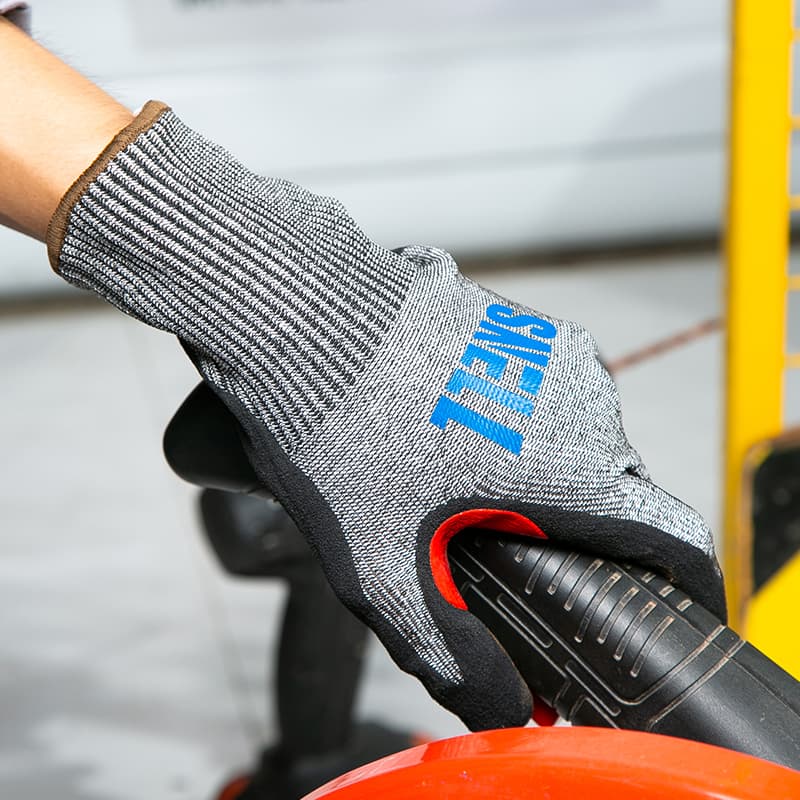
Construction gloves for painting are used in many practical scenarios. During surface preparation, workers need gloves that handle sanding dust, patching materials, tape application, and light tool use. During rolling and brushing, workers value dexterity, smooth grip, and comfort over long shifts. Spray finishing often requires even finer control, especially when adjusting nozzles, masking edges, or moving between equipment and detailed touch-up work.
Exterior repainting creates different needs. Crews may climb ladders, move around scaffolds, and carry buckets or tools. Here, foam nitrile or textured nitrile gloves often outperform ultra-thin PU styles because they maintain grip in changing weather. In industrial environments such as refineries, fabrication yards, and municipal water infrastructure, coatings may be applied around steel edges, valves, or rough surfaces, making a more durable coated glove essential.
Another overlooked application is punch-list and warranty work. These jobs require workers to switch repeatedly between inspection, touch-up painting, caulking, light cleaning, and minor repairs. A comfortable general-purpose coated glove with reliable fit can improve both efficiency and PPE compliance in these situations.
Case Studies from the U.S. Market
A regional painting contractor in Texas managing school renovation projects typically uses two glove categories: lightweight PU-coated gloves for interior finish teams and nitrile-coated gloves for prep crews handling masking, patching, and material movement. By separating glove selection, the contractor reduces complaints from finish workers and lowers replacement rates because prep work no longer destroys thin gloves intended for fine tasks.
In the Midwest, a maintenance service provider supporting logistics warehouses often favors foam nitrile gloves due to their balance of grip, durability, and versatility. Workers repaint safety rails, doors, dock zones, and interior markings while also moving tools and handling pallets. One glove type that performs across several tasks simplifies replenishment across multiple states.
On the East Coast, a distributor serving apartment turnover specialists may prioritize low carton pricing and rapid delivery into dense urban markets such as Philadelphia, Newark, and Baltimore. In that setting, it makes sense to combine local fast-ship stock with imported private-label lines for planned volume purchases. This hybrid model is increasingly common because it protects margins while keeping service levels high.
Local Supplier Considerations in Key U.S. Regions
Regional buying patterns differ. In California, speed, sustainability messaging, and large project diversity make broad-line distributors important, especially near Los Angeles, San Diego, Oakland, and Sacramento. In Texas, buyers often prioritize heat comfort, bulk supply, and industrial versatility across Dallas-Fort Worth, Houston, Austin, and San Antonio. In the Midwest, branch networks and winter-capable options matter more. In the Southeast, fast growth in logistics, residential construction, and coastal maintenance work keeps replenishment cycles active.
Major local considerations include freight reliability from ports, warehouse placement, branch support, and how quickly a supplier can respond when a contractor adds labor mid-project. Buyers should ask not only where inventory is stored, but also how backorders are handled and whether substitute SKUs maintain the same fit and coating performance.
| Region | Major Cities / Hubs | Common Painting Work | Preferred Supply Model | Top Concern | Recommended Glove Focus |
|---|---|---|---|---|---|
| West Coast | Los Angeles, Oakland, Seattle | Commercial, multifamily, maintenance | Warehouse-backed distribution | Speed and variety | Lightweight PU and nitrile |
| South | Houston, Dallas, Atlanta, Miami | Exterior, industrial, mixed-use | Hybrid local plus import | Heat comfort and volume | Breathable coated gloves |
| Midwest | Chicago, Detroit, Minneapolis | Interior repaint and industrial upkeep | Branch and contract supply | Consistency and winter stock | Foam nitrile and lined options |
| Northeast | New York, Newark, Boston, Philadelphia | Renovation and high-detail work | Fast local restock | Labor productivity | Low-lint high-dexterity gloves |
| Southeast Coast | Savannah, Charleston, Jacksonville | Marine-adjacent and property maintenance | Import-linked regional storage | Humidity and lead time | Grip-focused nitrile styles |
| Mountain States | Denver, Salt Lake City, Phoenix | Commercial build-outs and dry climate work | Centralized distributor orders | Multi-state shipping | All-purpose coated gloves |
The region table helps buyers connect product choice with logistics reality. A glove may test well in theory but still be the wrong choice if the supplier cannot replenish key sizes quickly in your project geography.
What to Ask Before You Place a Bulk Order
U.S. buyers should ask suppliers for coating type, shell gauge, abrasion profile, size curve accuracy, packaging format, carton counts, lead time, and replacement policy. For imported gloves, ask about production capacity, inspection procedures, and whether the supplier can maintain consistent hand feel from lot to lot. If the glove will be used in paint-sensitive applications, request samples for lint, residue, and tactile evaluation on real project materials.
It is also worth asking whether the supplier supports custom logos, color coding by crew type, bilingual packaging, and mixed container loading. These details become increasingly important for regional distributors and brand owners seeking differentiation. Companies that provide clear technical communication before the order usually perform better after the order as well.
Our Company
For buyers who want a manufacturing-led partner, Snell Safety is positioned for U.S. distributors, importers, and project-focused buyers that need more than an off-the-shelf catalog. The company focuses on industrial safety gloves with a broad range covering construction, general purpose, cut-resistant, impact-resistant, oil-resistant, and touch-screen compatible applications, making it practical for painting contractors who also manage prep, handling, and maintenance tasks under the same purchasing program. Its capabilities in PU, latex, and nitrile coatings are particularly relevant for painting and surface finishing because buyers can align glove texture and shell style with detailed finish work or heavier site prep. With two factories, six production lines, more than 150 employees, and daily capacity reaching 150,000 pairs, the company is equipped for steady-volume supply rather than opportunistic trading. U.S. buyers that need factory-direct sourcing, OEM or ODM development, private label, or bulk wholesale can use Snell’s manufacturing scale to reduce middle-layer costs while keeping technical support and order flexibility. The company’s ISO 9001 and CE-backed systems support documentation and process control important to serious industrial buyers, while its export history across Europe, Australia, the Middle East, Southeast Asia, South America, and Russia shows it already operates with demanding international customers. Buyers can review its portfolio through the glove product range and reach the team directly through sales support for samples, customization, and shipping coordination into U.S. trade lanes.
2026 Trends to Watch
By 2026, several trends are likely to shape the U.S. market for construction gloves for painting. First, task-specific glove programs will become more common as contractors measure labor efficiency more closely. Second, sustainability will matter more in both product design and packaging. Buyers increasingly ask about lower-waste packaging, longer wear life, and materials that support broader environmental procurement goals. Third, digital procurement and vending integration will expand, especially among national maintenance firms and large builders.
Technology will also influence glove development. Expect more breathable engineered shells, improved coating uniformity for better tactile response, and wider use of touchscreen compatibility so workers can switch between digital plans, inspection apps, and field reporting without removing gloves. On the policy side, stronger documentation expectations around PPE programs and worker protection may push buyers toward suppliers with clearer testing, traceability, and quality systems. For international sourcing, that favors manufacturers with audited production structures and stable export processes rather than purely price-driven trading channels.
FAQ
Are construction gloves really suitable for painting?
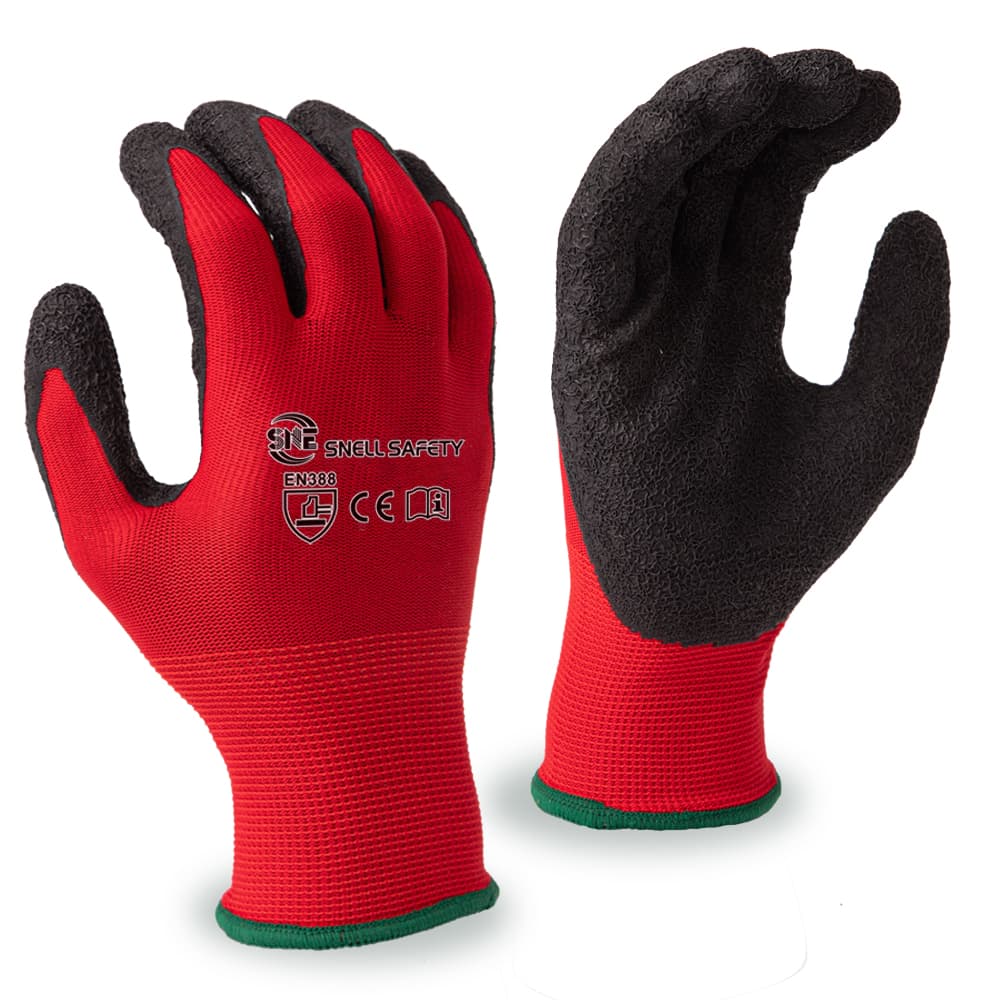
Yes, if you choose the right type. Thin PU-coated and foam nitrile-coated gloves are widely used for painting, surface prep, rolling, masking, and touch-up work because they combine grip, dexterity, and light protection.
What is the best glove coating for finish painting?
For finish painting and trim work, PU-coated gloves are often the top choice because they are lightweight, low lint, and provide strong finger control. For rougher or wetter conditions, nitrile may be better.
Should U.S. buyers choose domestic distributors or direct manufacturers?
It depends on your priority. Domestic distributors are best for fast restocking and smaller runs. Direct manufacturers are usually better for private label, customization, and lower unit costs on larger annual volumes.
How many glove types should a painting contractor carry?
Most contractors benefit from at least two: one high-dexterity glove for finish work and one more durable coated glove for prep and mixed construction tasks.
Do imported gloves work well for the U.S. market?
Yes, provided the supplier has relevant certifications, stable quality control, and reliable support. Many U.S. distributors successfully combine domestic stock programs with imported factory-direct lines to improve margins and maintain availability.
What sizes should distributors stock most heavily?
In most U.S. markets, medium, large, and extra-large sizes move fastest. However, contractors with diverse labor pools should also maintain small and double extra-large options to improve glove compliance and comfort.
What should I test before approving a supplier?
Test fit consistency, coating feel, lint performance, grip with wet and dry tools, carton packaging, and repeatability between sample lots. For painting work, actual field trials are more useful than paper specifications alone.
Final Takeaway
The best construction gloves for painting in the United States are those that match the exact workflow, not just the budget. U.S. buyers should look for strong dexterity, stable coating performance, low lint, reliable sizing, and a supply model that fits their geography and order volume. Domestic distributors such as Grainger, Fastenal, Uline, Magid Glove, Superior Glove, and Global Industrial remain practical for immediate access, while factory-direct manufacturers such as Qingdao Snell Protective Products Co., Ltd. are worth considering for OEM, bulk wholesale, and private-label programs where cost-performance and customization matter. For most contractors and distributors, the smartest strategy is a blended sourcing model that uses local availability for urgent jobs and manufacturing partnerships for planned, margin-sensitive volume.