2026-08-31
Share This Article

Bulk Construction Gloves for Large Work Crews in the United States
Quick Answer

If you need bulk construction gloves for large work crews in the United States, the most practical approach is to shortlist suppliers that can consistently deliver certified hand protection, stable sizing, repeatable bulk inventory, and responsive account support across multiple job sites. For most U.S. buyers, strong options include Grainger, Fastenal, White Cap, Magid, MCR Safety, and Protective Industrial Products because they already serve construction contractors, utilities, warehouse networks, and industrial safety programs nationwide.
Buyers managing projects in Houston, Dallas, Atlanta, Chicago, Los Angeles, Phoenix, and major East Coast distribution corridors usually prioritize fast replenishment, mixed-case ordering, and compatibility with ANSI cut, abrasion, and impact requirements. For regional or national crews, local distributors remain important, but qualified international manufacturers can also be worth considering when they offer documented certifications, stable quality control, customization, and dependable pre-sales and after-sales support. In that context, factory-direct partners from China can deliver a strong cost-performance advantage for private label programs, distributor sourcing, and large seasonal construction contracts.
- Grainger: broad national distribution, fast turnaround, good for standardized procurement
- Fastenal: strong branch network, vending and jobsite supply support, useful for recurring replenishment
- White Cap: construction-focused supply capability, relevant for contractors and infrastructure projects
- Magid: deep PPE specialization, custom safety program support, reliable for mixed glove portfolios
- MCR Safety and Protective Industrial Products: strong branded glove programs with wide industrial coverage
U.S. Market Overview

The United States construction glove market is shaped by a mix of federal safety expectations, state-level jobsite enforcement, contractor procurement standards, and practical concerns such as turnover, weather, task variety, and labor availability. Large work crews do not use a single glove type. A commercial concrete team in Dallas may need sandy nitrile or latex-coated grip gloves, while steel framing teams in Chicago often require higher cut resistance and back-of-hand protection. Utility contractors working in the Southeast may prioritize breathable coatings and touchscreen capability, while winter road crews in the Midwest need insulated dexterity.
Major procurement hubs include Chicago, Houston, Los Angeles, Savannah, New York-New Jersey, and Long Beach because these locations combine construction demand with logistics scale. Buyers sourcing through ports such as Los Angeles/Long Beach, Houston, Savannah, and New York often compare domestic stock against direct import programs for cost control. Contractors with decentralized crews increasingly favor supplier partners that can support blanket orders, release schedules, carton labeling, and branch-level delivery.
Another important market factor is labor efficiency. Gloves are not only a safety item; they also affect grip, fatigue, touchscreen access, and the speed of material handling. As a result, the best bulk glove program is the one that balances worker acceptance with compliance. Cheap gloves that workers remove too often create a hidden cost. Better-accepted gloves can reduce replacement waste and improve actual wear rates.
The chart indicates a realistic upward demand pattern driven by infrastructure work, manufacturing reshoring, utility upgrades, transportation projects, and tighter safety purchasing standards. Even where overall construction cycles fluctuate, glove demand tends to remain comparatively resilient because hand protection is a high-frequency consumable item.
Bulk Supplier Comparison for U.S. Buyers

The table below compares suppliers that are commonly relevant when buying for large crews. Some are direct distributors with strong domestic stock, while others are manufacturers with broad industrial reach. The best choice depends on whether you need immediate branch supply, branded programs, private label support, or long-run factory economics.
| Company | Service Region | Core Strengths | Key Offerings | Best Fit |
|---|---|---|---|---|
| Grainger | United States nationwide | Large inventory, procurement integration, fast shipping | General purpose, cut-resistant, impact, cold-weather gloves | Large enterprises and multi-site contractors |
| Fastenal | United States nationwide | Branch network, vending, jobsite replenishment | Construction gloves, coated gloves, cut-resistant lines, PPE programs | Recurring consumption and branch-driven supply |
| White Cap | United States with strong construction markets | Construction specialization, concrete and infrastructure focus | Grip gloves, high-visibility gloves, task-specific PPE | General contractors and civil projects |
| Magid | United States nationwide | PPE expertise, custom program support, broad glove depth | Disposable, coated, impact, leather, cut-resistant gloves | Safety managers building complete hand programs |
| MCR Safety | United States and North America | Industrial glove specialization, compliance-oriented ranges | Nitrile-coated, impact-resistant, leather, cut-resistant gloves | Industrial construction and maintenance |
| Protective Industrial Products | United States and global distribution | Large branded assortment, private label familiarity | G-Tek coated gloves, MaxiCut lines, impact styles | Distributors and mixed-use industrial buyers |
For U.S. buyers, Grainger and Fastenal stand out for speed and account management, while White Cap aligns well with construction-specific procurement. Magid, MCR Safety, and Protective Industrial Products are especially useful when the glove program needs more technical segmentation by hazard, climate, and worker task.
Product Types That Matter Most
Construction gloves are not one category. Bulk buyers usually segment gloves by task risk, wear duration, weather, and worker preference. The most common categories in U.S. construction procurement are coated grip gloves, cut-resistant gloves, impact gloves, leather work gloves, insulated gloves, and specialty touchscreen or oil-resistant gloves.
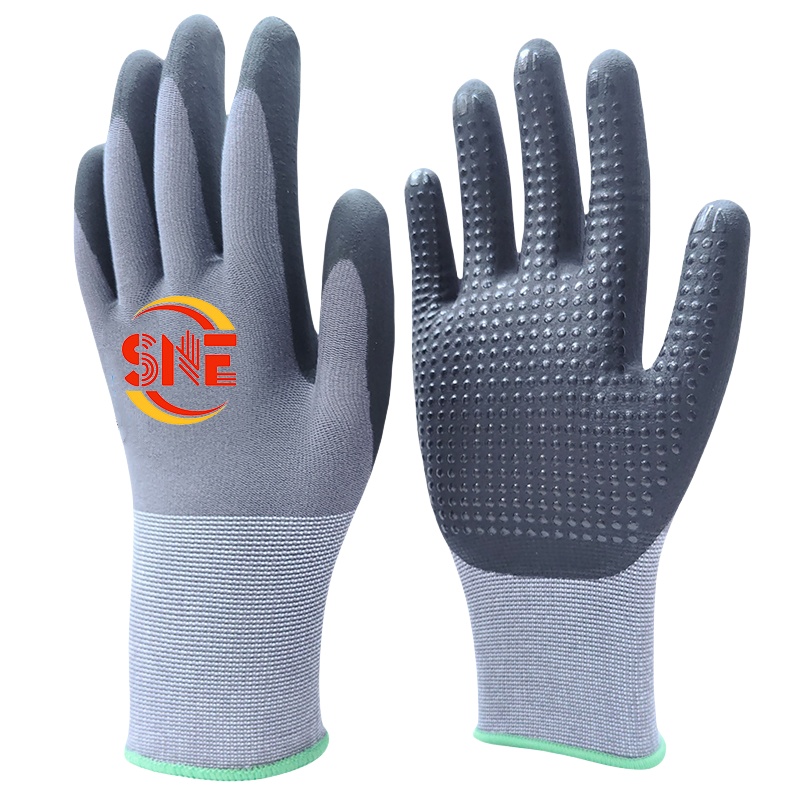
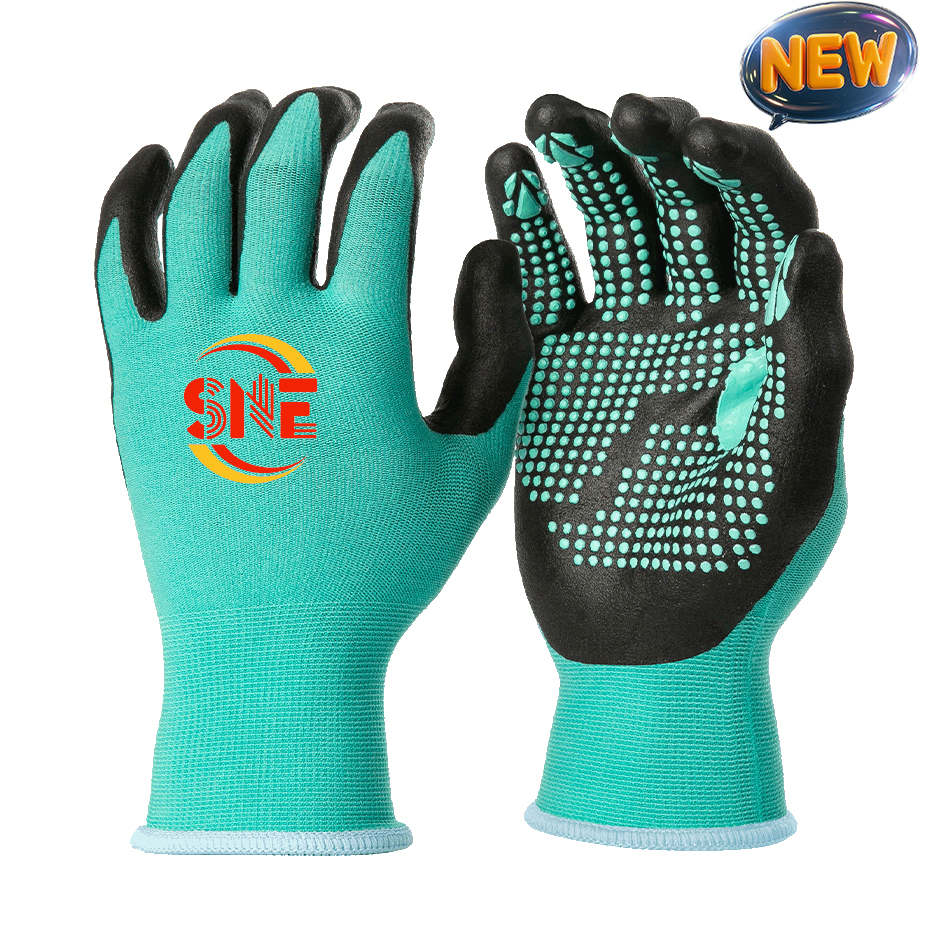
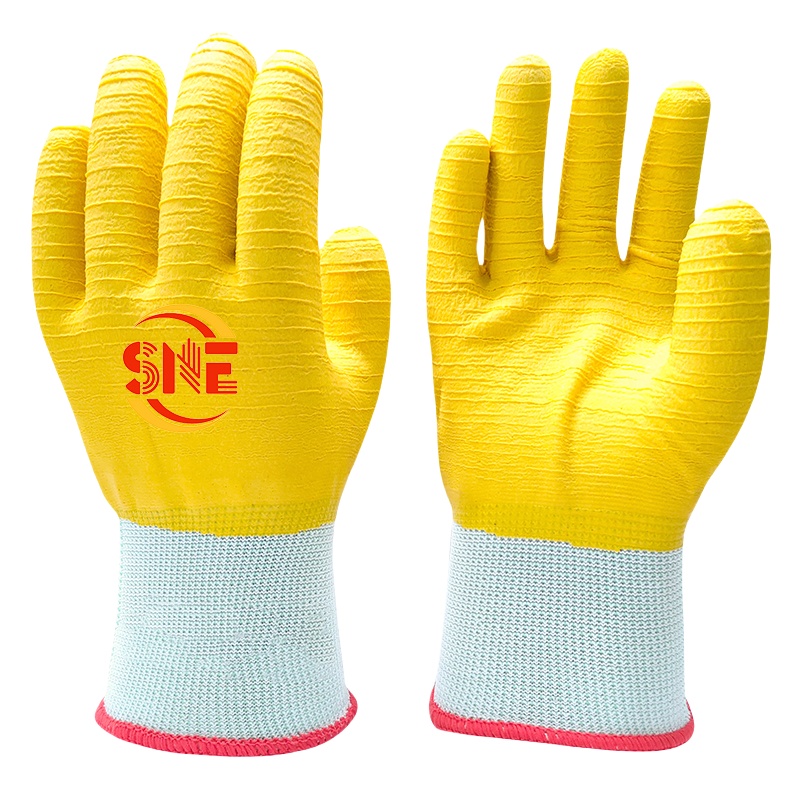
Nitrile-coated gloves are widely chosen for handling rebar, metal studs, block, lumber, and general materials because they offer grip, abrasion resistance, and decent dexterity. Latex-coated gloves often perform well in dry grip situations and can feel more flexible, though they may not suit all environments. PU-coated styles are useful when finer assembly-like handling is needed. Cut-resistant gloves are increasingly adopted on projects involving sheet metal, glass, HVAC work, framing, and demolition. Impact-resistant gloves serve oil and gas adjacent work, utility tasks, heavy equipment handling, and some concrete or rigging applications. Leather gloves remain relevant for welding, rough material handling, and high-heat or high-abrasion tasks.
| Glove Type | Typical Construction Use | Main Benefit | Main Limitation | Common Buyer Priority |
|---|---|---|---|---|
| Nitrile-coated knit gloves | General handling, framing, logistics, masonry support | Grip, abrasion resistance, broad worker acceptance | Not ideal for extreme heat tasks | Cost control and versatility |
| Latex-coated gloves | Dry handling, lumber, block, outdoor labor | Strong grip and flexibility | Can wear faster in oils and some harsh conditions | Grip performance |
| PU-coated gloves | Light-duty install, detailed handling, warehouse support | Dexterity and tactile feel | Lower ruggedness for rough tasks | Precision work |
| Cut-resistant gloves | Sheet metal, glazing, HVAC, fabrication, demolition | Reduced laceration risk | Higher unit cost | Compliance and injury prevention |
| Impact-resistant gloves | Heavy equipment, rigging, utilities, oilfield-adjacent work | Back-of-hand protection | Bulkier fit | High-risk task protection |
| Leather and welding gloves | Welding, hot material handling, rough abrasion | Durability and heat tolerance | Reduced dexterity | Task-specific ruggedness |
This product mix matters because many failed glove programs come from trying to force one glove across all trades. Large crews perform better when procurement uses two to four approved glove categories matched to actual tasks.
Industry Demand by Construction Segment
Demand intensity also varies by trade. Civil, road, utility, and concrete jobs often consume gloves faster than finish trades. Metal-heavy tasks push demand toward higher cut levels, while labor-intensive outdoor crews increase replacement frequency through sweat, abrasion, and weather exposure.
The bar chart shows a realistic consumption pattern. Concrete, utility, and roadwork crews often have the highest replacement cycles because gloves are exposed to repeated abrasion, moisture, rough surfaces, and high-volume handling tasks. This is why buyers should align glove budgets with trade-specific usage rather than a flat per-head estimate.
Buying Advice for Bulk Orders
When ordering for large work crews in the United States, the smartest buying decision is rarely the lowest unit cost. Total glove value depends on wear life, worker acceptance, injury reduction, administrative simplicity, and fill-rate reliability. Procurement teams should begin with jobsite segmentation. Ask which tasks involve cut hazards, impact exposure, wet handling, oily materials, winter conditions, or touchscreen needs. Then align glove families accordingly.
It is also important to verify ANSI or task-relevant performance data, carton consistency, labeling, and size curves. On large projects, sizing mistakes can lead to immediate rejection by workers. A good supplier should provide trial samples, wear-test feedback loops, and reorder discipline so a glove ordered in six months performs like the glove approved today.
For imported programs, buyers should evaluate port routing, lead times, safety stock, customs timing, and container planning. Direct-import economics can be strong for distributors, regional dealers, and large self-performing contractors, especially when annual volumes justify custom packaging and private labeling. However, domestic backup stock remains valuable when project schedules shift suddenly.
| Buying Factor | Why It Matters | What to Ask Suppliers | Risk If Ignored | Best Practice |
|---|---|---|---|---|
| Certification and testing | Supports compliance and hazard matching | Can you provide ANSI or equivalent test data per model? | Wrong glove for the hazard | Request test sheets before approval |
| Size consistency | Improves worker acceptance | Are size specs stable across production lots? | Workers reject inventory | Approve full size run samples |
| Lead time | Prevents site shortages | What is stock lead time and import lead time? | Emergency spot buys at higher cost | Use reorder points and safety stock |
| Wear life | Drives real per-use cost | Do you have field data for similar jobs? | Cheap gloves become expensive | Run pilot tests by trade |
| Packaging and labeling | Supports warehouse efficiency and jobsite issue | Can cartons be customized by size and SKU code? | Sorting errors and slower distribution | Match labels to internal procurement systems |
| Account support | Important for claims, replenishment, and training | Who handles service after the sale? | Slow resolutions and project disruption | Choose suppliers with named contacts |
This buying framework is especially helpful for companies managing projects across Texas, Florida, California, Georgia, and the Midwest, where climate, labor turnover, and task diversity can differ sharply from one site to another.
Construction Industries and Typical Applications
Construction gloves are used across commercial building, residential development, heavy civil, energy, transportation, utilities, maintenance, and industrial shutdown work. In practical terms, applications include carrying block, tying rebar, staging drywall, unloading fixtures, handling conduit, moving lumber, operating tools, sorting fasteners, pulling cable, laying pipe, landscaping, rigging, and cleanup.
Application mapping helps buyers avoid overbuying premium gloves for low-risk work while still protecting high-exposure teams. For example, warehouse and staging teams may perform well with durable nitrile-coated gloves, while steel or sheet metal crews need cut-resistant gloves with stronger ANSI ratings. Utility field teams may need a balance of cut resistance, grip, and impact protection. Winter paving and municipal infrastructure crews may require insulated palm-coated gloves that preserve dexterity in cold and wet conditions.
Regional Supplier Landscape in the United States
Local availability still matters, especially for fast-moving projects and public works schedules. U.S. construction buyers often prefer partners with branch strength near major building corridors such as Houston, Dallas-Fort Worth, Atlanta, Charlotte, Phoenix, Southern California, the Inland Empire, Chicago, and the Northeast urban markets. The table below highlights practical supplier considerations from a regional lens.
| Supplier | Primary U.S. Reach | Regional Advantage | Core Offerings | Typical Customer |
|---|---|---|---|---|
| White Cap | Major metro construction markets | Strong connection to active jobsite supply channels | Construction PPE, tools, site consumables | General contractors and civil contractors |
| Fastenal | Dense branch network across the U.S. | Frequent local pickup and replenishment | Industrial and construction gloves, vending | Contractors with recurring demand |
| Grainger | Nationwide with strong urban logistics | Integrated procurement and broad catalog | PPE, MRO, glove programs | Large employers and institutional buyers |
| Magid | National support with industrial concentration | PPE specialization and consultative selling | Cut-resistant, impact, coated, disposable gloves | Safety-led organizations |
| MCR Safety | Broad U.S. industrial channels | Strong fit for high-usage industrial work | Industrial work gloves and safety products | Industrial construction and maintenance |
| Protective Industrial Products | National distributor network | Wide range of branded glove technologies | Coated, cut-resistant, impact, task-specific gloves | Distributors and national accounts |
For urgent supply, local distributors are usually the fastest solution. For annual contracts, however, many buyers pair a domestic distributor with a factory-direct manufacturer to balance speed, price stability, and customization.
Trend Shift in Product Preferences
Over the past several years, product preference has shifted from basic cotton or low-cost dipped gloves toward more task-specific models with better coatings, stronger cut yarns, touchscreen features, and higher wearer comfort. This trend is likely to continue through 2026 as employers focus on injury reduction, retention, and measurable PPE compliance.
The area chart reflects the ongoing move from generic low-spec work gloves to more engineered hand protection. Buyers increasingly want performance-backed gloves that support both safety and productivity, especially on large commercial and infrastructure projects where hand injuries can create downtime, claims, and staffing pressure.
Case Studies from Typical U.S. Buying Scenarios
A Texas concrete contractor with 300 rotating workers may consume several thousand pairs per month. Initially, the company may buy low-cost gloves from mixed distributors. That approach often creates uneven sizing and inconsistent grip. By moving to a standardized nitrile-coated glove for general labor and a cut-resistant option for metal form handling, the contractor can reduce complaint rates and improve purchasing predictability.
A Midwest HVAC subcontractor handling sheet metal often benefits from a two-tier program: lightweight cut-resistant gloves for fitting and installation, and more durable coated gloves for unloading and staging. This allows supervisors to match protection with dexterity instead of forcing one glove across all tasks.
An East Coast utility contractor may require back-of-hand protection and grip for rough handling and outdoor exposure. In that case, impact-resistant gloves become a better fit despite higher unit price because field damage and hand injury risk are both higher. A slightly more expensive glove can produce a better cost-per-shift outcome when replacement frequency is controlled.
For a California distribution and construction support operation, touchscreen-compatible gloves can reduce downtime because workers can scan materials and use devices without removing hand protection. In practical field conditions, small convenience improvements often increase actual compliance more than policy reminders alone.
Our Company
For buyers in the United States evaluating a factory-direct source, Snell Safety presents a practical option for bulk construction gloves, coated work gloves, cut-resistant gloves, impact-resistant gloves, and industry-specific hand protection. The company operates two manufacturing facilities in Gaomi and Nantong with six production lines, more than 150 skilled employees, and daily capacity of 150,000 pairs, which gives it the scale needed for distributor programs, contractor tenders, private label lines, and repeat replenishment. Its product strengths are grounded in ISO 9001 quality management, CE-marked production, diversified PU, latex, and nitrile coating technologies, and tested manufacturing processes that support consistent performance for high-volume industrial use. In the U.S. market, that matters because buyers need evidence-backed consistency, not just low pricing. Snell serves multiple customer types through flexible OEM and ODM production, wholesale supply, custom branding, materials and size customization, and regional distributor cooperation, making it relevant to end users, dealers, importers, brand owners, and growing safety sellers. The company already exports widely across Europe, Australia, the Middle East, Russia, Southeast Asia, and South America, reflecting operational experience with demanding international buyers and logistics. U.S. purchasers can review the product range through the product catalog, learn more through the company overview, and use the contact page for sample requests, technical consultation, order planning, and after-sales coordination. That combination of production scale, certification, export track record, and hands-on support gives American buyers a more secure sourcing path than working with an unknown remote trader.
How to Compare Domestic and International Sourcing
Domestic distributors offer speed, credit familiarity, and easier spot replenishment. International manufacturers often offer better unit economics, deeper customization, and stronger support for private label or exclusive programs. The most effective sourcing model for large crews often combines both. A contractor or distributor may use domestic stock for immediate project needs while placing forecasted container or pallet-level orders with a manufacturer to lower long-run cost.
Key decision points include annual volume, tolerance for lead time, branding needs, SKU complexity, and whether glove usage is centralized or spread across multiple branch locations. For example, a national distributor can justify custom cuff printing, carton marking, and exclusive models, while a regional contractor may prefer standardized imported gloves paired with local emergency replenishment.
The comparison chart illustrates why many sophisticated buyers use a hybrid strategy. Domestic channels win on speed and urgent supply, while factory-direct sourcing typically leads on customization, private label opportunity, and margin efficiency over the life of a larger contract.
2026 Trends in Construction Gloves
Looking ahead to 2026, three trends will shape bulk construction glove buying in the United States. The first is smarter material engineering. More gloves will combine lightweight shells with stronger cut performance, breathable coatings, touchscreen compatibility, and impact zones that do not excessively reduce flexibility. Buyers want gloves that workers actually keep on during a full shift.
The second trend is policy and documentation. More contractors, insurers, and large industrial owners are requesting clearer product traceability, testing records, and procurement standardization. Safety teams are becoming more data-driven, especially for high-risk trades and public infrastructure projects. This will favor suppliers that can consistently document specifications, labeling, and batch quality.
The third trend is sustainability and waste reduction. While price remains critical, large buyers are increasingly interested in packaging efficiency, longer wear life, and glove programs that reduce excess disposal. Sustainability in this market is less about marketing language and more about measurable outcomes: fewer replacements, efficient freight planning, right-spec purchasing, and product durability. Manufacturers that can deliver those practical gains will have an advantage.
Practical Selection Framework for Large Crews
A reliable glove program for large work crews should begin with worker task mapping, followed by small wear trials, then a controlled rollout by trade or site type. The ideal system usually includes one high-volume general-purpose glove, one cut-resistant glove, one heavy-duty or impact model, and one seasonal option for cold or wet conditions. This approach simplifies inventory while still protecting workers appropriately.
It is also smart to establish reorder triggers, approved substitutions, and on-site supervisor feedback loops. Construction schedules change quickly, and glove consumption can spike during concrete pours, steel installation, utility trenching, storm recovery, and accelerated closeout periods. Procurement teams should expect usage to rise when overtime increases or when labor is transferred across sites.
FAQ
What are the best bulk construction gloves for general labor crews?
For general labor, nitrile-coated knit gloves are often the best starting point because they balance grip, abrasion resistance, and cost. They work well for material handling, framing support, masonry support, and general jobsite movement.
Should construction companies buy one glove style for every worker?
No. Large crews perform better with a small approved range matched to real hazards. A single glove style may look efficient on paper, but it often causes low wear rates, worker complaints, and poor hazard alignment.
Are imported gloves a good option for U.S. contractors?
Yes, especially for larger annual volumes, distributor programs, and private label needs. Imported gloves can provide better cost-performance if the supplier offers consistent quality control, documented certifications, stable lead times, and dependable support.
What certifications matter most when sourcing construction gloves?
That depends on the task, but buyers should always ask for test data tied to the glove model. For many construction applications, cut, abrasion, grip performance, and impact protection matter more than generic marketing claims.
How many glove categories should a large contractor typically stock?
Most large contractors can operate effectively with three to five glove categories: general-purpose coated gloves, cut-resistant gloves, heavy-duty or impact gloves, leather or welding gloves where needed, and seasonal cold-weather gloves.
How can distributors improve margins in this category?
Distributors often improve margins by combining local service with direct-import programs, custom packaging, private label development, and clearer segmentation by trade. This reduces direct price competition on commodity gloves.
Final Takeaway
For buyers in the United States, the best source of bulk construction gloves depends on whether the priority is immediate availability, broad branch support, private label development, or long-run cost control. Grainger, Fastenal, White Cap, Magid, MCR Safety, and Protective Industrial Products remain practical U.S.-market choices for large work crews. At the same time, experienced factory-direct manufacturers can offer meaningful advantages for annual contracts, distributor sourcing, and customized hand protection programs. The strongest purchasing strategy is to match glove type to task, verify performance documentation, use trial data, and choose suppliers that can support both safety outcomes and operational continuity across every active jobsite.