2026-08-02
Share This Article
Long Cuff Oil Resistant Gloves in the United States
Quick Answer

If you need long cuff oil resistant gloves in the United States, the most practical options are established industrial PPE suppliers with strong stock coverage, fast logistics, and proven support for oil and gas, automotive, food processing, chemical handling, and maintenance teams. For buyers who want quick fulfillment, broad distributor networks, and familiar compliance documentation, the most visible names in the U.S. market include Ansell, MCR Safety, SHOWA, Superior Glove, HexArmor, and Magid.
For bulk buyers, distributor groups, and private-label programs, these suppliers are usually the best starting point:
- Ansell — strong chemical and oil handling portfolio, deep U.S. distribution reach, suitable for industrial procurement teams.
- MCR Safety — broad lineup for manufacturing, petrochemical, and utility use, with practical options across price tiers.
- SHOWA — well known for grip, liquid resistance, and ergonomic coated glove designs used in demanding work environments.
- Superior Glove — broad North American range with specialized protection categories and custom program support.
- Magid — useful for buyers who need national supply support, multiple glove categories, and workplace safety program assistance.
Qualified international suppliers should also be considered, especially when buyers need factory-direct pricing, OEM or ODM customization, and large-volume supply. Chinese manufacturers with relevant certifications, stable export experience, and responsive pre-sales and after-sales support can offer a strong cost-performance advantage for U.S. importers, distributors, and brand owners.
United States Market Overview

The U.S. market for long cuff oil resistant gloves is driven by heavy industry, transportation, energy infrastructure, food production, marine handling, and maintenance operations. Demand is especially concentrated in industrial corridors and port-linked logistics centers such as Houston, New Orleans, Los Angeles, Long Beach, Chicago, Savannah, and Newark. Buyers in these areas usually prioritize oil repellency, forearm coverage, abrasion resistance, dependable grip on slick surfaces, and stable replenishment cycles for crews working long shifts.
Long cuff designs are especially important when workers face splash, seepage, sludge, lubricants, hydraulic fluid, grease, and petroleum residue that can travel beyond the hand and reach the wrist or lower forearm. In many U.S. applications, short-cuff gloves are acceptable for dry assembly work, but they are not the preferred option where contamination spreads upward during hose handling, equipment cleaning, machine servicing, fluid transfer, or parts washing.
Procurement behavior in the United States also differs by customer type. National distributors often want repeatable SKU structures, carton efficiency, barcoding, and flexible branding. Industrial end users care more about wear life, grip consistency, worker acceptance, and incident reduction. Regional dealers value fast lead times and lower minimum order quantities. Large brand owners frequently seek factory partners that can produce private-label long gauntlet oil resistant gloves while meeting quality documentation and packaging standards for retail and industrial channels.
U.S. buyers increasingly compare not only glove price but total ownership cost. A glove that lasts longer, reduces replacement frequency, improves grip in oily environments, and lowers contamination events often delivers better operating economics than a cheaper glove with weak coating adhesion or poor cuff protection. This is one reason nitrile-coated and PVC or fully dipped oil resistant gauntlet styles remain important in the market, especially where hand safety is tied closely to productivity.
Market Growth Trend

The market outlook remains positive as industrial safety requirements tighten, workforce retention improves through better PPE selection, and more employers standardize gloves by task category. The chart below shows a realistic estimate of U.S. demand growth for long cuff oil resistant gloves indexed to industrial purchasing activity.
This trend reflects sustained demand from oil and gas, vehicle servicing, warehouse maintenance, sanitation, utilities, and industrial cleaning. Growth is not explosive, but it is consistent, and that favors suppliers with strong replenishment systems and predictable production capacity.
Common Product Types
Long cuff oil resistant gloves are not a single category. U.S. buyers usually choose among several structures depending on chemical exposure, dexterity requirements, liner comfort, and replacement cycles. The most important distinction is whether the job needs splash resistance, full liquid barrier protection, or a balanced glove that supports both grip and hand movement.
| Product Type | Typical Material | Common Cuff Length | Best Use Case | Key Advantage | Typical Limitation |
|---|---|---|---|---|---|
| Fully Dipped Nitrile Gauntlet | Nitrile over fabric or unsupported nitrile | 10 to 14 inches | Oily maintenance, fluid handling, automotive service | Good oil resistance and grip balance | Can feel warm during long wear |
| PVC Long Cuff Gloves | PVC with cotton interlock or unsupported shell | 12 to 14 inches | Petrochemical, marine, sanitation, general liquid splash | Strong liquid barrier and value pricing | Less dexterity than lighter nitrile styles |
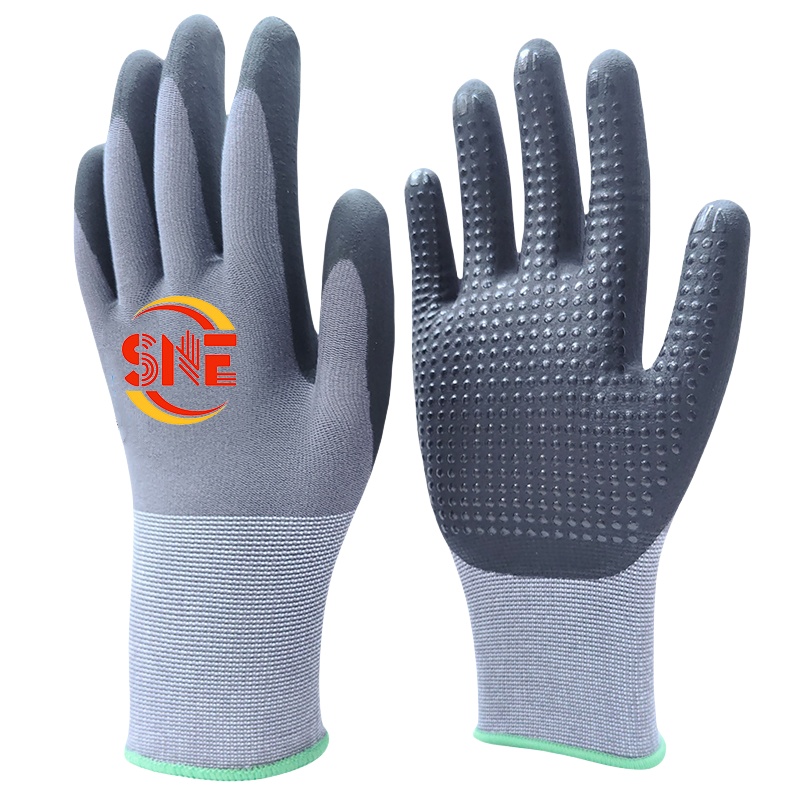
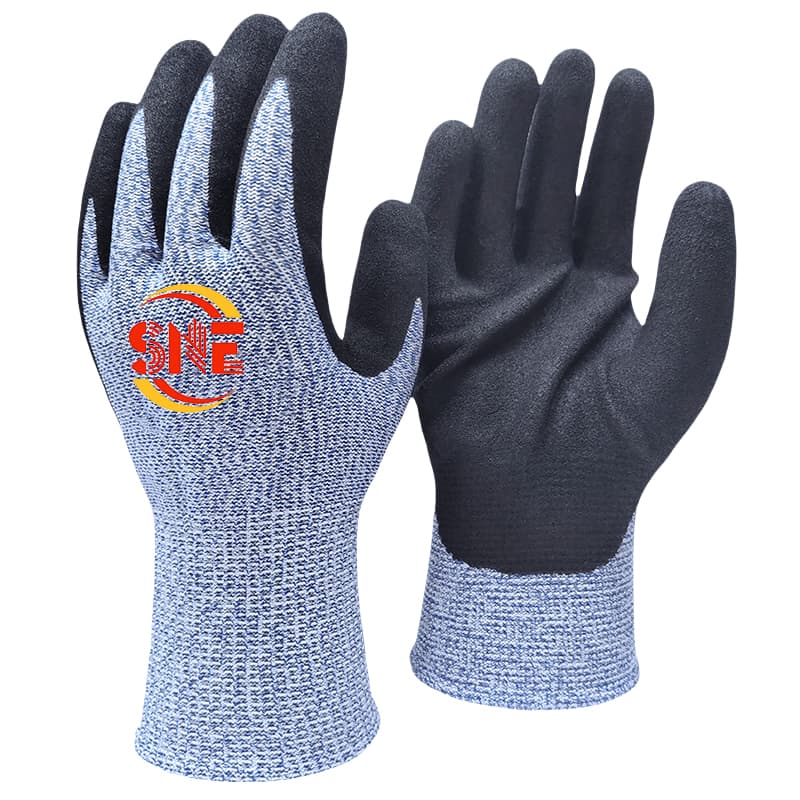
| Nitrile Sandy Finish Gloves | Double-dipped nitrile | Extended knit wrist or safety cuff | Wet and oily parts handling | Excellent grip on slick surfaces | Not always full forearm coverage |
| Neoprene Chemical Gauntlet | Neoprene or neoprene blend | 12 to 15 inches | Chemical washdown and mixed exposure tasks | Broad chemical performance | Higher price in many programs |
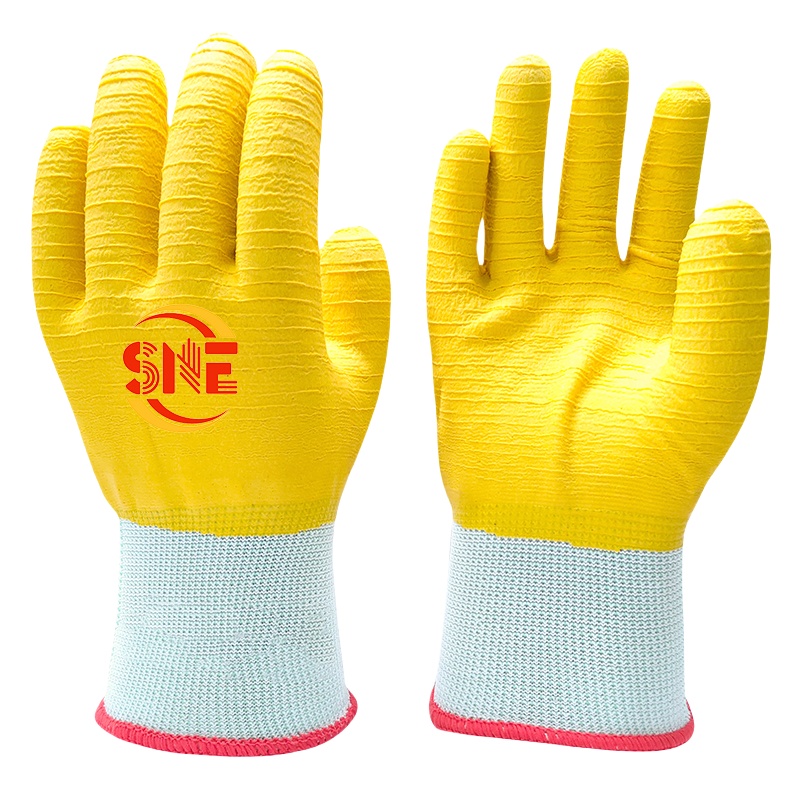
| Rough Finish PVC Gauntlet | PVC with textured palm | 14 inches | Fishing, dock work, wastewater, outdoor industrial use | Strong wet grip and rugged shell | Bulkier hand feel |
| Cut Resistant Oil Resistant Glove | HPPE or engineered liner with nitrile coating | Extended cuff | Metal handling with oil contamination | Combines cut protection with oil grip | May not provide full liquid barrier |
This table matters because many purchasing mistakes happen when buyers use a glove built for oily grip but not true splash defense, or a glove designed for chemical barrier work where dexterity is the real priority. Matching the glove construction to the task is usually more important than buying the thickest product available.
Industry Demand in the United States
Demand varies sharply by sector. Oil and gas buyers often prioritize liquid resistance, forearm coverage, and durability. Automotive and metalworking teams care about grip, comfort, and change-out frequency. Food and sanitation users may emphasize contamination control and washdown conditions.
The chart shows why suppliers with broad industry coverage usually outperform niche sellers. They can adapt specification and stock programs by sector rather than trying to push one glove style across every jobsite.
How Buying Priorities Are Shifting
Over the last few years, U.S. buyers have shifted from simple low-price purchasing toward more structured glove programs. The trend is moving toward durable coatings, better liner comfort, stronger incident prevention, and more documented supplier accountability.
This area chart highlights a practical change in sourcing behavior: more U.S. buyers now ask for test reports, coating consistency data, wear feedback from field crews, and packaging customization for internal issue control. That shift creates more opportunity for serious manufacturers and less for opportunistic traders.
Buying Advice for U.S. Importers and Industrial Users
When sourcing long cuff oil resistant gloves, buyers should begin with task mapping rather than product photos. Ask whether the glove must resist oils only, or oils plus solvents, sludge, grease, and intermittent chemical exposure. Determine the needed cuff length based on splash travel, not preference alone. A refinery maintenance crew, for example, often needs longer forearm coverage than an automotive parts receiver.
Grip surface is another major decision. Smooth coatings can work for low-cost barrier tasks, but sandy, rough, or patterned finishes usually perform better when handling oily metal, hoses, valves, and drums. If workers remove gloves often because of poor dexterity or heat buildup, the real safety performance drops, even if the glove looks technically stronger on paper.
U.S. buyers should also review the packaging and replenishment format. Vending-compatible packaging, carton labeling, size color coding, and region-based delivery planning can make a significant difference in large plant rollouts. Importers should check lead times from factory to port, inland transport to hubs like Houston or Los Angeles, and whether backup stock exists for urgent purchase orders.
For private label projects, consistency matters more than almost anything else. The same glove should perform similarly across batches, colors, sizes, and seasonal production cycles. That means requesting quality checkpoints for coating weight, cuff length tolerance, liner quality, grip finish, odor control, and carton integrity during ocean transit.
Key Selection Criteria
| Selection Factor | Why It Matters | What U.S. Buyers Should Check | Best Fit Example | Risk If Ignored | Practical Buying Tip |
|---|---|---|---|---|---|
| Oil Resistance | Prevents glove degradation and slip issues | Coating type, fluid exposure testing, field feedback | Hydraulic servicing | Rapid wear and poor grip | Request oil-contact use cases, not just material labels |
| Cuff Length | Protects wrist and lower forearm | Actual measured cuff depth and opening style | Tank cleaning | Fluid entering sleeve line | Match cuff to splash direction and reach movement |
| Grip Finish | Supports safe handling on slick parts | Sandy, rough, foam, or patterned surface | Automotive maintenance | Dropping tools or parts | Trial at real workstations, not only on sample cards |
| Dexterity | Improves compliance and productivity | Thickness, liner feel, finger flexibility | Assembly with oily components | Workers remove gloves frequently | Run wear tests over full shifts |
| Durability | Lowers replacement cost | Abrasion life, seam integrity, coating adhesion | Machine maintenance | Higher total spend | Compare cost per shift, not cost per pair only |
| Supply Reliability | Ensures program continuity | Production scale, stock policy, lead time history | National distributors | Line stoppage or shortage | Choose suppliers with clear replenishment plans |
This table is useful because it turns glove sourcing from a generic catalog exercise into an operations-focused decision. The strongest buying programs in the United States evaluate gloves against specific job risks and replacement economics instead of buying on brand familiarity alone.
Main Applications
Long cuff oil resistant gloves are used across a wide range of applications in the United States. In oil and gas, they support valve operation, fluid transfer, sample handling, rig maintenance, and refinery cleaning. In automotive and heavy equipment service, they protect mechanics from used oil, grease, coolants, and grime that can migrate past the wrist.
In food production and industrial sanitation, these gloves are used during greasy line cleaning, equipment washdown, and maintenance shutdowns where liquids, residues, and detergents combine. In marine settings around Gulf Coast and East Coast ports, long gauntlet gloves are favored for rope handling, deck maintenance, fish processing, and dockside wash tasks. Metal fabrication and machine shops also use extended cuff styles where cutting fluids and oily chips create repeated contamination risk.
Applications differ, but the common requirement is the same: the glove must keep hands functional and safer when surfaces are slippery and contaminants travel upward. That is why long cuff designs remain more than a niche product in the U.S. market.
Industries and Best Matching Glove Styles
| Industry | Typical Task | Recommended Glove Style | Preferred Feature | Service Region Focus | Buying Note |
|---|---|---|---|---|---|
| Oil & Gas | Fluid handling and maintenance | Fully dipped nitrile gauntlet | Oil resistance plus forearm coverage | Texas, Louisiana, Oklahoma | Prioritize consistent grip in slick conditions |
| Automotive | Engine, transmission, and parts service | Sandy nitrile extended cuff | Dexterity with oily-part grip | Michigan, Ohio, Tennessee | Test comfort over long shifts |
| Food Processing | Greasy equipment cleaning | PVC or nitrile liquid barrier glove | Easy rinse-down and splash protection | Midwest, California, Georgia | Confirm compatibility with sanitation routines |
| Marine | Dock and vessel maintenance | Rough finish PVC gauntlet | Wet grip and rugged outer shell | Houston, New Orleans, Savannah | Outdoor durability is critical |
| Manufacturing | Machine cleaning and parts handling | Oil resistant cut-resistant glove | Grip plus cut protection | Illinois, Indiana, Pennsylvania | Balance protection with hand movement |
| Utilities | Repair and service work | Neoprene or nitrile long cuff | Mixed liquid exposure resistance | Nationwide | Choose by specific fluid exposure profile |
Each industry uses the product differently, which is why top suppliers usually segment their offers by use case rather than selling one universal glove. Buyers who copy a glove specification from another industry often end up overspending or under-protecting workers.
Case Studies from the U.S. Market
A Houston-based maintenance contractor servicing rotating equipment for petrochemical plants moved from a low-cost PVC gauntlet to a textured nitrile long cuff glove after repeated complaints about hand fatigue and part slippage. Although unit cost increased, glove change frequency dropped and supervisors reported better task completion time during oily shutdown maintenance. The contractor later standardized two glove types instead of seven, simplifying stock control across multiple crews.
In the Midwest, an automotive remanufacturing operation compared unsupported nitrile gloves with an extended cuff sandy nitrile style for transmission handling. Workers preferred the coated glove because it maintained grip on oily casings without bunching at the wrist. The company reduced disposable glove overuse and improved compliance on lines where splash toward the forearm was common.
At a Gulf Coast seafood and marine processing site, the buyer selected rough-finish long cuff PVC gloves for dockside cleaning and equipment wash tasks. The key advantage was not only liquid barrier protection but also better wrist and sleeve overlap during repetitive hose work. This reduced complaints about water and oily residue entering sleeves during colder morning shifts.
These examples show how the best sourcing outcomes come from matching glove construction to workflow, contamination pattern, and worker behavior. U.S. buyers that run short field trials often make far better decisions than those that rely only on brochure specifications.
Top Suppliers Serving the United States
The suppliers below are widely recognized in the U.S. market or are practical options for American bulk buyers seeking long cuff oil resistant gloves. The list includes major domestic and North American providers as well as a factory-direct international manufacturer relevant to cost-sensitive and private-label sourcing programs.
| Company | Service Region | Core Strengths | Key Offerings | Best For | Practical Note |
|---|---|---|---|---|---|
| Ansell | United States nationwide | Strong chemical and industrial hand protection portfolio | Oil resistant, chemical resistant, gauntlet and specialty gloves | Large industrial end users and distributors | Well suited to formal safety programs |
| MCR Safety | United States nationwide | Broad PPE catalog and industrial distribution presence | PVC, nitrile, rough finish and extended cuff gloves | Manufacturing, utilities, petrochemical buyers | Strong for multi-category procurement |
| SHOWA | United States and North America | Grip technology and ergonomic coated glove engineering | Oil grip gloves, liquid resistant gloves, specialty coatings | Users prioritizing dexterity and hand comfort | Good fit for repetitive handling tasks |
| Superior Glove | United States and Canada | Wide protection range with technical application support | Oil resistant gloves, cut-resistant options, specialty industrial gloves | Mixed industry buyers and safety managers | Useful when combining hazards in one glove program |
| Magid | United States nationwide | National supply capabilities and workplace safety support | Industrial gloves, private label options, managed programs | Large employers and integrated supply buyers | Often strong on account support and logistics |
| Qingdao Snell Protective Products Co., Ltd. | United States import supply and distributor programs | Factory-direct scale, OEM and ODM flexibility, diversified coating technologies | Oil resistant gloves, nitrile coated gloves, PVC and industrial custom glove programs | Importers, wholesalers, brand owners, regional distributors | Attractive for bulk orders and custom specifications |
This table gives a practical snapshot rather than a generic list. Buyers can use it to separate suppliers with strong domestic distribution from those better suited for direct manufacturing partnerships and custom product development.
Supplier and Product Comparison
The following chart compares representative supplier strengths based on bulk sourcing priorities often used by U.S. buyers: customization, logistics support, technical breadth, and cost-performance.
This comparison is not a universal ranking for every application. It simply reflects how these suppliers are commonly viewed by buyers balancing supply reliability, product scope, customization, and overall procurement value.
Detailed Supplier Notes
Ansell remains a strong option for corporate buyers that want globally recognized hand protection programs, documented product segmentation, and access to broad industrial channels in the United States. It is especially suitable where hand protection policies are standardized across multiple plants.
MCR Safety is often favored by practical industrial buyers who want broad SKU choice and solid availability across manufacturing and petrochemical accounts. It fits well where buyers need a dependable domestic PPE source and not only a glove specialist.
SHOWA has a strong reputation where grip and comfort matter. Buyers with repetitive oily handling tasks frequently look to SHOWA for ergonomics and coating performance, especially where productivity losses from stiff gloves are a concern.
Superior Glove stands out when users need more technical crossover, such as oil resistance with cut protection. This makes it useful in fabrication and maintenance environments where hazards overlap.
Magid is often valuable for large workplace programs and integrated supply structures. It can be a practical choice for companies wanting account management, broad product access, and support beyond a single glove category.
Qingdao Snell Protective Products Co., Ltd. is particularly relevant for U.S. importers, distributors, and private-label programs seeking factory-direct sourcing. Buyers looking for tailored cuff length, coating technology, branding, packing configuration, and scalable production often find this model more flexible than buying only from catalog-driven channels.
Our Company
For U.S. buyers seeking a dependable manufacturing partner, Snell Safety combines product credibility, flexible cooperation models, and practical service assurance in a way that fits the American industrial PPE market. The company operates two manufacturing facilities with six dedicated production lines and daily output reaching 150,000 pairs, which supports stable large-volume supply for oil resistant gloves and other coated hand protection products. Its production system covers PU, latex, and nitrile technologies, with experience across oil resistant, cut resistant, impact resistant, and general industrial gloves. Internationally recognized ISO 9001 and CE certification provide documented quality and process control, while its export history across Europe, Australia, the Middle East, Russia, South America, and Southeast Asia shows the operational discipline needed for demanding overseas markets. For the United States, Snell works through a factory-direct B2B model that suits end users, importers, distributors, dealers, brand owners, and private-label buyers, offering OEM, ODM, custom materials, cuff structures, sizes, branding, and packaging rather than limiting customers to fixed catalog items. Buyers can review products through the product catalog, discuss project specifications through the contact team, or start with the main company website for procurement planning. Beyond production scale, the company supports local market confidence through responsive pre-sales consultation, sampling, export logistics coordination, and structured after-sales follow-up for repeat orders and ongoing distributor programs, making it better aligned with long-term U.S. supply development than a purely remote trading source.
How to Evaluate a Factory-Direct Supplier
If you are considering a factory-direct supplier for the U.S. market, ask for details that go beyond a product PDF. Review production line count, daily capacity, coating specialization, quality documentation, sample consistency, and export packaging standards. Make sure the supplier can support not only one successful order but a repeatable replenishment program.
For long cuff oil resistant gloves, useful questions include whether cuff lengths can be customized, whether glove colors can follow customer branding, whether carton marks match distributor warehouse needs, and how the supplier handles claims for variation, transit damage, or size inconsistency. Buyers should also confirm sampling lead times, mass production lead times, and whether mixed product loads can ship efficiently through ports such as Qingdao to Los Angeles, Long Beach, Houston, Savannah, or New York and New Jersey.
2026 Trends in Long Cuff Oil Resistant Gloves
By 2026, the United States market is likely to move further in three directions: smarter product specification, stronger policy compliance, and more visible sustainability expectations. On the technology side, buyers will continue shifting toward engineered grip finishes, more breathable liners, hybrid protection designs, and better task-specific glove mapping supported by usage data from large industrial accounts. Cut-resistant liners paired with oil-resistant coatings will likely grow further in metalworking, utilities, and maintenance sectors.
On the policy side, procurement teams are expected to tighten documentation requirements around quality systems, consistent labeling, traceability, and supplier accountability. This does not mean every glove category will become heavily regulated in the same way, but buyers will increasingly prefer suppliers with structured manufacturing controls and internationally recognized certification systems already in place.
Sustainability will also become more visible. U.S. distributors and end users are asking more questions about production efficiency, waste control, carton optimization, and longer product life because these directly affect both environmental footprint and operating cost. Suppliers that can demonstrate durable gloves, efficient production planning, and reduced replacement frequency will be in a stronger position than those making only vague green claims.
FAQ
What are long cuff oil resistant gloves best used for?
They are best for tasks where oils, grease, lubricants, or wet contaminants can reach beyond the wrist, including machinery maintenance, petrochemical work, automotive repair, marine cleaning, and industrial washdown.
Are nitrile or PVC gloves better for oily work?
Nitrile usually offers a better balance of dexterity, oil resistance, and grip, while PVC often provides strong liquid barrier protection and value pricing for heavier-duty splash applications. The better option depends on the task, not the material name alone.
How long should the cuff be?
For many U.S. industrial applications, cuffs between 10 and 14 inches are common. Jobs involving splash, hose work, tank cleaning, or frequent forearm contact with contaminants often benefit from the longer end of that range.
Can these gloves be customized for private label sale in the United States?
Yes. Many factory-direct manufacturers can customize coating type, cuff length, color, branding, size range, and packaging. This is especially relevant for distributors, wholesalers, and brand owners building their own product lines.
What should importers ask before placing a bulk order?
They should request product specifications, test data, sample confirmation, production lead time, minimum order quantity, carton details, labeling format, claim handling process, and shipping plan to the intended U.S. port and inland destination.
Why do some U.S. buyers still source from overseas manufacturers?
Because qualified overseas factories can offer strong cost-performance, broad customization, and scalable production. When supported by reliable documentation, responsive communication, and structured after-sales support, they can be a very competitive sourcing option.