2026-08-12
Share This Article
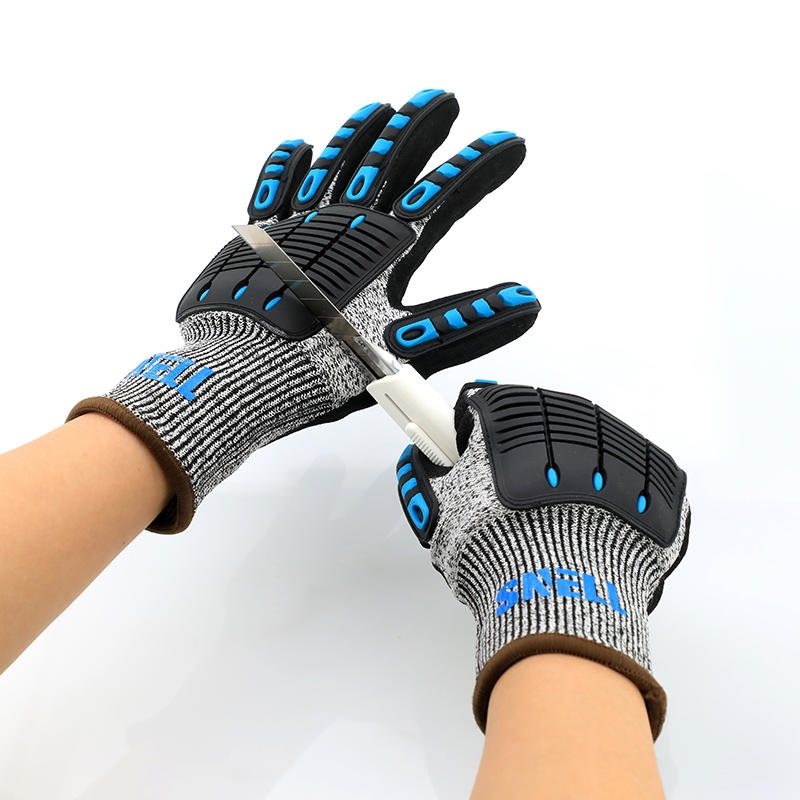
Level 2 vs Level 3 Impact Gloves in the United States
Quick Answer

For most buyers in the United States, the difference between level 2 vs level 3 impact gloves comes down to impact intensity, crush risk, and jobsite severity. Level 2 impact gloves are usually the better fit for general construction, warehouse handling, delivery, equipment service, utilities, and automotive work where workers need flexibility, grip, and lighter back-of-hand protection. Level 3 impact gloves are the stronger choice for oil and gas, mining, heavy manufacturing, demolition, steel, and high-energy maintenance tasks where pinch points, strike hazards, and repeated blunt-force exposure are more severe.
If you are buying for mixed-use teams, level 2 often gives the best balance of comfort, dexterity, and compliance. If you are buying for crews exposed to pipe handling, rigging, heavy tools, drilling components, or severe material impact, level 3 is usually worth the added bulk and cost. In the U.S. market, leading names commonly considered by safety managers include HexArmor, MCR Safety, Mechanix Wear, Ironclad, Superior Glove, and PIP. Qualified international manufacturers can also be a strong option when they hold relevant certifications, support U.S. documentation needs, and provide dependable pre-sales and after-sales service, especially when buyers want better cost-performance for large-volume contracts.
Understanding the U.S. Market for Impact-Resistant Gloves

The United States remains one of the largest and most mature markets for impact-resistant hand protection. Demand is especially strong in Texas oilfields, Gulf Coast refining, Appalachian energy operations, Midwest metal fabrication, California logistics, and major construction corridors in Florida, Georgia, Arizona, and North Carolina. Buyers in Houston, Chicago, Los Angeles, Atlanta, and Pittsburgh often evaluate gloves not only for impact performance but also for cut resistance, oil grip, touchscreen usability, and heat tolerance because jobs rarely involve a single hazard.
In practice, U.S. purchasing decisions are shaped by jobsite safety culture, insurance pressure, OSHA-driven risk reduction, labor retention, and total cost of ownership. A glove that lowers minor hand injuries and improves worker acceptance can create measurable savings through fewer incidents, less downtime, and better compliance. This is why the debate around level 2 vs level 3 impact gloves is not simply technical. It is a procurement decision tied to productivity, worker comfort, replacement frequency, and risk severity.
Large buyers near ports such as Los Angeles, Long Beach, Houston, Savannah, and New York-New Jersey also pay attention to supply continuity. Delays in safety glove replenishment can interrupt shutdowns, maintenance cycles, and seasonal fieldwork. That makes supplier reliability almost as important as the glove specification itself. Companies that can maintain stable lead times, offer private labeling, and support mixed carton programs often earn preference in distributor and contractor channels.
What Level 2 and Level 3 Mean in Practical Terms

When buyers compare level 2 vs level 3 impact gloves, they are typically looking at gloves tested to recognized impact protection criteria for back-of-hand performance. The higher the level, the stronger the glove is expected to perform against certain measured impact forces. In field terms, level 2 is a mid-to-high protection category suited to many everyday industrial tasks, while level 3 is generally selected when the risk of knuckle strikes, finger crush, or repeated blunt impact is more serious.
That said, higher impact protection does not automatically mean a better glove for every role. A level 3 glove may reduce dexterity, increase heat buildup, and feel too bulky for detailed assembly, scanning, or repetitive handling. A level 2 glove may encourage better worker adoption because it is lighter and easier to wear all day. The right choice depends on the job, not just the test level.
Key Differences Between Level 2 and Level 3 Gloves
| Factor | Level 2 Impact Gloves | Level 3 Impact Gloves | What It Means for U.S. Buyers |
|---|---|---|---|
| Impact protection | Moderate to high | High to very high | Level 3 fits higher-energy environments such as drilling, mining, and demolition. |
| Dexterity | Better finger movement | Usually lower due to added TPR coverage | Level 2 is often preferred for mechanics, warehouse crews, and service technicians. |
| Bulk | Lighter profile | Heavier and more structured | Bulk affects comfort, compliance, and precision work. |
| Worker comfort | Better for long shifts | Can run warmer during extended wear | Important for summer outdoor work in Texas, Arizona, and the Southeast. |
| Typical price | Lower | Higher | Level 3 may still save money if injury risk is materially lower. |
| Best-fit industries | Construction, logistics, utilities, automotive | Oil and gas, mining, steel, heavy maintenance | Selection should match hazard intensity, not just procurement preference. |
| Replacement cycle | Often shorter in harsh environments | Can be longer if build quality is stronger | Durability must be checked alongside unit cost. |
This comparison shows why many U.S. safety managers split their programs instead of choosing one impact level for every employee. They may assign level 2 to mobile teams and level 3 to high-exposure crews. That hybrid model often improves both protection and budget control.
Product Types Commonly Sold in the United States
Impact gloves in the U.S. market are rarely differentiated by impact level alone. Buyers usually compare palm coating, liner material, cut level, cuff design, climate suitability, and industry fit. This is especially true for distributors serving multiple states and industries.
| Product Type | Common Construction | Typical Use | Best Match |
|---|---|---|---|
| Synthetic leather impact gloves | TPR back, reinforced palm | General maintenance and construction | Level 2 or level 3 depending on hazard exposure |
| Nitrile-coated impact gloves | Cut liner plus nitrile palm | Oily handling and assembly | Level 2 for grip and flexibility |
| Sandy nitrile impact gloves | Grip-focused palm finish | Oil and gas, tools, wet materials | Often level 3 in harsher jobs |
| Cut-and-impact hybrid gloves | HPPE or engineered yarn liner with TPR | Metal handling and fabrication | Used when blunt and sharp hazards overlap |
| Winter impact gloves | Insulated liner with weather-resistant shell | Cold storage, utilities, outdoor work | Level depends on climate and impact needs |
| Hi-vis impact gloves | Bright shell with reflective details | Roadwork, utilities, logistics yards | Improves visibility and hand signaling |
| Waterproof impact gloves | Barrier membrane and sealed structure | Marine, energy, all-weather operations | Useful for Gulf Coast and Pacific Northwest crews |
For U.S. end users, the best product type is usually the one that aligns with the full hazard profile. For example, a warehouse team may need level 2 gloves with good touchscreen capability and low heat buildup, while a refinery turnaround team may need level 3 gloves with stronger TPR structure, oil grip, and higher cut resistance.
Market Growth and Procurement Direction
The U.S. market for impact-resistant gloves continues to expand as employers move from reactive PPE purchasing to hazard-specific hand protection programs. This growth is supported by stricter contractor prequalification standards, stronger safety expectations from major industrial owners, and better data on hand injury costs.
The line chart reflects a realistic growth pattern in U.S. demand, driven by sustained investment in infrastructure, energy, warehousing, and domestic manufacturing. The strongest purchasing activity tends to come from national safety distributors, industrial MRO channels, large contractors, and brand owners that private-label products sourced through global manufacturing networks.
Industry Demand by Sector
Different sectors purchase impact gloves for different reasons. Oil and gas buyers prioritize crush and strike protection. Logistics operators care more about compliance, comfort, and handling efficiency. Automotive plants often seek a balance of dexterity, cut resistance, and repetitive wear comfort.
The bar chart illustrates where the highest demand concentration tends to sit. Oil and gas remains the strongest segment for level 3 products, while construction and manufacturing create large recurring volume for level 2 and hybrid offerings.
Trend Shift in Buyer Preferences
U.S. buyers are increasingly moving away from single-spec glove programs toward role-specific hand protection. That shift is encouraging suppliers to offer more combinations of impact protection, cut levels, breathable liners, and grip technologies.
The area chart highlights a meaningful trend: safety managers in the United States increasingly prefer assigning different gloves to different tasks instead of forcing one model across all departments. This is one reason the level 2 vs level 3 discussion matters more than ever.
Buying Advice for U.S. Procurement Teams
The first step is to map the real hazard. If workers handle sheet metal and power tools but only occasional blunt impact, a cut-and-impact level 2 glove may be the best fit. If they regularly move drill pipe, castings, rigging gear, or demolition debris, level 3 should be considered sooner. Buyers should test gloves in live tasks, not just compare catalog data.
Comfort matters because non-compliance destroys protection value. A lighter level 2 glove may outperform a more protective level 3 glove if workers constantly remove it to regain dexterity. For this reason, trials should include wear time, hand fatigue, thermal comfort, and ease of gripping fasteners, controls, scanners, and tools.
Procurement teams should also compare carton economics, replenishment speed, and packaging options. A glove with lower unit pricing but frequent replacement may cost more over a full quarter. Similarly, imported gloves with strong documentation and stable lead times may outperform domestic brands if the supply chain is managed correctly through West Coast, Gulf, or East Coast distribution channels.
Common Applications by Job Function
| Application | Preferred Impact Level | Why It Is Chosen | Important Extra Feature |
|---|---|---|---|
| General commercial construction | Level 2 | Good balance of comfort and protection | Grip in dry and light wet conditions |
| Pipe handling and drilling support | Level 3 | Higher strike and crush exposure | Oil grip and cuff security |
| Warehouse and freight handling | Level 2 | Fast movement and scanning require dexterity | Touchscreen compatibility |
| Metal fabrication | Level 2 or 3 | Depends on cut hazard and impact severity | Cut-resistant liner |
| Mining and quarry operations | Level 3 | Higher blunt-force risk and rough surfaces | Durable palm reinforcement |
| Automotive maintenance | Level 2 | Mechanics need feel and tool control | Oil resistance |
| Utilities and field service | Level 2 | Long shift comfort and varied movement | Hi-vis shell or cold-weather option |
This table shows how application-specific buying leads to smarter results. It also explains why many U.S. distributors stock both categories rather than trying to replace one with the other.
How Major U.S. Industries Use These Gloves
Construction companies across states such as Texas, Florida, and Nevada often prefer level 2 gloves for framing, material handling, and equipment work because crews need flexibility during long shifts. However, demolition and heavy civil teams may move to level 3 when hand strikes against concrete, steel, or rigging gear become more likely.
Oil and gas operations in Texas, New Mexico, North Dakota, and Pennsylvania commonly lean toward level 3 because workers face impact and pinch hazards around tools, valves, tubular goods, and heavy components. Comfort still matters, but durability and impact coverage are usually weighted more heavily.
Manufacturing plants in Ohio, Michigan, Indiana, and Illinois often adopt a mixed strategy. Assembly, maintenance, stamping, and material movement can involve different combinations of cut, abrasion, and impact hazards. In these settings, level 2 gloves are common for routine use, while level 3 gloves are reserved for selected high-risk tasks.
In warehousing and logistics, especially around inland hubs like Dallas-Fort Worth, Chicago, Columbus, and the Port of Savannah network, level 2 gloves are more common because they support package handling, scanning, lifting, and repetitive movement with less fatigue.
Case Studies from the U.S. Market
A Texas energy contractor switched from a single premium level 3 glove to a split program using level 2 for inspection, driving, and light service tasks while keeping level 3 for pipe handling and mechanical operations. The result was improved worker acceptance, lower average glove cost per employee, and fewer complaints about heat and stiffness.
An Indiana fabrication plant moved the opposite direction. It had been using level 2 gloves across all departments but found recurring hand injuries in heavy material transfer and tool-change operations. After moving high-risk stations to level 3 cut-and-impact gloves, the company reported better hazard alignment and lower incident frequency.
A large Southeast warehouse operator tested level 3 gloves for all dock staff but reversed the decision after employees reported reduced scanning speed and grip sensitivity. The company adopted breathable level 2 gloves with reinforced palms instead, which improved compliance and preserved productivity.
These examples show that the best answer to level 2 vs level 3 impact gloves depends on task segmentation, not marketing language.
Local Suppliers and Major Brands Serving the United States
U.S. buyers often work with a mix of domestic brands, national distributors, and international factories supplying private-label or OEM programs. The supplier landscape includes major safety brands with strong channel reach, as well as factory-direct partners that help control costs for large-volume contracts.
| Company | Service Region | Core Strengths | Key Offerings |
|---|---|---|---|
| HexArmor | United States and Canada | Strong high-performance hand protection positioning, advanced task-specific designs | Impact gloves, cut-resistant gloves, high-hazard industrial PPE |
| MCR Safety | Nationwide U.S. | Broad industrial channel presence, multiple price tiers, strong distributor relationships | Impact gloves, coated gloves, safety glasses, workwear |
| Mechanix Wear | Nationwide U.S. | High brand recognition, mechanic-friendly fit, strong worker acceptance | Impact gloves, automotive gloves, tactical and trade gloves |
| Ironclad Performance Wear | United States | Task-oriented glove design, strong construction and utility presence | Impact protection, grip gloves, jobsite hand protection |
| Superior Glove | United States and North America | Wide technical range, strong cut-and-impact combinations | Impact gloves, cut-resistant gloves, specialty industrial gloves |
| PIP | Nationwide U.S. and global channels | Large catalog breadth, distributor support, industrial program management | Impact gloves, coated gloves, PPE systems |
| Ringers Gloves | United States, especially energy and industrial sectors | Known for oil and gas applications, rugged impact design heritage | Heavy-duty impact gloves, high-visibility industrial gloves |
For U.S. buyers, this supplier set covers a wide spectrum from premium specialist products to broad industrial catalogs. The best fit depends on whether the priority is brand recognition, technical specialization, or supply-chain flexibility.
Supplier Comparison by Program Fit
This comparison chart is not a certification ranking. It is a practical illustration of how buyers often evaluate suppliers based on breadth, channel support, and suitability for common U.S. industrial programs.
Detailed Analysis of Supplier Options
HexArmor is often considered when the job is high hazard and the buyer needs a premium technical solution. It is especially relevant in heavy industry, utilities, and specialized applications where protection performance is weighted above purchase price.
MCR Safety is attractive for buyers needing broad stocking support across the United States. Its channel reach and price segmentation make it practical for distributors, contractors, and industrial accounts with varied user groups.
Mechanix Wear has strong end-user recognition and is often chosen when worker adoption is critical. In automotive, maintenance, and general trade environments, comfort and familiarity can make a real difference in compliance.
Ironclad has built a reputation around task-based glove design and remains relevant in construction and utility applications where practical fit, durability, and hand movement matter.
Superior Glove stands out when cut protection and impact protection need to be combined in one program. This is valuable in fabrication, glass, metal handling, and mixed manufacturing environments.
PIP appeals to larger accounts and distributors that want a broad PPE partner, not just a glove brand. It can be a strong fit when centralized procurement teams are standardizing across multiple categories and locations.
Ringers Gloves remains a recognizable name in energy and high-abuse environments, especially where rugged back-of-hand structures and visibility features are expected.
Our Company in the U.S. Supply Context
For buyers seeking factory-direct alternatives, Snell Safety provides a practical option for U.S. importers, distributors, and private-label programs that need dependable impact glove manufacturing with cost control. The company operates two manufacturing facilities with six production lines and a daily capacity of 150,000 pairs, which supports stable bulk supply for North American contracts. Its product strength is built around impact-resistant and cut-resistant glove engineering, diversified PU, latex, and nitrile coating technologies, and internationally recognized systems such as ISO 9001 and CE compliance that help verify disciplined production and quality control for demanding export markets. In commercial terms, Snell works across flexible cooperation models, serving distributors, wholesalers, brand owners, industrial buyers, and custom programs through OEM, ODM, private label, bulk supply, and product customization in materials, coatings, sizes, and branding. For U.S. buyers, that means one source can support standard catalog demand, regional dealership development, or tailored hand-protection lines. Just as important, the company already serves major overseas markets and supports buyers with technical consultation, samples, export logistics, and responsive pre-sale and after-sale coordination, which gives American customers clearer documentation, smoother purchasing communication, and stronger long-term supply assurance than a purely transactional exporter. Buyers that want to discuss specifications, lead times, or custom projects can review the product range, learn more about the manufacturer, or reach out through the U.S.-focused contact page.
What U.S. Buyers Should Ask Before Ordering
| Question | Why It Matters | Best Practice | Risk If Ignored |
|---|---|---|---|
| What specific task is the glove for? | Prevents overbuying or under-protecting | Separate light, medium, and high-impact tasks | Wrong glove selection and low compliance |
| Does the worker also need cut protection? | Many industrial hazards overlap | Match impact level with cut rating and grip | Multiple glove changes or injury exposure |
| How hot is the work environment? | Heat affects wear acceptance | Trial gloves in real climate conditions | Workers remove gloves during tasks |
| How often are gloves replaced? | True cost is not unit price alone | Measure wear life per task and crew | Budget overruns and stockouts |
| Is branding or customization needed? | Important for distributors and brand owners | Choose OEM-capable suppliers early | Limited differentiation and delayed launch |
| What is the replenishment lead time? | Ports, seasons, and shutdowns affect supply | Build safety stock for critical operations | Operational interruption and rushed buys |
| What support is available after purchase? | Documentation and fit issues are common | Use suppliers with active service follow-up | Program failure and unresolved complaints |
This decision framework helps buyers move from product browsing to structured procurement. In the U.S., the most successful glove programs usually come from real wear trials plus disciplined supplier evaluation.
2026 Trends: Technology, Policy, and Sustainability
Looking toward 2026, the U.S. market for impact gloves is likely to keep moving toward more specialized products. Manufacturers are increasing use of engineered yarns, lighter TPR structures, breathable coatings, and ergonomic back-of-hand mapping that delivers protection without as much stiffness. This will narrow the comfort gap between level 2 and level 3 products.
Policy and compliance trends will also matter. More industrial owners are requiring documented PPE selection logic during contractor onboarding, especially in energy, infrastructure, and heavy manufacturing. Buyers should expect stronger demand for written hazard assessments, consistent glove coding by task, and clearer proof that a glove’s protective design matches the work environment.
Sustainability is becoming a real factor in corporate procurement, even in industrial PPE. By 2026, more U.S. buyers will ask about manufacturing efficiency, waste reduction, packaging optimization, and product longevity rather than focusing only on recycled marketing claims. Longer-lasting gloves, lower defect rates, and better supply planning may matter more than simplistic eco-label messaging. Suppliers that can demonstrate disciplined production, fewer quality failures, and efficient logistics into U.S. ports will be better positioned.
Digital procurement tools are also improving. National distributors and large employers increasingly track glove usage by site, task, and injury category. That data makes it easier to justify whether a level 2 or level 3 glove truly reduces incidents and delivers value.
FAQ
Are level 3 impact gloves always better than level 2?
No. Level 3 gloves provide stronger impact protection, but they can be bulkier and less flexible. If a job requires dexterity, lighter handling, or all-day comfort, level 2 may be the better operational choice.
Which industries in the United States most often need level 3 gloves?
Oil and gas, mining, heavy manufacturing, steel, demolition, and some utility maintenance operations are the most common users because the risk of blunt impact and crush injury is higher.
Can level 2 gloves still be used in construction?
Yes. In fact, they are often the preferred option for general construction because they balance hand protection with movement, grip, and reduced fatigue.
Should I choose based on price?
Price matters, but total value matters more. A cheaper glove that wears out quickly or gets rejected by workers can cost more than a better-fitting glove with a longer replacement cycle.
Do U.S. distributors buy from overseas manufacturers for impact gloves?
Yes. Many U.S. brands, importers, and private-label programs work with qualified international factories when the supplier can meet technical requirements, documentation standards, and service expectations while offering competitive pricing.
How should I test level 2 vs level 3 impact gloves before a bulk order?
Run a field trial with representative users in each job type. Track comfort, dexterity, grip, wear life, and worker acceptance for at least several shifts, then compare results against the hazard profile and replacement cost.
Final Take for U.S. Buyers
The practical answer to level 2 vs level 3 impact gloves in the United States is simple: choose level 2 when flexibility, comfort, and broad everyday usability matter most, and choose level 3 when the work involves heavier strikes, crush points, and more severe hand impact exposure. The best programs do not force one glove onto every role. They align glove level with real task risk, climate, wear time, and worker acceptance. In the U.S. market, that approach usually delivers better safety outcomes, stronger compliance, and smarter long-term purchasing.