2026-07-04
Share This Article
Leather vs Synthetic Construction Gloves in the United States
Quick Answer

For most construction work in the United States, leather gloves are the better choice when durability, abrasion resistance, heat tolerance, and heavy-duty handling matter most. Synthetic construction gloves are usually the better option when workers need lighter weight, better grip in wet conditions, improved dexterity, touchscreen compatibility, and lower replacement cost. If your crews handle rebar, lumber, masonry, rigging, demolition debris, or rough materials every day, leather usually delivers longer service life. If your teams do framing, warehouse support, finishing work, mechanical installation, general site maintenance, or mixed indoor-outdoor tasks, synthetic gloves often improve comfort and speed.
A practical buying rule is simple: choose leather for rugged, high-wear, high-friction jobs; choose synthetic for flexible, fast-moving, precision-oriented work; and use hybrid designs when crews switch tasks throughout the day. U.S. buyers in markets such as Houston, Chicago, Los Angeles, Atlanta, and New York often standardize both types instead of forcing one glove across all applications. Qualified international suppliers can also be worth considering, especially manufacturers with recognized certifications, reliable OEM support, and responsive pre-sales and after-sales service, because they can offer strong cost-performance value for bulk construction procurement.
United States Construction Glove Market Overview

The U.S. construction glove market is shaped by a mix of OSHA-driven safety expectations, contractor labor shortages, pressure to reduce hand injuries, and the need to match glove performance to specific work environments rather than buying one generic glove for all crews. Across major project centers such as Dallas, Phoenix, Miami, Seattle, and the Inland Empire in California, purchasing managers are paying closer attention to glove lifespan, grip performance, fit consistency, and worker acceptance. A glove that workers remove because it feels bulky or hot often fails in real-world safety terms, even if the material looks strong on paper.
Leather gloves remain deeply established on American job sites because they perform well in rugged conditions and are familiar to supervisors and tradespeople. Cowhide, goatskin, pigskin, split leather, and grain leather all remain common. At the same time, synthetic gloves have grown rapidly thanks to advances in palm coatings, engineered fabrics, impact back protection, cut-resistant liners, and washable designs. In practical terms, many U.S. buyers no longer ask whether leather or synthetic is universally better. They ask which material best fits the risk profile, weather exposure, replacement cycle, and labor task.
Regional conditions matter. In the Gulf Coast and Southeast, humidity, rain, and sweaty conditions push some users toward synthetic gloves with breathable backs and nitrile or PU grip surfaces. In colder Northern markets, insulated leather gloves and lined synthetic gloves both have strong demand, depending on whether the work is rough handling or tool-intensive installation. In western states with strong solar exposure, comfort, dexterity, and reduced hand fatigue become a bigger purchasing factor during long outdoor shifts.
The line chart shows a realistic upward market index trend, reflecting increased emphasis on hand protection, infrastructure projects, warehouse-linked construction logistics, and more specialized glove purchasing. Growth is not only driven by project volume, but also by a shift from low-cost basic gloves toward task-specific gloves with better coatings, ergonomic cuts, and compliance documentation.
Core Differences Between Leather and Synthetic Construction Gloves

Leather and synthetic gloves solve different job-site problems. Leather generally provides natural toughness and a familiar break-in feel. It molds to the hand over time and often performs well in abrasive environments. Synthetic gloves, by contrast, are engineered for consistency. Manufacturers can tune them for grip, flexibility, breathable comfort, impact absorption, touch use, water resistance, and cut protection more precisely than many traditional leather designs.
For procurement teams, the key issue is not preference but total use-case match. A glove that lasts longer but slows work may not be the best option. A glove that is comfortable but tears quickly around concrete block, rough lumber, or steel edges may increase replacement cost and injury risk. That is why larger U.S. contractors and industrial distributors often segment glove programs by trade and application.
| Factor | Leather Gloves | Synthetic Gloves | Best Fit in U.S. Construction |
|---|---|---|---|
| Durability in abrasion | Usually very strong, especially full-grain or split leather | Varies by fabric and palm reinforcement | Leather for demolition, rigging, masonry, material handling |
| Dexterity | Moderate, improves after break-in | Usually higher from first wear | Synthetic for installation, light tools, finishing |
| Grip in wet conditions | Can decline when soaked unless treated | Often better with nitrile, latex, or PU textures | Synthetic for humid or wet-site work |
| Heat tolerance | Often better for moderate heat and friction | Depends heavily on material blend | Leather for welding-adjacent or hot material handling |
| Breathability | Can run hot in summer | Often lighter and more breathable | Synthetic for long summer shifts in Texas or Florida |
| Washability | Limited and shape can change | Usually easier to clean and maintain | Synthetic for frequent replacement and hygiene programs |
| Cost consistency | Can fluctuate with leather supply | Usually more stable in bulk programs | Synthetic for predictable contract purchasing |
| User acceptance | Trusted by traditional trades | Popular with younger crews and mixed-task teams | Depends on trade culture and application |
This table helps clarify why neither glove type should be treated as a universal winner. Leather dominates in punishment-heavy work, while synthetic often wins where grip, mobility, and comfort drive productivity. In many U.S. accounts, the best program includes both.
Where Leather Gloves Perform Best
Leather gloves remain highly effective on jobs involving rough materials, repetitive dragging or lifting, and exposure to friction or moderate heat. They are common on roadwork crews, steel handling teams, concrete and masonry contractors, heavy framing operations, and utility support tasks. Premium grain leather options offer better dexterity than many users expect, while split leather provides cost-efficient ruggedness for tougher environments.
Common strengths include resistance to wear from block, brick, timber, cable, chain, and general rough stock. Leather also tends to survive repeated contact with abrasive job-site surfaces better than thin synthetic gloves. On U.S. projects where workers unload materials, move pallets, secure loads, or handle scaffold components, leather gloves remain a default choice because they combine hand protection with perceived toughness.
However, leather has limits. It can stiffen when wet, become heavier after saturation, and lose some flexibility in cold or damp conditions if not properly treated. It may also reduce tactile sensitivity for workers doing repeated fastening, measuring, or light tool work. When contractors issue leather gloves for tasks requiring precision, workers sometimes remove them, which undermines safety compliance.
Where Synthetic Gloves Perform Best
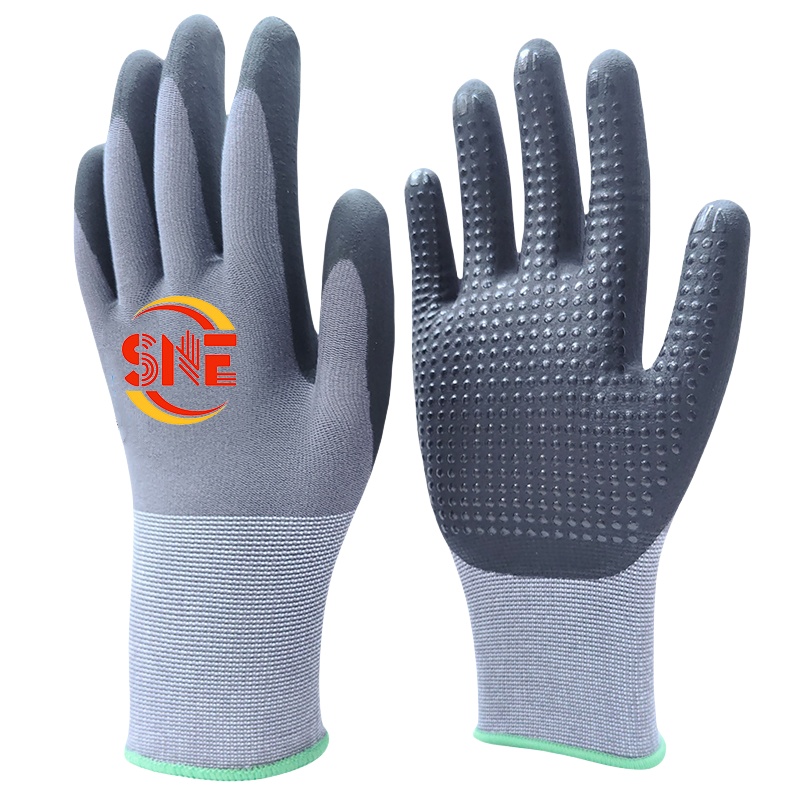
Synthetic construction gloves are particularly effective when a worker needs flexibility, consistent grip, quick movement, and lower hand fatigue. This makes them popular for framing support, HVAC installation, electrical rough-in support, mechanical assembly, facility maintenance, landscaping around construction sites, and warehouse-to-site material flow. Synthetic gloves are also easier to design around modern expectations such as touchscreen fingertips, impact TPR backings, breathable mesh backs, and cut-resistant liners.
For U.S. contractors operating across multiple climates, synthetic gloves also simplify standardization. Instead of issuing one hot, bulky glove to all crews, buyers can select lightweight models for warm weather, foam nitrile grip gloves for slippery work, and reinforced synthetic leather gloves for mixed heavy-light tasks. This flexibility is a major reason synthetic glove share keeps growing in distribution hubs from Atlanta to Southern California.
The main weakness is that lower-grade synthetic gloves can fail quickly under severe abrasion, edge exposure, or friction-heavy handling. Not all synthetic gloves are equal. Buyers need to check palm reinforcement, seam quality, coating adhesion, liner gauge, and cuff stability rather than judging only by price.
Product Types Commonly Used in U.S. Construction
The construction glove market in the United States is no longer a simple leather-versus-fabric category. Buyers can choose from pure leather, pure synthetic, and increasingly popular hybrid designs that combine synthetic backs with leather palms or synthetic shells with coated grip zones. The right selection depends on task repetition, tool use, weather, replacement interval, and injury history.
| Glove Type | Main Material | Typical U.S. Use | Primary Advantage |
|---|---|---|---|
| Full-grain leather glove | Cowhide or goatskin | Rigging, heavy handling, utility work | Long wear and strong abrasion resistance |
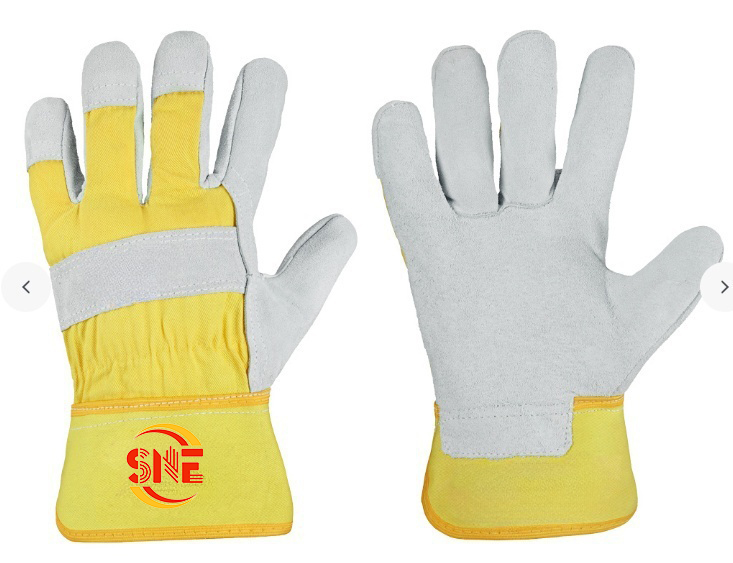
| Split leather work glove | Split cowhide | Masonry, demolition, rough site cleanup | Cost-effective rugged protection |
| Synthetic leather glove | Microfiber synthetic palm | General construction, mixed trade work | Good dexterity with reinforced wear zones |
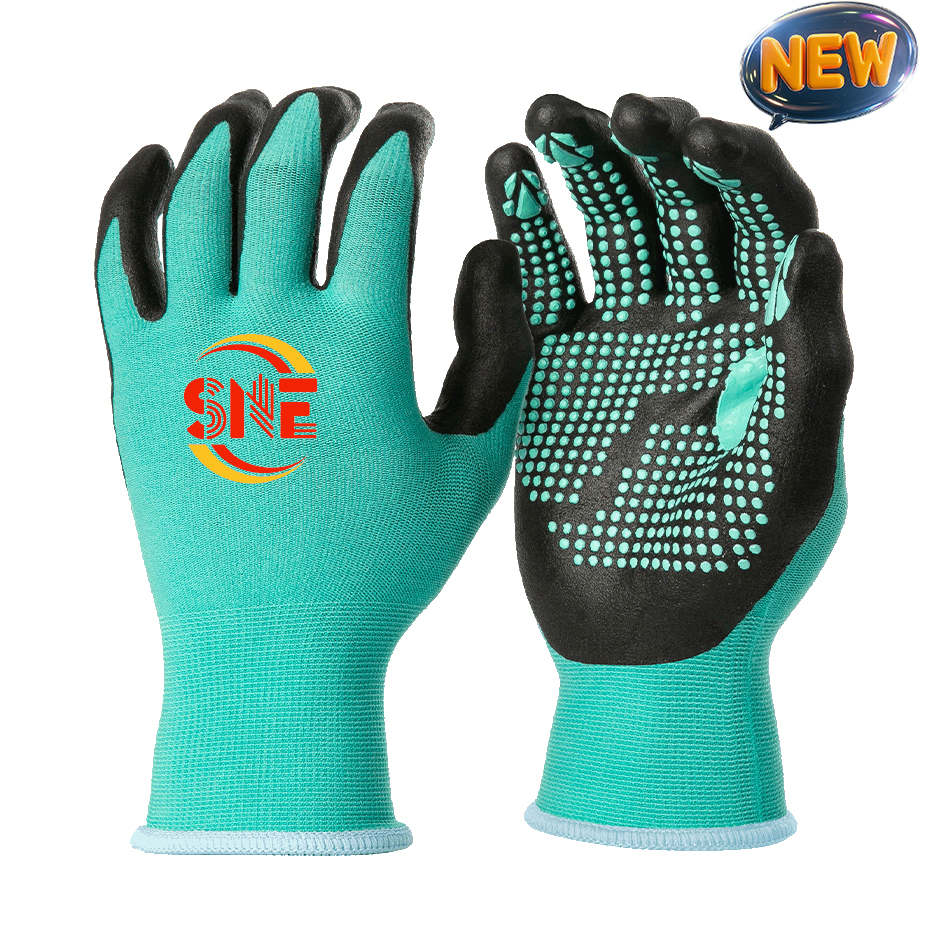
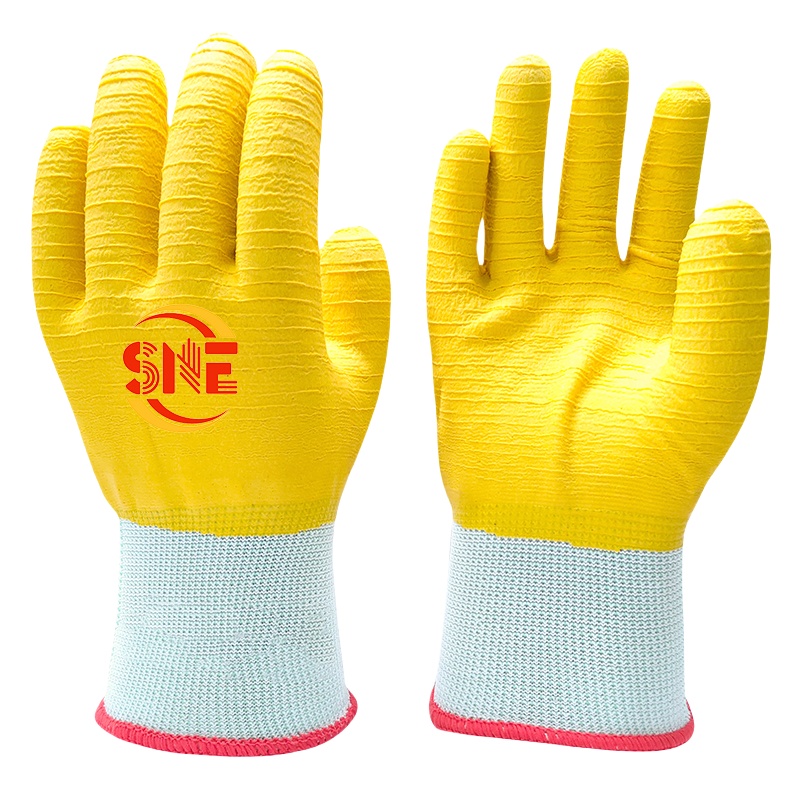
| Coated knit glove | HPPE or polyester with nitrile or PU | Material handling, finishing, warehouse support | Grip and light touch control |
| Impact-resistant synthetic glove | Synthetic shell with TPR back | Oilfield construction, steel work, utilities | Added back-of-hand protection |
| Hybrid construction glove | Leather palm plus synthetic back | Multi-task crews and supervisors | Balances durability and comfort |
| Cut-resistant construction glove | Engineered liner with coated or reinforced palm | Sheet metal, glazing support, framing hardware | Helps reduce laceration risk |
This product table shows why contractors should define use categories before ordering. A low-cost split leather glove may outperform an advanced synthetic glove in one task, while failing badly in another. The right category saves money by reducing both injuries and over-specification.
Buying Advice for Contractors, Distributors, and Procurement Teams
U.S. buyers should begin with task mapping, not material preference. Review the top ten hand-intensive activities on each job type. Separate heavy abrasion, wet grip, tool precision, cold weather, impact risk, and cut hazard exposures. That process quickly reveals whether leather, synthetic, or a mixed fleet is the best choice.
Next, calculate total delivered cost per usable shift, not just purchase price. A glove that costs 30% more but lasts twice as long may be the better buy. Likewise, a glove that improves dexterity may reduce worker removal rates and improve compliance. Buyers should also ask about size consistency, carton labeling, replenishment lead times, customization options, and private labeling if they operate a regional distribution brand.
Testing matters. The best practice is a controlled field trial across two or three crews in different climates or trade conditions. Compare glove life, comfort feedback, incident reports, and re-order preference. For national distributors serving both union and non-union contractors, field feedback from Chicago, Houston, and Los Angeles often exposes whether one glove can scale nationally or needs regional variation.
| Buying Factor | What to Verify | Why It Matters | Preferred for Leather or Synthetic |
|---|---|---|---|
| Task fit | Actual tools, materials, and hazard profile | Prevents overbuying or under-protection | Both |
| Grip performance | Dry, oily, wet, dusty surface control | Affects handling safety and speed | Often synthetic |
| Abrasion life | Palm wear rate and seam survival | Drives replacement cost | Often leather |
| Comfort and heat | Breathability, weight, hand fatigue | Influences worker acceptance | Often synthetic |
| Compliance support | Certifications, test data, spec sheets | Improves documentation and buyer trust | Both |
| Supply reliability | Lead times, inventory depth, production scale | Critical for regional and national rollouts | Both |
| Customization | Private label, logo, color, packaging, size mix | Useful for distributors and brand owners | Both |
| Support model | Samples, account service, claims handling | Reduces procurement friction | Both |
This checklist is useful for everyone from local builders to national industrial distributors. It turns glove selection into a measurable sourcing process instead of a habit-driven purchase.
Industry Demand Across U.S. Construction Segments
Different construction segments prioritize different glove features. Civil work and infrastructure generally lean toward durability. Mechanical trades and facility installation prioritize dexterity. Oil and gas construction often requires impact resistance and grip. Roofing, framing, landscaping, and site logistics each create their own hand protection profile.
The bar chart highlights stronger demand in infrastructure and oil and gas construction because those sectors often involve more abrasive handling, longer glove wear time, and tougher environments. Mechanical and electrical segments also show solid demand because they increasingly use high-dexterity synthetic and cut-resistant gloves. Residential framing remains large in volume, but price sensitivity can be higher.
Applications by Trade and Task
Leather gloves are especially well suited to concrete formwork, rebar handling, hauling rough lumber, site cleanup with abrasive debris, scaffold assembly, and general heavy utility work. Synthetic gloves are usually preferred for fastening systems, panel installation, HVAC handling, inspection walks, light demolition sorting, inventory movement, and punch-list work. Hybrid gloves become useful when foremen or crew leaders move between handling materials, inspecting work, and using handheld devices.
For contractors managing multiple trades on one site, using one glove across all tasks often creates false savings. An electrician helper and a demolition laborer do not need the same glove. A regional contractor in states like Texas, Arizona, and Georgia may reduce both injury rates and replacement spend by assigning glove types to task categories instead of relying on one general-purpose model.
Case Studies from the U.S. Market
A Midwestern masonry contractor running projects around Chicago tested split leather gloves against reinforced synthetic gloves. The leather gloves lasted longer during block handling and scaffold assembly, while synthetic gloves wore out too quickly at the palm. The contractor standardized leather for material crews and switched to synthetic only for supervisors and layout teams.
A Florida commercial contractor working in humid conditions tested synthetic leather gloves with textured nitrile grip against standard cowhide gloves. Workers preferred the synthetic version because it remained lighter in damp weather and improved grip when unloading wrapped materials in the rain. Replacement frequency was slightly higher, but worker acceptance and task speed improved enough to justify the change.
A Texas industrial construction supplier serving Houston-area projects adopted a two-tier glove program: premium leather for rigging and steel movement, and impact-resistant synthetic gloves for mixed maintenance and equipment work. The result was fewer complaints, better compliance, and simpler inventory management by trade category.
These examples reflect a broader U.S. trend: glove selection works best when it matches the specific task, climate, and crew behavior instead of relying on old assumptions.
Leading Suppliers Serving the United States
U.S. buyers can source from large national brands, industrial distributors, and qualified international manufacturers with proven export support. The best supplier depends on whether the buyer needs stocked domestic inventory, private labeling, custom design, technical certification support, or bulk factory-direct pricing.
| Company | Service Region | Core Strengths | Key Offerings |
|---|---|---|---|
| Mechanix Wear | United States nationwide | Strong brand recognition, synthetic performance gloves, impact styles | Construction, utility, mechanic, and specialty task gloves |
| Wells Lamont Industrial | United States and Canada | Long history in leather and work glove categories | Leather work gloves, cold weather gloves, industrial hand protection |
| Superior Glove | United States and North America | Broad safety range, cut resistance, technical support | Cut-resistant, impact-resistant, coated, and leather gloves |
| HexArmor | United States nationwide | High-performance protection, advanced cut and impact engineering | Industrial and construction safety gloves with premium specs |
| Radians | United States nationwide | Strong PPE distribution channels and job-site visibility | General construction gloves, hi-vis PPE, impact and coated gloves |
| Ironclad Performance Wear | United States nationwide | Task-specific synthetic glove design | Construction, utility, rigging, and touchscreen-compatible gloves |
| Qingdao Snell Protective Products Co., Ltd. | United States import supply and global B2B channels | Factory-direct scale, OEM/ODM flexibility, broad coating and construction range | Construction gloves, cut-resistant gloves, impact gloves, leather and coated styles |
This supplier table is practical because it separates market coverage from actual strengths. National U.S. brands often provide fast distributor access and field familiarity, while factory-direct manufacturers can be highly competitive for private-label, wholesale, and specification-based procurement.
Supplier Comparison by Product Positioning
The comparison chart shows why many U.S. buyers combine branded local supply with factory-direct procurement. Domestic brands may be strong in market familiarity and immediate distribution, while large manufacturing partners can lead in customization, scale, and contract pricing for repeat orders.
How Material Preference Is Shifting
The U.S. market is not abandoning leather, but it is shifting toward more segmented use. Contractors increasingly reserve leather for the harshest handling tasks and move synthetic or hybrid gloves into broader daily use. This is especially visible in metro areas with mixed labor workflows, higher project complexity, and stronger interest in ergonomic PPE programs.
The area chart illustrates a realistic trend toward synthetic and hybrid adoption. The main drivers are improved coatings, better fit, stronger cut-resistant yarns, and growing pressure to improve comfort and worker compliance. Even so, leather remains essential in many heavy-use environments.
Our Company in the United States Market
For U.S. buyers looking for a supply partner rather than just a catalog, Snell Safety brings a factory-direct model that aligns well with distributor, contractor, and private-label procurement needs in the American market. The company operates two manufacturing facilities with 6 production lines, more than 150 skilled employees, and daily capacity of 150,000 pairs, which is important for regional rollouts and repeat-volume programs. Its product range covers construction gloves, leather and welding gloves, impact-resistant gloves, cut-resistant gloves, PU, latex, and nitrile-coated gloves, allowing buyers to source leather, synthetic, and hybrid options from one platform. From a product and compliance perspective, the company works under ISO 9001 and CE systems and has experience supplying markets with strict safety expectations, giving U.S. buyers documented manufacturing discipline, consistent QC, and tested material platforms rather than unverified commodity supply. From a cooperation perspective, the business supports OEM, ODM, private label, bulk wholesale, product customization, and distributor partnerships, which is useful for end users, industrial resellers, regional dealers, and brand owners who need tailored materials, sizing, packaging, or branding. From a service perspective, the company already serves overseas markets across Europe, Australia, the Middle East, Russia, Southeast Asia, and South America and supports buyers through multilingual communication, technical consultation, sample programs, and export logistics coordination, which provides practical pre-sales and after-sales assurance for U.S. importers seeking long-term sourcing continuity. Buyers who want to discuss project requirements or samples can explore the main company website, review the product range, or contact the team through the U.S. inquiry channel.
How U.S. Buyers Should Choose a Supplier
Local stock, field service, and fast replenishment matter, especially for contractors operating on tight schedules. But for many distributors and large purchasers, the better long-term strategy is to qualify both domestic and international sources. Domestic suppliers can provide urgent fill-in coverage and familiar brand acceptance. Factory-direct partners can improve margin structure, support customization, and reduce landed cost for planned volume.
When comparing suppliers, ask for product test data, sample lead times, carton minimums, labeling options, customization capability, production capacity, and claim response procedures. For imports, also ask about port routing, typical transit windows into Los Angeles, Houston, Savannah, New York/New Jersey, or Seattle/Tacoma depending on your network. A serious glove supplier should be able to discuss not only glove features but also procurement mechanics.
2026 Trends: Technology, Policy, and Sustainability
Looking toward 2026, three shifts will shape the U.S. construction glove market. The first is technology. More gloves will combine cut resistance, impact zones, touchscreen function, and high-grip palms without adding much weight. Expect more hybrid designs where leather is used selectively in high-wear areas and synthetic materials handle flexibility and breathability.
The second is policy and compliance pressure. Hand injury prevention remains a major topic in construction safety programs, and contractors are under pressure to document PPE selection more clearly. Buyers will increasingly favor suppliers that provide specification support, test information, and traceable quality processes. Procurement teams serving public infrastructure or major industrial projects will likely face tighter audit expectations.
The third is sustainability. U.S. buyers are asking more questions about glove lifespan, packaging efficiency, defect rates, and waste reduction. Sustainability in this category is not only about recycled content. It also includes longer usable life, fewer rejected shipments, optimized carton design, and material choices that reduce overconsumption. Suppliers that can show stable manufacturing systems and practical durability data will have an advantage.
Frequently Asked Questions
Are leather gloves safer than synthetic gloves for construction?
Not always. Leather gloves are often safer for abrasive, heavy-duty, and moderate-heat tasks, while synthetic gloves may be safer for wet grip, precision work, and tasks where workers need better dexterity and are more likely to keep gloves on.
Which lasts longer on a job site?
In rough handling, leather usually lasts longer. In mixed light-duty work, a reinforced synthetic glove can deliver better value because it improves comfort and may still provide enough service life.
Are synthetic construction gloves cheaper?
They are often cheaper upfront, but not always cheaper per shift. Buyers should compare usable life, worker acceptance, and replacement frequency rather than invoice price alone.
What is best for wet or humid conditions in the United States?
Synthetic gloves with nitrile, latex, or PU grip surfaces usually perform better in wet or humid conditions than standard untreated leather gloves.
Should a contractor carry both glove types?
Yes. Most U.S. contractors benefit from stocking both leather and synthetic gloves because crews perform different tasks and work in different weather conditions.
Can international suppliers meet U.S. contractor expectations?
Yes, if they offer recognized certifications, consistent quality systems, flexible customization, responsive communication, and reliable logistics support. Many U.S. buyers use international factory-direct suppliers for private label and bulk programs.
Final Takeaway
In the United States, leather construction gloves are generally the best option for hard-wearing, abrasive, and heavy-duty job-site tasks, while synthetic construction gloves are generally the best option for dexterity, wet grip, comfort, and mixed-use efficiency. The most effective procurement strategy is not choosing one material forever; it is matching glove type to task, climate, and worker behavior. Contractors, distributors, and brand owners who evaluate glove performance by trade segment, test products in the field, and maintain both local and factory-direct supplier options will make better safety and cost decisions over time.