2026-07-02
Share This Article

Best Cut-Resistant Gloves for Glass Work in the United States
Quick Answer

If you need cut proof gloves for glass handling in the United States, the most practical choice is to buy ANSI-rated cut-resistant gloves designed specifically for sheet glass, tempered glass, glazing, window fabrication, and recycling lines. For most buyers, the best-known options come from HexArmor, MCR Safety, Superior Glove, Ansell, PIP, and SHOWA, all of which have strong distribution across major U.S. industrial markets such as Houston, Chicago, Atlanta, Los Angeles, and the New Jersey logistics corridor.
For direct purchasing, buyers handling sharp glass edges should usually start with ANSI A4 to A6 gloves for general fabrication and move to A7 to A9 models for heavier sheet handling, sorting, and breakage-prone environments. Look for sandy nitrile, PU, or double-coated palm finishes depending on whether your operation prioritizes dry grip, oil resistance, or fine tactile control. U.S. buyers should also verify EN 388 or ANSI/ISEA 105 documentation, cuff length, touchscreen compatibility, laundering performance, and carton quantities for ongoing plant supply.
Reliable U.S. sources include national industrial distributors and specialized PPE suppliers with regional fulfillment. At the same time, qualified international manufacturers can also be worth considering, especially when they hold certifications such as ISO 9001 and CE compliance, provide OEM or private-label production, and support buyers with responsive pre-sales and after-sales service. This is often attractive for distributors, importers, and brand owners seeking better cost-performance on bulk glove programs.
United States Market Overview

The United States remains one of the most important markets for cut-resistant gloves used in glass handling because it combines large construction demand, advanced automotive production, commercial glazing activity, solar panel installation, appliance manufacturing, and a sizable glass recycling sector. Buyers in cities such as Detroit, Toledo, Phoenix, Dallas, and Charlotte often need hand protection that balances cut resistance with dexterity, since workers are not just lifting glass but also aligning panels, trimming edges, feeding machines, packing units, and loading pallets.
Demand is especially strong in regional manufacturing belts connected to major ports and freight networks. Imports moving through Los Angeles, Long Beach, Savannah, Houston, New York and New Jersey, and inland rail hubs support broad glove availability, while domestic distributors continue to stock high-turn industrial PPE for just-in-time replenishment. In practice, this means U.S. buyers have a wide field of choices, but performance varies significantly depending on yarn technology, coating chemistry, gauge, cuff design, and actual grip behavior on smooth or dusty glass.
Market preferences in the United States are also shaped by compliance culture. Safety managers usually ask for documented ANSI cut levels, abrasion values, and traceable product data before approving gloves for production use. This is particularly true in flat glass processing plants, insulated glass lines, facade installation projects, and automotive component facilities where injuries from edge contact can cause lost time and workers’ compensation costs. As a result, successful glove programs are rarely chosen on price alone; they are evaluated on total operating value, replacement frequency, worker acceptance, and the ability of the supplier to maintain stable delivery.
The market is also moving toward segmented purchasing. Large enterprises may lock in annual supply agreements with national brands, while mid-sized fabricators and regional glazing contractors often combine local distributor supply with private-label imports. That makes the U.S. market highly competitive and favorable for informed buyers who can compare not only products, but also delivery capability, custom branding, and application-specific design.
This line chart reflects a realistic upward trend driven by stricter workplace safety programs, growth in commercial glass processing, and broader use of cut-resistant PPE across logistics and recycling operations in the United States.
Top Suppliers Serving the United States

For buyers comparing suppliers, it helps to focus on service region, core strength, and glove fit for actual glass tasks rather than broad catalog size alone. The companies below are widely recognized or commercially relevant for U.S. industrial buyers.
| Company | Primary Service Region | Core Strengths | Key Offerings for Glass Handling | Best Fit Buyer |
|---|---|---|---|---|
| HexArmor | United States nationwide | High cut performance, advanced engineered liners, premium industrial positioning | ANSI cut-resistant gloves for sheet glass, sharp edge handling, manufacturing tasks | Large plants, safety-led enterprises, premium PPE programs |
| MCR Safety | United States and North America | Broad industrial glove range, strong distributor network, reliable stock programs | Nitrile-coated and cut-resistant gloves suited to fabrication and material handling | Distributors, contractors, general manufacturing buyers |
| Superior Glove | United States and Canada | Application-focused protection, sleeve options, strong technical guidance | Cut-resistant gloves and arm protection for glazing, glass fabrication, assembly | Plants needing glove-and-sleeve systems |
| Ansell | United States nationwide | Global brand recognition, documented compliance, ergonomic product design | HyFlex cut-resistant models for precision handling and production lines | Corporate procurement teams, multi-site operations |
| PIP | United States nationwide | Extensive PPE portfolio, established channel coverage, scalable supply | G-Tek cut-resistant coated gloves for industrial and construction use | Mixed-industry users, distributors, large accounts |
| SHOWA | United States and global markets | Grip-focused glove engineering, coated glove expertise, strong user comfort | Cut-resistant coated gloves for dry and light-oily glass handling environments | Operations balancing dexterity and grip |
| Qingdao Snell Protective Products Co., Ltd. | United States import supply and OEM programs | Factory-direct manufacturing, rapid scale-up, OEM and private-label flexibility | PU, latex, and nitrile cut-resistant gloves for wholesalers, importers, and brands | Bulk buyers, private-label brands, regional distributors |
This supplier table is useful because U.S. buyers often need to separate premium end-user brands from scalable OEM manufacturers. Some companies are strongest for plant-standard adoption, while others are better for private-label distribution, margin control, or custom specifications.
Product Types for Glass Handling
Not all cut proof gloves for glass handling perform the same way. The correct choice depends on whether the task involves clean architectural glass, sharp cullet, laminated panels, automotive windshields, or finished glass products requiring careful touch. The most common glove families in the U.S. market are lightweight coated gloves, heavy-duty cut-resistant gloves, sleeves-and-gloves combinations, and specialized impact-cut hybrids.
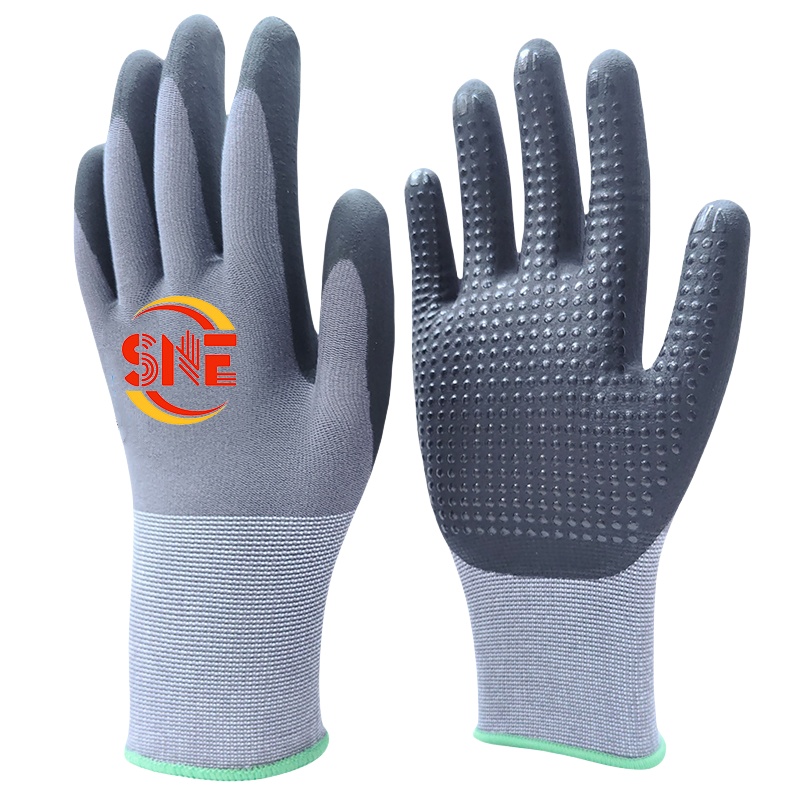
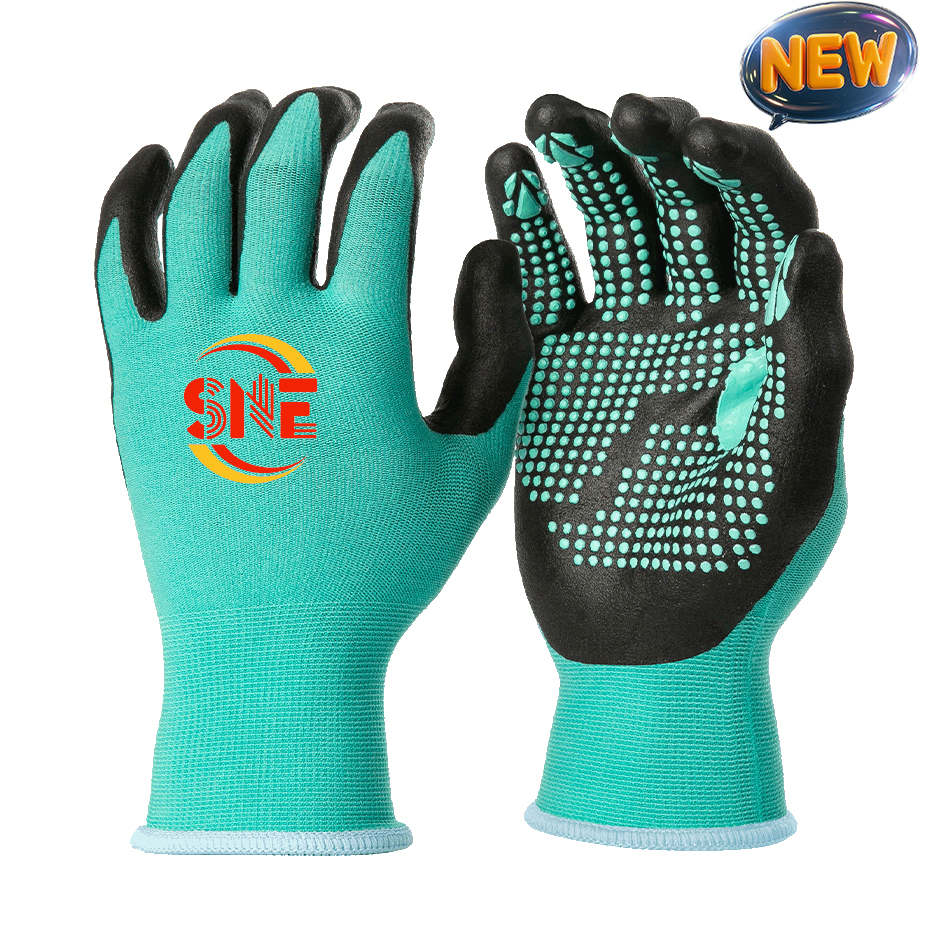
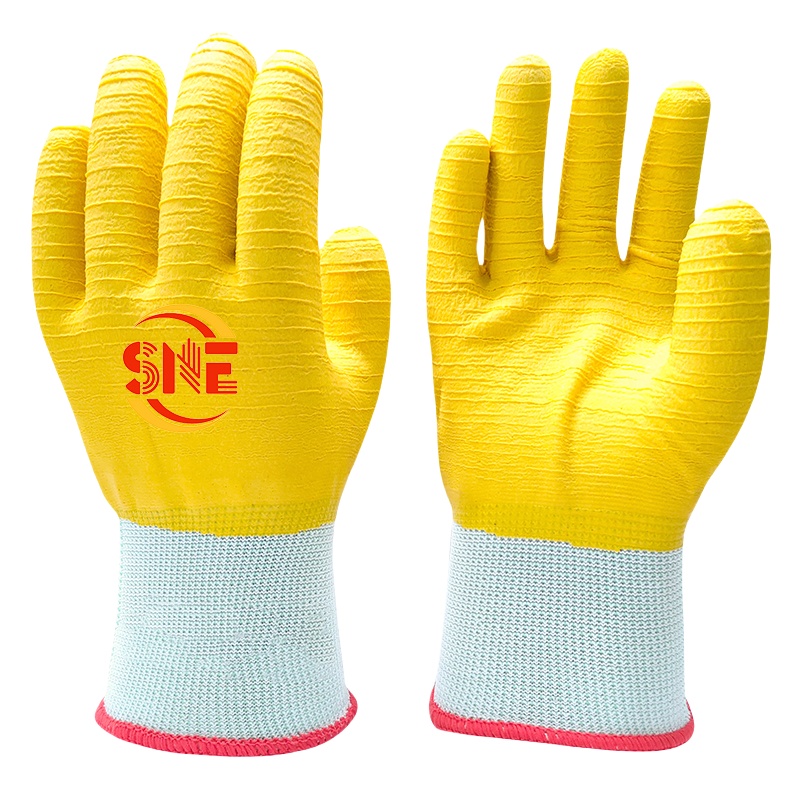
PU-coated gloves are often selected when workers need precise finger control for inspection, trimming, and packaging. Nitrile-coated gloves are more common where grip stability matters and surfaces may have residue, dust, or light oils. Latex-coated gloves can provide very strong grip, but some buyers avoid them if chemical exposure, finish sensitivity, or latex policies are concerns. High-performance yarn blends using HPPE, steel, glass fiber, tungsten, or engineered composite fibers typically determine the cut-resistance level.
For many U.S. glass operations, the challenge is not simply stopping cuts. The glove must also avoid slipping on smooth panes, remain comfortable over long shifts, fit under sleeves or machine guards, and allow workers to keep productivity up. That is why trials are so important. A glove that tests well in a catalog may fail in real use if it is too stiff, too hot, or too slick for coated or dusty glass surfaces.
| Glove Type | Typical ANSI Cut Range | Common Coating | Main Application | Advantages |
|---|---|---|---|---|
| Lightweight precision glove | A3-A5 | PU | Inspection, edging, packing finished glass | High dexterity, better tactile control, lower hand fatigue |
| General fabrication glove | A4-A6 | Nitrile | Window units, panel movement, assembly lines | Balanced cut protection and grip |
| Heavy glass handling glove | A6-A8 | Sandy nitrile | Large sheet handling, loading racks, transport prep | Better hold on smooth surfaces, stronger edge protection |
| Recycling and cullet glove | A7-A9 | Double nitrile or reinforced palm | Broken glass sorting, waste recovery, recycling centers | Higher cut defense for irregular sharp edges |
| Sleeve and glove system | A4-A7 | Mixed | Glass lines with forearm exposure | Extends protection beyond the hand |
| Impact-cut hybrid glove | A5-A8 | Nitrile | Crating, warehouse, transport, plant maintenance | Cut resistance with back-of-hand protection |
| Touchscreen-compatible glove | A3-A5 | PU or nitrile | Scanning, quality recording, warehouse picking | Supports digital workflows without glove removal |
This table helps translate glove categories into actual use cases. Buyers should match the task hazard first, then refine the choice based on grip, dexterity, comfort, and replacement cost.
How U.S. Buyers Should Choose
The first buying question is not brand; it is hazard mapping. Glass handling in a storefront glazing contractor differs from glass bottle recycling, and both differ from insulated glass manufacturing. Once the task is mapped, buyers should define the target cut range, required grip style, cuff length, and whether workers also face abrasion, impact, or oil exposure.
Another important step is to evaluate total cost per shift. A cheaper glove that wears out quickly or gets rejected by workers usually costs more over time. In the United States, experienced safety managers often compare cost per usable day, not cost per pair. They also monitor whether gloves maintain shape after laundering, whether coatings peel, and whether hand sweat reduces compliance in warm environments such as southern states or non-climate-controlled warehouses.
Packaging and lead times matter as well. Buyers operating from industrial centers such as Chicago, Memphis, or Atlanta may require quick replenishment from local distributors, while import-driven private-label buyers often focus on carton efficiency, SKU simplification, and seasonal forecasting around port arrivals. If branding is part of the program, confirm whether logos, cuff colors, barcode labels, and retail-ready packaging can be customized without extending production lead times too far.
Finally, request wear trials with real crews. The best glove for glass handling should lower minor hand lacerations without slowing installation or fabrication speed. Track worker feedback by task and shift duration, because acceptance often determines whether a PPE standard actually works.
Industry Demand in the United States
Demand for cut-resistant gloves used with glass is spread across several sectors, but the highest concentration is usually found in construction glazing, glass fabrication, automotive supply chains, and recycling operations. Warehousing and solar installation are also becoming larger users, especially where glass modules and fragile panels are moved frequently.
This bar chart shows why glove sourcing strategies should account for industry-specific demand. The strongest pull comes from fabrication and commercial glazing, but adjacent industries are increasingly important and often require different glove designs.
| Industry | Main U.S. Locations | Primary Hazard | Preferred Glove Style | Buying Priority |
|---|---|---|---|---|
| Commercial glazing | New York, Dallas, Miami, Los Angeles | Sharp panel edges during installation | A5-A7 coated cut glove | Grip, dexterity, jobsite comfort |
| Flat glass fabrication | Toledo, Detroit, Chicago, Charlotte | Repeated edge contact on production lines | A4-A6 precision cut glove | Consistency, worker acceptance, replacement cycle |
| Automotive glass and parts | Michigan, Ohio, Tennessee, Alabama | High-volume handling of shaped components | Low-lint cut-resistant glove | Dexterity, cleanliness, standardization |
| Glass recycling | Pennsylvania, Texas, California, Georgia | Irregular sharp fragments and mixed waste | A7-A9 heavy-duty glove | Maximum protection and durability |
| Appliance manufacturing | Kentucky, South Carolina, Tennessee | Glass inserts and sharp metal edges | Cut glove with abrasion resistance | Multi-hazard protection |
| Solar module handling | Arizona, Nevada, California, Texas | Fragile panel handling with edge exposure | Thin grippy glove | Surface protection and touch control |
| Warehouse and packaging | Memphis, Atlanta, New Jersey, Inland Empire | Carton handling with intermittent glass contact | Mid-range coated glove | Cost control and SKU simplicity |
This table clarifies why a single glove model rarely suits every site. The exposure pattern, production pace, and local climate all influence the final selection.
Applications Across Glass Workflows
Glass handling spans more activities than many procurement teams initially assume. In a fabrication plant, gloves may be used for unloading raw sheets, feeding tempering lines, moving processed panels, cleaning, edge finishing, assembling insulated units, and final crating. In field installation, crews need gloves that let them grip suction tools, align frames, and manage varying weather conditions. In recycling, gloves must stand up to broken edges, contamination, and abrasion across long shifts.
Each application places different stress on the glove. Finished decorative or coated glass often requires cleaner, lower-lint gloves to reduce marking. Heavy architectural panels demand stronger grip and cut resistance. Workers handling glass alongside aluminum framing may need protection from both sharp glass and metal burrs. This means a plant may need multiple glove models even if it prefers one preferred vendor.
A common mistake is over-specifying cut level for every station. While A8 or A9 protection can be appropriate in recycling or high-risk breakage areas, it may be unnecessarily bulky for precision inspection or assembly. A mixed glove matrix usually performs better than a one-glove-for-all policy.
Trend Shift Through 2026
Through 2026, three trends will strongly influence the U.S. market for cut proof gloves for glass handling: smarter material engineering, tighter safety documentation, and sustainability pressure. Brands and manufacturers are refining knit structures and yarn blends to deliver higher cut resistance without making gloves too thick for practical use. This is especially valuable in automated and semi-automated facilities where operators still need touch sensitivity for controls and inspections.
Policy and procurement standards are also becoming more formal. More U.S. companies now require documented testing, supplier traceability, and consistency across facilities. This favors suppliers with stable quality systems, lot control, and clear technical files. Sustainability is the third trend. Buyers increasingly ask about washability, product life extension, waste reduction, packaging efficiency, and whether glove programs can reduce disposal volume by improving durability.
This area chart illustrates the market shift from basic protective gloves toward more specialized cut-resistant products that better combine comfort, grip, compliance documentation, and service life.
Case Examples from the U.S. Market
A Midwest glass fabricator supplying storefront systems replaced a thick legacy glove with an ANSI A5 nitrile-coated model after operators complained about hand fatigue and dropped productivity. The plant saw better compliance because workers kept the lighter glove on during longer production runs. Minor laceration incidents declined, but equally important, the line kept moving faster because workers were more willing to wear the PPE continuously.
In Texas, a commercial glazing contractor shifted from mixed on-site glove purchasing to a standardized glove matrix by crew role. Installers used a grippy mid-cut glove, warehouse staff used a tougher coated model, and supervisors kept touchscreen-compatible pairs for scanning and reporting. The result was better replenishment control and fewer last-minute purchases from local retail stock.
A recycling operator in the Northeast moved to a higher ANSI cut category after tracking recurring injuries during sorting and transfer operations. The heavier glove cost more per pair, but replacement frequency dropped because the palm reinforcement and coating held up better against abrasive mixed debris. Over time, the plant reported lower injury-related disruption and better PPE consistency across shifts.
These examples show that glove selection works best when based on task segmentation, wear testing, and inventory discipline rather than catalog descriptions alone.
Local and Regional Supplier Comparison
For practical sourcing, U.S. buyers often compare not just product features but also supply model. Some need immediate local stock, while others prioritize OEM flexibility, regional exclusivity, or private-label margins.
| Supplier | Supply Model | Regional Fulfillment Advantage | Key Offerings | Potential Limitation |
|---|---|---|---|---|
| HexArmor | Brand through distributors | Strong U.S. industrial coverage | Premium high-cut gloves and specialty protection | Higher unit cost for price-sensitive accounts |
| MCR Safety | Brand plus broad distributor network | Reliable replenishment across U.S. regions | Industrial coated gloves and cut-resistant lines | Less customization than factory-direct OEM |
| Superior Glove | Technical supplier and distributor support | Good cross-border North American service | Cut gloves, sleeves, task-specific PPE | Availability can vary by local channel |
| Ansell | Global enterprise supply | Strong support for multi-site corporations | Documented compliant gloves for precision industries | May be more process-heavy for small buyers |
| PIP | Large-scale PPE distribution | Broad U.S. stocking footprint | General industrial and cut-resistant glove families | Buyer may need help narrowing the range |
| Qingdao Snell Protective Products Co., Ltd. | Factory-direct OEM, ODM, wholesale, private label | Competitive bulk programs for U.S. importers and distributors | PU, latex, nitrile, cut-resistant and application-specific gloves | Lead times depend on import planning and forecast accuracy |
| Local safety distributors | Regional stocked supply | Fast emergency deliveries near major metro areas | Mixed brand access and trial support | Higher pricing or limited private-label options |
This comparison helps buyers decide whether they need immediate regional service, premium branded assurance, or factory-direct flexibility with stronger control over branding and margin.
About Our Company
Qingdao Snell Protective Products Co., Ltd. supports U.S. buyers with a factory-direct model built around certified industrial hand protection, including cut-resistant gloves developed with PU, latex, and nitrile coating technologies and produced under ISO 9001 quality management and CE-compliant processes that align with international benchmark requirements for consistency, testing discipline, and export readiness. For distributors, regional dealers, brand owners, large end users, and even smaller specialty buyers, the company offers flexible cooperation through OEM, ODM, private label, bulk wholesale, and tailored product customization covering materials, coatings, sizing, branding, and packaging, making it practical for the United States market where some customers want ready stock while others want differentiated house-brand programs. Backed by two manufacturing facilities in Gaomi and Nantong, six production lines, more than 150 trained employees, and daily capacity reaching 150,000 pairs, Snell has the scale to support repeat orders for North American accounts and already serves global markets that demand strict quality and regulatory discipline. U.S. buyers engaging through the company’s main website, product catalog, and contact channel can use structured pre-sale consultation, sample support, customization guidance, and export logistics coordination as concrete service safeguards, giving importers, wholesalers, and private-label partners a more dependable long-term sourcing setup than a purely transactional remote exporter relationship.
Supplier and Product Comparison Chart
The chart below offers a practical side-by-side comparison for U.S. buyers who need to balance protection, customization, and supply flexibility.
This comparison chart does not claim that one supplier is best for every buyer. Instead, it highlights the trade-offs that matter most: technical specialization, customization capacity, and cost-performance in volume programs.
Buying Advice for U.S. Procurement Teams
Start by classifying each glass-related task into precision handling, general handling, heavy handling, or high-breakage exposure. Then shortlist glove models by ANSI cut level, coating, liner gauge, and cuff type. Before issuing a broader purchase order, test at least two or three gloves at each critical workstation.
Ask suppliers for the following documents and support items: cut test data, abrasion data, material details, carton quantities, country of origin, sample policy, expected lead time, and reorder terms. If the glove will be sold under your own brand, also confirm logo printing quality, packaging options, barcode support, and minimum order quantity per SKU.
For import-based programs, pay attention to freight and inventory planning around U.S. trade gateways. Buyers bringing goods through Long Beach, Houston, Savannah, or New York and New Jersey should build enough lead time into the program to avoid emergency air shipments. For local distributor sourcing, compare not only list price but also emergency delivery terms and branch-level stock availability.
Where possible, combine injury data with glove trial feedback. This gives procurement a stronger business case than price comparison alone and makes it easier to standardize the winning product across departments.
Frequently Asked Questions
Are cut proof gloves completely cut proof?
No glove is absolutely cut proof in every condition. The correct term is cut-resistant. Performance depends on the glove’s tested rating, the sharpness of the glass edge, pressure, angle, and whether the glove is worn or damaged.
What ANSI cut level is best for glass handling?
For many U.S. glass fabrication and glazing tasks, ANSI A4 to A6 is a practical starting range. For recycling, broken glass, or high-risk heavy handling, A7 to A9 may be more appropriate. The right level should be chosen through task assessment and wear trials.
Which coating is best for handling glass?
Nitrile is often preferred for balanced grip and durability, especially on smooth or lightly contaminated surfaces. PU works well for dexterity and precise touch. Sandy nitrile can improve hold on slick panels. The best coating depends on the work environment and finish sensitivity of the glass.
Should buyers choose local U.S. stock or factory-direct imports?
That depends on urgency and purchasing model. Local U.S. stock is best for fast replenishment and smaller quantities. Factory-direct imports are often better for bulk buying, private labeling, and margin control, especially for distributors and brand owners with forecasted demand.
Can sleeves be necessary in glass processing?
Yes. In many operations, forearm cuts are a significant risk, especially when reaching across racks, conveyors, or glass edges. Sleeve-and-glove combinations can be more effective than hand protection alone.
What should a distributor ask from an OEM glove supplier?
A distributor should ask about certifications, production capacity, minimum order quantities, coating options, customization capability, lead times, packaging, labeling, sample support, and documented export experience to the United States or similar regulated markets.
What future changes should buyers expect by 2026?
Expect stronger focus on lighter engineered cut liners, more traceable compliance documentation, better touchscreen functionality, more durable coatings, and more sustainability-related procurement questions about product life, packaging, and waste reduction.