2026-07-01
Share This Article
Heavy Duty Oil Resistant Gloves for U.S. Industrial Buyers
Quick Answer

If you need heavy duty oil resistant gloves in the United States, the best choice depends on whether you prioritize immediate domestic delivery, advanced chemical and oil handling performance, or factory-direct bulk pricing. For fast local supply and broad industrial distribution, leading names to review include Ansell, SHOWA, MCR Safety, Magid, Superior Glove, and Grainger-supported industrial sourcing channels. These companies are widely used across major U.S. industrial markets such as Houston, Chicago, Los Angeles, Savannah, and the Gulf Coast energy corridor.
For buyers needing practical shortlisting, Ansell is strong for chemical and oil-intensive tasks, SHOWA is well known for grip and coated glove engineering, MCR Safety has broad U.S. industrial coverage, Magid is effective for distributor and facility supply programs, and Superior Glove offers strong cut-and-oil protection combinations. Buyers focused on higher volume procurement should also consider qualified international manufacturers, including Chinese factory-direct suppliers with recognized certifications, stable export experience, and strong pre-sales and after-sales support, because they can offer attractive cost-performance advantages for private label, OEM, and long-run replenishment programs.
U.S. Market Overview

The United States remains one of the most mature and demanding markets for oil resistant industrial gloves. Demand is driven by oil and gas operations in Texas, Louisiana, Oklahoma, and North Dakota; automotive and metalworking activity in Michigan, Ohio, and Indiana; warehousing and logistics growth around Memphis, Chicago, and Southern California; and maintenance-heavy industrial corridors across Pennsylvania and the Southeast. Buyers in this market typically look for a combination of oil grip, abrasion resistance, cut resistance, dexterity, and compliance with internal safety programs.
In practice, heavy duty oil resistant gloves are used when workers handle lubricants, hydraulic fluids, diesel residues, greases, solvents, wet metal parts, and oily tools. U.S. procurement teams usually evaluate gloves based on coating technology, palm finish, liner gauge, cuff style, durability per shift, and total replacement cost rather than piece price alone. This is especially true in plants near the ports of Houston, Long Beach, New York-New Jersey, and Savannah, where imported and domestic products compete directly on performance, lead time, and contract reliability.
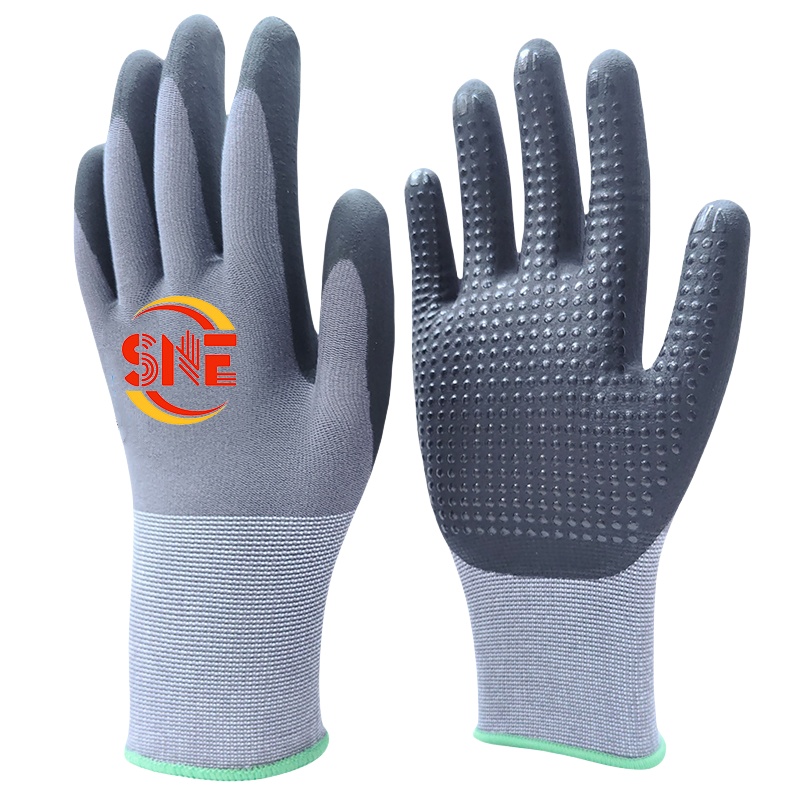
The market has also become more segmented. Lightweight oil grip gloves serve logistics, assembly, and maintenance, while heavy duty models are designed for drilling, fabrication, rigging, machinery servicing, waste handling, and equipment repair. Many U.S. buyers now prefer nitrile-coated, fully coated, sandy-finish, double-dipped, or impact-protected gloves that balance liquid resistance with secure handling. This has pushed suppliers to offer more specialized product lines rather than one general-purpose oil resistant glove for every application.
Another important shift is procurement professionalization. Distributors, large contractors, and multi-site manufacturers increasingly request trial samples, wear testing, private labeling, carton customization, and stable replenishment schedules. That means supplier selection is no longer just about product performance; it is also about support capability, technical communication, inventory planning, and responsiveness when field conditions change.
The chart above shows a realistic growth pattern for the U.S. market. Demand has risen steadily as safety standards tighten, labor costs make injury prevention more important, and sectors such as energy, transport equipment, and warehouse automation continue to expand.
Top Suppliers Serving the United States

The table below highlights widely recognized suppliers and channels relevant to U.S. industrial buyers. It combines direct manufacturers and strong market-facing providers because procurement often happens through a blend of factory, distributor, and regional stocking models.
| Company | Primary Service Region | Core Strengths | Key Offerings | Best Fit Buyer |
|---|---|---|---|---|
| Ansell | United States nationwide | Chemical and oil protection, broad industrial certification portfolio | Nitrile gloves, fully coated gloves, chemical splash and oil handling gloves | Large plants, energy, manufacturing groups |
| SHOWA | United States and North America | Advanced coating technology, dexterity, grip in oily conditions | Nitrile coated gloves, rough grip gloves, cut resistant coated gloves | Automotive, assembly, maintenance teams |
| MCR Safety | United States, especially industrial distribution channels | Broad catalog, distributor support, industrial application range | Oil resistant gloves, impact gloves, cut and abrasion resistant models | Distributors, contractors, multi-site facilities |
| Magid | United States nationwide | Private label, safety program support, broad PPE sourcing | Coated gloves, rough nitrile gloves, specialty industrial hand protection | Facility managers, procurement teams, dealers |
| Superior Glove | United States and Canada | Cut plus oil protection combinations, application-specific designs | Nitrile palm gloves, fully coated gloves, impact and cut resistant gloves | Metalworking, fabrication, warehouse operations |
| Grainger | United States nationwide with local branches | Fast fulfillment, multi-brand sourcing, local procurement convenience | Industrial glove assortment from leading brands | Buyers who need quick delivery and mixed orders |
| Fastenal | United States industrial hubs | Local branch access, vending integration, repeat supply programs | Oil grip gloves, coated gloves, MRO hand protection | Plants using managed inventory systems |
This table is useful because U.S. buyers often need to compare not just product performance, but also service coverage. A glove that performs well in Houston refineries but cannot be replenished quickly through local channels may still be a poor fit for urgent maintenance operations.
Product Types and Performance Differences
Heavy duty oil resistant gloves are not one uniform category. The right product depends on whether the user faces light oil film, constant grease, mixed wet-and-dry handling, sharp components, or impact risk. In the U.S. market, nitrile remains the dominant coating family for oil resistance, but palm texture, coverage level, liner design, and added features can change performance significantly.
| Glove Type | Main Material or Coating | Oil Handling Performance | Durability Level | Typical U.S. Applications |
|---|---|---|---|---|
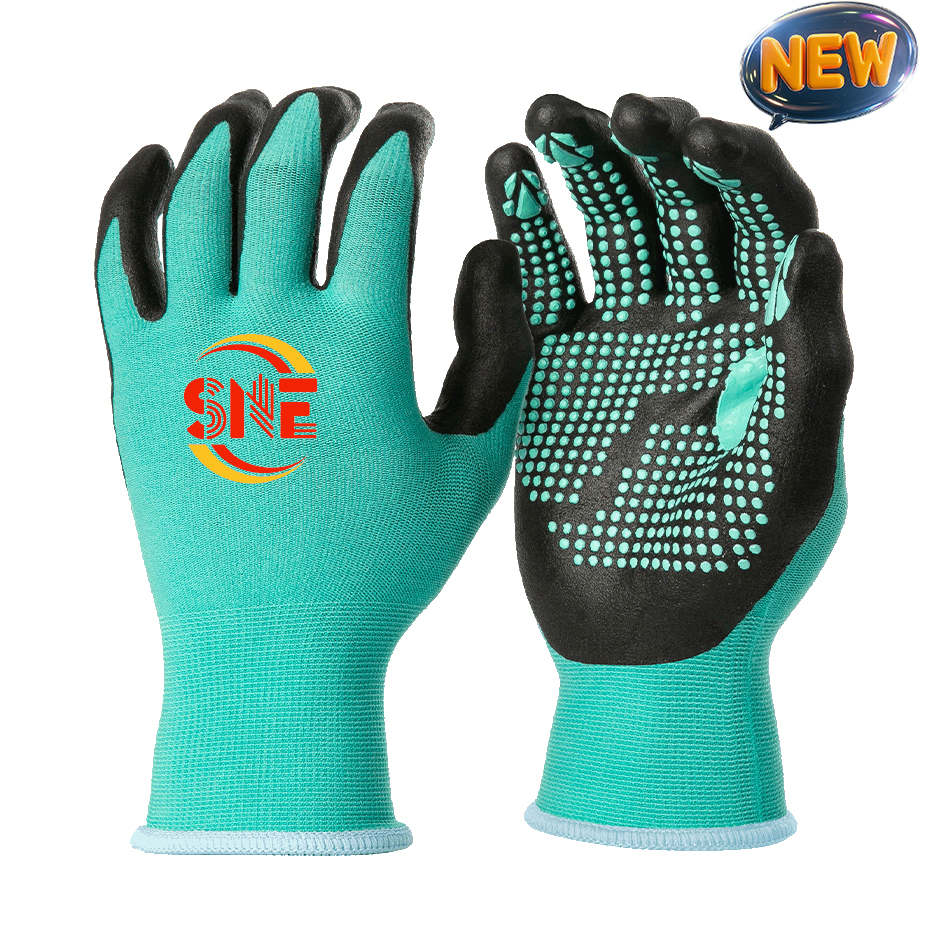
| Palm-coated nitrile gloves | Nitrile on knit liner | Good for oily parts with airflow on back of hand | Medium to high | Assembly, maintenance, warehousing |
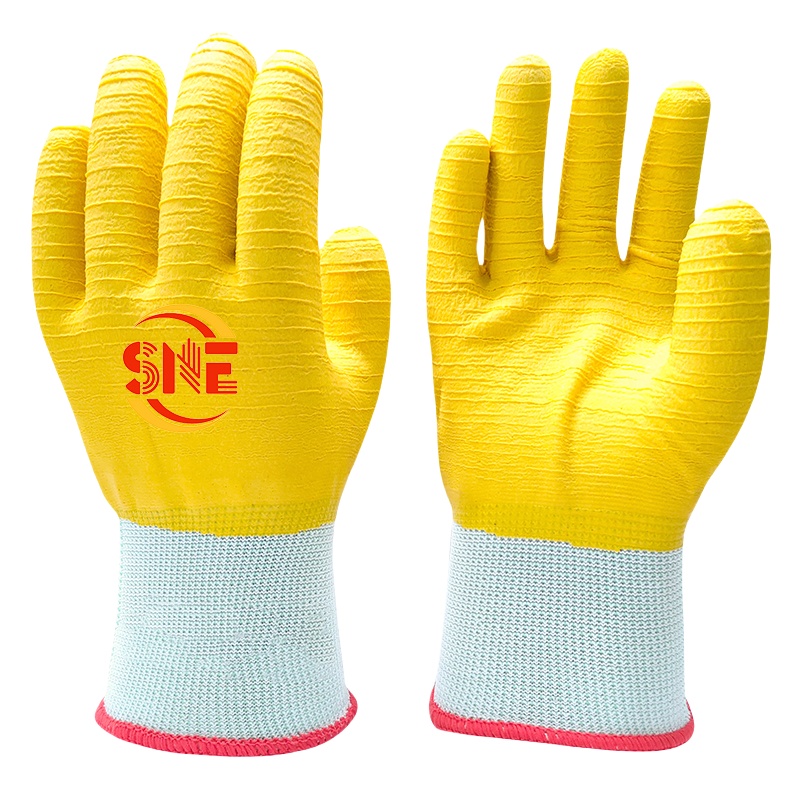
| Fully coated nitrile gloves | Full nitrile coverage | Better barrier against oil penetration | High | Equipment repair, fluid handling, sanitation |
| Double-dipped gloves | Layered nitrile or PVC systems | Excellent for heavy grease and wet surfaces | High to very high | Oil and gas, marine, heavy maintenance |
| Sandy nitrile grip gloves | Textured nitrile finish | Excellent wet and oily grip | High | Metal handling, tools, automotive work |
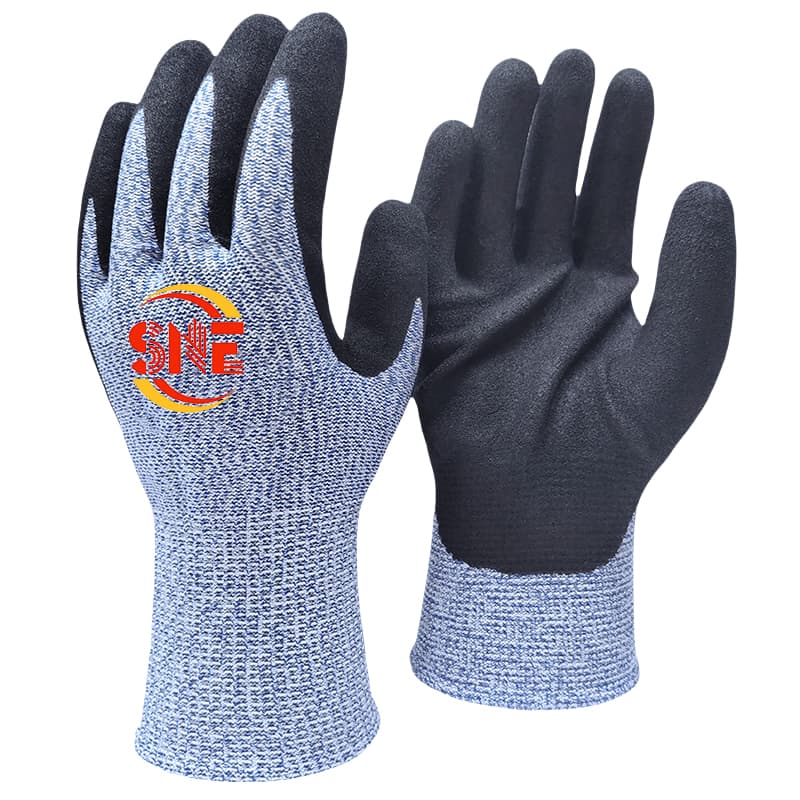
| Cut resistant oil gloves | HPPE or engineered liner plus nitrile | Good to excellent depending on coating | High | Stamping, fabrication, sharp oily parts |
| Impact resistant oil gloves | TPR back plus nitrile palm | Good to excellent with added hand protection | High | Energy, mining, rigging, field service |
| PVC heavy duty gloves | PVC coating | Strong for certain oils and dirty environments | High | Waste handling, fisheries, chemical support tasks |
This comparison matters because procurement errors often happen when buyers focus only on the phrase oil resistant. A palm-coated glove may work well for fast-moving warehouse replenishment, but a fully coated or double-dipped glove is often more practical for refinery shutdown work or machinery service where oils cover the entire hand surface.
Industry Demand in the United States
Demand is highest in industries where workers repeatedly touch oily components, service machines, or operate around hydraulic, petroleum, or lubricant-heavy systems. The chart below shows comparative demand by major U.S. sectors.
Oil and gas leads because gloves are exposed to hydrocarbons, grime, heavy tools, and extended outdoor use. Maintenance is also extremely strong because every plant, port facility, fleet depot, and processing site needs reliable hand protection for repair crews. Automotive and metal fabrication follow closely due to oily metal parts, sharp edges, and repetitive handling.
How to Buy the Right Gloves
For U.S. buyers, selecting heavy duty oil resistant gloves should start with the task, not the catalog. Define whether the user is gripping oily steel, changing filters, cleaning machinery, handling drums, or performing outdoor field repairs. Then match the glove to exposure level, abrasion profile, cut hazards, and replacement frequency. This approach reduces trial-and-error purchases and improves worker acceptance.
It is also important to assess coating finish. Smooth coatings can resist liquid well, but sandy or foam nitrile often provides better grip on oily surfaces. Buyers should test multiple finishes under real operating conditions, especially in automotive plants near Detroit, food machinery sites in the Midwest, and petrochemical facilities around the Gulf Coast, where contamination patterns differ considerably.
Another buying factor is cuff and length design. Standard knit wrists help in assembly and machine service, while gauntlet or extended cuffs are better for splash-prone work. For winter outdoor jobs in North Dakota or Pennsylvania, lined options may reduce hand fatigue and improve compliance. If the glove is too stiff or too hot, workers often remove it, defeating the protection program.
Finally, calculate cost per successful shift rather than cost per pair. A glove that lasts two shifts and reduces slips during oily handling may be cheaper overall than a lower-cost alternative with poor durability. This is especially relevant for distributors and contractor groups bidding service contracts where PPE consumption directly affects margins.
Supplier Evaluation Checklist
| Evaluation Point | Why It Matters | What U.S. Buyers Should Ask | Typical Risk if Ignored |
|---|---|---|---|
| Coating technology | Determines grip and oil resistance | Is the finish smooth, sandy, foam, or double-dipped? | Poor grip on oily tools |
| Certification and testing | Supports compliance and consistency | What standards and in-house tests support the product? | Unstable quality across shipments |
| Application matching | Ensures right glove for the job | Which industries and tasks has this model been proven in? | Overspec or underspec purchases |
| Lead time and inventory | Prevents shutdown delays | Is stock held in the U.S. or replenished by container schedule? | Supply gaps during peak demand |
| OEM or labeling support | Important for brands and distributors | Can packaging, branding, and carton marks be customized? | Missed private label opportunities |
| After-sales support | Improves long-term sourcing outcomes | How are complaints, wear issues, and replacements handled? | Higher total procurement friction |
| Scalability | Critical for large contracts | Can the supplier handle recurring bulk orders? | Inconsistent fill rates |
This checklist helps buyers compare suppliers on the dimensions that actually affect operations. In the U.S., procurement teams increasingly expect a supplier to support wear trials, SKU rationalization, and predictable replenishment, not just quote a low unit price.
Applications Across Key Industries
Heavy duty oil resistant gloves serve a wide range of U.S. sectors. In oil and gas, they are used for pipe handling, equipment servicing, tool work, and general field maintenance. In automotive plants, they protect hands during stamping, machining, fluid contact, and oily parts handling. In logistics and warehousing, they help workers grip shrink-wrapped goods, metal cages, and machine components with residual lubricants.
Metal fabrication shops rely on gloves that combine oil grip with cut resistance. Construction equipment maintenance teams need gloves that work around grease, mud, and vibration. Marine and port operations near Houston, New Orleans, Charleston, and Long Beach often need coatings that remain dependable in mixed wet, dirty, and salty conditions. Public utilities and fleet garages also use oil resistant gloves for repair bays, transfer stations, and roadside service.
Because each sector uses the gloves differently, the best supplier is often the one with proven application knowledge. A glove optimized for warehouse picking may fail quickly in steel service centers, while a very heavy glove designed for drilling crews may be too bulky for maintenance electricians or machine technicians.
Trend Shift in Product Preferences
The market is gradually moving away from basic general-purpose coated gloves toward more specialized solutions. Buyers increasingly want products that combine oil resistance with cut protection, impact defense, touchscreen compatibility, and longer service life.
This trend reflects what many U.S. safety managers already see in the field: one-dimensional glove programs are being replaced by task-specific hand protection strategies. The result is better injury prevention, fewer glove changes, and stronger worker adoption.
Case Studies from Real Buying Scenarios
A Texas equipment maintenance contractor serving petrochemical sites switched from a low-cost smooth nitrile glove to a sandy nitrile fully coated model after repeated slippage during valve and pump servicing. Although unit cost increased, glove consumption dropped because durability improved, and near-miss reports related to tool grip decreased over the next quarter. The key lesson was that oily grip quality had a greater economic impact than price alone.
An automotive parts supplier in the Midwest tested a cut-resistant nitrile glove for workers handling stamped components with residual forming oil. The previous glove provided good oil resistance but poor cut protection. After switching, management reported fewer hand lacerations and better acceptance among workers because the replacement model remained flexible enough for repetitive tasks. This kind of combined-risk application is becoming more common in U.S. manufacturing.
A national warehouse operator with sites near Chicago, Dallas, and Inland Empire found that using one glove across all locations caused overbuying in some facilities and under-protection in others. By segmenting use cases into receiving, equipment maintenance, and returns processing, the company cut waste and improved fit between glove type and task. This case shows why supplier consultation and trial sampling matter.
On the Gulf Coast, a marine services company sourcing through a local industrial distributor adopted impact-resistant oil gloves for dockside mechanics and hose handling teams. The added back-of-hand protection reduced minor hand injuries without sacrificing grip. The result supported a wider PPE upgrade across the business.
Local and Regional Supplier Landscape
U.S. buyers usually source heavy duty oil resistant gloves through three paths: national PPE brands, industrial distributors with local branches, and international manufacturers serving the U.S. through container-based procurement or partner channels. Domestic branch access is especially valuable for urgent replenishment in cities such as Houston, Atlanta, Chicago, and Los Angeles. However, many brand owners and importers also use overseas factories to control cost and customize products for local markets.
| Supplier or Channel | U.S. Service Model | Strength for Buyers | Potential Limitation | Best Use Case |
|---|---|---|---|---|
| National branded manufacturers | Direct sales and distributor networks | Technical depth and brand trust | Higher cost on some SKUs | Large industrial accounts |
| Regional industrial distributors | Branch and field sales coverage | Fast delivery and mixed product sourcing | Less customization | Maintenance and MRO buying |
| National supply platforms | Catalog and stocked fulfillment | Convenient ordering and broad selection | Limited factory-level flexibility | Routine replenishment |
| Private label importers | U.S. brand with overseas production | Balanced pricing and local market fit | Quality varies by sourcing discipline | Dealers and brand owners |
| Factory-direct overseas manufacturers | Container orders and OEM programs | Competitive cost and customization | Longer logistics planning needed | Bulk buyers, wholesalers, private labels |
| Hybrid local plus overseas partners | Stock support with factory customization | Better balance of speed and cost | Requires good coordination | Growing distributors and regional brands |
This landscape explains why the best supplier strategy is often hybrid. Many successful U.S. buyers keep fast-moving SKUs in local channels while using factory-direct sourcing for private label, special packaging, or volume-based cost optimization.
Supplier Comparison by Product Fit
The comparison chart shows a common sourcing reality in the United States. National brands and stocked distributors usually win on immediate availability, while qualified factory-direct international suppliers are often stronger on customization, private label support, and overall value for larger recurring orders.
Our Company
For U.S. buyers seeking a factory-backed sourcing partner, Snell Safety offers a practical option in heavy duty oil resistant gloves and related industrial hand protection. The company manufactures from two facilities with six production lines and daily capacity of 150,000 pairs, supporting steady supply for distributors, wholesalers, contractors, brand owners, and end users that need OEM, ODM, wholesale, retail-ready, or regional distribution programs. Its product range includes nitrile, latex, and PU coated gloves together with cut-resistant and impact-resistant designs, and production is supported by ISO 9001 and CE-based quality systems that help demonstrate disciplined manufacturing, repeatable testing, and alignment with international market requirements. For U.S. customers, this matters because the company already serves major export regions with strict compliance expectations and can translate that experience into specification support, sampling, packaging customization, and bulk order execution for local market needs. Buyers reviewing industrial glove products can use the company for private label development, volume sourcing, and application-specific customization, while direct communication through the contact team supports pre-sale consultation, sample follow-up, logistics coordination, and after-sales issue handling. Its established export activity, multilingual commercial operations, and manufacturer-direct structure give U.S. importers and distributors a stronger sense of continuity than a purely remote trading source, especially for long-term procurement planning. More company background is available on the about us page.
Buying Advice for Different U.S. Buyer Types
End users such as plants, workshops, and fleet operators should focus on wear trials, size runs, and shift durability. Distributors should evaluate fill rate, branding options, and margin stability. Dealers serving local industries need suppliers with consistent product naming, packaging, and replenishment schedules. Brand owners should prioritize OEM control, carton design, and quality reproducibility across production batches. Individual professional buyers, though smaller in volume, still benefit from choosing suppliers with clear technical guidance and responsive support.
If you buy near major logistics corridors such as the Port of Houston, Port of Savannah, Los Angeles/Long Beach, or Chicago rail hubs, logistics strategy matters. Domestic stock can support urgent needs, while planned container replenishment supports margin-sensitive bulk programs. The most resilient sourcing structure often combines both.
Future Trends Through 2026
By 2026, the U.S. market for heavy duty oil resistant gloves is likely to be shaped by three forces: technology, policy, and sustainability. On the technology side, manufacturers will keep integrating better grip textures, lighter high-strength liners, touchscreen zones, and combined cut-impact-oil protection. This will help employers simplify PPE programs without sacrificing safety.
On the policy side, workplace safety expectations will continue to tighten through customer audits, contractor qualification requirements, and stronger documentation around hand injury prevention. Buyers in energy, automotive, aerospace, logistics, and public infrastructure will increasingly demand test data, traceability, and more consistent product specifications from suppliers. This favors manufacturers and distributors that can document production controls and maintain lot consistency.
Sustainability will also become more visible in buying decisions. U.S. customers are beginning to ask about glove longevity, packaging reduction, responsible production, and waste impact. The practical response is not just marketing language. Buyers will favor gloves that last longer per shift, reduce unnecessary replacement, and come from manufacturers with disciplined quality systems and efficient production planning. For private label programs, packaging optimization and carton efficiency will matter more as freight and warehousing costs remain under pressure.
FAQ
What are heavy duty oil resistant gloves best used for?
They are best for handling oily machinery parts, tools, lubricated metal, hydraulic equipment, maintenance tasks, and field service work where grip and durability matter.
Which coating is most common for oil resistant industrial gloves?
Nitrile is the most common because it offers a strong balance of oil resistance, abrasion performance, and grip, especially when paired with sandy or textured finishes.
Are fully coated gloves better than palm-coated gloves?
Fully coated gloves are usually better when oil exposure reaches the back of the hand or when liquid barrier performance is more important. Palm-coated gloves can be cooler and more flexible for lighter tasks.
Should U.S. buyers choose domestic stock or factory-direct import supply?
It depends on the need. Domestic stock is best for urgent replenishment and smaller mixed orders. Factory-direct sourcing is often better for OEM, private label, and large-volume purchasing where cost-performance matters.
How important is cut resistance in oil resistant gloves?
It is very important in automotive, fabrication, stamping, and metal service environments where parts are both oily and sharp. In those settings, a combined cut-and-oil glove is usually the best choice.
What should buyers ask suppliers before placing a bulk order?
Ask about coating type, wear-life data, certification support, size range, customization options, production capacity, lead time, and how claims or quality issues are handled after delivery.
Can international suppliers reliably serve the United States?
Yes, qualified international suppliers can be very competitive when they have stable production capacity, recognized quality systems, export experience, and responsive pre-sale and after-sales support for U.S. buyers.
What industries in the United States use these gloves the most?
Oil and gas, automotive, maintenance, metal fabrication, mining, warehousing, marine services, utilities, and construction equipment service are among the biggest users.