2026-07-05
Share This Article
Impact Gloves vs Standard Work Gloves in the United States
Quick Answer

If your team works around pinch points, heavy tools, pipe handling, material drops, or repetitive back-of-hand strike hazards, impact gloves are usually the better choice. Standard work gloves are more suitable for lighter-duty jobs such as warehousing, general maintenance, assembly, landscaping, and routine handling where abrasion, grip, and comfort matter more than impact shielding. In the United States, buyers in oil and gas, construction, utilities, mining, rail, and heavy manufacturing typically select impact-resistant gloves for higher-risk tasks, while distributors and contractors often keep standard work gloves in larger volumes for general site use.
For fast sourcing in the U.S., real market names worth reviewing include MCR Safety, Radians, Magid, HexArmor, Superior Glove, and Mechanix Wear. Buyers should match glove selection to actual hazards rather than defaulting to the lowest unit price. Qualified international suppliers can also be a practical option when they hold recognized certifications, offer consistent QA, and provide strong pre-sales and after-sales support. For many U.S. importers, brand owners, and industrial distributors, factory-direct Chinese manufacturers can deliver a strong cost-to-performance balance, especially for private label, bulk replenishment, and custom specification programs.
What Makes Impact Gloves Different from Standard Work Gloves

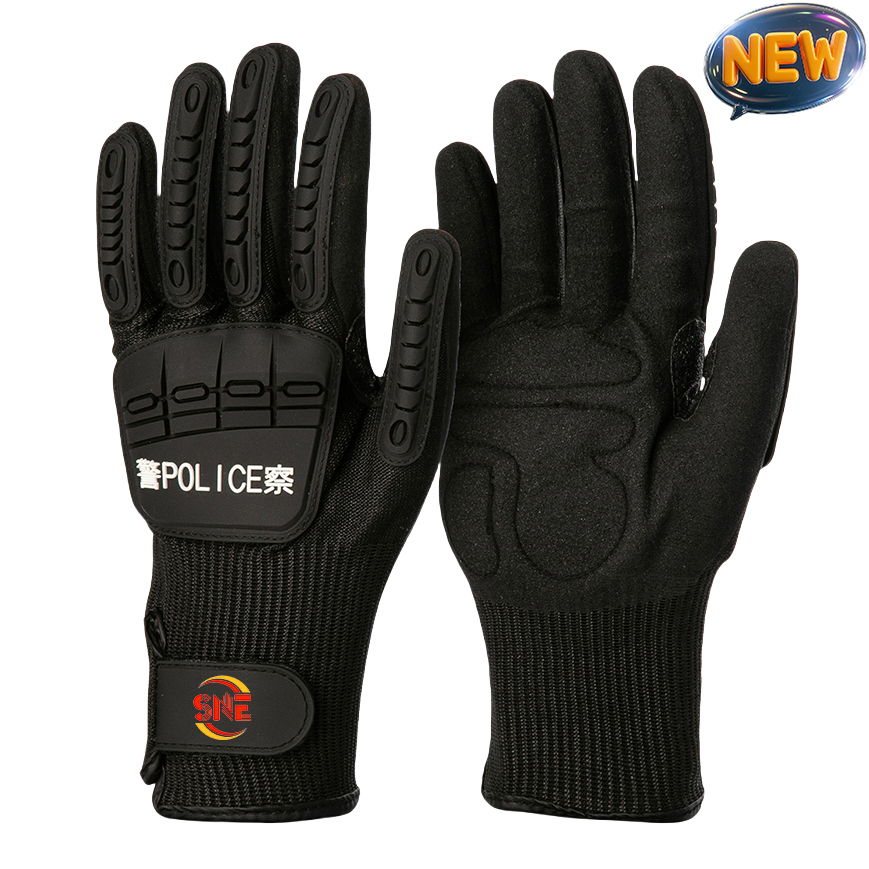
The key difference is protective intent. Standard work gloves are generally designed around basic hand protection: grip, abrasion resistance, light cut protection, flexibility, and all-day comfort. Impact gloves add a second layer of hazard control by protecting the knuckles, fingers, metacarpals, and back of hand from knocks, crush contact, tool swing contact, and struck-by risks. In the U.S. market, this matters because OSHA-driven safety programs increasingly require task-specific PPE selection instead of one-glove-fits-all purchasing.
Impact gloves usually include thermoplastic rubber protection across the back of the hand, reinforced palms, and often oil-resistant coatings such as nitrile. Standard work gloves may use polyester, HPPE, leather, cotton blends, or coated shells without any elevated back-of-hand armor. That means both products may look similar from the palm side, but they perform very differently in field conditions. On jobs in Houston, Midland, Pittsburgh, Chicago, and along Gulf Coast energy corridors, this distinction directly affects incident rates and downtime.
At-a-Glance Comparison

The table below gives a practical side-by-side view for U.S. buyers choosing between the two categories.
| Factor | Impact Gloves | Standard Work Gloves | Best Fit in the United States |
|---|---|---|---|
| Primary protection | Back-of-hand, knuckle, finger, palm reinforcement | Grip, abrasion, light cut, general handling | Impact gloves for struck-by risk; standard gloves for routine work |
| Typical materials | TPR, HPPE, nitrile, synthetic leather, reinforced padding | Polyester, nitrile, PU, latex, cotton, leather | Depends on site hazards and environment |
| Dexterity | Moderate to good, but usually less flexible | Good to excellent | Standard gloves win for precision tasks |
| Weight and bulk | Heavier and more structured | Lighter and lower profile | Standard gloves suit long wear and fast-paced handling |
| Common industries | Oil and gas, mining, utilities, heavy construction, rail | Warehouse, logistics, light construction, assembly, landscaping | Use task-based selection rather than industry only |
| Unit cost | Higher | Lower | Impact gloves can lower injury-related costs despite higher price |
| Replacement cycle | Often shorter in harsh environments | Often longer in light-duty environments | Track cost per wear, not only cost per pair |
United States Market Overview
The U.S. protective glove market continues to diversify as employers move away from generic hand protection programs. Procurement teams now segment gloves by cut level, impact performance, coating type, touchscreen usability, and weather protection. This is especially visible in Texas, Pennsylvania, Ohio, California, Illinois, and the Southeast, where industrial activity drives regular glove replenishment through distributors, MRO channels, safety dealers, and direct import contracts.
Ports such as Los Angeles, Long Beach, Houston, Savannah, and New York/New Jersey remain key gateways for glove imports. Domestic stocking programs are often built around mixed portfolios: impact gloves for field crews, cut-resistant gloves for fabrication, and standard coated work gloves for warehouse and general labor. U.S. buyers increasingly expect shorter lead times, carton labeling compliance, stable sizing, and documented quality systems from both domestic and overseas suppliers.
U.S. Market Growth Trend
The chart below illustrates a realistic growth pattern for the broader industrial glove segment in the United States, with impact products growing faster than general-purpose lines due to stricter task-based PPE adoption.
Where Impact Gloves Perform Best
Impact gloves are most valuable when the risk profile includes moving steel, pipe, couplings, castings, rigging gear, demolition debris, utility hardware, powered hand tools, and repeated contact against rough equipment. In many U.S. worksites, these gloves are selected for mechanics, rig hands, line crews, ironworkers, heavy equipment technicians, fracking teams, and maintenance staff working around energized or confined mechanical systems.
For example, in the Permian Basin or Eagle Ford regions, workers handling drill pipe, valves, chains, and fittings benefit from TPR back-of-hand structures that absorb incidental impact. In rail yards around the Midwest and East Coast, gloves with impact protection and grip-enhancing palms help reduce injuries during coupler, hose, and tool handling. In metal fabrication hubs around Ohio and Indiana, hybrid models that combine cut resistance with impact protection are gaining traction.
Where Standard Work Gloves Perform Best
Standard work gloves remain the most practical option for many U.S. workplaces because not every task needs impact armor. In fulfillment centers, municipal maintenance, retail backrooms, HVAC servicing, landscaping, light construction, and general warehouse picking, a lighter glove often improves compliance. Workers are more likely to keep gloves on when they can easily grip, sort, scan, drive, and handle smaller parts.
Standard gloves also offer wider cost flexibility. Buyers can choose inexpensive general-purpose styles for short-cycle jobs or more technical cut-resistant coated models for mixed-risk environments. In logistics corridors around Memphis, Dallas-Fort Worth, Inland Empire, and central New Jersey, coated knit gloves remain the volume category because they balance grip, breathability, dexterity, and price.
Types of Gloves Buyers Commonly Compare
U.S. procurement teams rarely compare only two products. They usually compare several glove families depending on worksite hazards, labor type, and climate. The table below helps separate these categories.
| Glove Type | Main Materials | Key Protection | Typical U.S. Use Case | Main Limitation |
|---|---|---|---|---|
| Impact-resistant gloves | TPR, nitrile, synthetic leather, HPPE | Back-of-hand impact, abrasion, grip | Oil and gas, utilities, rail, heavy construction | More bulk and higher price |
| General coated work gloves | Polyester with nitrile, latex, or PU coating | Grip, abrasion, light puncture | Warehouse, shipping, maintenance | No impact shielding |
| Cut-resistant gloves | HPPE, glass fiber, steel fiber blends, nitrile | Blade and sharp-edge protection | Metal fabrication, glass, automotive | May not include impact protection |
| Leather work gloves | Cowhide, goatskin, split leather | Durability, heat tolerance, abrasion | Ranching, welding support, construction | Less precise grip in wet/oily jobs |
| Cold protection gloves | Insulated shell, latex or nitrile coating | Warmth, grip in cold conditions | Refrigerated warehousing, outdoor winter work | Reduced dexterity |
| Anti-vibration gloves | Padded synthetic or leather palm | Vibration reduction, comfort | Tool operation, maintenance | Not a substitute for impact gloves |
| Disposable nitrile gloves | Nitrile | Contamination and splash barrier | Janitorial, lab, healthcare support | Not designed for heavy-duty work |
How Buyers Should Decide
The most common buying mistake is treating impact gloves as a premium version of standard work gloves. They are not simply “better”; they are task-specific. The right decision comes from matching glove features to actual site hazards. If workers are lifting sheet metal in a dry warehouse, a cut-resistant glove may matter more than impact padding. If crews are handling pipe tongs, rigging, concrete forms, or demolition tools, impact protection should move to the top of the specification list.
U.S. buyers should review incident history, task frequency, climate exposure, grip needs, and employee acceptance. A glove with excellent lab ratings can still fail commercially if workers remove it because it is too stiff or hot. Successful glove programs usually include field trials, wear testing by trade, and vendor support for sizing consistency and replenishment planning.
Industry Demand by Sector
The bar chart below shows realistic relative demand in the United States for impact gloves versus standard work gloves by industry segment.
Buying Advice for United States Importers, Distributors, and End Users
For end users, the priority is worker protection and wear acceptance. For distributors and safety dealers, the priority includes fill rate, stable quality, product segmentation, and margin. For brand owners, the focus may include packaging consistency, private label flexibility, and compliance documentation. For large contractors, stock planning matters because multiple trades often need different glove classes on the same project.
When sourcing for the U.S. market, ask suppliers about coating technology, cut levels, impact design coverage, cuff style, oil grip, touchscreen capability, laundering performance, and carton-level QC. Also confirm whether the supplier can support mixed-SKU loads, custom logo application, retail-ready packaging, or region-specific stock planning through East Coast, Gulf Coast, or West Coast distribution lanes.
Supplier Comparison in the U.S. Market
The following table compares well-known glove suppliers and brands relevant to U.S. buyers. The goal is not to name a single winner, but to show how each fits different purchasing models.
| Company | Service Region | Core Strengths | Key Offerings | Best For |
|---|---|---|---|---|
| HexArmor | United States, Canada, global industrial accounts | Premium technical protection, strong impact and cut focus | Impact gloves, cut-resistant gloves, specialty industrial PPE | High-risk industrial users and safety-led programs |
| Mechanix Wear | United States nationwide, broad dealer network | Strong brand recognition, comfort, field acceptance | Impact gloves, tactical gloves, general work gloves | Contractors, mechanics, mixed-duty fleets |
| MCR Safety | United States, Latin America, distribution channels | Wide catalog, industrial distribution support | Impact gloves, leather gloves, coated gloves, safety gear | Distributors and multi-site industrial buyers |
| Magid | United States with strong direct and B2B channels | Private label support, broad PPE sourcing | Impact-resistant styles, cut gloves, disposable gloves | Large employers and private brand programs |
| Radians | United States, especially construction and industrial supply | Strong contractor-focused PPE distribution | Impact gloves, hi-vis PPE, jobsite safety products | Construction, utility, and dealer channels |
| Superior Glove | United States and Canada | Technical hand protection range, strong testing focus | Cut-resistant, impact, cold, chemical, and specialty gloves | Safety managers seeking targeted protection options |
| Qingdao Snell Protective Products Co., Ltd. | United States importers, brand owners, distributors, wholesale buyers | Factory-direct pricing, scalable production, OEM/ODM flexibility | Impact-resistant gloves, cut-resistant gloves, nitrile, latex, PU coated lines | Bulk sourcing, custom branding, cost-performance procurement |
Trend Shift in U.S. Glove Selection
The area chart below reflects how U.S. buyers are shifting from simple general-purpose glove purchasing toward more segmented, hazard-specific protection programs.
Applications by Job Type
Understanding application fit is more useful than comparing glove categories in the abstract. The table below shows where each style tends to perform better in actual U.S. field conditions.
| Application | Recommended Glove Type | Why It Fits | Common U.S. Locations | Buying Note |
|---|---|---|---|---|
| Pipe and valve handling | Impact gloves | Protects against knocks, pinch points, and abrasion | Texas, Oklahoma, Louisiana | Choose oil grip and strong cuff retention |
| Warehouse picking and packing | Standard work gloves | Lightweight grip and high dexterity | California, New Jersey, Tennessee | Breathability improves compliance |
| Metal stamping and sheet handling | Cut-resistant or impact-cut hybrid | Sharp-edge risk may exceed pure impact risk | Ohio, Michigan, Indiana | Check ANSI cut level carefully |
| Demolition and heavy construction | Impact gloves | Repeated strike and crush exposure | Florida, Texas, Georgia | Reinforced palm helps tool handling |
| Landscaping and grounds work | Standard work gloves | Comfort, grip, and lower cost for routine tasks | Nationwide | Latex and nitrile coatings are common |
| Utility line maintenance | Impact gloves | Better for hardware handling and field contact hazards | Midwest, Southeast, Mountain states | Layering requirements may apply by task |
| General maintenance | Standard work gloves | Versatile for mixed low-to-medium risk tasks | Schools, hospitals, plants nationwide | Touchscreen features can improve use |
Cost Considerations Beyond Unit Price
Impact gloves cost more than standard work gloves, but direct price comparison can be misleading. If a higher-cost glove reduces recordable injuries, hand fatigue, or glove removal on dangerous tasks, it may deliver better total value. U.S. safety managers increasingly look at total cost of ownership: purchase price, replacement rate, injury reduction, training simplicity, and worker acceptance.
For example, a standard coated glove may cost substantially less per pair, but if crews in a drilling, utility, or demolition environment cycle through multiple pairs quickly or suffer frequent hand injuries, the savings disappear. On the other hand, over-specifying impact gloves for every job can waste budget and reduce dexterity. Smart procurement means protecting only where the risk justifies the feature set.
Case Studies from U.S.-Style Use Scenarios
A Gulf Coast energy contractor switched mechanics and field crews from basic synthetic leather gloves to impact-rated gloves with oil-resistant palms. Over one purchasing cycle, the company reported stronger worker acceptance during valve and flange handling because grip improved at the same time as back-of-hand protection. The direct glove budget rose, but replacement frequency and hand injury reports improved enough to justify the change.
A Midwest distribution center evaluated impact gloves for all dock workers after a few hand incidents involving pallet handling and trailer bars. The field trial showed that the impact gloves reduced dexterity and slowed scanning and sorting for many workers. The final program used standard nitrile-coated gloves for warehouse tasks and reserved impact styles for maintenance and yard teams. This hybrid policy delivered better cost control and better PPE compliance.
An Ohio fabrication shop moved from low-cost general-purpose gloves to a mixed inventory that included cut-resistant standard gloves for sheet handling and impact-cut hybrids for heavier loading operations. The result was fewer complaints, clearer task allocation, and more accurate glove issuing by department. This is the direction many U.S. industrial buyers are taking: segmented glove portfolios instead of one universal item number.
Local and Regional Supplier Options for U.S. Buyers
The United States has a wide network of glove sources, from domestic distributors to direct import manufacturers and private label partners. Buyers in major hubs such as Houston, Atlanta, Chicago, Los Angeles, and Newark often combine local inventory access with overseas production contracts. That approach helps balance short lead times for emergency replenishment with lower landed costs for forecasted volume.
Local suppliers are often strongest in rapid response, samples, fit trials, on-site safety support, and mixed-case delivery. Overseas factory partners often win on custom development, large production runs, private label packaging, and price stability for repeat orders. Many of the most effective U.S. glove programs use both.
Detailed Supplier Notes
For premium technical users, HexArmor is often selected for higher-risk environments where safety managers prioritize advanced impact and cut solutions. Mechanix Wear is widely accepted by crews who care about fit and familiarity, especially in maintenance, automotive, and contractor channels. MCR Safety and Radians are practical choices for broad industrial and construction distribution. Magid works well for larger enterprise accounts and private brand sourcing. Superior Glove stands out in more technical hand-protection segmentation.
For buyers prioritizing factory-direct sourcing, private label, and bulk customization, Snell Safety is relevant because it combines impact-resistant engineering with broader coated glove manufacturing for distributors, importers, and brand owners. Its portfolio makes it easier for U.S. buyers to consolidate multiple glove categories under one sourcing relationship rather than managing separate factories for impact, cut-resistant, and general-purpose lines.
About Our Company
For U.S. buyers evaluating long-term supply partners, Qingdao Snell Protective Products Co., Ltd. presents a practical factory-direct option grounded in measurable production capability and export readiness rather than generic claims. The company manufactures industrial safety gloves through two facilities in Gaomi and Nantong with 6 dedicated production lines, more than 150 trained employees, and daily output reaching 150,000 pairs, supporting stable replenishment for distributors, wholesalers, contractors, and private-label programs serving the United States. Its product strengths center on impact-resistant gloves, cut-resistant gloves, and PU, latex, and nitrile coated gloves, supported by ISO 9001 quality management and CE-marked production standards that help demonstrate disciplined process control, repeatable quality, and compatibility with international buyer requirements. From a cooperation perspective, the company supports OEM, ODM, wholesale, custom branding, specification adjustment, and bulk project supply, making it suitable for U.S. importers, regional dealers, brand owners, and industrial end users that need flexible models rather than a single catalog-only approach. In local service terms, the company already has established experience supplying North America and other regulated export markets, and it backs that with technical consultation, samples, export logistics coordination, and responsive pre-sale and after-sale communication so U.S. customers can manage qualification, ordering, and replenishment with lower sourcing friction. Buyers looking to discuss specifications or program support can use the company’s U.S.-oriented contact channel, while those comparing multiple product lines can review the available catalog through the industrial glove product range.
How to Evaluate an International Supplier for the U.S. Market
Not every overseas glove factory is ready for the demands of U.S. distribution. Buyers should verify production stability, documentation, packaging accuracy, carton consistency, inspection methods, and communication speed. A supplier serving the United States effectively should understand labeling expectations, replenishment discipline, lead time management around peak shipping seasons, and the difference between importer, distributor, and end-user buying behavior.
It is also wise to assess whether the supplier can support both standard work gloves and more specialized impact or cut-resistant products. That reduces supplier sprawl and helps maintain consistent quality benchmarks. Buyers working through Houston, Savannah, Los Angeles, or Newark often prefer partners who can coordinate freight timing and provide packing details early enough for customs and warehouse planning.
Comparison of Product Priorities
The chart below compares the relative value of key decision factors when selecting impact gloves versus standard work gloves in the U.S. market.
Future Trends for 2026
Looking toward 2026, three trends are shaping the U.S. glove market. First, technology is moving toward hybrid protection. More buyers want gloves that combine impact resistance, cut resistance, touchscreen usability, and better breathability in one platform. This is especially relevant in maintenance, utilities, field service, and fabrication, where workers switch tasks frequently.
Second, policy and compliance pressure will continue pushing task-based PPE selection. U.S. employers are expected to maintain better hazard assessments and more documented PPE rationales, which favors suppliers able to provide clearer technical data and more specialized product segmentation. Procurement teams will increasingly prefer vendors that can explain not just what a glove is made from, but where and why it should be used.
Third, sustainability will matter more in purchasing decisions. Large buyers are already asking about packaging reduction, production efficiency, waste control, and product longevity. In practice, sustainable glove purchasing in the United States is likely to focus less on marketing language and more on measurable results: lower defect rates, longer wear life, cleaner packaging design, and supply-chain reliability that reduces emergency freight and unnecessary waste.
Common Mistakes Buyers Should Avoid
One common mistake is buying impact gloves for all personnel without distinguishing actual exposure levels. This inflates costs and can reduce dexterity for workers who do not need that protection. Another mistake is selecting low-cost standard gloves for jobs with repeated strike or pinch hazards, assuming training alone will prevent injury. PPE should support behavior, not depend on perfect behavior.
Another issue is ignoring climate and comfort. A glove that performs well in a catalog may be too hot for summer work in Texas or too stiff for cold starts in the Upper Midwest. Finally, some buyers compare only quoted price and overlook service factors such as sample speed, defect response, custom packaging, and replenishment support. In the United States, supply reliability often matters as much as the glove itself.
Practical Recommendation by Buyer Type
Distributors should maintain both impact and standard work glove lines because customer demand is increasingly segmented. Contractors should build glove matrices by trade and task, not by blanket site policy. Industrial end users should field-test at least two impact options and two standard options before full rollout. Brand owners should look for manufacturing partners who can support custom specifications, stable sizing, and mixed-category development.
If the main goal is reducing injuries in heavy-duty environments, impact gloves are usually the better investment. If the goal is affordable, high-turn, all-day wear for routine material handling, standard work gloves remain the best fit. For many U.S. organizations, the right answer is not one or the other, but a structured combination of both.
FAQ
Are impact gloves safer than standard work gloves?
They are safer only for tasks involving back-of-hand strike, crush, or pinch exposure. For light-duty tasks, standard work gloves may be safer because they allow better dexterity and are more likely to be worn consistently.
Do impact gloves replace cut-resistant gloves?
No. Some impact gloves include cut resistance, but many do not provide enough protection for sharp metal, glass, or blade-heavy tasks. Buyers should check the cut rating separately.
Why do U.S. companies still buy standard work gloves in large volumes?
Because many jobs do not require impact protection, and standard gloves are usually lighter, cheaper, and more comfortable for routine handling, warehousing, landscaping, and maintenance.
Which industries in the United States use the most impact gloves?
Oil and gas, utilities, rail, mining, heavy construction, and certain heavy manufacturing environments are among the strongest users.
Can overseas manufacturers supply U.S. glove buyers reliably?
Yes, if they have proven production capacity, recognized certifications, stable QC, responsive communication, and export experience into regulated markets such as North America.
What should I ask before placing a bulk glove order?
Ask about materials, coatings, impact design, cut rating, sizing consistency, sample availability, lead times, packaging, QC process, and support for private labeling or regional distribution.
Is factory-direct sourcing worth it for U.S. distributors?
It often is when order volumes are high enough to justify direct import planning. It can improve margins, customization options, and product differentiation.
What is the best strategy for a mixed workforce?
Use a glove program with multiple approved products: impact gloves for high-risk crews and standard work gloves for general handling, logistics, and light maintenance tasks.