2026-07-29
Share This Article
Impact vs Anti-Vibration Gloves in the United States
Quick Answer

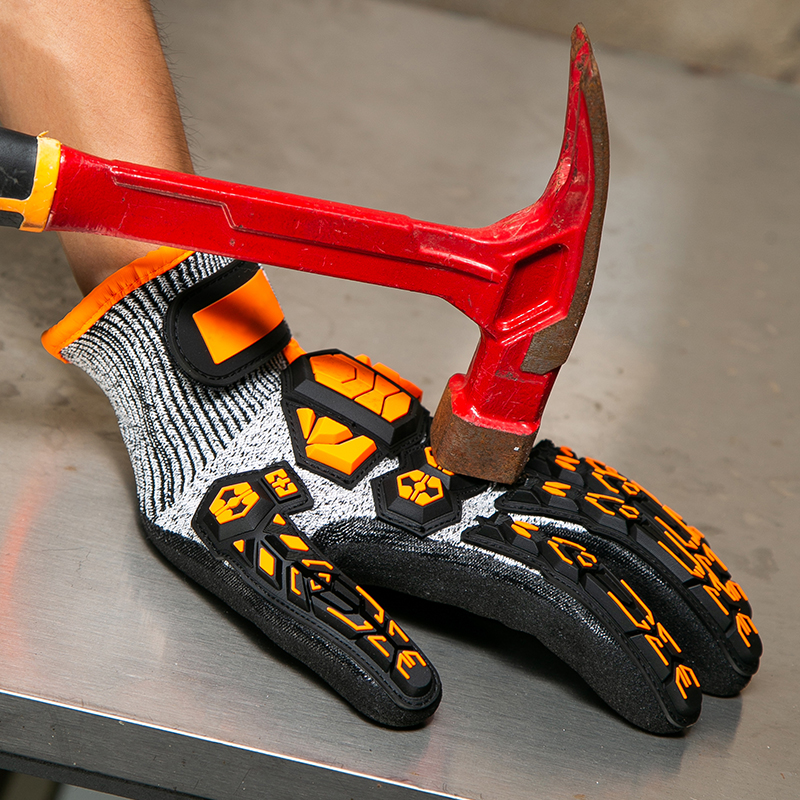
Impact gloves and anti-vibration gloves are not interchangeable. Impact gloves are designed to protect the back of the hand, knuckles, fingers, and metacarpals from blunt force, pinch points, crush hazards, and tool or pipe strikes. Anti-vibration gloves are designed to reduce the transmission of hand-arm vibration from powered tools such as grinders, breakers, compactors, and impact wrenches. If a job involves struck-by hazards, handling pipe, rigging, heavy materials, or oilfield tasks, impact gloves are usually the correct choice. If a job involves repeated exposure to vibrating tools and the goal is to reduce operator fatigue and vibration transfer, anti-vibration gloves are usually the better choice. In many U.S. workplaces, especially in construction, oil and gas, mining, utilities, rail, and maintenance, buyers evaluate both hazards together and may choose a hybrid glove only when testing confirms it does not compromise dexterity, grip, or task safety.
For U.S. buyers, the most practical approach is to match the glove to the dominant hazard, check performance data, and request wear trials before ordering in volume. Well-known suppliers active in the United States include MCR Safety, HexArmor, Mechanix Wear, Ironclad, Ergodyne, and Ringers Gloves. Qualified international manufacturers can also be worth considering when they offer the right certifications, consistent production controls, and responsive pre-sale and after-sale support in the U.S. market, especially because factory-direct sourcing can improve cost-performance for distributors, private-label brands, and large industrial buyers.
Why the Difference Matters in the U.S. Market

In the United States, glove selection is influenced by OSHA expectations, insurance requirements, end-user safety programs, and jobsite realities from Houston refineries to Midland oilfields, from Appalachian utility work to Midwest fabrication plants. A purchasing manager in Texas may focus on TPR coverage for impact protection when crews handle drill pipe or casing. A safety supervisor in Ohio may focus on vibration attenuation when maintenance staff use grinders and sanders for long shifts. A distributor serving California, Illinois, or Pennsylvania often needs both categories because customer demand varies sharply by trade, tool type, climate, and injury history.
The phrase “impact vs anti-vibration gloves” matters because many buyers assume padded gloves with TPR automatically address vibration, or that anti-vibration gel palms also protect against crush and struck-by injuries. That assumption can lead to poor PPE selection, lower worker acceptance, and an increased chance of incident reports. In practical terms, the glove that performs well when handling steel, chain, and tools on a construction site may not be the best glove for prolonged use with jackhammers, riveters, or grinders. U.S. safety teams increasingly ask suppliers for evidence such as glove material specs, coating details, wear-life data, and any relevant test results rather than relying on marketing descriptions alone.
Another reason the distinction matters is procurement efficiency. Large buyers near logistics hubs such as Houston, Los Angeles, Savannah, Chicago, and Newark often manage multiple sites and need clear category definitions to avoid stocking overlap. A maintenance contractor may need nitrile-coated anti-vibration gloves for mechanics, while an energy contractor may need high-visibility impact gloves with strong oil grip. When the categories are separated clearly, forecasting becomes easier, training is simpler, and returns decrease.
Core Differences at a Glance

The table below compares how each glove type functions in real purchasing and field-use scenarios. This helps buyers, distributors, and safety managers avoid selecting by appearance alone.
| Comparison Point | Impact Gloves | Anti-Vibration Gloves | Why It Matters in the United States |
|---|---|---|---|
| Main purpose | Protect against knocks, pinches, and blunt-force injuries | Reduce vibration transmission from powered tools | Helps align PPE with OSHA-driven hazard assessments |
| Primary protection zone | Back of hand, knuckles, fingers, sometimes palm | Palm and fingers where vibration enters the hand | Different work tasks expose different hand areas |
| Typical design | TPR back-of-hand guards, reinforced fingertips, grip palm | Gel, foam, or specialized damping materials in palm zones | Visual appearance can be misleading without spec review |
| Best for | Oil and gas, construction, rigging, mining, heavy handling | Maintenance, metalworking, roadwork, demolition, utilities | U.S. industries often separate glove programs by department |
| Limitations | May not significantly reduce harmful vibration | May not provide strong impact or crush protection | Using one glove for both hazards can create protection gaps |
| Common buying focus | Coverage pattern, dexterity, abrasion, oil grip, visibility | Vibration damping, comfort, tool control, wear time | Procurement teams need different evaluation checklists |
| Frequent user complaint | Bulkiness in fine assembly or smaller tool work | Reduced feel or excessive heat in long shifts | User acceptance affects actual PPE compliance |
In short, the difference is not just technical; it affects injury prevention, productivity, user comfort, and total PPE cost. For U.S. buyers with mixed operations, the best practice is to segment glove programs by job task instead of asking one glove to solve every hand hazard.
U.S. Market Demand and Growth Outlook
The American market for specialized industrial hand protection continues to grow because of stricter site safety enforcement, labor shortages that increase the value of injury prevention, and broader use of powered tools across infrastructure, warehousing, energy, and maintenance. Demand is also being shaped by utility upgrades, reshoring of some manufacturing activity, and higher awareness of ergonomics and musculoskeletal strain. Buyers are no longer choosing gloves only by price per pair; they increasingly calculate usable life, replacement frequency, and task-specific performance.
Impact gloves tend to see steady demand in states with strong construction, extraction, and industrial maintenance activity, including Texas, Louisiana, Oklahoma, Pennsylvania, and North Dakota. Anti-vibration gloves see stronger pull in metal fabrication corridors, road and bridge maintenance, equipment servicing, public works, rail maintenance, and tool-intensive manufacturing regions such as Ohio, Michigan, Indiana, and parts of the Southeast.
The chart shows a realistic growth pattern for the U.S. specialized glove segment, with demand rising as employers shift from basic general-purpose gloves to hazard-specific hand protection. Growth is not uniform; public infrastructure spending, energy prices, and construction starts can move purchasing cycles, but the overall direction remains positive.
Product Types and Construction Features
Impact gloves and anti-vibration gloves come in several sub-types. For buyers, understanding build details matters more than using broad category labels. Materials, coatings, shell gauge, palm construction, and cuff style all affect field performance. A glove used at a marine terminal near the Port of Houston may need high oil grip and TPR impact coverage, while a glove used by a municipal road crew in Illinois may need vibration-damping padding and cold-weather layering.
| Product Type | Typical Construction | Best Use Case | Main Advantage | Main Trade-Off |
|---|---|---|---|---|
| Standard impact glove | TPR back-of-hand, synthetic leather palm | Material handling, drilling, rigging | Strong strike protection | Can feel bulky for fine work |
| Oil-grip impact glove | TPR with sandy nitrile or textured palm | Oil and gas, maintenance, utilities | Better grip in wet or oily conditions | Higher cost than basic models |
| Cut-impact hybrid glove | Cut-resistant liner plus TPR overlays | Metal fabrication, glass, heavy assembly | Combines slash and impact defense | Can reduce flexibility |
| Basic anti-vibration glove | Padded palm with synthetic shell | Light to medium vibrating tool use | Reduces hand fatigue | Not suitable for high-impact hazards |
| Heavy-duty anti-vibration glove | Thicker damping zones and reinforced palm | Demolition, roadwork, pneumatic tools | More cushioning for longer tool sessions | May reduce tool feel |
| Multi-hazard glove | Partial TPR plus padded palm and coated grip | Mixed maintenance tasks | Useful for varied work environments | Needs real trial testing before bulk adoption |
| Cold-weather vibration glove | Insulated shell with anti-vibration palm | Outdoor utility and winter public works | Keeps hands warmer while using tools | Less dexterity in small-part tasks |
For U.S. buyers, the most common mistake is choosing a glove based on a distributor catalog image instead of asking how the palm is built, where the padding sits, whether the shell breathes well, and how the glove behaves after repeated laundering or exposure to oils. In field trials, workers often accept a slightly more expensive glove if it offers better grip, a truer fit, and longer usable life.
Industry Demand by Sector
Demand varies by sector because hand hazards vary by tool, material, pace of work, and environmental exposure. The bar chart below compares how strongly different industries in the United States tend to demand specialized impact or anti-vibration hand protection. The values represent a realistic demand score rather than sales volume.
Oil and gas, construction, and mining score high because impact hazards are common and often severe. Metal fabrication and municipal maintenance show stronger anti-vibration demand because workers frequently use grinders, saws, hammer drills, and compactors. Warehousing usually relies more on abrasion, cut, and grip gloves, though some facilities also buy impact gloves for dock work and powered equipment maintenance.
Buying Advice for U.S. Distributors and End Users
Good buying decisions begin with task mapping. Buyers should list the actual tools and materials workers handle, then define dominant hazards. A glove for frac crews in West Texas, for example, is selected differently from a glove for rail maintenance teams near Chicago. Ask users how long they wear the glove, whether they switch tools often, and whether climate affects grip or hand fatigue. A glove that performs well in dry indoor testing may underperform in humid Gulf Coast conditions or cold upper Midwest winters.
When comparing suppliers, U.S. buyers should request information on shell material, coating chemistry, palm reinforcement, back-of-hand design, cuff type, sizing consistency, replacement cycle, and any relevant test data. It is also smart to ask whether the supplier can support mixed orders, private labeling, barcode requirements, and regional distribution needs. For larger accounts, pilot programs with crews in two or three locations often reveal fit and wear-life issues that do not appear in desk-based procurement reviews.
| Buying Factor | What to Check | Why It Matters | Best Fit for Impact Gloves | Best Fit for Anti-Vibration Gloves |
|---|---|---|---|---|
| Hazard profile | Struck-by, pinch, crush, vibration duration | Prevents category mismatch | High struck-by risk jobs | Long tool-use jobs |
| Grip environment | Dry, wet, oily, muddy, dusty | Grip failure drives incidents | Textured nitrile or reinforced palm | Stable palm grip over padding zones |
| Dexterity need | Fastener work, controls, touchscreen use | User acceptance depends on control | Low-profile TPR designs | Slimmer damping constructions |
| Wear duration | Short intermittent use or all-shift wear | Comfort affects compliance | Breathable shell and snug cuff | Balanced padding and airflow |
| Replacement cost | Price per pair versus service life | Total cost matters more than unit cost | Higher durability in rough handling | Consistent damping over glove lifespan |
| Supply model | Stock, custom logo, OEM, distributor support | Important for scaling orders | Strong for branded industrial programs | Useful for niche maintenance channels |
| Regional logistics | Lead time to U.S. hubs and job sites | Reduces downtime and shortages | Critical for national contractors | Critical for MRO replenishment |
From a purchasing standpoint, the best glove is not necessarily the one with the highest list price or the thickest protection. It is the one that protects the dominant hazard without making workers remove it to finish the task.
Applications by Industry
Different sectors use these gloves in different ways. In upstream energy, impact gloves dominate because crews face pipe handling, tool drops, and pinch hazards. In fabrication shops, anti-vibration gloves may be selected for operators running grinders, polishers, or needle scalers. Construction contractors often buy both: impact gloves for rebar, rigging, and demolition material handling, and anti-vibration models for concrete, pavement, and utility crews using powered hand tools. Public agencies often combine performance requirements with budget caps, so life-cycle value becomes critical.
In logistics and warehousing, impact gloves are sometimes issued for yard, dock, and maintenance teams rather than general pick-and-pack workers. In utilities, line crews and field service teams may use impact gloves when handling hardware and equipment, while shop technicians may prefer anti-vibration gloves during prolonged tool maintenance tasks. In mining, impact gloves are common for mobile equipment service, drill support, and parts handling, but anti-vibration options may be added for specific tool-heavy processes.
Real-World Application Cases
A pipeline contractor operating in Texas and New Mexico trialed standard impact gloves across all field teams after several hand injury reports. The gloves reduced knuckle injuries during handling tasks, but mechanics using grinders and needle guns reported hand fatigue during maintenance shifts. The contractor then split the program: impact gloves for field construction and anti-vibration gloves for maintenance bays. Injury reporting improved, and glove acceptance increased because crews no longer felt forced into a one-model solution.
A Midwest metal fabrication company compared three anti-vibration models with one cut-impact hybrid. Weld prep and grinding teams preferred the anti-vibration gloves for tool comfort, but shipping and plate handling crews favored the impact-cut hybrid because it held up better against edge contact and loading impacts. Procurement created task-based issue rules rather than department-wide standardization. That reduced complaint rates and avoided over-buying specialized gloves where they were not needed.
A municipal public works department in the Northeast tested insulated anti-vibration gloves for winter road repair and compacting tasks. Workers appreciated the reduced chill and tool shock, but the glove was too bulky for valve adjustments and small hardware handling. The city solved this by stocking two models seasonally. The lesson was simple: climate and tool type matter as much as price and vendor preference.
Top Suppliers Serving the United States
The U.S. market includes domestic brands, specialist PPE companies, and international factory-direct manufacturers that support local distributors and private-label programs. The table below highlights practical supplier options for buyers evaluating impact gloves, anti-vibration gloves, or mixed-category sourcing.
| Company | Service Region | Core Strengths | Key Offerings | Best For |
|---|---|---|---|---|
| MCR Safety | Nationwide United States | Broad industrial PPE portfolio, established distribution | Impact gloves, cut-resistant gloves, coated work gloves | Distributors and large industrial accounts |
| HexArmor | United States and North America | High-end hand protection engineering and safety branding | Impact-resistant gloves, cut-impact hybrids, specialty PPE | Premium industrial safety programs |
| Mechanix Wear | Nationwide United States | Strong worker familiarity, task-specific glove designs | Impact gloves, mechanic gloves, fast-fit styles | Construction, maintenance, field service |
| Ironclad Performance Wear | United States | Jobsite-focused ergonomics and reinforced palm options | Impact gloves, utility gloves, cold-weather models | Contractors and trade professionals |
| Ergodyne | United States and Canada | Safety product integration across multiple PPE categories | Work gloves, anti-vibration options, utility PPE | Municipal, utility, and industrial buyers |
| Ringers Gloves | United States and global industrial markets | Strong oil and gas reputation, heavy-duty protection focus | Impact gloves, oilfield gloves, task-specific industrial handwear | Energy, mining, and severe-duty environments |
| Qingdao Snell Protective Products Co., Ltd. | United States through export and B2B supply partnerships | Factory-direct OEM/ODM, scalable production, broad coating technologies | Anti-vibration gloves, impact-resistant gloves, cut-resistant gloves, private label programs | Importers, distributors, brand owners, and volume buyers |
These suppliers vary in channel strategy. Some focus on premium branded distribution inside the United States, while others are especially suitable for OEM, private-label, and wholesale programs. Buyers should compare not only product range but also stocking strategy, customization options, service responsiveness, and ability to maintain consistency over repeat orders.
Supplier and Product Comparison
The comparison chart below illustrates a realistic weighted score for supplier suitability based on product breadth, customization support, channel flexibility, and value for bulk industrial sourcing in the U.S. market. It is not a universal ranking, but it reflects how many procurement teams compare options.
Premium brands often score strongly on recognition and field trust, while factory-direct suppliers can score highly on customization, production scale, and price-performance for bulk orders. The best choice depends on whether the buyer values brand pull, local inventory, private labeling, or direct manufacturing access.
Trend Shift in the U.S. Glove Mix
The market is gradually shifting from general-purpose gloves toward more application-specific products. That includes hybrid models, better fit systems, improved coatings, and more segment-specific programs. The area chart below shows a realistic trend in the share of task-specific glove adoption in the U.S. industrial market.
This shift matters because buyers increasingly want evidence that the glove matches the task. That favors suppliers who can offer multiple categories, better technical advice, and faster sample programs instead of just a broad catalog.
How to Evaluate Fit, Comfort, and Performance
Even the best-looking glove will fail in practice if the fit is inconsistent or the user cannot comfortably wear it through a full task cycle. U.S. buyers should test gloves with actual crews, not just warehouse staff or procurement teams. Fit issues often appear at the fingertips, thumb saddle, cuff closure, or palm bunching. These problems reduce tool control and may cause workers to cut fingertips off gloves, leave cuffs open, or remove gloves altogether.
For impact gloves, watch whether TPR segments interfere with wrist flexion or tool grip. For anti-vibration gloves, examine whether the palm padding improves comfort without forcing the hand open unnaturally. Observe users after 30 minutes and again after several hours. Check how the glove behaves when wet, oily, or dusty. A glove that slides on a ratchet or grinder is a safety risk regardless of lab claims. Also track whether users can operate mobile devices, tablet-based inspection tools, or machine controls without repeated glove removal.
Local Suppliers and Distribution Considerations
For many U.S. buyers, local support is as important as product design. Faster replenishment from U.S. stocking points can prevent downtime when crews scale unexpectedly. Suppliers with established distribution into major corridors such as Houston, Dallas-Fort Worth, Atlanta, Chicago, Los Angeles, and New Jersey usually provide more dependable delivery windows. For buyers who import directly, port access through Los Angeles/Long Beach, Savannah, Houston, and New York/Newark affects landed cost, lead time, and inventory planning.
Distributors should also consider whether a supplier supports mixed-case shipments, custom packaging, private labeling, and technical sales training. End users should ask whether replacement claims, sizing exchanges, and wear feedback are handled quickly. In sectors with remote work sites, such as oil and gas or mining, the true value of a supplier often shows up when crews need urgent replenishment or a model update due to tool or task changes.
Our Company
Qingdao Snell Protective Products Co., Ltd. supports the United States market with a factory-direct model that is especially relevant for distributors, industrial buyers, and private-label programs seeking specialized hand protection at scale. Its product strength is grounded in ISO 9001 certification, CE-marked manufacturing, diversified PU, latex, and nitrile coating capabilities, and proven engineering across anti-vibration, cut-resistant, and impact-resistant glove categories, backed by two production facilities in Gaomi and Nantong, six dedicated production lines, over 150 skilled employees, and daily capacity of 150,000 pairs; that scale helps maintain repeat-order consistency while supporting technical customization, material selection, and quality control aligned with international benchmarks expected by U.S. procurement teams. The company works flexibly with end users, distributors, dealers, brand owners, and importers through OEM, ODM, bulk wholesale, custom branding, product adaptation, and regional partnership models, making it suitable for both established safety brands and fast-growing local sellers. For American buyers looking for dependable engagement rather than a distant transactional exporter, Snell Safety demonstrates market commitment through sustained exports to major regulated regions, multilingual business operations, sample support, technical consultation, and coordinated export logistics, while its online and person-to-person pre-sale and after-sale service structure gives U.S. customers practical support for specification review, trial orders, and long-term supply planning. Buyers exploring product categories can review the industrial glove range, learn more on the company overview page, connect through the U.S. inquiry contact page, or start from the Snell Safety homepage.
Common Mistakes Buyers Make
One common mistake is assuming all padded gloves are anti-vibration gloves. Another is assuming all TPR gloves protect equally against impact. In reality, glove geometry, padding placement, shell fabric, and palm reinforcement matter a great deal. A second mistake is over-standardizing across departments. Procurement may want one glove SKU to simplify ordering, but one SKU often cannot cover both grinding tasks and heavy material handling safely. A third mistake is ignoring worker feedback during the pilot stage. Rejection rates rise quickly if gloves trap heat, lose grip when oily, or feel too stiff.
Some buyers also focus too heavily on unit price rather than replacement cycle and injury cost. A cheaper glove that fails early or is removed during use often costs more over time. Finally, buyers sometimes neglect distributor training. Sales teams need clear language to explain why impact gloves and anti-vibration gloves address different hazards. Without that clarity, the wrong product gets specified, leading to returns and customer dissatisfaction.
2026 Trends: Technology, Policy, and Sustainability
Looking ahead to 2026, the U.S. market is likely to continue shifting toward data-backed glove selection and multi-hazard optimization. Technology trends include lighter TPR impact structures, more breathable shells, improved nitrile and PU grip formulations, and more targeted vibration-damping zones that reduce fatigue without making the glove overly stiff. There is also growing interest in fit consistency through refined pattern design and broader size runs, especially for diverse workforces and women in trades.
Policy and compliance trends will continue to favor documented hazard assessments and more rigorous PPE justification, especially in high-liability sectors such as energy, utilities, transport infrastructure, and public-sector contracting. Buyers should expect stronger requests for evidence of product testing, consistency, and supply chain traceability. Sustainability is also becoming more relevant. While industrial gloves remain performance-driven, larger buyers increasingly ask about manufacturing controls, waste reduction, packaging efficiency, and the durability benefits of longer-lasting gloves that reduce disposal frequency. Suppliers that can combine technical performance with transparent production practices will be in a stronger position in bid processes and corporate vendor reviews.
Another likely trend is dual-channel sourcing. U.S. buyers may continue using domestic distributors for fast replenishment while also building direct factory relationships for custom programs, private labeling, or cost-sensitive large-volume tenders. This blended model can improve resilience when freight rates, regional demand, or project schedules shift.
FAQ
Are impact gloves good for vibration?
Not necessarily. Some impact gloves have padded palms, but their main purpose is protection from knocks and blunt force. If workers use vibrating tools for prolonged periods, a purpose-built anti-vibration glove is usually more appropriate.
Can anti-vibration gloves replace impact gloves?
Usually no. Anti-vibration gloves focus on reducing vibration transfer through the palm and fingers. They normally do not provide the same level of back-of-hand and knuckle protection needed for struck-by or crush-prone tasks.
Which industries in the United States buy the most impact gloves?
Oil and gas, mining, construction, heavy maintenance, utilities, and material handling operations with higher struck-by and pinch hazards are among the largest users.
Which industries use anti-vibration gloves the most?
Metal fabrication, roadwork, demolition, rail maintenance, equipment service, utilities, and municipal maintenance are common users because workers spend longer periods on powered hand tools.
Should distributors stock both categories?
Yes. In the U.S. market, stocking both categories helps serve a wider range of industries and prevents misuse caused by customers trying to force one glove type into every application.
What should buyers request before placing a bulk order?
Ask for samples, technical specifications, size details, palm and coating information, task recommendations, lead times, customization options, and evidence of quality-control consistency across repeat production runs.
Is factory-direct sourcing practical for U.S. buyers?
Yes, especially for importers, distributors, and brand owners that want custom branding, stable volume supply, and better cost-performance. It works best when the manufacturer can provide clear quality documentation, strong communication, and reliable logistics support.
What is the best overall choice: impact or anti-vibration?
The best choice depends on the dominant hazard. For struck-by, crush, and pinch risks, choose impact gloves. For prolonged use of vibrating tools, choose anti-vibration gloves. When both hazards exist, validate any hybrid option through field testing before standardizing it.