2026-07-22
Share This Article

How to Choose Construction Gloves in the United States
Quick Answer

To choose the right construction gloves for your team in the United States, start with the hazards of the job, not the lowest unit price. Match gloves to the actual task: abrasion-resistant gloves for material handling, cut-resistant gloves for framing and sheet metal contact, impact gloves for demolition and heavy equipment work, waterproof or nitrile-coated gloves for wet concrete and muddy sites, and insulated gloves for winter projects in colder states. Then confirm fit, grip, cuff style, breathability, touchscreen compatibility if needed, and compliance with customer or site safety requirements. For most contractors, the most practical approach is to standardize two to four glove types by trade and season rather than issue one glove for every task.
A fast buying rule for U.S. teams is this: choose ANSI cut levels when sharp edges are present, select palm coatings based on dry, oily, or wet handling conditions, test glove dexterity with common site tasks such as fastening, measuring, and lifting, and track replacement rates by crew. Domestic distributors can provide fast replenishment, while qualified international suppliers can also be a smart option when they hold recognized certifications, maintain strict production controls, and offer responsive pre-sales and after-sales support. For buyers balancing performance and cost, experienced Chinese manufacturers with factory-direct supply and customization options are worth considering alongside U.S. sources.
The U.S. Construction Glove Market

The United States remains one of the most demanding markets for construction hand protection because job conditions vary widely by region, season, trade, and project type. A contractor pouring concrete in Houston, a steel crew in Chicago, a roofing team in Phoenix, and a utility contractor in Seattle all need different glove performance characteristics. The practical buying challenge is not simply finding gloves labeled for construction; it is finding the right combination of cut resistance, grip, dexterity, durability, weather protection, and cost control for real field use.
Large metropolitan job corridors such as New York City, Los Angeles, Dallas-Fort Worth, Atlanta, Miami, Chicago, and Seattle influence national purchasing patterns because they combine labor density, union and non-union job sites, strict safety expectations, and high replacement volume. Major import gateways such as the Port of Los Angeles, Port of Long Beach, Port of Houston, Port of Savannah, Port of New York and New Jersey, and Port of Seattle also affect procurement decisions. Buyers sourcing in bulk often compare local stocking programs against direct-import models, especially when seasonal demand spikes or large infrastructure jobs require consistent glove supply over several quarters.
For distributors, general contractors, subcontractors, and private-label brands, the market has become more data-driven. Buyers increasingly want trial results by crew, clear ANSI/ISEA performance labeling, evidence of coating consistency, and documented quality control. They also want faster replenishment and lower total cost per wear, not just a lower invoice price per pair. That is why construction glove procurement in the U.S. now blends safety compliance, field performance, logistics reliability, and brand support.
The line chart suggests a realistic upward demand trend driven by infrastructure spending, warehouse-linked construction activity, energy projects, and stricter PPE enforcement. While exact volume varies by channel, the trajectory reflects what many glove buyers see in the field: more task-specific glove selection and a greater willingness to pay for gloves that reduce injuries and last longer.
What U.S. Buyers Should Evaluate First

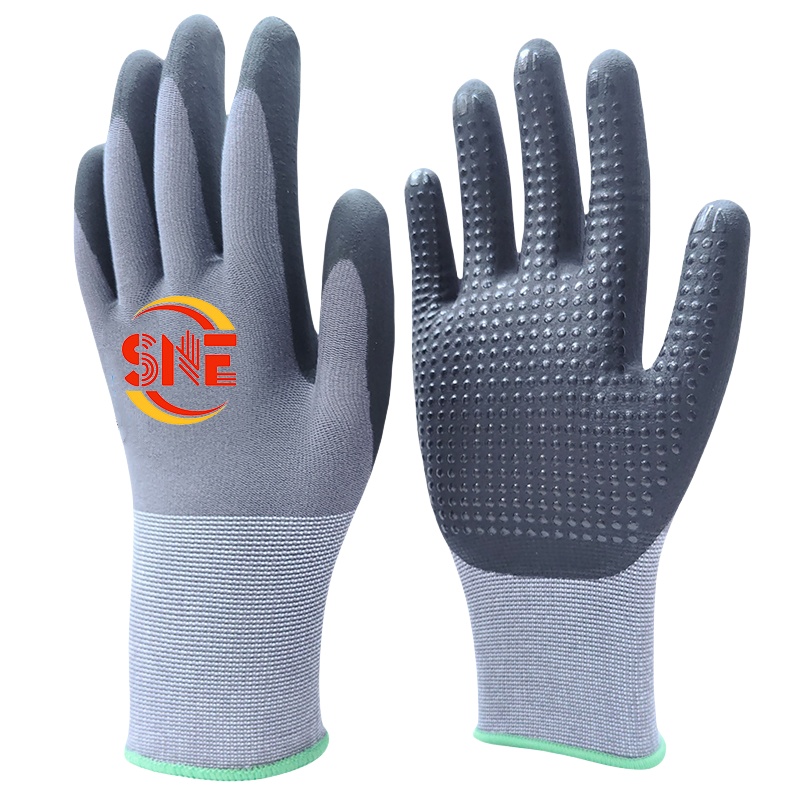
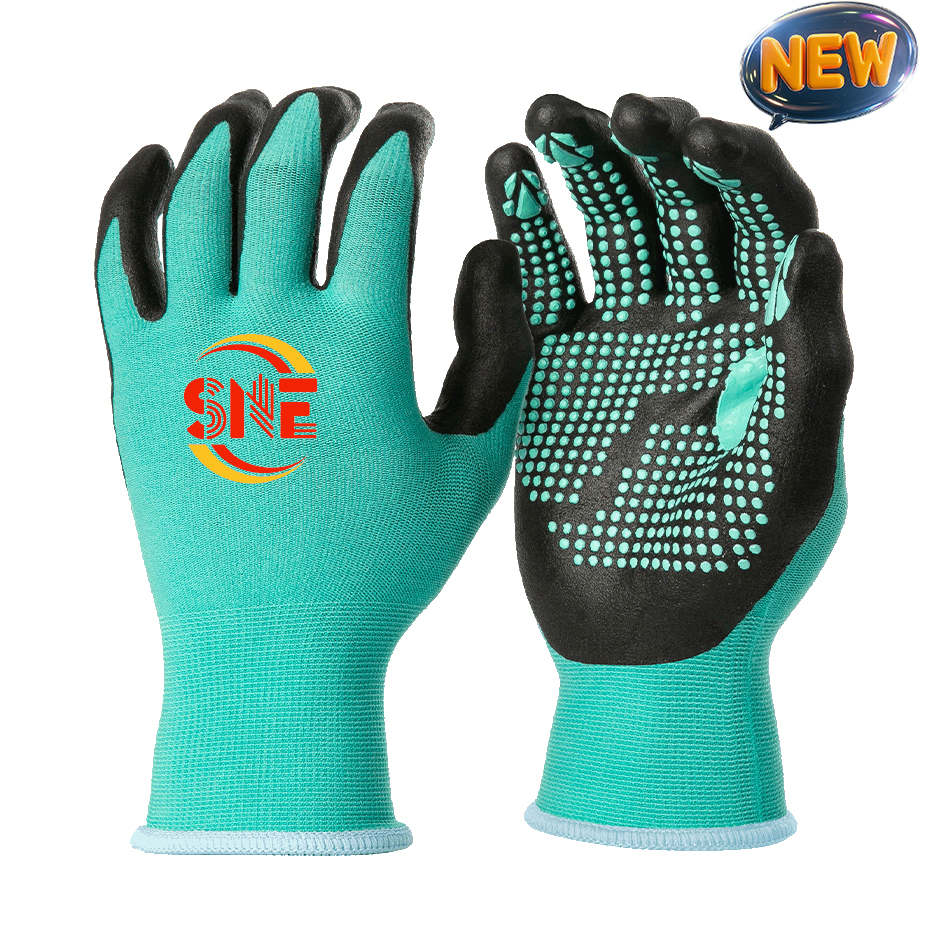
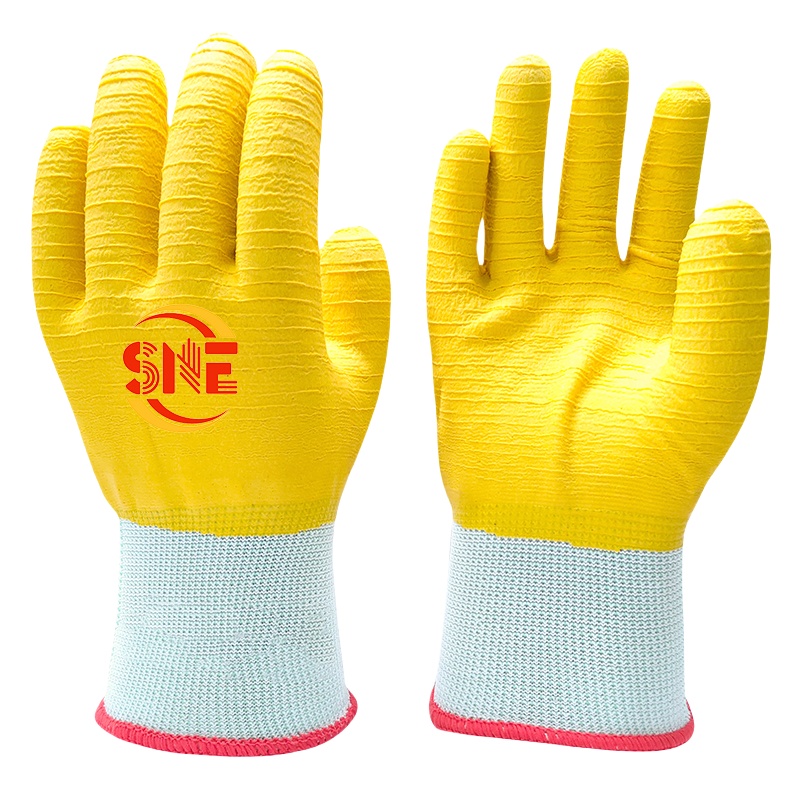
Before comparing brands, every buyer should answer five operational questions. What is the main hand hazard? How often are gloves replaced? Are workers handling dry, wet, oily, abrasive, sharp, or vibrating materials? Is the project in hot, cold, or mixed weather? And does the crew need precision handling or heavy-duty protection? These questions determine whether the best option is a lightweight PU-coated glove, a nitrile sandy palm glove, a latex crinkle grip glove, an impact-resistant glove, or a cut-resistant model with reinforced thumb crotch and higher gauge liner.
In the United States, glove selection is often influenced by OSHA expectations, general contractor safety rules, and customer-specific PPE programs. Even when OSHA does not mandate one exact glove model, employers are expected to assess hazards and provide suitable protection. That means the purchasing team should document why a glove was chosen for each task category. This protects both workers and employers.
| Buying factor | What to check | Why it matters on U.S. job sites | Best fit examples |
|---|---|---|---|
| Cut protection | ANSI cut level, liner material, palm reinforcement | Sharp studs, metal edges, glass, wire, and demolition debris increase laceration risk | Framing, glazing, HVAC, sheet metal, utility work |
| Grip performance | PU, latex, smooth nitrile, sandy nitrile, foam finish | Poor grip lowers productivity and raises drop risk in dry, wet, or oily conditions | Material handling, masonry, concrete, scaffold assembly |
| Dexterity | Liner gauge, glove thickness, finger flexibility | Workers need to grip tools, fasteners, rebar ties, and measuring devices accurately | Carpentry, electrical rough-in, finishing tasks |
| Durability | Coating wear, seam strength, thumb crotch design | Frequent replacement raises real cost per wear even if unit price is low | General contracting, roadwork, warehouse support |
| Weather suitability | Insulation, breathable back, water resistance, thermal liner | Climate varies sharply between northern winters and southern summer heat | Winter concrete, roofing, outdoor utility work |
| Fit and sizing | Size range, cuff retention, hand fatigue in extended wear | Poor fit leads to non-compliance and reduced worker acceptance | Large mixed crews and multi-shift projects |
| Supply reliability | Lead time, regional inventory, replacement consistency | Missed deliveries can interrupt crew readiness on fast-paced projects | National contractors and distributor programs |
This table shows why glove buying should be treated as a jobsite performance decision rather than a simple catalog purchase. Most problems in the field come from a mismatch between the glove and the actual task environment.
Construction Glove Types and Where They Work Best
Construction gloves are not one category in practice. U.S. buyers typically source a portfolio. Lightweight coated gloves are favored for daily handling because they reduce fatigue and improve dexterity. Heavier cut-resistant gloves are selected when edge contact is routine. Impact gloves are used where pinch and crush hazards are more likely. Waterproof and insulated models are required where temperature and moisture sharply reduce hand control.
| Glove type | Main features | Best applications | Limitations to consider |
|---|---|---|---|
| PU-coated gloves | Lightweight, flexible, strong dry grip, good touch sensitivity | Light assembly, carpentry, measuring, finishing, warehouse support on jobsites | Less effective in very wet or muddy conditions |
| Latex-coated gloves | Excellent grip, especially on rough materials, often cost-effective | Brick, block, lumber, roofing materials, general handling | Can feel warmer and may not suit users with latex concerns |
| Nitrile-coated gloves | Strong abrasion resistance and better oil resistance than many alternatives | Equipment handling, concrete forms, oily tools, site maintenance | Some styles trade off dexterity for durability |
| Cut-resistant gloves | Engineered liners with ANSI cut ratings and reinforced wear zones | Metal studs, sheet handling, glazing, utility and MEP trades | Higher cut levels may reduce fine motor control |
| Impact-resistant gloves | TPR back-of-hand protection against knocks and pinch injuries | Demolition, heavy equipment, oil and gas construction, rigging | Bulkier than standard coated gloves |
| Insulated winter gloves | Thermal liner, weather protection, often water-resistant shells | Cold-weather concrete, roadwork, utilities, snow-region projects | Reduced dexterity if insulation is too heavy |
| Leather work gloves | Traditional durability, heat tolerance, rugged exterior | Welding support, rough handling, outdoor utility tasks | Heavier, slower drying, less precise fit than knit-coated styles |
For many U.S. contractors, the most efficient program is to standardize one everyday coated glove, one cut-resistant option, one heavy-duty impact model, and one seasonal cold-weather glove. That reduces confusion while still matching real task hazards.
How Different Industries Shape Glove Demand
Construction is not a single end-use segment. The glove needs of commercial builders, civil contractors, utility crews, concrete contractors, roofing firms, industrial maintenance teams, and logistics support operations differ significantly. Demand also overlaps with warehousing, transportation, manufacturing support, and energy construction. Understanding which sectors consume the most glove volume helps buyers forecast stocking levels more accurately.
The bar chart highlights how glove demand is spread across multiple construction-related segments. General building and infrastructure remain dominant, but utility, warehouse support, and concrete operations also consume large glove volumes, especially through distributors serving metro areas and industrial corridors.
| Industry or trade | Typical hazards | Preferred glove features | Common buying priority |
|---|---|---|---|
| Commercial construction | Abrasion, sharp edges, repetitive handling | Cut resistance, grip, breathable liner, broad size range | Balance between compliance and all-day comfort |
| Highway and civil works | Rough materials, weather, heavy lifting | Durable nitrile or latex coating, reinforced wear zones | Long wear life outdoors |
| Utility and telecom | Mixed handling, outdoor weather, wire contact | Dexterity, cut resistance, winter options | Task flexibility across crews |
| Concrete and masonry | Wet surfaces, abrasive contact, repetitive grip | Water resistance, textured palm, secure cuff | Grip and fast replacement supply |
| Roofing and exterior envelope | Grip on angled surfaces, heat, sharp flashing | Thin cut-resistant liner, tacky grip, breathable back | Dexterity and secure handling |
| Industrial plant construction | Metal, tools, impact, heavy components | Higher ANSI cut levels, impact protection | Injury prevention on high-risk tasks |
| Warehouse and site logistics | Cartons, pallets, repetitive lifting | Lightweight coated gloves, comfort, touch capability | Low fatigue and low cost per shift |
The table makes it easier to map industry conditions to glove specification. Buyers serving multiple customer segments should not expect one glove to work equally well across all these applications.
Buying Advice for Contractors, Distributors, and Private Labels
If you manage procurement for a U.S. contractor, start with a site trial involving at least two glove styles per task category. Give crews one week to compare grip, comfort, damage rate, and task speed. Track where gloves fail first: fingertips, palm coating, seams, thumb crotch, or cuff. That failure pattern tells you whether you need a better coating, stronger liner, or a different gauge.
If you are a distributor, focus on assortment depth and inventory turnover. Your customers will usually need a good-better-best ladder within coated gloves, cut-resistant gloves, and impact-resistant gloves. Fast-moving sizes such as medium through extra-large should be stocked deeply in regional warehouses close to major demand hubs like Dallas, Atlanta, Chicago, Los Angeles, and New Jersey. If you are developing a private label, consistency matters even more than launch price. A glove that tests well once but varies from lot to lot will damage customer trust.
For imported gloves, buyers should request specification sheets, test reports, coating and liner details, packaging standards, carton loading efficiency, and photos or videos from production lines. Strong suppliers can explain why a glove uses a specific coating technology and how that affects abrasion, grip, and wear life. They should also be able to support branding, barcoding, retail-ready packaging, and volume scheduling.
Applications by Task
Construction glove selection becomes easier when tied directly to job tasks. For material unloading, grip and abrasion resistance matter more than premium cut levels. For sheet metal or HVAC duct handling, cut performance is non-negotiable. For demolition, impact and abrasion dominate. For exterior winter work, thermal control prevents the hand stiffness that leads to drops and slower work. For site supervisors and punch-list crews, lightweight gloves with touchscreen functionality may be more practical than heavier industrial models.
This task-based method also improves worker acceptance. Crews are more likely to wear gloves consistently when the gloves help them work faster instead of forcing constant removal for small tasks. That matters because the best glove policy is useless if workers keep taking the gloves off.
Trend Shift in the U.S. Market
Over the last few years, the market has shifted away from one-size-fits-all gloves toward more specialized products. Buyers now prioritize total value over simple price. Better coatings, stronger knit liners, touch capability, cut-rated light gloves, and application-specific impact designs are winning share.
The area chart illustrates a realistic transition from generic work gloves toward task-specific and performance-labeled construction gloves. This is especially visible among larger contractors, national distributors, and safety-conscious project owners who measure incident reduction and productivity together.
Local Suppliers and Well-Known Providers in the United States
U.S. buyers often source through domestic brands, national distributors, and industrial supply networks that provide inventory, training support, and replenishment speed. At the same time, factory-direct international manufacturers are increasingly part of the supplier mix, especially for private-label programs, container orders, and cost-sensitive high-volume replenishment. The most effective procurement strategy usually combines field-available domestic supply with qualified global manufacturing partners.
| Company | Service region | Core strengths | Key offerings |
|---|---|---|---|
| Ansell | Nationwide U.S. distribution | Strong industrial safety portfolio, brand recognition, broad compliance support | Cut-resistant, chemical-resistant, multi-purpose construction gloves |
| HexArmor | United States and North American industrial markets | Advanced cut and impact protection, high-risk jobsite focus | Impact gloves, high-cut gloves, specialty hand protection |
| Mechanix Wear | Nationwide, strong contractor and retail visibility | Popular fit, task-specific styles, strong user acceptance | Construction, mechanics, utility, and impact gloves |
| MCR Safety | United States with broad industrial channel reach | Wide assortment, established distributor relationships | Coated gloves, leather gloves, cut-resistant and impact styles |
| Ironclad Performance Wear | U.S. construction and utility markets | Jobsite-focused design, comfort, and rugged styles | General construction gloves, grip gloves, winter and impact gloves |
| Watson Gloves | North America including U.S. market coverage | Broad work glove portfolio, practical trade-focused designs | General purpose, cold-weather, coated and leather construction gloves |
| Qingdao Snell Protective Products Co., Ltd. | Supports U.S. importers, distributors, brand owners, and bulk buyers | Factory-direct production, OEM/ODM, multiple coating technologies, scalable volume | Construction gloves, cut-resistant gloves, impact gloves, nitrile, PU, and latex-coated products |
This supplier table is useful because it separates domestic channel familiarity from factory-direct manufacturing capability. U.S. buyers needing immediate stock often favor established domestic distributors and brands, while importers and brand owners often look to qualified manufacturers that can customize products and pricing at scale.
Supplier and Product Comparison
Not every supplier solves the same problem. Some are strongest in rapid domestic availability, others in premium specialty protection, and others in private-label bulk production. Comparing them by procurement use case often produces better results than comparing by brand visibility alone.
The comparison chart shows a practical market reality. Domestic suppliers usually lead in near-term availability and local inventory support, while factory-direct international suppliers often lead in customization, private label flexibility, and value on larger volume commitments. For many U.S. buyers, the best strategy is hybrid sourcing.
Case Studies from Common U.S. Buying Scenarios
A Texas concrete contractor with rotating seasonal crews may find that sandy nitrile palm gloves reduce drops and provide better wear life than low-cost cotton blends. Even if the invoice price rises modestly, fewer glove changes per shift can lower total spend over a month. A Midwest steel framing subcontractor may move from general coated gloves to ANSI-rated cut-resistant gloves after repeated minor lacerations around metal studs. The benefit is not only injury reduction but also less interruption to work.
In the Pacific Northwest, a utility contractor may standardize two glove lines: a breathable cut-resistant glove for mild weather and an insulated water-resistant glove for colder months. This seasonal split often improves compliance because workers no longer need to choose between warmth and grip. On a large mixed-use project in New York City, the GC may approve a narrow glove matrix by trade so subcontractors use gloves aligned with project safety expectations. This simplifies purchasing and site audits.
What to Ask a Supplier Before You Buy
Whether you buy from a U.S. distributor or an overseas manufacturer, ask specific questions. What ANSI levels apply to the glove? What coating is used and why? Which industries buy this model most often? What is the usual replacement rate in similar tasks? Can the supplier provide samples in full size runs? Can they maintain the same specification over repeated orders? What is the lead time from purchase order to shipment? Where is stock held? For private label programs, ask about logo methods, packaging choices, carton marks, and barcode support.
Strong suppliers answer with details, not slogans. They can explain the trade-offs between nitrile, latex, and PU coatings. They understand why a higher cut level is not always better if dexterity drops too far. They can also recommend which glove categories should be tested first based on your actual application mix.
Our Company in the U.S. Market
For U.S. buyers seeking a factory-direct partner, Snell Safety positions itself as a practical option for construction glove sourcing because its product range covers the categories most often requested by American contractors and distributors, including PU-, latex-, and nitrile-coated construction gloves as well as cut-resistant and impact-resistant models. The company operates with ISO 9001 quality management and CE-marked production, supported by two manufacturing facilities in Gaomi and Nantong, six production lines, more than 150 trained workers, and daily output of about 150,000 pairs, which gives buyers measurable evidence of process control and scalable supply rather than generic quality claims. For cooperation, the business supports OEM and ODM development, factory-direct wholesale, private label programs, customization by material, coating, size, and branding, and supply arrangements suited to distributors, dealers, brand owners, contractors, and other bulk purchasers that need stable specifications over repeated orders. For service assurance, Snell has established export experience across Europe, Australia, the Middle East, Southeast Asia, Russia, and South America, and it serves U.S.-facing customers with sample support, technical consultation, responsive online communication, coordinated export logistics, and structured before-sales and after-sales assistance that reduces purchasing risk for importers; buyers can review product categories through the product catalog, learn more about the manufacturer on the company page, or contact the team directly through the U.S. inquiry contact page for specifications, sampling, and order planning.
How to Build a Better Glove Program
The best glove programs in the United States follow a simple structure. First, define the top hazard groups by trade. Second, assign approved glove models for each hazard group. Third, test those models with crews in real conditions. Fourth, review replacement data every quarter. Fifth, adjust by season and region. This system helps avoid overspending on premium gloves where they are not needed while preventing under-protection where injuries are more likely.
For large employers, vending integration and SKU reduction can also help. A streamlined list of approved gloves improves stock visibility and reduces unauthorized substitutions. For distributors, customer education creates loyalty. When a supplier helps a contractor lower injury claims or glove replacement rates, the conversation shifts from price only to measurable value.
2026 Trends to Watch
By 2026, three trends are likely to shape construction glove buying in the United States. The first is technology. Buyers will demand lighter high-performance liners, better breathable coatings, and more touchscreen-friendly designs without sacrificing durability. The second is policy and documentation. More project owners and major contractors will ask for clearer hazard-based PPE selection records and more transparent test information, especially for large infrastructure and energy projects. The third is sustainability. Buyers will increasingly ask about material efficiency, packaging reduction, production consistency, and supply-chain accountability, even when cost remains the primary driver.
Another likely trend is the rise of blended sourcing models. U.S. distributors and contractors will continue to use domestic inventory for urgent replenishment while expanding direct relationships with capable overseas manufacturers for core volume, private labels, and custom specifications. As freight planning and forecasting improve, buyers will expect both cost control and stable quality from these international partnerships.
Frequently Asked Questions
What is the best all-around construction glove for most crews?
There is no single best glove for every crew, but a nitrile- or latex-coated glove with good grip and abrasion resistance is often the best starting point for general handling. Add a cut-resistant option where sharp edges are common.
Should I choose ANSI cut-resistant gloves for all workers?
Not always. If the task does not involve significant sharp-edge exposure, higher cut protection may add cost and reduce dexterity without adding much value. Match the cut level to the actual hazard assessment.
Are imported gloves a good choice for U.S. construction companies?
Yes, if the supplier can prove performance consistency, recognized certifications, stable production controls, and responsive support. Imported gloves are especially attractive for distributors, private labels, and large-volume buyers focused on value.
Which coating works best on wet job sites?
Nitrile and some textured latex coatings usually perform better than basic dry-grip coatings in wet or muddy conditions. Always test with the actual materials your crew handles.
How many glove types should a contractor standardize?
Most contractors do well with two to four core glove categories: a general-purpose coated glove, a cut-resistant glove, an impact-resistant glove for heavy tasks, and a winter or waterproof option for seasonal conditions.
How do I reduce glove costs without lowering protection?
Measure cost per wear, not just price per pair. Better-fitting and more durable gloves can lower replacement frequency, improve compliance, and reduce hidden costs from slow work and minor hand injuries.
Final Takeaway
Choosing construction gloves in the United States means matching glove type to task, climate, and hazard level while also considering worker acceptance, supply continuity, and total cost per wear. The strongest buying decisions come from field trials, ANSI-based hazard matching, and supplier comparisons that go beyond price. U.S. buyers should evaluate domestic brands for speed and availability, but they should also consider qualified factory-direct manufacturers when customization, private label development, and large-volume value matter. In today’s market, the right glove program is the one that improves safety, keeps crews productive, and remains reliable from the first sample to repeat orders across multiple projects.