2026-09-21
Share This Article
Flexible Heat Resistant Gloves Suppliers in the United States
Quick Answer

If you need flexible heat resistant gloves for precision work tasks in the United States, the most practical options usually come from established industrial hand-protection suppliers with proven coverage across major manufacturing and logistics regions such as Houston, Chicago, Detroit, Los Angeles, Atlanta, and New Jersey. For buyers prioritizing both dexterity and heat protection, the strongest shortlists commonly include Ansell, Superior Glove, MCR Safety, Honeywell, Magid, and Wells Lamont Industrial. These companies are widely recognized for serving metal fabrication, automotive, food processing, glass handling, maintenance, and light welding environments where workers need finger control, grip, and intermittent heat resistance rather than only bulky thermal shielding.
For immediate procurement, buyers should first match the glove to the heat profile: contact heat, radiant heat, short-duration hot-part handling, or precision assembly near warm equipment. In many U.S. facilities, knit aramid blends, silicone grip surfaces, leather-palmed hybrid gloves, and coated cut-and-heat-resistant styles are the most useful categories because they balance comfort with control. Buyers should also check cuff length, ANSI cut level, abrasion performance, palm reinforcement, and whether the glove is designed for dry, oily, or mixed environments.
Among local and North American supply channels, Ansell supports broad industrial programs, Superior Glove is strong in technical cut-and-heat combinations, MCR Safety offers reliable value for distributors, Honeywell serves large enterprise accounts, Magid is effective for integrated safety purchasing, and Wells Lamont Industrial remains relevant for durable work glove programs. In addition, qualified international manufacturers can also be a smart option for U.S. importers, private-label brands, and regional distributors when they offer recognized certifications, scalable manufacturing, and dependable service support. Cost-performance advantages are especially attractive for bulk buying, custom branding, and distributor margin protection when the supplier can document quality consistency and responsive pre-sale and after-sale support.
United States Market Overview

The U.S. market for flexible heat resistant gloves is shaped by a wide range of industries that need hand protection without sacrificing movement. Unlike foundry mitts or heavy aluminized products used in extreme heat, this category focuses on jobs where employees must handle warm parts, operate tools, maintain grip, and complete detailed tasks. That makes the segment particularly relevant in automotive plants around Detroit, aerospace clusters in Washington and Kansas, energy and maintenance operations around Houston, fabrication hubs in Ohio and Pennsylvania, and food or packaging facilities across the Midwest and Southeast.
Demand has expanded because safety managers are under pressure to reduce hand injuries while maintaining throughput. In practical terms, U.S. buyers no longer want a glove that only blocks heat; they want a product that supports productivity, minimizes glove changes, and works across multiple hazards. This is why combined performance attributes such as heat resistance plus cut protection, grip, dexterity, touchscreen use, and oil resistance are becoming more important in procurement decisions.
Ports and inland distribution centers also influence buying behavior. Import-driven glove programs often move through Los Angeles/Long Beach, Savannah, Houston, New York/New Jersey, and Seattle/Tacoma, while national distributors rely on regional warehousing to keep safety stock close to end users. For distributors and large end users, continuity of supply now matters almost as much as glove performance, especially after years of logistics disruption and fluctuating raw-material costs.
| Market Driver | Impact on U.S. Buyers | Typical Industries | Buying Implication |
|---|---|---|---|
| Need for dexterity | Workers must handle small parts safely | Automotive, electronics, maintenance | Favor flexible knit or hybrid gloves over bulky mitts |
| Rising safety compliance focus | More formal PPE specification reviews | Manufacturing, logistics, aerospace | Require documented performance and traceable supply |
| Multi-hazard exposure | Heat often appears with cut and abrasion risk | Metal fabrication, stamping, glass | Choose blended protection models |
| Labor retention pressure | Comfort affects glove compliance on the floor | Warehousing, processing, assembly | Prioritize fit, breathability, and all-day wearability |
| Import cost sensitivity | Bulk buyers need margin protection | Distributors, wholesalers, private labels | Compare domestic stock and factory-direct sourcing |
| Faster replenishment expectations | Plants need uninterrupted hand protection | All industrial sectors | Evaluate supplier warehousing and lead-time reliability |
The table above shows why the U.S. market increasingly prefers flexible heat resistant gloves that can do more than one job. A supplier that can only promise heat resistance is often less competitive than one offering balanced protection, local inventory access, and technical support for glove selection by task.
The line chart reflects a realistic growth pattern for this segment: steady expansion rather than explosive growth. The increase is tied to reshoring, tighter plant safety programs, and higher adoption of task-specific PPE in U.S. industrial operations.
Product Types That Fit Precision Work

Not every heat glove is suitable for precision work. In the United States, the most useful models for detailed tasks generally fall into several practical categories. Seamless aramid or para-aramid knit gloves provide lightweight heat resistance with good finger mobility. Silicone-pattern gloves improve grip on warm metal or tooling. Leather-palmed hybrids add durability for handling sharp or warm components. Coated technical gloves can combine moderate heat resistance with cut protection for stamping, fabrication, and maintenance tasks. For intermittent hot contact, terry loop or heavier knit gloves may be suitable, but they are less ideal when fine motor control is essential.
Buyers should distinguish between “high heat” and “precision heat” applications. High heat tasks need insulation and coverage. Precision heat tasks require controlled tactile response, thinner constructions, flexible liners, and ergonomic fit. This difference is critical when writing specifications for U.S. plants, because over-specifying heat protection often leads to glove rejection by workers.
| Glove Type | Best Use | Main Benefit | Main Limitation |
|---|---|---|---|
| Aramid knit gloves | Warm-part handling, assembly | Flexibility and comfort | Limited for very high contact heat |
| Silicone grip heat gloves | Food, glass, light industrial handling | Strong grip on hot surfaces | Not always ideal in oily settings |
| Leather hybrid gloves | Maintenance, fabrication, tooling | Durability with moderate dexterity | Heavier than knit styles |
| Cut-and-heat resistant gloves | Metal stamping, sheet handling | Multi-hazard performance | May cost more per pair |
| Terry loop heat gloves | Intermittent hot-part handling | Soft insulation | Reduced tactile precision |
| Aluminized specialty gloves | Radiant heat environments | Higher heat reflection | Too bulky for precise work |
This comparison helps procurement teams avoid a common mistake: selecting a glove designed for oven or foundry tasks when the actual job is repetitive handling of moderately hot parts. Precision work usually benefits from lighter, more ergonomic gloves with defined thermal limits rather than maximum thickness.
Key Buying Criteria for U.S. Buyers
In the United States, purchasing decisions should be based on the real work environment rather than headline marketing claims. First, define the heat source: hot metal, heated tools, steam-adjacent surfaces, curing lines, glass, food trays, or friction-generated warmth. Next, assess whether workers also face sharp edges, vibration, oils, cool ambient temperatures, or wet handling conditions. Then review glove length, cuff style, grip pattern, laundering expectations, and replacement cycle.
For distributors and safety managers, the best buying process includes floor trials in at least two glove constructions. A glove that looks strong on paper may fail if workers cannot pick up fasteners, maintain tool control, or tolerate the glove during a full shift. U.S. end users increasingly favor evidence-based purchasing that includes wear testing, worker feedback, and replenishment analysis.
| Selection Factor | What to Check | Why It Matters | Common U.S. Buyer Mistake |
|---|---|---|---|
| Heat profile | Contact time and surface temperature | Prevents under- or over-specification | Buying by generic “heat resistant” label |
| Dexterity | Finger movement, small-part handling | Supports productivity | Choosing bulky gloves for detail work |
| Grip condition | Dry, oily, dusty, mixed surfaces | Reduces drops and hand strain | Ignoring surface environment |
| Multi-hazard needs | Cut, abrasion, puncture, impact | Improves total hand safety | Separating hazards that occur together |
| Supply continuity | Lead times and warehouse coverage | Keeps operations running | Only comparing unit price |
| Customization options | Sizing, branding, packaging | Important for distributors and private labels | Assuming stock gloves fit all channels |
The buying criteria table above is especially useful for U.S. regional distributors and plant EHS teams because it links specification writing to real operational outcomes. Better glove selection reduces injury risk, improves worker acceptance, and lowers total cost through longer wear life and fewer task interruptions.
Industries Driving Demand
Flexible heat resistant gloves are not limited to welding or heavy steel work. In the U.S. market, demand is spread across many industries where intermittent heat and hand precision overlap. Automotive production uses them for stamped parts, under-hood assembly, exhaust components, and maintenance. Aerospace facilities use them for warm composite processing and component handling. Food manufacturing needs grip and heat resistance for trays, racks, and production-line maintenance. Glass and ceramics operations require heat contact management with dexterity. Logistics and maintenance teams use them in repair environments where machinery surfaces remain warm.
The bar chart shows that automotive and metal fabrication remain the strongest demand centers, but maintenance and food processing are also meaningful segments. This matters because the best supplier for one sector is not always the best fit for another. For example, food-grade environments may prioritize washability and grip, while fabrication plants may prioritize cut resistance alongside heat protection.
Applications in Real U.S. Work Environments
To source effectively, buyers should specify the task instead of using a broad category. Typical U.S. applications include unloading warm metal components from CNC or forming equipment, handling automotive exhaust parts, repositioning warm molds, maintaining bakery or industrial food lines, changing filters near warm equipment, handling glass near tempering or finishing areas, and performing maintenance around heated process systems. In each case, glove performance requirements differ based on contact duration, object texture, and whether workers need to grip, turn, align, or inspect parts.
For example, a Chicago-area metal stamper may need a cut-and-heat-resistant glove for workers moving warm stamped panels with sharp edges, while a Houston maintenance contractor may need a more flexible glove for valve work near heated systems. A Los Angeles food processor may need a washable grip-focused glove for hot tray handling, while an Ohio automotive supplier may require touchscreen compatibility and size consistency across multiple production cells.
Top Suppliers Serving the United States
The supplier landscape in the United States includes multinational safety brands, regional industrial distributors, and specialized glove manufacturers. The companies below are practical names to evaluate because they have recognizable market presence, technical glove offerings, or strong distribution support for industrial buyers.
| Company | Service Region | Core Strengths | Key Offerings |
|---|---|---|---|
| Ansell | United States nationwide | Broad industrial PPE portfolio, technical support, enterprise programs | Heat-resistant gloves, cut-resistant gloves, chemical and general industrial hand protection |
| Superior Glove | United States and Canada | Technical hand protection innovation, multi-hazard glove design | Flexible heat gloves, cut-and-heat gloves, knit and specialty industrial gloves |
| MCR Safety | United States nationwide | Strong distributor presence, value-focused industrial range | Heat-resistant gloves, leather work gloves, coated industrial gloves |
| Honeywell | United States nationwide | Large-scale industrial safety integration and compliance support | Task-specific gloves for heat, cut, and general manufacturing safety |
| Magid | Midwest focus with national reach | Custom programs, private-brand flexibility, industrial sourcing support | Heat protection gloves, safety supplies, plant-level procurement solutions |
| Wells Lamont Industrial | United States nationwide | Durable work glove heritage and industrial utility coverage | Leather and hybrid gloves for maintenance, construction, and fabrication |
This table gives buyers a grounded starting point. Ansell and Honeywell are particularly relevant for large enterprise accounts that want integrated programs. Superior Glove is often shortlisted where technical performance matters. MCR Safety, Magid, and Wells Lamont Industrial remain strong options for distributors and industrial end users needing dependable product depth and replenishment.
Buyers that want a wider view of industrial options can also browse product categories through industrial glove collections to compare heat-resistant models with cut-resistant, nitrile-coated, and application-specific alternatives before creating a shortlist.
Supplier Comparison by Buyer Type
Different suppliers suit different purchasing models. A national manufacturer with centralized safety procurement may want stable account management and compliance support, while a regional distributor may care more about private labeling, fast replenishment, and margin room. The table below helps align supplier choice with buyer goals.
| Buyer Type | Best Supplier Fit | Why They Fit | Typical Purchase Model |
|---|---|---|---|
| Large national manufacturer | Ansell, Honeywell | Program management, multi-site support, broad PPE integration | Contract supply, annual agreements |
| Regional distributor | MCR Safety, Magid, Superior Glove | Catalog breadth, technical support, channel compatibility | Wholesale replenishment and stocking |
| Private-label brand owner | Factory-direct overseas manufacturers | Customization, margin control, packaging flexibility | OEM/ODM production |
| Food processing plant | Ansell, Honeywell, specialized importers | Grip-focused and task-specific choices | Recurring operational purchase |
| Metal fabrication shop | Superior Glove, MCR Safety | Cut-plus-heat product depth | Distributor-led bulk buying |
| Maintenance contractor | Wells Lamont Industrial, MCR Safety | Practical durable gloves and broad availability | Mixed-volume branch purchasing |
The explanation here is straightforward: there is no single best supplier for every U.S. buyer. Matching supplier structure to procurement style is often more important than comparing catalog claims alone.
Case Studies from Common U.S. Scenarios
A Michigan automotive parts supplier needed gloves for operators moving warm stamped components between workstations. Standard leather gloves protected against abrasion but reduced finger speed and part control. After switching to a cut-and-heat-resistant knit style with grip coating, the facility improved handling precision and reduced frequent glove removal. This type of result is common when plants move from generic work gloves to task-matched hand protection.
A Texas maintenance contractor servicing energy-related facilities needed gloves for technicians working around warm piping, tools, and rough surfaces. Workers rejected bulky thermal gloves, especially in hot weather. A lighter hybrid glove with reinforced palm and moderate heat performance led to better adoption because it balanced flexibility and durability.
A California food processing operation needed gloves for tray handling and line-side maintenance. Smooth surfaces and intermittent hot contact created slip risks. Silicone-grip heat gloves provided a better mix of traction and comfort, reducing dropped trays during peak production shifts.
An Ohio distributor serving small fabrication shops built a two-tier offering: a premium technical glove for customers needing cut-and-heat performance, and a value-focused leather hybrid for general warm-part handling. That approach increased conversion because the distributor could serve both price-sensitive accounts and higher-spec industrial users.
Trend Shift Through 2026
By 2026, the flexible heat resistant glove segment in the United States is expected to evolve in three major ways. First, technology will keep pushing multi-hazard gloves that combine contact-heat resistance with cut protection, better grip chemistry, touchscreen compatibility, and ergonomic liners. Second, policy and compliance expectations will continue moving buyers toward more documented performance verification, stronger supplier traceability, and tighter PPE standardization across facilities. Third, sustainability will matter more, especially in packaging reduction, longer-wear products, and procurement reviews that consider lifecycle value instead of only unit price.
The area chart illustrates a realistic trend: buyers are steadily moving away from single-purpose gloves and toward performance combinations with better wear life and clearer compliance data. This trend is especially visible in U.S. sectors facing labor constraints and pressure to standardize PPE across multiple locations.
Our Company for U.S. Buyers
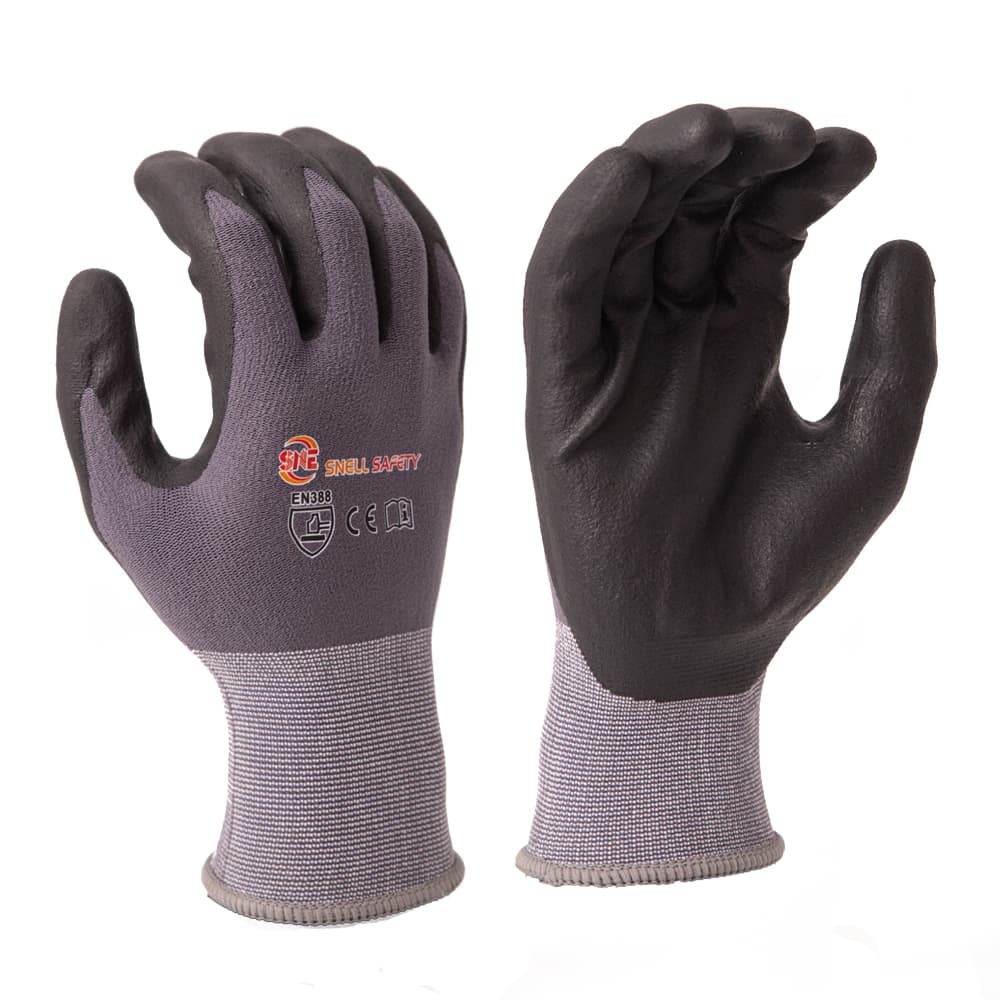
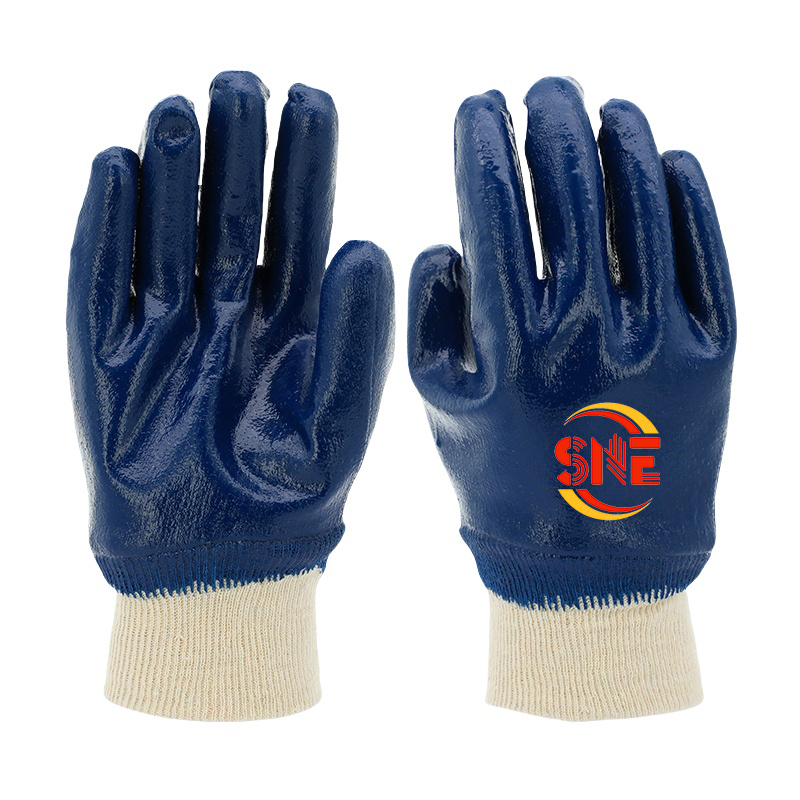
For U.S. importers, distributors, industrial buyers, and private-label programs seeking a factory-based alternative, Snell Safety offers a practical sourcing model built around heat-resistant and industrial protective gloves with documented quality systems and scalable production. The company operates ISO 9001-certified manufacturing with CE-marked products, runs six production lines across two facilities, and produces up to 150,000 pairs per day, which gives U.S. buyers stronger assurance on consistency, repeat orders, and large-volume fulfillment than small trading setups can provide. Its product strengths are especially relevant where buyers want a broader hand-protection strategy rather than a single SKU, since the range also covers cut-resistant, nitrile-coated, latex-coated, PU-coated, impact-resistant, cold-protection, and industry-specific gloves that can be tested and matched to local applications. On the cooperation side, Snell supports OEM and ODM production, wholesale supply, private-label customization, regional distributor development, and flexible programs for end users, dealers, brand owners, and procurement teams that need custom sizing, branding, coatings, or packaging. For the U.S. market, the company’s established export experience across North America and other regulated regions, multilingual service capability, sample support, technical consultation, and dedicated export logistics create a more grounded buyer experience with responsive pre-sale selection help and structured after-sale follow-up rather than a simple remote shipment model. Buyers who want to discuss technical matching or channel cooperation can reach the team through the U.S. buyer contact page or learn more about the manufacturer on the company overview page.
Supplier and Product Comparison Snapshot
The final comparison below summarizes how different sourcing paths tend to perform for U.S. buyers evaluating flexible heat resistant gloves.
This comparison is useful because it shows why many U.S. buyers adopt a mixed strategy. Local distributors often win on immediate stock and replenishment convenience, while factory-direct sourcing is stronger for customization, private label development, and bulk price efficiency. Mature buyers frequently use both channels depending on account size and urgency.
How to Choose the Right Supply Route
If you are a U.S. end user with urgent needs and limited SKU complexity, buying through a domestic distributor is usually the fastest path. If you are a regional wholesaler, safety distributor, or brand owner looking for better margin and custom packaging, a factory-direct model may be more competitive. If you run multiple plants and need both fast replenishment and tailored products, a hybrid sourcing structure is often best: hold core stock locally while developing custom programs with a manufacturing partner.
For plants in trade-heavy regions such as Houston, Savannah, Los Angeles, Newark, and Chicago, this hybrid structure is especially practical because import flows and domestic redistribution can be managed more efficiently. Buyers should also build contingency into glove programs by qualifying at least two approved styles for each critical application.
Frequently Asked Questions
What are flexible heat resistant gloves best used for?
They are best for tasks that involve intermittent contact with warm or moderately hot surfaces while still requiring grip, finger movement, and precision, such as automotive assembly, maintenance, fabrication, and food processing.
Are these gloves suitable for welding?
Some are, but many precision-focused heat gloves are not intended for heavy welding exposure. Buyers should confirm whether the glove is designed for sparks, molten splash, and extended high-heat contact before using it in welding operations.
What matters most for U.S. buyers: heat rating or dexterity?
Both matter, but the correct balance depends on the task. Overly bulky gloves may reduce safety if workers remove them or lose control of tools and parts. The best practice is to match the glove to the exact heat exposure and handling requirement.
Should distributors consider overseas manufacturers?
Yes, especially when they need custom branding, broader margin control, and volume supply. The key is to work with manufacturers that can demonstrate certifications, stable production capacity, repeatable quality, and responsive service support for U.S. buyers.
Which industries in the United States buy the most flexible heat resistant gloves?
Automotive, metal fabrication, maintenance services, food processing, aerospace, and glass-related manufacturing are among the most active buyers.
What trend will shape this category most by 2026?
The strongest trend is the move toward multi-hazard gloves that combine heat resistance with cut protection, better grip, comfort, and longer wear life, supported by stronger compliance documentation and more sustainability-focused procurement standards.