2026-06-04
Share This Article
EN 388 Cut Resistance Ratings for Buyers in the United States
Quick Answer

EN 388 cut resistance ratings tell United States buyers how well a glove resists blade-related hazards during mechanical testing. For cut protection, the most important marks are the Coup Test score from 1 to 5 and the ISO 13997 letter score from A to F, where A is the lowest cut resistance and F is the highest. In practical U.S. buying decisions, light assembly and warehousing often fit A or B, general metal handling often fits C, glass, stamping, and sharper-edge work often need D or E, and the most severe sheet metal or blade exposure usually points to F. If you source locally, leading names active in the U.S. market include Ansell, MCR Safety, HexArmor, Superior Glove, PIP, and Mechanix Wear. Qualified international suppliers can also be a smart option when they hold relevant certifications, support OEM or private label programs, and offer responsive pre-sales and after-sales service, because they often deliver stronger cost-performance for bulk orders.
What EN 388 Means in the United States

Although EN 388 is a European standard, it is widely used by importers, distributors, safety managers, and procurement teams across the United States because it gives a structured way to compare mechanical glove performance. In U.S. workplaces, it is often reviewed alongside ANSI/ISEA 105. Buyers in industrial hubs such as Houston, Chicago, Detroit, Los Angeles, Savannah, and Newark frequently ask suppliers to show both standards, especially when gloves are imported through major ports and then redistributed into construction, automotive, logistics, and metal fabrication channels.
EN 388 evaluates multiple mechanical risks, including abrasion resistance, blade cut resistance, tear resistance, puncture resistance, and, in the updated version, impact protection where applicable. For cut-resistant gloves, the cut scores usually receive the most attention because they directly affect user safety in handling sharp sheet metal, glass, tools, and components with burrs or edges.
The rating is commonly written as a sequence of digits and letters, for example 4X43D or 4X42F. The first four characters represent abrasion, Coup Test cut, tear, and puncture. The final letter, from A to F, represents ISO 13997 cut resistance. If there is impact protection on the back of the hand, the mark may also include a P. In real U.S. procurement work, many buyers rely more heavily on the A-F letter because it is especially useful for modern cut-resistant materials that can dull the Coup blade and distort the older test result.
How EN 388 Cut Resistance Ratings Work

There are two cut-related elements inside EN 388 that matter for glove buyers.
The Coup Test uses a circular rotating blade and compares how many cycles are needed to cut through the glove material relative to a control fabric. It produces levels from 1 to 5. However, advanced fibers such as HPPE, engineered yarn blends, steel, or glass fiber can dull the blade during testing, which can make the result less reliable. That is why many technical buyers in the United States now focus on the ISO 13997 result.
The ISO 13997 test uses a straight blade and measures the force needed to cut the material over a set distance. It produces the letter scale from A to F. Because the test better reflects high-cut-performance materials, it is often the most useful part of EN 388 for demanding industrial tasks.
| EN 388 level | Indicative force range | Typical U.S. tasks | Common industries | Risk profile | Buying note |
|---|---|---|---|---|---|
| A | 2 to under 5 newtons | Light packaging, general warehouse picking | Logistics, retail distribution | Low cut exposure | Good when dexterity matters more than high cut defense |
| B | 5 to under 10 newtons | Basic assembly, parts handling | Automotive sub-assembly, maintenance | Low to moderate | Often selected for comfort and all-day wear |
| C | 10 to under 15 newtons | General metal handling, appliance assembly | Manufacturing, HVAC, fabrication | Moderate | Popular middle ground for distributors |
| D | 15 to under 22 newtons | Sheet metal work, sharper edge handling | Construction, metal service centers | Moderate to high | Frequently requested for industrial contracts |
| E | 22 to under 30 newtons | Glass handling, stamping, recycling | Glass, heavy manufacturing, waste operations | High | Best for buyers prioritizing injury prevention over feel |
| F | 30 newtons and above | Very sharp metal, blade-heavy exposure | Steel processing, high-risk fabrication | Very high | Confirm grip, fit, and fatigue impact before bulk rollout |
This table helps United States buyers translate ratings into real tasks. It should not replace site-specific hazard analysis, but it is a practical shortlist tool when comparing vendor samples.
Why U.S. Buyers Compare EN 388 with ANSI Cut Levels
In the United States, many safety directors know ANSI A1 through A9 better than EN 388 A through F. The standards are not identical, yet they often appear together on technical data sheets for imported gloves. When distributors in states such as Texas, Ohio, Illinois, California, and Pennsylvania evaluate glove portfolios, dual-marked products are easier to sell because end users can align them with local safety programs while still understanding the global test profile.
For cross-border sourcing, EN 388 matters because many factories in Asia and Europe use it as a base testing language. If you are importing through Los Angeles/Long Beach, Houston, New York/New Jersey, or Savannah, suppliers that provide full conformity documentation, batch traceability, and consistent labeling tend to reduce compliance friction and customer complaints.
U.S. Market Demand for Cut-Resistant Gloves
The United States remains one of the most important global markets for cut-resistant hand protection. Demand is driven by tighter workplace safety expectations, rising claims costs, automation-related handling tasks, and the need to balance protection with dexterity in e-commerce and advanced manufacturing.
The market growth trend shown above reflects realistic expansion patterns tied to labor protection spending, nearshoring, and stronger replacement cycles in industrial PPE procurement. Growth is especially visible in warehouse corridors around Dallas-Fort Worth, the Midwest manufacturing belt, and Gulf Coast energy operations.
Product Types Buyers See Most Often
Not all EN 388 cut-rated gloves are built the same. The right glove depends on yarn construction, coating, gauge, cuff style, touch sensitivity, and whether oil, heat, or impact hazards are also present. In the U.S. market, procurement teams usually group products by task rather than standard alone.
| Glove type | Typical materials | Typical EN 388 cut range | Main benefit | Best-fit industries | Common trade-off |
|---|---|---|---|---|---|
| PU coated cut gloves | HPPE, glass fiber, nylon, PU palm | B to D | High dexterity and clean grip | Electronics, assembly, logistics | Less durable in heavy abrasion than some nitrile styles |
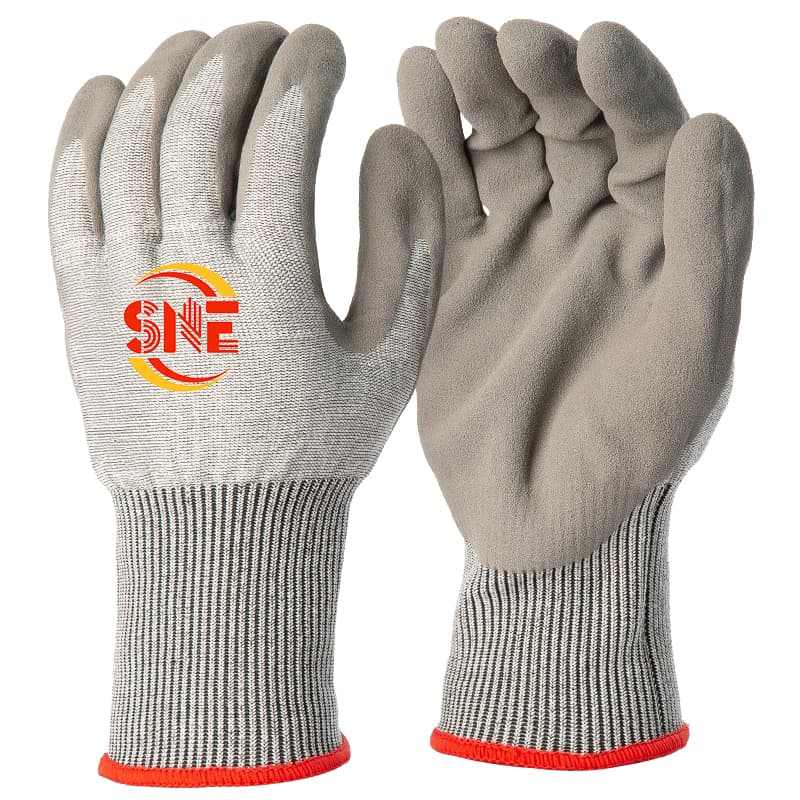
| Nitrile coated cut gloves | HPPE blends with smooth or sandy nitrile | C to F | Oil grip and stronger wear life | Automotive, metal fabrication, maintenance | Can feel stiffer |
| Latex coated cut gloves | Engineered yarn shell with latex coating | B to E | Strong dry grip and flexibility | Construction, general handling | Not ideal for users sensitive to latex |
| Cut-resistant sleeves | HPPE, aramid, blended yarns | C to F | Forearm protection | Glass, sheet metal, food processing support tasks | Need pairing with correct glove and secure fit |
| Impact cut gloves | TPR back, cut liner, nitrile palm | D to F | Combined cut and impact defense | Oil and gas, mining, heavy equipment | Bulkier and warmer |
| Heat plus cut gloves | Aramid blends, reinforced palm | C to E | Protection against sharp and hot parts | Welding support, foundry support, automotive hot parts | Reduced fine-motor feel |
This product overview matters because a buyer who selects only by cut level may miss coating performance, hand fatigue, or grip failure in oily conditions. A glove rated D with the wrong palm finish can underperform in practice compared with a well-matched C-rated style.
Industry Demand by Sector
Some sectors create much stronger demand for higher EN 388 cut resistance than others. The following chart reflects realistic demand intensity among major U.S. buyer groups.
The bar chart shows why distributors with strong industrial portfolios often keep deeper stock in C, D, and E-rated products. Metal fabrication, glass handling, and automotive stamping continue to account for a large share of repeat cut-glove volume in the United States.
Buying Advice for U.S. Procurement Teams
First, match the glove to the actual edge hazard instead of buying the highest cut level automatically. Higher cut ratings can reduce comfort, sensitivity, and compliance if workers remove the gloves during fine tasks. Second, review coating performance in the real work environment. Dry handling, oil handling, wet surfaces, and mixed conditions often require different palm finishes. Third, test multiple sizes. Poor fit causes dropped parts and early fatigue.
Fourth, ask for documentation beyond the catalog page. Strong suppliers should provide test reports, lot consistency information, packaging details, and delivery lead times. Fifth, consider the total landed cost. A cheaper imported glove may still be the better value if it has stable sizing, lower defect rates, and fewer replenishment delays from the port to your warehouse. Sixth, involve end users before rollout. Pilot programs in one plant or one line usually prevent expensive company-wide mistakes.
| Decision point | What to check | Why it matters | Typical mistake | Good buyer action | Best fit for |
|---|---|---|---|---|---|
| Cut level selection | Actual edge sharpness and contact frequency | Avoids overbuying or under-protection | Choosing the highest level without field testing | Run a short wear trial by task type | All industries |
| Grip type | Dry, oily, wet, or mixed surface performance | Controls slip injuries and productivity | Using smooth PU in oily applications | Match coating to surface conditions | Maintenance, automotive, logistics |
| Comfort and dexterity | Gauge, liner softness, breathability | Drives worker acceptance | Ignoring complaint rates | Collect user feedback by shift | Assembly, warehouse, electronics |
| Durability | Abrasion and seam performance | Lowers replacement frequency | Focusing only on cut score | Compare cost per wear day | Construction, fabrication |
| Compliance documentation | EN 388 reports, labeling, traceability | Supports audits and customer trust | Accepting incomplete technical sheets | Request current supporting files before PO | Distributors, large end users |
| Supply reliability | Inventory depth and lead-time stability | Prevents stockouts | Buying only on unit price | Review replenishment plan and shipping route | National accounts, OEM buyers |
This checklist is especially useful for U.S. buyers that manage multi-site operations from regional hubs such as Atlanta, Chicago, or Dallas and need one glove platform that works across different plants.
Applications Where EN 388 Ratings Matter Most
Applications vary sharply by risk profile. In distribution centers, workers opening cartons, breaking down pallets, and handling shelf hardware may only need lower to medium cut levels, especially when speed and touchscreen use are important. In automotive plants around Michigan, Ohio, and Tennessee, workers handling stampings, trim, and unfinished parts often need C to E levels depending on the operation. In metal fabrication shops across Indiana and Pennsylvania, sharper edges frequently push buyers toward D, E, or F with nitrile-coated palms.
In oil and gas regions such as Texas and the Gulf Coast, gloves often need combined protection: cut resistance, grip in oily conditions, and sometimes impact protection. Construction buyers in fast-growth markets like Florida and Arizona may use lower-cost latex or nitrile-coated cut gloves for mixed-site tasks, but the correct choice still depends on whether materials are rough, abrasive, or blade-like.
Trend Shift in U.S. Product Preferences
The next chart shows how the product mix is shifting in the U.S. market as buyers prioritize dexterity, sustainability, and application-specific coatings.
The area chart illustrates a clear market trend: U.S. users no longer want only maximum protection. They increasingly want lighter gloves that still hit the right cut threshold, especially in warehousing, assembly, and e-commerce fulfillment. This shift will continue into 2026 as labor retention and ergonomics stay important.
Case Studies from Typical U.S. Buying Scenarios
A Midwest metal stamping company replaced a bulky high-cut glove with a better-fitted EN 388 D nitrile-coated style after observing that workers were removing gloves for dexterity. Although the nominal cut level dropped from the previous product, actual glove compliance improved, near-miss incidents fell, and replacement frequency declined because the selected coating lasted longer in oil-contaminated workstations.
A Southeast logistics operator handling damaged pallets, stretch film, and mixed retail returns moved from general-purpose gloves to EN 388 B and C options for targeted tasks. The site did not need premium F-level gloves, but it did need cleaner grip and better tactile control. By segmenting glove choice by task, the buyer lowered cost per employee without increasing incident reports.
A Gulf Coast maintenance contractor selected impact-rated EN 388 E gloves for crews working around valves, rough steel, and sharp-edged equipment. The contractor required both cut resistance and back-of-hand defense. Field feedback showed that the glove cost more initially, but reduced hand injuries during shutdown work where the exposure profile was broader than simple blade contact.
Local Suppliers and Brands Active in the United States
For U.S. buyers, local availability, channel support, and product range often matter as much as test data. The companies below are real names with meaningful presence in the United States market.
| Company | Service region | Core strengths | Key offerings | Best fit buyer | Practical note |
|---|---|---|---|---|---|
| Ansell | Nationwide United States | Large industrial portfolio, strong compliance support | HyFlex cut-resistant gloves, specialty hand protection | Large industrial plants, national contracts | Strong for enterprise procurement programs |
| MCR Safety | United States with broad distributor network | Industrial PPE depth and channel coverage | Cut Pro series, coated and unsupported gloves | Distributors, construction, manufacturing | Often easy to source quickly through local channels |
| HexArmor | Strong U.S. presence, especially industrial users | High-performance cut and impact solutions | SharpsMaster, Helix, impact-resistant gloves | High-risk applications, oil and gas, utilities | Useful when premium protection is required |
| Superior Glove | North America including the United States | Broad glove engineering and technical education | TenActiv cut-resistant gloves and sleeves | Plants needing varied cut levels and sleeve options | Good choice for application-based program building |
| PIP | Nationwide U.S. supply footprint | Large PPE distribution reach and private label experience | G-Tek cut-resistant series | Distributors, mixed-industry buyers | Strong when bundling gloves with broader PPE |
| Mechanix Wear | United States national coverage | User comfort, tactical and industrial crossover | Cut-resistant work gloves for maintenance and field work | Maintenance teams, utilities, field service | Often favored where fit and user acceptance matter |
This supplier table is meant to narrow initial sourcing conversations. Buyers should still compare stock availability, application fit, and documentation quality before approving a final program.
Supplier and Product Comparison
Comparison data helps identify whether a supplier is best for premium protection, distributor flexibility, or balanced value. The chart below presents a realistic index based on product breadth, U.S. availability, technical support, and suitability for cut-resistant programs.
This comparison is a planning aid rather than a certification ranking. For example, a buyer needing high-risk impact and cut coverage may lean toward a premium specialist, while a regional distributor may prioritize broad availability and easier replenishment.
Our Company
For buyers in the United States who want a factory-direct option in addition to domestic brands, Snell Safety offers a practical sourcing model built around industrial hand protection rather than general merchandise. The company manufactures cut-resistant, impact-resistant, PU-coated, latex-coated, and nitrile-coated gloves in two production facilities with six dedicated lines and daily capacity of about 150,000 pairs, giving U.S. importers and private-label programs real scale for repeat orders. Its production system operates under ISO 9001 and CE-related quality requirements, with vertically integrated manufacturing and testing controls that help support consistent EN 388 performance across bulk lots. For the United States market, this matters because distributors, brand owners, dealers, and end users can source through flexible OEM, ODM, wholesale, private-label, and customization programs instead of accepting one fixed catalog. Snell already serves international markets with strict safety expectations and supports buyers through pre-sales technical consultation, sample evaluation, customization on coatings and branding, and export logistics coordination, while its responsive online service and structured after-sales follow-up give U.S. customers more protection than a remote spot exporter. Companies that want to evaluate current models, discuss private labeling, or request technical support can use the U.S.-focused contact page, review the broader glove product range, or learn more about operating background on the company overview page.
How to Choose Between Local and Overseas Sources
Local U.S. suppliers usually offer faster replenishment, easier field visits, and established distributor relationships. They are especially strong when a plant needs emergency stock or wants to trial multiple glove lines quickly. Overseas factory-direct sources can be highly competitive when buyers need customized cuffs, colors, branding, packaging, or exclusive SKUs at scale. They can also provide better cost efficiency when annual volumes are high enough to justify direct importing.
The best decision depends on your operating model. A national distributor may mix both approaches: domestic stock for fast-moving lines and overseas factory-direct programs for strategic private-label accounts. An end user with stable annual consumption may choose a direct factory relationship to improve margin control, especially if the supplier has reliable documentation and communication.
Industries That Commonly Specify EN 388 Ratings
Automotive remains one of the most specification-driven sectors. Plants handling stamped parts, trim, body panels, and components with sharp unfinished edges often write minimum cut levels into standard operating procedures. Metal fabrication and service centers also rely heavily on EN 388 because edge exposure is more predictable and recurrent. Construction buyers use cut-rated gloves when working with studs, flashing, metal ducting, glass, and demolition debris. Warehousing and logistics are a growing segment because package handling injuries remain common, even where the cut hazard is less severe than in heavy industry.
Other sectors include aerospace maintenance, appliance manufacturing, utilities, recycling, and food-related secondary tasks where employees handle cans, trays, or processing equipment parts. In each case, the ideal glove combines cut resistance with the correct surface grip and wear profile.
What Will Change by 2026
By 2026, three trends are likely to shape EN 388 cut glove buying in the United States. The first is technical refinement. More gloves will combine thinner liners with higher cut performance through improved engineered yarns, blending HPPE, steel, mineral fiber, or alternative reinforcement technologies to reduce hand fatigue. The second is policy and documentation pressure. More large buyers will ask for clearer traceability, restricted-substance alignment, and stronger proof of testing consistency, particularly in government-adjacent, infrastructure, and enterprise procurement frameworks. The third is sustainability. Buyers increasingly want longer-wear gloves, recycled-content packaging, and product designs that reduce replacement frequency without sacrificing safety.
Another likely shift is digital purchasing behavior. U.S. buyers now expect faster sample approval, clearer online technical sheets, and quicker technical responses before placing a container order or regional stocking agreement. Suppliers that combine technical credibility with practical service responsiveness will likely gain share.
Common Mistakes When Reading EN 388 Labels
One common mistake is assuming the glove with the highest cut letter is always the safest choice. In reality, a glove that workers refuse to wear consistently is not the best safety outcome. Another mistake is ignoring abrasion and puncture scores. Some tasks involve rough surfaces and snags rather than pure blade hazards. A third mistake is failing to distinguish between the older Coup Test number and the ISO 13997 letter. Modern high-performance gloves often need the letter score to give the buyer a clearer picture of real cut resistance.
Buyers also sometimes overlook the impact marker. If a glove includes back-of-hand impact protection, that can be critical in oil and gas, mining, and utility work. Finally, imported products should be checked for labeling consistency from sample stage to production stage so there are no surprises when inventory reaches a U.S. warehouse.
FAQ
Is EN 388 accepted in the United States?
Yes. It is widely recognized by U.S. buyers and is commonly used alongside ANSI/ISEA 105. Many importers and distributors prefer gloves that show both standards on technical data sheets.
What is the most important cut rating in EN 388?
For many modern cut-resistant gloves, the ISO 13997 letter rating from A to F is the most informative because it better reflects advanced fibers that can affect the older Coup Test.
Which EN 388 cut level is best for sheet metal?
Many sheet metal applications in the United States start around D or E, but the right choice depends on edge sharpness, handling frequency, grip conditions, and whether workers also face abrasion or impact hazards.
Are higher cut ratings always better?
No. Higher ratings can add stiffness or reduce dexterity. The best glove is the one that balances protection, comfort, grip, and worker compliance for the actual task.
Can warehouses use EN 388 cut-rated gloves?
Yes. Warehouses often use A, B, or C-rated gloves for carton handling, pallet breakdown, and general distribution work where low to moderate cut exposure exists.
Should U.S. buyers source only from domestic suppliers?
Not necessarily. Domestic suppliers provide speed and local stock, while qualified international manufacturers can deliver strong value, customization, and scalable production if they have the right certifications and support structure.
What documents should I request before buying?
Ask for current test reports, technical data sheets, labeling details, packaging specifications, size consistency information, and delivery lead times. For large programs, request samples from production-equivalent lots.
How often should cut-resistant gloves be replaced?
Replacement depends on abrasion, contamination, laundering practices, and damage history. A glove should be replaced when it shows wear, cuts, coating failure, seam damage, or no longer provides secure grip.
Final Takeaway
For buyers in the United States, EN 388 cut resistance ratings are most useful when they are treated as a decision framework rather than a single number to chase. The practical hierarchy is simple: understand the hazard, focus on the A-F ISO cut letter, match the coating to the work environment, and validate comfort with real users. Whether you buy from established U.S. brands or add a factory-direct international source to your supply base, the best results come from documented performance, stable delivery, and application-specific testing. That approach reduces injuries, improves wearer compliance, and creates a more resilient hand protection program across modern U.S. industry.