2026-08-29
Share This Article
Double Coated Oil Resistant Gloves in the United States
Quick Answer

If you need double coated oil resistant gloves in the United States, the most practical approach is to shortlist suppliers that already serve industrial buyers in oil and gas, automotive, metal fabrication, warehousing, and maintenance. For local availability and fast fulfillment, well-known names such as Ansell, MCR Safety, Magid, PIP, HexArmor, and Superior Glove are commonly considered by U.S. distributors and safety managers. These companies are widely used across major industrial hubs such as Houston, Chicago, Los Angeles, Savannah, and New Jersey because they offer broad sizing, documented performance data, and established support channels.
For buyers focused on factory-direct pricing, OEM branding, or large-volume replenishment, qualified international manufacturers can also be a strong option. Chinese suppliers with recognized quality systems, relevant certifications, stable nitrile or mixed-coating production, and responsive pre-sales and after-sales support can offer a very competitive cost-to-performance ratio for U.S. importers, private-label programs, and regional distributors.
In short, the best supplier depends on your priority: fast domestic delivery, premium specialty performance, or factory-direct value for bulk procurement. If your team handles oily parts, fluids, greases, or wet tools every day, double-coated nitrile styles are usually the safest starting point because they balance grip, abrasion resistance, and liquid barrier protection better than many single-coated alternatives.
United States Market Overview

The U.S. market for oil resistant hand protection remains strong because industrial employers continue to tighten PPE selection standards around task-specific hazards. In sectors like petrochemicals along the Gulf Coast, automotive manufacturing in Michigan and Ohio, logistics operations near Inland Empire distribution centers, and metalworking clusters in the Midwest, gloves are no longer treated as generic consumables. Buyers increasingly compare grip performance in oil, coating durability, cut resistance, breathability, and replacement cycle cost.
Double coated oil resistant gloves are especially relevant where workers face a combination of light liquid splash, oily surfaces, sharp-edged parts, and repetitive handling. A double-coat design often uses a full base coating for barrier protection plus a second palm or palm-and-fingertip coating to improve grip and wear life. This construction is valued in the United States because it addresses real workplace complaints: tools slipping in oil, gloves wearing out too quickly at the thumb crotch, and operators removing gloves because fully impermeable styles feel too stiff.
Regional demand patterns also matter. Buyers near Houston, Corpus Christi, and Baton Rouge often prioritize oil handling and chemical-adjacent applications. Customers around Detroit and Cleveland care about dexterity with oily stamped parts and assembly components. In California ports and warehouse corridors, procurement teams often want durable coated gloves that can work across mixed tasks rather than stocking too many single-use models.
The chart above reflects a realistic demand index trend driven by stricter PPE compliance, warehouse labor growth, energy-sector maintenance cycles, and ongoing replacement demand from industrial end users. The market is not just growing in volume; it is also moving toward more specialized glove specifications.
What Double Coated Oil Resistant Gloves Are

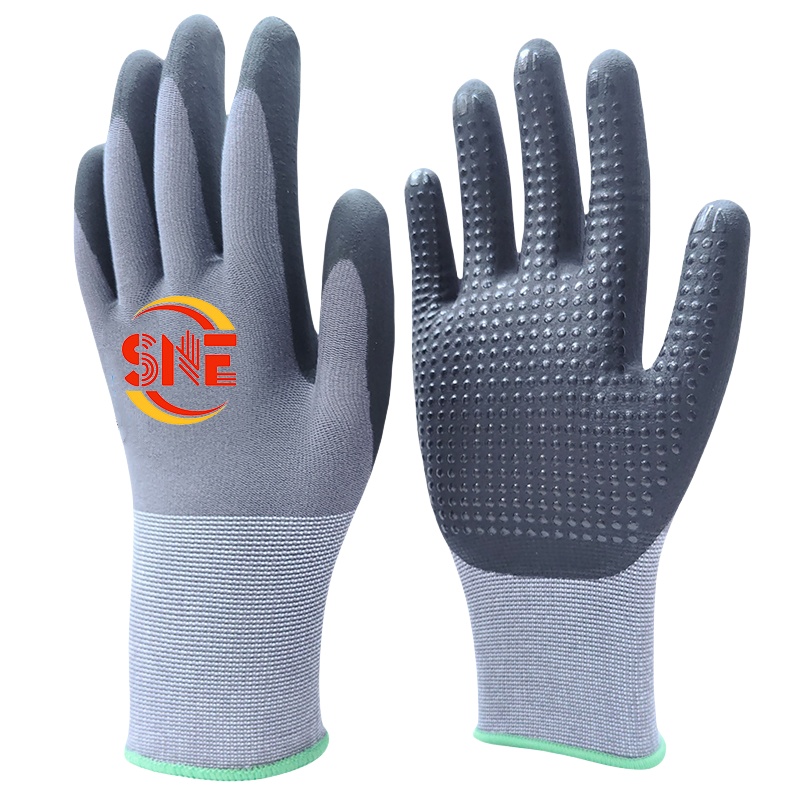
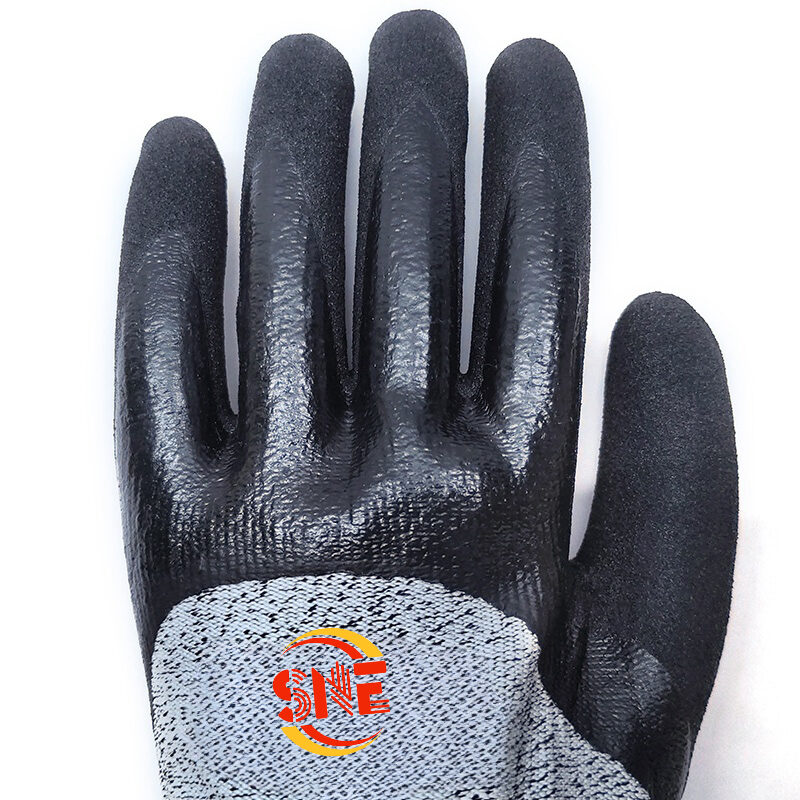
Double coated oil resistant gloves are work gloves built with two coating layers, most often nitrile over nitrile, nitrile over sandy nitrile, or a similar dual-finish construction applied to a textile liner. The first coat helps block oil penetration and adds structure, while the second coat improves grip, wear resistance, and handling precision. In practical U.S. industrial settings, that means fewer drops, better control of greasy components, and longer service life in repetitive handling jobs.
These gloves are commonly made on knit liners such as polyester, nylon, HPPE blends, or mixed engineered yarns depending on whether the target task is general handling, cut protection, or cold-weather work. Buyers should not assume all double-coated gloves are waterproof. Some are highly oil resistant but still breathable. Others are more fully sealed but less flexible. That distinction matters when selecting gloves for refinery turnaround teams, auto assembly operators, machine shops, and warehouse mechanics.
Product Types and Performance Differences
Not every double-coated glove performs the same way. Coating texture, liner gauge, cuff style, and coverage pattern all affect actual field performance. The following table compares the most common styles relevant to U.S. industrial purchasing.
| Product Type | Typical Coating Structure | Best For | Main Advantage | Possible Limitation | Common U.S. Buying Context |
|---|---|---|---|---|---|
| Smooth nitrile over full nitrile | Full first coat with second palm coat | General oily handling | Good oil barrier and durable palm wear | Less grip on very slick surfaces than sandy finishes | Maintenance, warehousing, parts handling |
| Sandy nitrile double coated | Base nitrile plus sandy nitrile palm | Wet and oily grip | Excellent grip in oil-heavy tasks | Can be slightly rougher on sensitive parts | Oil and gas, automotive, fabrication |
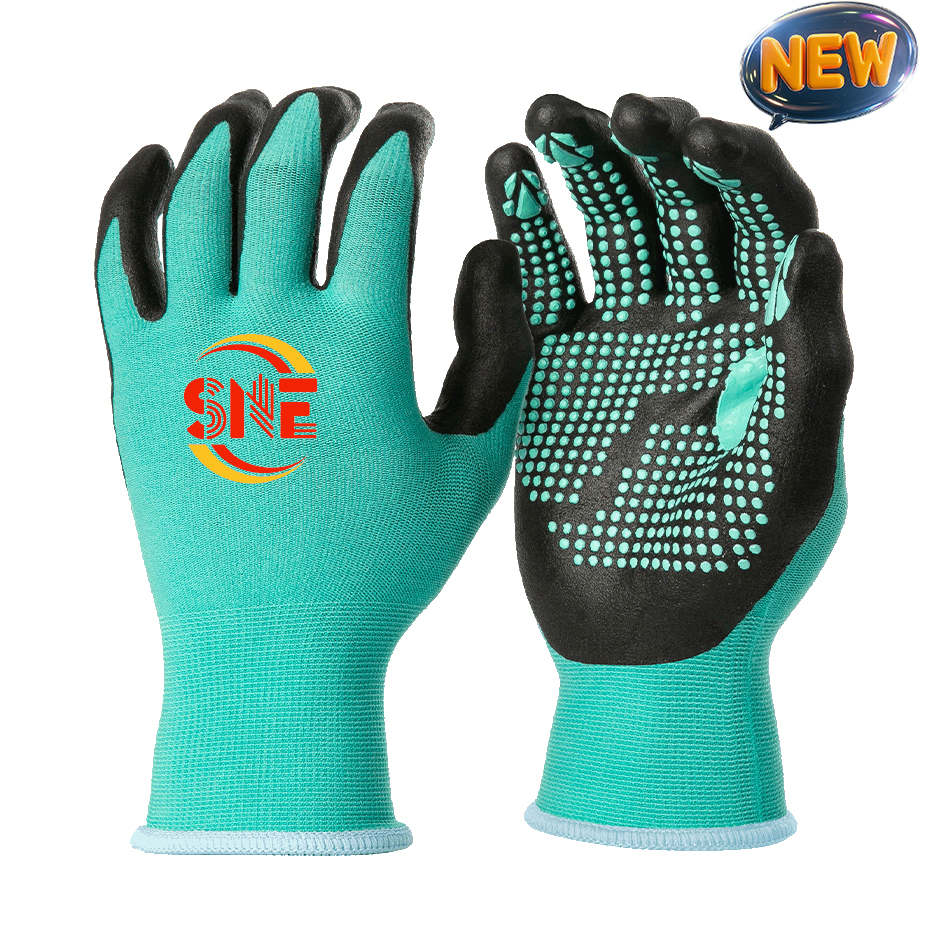
| Foam nitrile double coated | Base coat plus foam finish | Light oil and dexterity work | Better flexibility and touch sensitivity | Usually less liquid resistance than heavier coatings | Assembly, light manufacturing |
| Double coated cut-resistant glove | Nitrile coating on HPPE or engineered liner | Oily sharp-part handling | Combines grip and cut protection | Higher unit cost | Metal stamping, glass, machining |
| Cold-weather double coated glove | Dual nitrile over insulated liner | Outdoor winter use | Retains grip in cold conditions | Reduced fine dexterity | Utilities, construction, outdoor logistics |
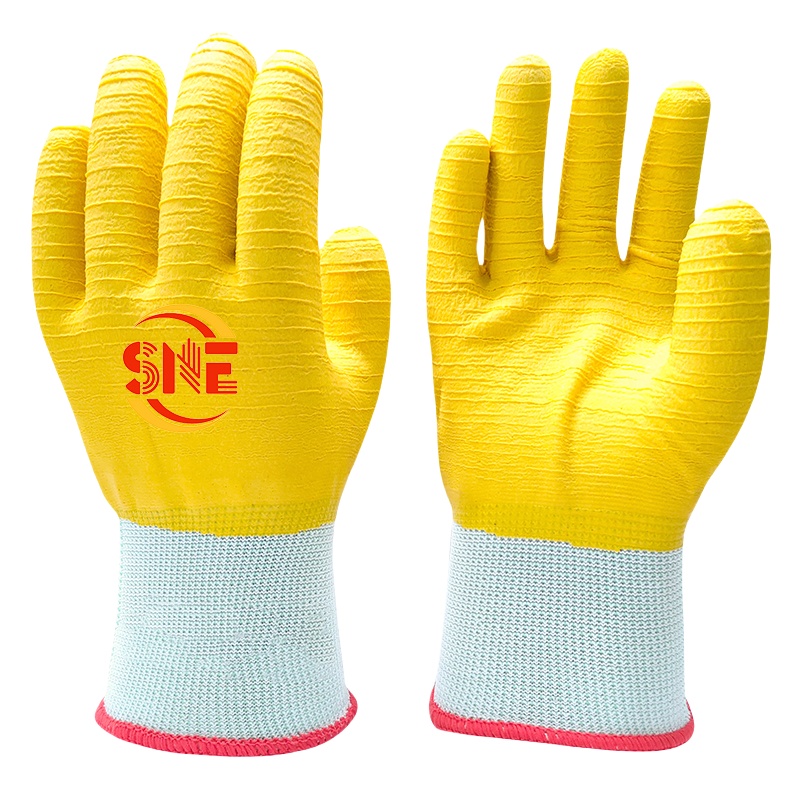
| Fully coated plus palm finish glove | Full hand coat with reinforced palm | Dirty, splash-prone tasks | Broader barrier coverage | May run warmer during long shifts | Refineries, sanitation, heavy maintenance |
This comparison shows why procurement teams should match glove architecture to the job instead of ordering by price alone. A warehouse with occasional oily cartons may prefer foam nitrile, while a pipeline contractor handling lubricated metal tools usually needs sandy double nitrile.
Top Suppliers Serving the United States
The U.S. market includes domestic brands, North American safety groups, and international manufacturers with established distribution channels. The table below highlights suppliers that are frequently relevant when evaluating double coated oil resistant gloves for industrial use.
| Company | Primary Service Region | Core Strengths | Key Offerings | Best Fit Buyer | Notes |
|---|---|---|---|---|---|
| Ansell | United States nationwide | Strong industrial PPE portfolio, compliance support, premium performance lines | Oil grip gloves, chemical gloves, cut-resistant coated gloves | Large industrial plants and national accounts | Often specified in high-compliance environments |
| MCR Safety | United States and distributor network | Broad glove catalog, industrial distribution strength, practical product segmentation | Nitrile coated gloves, cut-resistant gloves, impact gloves | Distributors, contractors, maintenance teams | Popular in construction and general industry |
| Magid | United States with strong Midwest reach | Private label capability, large safety assortment, custom program support | Coated work gloves, specialty PPE, managed safety supply | Mid-size and enterprise buyers | Useful for program-based procurement |
| PIP | North America | Wide distribution, multiple performance tiers, scalable inventory | G-Tek coated gloves and industrial hand protection | Multi-site buyers and regional distributors | Good option when consistent availability matters |
| HexArmor | United States and Canada | High-spec engineering, safety innovation, advanced protection focus | Cut-resistant, impact-resistant, specialty oil-handling gloves | Hazard-intensive industries | Often considered for premium applications |
| Superior Glove | North America | Strong technical lineup, broad hand protection categories, industrial expertise | Oil grip gloves, cut-resistant gloves, cold and chemical styles | Plants needing multiple hand protection categories | Frequently used across manufacturing sectors |
| Qingdao Snell Protective Products Co., Ltd. | United States importers, distributors, private-label buyers | Factory-direct production, OEM and custom manufacturing, high-volume capability | Nitrile, PU, latex coated gloves, oil resistant gloves, cut-resistant lines | Brand owners, wholesalers, regional distributors | Cost-effective for bulk sourcing and customization |
For U.S. buyers, this supplier landscape creates three clear routes: premium established brands, broad-line industrial distributors, or direct factory sourcing for private label and volume purchasing. The right route depends on lead time expectations, budget targets, and whether your glove specification is standard or customized.
Supplier Comparison by Demand Segment
This comparison chart is not a certification ranking. It simply illustrates how buyers often score suppliers across availability, product breadth, technical fit, customization options, and procurement practicality for U.S. industrial programs.
Industry Demand in the United States
Demand for double coated oil resistant gloves is not evenly distributed. The heaviest users are sectors where lubrication, cutting fluids, hydraulic oils, greasy parts, and wet outdoor conditions are part of routine work.
The strongest demand typically comes from oil and gas, automotive, metal fabrication, and general industrial maintenance. That pattern aligns with where oily tools, slippery parts, and abrasion-heavy handling overlap in daily operations.
| Industry | Typical Hazard | Why Double Coated Gloves Matter | Preferred Features | Purchase Trigger | Main U.S. Regions |
|---|---|---|---|---|---|
| Oil and gas | Oil, grease, tool slippage | Improves grip and glove life | Sandy nitrile, full coating, durable cuff | Turnarounds and routine maintenance | Texas, Louisiana, Oklahoma |
| Automotive | Oily components and repetitive handling | Supports dexterity with better wear resistance | 15 gauge liner, palm grip, cut option | Assembly line standardization | Michigan, Ohio, Indiana |
| Metal fabrication | Sharp oily sheet and machined parts | Balances cut protection and grip | HPPE liner, dual nitrile coating | Injury reduction initiatives | Midwest and Southeast |
| Warehousing | Mixed dry and oily handling | Reduces drops and improves glove lifespan | Foam or sandy nitrile palm | SKU consolidation | California, New Jersey, Georgia |
| Construction | Mud, oils, rough surfaces | Better palm durability than light gloves | Reinforced palm, robust liner | Outdoor project season | Texas, Florida, Carolinas |
| Maintenance | Lubricants and varied tasks | One glove can cover multiple conditions | General-purpose nitrile double coat | MRO cost control | Nationwide |
This table helps buyers translate industry conditions into glove specifications. It is especially useful when a procurement team wants to move from generic “oil-resistant gloves” toward application-specific purchasing language.
Trend Shift Toward Better Grip, Compliance, and Sustainability
The U.S. market is shifting from basic coated gloves toward more engineered hand protection. Employers want measurable value: fewer slips, longer replacement intervals, reduced hand injuries, and easier worker acceptance. There is also more interest in gloves that support sustainability goals through longer wear life, reduced waste, and better packaging efficiency.
The area chart reflects a realistic trend: more U.S. buyers are upgrading from low-cost single-coat gloves to products that offer better oil grip, cut resistance, and longer use cycles. This is partly driven by labor shortages, since employers want gloves workers will actually keep on during a full shift.
Buying Advice for U.S. Buyers
When comparing double coated oil resistant gloves, U.S. buyers should evaluate more than price per pair. The true cost depends on replacement frequency, worker compliance, grip failure incidents, and how well the glove matches the actual task. A glove that costs more upfront but lasts two shifts instead of one can reduce total spend and improve safety outcomes.
Start with the work environment. If workers handle moderately oily cartons or packaged parts, a lighter foam or sandy nitrile palm may be enough. If they handle heavily lubricated tools, hydraulic fittings, greasy castings, or outdoor service work, a more robust full-coat-plus-palm design usually performs better. For metal stamping or sharp-edged parts, cut-resistant liners are worth the premium.
Procurement managers in the United States should also ask suppliers for consistent size curves, carton pack details, country-of-origin transparency, and documentation tied to performance claims. If the gloves are for distributor resale, barcode labeling, private-brand packaging, and SKU continuity are equally important.
| Buying Factor | What to Check | Why It Matters | Best Question to Ask Supplier | Risk if Ignored | Recommended Priority |
|---|---|---|---|---|---|
| Coating texture | Smooth, foam, sandy, full coat coverage | Directly affects grip in oil | Which finish performs best in lubricated metal handling? | Tool slips and poor acceptance | High |
| Liner material | Nylon, polyester, HPPE, insulated options | Controls comfort, cut protection, dexterity | Is this liner suited for sharp parts or general handling? | Wrong glove for the hazard | High |
| Certification and testing | Applicable quality and safety documentation | Supports compliance and buyer confidence | Can you provide current test reports and quality certifications? | Unverified claims | High |
| Replacement cycle | Expected wear in actual application | Determines total cost of use | What is the typical wear life in similar U.S. applications? | False savings from cheap gloves | High |
| Customization | Private label, logo, packaging, cuff color | Important for distributors and brands | What OEM options are available at what MOQ? | Limited resale differentiation | Medium |
| Lead time and stocking | Domestic inventory or import planning | Prevents supply gaps | What are the lead times for repeat orders and urgent replenishment? | Production interruptions | High |
This checklist works well for both end users and distributors. It converts general purchasing discussions into practical supplier questions that can reveal whether a product truly fits the job.
Applications Across U.S. Worksites
Double coated oil resistant gloves are widely used in environments where hands must stay protected without losing control of tools or parts. Common applications include handling metal fittings in Houston service yards, moving oily brake or transmission parts in Detroit-area automotive plants, changing filters in industrial maintenance workshops, sorting lubricated hardware in New Jersey distribution hubs, and servicing heavy equipment in construction fleets across Texas and Florida.
They are also useful in marine support, agriculture equipment maintenance, rail workshops, and utility repair crews. In many of these settings, glove selection is driven by a mix of hazards rather than one isolated risk. Workers may need grip, abrasion resistance, moderate liquid resistance, and all-day comfort at the same time.
Case Studies and Practical Selection Examples
A Midwest metal fabrication company handling sheet components found that single-coated gloves wore through too quickly at the palm and thumb. After switching to a double coated cut-resistant nitrile glove, the site reduced frequent mid-shift glove changes and improved grip consistency on lightly oiled parts. Although the per-pair price increased, the monthly usage rate dropped enough to improve total cost efficiency.
A Gulf Coast maintenance contractor needed a glove for oily valves, tools, and outdoor service work. Thin assembly gloves were rejected by crews because they became slick too fast. A heavier sandy nitrile double-coated glove performed better in field conditions, especially during equipment shutdown periods when tasks changed constantly throughout the day.
A regional warehouse operator near Savannah wanted fewer glove SKUs across facilities. By standardizing one midweight double-coated glove for dock, maintenance, and returns teams, the company simplified stocking, improved worker familiarity, and reduced purchasing complexity.
Local Supplier Coverage and Practical Procurement Paths
In the United States, buyers usually source through one of four channels: direct from major brands, through industrial safety distributors, from specialized PPE dealers, or via import programs for private label and large-volume factory-direct purchasing. Domestic supply is often faster for standard products, but factory-direct sourcing can be significantly more cost-efficient for recurring orders and branded programs.
Buyers operating near major trade hubs such as the Port of Los Angeles, Port of Long Beach, Port of Houston, Port of Savannah, and Port Newark-Elizabeth can sometimes build hybrid procurement models. They maintain domestic emergency stock while importing planned-volume orders with custom branding. This is especially practical for distributors and multi-branch wholesalers.
Our Company
For U.S. buyers seeking a factory-direct partner, Snell Safety provides a practical option for double coated oil resistant gloves and related industrial hand protection. The company manufactures coated gloves through dedicated production facilities in Gaomi and Nantong with six production lines and daily output reaching 150,000 pairs, which supports stable supply for repeat purchase programs. Its product portfolio covers nitrile, PU, and latex coated gloves, with particular strength in oil resistant, cut-resistant, impact-resistant, and general industrial styles. From a quality standpoint, the company operates under ISO 9001 and CE-related production controls, backed by hands-on glove manufacturing experience and a vertically integrated process that helps maintain consistent coating performance, sizing, and batch quality for export markets including North America. From a cooperation standpoint, the business works flexibly with U.S. distributors, dealers, brand owners, wholesalers, and industrial end users through OEM, ODM, private label, bulk supply, and customized specification programs, making it suitable both for resale channels and direct workplace consumption. For local service assurance, the company already serves buyers across major global markets and supports U.S.-facing customers through structured pre-sales consultation, sample support, production follow-up, export logistics coordination, and after-sales response for ongoing replenishment programs, giving American buyers a more dependable long-term sourcing relationship than a one-off remote exporter model. Buyers can review the broader range on the product catalog, learn more through the company overview, or reach the team directly through the U.S. inquiry contact page.
How to Choose Between Domestic and International Supply
Domestic suppliers are usually best when you need immediate delivery, smaller mixed orders, or approved brand continuity. International factory partners become more attractive when you need custom cuffs, colors, logos, packaging, or aggressive landed-cost targets on high-volume orders. In practice, many U.S. distributors use both: domestic inventory for urgent needs and direct imports for margin management.
If you buy internationally, ask about production capacity, carton consolidation, export experience to North America, and responsiveness on claims or quality issues. Strong pre-sales and after-sales support matters as much as product price, especially when your gloves are used in regulated or high-risk workplaces.
Industries Best Matched to Double Coated Oil Resistant Gloves
The best fit industries are those where dry-only gloves fail too quickly and heavy chemical gloves are too bulky. That includes automotive assembly and service, machining, steel service centers, pipeline maintenance, warehouse equipment servicing, agriculture equipment repair, utilities, marine support, and general MRO teams. Even in food-adjacent industrial maintenance areas, these gloves can be relevant when the task involves non-food-contact lubrication equipment and greasy mechanical components.
For U.S. safety managers, the real benefit is operational balance. Double-coated gloves often bridge the gap between lightweight precision gloves and bulky liquid-proof alternatives. That is why they remain a strong category for mixed-task environments.
Future Trends Through 2026
Looking into 2026, several trends are shaping the U.S. market for double coated oil resistant gloves. First, more buyers are requesting gloves that combine oil grip with cut resistance rather than stocking separate products. Second, sustainability is becoming a procurement criterion, especially among larger manufacturers and national distributors that want longer wear life, less packaging waste, and better supplier transparency. Third, policy and compliance pressure are encouraging clearer hazard-based glove selection, particularly in sectors with established PPE audits.
Technology is also improving liner comfort, palm texture engineering, and coating consistency. Newer gloves are designed to keep grip even with thinner, more dexterous liners. In addition, some buyers are favoring touchscreen-capable industrial gloves for maintenance staff using handheld diagnostic devices. U.S. employers are also paying more attention to worker acceptance, since a glove that meets technical specs but is uncomfortable often ends up unused.
Another practical 2026 trend is procurement digitalization. More distributors and end users now compare test data, replacement-cycle performance, and landed cost through centralized purchasing systems. Suppliers that can provide clear documentation, reliable replenishment, and customization flexibility will likely gain market share.
Frequently Asked Questions
Are double coated oil resistant gloves better than single coated gloves?
For many oily industrial tasks, yes. Double-coated gloves usually offer better grip durability, stronger barrier performance, and longer wear life. However, they can be heavier than light single-coated gloves, so task matching still matters.
What coating is usually best for oily surfaces?
Sandy nitrile is often preferred for oily or greasy surfaces because it provides a more secure grip than many smooth finishes. For lighter oil exposure where dexterity is critical, foam nitrile can also work well.
Are these gloves waterproof?
Some are highly liquid resistant, especially full-coated designs, but not all double-coated gloves are fully waterproof. Buyers should review the coating coverage and intended use before purchasing.
Which U.S. industries buy the most double coated oil resistant gloves?
Oil and gas, automotive, metal fabrication, general maintenance, warehousing, utilities, and construction are among the largest user groups in the United States.
Can distributors source private-label versions?
Yes. Many manufacturers and some major suppliers support OEM or private-label programs. This is particularly common for import-based bulk purchasing and regional distribution programs.
What order quantities are typical for factory-direct sourcing?
That varies by glove design, packaging, and customization level. Standard products can sometimes be ordered at moderate volume, while fully customized OEM programs usually require higher minimum order quantities.
How can I reduce total glove cost instead of just unit price?
Track replacement frequency, grip-related incidents, worker acceptance, and task fit. A glove with better durability and fewer failures often lowers the real cost per shift even if the purchase price is higher.
Are international suppliers practical for U.S. buyers?
Yes, especially for distributors, wholesalers, and brand owners that buy in bulk. The key is choosing suppliers with documented quality systems, stable production capacity, and reliable pre-sales and after-sales support for the U.S. market.
Final Takeaway
Double coated oil resistant gloves are a strong choice for U.S. workplaces where oil, grease, slippery tools, and repeated abrasion create daily hand safety challenges. The most reliable buying strategy is to match coating style and liner construction to the real task, then compare suppliers on performance consistency, support, and total cost of use rather than price alone. For immediate domestic access, established North American brands remain important. For bulk procurement, private label, or stronger price-performance, qualified factory-direct manufacturers with proven certifications, export experience, and responsive service can be equally compelling for United States buyers.