2026-07-20
Share This Article
Disposable vs Reusable Oil Resistant Gloves in the United States
Quick Answer

For most buyers in the United States, disposable oil resistant gloves are the better choice for short-duration tasks, contamination-sensitive work, frequent glove changes, and light-to-moderate oil contact. Reusable oil resistant gloves are usually the better option for longer shifts, heavier mechanical risk, repeated handling of oily parts, and jobs that require stronger grip, abrasion resistance, and lower cost per wear.
If your team works in automotive service, food processing, janitorial operations, laboratory support, or quick-turn maintenance, disposable nitrile gloves are typically the most efficient option. If your operation involves metal fabrication, construction equipment servicing, oil and gas maintenance, warehousing, manufacturing, or machinery repair, reusable nitrile-coated or fully coated work gloves generally provide better durability and value.
Leading suppliers serving U.S. buyers include Ansell, SHOWA, Superior Glove, MCR Safety, Magid, and HexArmor, all of which have established distribution across industrial hubs such as Houston, Chicago, Los Angeles, Savannah, and New Jersey. Qualified international manufacturers can also be a smart option when they hold recognized certifications, offer stable bulk production, and provide responsive pre-sales and after-sales support. In practice, many American importers, distributors, and private-label brands also evaluate Chinese factory-direct suppliers because the cost-performance ratio can be strong for bulk procurement.
Understanding the U.S. Market for Oil Resistant Gloves

The United States market for oil resistant gloves is shaped by several overlapping forces: workplace safety compliance, rising labor costs, pressure to reduce hand injuries, and the need to balance procurement cost with long-term performance. Buyers are not simply asking whether a glove resists oil; they are asking how well it maintains grip under oil exposure, how long it lasts, whether it can support cut resistance, and how consistently it performs across multiple batches.
Across major industrial states such as Texas, Ohio, Michigan, California, Pennsylvania, and Illinois, hand protection purchasing decisions are often made at the plant, branch, or distributor level. Automotive corridors around Detroit, energy operations along the Gulf Coast near Houston, logistics hubs around Chicago and Memphis, and port-connected import channels in Los Angeles, Long Beach, Savannah, and Newark all influence what products move fastest. Disposable gloves sell strongly where hygiene and rapid change-out matter. Reusable oil resistant gloves dominate where task repetition, mechanical handling, and shift-long wear are more important.
In the U.S., nitrile remains the preferred material family for oil resistance in both disposable and reusable formats. Disposable nitrile gloves are favored because they avoid natural rubber latex allergy concerns and provide dependable splash and light-oil resistance. Reusable gloves often use nitrile coatings, sandy nitrile palms, or full nitrile dips over knitted liners to combine oil grip with abrasion protection. Buyers in heavy industry increasingly compare gloves by total cost of ownership rather than unit price alone.
Another defining market trend is segmentation. A maintenance manager in Houston may need fully coated gloves for hydraulic fluid exposure, while a technician in an electronics assembly environment may need thinner disposable nitrile gloves with tactile sensitivity. This is why a single “best” glove category does not exist across the whole U.S. market. The right answer depends on oil type, contact duration, hazard mix, replacement cycle, and whether contamination control is part of the work process.
Disposable and Reusable Oil Resistant Gloves at a Glance

| Factor | Disposable Oil Resistant Gloves | Reusable Oil Resistant Gloves | Best Fit in the United States |
|---|---|---|---|
| Typical material | Disposable nitrile, sometimes heavier exam-grade nitrile | Nitrile-coated knit, double-dipped nitrile, PVC, neoprene blends | Disposable for hygiene tasks; reusable for industrial handling |
| Use duration | Single task or short shift cycle | Multiple tasks or full shift | Disposable in high-change environments; reusable in repeated operations |
| Oil exposure level | Light to moderate splash and surface oil | Moderate to heavy contact with oily parts and tools | Reusable for persistent oil handling |
| Grip in oily conditions | Moderate, depends on texture | Higher, especially sandy nitrile and foam nitrile designs | Reusable for assembly, maintenance, and machine work |
| Mechanical protection | Low | Moderate to high, depending on liner and coating | Reusable for abrasion, cut, and impact risk |
| Cost per use | Higher in high-volume repetitive work | Lower when wear life is strong | Reusable for sustained industrial programs |
| Contamination control | Excellent for clean change-outs | Less ideal when frequent contamination transfer is a concern | Disposable for food-adjacent and clean maintenance workflows |
This comparison shows why U.S. buyers often stock both categories rather than choosing only one. Disposable gloves solve contamination and convenience problems. Reusable gloves solve durability and grip problems. Mature safety programs across American industrial sites usually split purchasing by task family instead of using a single glove type for every job.
When Disposable Oil Resistant Gloves Make More Sense
Disposable oil resistant gloves are the practical choice when workers need quick replacement, clean removal, and a barrier against intermittent oil contact. In the United States, this is especially common in automotive fluid checks, janitorial chemical handling, food plant maintenance, sanitation support, inspection work, and field service tasks where carrying a box of gloves is easier than managing laundry or reissue cycles.
The biggest advantage is convenience. Workers can remove a contaminated glove immediately and put on a fresh pair in seconds. That supports hygiene, reduces cross-contamination, and keeps processes moving. Thin disposable nitrile also offers good finger sensitivity for technicians handling small parts, electrical connectors, handheld tools, or barcode devices.
However, disposable gloves have limits. They are not built for rough edges, repeated abrasion, hot metal, or sustained gripping of oily components. In industrial settings around Cleveland, Milwaukee, or Tulsa, buyers often discover that disposables become expensive when workers change gloves several times per shift because of tearing or contamination. That is where reusable gloves usually become the more economical choice.
When Reusable Oil Resistant Gloves Are the Better Investment
Reusable oil resistant gloves are designed for longer wear, stronger grip, and better performance where oil exposure is part of the job rather than an occasional nuisance. Mechanics, maintenance technicians, machine operators, warehouse teams, rig crews, and fabrication workers across the U.S. frequently choose nitrile-coated gloves because they stay functional even when handling oily metal, lubricated components, or greasy tools.
In many applications, reusable gloves also improve safety outcomes by reducing hand fatigue and lowering the chance of dropped items. Textured nitrile coatings, foam nitrile palms, and full-dip constructions can dramatically improve grip compared with disposable gloves. If the liner includes cut-resistant yarns or abrasion-resistant reinforcement, a single glove can cover multiple hazards at once. That matters in sectors such as oil and gas, heavy manufacturing, rail maintenance, and machine repair, where workers rarely face oil exposure in isolation.
For procurement teams in the United States, the central economic benefit is lower cost per wear. A reusable glove may cost more up front, but if it replaces several pairs of disposables per day while reducing tear-related waste and improving productivity, it often wins on total program cost.
Market Growth Trend in the United States
Demand for oil resistant gloves in the U.S. continues to rise as employers emphasize both safety performance and operating efficiency. The line chart below models a realistic market growth trend for industrial oil resistant gloves, combining disposable and reusable demand across manufacturing, automotive, logistics, and energy sectors.
Product Types Commonly Bought by U.S. Users
| Product type | Construction | Main advantage | Common U.S. applications |
|---|---|---|---|
| Disposable nitrile gloves | Single-use synthetic nitrile | Fast replacement and contamination control | Inspection, sanitation, auto service, cleaning |
| Textured disposable nitrile gloves | Raised fingertip or palm texture | Better grip than smooth disposable gloves | Maintenance, fluid handling, warehouse tasks |
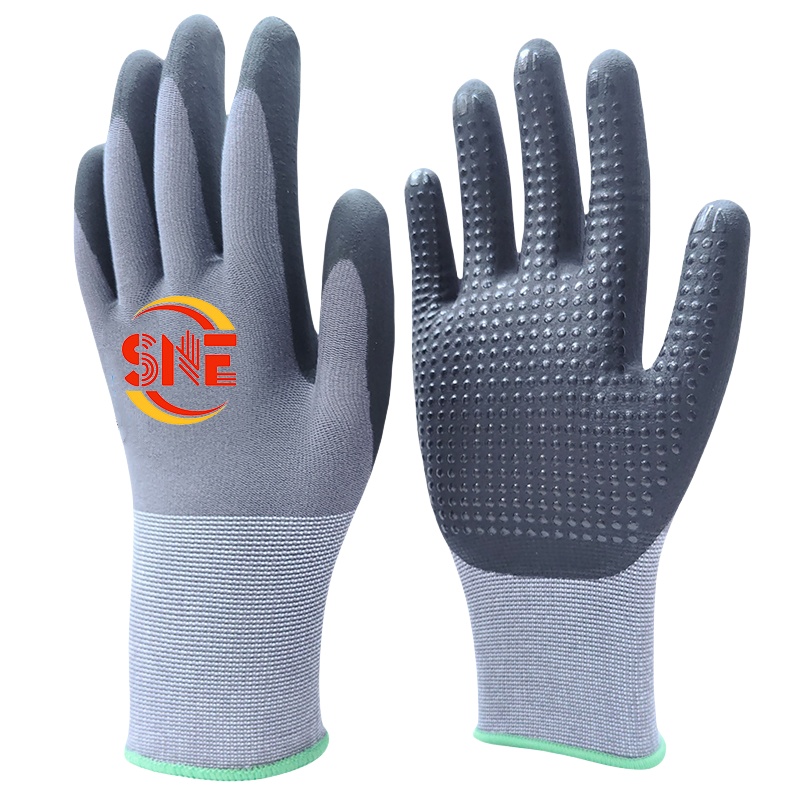
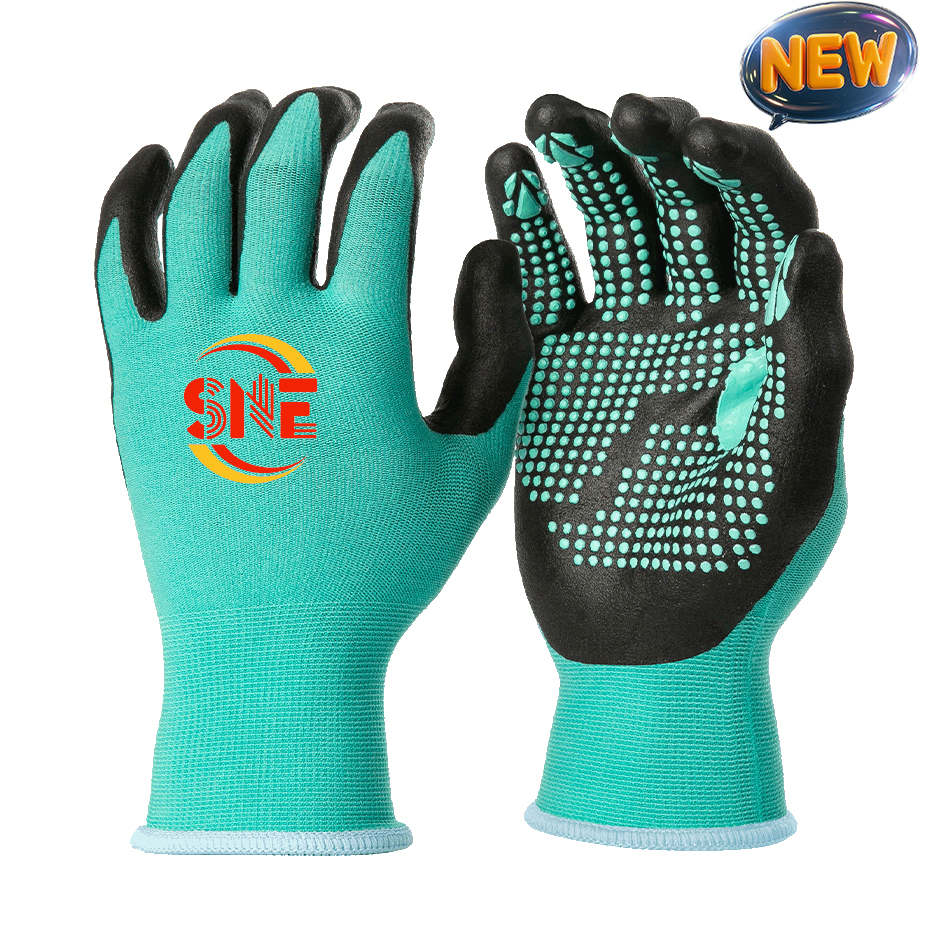
| Foam nitrile coated gloves | Knit liner with breathable palm coating | Comfort and dexterity with light oil grip | Assembly, light manufacturing, logistics |
| Sandy nitrile coated gloves | Roughened nitrile palm finish | Strong grip in oily environments | Machining, automotive parts handling, repair |
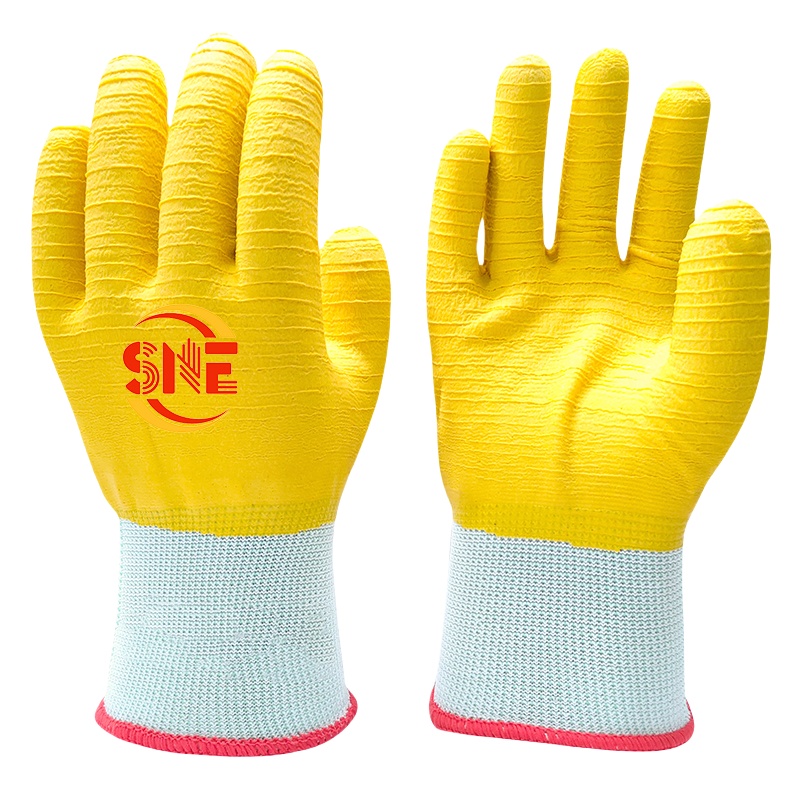
| Fully coated nitrile gloves | Complete coating over liner | Higher liquid barrier and durability | Heavy maintenance, oil and gas, equipment servicing |
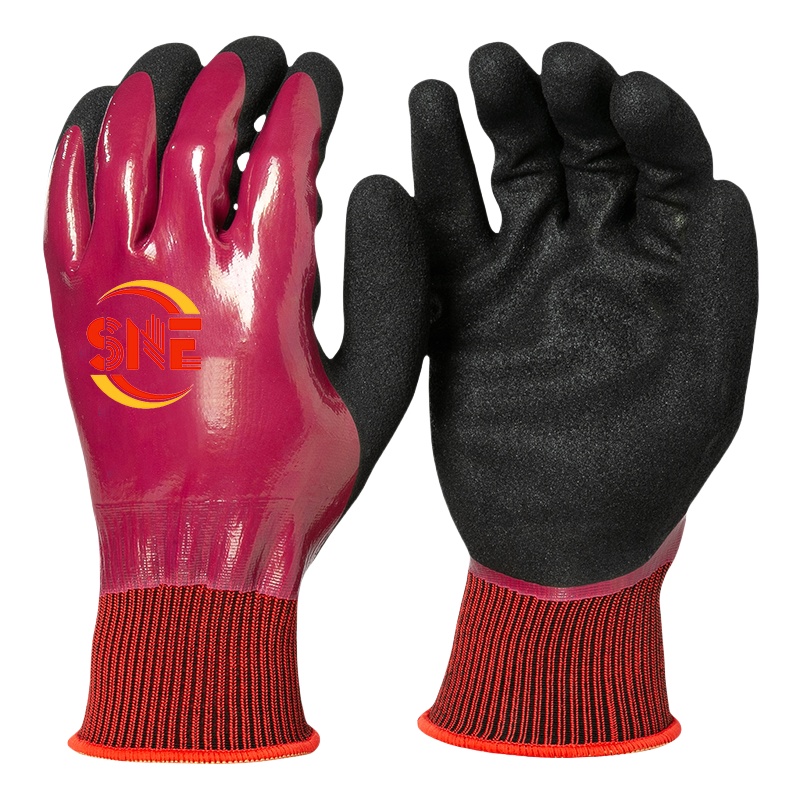
| Double-dipped nitrile gloves | Two-layer coating system | Improved oil resistance and wear life | Industrial maintenance, metalwork, utilities |
| Cut resistant oil grip gloves | HPPE or engineered yarn liner with nitrile coating | Combines cut protection with oil handling | Stamping, fabrication, sheet metal, glass support |
For U.S. distributors and end users, the most effective strategy is to map glove types to job conditions. Foam nitrile is often enough for dry-to-light oil assembly work, while sandy nitrile or full nitrile coating is a better fit for persistent oil contact. Disposable gloves remain essential where contamination turnover matters more than durability.
Industry Demand by Sector
Not every industry in the United States values oil resistant gloves for the same reason. Automotive and manufacturing prioritize grip and repeat wear. Food-adjacent maintenance focuses on contamination control. Energy and mining prioritize durability and all-around hazard reduction. The bar chart shows a realistic comparison of industry demand intensity.
Buying Advice for U.S. Procurement Teams
When comparing disposable vs reusable oil resistant gloves, procurement teams in the United States should avoid focusing only on case price. Instead, evaluate six practical factors: oil type, wear duration, tear rate, grip performance, contamination risk, and replacement frequency. A glove that costs less per pair may cost more per shift if it fails early or causes dropped components.
Oil type matters because lubricants behave differently. Light machine oils, cutting fluids, hydraulic fluids, engine oils, and greasy residues do not all affect glove surfaces the same way. Task duration matters because brief contact may favor disposables, while constant exposure favors reusable coatings. If employees frequently handle sharp-edged oily parts, a reusable cut-resistant glove often outperforms both plain disposables and basic knit gloves.
U.S. buyers should also request wear trials at actual job sites, not just desk evaluations. Conditions in a refinery near Corpus Christi, a distribution center outside Columbus, or an automotive supplier in Tennessee will quickly reveal whether a glove performs as promised. A three-day or one-week plant trial often produces clearer purchasing data than catalog comparisons.
How the Trend Is Shifting
The market is gradually shifting from single-factor glove selection toward multi-hazard, task-specific, and sustainability-aware purchasing. The area chart below reflects a realistic change in buyer preference in the United States, where reusable and hybrid-performance products are steadily gaining share against purely disposable usage in industrial settings.
Best Use Cases by Application
| Application | Preferred glove style | Why it works | Notes for U.S. buyers |
|---|---|---|---|
| Quick lube and fluid checks | Disposable nitrile | Fast glove changes and fluid barrier | Ideal for service bays with high turnover |
| Automotive parts assembly | Foam or sandy nitrile coated reusable gloves | Grip, dexterity, and lower shift cost | Common in Midwest manufacturing plants |
| Hydraulic equipment maintenance | Fully coated reusable nitrile gloves | Better barrier and tool control | Useful in construction and agriculture equipment service |
| Oily sheet metal handling | Cut resistant nitrile coated gloves | Combines cut protection and oil grip | Strong fit for fabrication shops |
| Janitorial and sanitation support | Disposable nitrile | Reduces contamination transfer | Often combined with chemical compatibility review |
| Warehouse returns processing | Light reusable nitrile palm gloves | Comfort for mixed dry and oily handling | Useful in e-commerce hubs |
| Oilfield equipment repair | Heavy-duty double-dipped reusable gloves | Long wear life in harsh service conditions | Common requirement in Texas and North Dakota |
This table is useful because it ties glove selection to work reality. Many U.S. facilities make the mistake of buying one glove style for all departments. That usually creates either overspending or underprotection. Matching glove architecture to application reduces both waste and worker complaints.
Local Suppliers and Major Brands Serving the United States
U.S. buyers typically source from a mix of domestic brands, North American distributors, and overseas factories with strong import capability. The companies below are recognizable names in the American market or practical options for industrial buyers seeking oil resistant glove programs at scale.
| Company | Service region | Core strengths | Key offerings |
|---|---|---|---|
| Ansell | Nationwide United States distribution | Broad industrial portfolio, chemical expertise, established safety channels | Disposable nitrile, reusable nitrile, chemical and mechanical protection gloves |
| SHOWA | United States industrial and distributor network | Engineered hand protection, strong grip technologies, brand recognition | Disposable nitrile, fully coated gloves, oil-grip industrial gloves |
| Superior Glove | North America with strong U.S. reach | Task-specific designs, cut resistant options, industrial channel support | Oil-resistant coated gloves, cut resistant nitrile gloves, specialty hand protection |
| MCR Safety | United States with established distribution | Industrial PPE focus, value-based range, strong safety catalog depth | Nitrile disposables, coated work gloves, heavy-duty hand protection |
| Magid | National U.S. supply coverage | Private label capability, industrial service model, broad SKU availability | Disposable gloves, reusable oil grip gloves, custom safety programs |
| HexArmor | United States and major industrial accounts | Higher-spec protection, premium industrial positioning, hazard-specific design | Impact-resistant and oil-handling gloves for demanding work sites |
| Qingdao Snell Protective Products Co., Ltd. | Factory-direct supply to U.S. importers, distributors, and brand owners | Bulk capacity, OEM/ODM flexibility, diversified nitrile, latex, and PU coating expertise | Oil resistant gloves, cut resistant gloves, impact gloves, custom private-label programs |
For U.S. buyers, this supplier table is most useful when separating premium brand purchasing from bulk sourcing strategy. Well-known brands often provide easier distributor access and field support, while factory-direct manufacturers can offer stronger pricing, customization, and production control for importers and private-label programs.
Supplier and Product Comparison
The comparison chart gives a simplified view of how different sourcing models are often evaluated by procurement teams in the United States. The values are a practical benchmark for comparing flexibility, scale, customization, and industrial focus rather than an absolute ranking.
Industries That Depend Most on Oil Resistant Gloves
Oil resistant gloves are essential in American industries where surfaces, tools, and parts are routinely contaminated by lubricants, cutting fluids, grease, fuel residues, or hydraulic oils. The strongest demand comes from automotive manufacturing and repair, machining, general manufacturing, energy, utilities, warehousing, and heavy equipment service. In these sectors, hand injuries are not just a medical issue; they also trigger downtime, lost productivity, and quality problems.
In automotive plants across Michigan, Indiana, Kentucky, and Tennessee, reusable nitrile-coated gloves are widely used because workers need both dexterity and grip while handling coated parts. In oil and gas operations across Texas, Louisiana, Oklahoma, and North Dakota, thicker reusable gloves are common because durability and wet grip matter more than lightweight feel. In sanitation and facility maintenance, disposable nitrile gloves remain common because contamination control and glove replacement speed are more important than extended wear life.
Case Studies from Real-World U.S. Buying Scenarios
A regional automotive parts distributor near Detroit switched one department from heavy disposable nitrile to sandy nitrile reusable gloves for oily metal handling. The result was fewer glove changes per shift, better part control, and lower monthly glove consumption. Disposable gloves were still retained for inspections and final handling where cleanliness mattered more than durability.
An equipment maintenance contractor serving sites in Houston and Beaumont tested fully coated reusable nitrile gloves against standard disposable gloves for hydraulic service. Technicians reported stronger grip on hoses and fittings and fewer tears during routine service. The company continued using disposable gloves only for quick contamination-sensitive checks.
A food manufacturing plant in the Midwest used a dual-program approach: disposable nitrile for sanitation and line-adjacent work, reusable oil resistant gloves for maintenance mechanics handling lubricated components. This split reduced overspending on disposable gloves while still preserving hygiene protocols.
A warehouse operator in Inland Empire, California, found that light reusable nitrile palm gloves performed better than disposable gloves for mixed inventory handling where some packages had oily residue. Workers gained more grip without sacrificing too much dexterity, and glove complaints dropped.
How to Decide Between Disposable and Reusable
The simplest decision framework is this: choose disposable gloves when contamination control, short tasks, and tactile precision are the top priorities; choose reusable gloves when grip, durability, mechanical protection, and repeated oil exposure are the top priorities. If both matter, use a dual-inventory program.
For U.S. facilities, the most practical questions are: How often does the worker change gloves? Is there sharp-edge exposure? Does the worker need a clean glove every task cycle? Is hand fatigue an issue? Are gloves being used with smartphones, scanners, or precision tools? Does the site need cut resistance or impact protection in addition to oil resistance? Answering these questions usually makes the correct purchasing path obvious.
Our Company in the United States Market
For U.S. buyers looking beyond domestic catalog brands, Snell Safety has become a practical factory-direct option for oil resistant gloves and related industrial hand protection because its production system combines ISO 9001 management, CE-compliant manufacturing discipline, and specialized expertise in nitrile, latex, and PU coating technologies with cut-resistant and impact-resistant glove engineering. Operating two manufacturing facilities in Gaomi and Nantong with six dedicated production lines, more than 150 skilled employees, and daily capacity of 150,000 pairs, the company supports stable bulk supply for distributors, dealers, brand owners, industrial users, and procurement teams that need OEM, ODM, private-label, wholesale, and customized product programs rather than one-size-fits-all imports. Its export track record across Europe, Australia, the Middle East, Russia, South America, and Southeast Asia demonstrates real experience with demanding regulatory and commercial markets, while responsive online technical consultation, sample support, customization guidance, logistics coordination, and ongoing after-sales communication give U.S. customers clearer protection than a distant spot-market vendor. Buyers exploring long-term sourcing can review the company background at the company overview, browse current product categories through the product center, and arrange direct commercial follow-up through the U.S.-focused contact channel.
What U.S. Importers and Distributors Should Check Before Ordering
Importers and distributors in the United States should confirm more than material claims. Ask for coating details, liner gauge, cuff style, grip finish, available sizes, carton configuration, and documentation consistency from lot to lot. Review whether the supplier can support retail packaging, private labeling, barcode requirements, and seasonal volume spikes tied to U.S. industrial demand cycles.
Port strategy also matters. Buyers moving goods through Los Angeles/Long Beach, Savannah, Houston, or New York/New Jersey should plan around lead times, inland freight costs, and reorder triggers. For reusable gloves, it is especially important to test durability under the exact oil type and handling motion present at the worksite. For disposable gloves, carton quality, case count stability, and tear performance are usually the operational pain points that deserve attention.
Trends for 2026: Technology, Policy, and Sustainability
By 2026, the United States market for oil resistant gloves is likely to move in three clear directions. First, technology will continue shifting toward multi-hazard glove platforms that combine oil grip with cut resistance, touchscreen compatibility, and improved ergonomic fit. Second, policy pressure tied to workplace safety audits, procurement transparency, and environmental reporting will push larger employers to justify glove selection using documented wear performance rather than lowest unit price alone. Third, sustainability will matter more, especially in high-volume sectors trying to reduce single-use waste without sacrificing hand protection.
That does not mean disposable gloves will disappear. Instead, the market is likely to become more segmented. Disposable nitrile will remain important in contamination-sensitive and short-cycle tasks, while reusable gloves will gain share where employers want to reduce waste streams and improve total cost of ownership. More U.S. buyers will also demand better packaging efficiency, clearer recyclability information, and supply partners that can prove production consistency and responsible manufacturing processes.
FAQ
Are disposable nitrile gloves truly oil resistant?
Yes, disposable nitrile gloves are oil resistant for light to moderate exposure and are widely used in the United States for automotive service, cleaning, and maintenance support. They are not usually the best option for rough, prolonged, or mechanically demanding oily work.
Do reusable oil resistant gloves save money?
Usually yes, especially when workers handle oily parts all shift long. The upfront price is higher, but the cost per wear is often lower because the gloves last longer and tear less often.
Which is safer for oily metal parts?
Reusable nitrile-coated gloves are generally safer because they provide stronger grip and can include cut-resistant liners. Disposable gloves are more likely to tear and usually offer less protection from sharp edges.
Which industries in the United States buy the most oil resistant gloves?
Automotive, manufacturing, oil and gas, equipment maintenance, warehousing, utilities, and construction are among the largest buyers. Food plant maintenance and sanitation teams also purchase significant volumes, especially disposable nitrile gloves.
Should a company stock both disposable and reusable gloves?
Yes. Many of the most efficient U.S. safety programs use both. Disposable gloves are kept for hygiene and change-out tasks, while reusable gloves are assigned to prolonged oily handling and mechanical work.
What is the best material for oil resistance?
Nitrile is the most common choice for both disposable and reusable oil resistant gloves because it balances oil resistance, grip potential, durability, and broad industrial acceptance.