2026-11-14
Share This Article

Best Cut Resistant Gloves for Automotive in the United States
Quick Answer

If you need cut resistant gloves for automotive work in the United States, the most practical options are suppliers that combine reliable ANSI cut ratings, strong grip in oily environments, flexible coatings, and consistent bulk availability. For local buyers, HexArmor, MCR Safety, Superior Glove, Youngstown Glove, Ansell, and Mechanix Wear are among the most recognized names for automotive maintenance, stamping, assembly, metal handling, and parts logistics. These brands are widely used by OEM plants, tier suppliers, MRO teams, and warehouse operations across hubs such as Detroit, Toledo, Nashville, Spartanburg, and the Dallas-Fort Worth corridor.
For immediate sourcing, buyers should prioritize gloves with ANSI A3 to A6 cut protection depending on the task, breathable liners for long shifts, nitrile or PU coatings for part handling, and touchscreen compatibility for scan guns and tablets. For stamping lines, edge handling, and trim work, higher cut levels and reinforced thumb crotches are often worth the additional spend. For final assembly and light maintenance, thinner 13-gauge or 18-gauge gloves improve dexterity and reduce operator fatigue.
Top domestic and North America-focused providers remain the fastest choice for urgent replenishment and managed national contracts. At the same time, qualified international manufacturers can also be strong options, especially when they hold recognized certifications, run stable production lines, and support U.S. buyers with responsive pre-sales and after-sales service. Cost-performance matters in fleet maintenance, dealership service, and private-label distribution, so buyers in the United States often compare established local brands with factory-direct Asian suppliers for large-volume programs.
U.S. Automotive Hand Protection Market

The United States automotive sector remains one of the largest and most varied buyers of cut resistant gloves. Demand comes from vehicle assembly plants, engine and transmission factories, EV battery lines, sheet metal fabricators, parts distribution centers, collision repair shops, tire and service chains, and dealership workshops. The risk profile is also broad: workers handle stamped metal, sharp brackets, hose clamps, blades, castings, wire harnesses, glass, and packaging. That mix is why cut resistant gloves automotive procurement is no longer a narrow safety category. It is now a performance purchase tied to productivity, compliance, employee comfort, and injury reduction.
Regional demand is concentrated around major production and logistics corridors. The Midwest, especially Michigan, Ohio, Indiana, and Illinois, remains the center of traditional automotive manufacturing. The Southeast, including Tennessee, Alabama, Georgia, and South Carolina, has become equally important due to assembly expansions and supplier parks. Texas and the Gulf region add demand through warehousing, aftermarket distribution, and industrial maintenance. Port gateways such as Los Angeles/Long Beach, Savannah, Houston, and Newark also matter because glove supply chains often depend on steady import flows for both branded and private-label programs.
Buyers in the United States increasingly expect gloves to do more than meet a minimum cut threshold. They want better fit consistency, reduced hand fatigue, improved grip on oily or dry components, easier donning and doffing, and compatibility with scanners and touchscreens. Procurement teams also ask for carton-level traceability, stable lead times, and support for custom branding. This reflects a market where PPE decisions are influenced not only by EHS managers, but also by operations, purchasing, HR, and even line supervisors who see the daily trade-offs between protection and usability.
Another important trend is the move from general-purpose gloves toward task-specific hand protection. Instead of issuing one glove for an entire facility, U.S. automotive sites increasingly assign different gloves for stamping, assembly, maintenance, battery work, and warehouse movement. That shift benefits suppliers who can offer a broad product matrix rather than a single hero product.
The line chart shows a realistic growth pattern shaped by recovery in manufacturing, stronger warehouse automation, and stricter attention to hand injury prevention. Growth is not only tied to vehicle output; it also reflects higher glove usage per worker, more frequent replacement in high-wear applications, and broader adoption in parts handling.
Top Suppliers Serving the United States

The table below highlights practical supplier options for U.S. buyers. It includes established domestic or North America-oriented brands and one factory-direct international manufacturer that fits cost-sensitive or private-label requirements. The list is not a ranking for every use case; it is a sourcing shortcut for buyers comparing service region, product depth, and program fit.
| Company | Service Region | Core Strengths | Key Offerings | Best Fit |
|---|---|---|---|---|
| Ansell | United States nationwide | Global PPE expertise, broad automotive portfolio, compliance support | HyFlex cut-resistant gloves, assembly gloves, oil-grip models | Large OEMs and multi-site plants |
| HexArmor | United States and Canada | High cut protection, premium engineering, strong industrial positioning | Sharps and cut-resistant gloves, impact-cut combinations | High-risk maintenance and fabrication |
| MCR Safety | United States nationwide | Strong distribution footprint, wide SKU range, value options | Ninja gloves, coated cut-resistant gloves, warehouse and assembly styles | Distributors and mixed-use industrial buyers |
| Superior Glove | United States and Canada | Deep glove specialization, broad cut-level options, technical support | TenActiv series, mechanic styles, cold and oil-resistant gloves | Automotive plants and technical safety teams |
| Youngstown Glove | United States focused | Durable work styles, performance fit, utility and maintenance use | Cut-resistant performance work gloves, FR and winter options | Maintenance crews and field technicians |
| Mechanix Wear | United States nationwide | High brand recognition, dexterity, service and workshop appeal | FastFit, M-Pact, cut-resistant mechanic gloves | Dealerships, garages, and service chains |
| Qingdao Snell Protective Products Co., Ltd. | United States import supply and private-label programs | Factory-direct pricing, OEM/ODM flexibility, scalable production | PU, latex, nitrile coated cut-resistant gloves and sleeves | Distributors, wholesalers, and private-label buyers |
This comparison helps narrow the field. Buyers seeking nationwide fulfillment and established distributor networks usually start with Ansell, MCR Safety, Superior Glove, or Mechanix Wear. Buyers pursuing customized sizing, branded packaging, or aggressive landed cost targets often evaluate factory-direct supply in parallel, especially for recurring volume contracts.
Product Types for Automotive Use
Not every automotive job needs the same glove structure. The ideal cut resistant gloves automotive program usually includes at least three categories: lightweight assembly gloves, medium-duty maintenance gloves, and high-cut gloves for metal or glass handling. Choosing by hazard and workflow is more effective than choosing by price alone.
| Glove Type | Typical Cut Level | Coating | Common Automotive Tasks | Main Advantage |
|---|---|---|---|---|
| Lightweight PU-coated knit glove | ANSI A2 to A4 | PU | Interior assembly, small parts handling, scanning | High dexterity and clean handling |
| Nitrile-coated cut glove | ANSI A3 to A6 | Nitrile | Parts movement, maintenance, oily component handling | Strong grip and abrasion resistance |
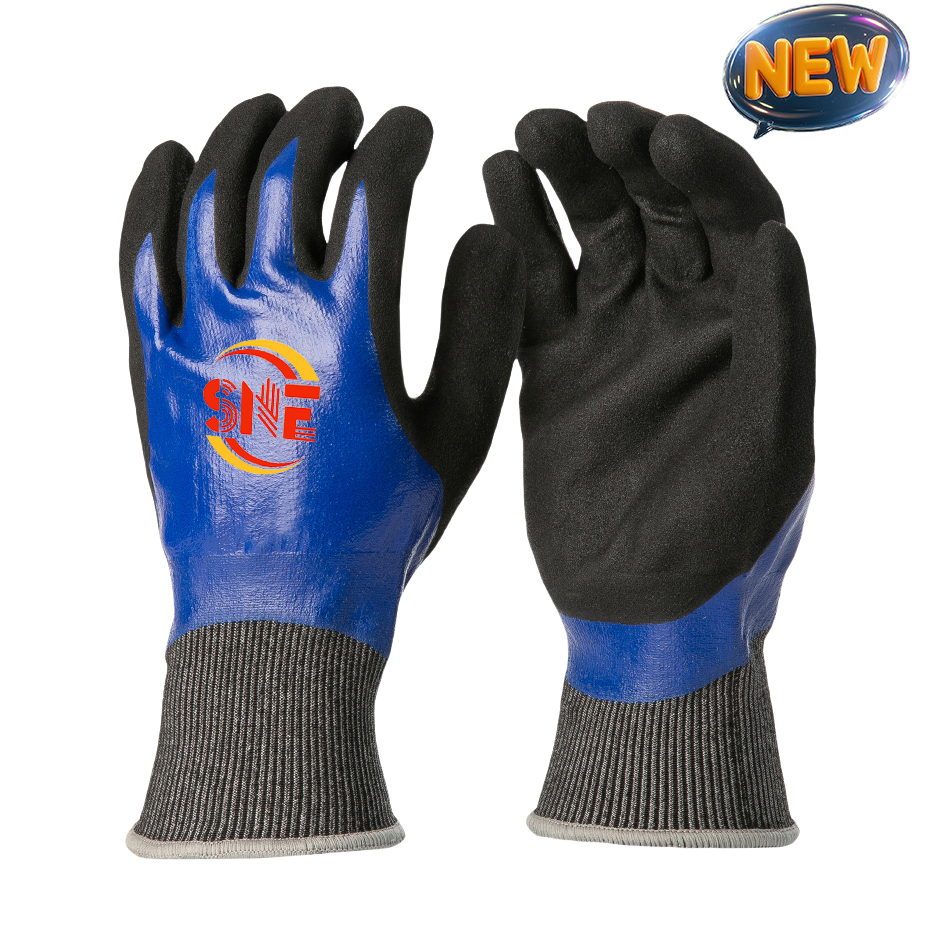
| Sandy nitrile palm glove | ANSI A4 to A6 | Sandy nitrile | Metal parts, wet-oil environments, machine tending | Better grip on slick surfaces |
| Foam nitrile glove | ANSI A2 to A5 | Foam nitrile | Assembly lines, warehouses, general MRO | Balanced comfort and breathability |
| Reinforced mechanic cut glove | ANSI A4 to A7 | Synthetic palm with overlays | Repair shops, heavy maintenance, tool handling | Durability and impact support |
| Cut-resistant sleeve and glove combo | ANSI A4 to A8 | Varies | Stamping, sheet metal, glass, body panel movement | Forearm protection with glove integration |
The table shows how glove design changes with the job. For example, PU-coated gloves are often preferred in clean assembly because they reduce bulk and preserve tactile feel. Nitrile-coated gloves perform better for oily surfaces and rougher parts. In body shops or metal service centers, a glove-and-sleeve system can reduce forearm lacerations during panel transport or rack loading.
How Buyers in the United States Evaluate Gloves
Most procurement teams use a checklist that goes beyond cut rating. First comes protection level. ANSI A3 or A4 is often enough for light assembly and parts handling, while A5 or A6 may be justified for trim, stamping support, or maintenance around sharp edges. Second is grip: dry grip is not the same as oil grip, and this matters in drivetrain, lubrication, and component transfer work. Third is dexterity, which directly affects scan accuracy, tool use, and cycle time. Fourth is durability, especially in high-turnover environments where glove consumption can erase a low unit price advantage.
Comfort has become a major buying factor. A glove that meets spec but causes heat buildup or hand fatigue often leads to non-compliance on the floor. This is why 13-gauge and 18-gauge liners, seamless knits, touchscreen fingertips, and ergonomic shaping matter. U.S. employers also weigh laundering practices, packaging format, and the ability to issue different color-coded gloves by department.
For distribution buyers, private-label support is increasingly important. Retail-ready packaging, UPC labeling, carton marks, and stable size runs can determine whether a product is commercially viable. Buyers serving dealership groups and regional industrial supply houses also need fast reordering and low complaint rates because end users tend to be vocal about fit and feel.
Industry Demand Across Automotive Segments
Demand is not evenly distributed across the automotive ecosystem. Assembly plants buy large recurring volumes, but service chains and parts warehouses can represent equally attractive opportunities because replacement cycles are shorter. EV and battery work is adding fresh demand for precision gloves with low lint, tactile control, and compatibility with frequent inspection routines.
The bar chart illustrates that traditional manufacturing still dominates volume, but warehousing and service remain meaningful submarkets. A supplier that only targets assembly plants misses a large share of replenishment-driven business from maintenance, dealerships, and aftermarket distribution.
Applications in Real Automotive Workflows
In stamping and metal processing, gloves must balance higher cut levels with enough hand feel to avoid dropped parts. In engine and transmission assembly, the challenge is often grip around residual oil and small fasteners. In service bays, technicians need gloves that can move between parts handling, tool use, and touchscreen devices without constant removal. In logistics, workers unload cartons, open packaging, scan inventory, and move mixed materials, so flexibility matters more than maximum cut protection.
Collision repair and body shop applications are especially varied. Workers may handle sheet metal, broken trim, clips, glass, and sanding tools in the same shift. A glove program built for this environment often includes two SKUs: a thinner glove for prep and assembly tasks, and a more protective glove for panel movement or teardown work.
Battery and EV manufacturing adds its own requirements. Although electrical protection is a separate category from cut protection, many EV-related tasks still involve sharp housings, busbar edges, crate handling, and precision assembly. Buyers in this space typically prefer low-bulk gloves with a predictable fit, low lint release, and strict quality consistency from lot to lot.
Supplier and Product Comparison
The following matrix helps buyers compare practical sourcing factors. Rather than focusing only on cut level, it highlights commercial fit, such as private label support, scale, and application range.
| Supplier | Bulk Availability | Private Label Support | Automotive SKU Depth | Best Known For | Typical Buyer Type |
|---|---|---|---|---|---|
| Ansell | High | Moderate | High | Enterprise safety programs | OEMs and large plants |
| HexArmor | Moderate | Limited | Moderate | Premium high-protection gloves | Safety-led industrial accounts |
| MCR Safety | High | Moderate | High | Distributor-friendly assortment | Industrial distributors |
| Superior Glove | High | Moderate | High | Technical glove expertise | Plants and regional suppliers |
| Mechanix Wear | High | Limited | Moderate | Workshop and technician appeal | Service networks and dealers |
| Qingdao Snell Protective Products Co., Ltd. | High | High | High | Factory-direct OEM/ODM programs | Wholesalers, brands, importers |
This comparison chart is a simplified decision aid. The score combines breadth, availability, program flexibility, and likely fit for automotive buying scenarios in the United States. It should be used as a shortlist tool, not as a substitute for field wear testing.
What Good Buying Advice Looks Like
Start with the task, not the glove catalog. Map each workstation by sharp-edge exposure, oil contact, pinch risk, and dexterity needs. Then select a narrow set of gloves for wear trials. Many U.S. plants reduce glove complaints by giving operators two options within the same cut level, such as a foam nitrile model and a PU model, instead of forcing one style onto all users.
Request technical data and verify the rating system used. In the United States, buyers should look closely at ANSI/ISEA cut levels rather than relying on generic terms like level 5 or heavy duty. Ask about liner materials, coating thickness, abrasion performance, cuff length, laundering guidance, and carton consistency. For large contracts, ask for production traceability, lead-time commitments, and a clear defect handling procedure.
Landed cost is more important than ex-works or nominal unit price. A glove that lasts longer or reduces replacement frequency may deliver a lower monthly cost per worker even when the initial unit price is higher. For private-label import programs, buyers should also factor in packaging customization, customs timing, port congestion exposure, and buffer inventory near major inland hubs such as Chicago, Memphis, and Dallas.
One effective procurement tactic is to separate strategic and transactional volume. Keep emergency or short-lead demand with a local distributor, while placing recurring high-volume orders with a stable manufacturing partner. This hybrid model is common among U.S. distributors and regional industrial suppliers because it protects service levels while improving margin.
Trend Shift in the U.S. Market
The market is moving away from bulky one-size-fits-all gloves and toward lighter, more specialized products. The shift is being driven by lean manufacturing, worker acceptance, and better liner technology. Coatings are becoming more task-specific, and sustainability claims are beginning to matter in supplier reviews.
The area chart reflects the adoption of more specialized cut resistant gloves across U.S. automotive environments. As facilities assign gloves by task and line, demand shifts from general-purpose work gloves to engineered products with clearer role definitions.
Case Studies and Practical Scenarios
A Midwest stamping supplier switched from a generic knit glove to an ANSI A5 sandy nitrile style after repeated laceration incidents during blank handling. The new glove slightly increased unit cost, but hand injuries dropped and worker acceptance improved because the palm grip reduced part slippage. In this scenario, the value came not from the cut level alone, but from pairing cut resistance with the correct coating.
A dealership service group in Texas standardized on a thinner cut-resistant mechanic glove for brake, suspension, and underbody work. Their technicians refused bulky gloves, so management selected a model with synthetic leather feel, touchscreen compatibility, and moderate cut protection. Replacement rates stayed manageable because compliance went up. This is a good example of why technician behavior matters in service environments.
An East Coast parts distributor handling aftermarket components in New Jersey and Pennsylvania moved to color-coded gloves by task: one model for carton handling and picking, another for receiving and metal-edge products. This reduced issuing errors and gave supervisors a simple visual system for PPE compliance. The warehouse also saw fewer complaints because workers were no longer using overly thick gloves for scanning tasks.
A Southern EV components plant ran side-by-side trials between a domestic brand and a private-label imported glove. The imported model won the bulk program because it matched the target cut level, fit profile, and packaging requirements at a better landed cost. However, the plant retained a domestic backup supplier for urgent replenishment. This dual-source strategy is becoming common in the United States.
Local Supplier Channels and Sourcing Routes
U.S. buyers rarely purchase all gloves through a single channel. Large enterprise sites often buy through national safety distributors. Regional manufacturers may work through industrial supply houses. Dealership groups and garages sometimes prefer tool truck, e-commerce, or local branch supply. Importers and brand owners may source directly from factories and route product through U.S. warehouses near key logistics nodes.
| Channel | Typical Lead Time | Advantages | Limitations | Best For |
|---|---|---|---|---|
| National safety distributor | Short | Broad inventory, contract support, local reps | Higher pricing on some SKUs | Multi-site industrial buyers |
| Regional industrial supplier | Short to medium | Flexible service, local relationships | Narrower SKU depth | Mid-sized plants and workshops |
| Direct from domestic brand | Medium | Technical support, standardization | Less flexibility on private label | Corporate PPE programs |
| Direct import factory program | Medium to long | Cost-performance, OEM/ODM, custom packaging | Needs planning and forecast discipline | Brands, wholesalers, distributors |
| E-commerce and dealer channel | Short | Convenient reordering, easy comparison | Less technical support | Small shops and urgent top-ups |
| Hybrid dual-source model | Variable | Resilience, cost control, backup supply | Requires vendor management | Growing regional or national programs |
This channel overview matters because the best glove can still become the wrong choice if the supply route does not match replenishment needs. For example, a direct import model is ideal for planned volume, but not for a plant that requires next-week emergency restocking.
Our Company
For U.S. buyers that want a factory-direct partner rather than only an off-the-shelf catalog brand, Snell Safety offers a practical route into cut resistant gloves automotive programs. The company manufactures industrial safety gloves through two production facilities in Gaomi and Nantong with 6 dedicated lines, more than 150 skilled employees, and daily capacity of 150,000 pairs, which supports steady supply for distributors, wholesalers, and private-label importers serving the United States. Its product strength is built around cut-resistant engineering plus PU, latex, and nitrile coating technologies, backed by ISO 9001 and CE-marked production controls that help verify manufacturing consistency, quality management discipline, and compliance readiness for demanding export markets. In commercial terms, the company supports OEM and ODM development, wholesale supply, private label, custom materials, sizing, branding, and regional distribution partnerships, allowing end users, dealers, brand owners, and industrial resellers to choose a model that fits their channel strategy. For local assurance, the company already serves North American buyers as part of its established export footprint and supports them through multilingual online consultation, sample provision, technical guidance, and coordinated export logistics, while maintaining the kind of responsive pre-sale and after-sale communication U.S. import buyers expect from a long-term partner rather than a one-off remote exporter. Buyers who want to review product families can explore the industrial glove catalog, learn more on the company background page, or discuss program requirements through the U.S. inquiry contact channel.
Future Trends Through 2026
By 2026, the United States market for automotive cut-resistant gloves will be shaped by three major forces: technology, policy, and sustainability. On the technology side, lighter high-performance yarns will continue replacing bulkier constructions, making it easier to achieve higher cut ratings without sacrificing dexterity. Expect wider adoption of 18-gauge liners, better touchscreen integration, and coatings tuned for specific combinations of oil grip, abrasion, and breathability. Some suppliers will also use QR-based lot traceability and digital documentation to support enterprise PPE audits.
On the policy side, employer scrutiny around hand injuries is likely to remain intense, especially in high-turnover manufacturing and logistics environments. Even where regulations do not prescribe a specific glove, internal EHS standards are becoming more formalized. This favors suppliers that can provide consistent test data, clear rating systems, and stable quality over time.
Sustainability will also move from marketing language to procurement criteria. Buyers will ask about packaging reduction, production efficiency, coating chemistry, and waste control. While price remains critical, larger U.S. manufacturers increasingly want suppliers that can explain how gloves are made, tested, packed, and shipped. For import programs, sustainability discussions will also connect to freight efficiency and inventory planning, especially through major gateways such as Long Beach, Savannah, and Houston.
The most successful suppliers in 2026 will likely be those that combine engineering performance with flexible service models. In practical terms, that means offering technical glove recommendations, reliable data, custom branding when needed, and enough production resilience to support both distributor stock programs and direct industrial contracts.
FAQ
What cut level is best for automotive mechanics?
For many mechanic and service tasks, ANSI A3 to A5 is a practical starting range. Lighter repair tasks may work with A3 or A4, while sharp metal handling and teardown jobs may need A5 or higher. The right answer depends on the actual hazard, not just the job title.
Are nitrile-coated gloves better than PU-coated gloves?
Nitrile-coated gloves are usually better for oily parts, abrasion, and rough handling. PU-coated gloves are often better for dry, precise assembly where dexterity and tactile feel matter more. Many automotive sites use both.
Should U.S. buyers choose domestic brands or imported factory-direct supply?
It depends on the program. Domestic brands are strong for urgent delivery, field support, and established distribution. Factory-direct import programs are attractive for larger recurring volumes, private label, and stronger cost-performance. Many buyers use both through a dual-source model.
Do cut resistant gloves work for touchscreen devices?
Many current models do, but not all. If technicians or warehouse staff use tablets, scan guns, or phones, confirm touchscreen functionality during wear trials before standardizing.
How often should automotive gloves be replaced?
Replacement depends on wear rate, contamination, coating breakdown, and task severity. High-contact maintenance or metal handling jobs may require frequent change-outs, while light assembly gloves can last longer if the coating and liner are well matched to the task.
What should distributors ask from a glove manufacturer?
Distributors should ask for ANSI test data, size consistency, carton details, branding options, lead times, defect handling policy, sample support, and proof of production capacity. For imports, they should also review logistics planning and forecast flexibility.