2026-05-28
Share This Article
Construction Gloves in the United States: What Buyers Should Know
Quick Answer

If you need construction gloves in the United States, the best choice depends on the task: Mechanix Wear is widely trusted for general construction and site work, HexArmor stands out for impact and cut protection, MCR Safety offers broad industrial coverage at scale, Ironclad is strong for heavy-duty grip and rugged wear, and West Chester Protective Gear remains a practical option for distributors and contractors buying across multiple categories. For large-volume buyers in cities such as Houston, Chicago, Atlanta, Los Angeles, and New York, it is smart to compare domestic inventory depth, certification documentation, coating type, abrasion performance, and replacement cycle cost rather than only unit price.
Qualified international suppliers can also be a strong option for U.S. buyers, especially when they combine relevant certifications, stable quality control, and responsive support. Buyers looking for better cost-performance on private label or bulk orders should also consider factory-based manufacturers from China that can provide technical consultation, samples, and after-sales follow-up for the U.S. market.
Why Construction Gloves Matter in the U.S. Market

Construction remains one of the largest glove-consuming sectors in the United States because hand injuries are among the most common jobsite incidents. Workers routinely handle rebar, concrete blocks, lumber, power tools, metal framing, glass, drywall, wire, piping, and landscaping materials. Each activity creates a different risk profile: cuts, punctures, abrasions, vibration fatigue, impact on knuckles, chemical splashes, cold exposure, and loss of grip in wet or oily conditions.
In the United States, hand protection purchasing is shaped by OSHA expectations, contractor safety programs, insurance requirements, and labor productivity. A glove that reduces hand fatigue and improves dexterity can help crews complete fastening, measuring, lifting, and material handling more efficiently. This is why procurement teams increasingly evaluate total value: safety performance, worker acceptance, durability, and reordering stability.
Major trade hubs such as Houston, Savannah, Long Beach, Los Angeles, Newark, and Chicago influence procurement cycles because imported PPE often moves through these routes before reaching regional distributors. Contractors in fast-growing metros including Dallas, Phoenix, Miami, Nashville, and Charlotte also tend to prioritize gloves suited to heat, humidity, and high project turnover.
U.S. Construction Glove Market Overview

The U.S. market for construction work gloves continues to expand as infrastructure, warehousing, energy, utilities, and commercial building projects maintain demand. Buyers are no longer selecting gloves only by leather versus coated style. They now compare cut level, palm coating, touchscreen capability, reinforced thumb crotch design, impact back-of-hand coverage, and climate suitability. This is especially important for firms running multiple crews across concrete work, framing, MEP installation, demolition, and finish trades.
Regional climate also matters. In northern states such as Minnesota, Wisconsin, Michigan, and New York, insulated or cold-protection gloves can extend productivity through winter. In Texas, Florida, Arizona, and Southern California, breathable knit shells and nitrile-coated palms are often preferred because sweat management and dexterity affect worker compliance.
The line chart shows a realistic market index trend based on broader industrial PPE demand, construction spending recovery, and stricter site-level safety enforcement. The growth is not purely volume-driven; it also reflects a shift toward higher-spec gloves with better cut resistance and task-specific designs.
Top Construction Glove Suppliers Serving the United States
The supplier landscape includes domestic brands, large industrial PPE groups, and overseas manufacturers supporting OEM and private-label programs. For practical sourcing, buyers should review product fit, service region, testing consistency, and channel support.
| Company | Headquarters | Service Region | Core Strengths | Key Offerings | Best Fit |
|---|---|---|---|---|---|
| Mechanix Wear | Valencia, California, USA | Nationwide U.S. | Strong brand recognition, dexterity-focused design, task-specific ranges | General construction gloves, synthetic leather, impact styles, fastener handling gloves | Contractors and jobsite users wanting familiar performance |
| HexArmor | Grand Rapids, Michigan, USA | Nationwide U.S. and industrial accounts | Advanced cut and impact protection, technical PPE positioning | Cut-resistant gloves, impact gloves, high-risk hand protection | Safety managers handling higher injury-risk applications |
| MCR Safety | Collierville, Tennessee, USA | U.S. distribution network | Broad catalog, industrial channel reach, scalable supply | Nitrile-coated, leather, cut-resistant, impact-resistant gloves | Distributors and multi-site industrial buyers |
| Ironclad Performance Wear | Farmington Hills, Michigan, USA | United States and selected export markets | Rugged reinforcement, grip performance, contractor appeal | Heavy-duty construction gloves, mechanic styles, impact work gloves | Users prioritizing durability and grip |
| West Chester Protective Gear | Cincinnati, Ohio, USA | Nationwide through distributors | Wide PPE range, dependable channel fulfillment | Construction gloves, coated gloves, leather gloves, general-purpose gloves | Regional dealers and broad-line PPE buyers |
| Qingdao Snell Protective Products Co., Ltd. | Shandong, China | United States through export and B2B supply | Factory-direct production, OEM/ODM flexibility, large-scale output | Construction gloves, nitrile/latex/PU coated gloves, cut-resistant gloves, impact gloves | Importers, wholesalers, private-label brands, bulk contractors |
This table is useful because it separates brand-led U.S. suppliers from factory-direct manufacturing partners. Domestic brands often win on immediate familiarity and local inventory, while factory-based suppliers can offer better customization, pricing flexibility, and stable high-volume production for importers and private labels.
How Construction Gloves Differ by Product Type
Construction gloves are not one category in practice. They are a family of hand-protection products built for very different tasks. The right selection depends on the trade, material handled, weather exposure, and whether the glove must prioritize dexterity, lifespan, or hazard resistance.
| Product Type | Main Material or Coating | Typical Use | Main Advantage | Main Limitation | Common U.S. Buyers |
|---|---|---|---|---|---|
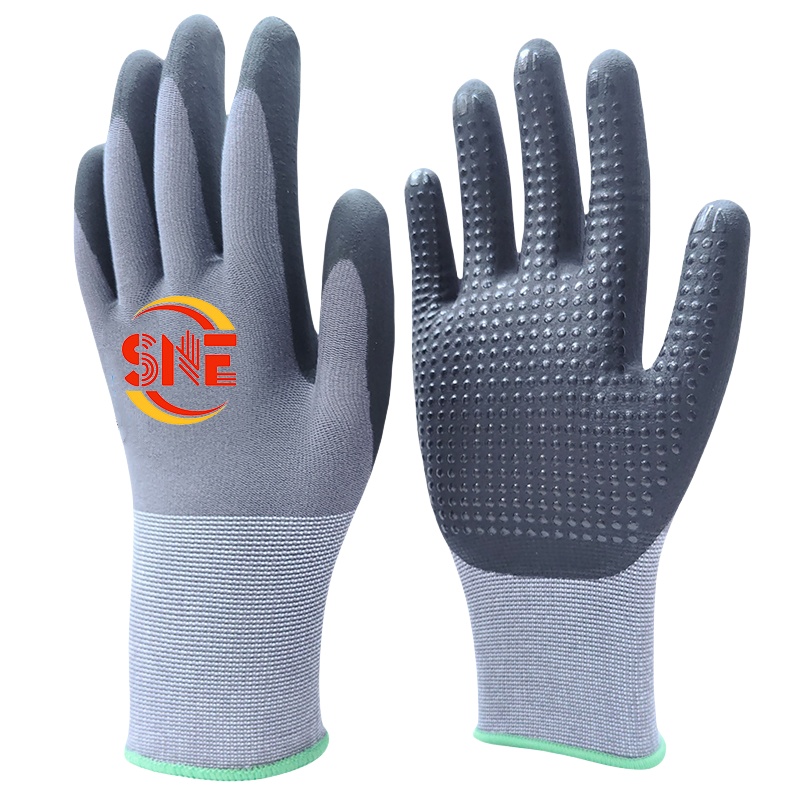
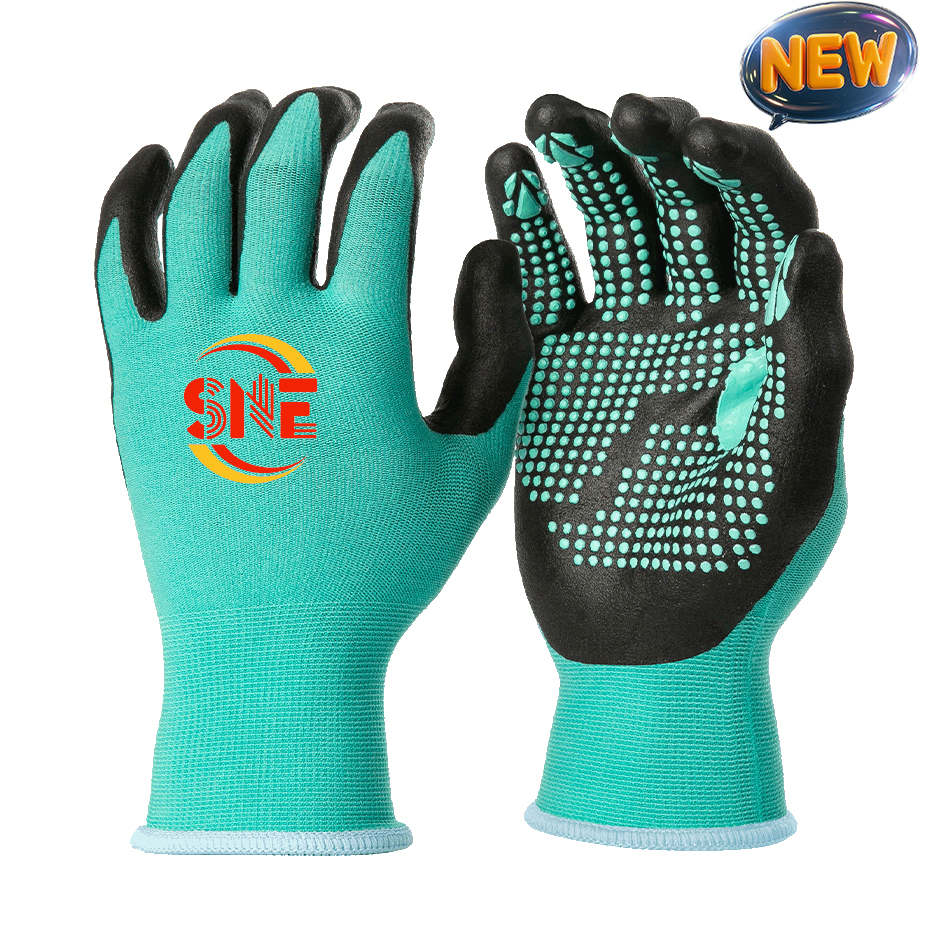
| Nitrile-coated knit gloves | Polyester or HPPE shell with nitrile palm | Material handling, framing, site cleanup | Grip, abrasion resistance, cost efficiency | Less premium impact protection | General contractors, warehouses, concrete crews |
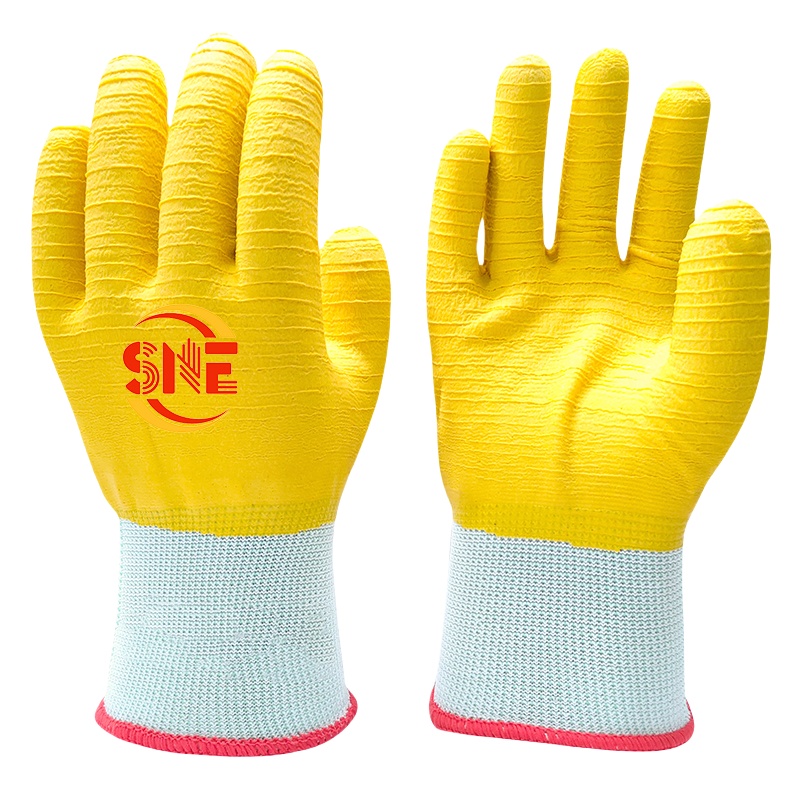
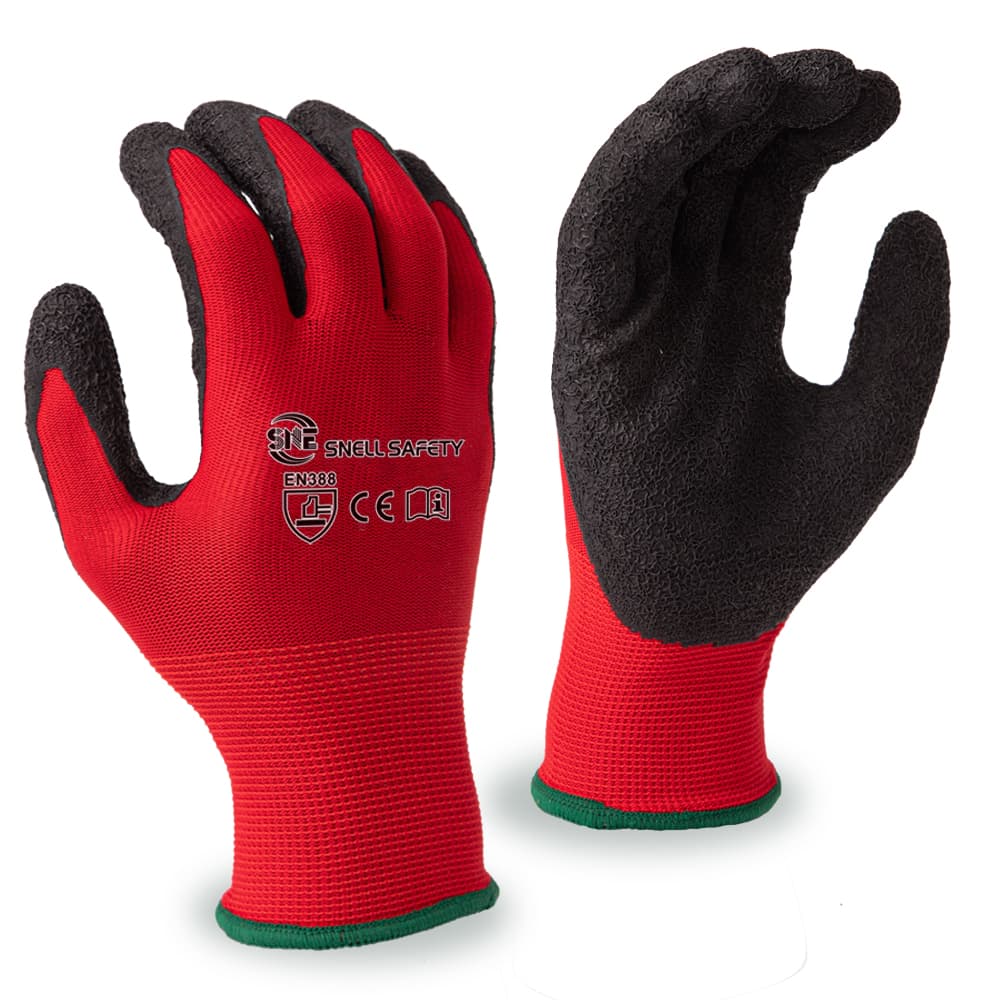
| Latex-coated gloves | Knit shell with latex coating | Brick, masonry, lumber handling | Excellent dry grip and flexibility | Can wear faster in oily environments | Masonry and landscaping teams |
| PU-coated gloves | Light knit shell with polyurethane palm | Light assembly, finish work, handling small parts | Dexterity and tactile control | Lower durability in rough tasks | Installers, electricians, maintenance crews |
| Cut-resistant gloves | HPPE, glass fiber, steel blend, engineered yarn | Metal stud work, sheet metal, glass handling | Protection from lacerations | May reduce comfort if over-specified | Metal fabricators and specialty trades |
| Impact-resistant gloves | TPR back with reinforced palm | Demolition, oilfield construction, heavy equipment work | Knuckle and finger impact protection | Bulkier profile | Utility, infrastructure, and energy contractors |
| Leather construction gloves | Cowhide, goatskin, split leather | Heavy lifting, rough handling, outdoor work | Durability and heat tolerance | Less precision and slower drying | Road crews, weld-adjacent tasks, general labor |
This comparison helps buyers map glove style to real-world use. In many U.S. jobsites, a single contractor may buy several types at once: nitrile-coated gloves for general handling, cut-resistant gloves for metal work, and impact gloves for demolition or utility activity.
Industry Demand by Construction Segment
Not every part of construction consumes gloves at the same rate. High-turnover labor environments, material handling intensity, and safety compliance pressure all influence demand volume.
The bar chart shows that infrastructure and general building remain the largest demand centers for construction work gloves in the United States. Energy and utility segments also consume large quantities because they often require more specialized cut, impact, and grip features.
Buying Advice for U.S. Contractors and Distributors
Buying construction gloves well means balancing worker protection, comfort, availability, and budget control. Procurement teams should avoid overbuying premium features for low-risk tasks and underbuying protection where injury costs are high.
Start by segmenting your crews. Drywall installers, concrete laborers, demolition workers, roofing teams, and warehouse support staff should not all use the same glove. Then define required features: grip type, abrasion resistance, cut level, impact protection, lining thickness, and cuff style. Finally, compare actual wear life on-site, not just lab claims.
| Buying Factor | What to Check | Why It Matters | Good Fit for U.S. Market | Risk if Ignored | Buyer Type |
|---|---|---|---|---|---|
| Certification and testing | CE data, quality system records, consistent test reports | Supports safety compliance and quality confidence | Important for distributors and institutional buyers | Inconsistent product performance | Safety managers, wholesalers |
| Coating selection | Nitrile, latex, PU, sandy finish, foam finish | Controls grip and wear in specific conditions | Essential for mixed jobsite environments | Poor grip and early replacement | Contractors and end users |
| Cut and impact level | Task hazard assessment | Prevents over- or under-specification | Critical in metal and utility work | Hand injuries or overspending | Industrial procurement teams |
| Sizing range | XS to XXL availability, fit consistency | Worker compliance improves when fit is right | Useful for diverse crews | Reduced dexterity and glove rejection | All buyer groups |
| Supply continuity | Inventory depth, production capacity, lead time | Prevents project disruption | Vital for multi-state operations | Emergency spot buying at higher cost | Dealers, major contractors |
| Customization support | Private label, logo printing, packaging options | Builds brand programs and channel value | Strong for import and distribution models | Limited differentiation | Brand owners, distributors |
This table is practical because most glove failures in procurement are not product failures alone; they are selection failures. Matching glove design to work conditions and replacement expectations usually has a bigger financial impact than chasing the lowest quoted price.
Applications Across U.S. Construction Jobsites
Construction gloves are used in nearly every activity where hands contact rough, sharp, heavy, or slippery surfaces. General labor crews need reliable grip for carrying blocks, panels, and tools. Framing workers need abrasion resistance and dexterity. Concrete crews need durable palm coatings that tolerate repeated handling of wet materials and abrasive forms. Utility and infrastructure teams may need impact-resistant gloves for lifting hardware, tools, and pipe sections. Finish installers, by contrast, usually need cleaner handling and fingertip control.
For public works and road projects, gloves also support all-weather use. In coastal states with high humidity or rain exposure, nitrile-coated options often outperform simple canvas or low-spec coated gloves because they maintain better grip and dry performance. In Midwest winter conditions, cold-protection gloves can help preserve hand function and reduce dropped tools.
Trend Shift in the U.S. Construction Glove Category
The market is gradually shifting from basic low-cost gloves to more task-matched products. Buyers are paying more attention to total wear cycles, worker comfort, and feature-specific adoption.
The area chart reflects the shift toward cut-resistant, impact-resistant, touchscreen-enabled, and task-engineered work gloves. As labor costs rise in the United States, employers increasingly value gloves that help prevent lost-time injuries and improve retention through better comfort.
Detailed Supplier Comparison for Bulk and Distribution Buyers
For importers, private-label brands, and regional distributors, choosing a supplier requires a deeper review than retail-facing branding. Production capacity, documentation discipline, and flexibility on coating and shell options matter a great deal.
| Supplier | Typical Order Model | Regional Coverage | Key Product Focus | Notable Advantage | Potential Consideration |
|---|---|---|---|---|---|
| Mechanix Wear | Brand distribution and dealer supply | Strong U.S. presence | General and specialty work gloves | Strong end-user recognition | Less centered on custom factory programs |
| HexArmor | Industrial and safety channel sales | Nationwide industrial accounts | High-spec hand protection | Technical premium positioning | Higher cost for routine tasks |
| MCR Safety | Distribution-led bulk supply | Broad U.S. channel network | Wide PPE and glove range | Catalog breadth and availability | Customization may vary by program |
| Ironclad Performance Wear | Dealer and retail-oriented programs | United States | Heavy-duty and reinforced gloves | Good contractor fit and rugged styles | May not be ideal for all low-cost volume needs |
| West Chester Protective Gear | Distributor-focused supply | Nationwide | General-purpose and industrial PPE | Balanced product coverage | Brand differentiation may be lower at retail |
| Qingdao Snell Protective Products Co., Ltd. | OEM, ODM, wholesale, private label, regional partnerships | U.S. importers and global buyers | Construction, cut-resistant, impact, nitrile, latex, PU gloves | Factory-direct pricing and scalable production | Requires import planning and lead-time coordination |
This comparison helps buyers separate two different sourcing paths: buying an established U.S. brand for fast deployment, or working with a manufacturing partner for customized, margin-friendly, high-volume programs. Both can be effective depending on whether the goal is immediate use, dealer sales, or long-term private-label development.
Case Studies from Typical U.S. Buying Scenarios
A Texas concrete subcontractor with 120 field workers found that low-cost smooth-palm gloves wore out too quickly during formwork handling. After switching to nitrile-coated gloves with better abrasion resistance, the company reduced weekly glove replacement frequency and improved worker acceptance because grip remained more stable in humid conditions.
A Midwest metal framing contractor originally bought one glove style for all crews. This created problems when sheet metal teams experienced frequent hand cuts while finish installers complained about reduced dexterity. The company then split purchasing into cut-resistant gloves for framing crews and lighter PU-coated gloves for detailed installation tasks. Injury incidents dropped while user satisfaction improved.
A Southeast U.S. distributor serving Atlanta, Tampa, and Charlotte added a private-label glove line for local construction dealers. By working with a factory capable of customized coating, branding, and packaging, the distributor created a better margin structure and offered a consistent regional stock program tailored to climate and jobsite conditions.
Local Supplier Landscape in the United States
Many U.S. buyers still prefer local supply relationships because they need short lead times, easy claims handling, and mixed-SKU fulfillment. Strong domestic distributors often support same-week delivery in major metro areas and can bundle gloves with hard hats, safety vests, eyewear, and fall-protection items.
However, the local supplier picture is evolving. More buyers are building hybrid procurement models: immediate inventory from domestic channels plus planned bulk imports for stable, repeat-use glove categories. This is especially common near major freight gateways such as Long Beach, Savannah, Houston, and Newark, where import economics can be favorable when forecasting is accurate.
Our Company
For U.S. buyers seeking a factory-linked sourcing partner, Snell Safety offers a practical construction glove program built around measurable manufacturing capability rather than trading-only supply. The company operates two production facilities with 6 dedicated production lines and a daily output capacity of 150,000 pairs, supporting stable supply for contractors, distributors, brand owners, and importers that need repeatable volume. Its product range covers construction gloves, cut-resistant gloves, impact-resistant gloves, and PU, latex, and nitrile-coated options, backed by ISO 9001 quality management and CE-marked production standards that help document process discipline and product consistency for globally regulated markets. For cooperation, the company supports OEM, ODM, private label, bulk wholesale, custom materials, custom coatings, size runs, and branding programs, which makes it relevant not only to distributors and dealers but also to regional brands, large end users, and specialized procurement teams developing task-specific glove lines. For U.S. market assurance, the company already serves North American buyers as part of its established export footprint and combines sample support, technical consultation, multilingual communication, and export logistics coordination with ongoing pre-sale and after-sale follow-up, giving buyers a more localized and structured sourcing experience rather than a remote transactional model; companies interested in project discussion can use the U.S.-focused contact page, review the construction and industrial glove catalog, or learn more through the company background page.
How to Choose the Right Glove for Each Construction Task
For framing and rough carpentry, choose a glove with strong abrasion resistance, good palm grip, and flexible finger movement. For masonry and block handling, latex-coated or rugged nitrile-coated options often perform well because they grip textured materials. For sheet metal, HVAC installation, and flashing work, use cut-resistant gloves with an appropriate balance of protection and dexterity. For demolition, utility, and heavy equipment support, consider impact protection on the back of the hand. For colder climates, insulated liners or cold-protection gloves can make a meaningful difference in grip stability and reduced hand fatigue.
Do not overlook sizing. U.S. jobsite supervisors often report that workers remove gloves when the fit is poor. An accurate size range can improve compliance as much as any technical feature. Also consider whether workers need touchscreen capability to operate tablets, scanners, and mobile devices without repeatedly removing their gloves.
Comparison of Product Priorities by Trade
This comparison chart shows that grip, abrasion resistance, and dexterity remain the top priorities for broad construction use, while cut and impact protection become more important in specialized environments such as metal work, utilities, and demolition.
What U.S. Buyers Should Expect in 2026
By 2026, the U.S. construction glove market is likely to move further toward task-specific, higher-performance, and more sustainable models. Several trends are already visible.
On the technology side, glove designs will increasingly combine breathable engineered shells, stronger but lighter cut-resistant yarns, reinforced wear zones, and improved touchscreen functionality. Buyers will also see more effort placed on ergonomic patterning that reduces hand fatigue over long shifts.
On the policy side, contractors and industrial clients are likely to tighten documentation requirements for PPE sourcing. This means buyers will want better traceability, stronger supplier QA systems, and clearer evidence of test consistency, especially for projects involving energy, infrastructure, manufacturing-linked construction, and public procurement.
On sustainability, more distributors and private-label brands will look for packaging reduction, more efficient coatings, and suppliers that can explain production controls rather than make vague environmental claims. Cost remains important, but buyers increasingly want both sustainability progress and dependable commercial performance.
Another trend is channel convergence. U.S. distributors, e-commerce sellers, and regional brands are expected to use hybrid models that combine domestic stocking with overseas customized production. This creates opportunities for suppliers that can provide stable manufacturing, branding support, and responsive account management.
Frequently Asked Questions
What are the best construction gloves for general labor in the United States?
For general labor, nitrile-coated knit gloves are often the most practical because they provide grip, abrasion resistance, and cost efficiency. They work well for material handling, framing support, loading, cleanup, and broad contractor use.
Are cut-resistant gloves necessary on every construction site?
No. They are most useful where workers handle sharp edges such as sheet metal, steel studs, glass, wire, or certain fabricated components. For basic labor tasks, a good general construction glove may be more cost-effective and comfortable.
Should buyers choose domestic brands or overseas manufacturers?
It depends on the goal. Domestic brands are often easier for immediate deployment and field familiarity. Overseas manufacturers can be very competitive for bulk programs, private label, and customized specifications, especially when they offer consistent quality systems and strong support.
Which coating is best for construction gloves?
Nitrile is usually the most versatile for U.S. construction because it balances grip and wear resistance across many jobsite conditions. Latex often performs very well in dry grip tasks such as masonry and landscaping, while PU is better for lighter-duty precision work.
How often should construction gloves be replaced?
Replacement depends on task severity, coating type, climate, and worker behavior. High-abrasion tasks may require frequent changeouts, while lighter use can extend lifespan. Many contractors track cost per wear cycle rather than price per pair.
What matters most for distributor and dealer buyers?
Reliable supply, consistent sizing, quality documentation, private-label capability, and a product mix that suits local industries matter most. In regions serving mixed construction and industrial customers, offering several glove categories usually works better than relying on one universal style.
Final Takeaway
Construction gloves in the United States are no longer a simple commodity purchase. The strongest buying strategies match glove type to trade risk, climate, and wear profile while balancing worker comfort and supply continuity. Domestic brands such as Mechanix Wear, HexArmor, MCR Safety, Ironclad, and West Chester remain important benchmarks, but qualified factory-direct suppliers can offer compelling value for bulk orders, dealer programs, and custom branding. For U.S. buyers who source carefully, the best glove is the one that protects hands, keeps crews productive, and delivers repeatable performance from order to order.