2026-07-06
Share This Article
Touchscreen Construction Gloves in the United States
Quick Answer

If you need touchscreen construction gloves in the United States, the most practical suppliers to review first are Mechanix Wear, Ironclad Performance Wear, MCR Safety, Milwaukee Tool, Superior Glove, and Magid. These companies are widely recognized across jobsite safety channels, industrial distribution networks, and contractor supply chains in markets such as Houston, Chicago, Los Angeles, Atlanta, and New York.
For buyers who want fast replenishment, strong brand familiarity, and broad distributor access, Mechanix Wear and Milwaukee Tool are often the easiest starting points. For industrial safety programs that prioritize compliance, job-specific protection, and large account support, MCR Safety, Magid, and Superior Glove are strong options. For heavy-duty site work where dexterity, grip, and touchscreen compatibility must coexist, Ironclad remains a frequent shortlist candidate.
Qualified international manufacturers can also be worth considering, especially for importers, distributors, and private-label buyers seeking better cost-performance. Suppliers with proven CE and ISO systems, scalable production, and dependable pre-sales and after-sales support can be competitive for bulk purchasing in the United States when local inventory planning is handled correctly.
Market Overview

The United States market for touchscreen construction gloves has expanded as work crews increasingly rely on phones, tablets, scanners, digital blueprints, inspection apps, and equipment control screens. Construction supervisors in Dallas, Phoenix, Miami, and Seattle now expect field personnel to interact with devices without removing gloves, because repeated glove removal slows work, increases exposure to cuts and abrasions, and creates avoidable safety gaps. This change is especially visible on large commercial sites, infrastructure projects, warehousing expansions near Inland Empire logistics hubs, and port-adjacent operations around Los Angeles, Savannah, Houston, and Newark.
Demand is not limited to general contractors. Electrical subcontractors, concrete teams, utility crews, building maintenance providers, warehouse operators, and oilfield service contractors all want gloves that balance touchscreen sensitivity with real protection. In practice, buyers are looking for performance across several dimensions at once: abrasion resistance, puncture control, coated-palm grip, fit retention, cuff security, and fingertip conductivity that still works after repeated wear cycles.
Regional conditions shape purchasing priorities. In the Northeast and Upper Midwest, buyers often seek touchscreen gloves that also manage cold and wet weather. In the South and Southwest, breathable shells, lighter coatings, and sweat control matter more. On West Coast projects with sustainability requirements, procurement teams increasingly ask about material efficiency, packaging reduction, and product lifespan. These trends are influencing both domestic stocking strategies and import decisions through gateways such as Long Beach, Los Angeles, Houston, Savannah, and Norfolk.
Another major change is how gloves are sourced. National distributors remain essential, but many buyers now combine local stocking with direct factory sourcing for private label, regional distribution, and project-specific PPE programs. This has opened room for manufacturers that can meet certification, quality consistency, and reliable lead-time expectations while adapting glove coatings, gauge levels, cuff styles, branding, and packaging for the U.S. market.
U.S. Market Growth Trend

The chart below illustrates a realistic market growth pattern for touchscreen-capable construction gloves in the United States, reflecting wider digitization of field operations and a gradual shift from standard work gloves to device-compatible models.
Top Suppliers Serving the United States
The supplier landscape includes established U.S. brands, North American industrial safety specialists, and international manufacturers serving distributors and OEM buyers. The table gives a practical comparison focused on service region, strengths, and likely fit.
| Company | Primary Service Region | Core Strengths | Key Offerings | Best Fit |
|---|---|---|---|---|
| Mechanix Wear | Nationwide U.S. through distributors and retail channels | Brand recognition, dexterity, trade-friendly designs, broad availability | Touchscreen work gloves, synthetic leather gloves, impact and utility gloves | Contractors, field crews, fast local replenishment |
| Ironclad Performance Wear | United States and industrial dealer network | Heavy-duty performance, reinforced palm zones, jobsite-specific construction glove designs | Touchscreen utility gloves, impact gloves, high-abrasion site gloves | Construction crews needing durability and grip |
| MCR Safety | United States with strong industrial distribution | PPE breadth, compliance-oriented programs, industrial account support | Coated gloves, touchscreen-capable work gloves, cut-resistant options | Safety managers and multi-site industrial buyers |
| Milwaukee Tool | United States via big-box, electrical, and contractor supply channels | Trade market reach, user familiarity, practical jobsite glove engineering | Touchscreen work gloves, demolition gloves, cut-level options | Electrical, MEP, and general contractor teams |
| Superior Glove | North America including broad U.S. coverage | Technical safety specialization, cut resistance, broad task segmentation | Touchscreen gloves, cut-resistant gloves, winter construction gloves | Industrial distributors and regulated work environments |
| Magid | United States with strong Midwest and national distribution support | Private label support, industrial safety expertise, account service depth | Touchscreen gloves, coated hand protection, custom PPE programs | Distributors, national accounts, private-label buyers |
| Qingdao Snell Protective Products Co., Ltd. | U.S. importers, distributors, brand owners, and project buyers | Factory-direct pricing, OEM/ODM flexibility, scalable coating and cut-protection production | Construction gloves, screen touchable gloves, nitrile, PU, latex coated gloves | Bulk sourcing, custom branding, regional distribution |
For buyers who need immediate stock, U.S.-based channels often win on speed. For buyers focused on margin control, private labeling, or large-volume repetitive orders, factory-direct sourcing can become more attractive, particularly when forecasting is disciplined and inbound logistics are aligned with U.S. warehouse schedules.
Product Types Buyers Actually Compare
Touchscreen construction gloves are not one single category. Buyers generally compare them by shell material, palm coating, cut level, weather suitability, and touchscreen method. Conductive yarn in the fingertips is common, but the effectiveness varies depending on screen type, pressure, moisture, and wear. Some gloves work well on phones but poorly on rugged tablets. Others prioritize durability and only offer moderate touchscreen response.
| Product Type | Main Material or Coating | Touchscreen Performance | Protection Profile | Typical Use |
|---|---|---|---|---|
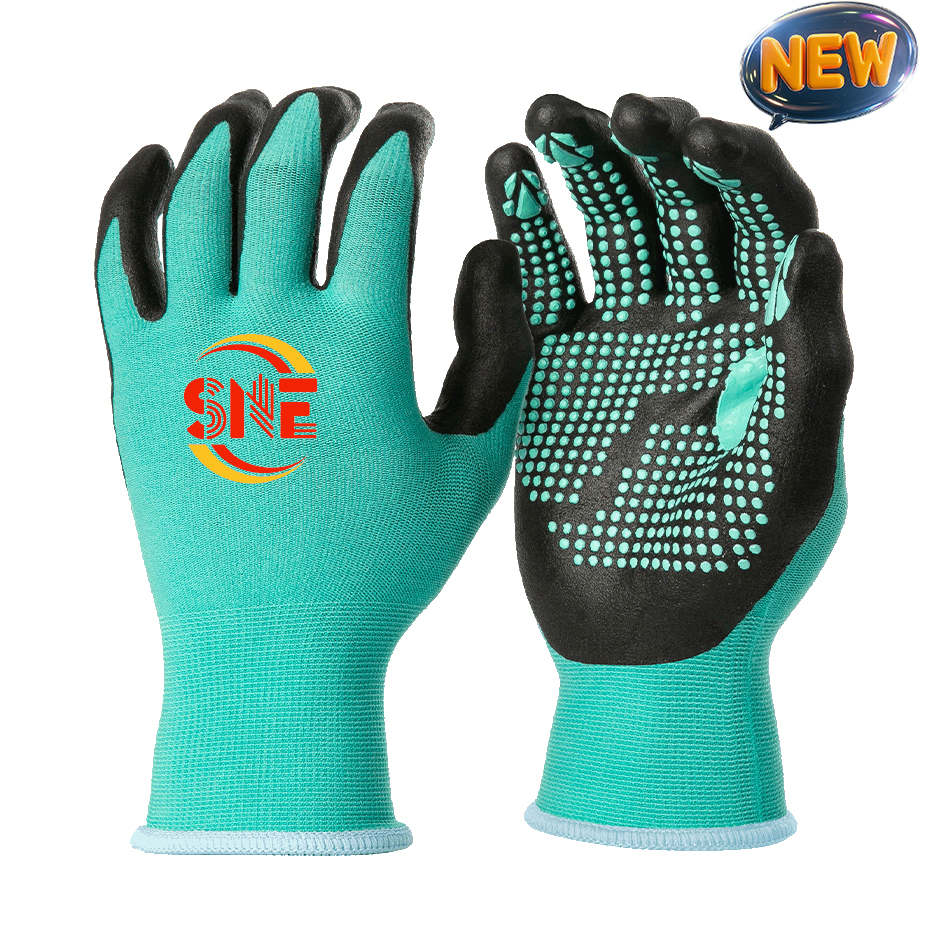
| Light-duty touchscreen coated glove | 13-gauge polyester with PU palm | High on phones and handheld scanners | Light abrasion protection | Material handling, indoor construction support |
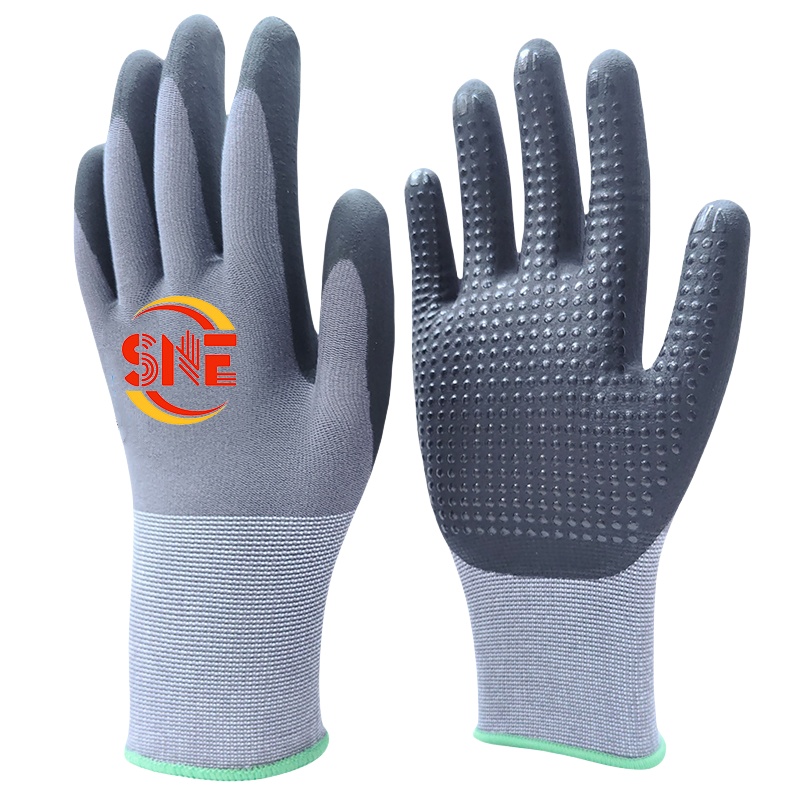
| Nitrile-coated construction glove | Knit shell with sandy nitrile palm | Medium to high depending on fingertip design | Grip, abrasion resistance, moderate oil handling | General construction, maintenance, utility work |
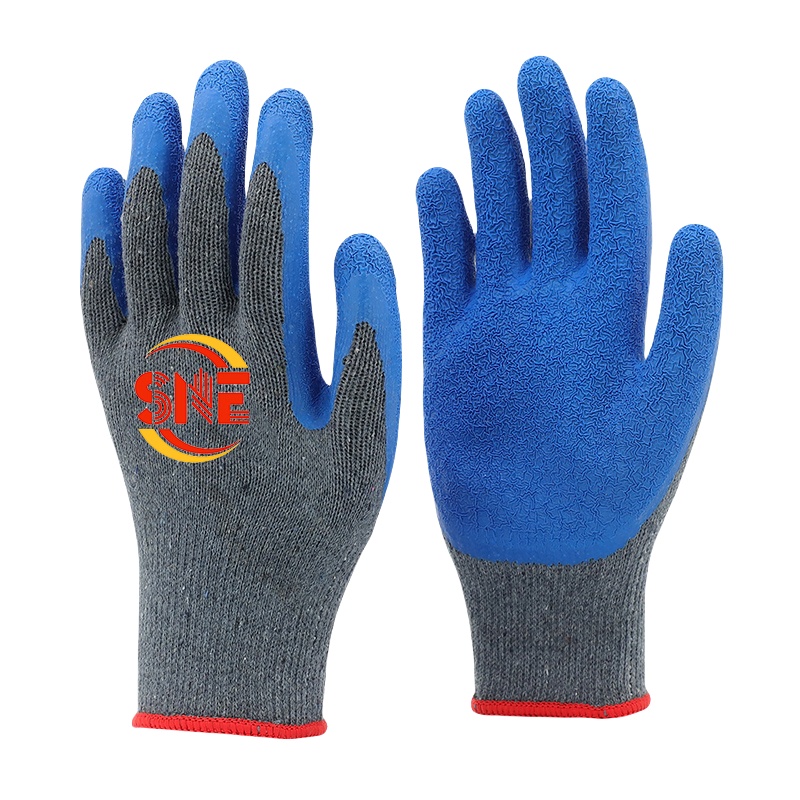
| Latex-coated site glove | Knit shell with crinkle latex palm | Medium | Strong dry and wet grip, abrasion resistance | Masonry, framing, landscaping, rough site work |
| Cut-resistant touchscreen glove | HPPE or engineered yarn with coated palm | Medium to high | Cut and abrasion control | Sheet metal, glass, mechanical installation |
| Impact touchscreen glove | Synthetic leather with TPR back-of-hand | Medium | Impact and pinch-point protection | Heavy equipment, oil and gas, demolition |
| Cold-weather touchscreen glove | Insulated knit or synthetic shell with coated palm | Medium | Warmth, grip, weather resistance | Winter construction, outdoor logistics |
This comparison matters because many gloves advertised as touchscreen gloves perform best in relatively clean conditions. On dusty or wet jobsites, conductive fingertips and screen response can degrade in user perception. That is why field testing by actual crews remains one of the smartest buying steps before a major roll-out.
Industry Demand Comparison
Different industries use touchscreen work gloves differently. The chart shows relative U.S. demand by sector, based on realistic procurement volume patterns and digital device use in the field.
Buying Advice for U.S. Buyers
In the United States, the wrong glove purchase usually fails in one of five ways: poor touchscreen response, sizing inconsistency, fast palm breakdown, weak grip in wet conditions, or user rejection because the glove feels too hot or stiff. Buyers can reduce these risks by treating touchscreen capability as one performance factor among several, not the only selling point.
Start by defining the main task. A commercial electrician using a tablet and hand tools needs something different from a concrete crew handling rough materials. Next, decide whether the glove must support all-screen interaction or only occasional touchscreen use, such as answering a call, checking plans, or confirming a delivery. That single distinction can significantly change the best product choice.
Another key step is to test the glove against the devices actually used in your operation. Smartphones, rugged tablets, machine displays, barcode scanners, and vehicle telematics screens do not all react the same way. It is also worth checking how the glove behaves after dirt accumulation, repeated laundering if applicable, and multi-day site wear. Procurement teams in Chicago, Denver, and Charlotte increasingly build short pilot programs before placing annual contract orders.
For import sourcing, buyers should also evaluate carton efficiency, reorder cadence, lead time predictability, labeling compliance, and whether the manufacturer can hold specification consistency across production lots. This matters for distributors and private-label sellers who need repeatability more than one-time price wins.
Evaluation Checklist
The table below helps buyers compare gloves in a structured way. Each row reflects a factor that commonly affects total satisfaction after deployment.
| Evaluation Factor | Why It Matters | What to Ask Supplier | Warning Sign | Best Buyer Type |
|---|---|---|---|---|
| Touchscreen accuracy | Determines real field usability | Which fingers are conductive and on what devices tested? | Vague claims without application examples | All users |
| Abrasion life | Impacts replacement frequency | How many wear cycles or benchmark comparisons are available? | Good touch response but weak palm durability | Construction and maintenance |
| Grip in wet or dusty use | Critical for jobsite safety | Which coating performs best under site conditions? | Only tested in dry indoor scenarios | Outdoor crews |
| Fit consistency | Improves acceptance and productivity | What is the size tolerance across lots? | Frequent complaints about finger length mismatch | Distributors and large employers |
| Certification and quality system | Signals manufacturing control | Is the plant ISO certified and what standards apply? | No documentation or irregular testing | Industrial programs |
| Supply model | Affects price, lead time, and flexibility | Can you support stock, OEM, and repeat custom orders? | Cannot scale after successful trial | Brand owners and importers |
This framework is especially useful for multi-location employers that need one approved glove family across several climate zones and work processes. It also helps smaller distributors compare branded stocking programs against private-label import opportunities.
Applications Across Industries
Touchscreen construction gloves now appear in far more settings than traditional building sites. In warehousing near Memphis, Louisville, and Southern California logistics corridors, workers use them while checking handheld scanners and transport documentation. In utilities, line crews and field technicians use touchscreen gloves for dispatch systems and mobile inspections. In manufacturing, maintenance teams rely on them when moving between equipment handling and digital work orders.
Construction remains the largest use segment because jobsite communication has become highly device-driven. Foremen use phones for crew coordination, superintendents update schedules in project management apps, subcontractors review punch lists on tablets, and site deliveries are confirmed digitally. Gloves that allow these actions without removal can save time and reduce the temptation to work with exposed hands.
For oil and gas and mining environments, touchscreen compatibility is often a secondary feature behind impact resistance, oil grip, and durability. In contrast, for light industrial and facility service roles, touchscreen speed and comfort may rank higher than heavy protection. The best sourcing decisions align the glove with the actual priority stack of the end user.
Trend Shift in Product Preferences
The area chart highlights the shift from basic touchscreen convenience toward gloves that combine multi-functional protection with digital usability. Buyers increasingly expect one glove to cover grip, durability, dexterity, and screen access.
Case Studies and Practical Use Scenarios
A regional contractor in Texas sourcing for mixed crews may split purchases between two glove types: a breathable touchscreen nitrile glove for general framing and MEP work, and a higher-abrasion impact touchscreen model for equipment and concrete support teams. This approach often costs less over a year than forcing one premium glove into every task.
A Midwest distributor serving municipalities and utilities may prefer a private-label touchscreen glove family with consistent sizing, retail-ready packaging, and flexible case quantities. In this case, factory-direct manufacturing becomes attractive if the supplier can maintain specification stability, support seasonal forecasts, and provide sample iteration before launch.
A warehouse operator near the Port of Savannah may need touchscreen gloves mainly for scanner use and pallet movement, not for harsh cut hazards. The best solution in that environment could be a lighter gauge PU or nitrile-coated glove with strong touch sensitivity and lower unit cost. By contrast, a steel-adjacent fabricator around Pittsburgh would usually need cut resistance first and touchscreen use second.
These examples show why category labels alone do not solve procurement decisions. Buyers get better results when they map gloves to workflow, climate, device type, and replacement expectations.
Local and Regional Supplier Considerations
Buyers in the United States usually combine three sourcing paths: local distributor purchase, national contract supply, and direct import or factory program. Local purchase works best when downtime is the main risk and inventory must be replenished quickly. National programs are useful when a company wants standardized PPE across branches. Direct import fits buyers seeking custom packaging, brand ownership, margin control, or dedicated glove specifications unavailable from standard catalogs.
Geography also matters. Buyers in California and the Pacific Northwest often value port access through Los Angeles and Long Beach for faster inbound container planning. Gulf Coast buyers may prefer Houston for import efficiency. East Coast importers may structure inventory through Savannah, Newark, or Norfolk depending on freight patterns. These logistics choices can affect not only landed cost but also how safely a buyer can run lower inventory levels.
Supplier Comparison by Purchase Model
This table helps procurement teams decide which supplier style best matches their operating model rather than focusing only on brand visibility.
| Supplier | Purchase Model | Lead Time Profile | Customization Level | Service Strength | Ideal Buyer |
|---|---|---|---|---|---|
| Mechanix Wear | Distributor and retail-based | Short for stocked items | Low to moderate | Strong product availability | Contractors needing quick replenishment |
| Ironclad Performance Wear | Dealer and industrial supply | Short to moderate | Moderate | Task-focused glove specialization | Crews with demanding site conditions |
| MCR Safety | Industrial distribution and account supply | Short to moderate | Moderate | Program support and safety breadth | Large industrial employers |
| Superior Glove | North American distribution | Moderate | Moderate | Technical product matching | Safety-led procurement teams |
| Magid | Distribution plus private-label capable programs | Moderate | High | Account management and custom programs | Distributors and national accounts |
| Qingdao Snell Protective Products Co., Ltd. | Factory-direct, OEM/ODM, wholesale, custom manufacturing | Moderate to long depending on forecast and shipping plan | High | Bulk production, specification flexibility, direct pricing | Importers, brand owners, regional distributors |
The most important takeaway is that a supplier can be excellent for one buying model and inefficient for another. A contractor needing 500 pairs next week should not evaluate the market the same way as a distributor planning 100,000-pair annual demand under a private-label strategy.
Our Company
For U.S. buyers looking beyond catalog-only options, Snell Safety offers a factory-direct route built around measurable production capability and export readiness. The company manufactures construction gloves and screen touchable gloves through two production facilities in Gaomi and Nantong with six dedicated lines and daily output capacity of about 150,000 pairs, supporting stable supply for distributors, wholesalers, brand owners, and project buyers that need repeatable volume. Its manufacturing system is backed by ISO 9001 and CE compliance, while its core material strengths cover PU, latex, and nitrile coating technologies together with cut-resistant and impact-resistant engineering, giving U.S. customers practical choices for balancing dexterity, grip, durability, and touchscreen use against international safety benchmarks. In commercial terms, Snell serves multiple buyer profiles through OEM, ODM, private label, bulk wholesale, customized materials, sizing, coatings, and branding programs, which is especially useful for regional distributors and U.S. importers building their own glove line. For service assurance, the company already works with clients across North America and other regulated export markets, supports multilingual pre-sales consultation, sampling, technical discussion, and export logistics coordination, and maintains a responsive sales process through its U.S.-oriented contact channel; that combination gives local buyers more than remote shipment only, because it supports specification confirmation, order follow-up, and after-sales communication in a way that fits long-term market participation. Buyers comparing stocking options can also review the broader product portfolio and company background on the manufacturer profile page before requesting samples or discussing regional distribution cooperation.
Detailed Product Selection Guidance
When sourcing touchscreen construction gloves, buyers should focus on the use case sequence rather than a single headline feature. A glove that performs well for checking a smartphone may still fail if workers handle rebar, formwork, rough lumber, abrasive concrete edges, or oily tools all day. That is why coating selection matters so much. PU palms usually offer better tactile feel and cleaner touchscreen interaction, but may not last as long in rough construction. Sandy nitrile tends to provide stronger durability and grip, especially where light oils or dust are present. Latex often excels in grip-heavy tasks but may feel bulkier and may not deliver the same fine device response as a lighter conductive design.
Cut level should also be matched to real exposure. Many buyers over-specify cut protection for crews who mainly need abrasion resistance and dexterity. That can increase cost and reduce comfort unnecessarily. On the other hand, metal handling, glazing, mechanical installation, and HVAC sheet work often justify cut-resistant touchscreen gloves because workers still need device access for installation documents, measurements, and service records.
Sizing strategy deserves more attention than it usually gets. In U.S. field programs, poor fit is one of the main reasons gloves sit unused. Contractors with diverse labor forces often benefit from trialing at least four to five sizes before committing to a style. A glove with excellent technical specifications can still underperform commercially if users reject the fit, cuff design, or fingertip feel.
Supplier and Product Comparison Factors
The comparison chart below shows a realistic scoring model for what many U.S. buyers weigh when choosing between supplier paths. The values are illustrative but reflect common purchasing logic in the field.
Industries and Application Match Table
Use this table to align glove types with the most common U.S. end-use settings. It can help narrow down the product family before sampling.
| Industry | Common Task | Recommended Glove Type | Main Benefit | Typical U.S. Regions |
|---|---|---|---|---|
| Commercial construction | General site handling, device checks, material movement | Nitrile-coated touchscreen glove | Balance of durability and digital usability | Texas, Florida, California |
| Electrical and MEP | Tablet use, hand tools, cable and component handling | Light to medium touchscreen utility glove | Dexterity and screen access | Illinois, Georgia, Arizona |
| Warehousing and logistics | Scanner use, packing, pallet work | PU-coated touchscreen glove | Fast touch response and comfort | California Inland Empire, Tennessee, New Jersey |
| Utility field service | Inspection apps, repair work, outdoor maintenance | All-weather touchscreen coated glove | Grip and mobile device convenience | Midwest, Northeast, Southeast |
| Oil and gas support | Equipment handling, mobile reporting, rough work | Impact touchscreen glove | Protection plus limited device access | Texas, Oklahoma, North Dakota |
| Metal and mechanical trades | Sharp edge handling, service documentation | Cut-resistant touchscreen glove | Cut control with functional screen use | Pennsylvania, Ohio, Michigan |
These matches are not rigid rules, but they reflect how many U.S. industrial buyers segment glove demand today. The right choice depends on the proportion of time workers spend handling material versus interacting with screens.
Future Trends Through 2026
By 2026, the touchscreen construction glove market in the United States will likely be shaped by three parallel shifts: smarter jobsite technology, stricter procurement expectations, and growing sustainability pressure. First, digital workflows are becoming standard in construction and maintenance. More crews will use tablets for drawings, QR-based asset checks, digital permits, and AI-assisted inspection tools. That means touchscreen compatibility will become a baseline requirement in more glove categories rather than a premium add-on.
Second, policy and compliance expectations are tightening. Large contractors and industrial operators increasingly want documented quality systems, consistent product traceability, and clearer performance claims. Suppliers that can align with standardized testing, lot consistency, and dependable product documentation will be favored in approved vendor programs. This is especially relevant for buyers serving government work, infrastructure contracts, energy projects, and large institutional builds.
Third, sustainability is moving from marketing language into buying criteria. U.S. buyers are asking about product life extension, reduced packaging waste, optimized carton density, and whether glove design can lower total annual consumption. While recycled-content PPE still faces performance scrutiny in heavy-duty settings, more manufacturers are exploring lower-waste knitting, better coating efficiency, and packaging formats that reduce freight volume. Buyers in coastal states and enterprise procurement teams with ESG targets are especially active here.
There is also a likely shift toward glove families instead of single products. Employers want a coordinated range where light-duty, cut-resistant, impact, and winter variants share similar sizing logic and touchscreen behavior. That simplifies training, inventory control, and user adoption. Suppliers able to build these families consistently will stand out.
FAQ
Are touchscreen construction gloves durable enough for daily site work?
Yes, but durability depends on coating type, reinforcement, and task intensity. Nitrile and reinforced synthetic models generally last longer than very light touchscreen gloves designed mainly for logistics or light assembly.
Do touchscreen gloves work on all devices?
No. Performance varies across smartphones, rugged tablets, scanners, and machine screens. Buyers should test the exact devices used in the field before making a large purchase.
What is the best glove for construction crews that also use tablets?
For many general construction crews, a nitrile-coated touchscreen glove offers the best balance of grip, wear life, and usable screen response. For high-precision tasks, a lighter PU-coated option may work better.
Should U.S. distributors consider overseas manufacturers?
Yes, especially for bulk orders, private label programs, and custom specifications. The key is verifying certifications, production control, lead times, and communication quality, then matching the import plan to U.S. inventory needs.
Is cut resistance necessary for all touchscreen construction gloves?
No. It is only necessary when the work includes meaningful cut hazards such as sheet metal, glass, or sharp-edged components. Over-specifying cut level can raise cost and reduce comfort.
How can buyers reduce the risk of choosing the wrong glove?
Run a field trial with actual workers, compare at least two glove types, test with real devices, and track replacement rate, user acceptance, and failure points over a short pilot period before scaling up.