2026-08-03
Share This Article
Best Construction Gloves for Roofing in the United States
Quick Answer

If you need construction gloves for roofing in the United States, the best choice depends on the roof system, climate, and risk level on the jobsite. For steep-slope residential roofing, lightweight cut-resistant gloves with strong grip and touchscreen capability are usually the most practical. For metal roofing, flashing, gutters, and sheet handling, higher cut-level gloves with nitrile or PU coatings are the safer option. For commercial reroofing, demolition, tear-off, and heavy material handling, impact-resistant gloves with reinforced palms can reduce hand fatigue and knuckle injuries.
Among the most practical suppliers and brands serving U.S. buyers are MCR Safety, Mechanix Wear, HexArmor, Youngstown Glove Company, Magid, and Ironclad. These companies are well known in construction, maintenance, and industrial PPE channels, and they offer gloves suitable for roof installation, repair, tear-off, ladder work, siding, and gutter applications. Buyers in markets such as Texas, Florida, California, Illinois, Georgia, and the Northeast often prioritize grip in dusty conditions, abrasion resistance on shingles, and cut protection when handling metal edges.
Qualified international suppliers can also be strong options, especially for distributors, importers, and private-label buyers seeking cost-performance advantages. Manufacturers with ISO 9001 systems, CE-marked products, scalable production, and reliable pre-sales and after-sales support can be considered alongside domestic brands, particularly when bulk purchasing, OEM customization, or regional distribution is required.
Roofing Glove Market in the United States

The U.S. roofing and exterior construction market creates steady demand for task-specific hand protection. Roofing contractors work across residential, commercial, and industrial projects involving asphalt shingles, metal panels, membranes, underlayment, flashing, siding, fascia, gutters, skylights, and solar-adjacent installations. That means a single glove style rarely fits every task. Buyers in major construction hubs such as Houston, Dallas, Miami, Orlando, Atlanta, Phoenix, Los Angeles, Chicago, Denver, and Philadelphia increasingly purchase gloves by application rather than by generic category.
In the United States, roofing safety decisions are influenced by OSHA expectations, insurance pressure, labor shortages, and a greater emphasis on productivity. Gloves are no longer viewed only as basic PPE. Contractors now evaluate hand protection based on grip, dexterity, cut level, impact coverage, all-day comfort, sweat management, touchscreen use, and replacement cost. This shift is especially visible among crews handling sheet metal, coping, drip edge, fasteners, and demolition debris.
Regional conditions also shape buying patterns. In the Gulf Coast and Southeast, breathable coatings and moisture control matter because crews work in heat and humidity. In the Midwest and Northeast, cold-weather flexibility matters during shoulder seasons. In the Southwest, UV exposure and dusty surfaces increase the need for durable coatings and secure grip. Near ports and distribution centers such as Los Angeles/Long Beach, Houston, Savannah, New York/New Jersey, and Seattle/Tacoma, importers and national distributors also have easier access to factory-direct glove sourcing models.
The market is also becoming more segmented. Small roofing companies often buy through local safety distributors or building supply partners. Regional contractors seek a balance between performance and replacement cost. National distributors and private-label brands look for factory partners that can scale quickly, maintain consistent quality, and support custom packaging. This is where both U.S. PPE brands and established overseas manufacturers compete.
The line chart shows a realistic upward demand trend tied to reroofing activity, storm restoration, contractor safety awareness, and broader adoption of cut-resistant gloves in exterior trades. Growth is not explosive, but it is durable, which makes roofing gloves an attractive category for distributors and PPE wholesalers serving the U.S. market.
Top Suppliers Serving U.S. Roofing Buyers

The suppliers below are relevant because they either manufacture directly, maintain strong distribution in the United States, or offer glove lines commonly selected for construction and roofing environments. The table is designed to help buyers compare service regions, strengths, and best-fit applications rather than assume one supplier is ideal for every crew.
| Company | Service Region | Core Strengths | Key Offerings for Roofing | Best Fit Buyer |
|---|---|---|---|---|
| Mechanix Wear | Nationwide U.S. | Dexterity, brand recognition, task-specific designs | FastFit, cut-resistant work gloves, impact styles | Contractors, field crews, local dealers |
| HexArmor | United States and Canada | Advanced cut and impact protection | High-cut gloves for sheet metal and flashing work | Commercial roofing, industrial safety managers |
| MCR Safety | Nationwide U.S. | Broad industrial catalog, distributor reach | Nitrile-dipped, cut-resistant, general construction gloves | Distributors, safety buyers, multi-branch contractors |
| Youngstown Glove Company | United States | Durability, utility trade adoption, winter options | Water-resistant and performance work gloves | Roof repair teams, utility and service crews |
| Magid | United States | Industrial PPE breadth, private-label support | Cut-resistant and coated gloves for exterior work | Large employers, procurement teams, resellers |
| Ironclad Performance Wear | United States | Reinforcement zones, impact styles, worker comfort | General construction and heavy-duty work gloves | General contractors, roofing and siding crews |
| Qingdao Snell Protective Products Co., Ltd. | U.S. import market via factory-direct supply | OEM/ODM, large-volume production, coating expertise | PU, latex, nitrile, cut-resistant and impact-resistant gloves | Importers, wholesalers, brand owners, distributors |
This comparison shows that domestic brands often win on immediate channel access and established distributor relationships, while factory-direct manufacturers can provide stronger pricing flexibility, customization, and volume support. For U.S. buyers managing seasonal demand surges after storms or ramping private-label programs, both routes can be strategically useful.
Product Types for Roofing and Exterior Work
Roofing crews use gloves across a wide range of tasks, so product selection should follow the actual work sequence. Tear-off creates abrasion, puncture, and debris exposure. Installing shingles requires tactility and repetitive gripping. Metal roofing introduces sharp edges and a much higher cut hazard. Gutters and siding involve handling long, awkward parts where grip and hand placement are critical. Maintenance and repair require gloves that can be worn all day without slowing fastening, measuring, or sealant work.
| Glove Type | Main Material or Coating | Typical Roofing Use | Main Advantage | Potential Trade-Off |
|---|---|---|---|---|
| Lightweight PU-coated gloves | PU on knit liner | Shingle installation, light repair, handling tools | Excellent dexterity and low hand fatigue | Less durable in aggressive tear-off work |
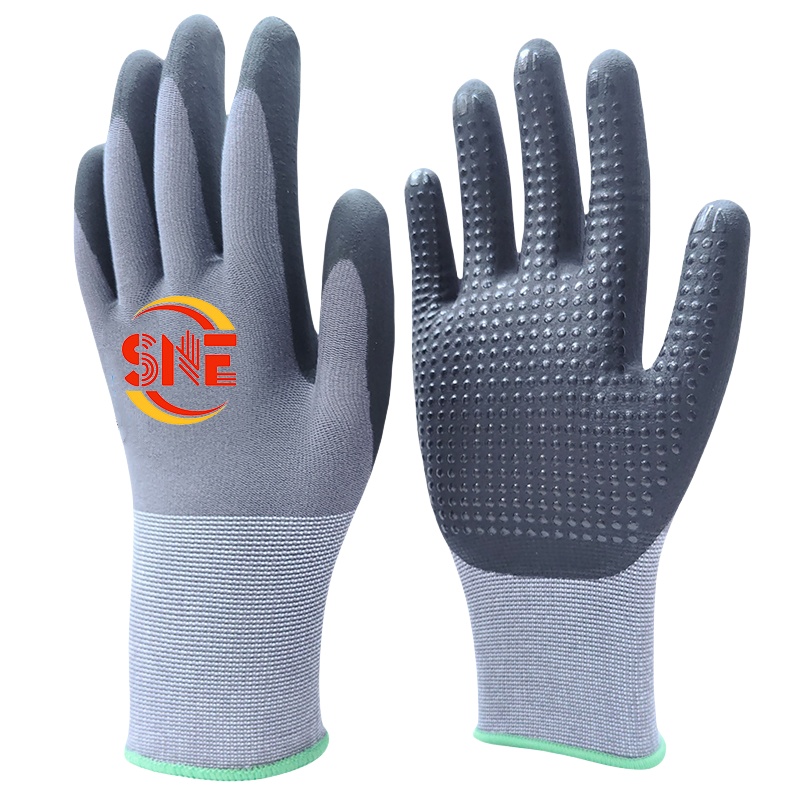
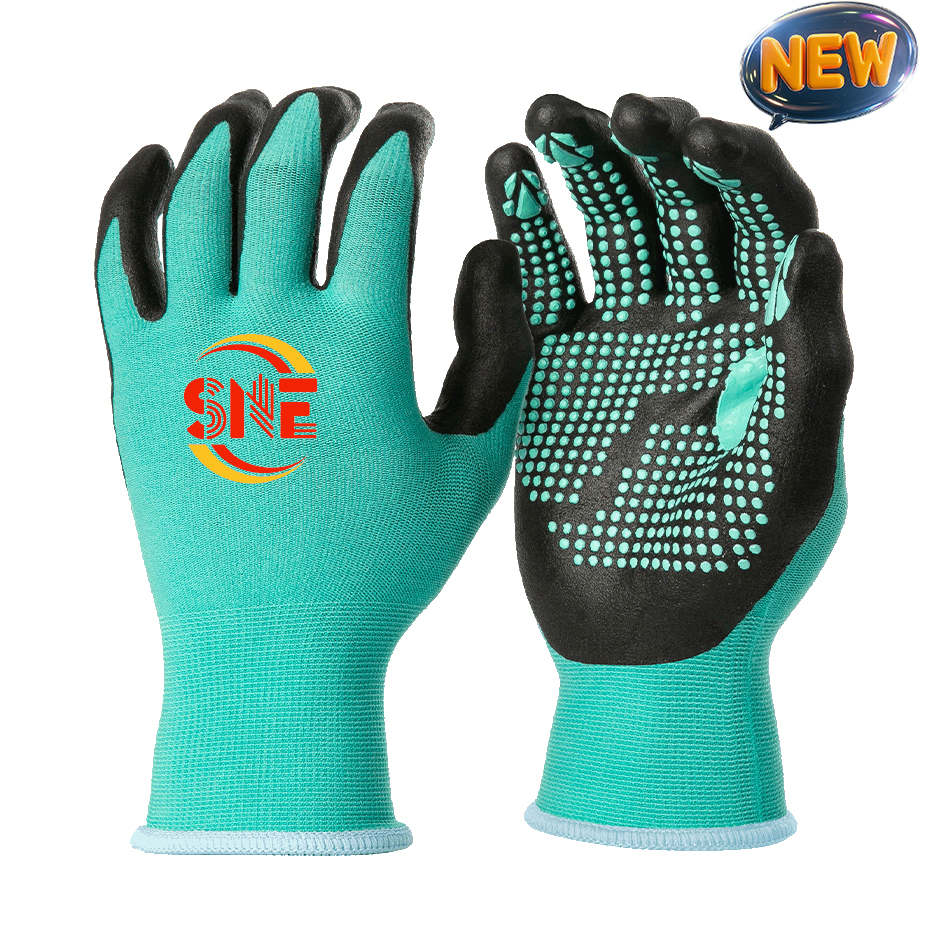
| Nitrile-coated cut-resistant gloves | Nitrile on HPPE or blended liner | Metal roofing, flashing, gutters, trim work | Strong grip and cut resistance | Can feel warmer in hot climates |
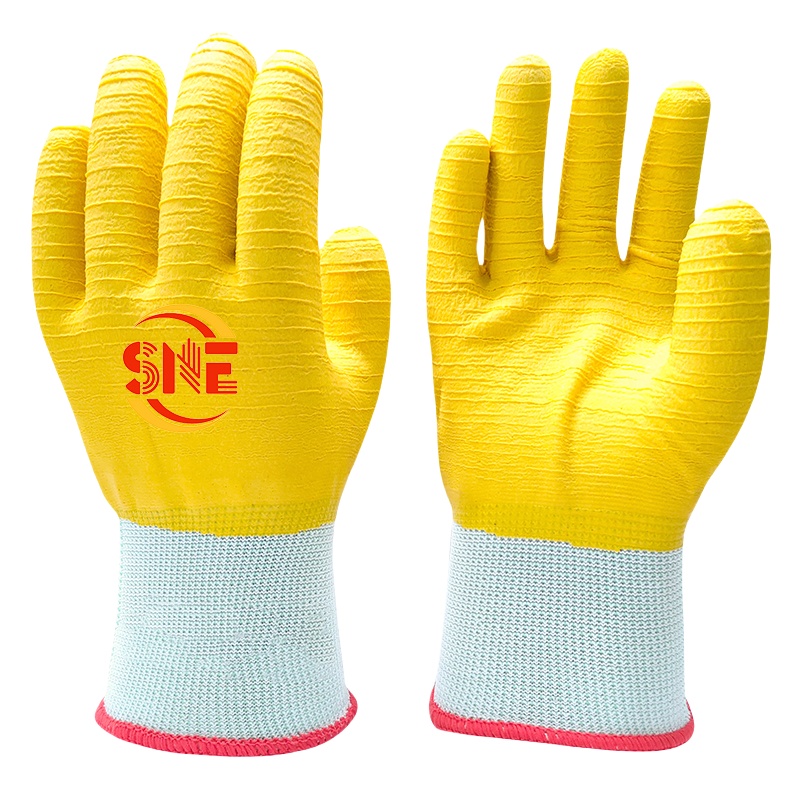
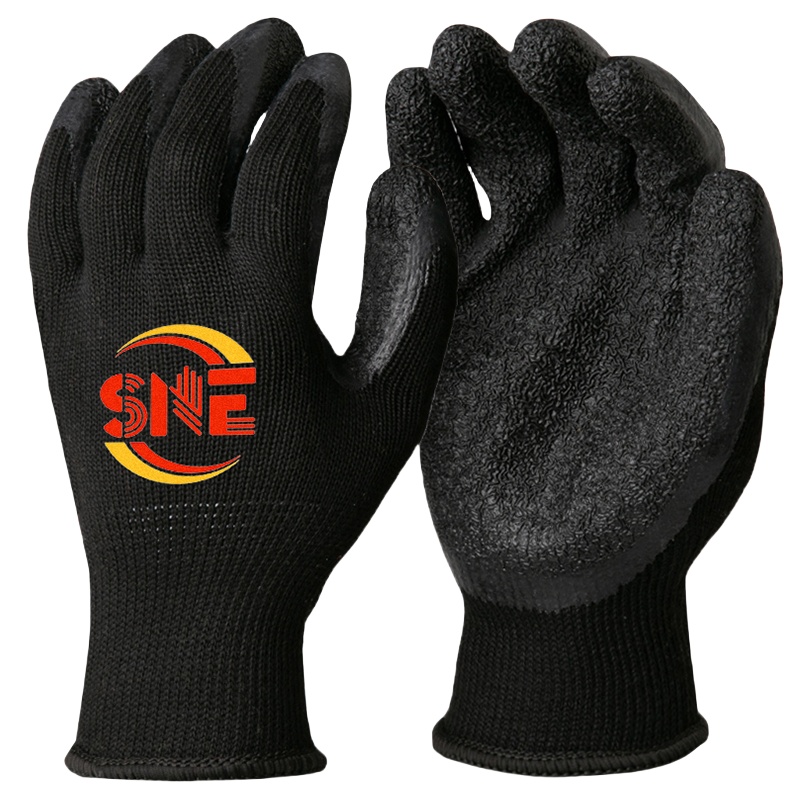
| Latex-coated construction gloves | Latex on knit liner | General exterior work, siding, tile handling | Reliable dry and light-wet grip | May not suit all users sensitive to latex |
| Impact-resistant gloves | TPR plus coated palm | Tear-off, loading, material handling | Knuckle and back-of-hand protection | Lower finger dexterity |
| Leather/palm-reinforced gloves | Synthetic or natural leather | Heavy handling, ladders, rough framing edges | Durability and comfort under load | Reduced precision for fine tasks |
| Cold-weather coated gloves | Insulated liner with coating | Winter roofing and exterior repair | Warmth with usable grip | Bulkier fit |
| Touchscreen-compatible work gloves | Coated or synthetic performance fabric | Inspection, service documentation, mobile use | Less glove removal during workflow | Touch performance varies by model |
The table helps buyers match glove design to roofing reality. A contractor who installs mostly laminated asphalt shingles in Georgia may prefer a breathable PU-coated glove, while a crew fabricating metal panels in Illinois may need higher cut ratings and more durable nitrile coatings. Product type should always follow hazard exposure, not only unit price.
How U.S. Industries Use Roofing Gloves
Roofing gloves are not used only by roofing contractors. Exterior restoration firms, solar installers, sheet metal shops, general contractors, maintenance departments, and building envelope specialists all rely on similar glove categories. Understanding cross-industry demand helps distributors stock the right range and helps factory partners prioritize the right specifications.
The bar chart shows why residential and commercial roofing remain the largest end uses, but also why adjacent trades matter. Siding, gutter installation, and maintenance teams often buy similar gloves in large volumes. For local distributors in building markets like Tampa, Charlotte, Nashville, and Indianapolis, cross-selling between these segments can significantly improve inventory turnover.
| Industry | Common Tasks | Main Risk to Hands | Preferred Glove Features | Typical Buying Pattern |
|---|---|---|---|---|
| Residential roofing | Shingles, underlayment, tear-off | Abrasion, puncture, repetitive strain | Grip, dexterity, breathable fit | Frequent replacement, mid-price focus |
| Commercial roofing | Membranes, insulation boards, flashing | Cuts, surface heat, heavy handling | Cut resistance, durability, comfort | Standardized crew purchasing |
| Metal roofing | Panels, trim, edges, fabrication | Sharp edges and lacerations | Higher cut level, strong coated grip | Spec-driven purchasing |
| Siding and gutters | Long component handling, fastening | Edge cuts, slips, fatigue | Flexible fit, grip, light cut protection | Mixed-use glove inventories |
| Facilities maintenance | Roof checks, leak repair, cleanup | Unpredictable contact hazards | All-purpose coated gloves | Smaller but recurring orders |
| Storm restoration | Debris removal, temporary repair | Puncture, impact, wet conditions | Impact zones, durable palm coating | Urgent buying after weather events |
This table makes clear that the same glove rarely performs equally well across all industries. A distributor serving storm restoration in the Gulf Coast will often stock tougher, faster-ship styles, while a commercial roofer in Chicago may value cut resistance and cold-weather flexibility more strongly.
Buying Advice for Contractors, Distributors, and Importers
U.S. buyers should begin with hazard mapping. Start by listing the exact tasks: tear-off, carrying bundles, handling flashing, panel installation, gutter cuts, sealant work, ladder movement, and cleanup. Then define whether the crew needs more dexterity, more cut protection, more abrasion resistance, or better impact coverage. This avoids overbuying heavy gloves that reduce productivity or underbuying light gloves that fail too quickly.
For contractors, trialing two or three glove styles on real jobsites is usually more effective than relying only on catalog descriptions. Workers can quickly report whether seams interfere with fastening, whether palms slip when dusty, or whether coatings wear out too fast on shingles. For distributors, the best approach is usually a compact matrix: one lightweight coated glove, one cut-resistant model, one impact glove, one winter style, and one higher-value private-label option.
For importers and brand owners, the key questions are consistency, testing, lead time, carton configuration, labeling, and replenishment speed. Factories with multiple production lines and diversified coating technologies can support better continuity when demand spikes. U.S. buyers near major logistics gateways such as the Port of Los Angeles, Port of Houston, Port of Savannah, and Port of New York/New Jersey often prefer partners that understand export documentation, packaging compliance, and mixed-product bulk shipments.
Price should be evaluated against usable life, not only piece cost. A glove that costs less but fails after one day of tear-off can be more expensive than a glove that lasts three days and reduces worker complaints. In roofing, grip and fit also affect speed, and speed affects labor cost. Good gloves save time by reducing drops, readjustments, and hand strain.
Supplier and Product Comparison by Key Buying Factors
This table compares suppliers and glove approaches based on practical buying criteria common in the United States. It is useful for procurement teams, distributors, and contractors deciding whether to prioritize brand familiarity, private-label control, or bulk cost management.
| Option | Lead Time Profile | Customization | Price Position | Best Use Case | Notes |
|---|---|---|---|---|---|
| Domestic premium brand | Fast through distributor stock | Low to moderate | Higher | Immediate field deployment | Strong for urgent jobsite needs |
| Domestic industrial distributor line | Fast to moderate | Moderate | Mid-range | Recurring contractor orders | Good for mixed-category purchasing |
| Private-label importer program | Moderate to long | High | Competitive | Regional dealer brands | Works well with forecasting |
| Factory-direct OEM from Asia | Moderate to long | Very high | Very competitive | Wholesalers and brand owners | Best when volume justifies planning |
| Safety specialty supplier | Moderate | Moderate | Mid to higher | Higher-risk metal and demolition work | Often stronger on technical support |
| Local construction supply reseller | Very fast | Low | Mid to higher | Small contractor replenishment | Convenient but fewer technical options |
The comparison shows why purchasing strategy should align with business model. A local roofer replacing gloves weekly may need immediate availability, while a distributor building a regional brand in the Southeast may gain better margins and product control through factory-direct or OEM sourcing.
Application Trends Across Roofing Tasks
Roofing glove demand is shifting toward more specialized use by task. General-purpose cotton and low-performance gloves are losing share because contractors increasingly prefer coated and engineered styles that improve grip, dexterity, and injury prevention. This trend is visible in repair work, insurance-driven restoration, metal roof installation, and integrated exterior packages that include gutters and siding.
The area chart highlights the transition from basic gloves to performance-focused products. The biggest growth comes from cut-resistant coated gloves and hybrid styles that combine flexibility with stronger mechanical protection. This matters for U.S. roofing buyers because insurance claims, labor efficiency, and worker retention all benefit when crews use gloves they can actually keep on throughout the day.
Case Studies from the U.S. Market
A Florida residential roofer working in Tampa and Orlando switched from low-cost generic cotton gloves to lightweight nitrile-coated gloves with touchscreen fingertips. The company reported fewer dropped fasteners, better grip in humid conditions, and improved acceptance among younger technicians using mobile apps for photo documentation. Although the unit cost increased, replacement frequency fell enough to improve total value.
A Texas metal roofing installer in Houston moved to higher cut-level gloves after repeated hand lacerations during flashing and trim work. The contractor introduced one glove style for fabrication and another for general rooftop installation. Injury incidents declined, and the safety manager found it easier to justify PPE spending when linking glove selection directly to task hazards.
An Illinois distributor supplying roofers, gutter installers, and siding crews developed a private-label glove line with a factory partner. By segmenting products into lightweight, cut-resistant, and impact models, the distributor improved gross margin and differentiated its offering from commodity imports. Consistent carton labeling and custom branding also made branch-level inventory easier to manage.
A storm restoration contractor working across Louisiana and Georgia adopted impact-resistant gloves for debris-heavy cleanup and teardown, while keeping lightweight coated gloves for finish work. The split-purchase model reduced complaints that “safety gloves are too bulky” because crews only wore heavy styles when truly needed.
Local Supplier Landscape in the United States
U.S. buyers typically source roofing gloves through four channels: national PPE distributors, regional safety houses, construction supply dealers, and direct-import programs. National channels offer speed, credit terms, and broad catalogs. Regional dealers often provide better field familiarity and can respond quickly in markets with active reroofing demand. Direct-import programs are strongest where buyers can forecast volume and want more control over branding and margin.
In metro areas with strong roofing activity such as Dallas-Fort Worth, Phoenix, Atlanta, Miami, Charlotte, and Southern California, buyers often combine channels. A contractor may purchase premium gloves locally for urgent use while testing lower-cost private-label or imported options for routine crew deployment. This mixed strategy is especially common during storm seasons or after hail events in central states.
When evaluating local suppliers, ask how quickly they can replenish stock, whether they understand roofing-specific hazards, whether samples are available, and whether they offer multiple cut levels or coatings. A supplier who can explain the difference between handling asphalt shingles and handling metal drip edge is generally more useful than one selling only by generic price tier.
Our Company and Why It Matters for U.S. Buyers
For U.S. buyers seeking a factory-backed option, Snell Safety positions itself as a practical partner for roofing and exterior glove programs because it combines ISO 9001-managed production and CE-marked products with specialized expertise in PU, latex, and nitrile coating technologies, plus cut-resistant and impact-resistant glove engineering suited to the real hazards of shingles, sheet metal, siding, gutters, and demolition handling. With two production facilities in Gaomi and Nantong, six dedicated lines, more than 150 trained employees, and daily capacity of 150,000 pairs, the company can support repeat bulk orders for distributors, dealers, brand owners, contractors, and procurement teams through flexible OEM, ODM, wholesale, private-label, and custom manufacturing models, including material, coating, size, and branding adjustments. Its export experience across North America and other regulated markets, multilingual sales support, sample service, technical consultation, and organized logistics coordination give U.S. importers and regional partners practical pre-sale and after-sale assurance; buyers exploring partnership options can review the company background, browse the glove catalog, or reach out through the U.S.-focused contact channel for specification matching, sampling, and ongoing account support that reflects a long-term commitment to the market rather than a one-off remote export transaction.
Comparison of Glove Features Most Relevant to Roofing
This comparison chart helps show how different glove attributes rank in importance for typical roofing work. The values reflect market priorities often reported by contractors and safety buyers rather than laboratory ratings.
The comparison chart shows why lightweight coated gloves remain popular: grip and dexterity are critical every day. But it also shows why cut resistance is moving up in priority, especially as more contractors handle metal accessories, prefabricated trims, and integrated exterior systems.
Future Trends Through 2026
By 2026, construction gloves for roofing in the United States are likely to be shaped by three major trends: smarter product engineering, stronger safety compliance, and more visible sustainability demands. On the product side, buyers will see more gloves built around thinner cut-resistant liners, better grip coatings for dusty and mixed-weather conditions, and stronger touchscreen compatibility so crews can document work without constant glove removal.
On the policy side, more contractors will formalize glove selection by task as part of safety training and insurance compliance. Even when regulations do not prescribe one exact glove type, employers are under growing pressure to demonstrate that PPE choices match known hazards such as sharp metal, demolition debris, and repetitive handling. This will increase demand for documented specifications, test data, and reliable supplier traceability.
Sustainability is also moving from marketing language toward procurement criteria. Large buyers and brand owners are starting to ask about manufacturing controls, waste reduction, packaging efficiency, and supply-chain consistency. While roofing gloves remain a performance-first purchase, distributors and importers increasingly prefer manufacturers that can show disciplined production systems and long-term quality management rather than only low prices.
Another trend is supply-chain regionalization in planning, even if production remains global. U.S. buyers want fewer surprises in lead time, stronger packaging compliance, and better communication during replenishment. Manufacturers that support forecasting, technical consultation, and rapid specification confirmation will be better positioned than those competing only on unit cost.
Frequently Asked Questions
What are the best construction gloves for roofing?
The best construction gloves for roofing usually combine strong grip, comfortable dexterity, and enough cut or abrasion resistance for the task. Lightweight coated gloves work well for shingles and repair, while higher cut-resistant gloves are better for metal roofing and flashing.
Are cut-resistant gloves necessary for roofing crews?
They are strongly recommended whenever workers handle metal edges, flashing, gutters, trim, or demolition debris. For basic asphalt shingle work, some crews may use lighter gloves, but many contractors still prefer moderate cut protection for overall safety.
Which coating is best for roofing gloves?
PU is often preferred for dexterity and comfort, nitrile for stronger grip and durability, and latex for reliable traction in many general construction tasks. The best coating depends on whether the crew handles shingles, metal, wet surfaces, or rough debris.
Should roofing contractors buy domestic brands or import direct?
Domestic brands are useful for immediate availability and established distribution. Direct import can offer better pricing, customization, and private-label potential when order volume and planning justify longer lead times.
How often should roofing gloves be replaced?
Replacement depends on task intensity, coating wear, and worker acceptance. Tear-off and metal handling typically wear gloves out faster than inspection or light repair work. Many contractors replace gloves when grip declines, seams fail, or cut risk increases.
What should distributors stock for roofing customers?
A practical range includes a lightweight coated glove, a cut-resistant nitrile-coated glove, an impact-resistant option, a cold-weather style, and a value-oriented bulk model for price-sensitive contractors.
Final Takeaway
For most buyers in the United States, the best construction gloves for roofing are not a single model but a small, task-matched glove program. Lightweight coated gloves are ideal for everyday shingle and exterior work, cut-resistant styles are essential for metal applications, and impact gloves add value in tear-off and debris handling. Contractors should buy based on real task hazards and replacement cost over time, while distributors and brand owners should balance local availability with the stronger customization and margin opportunities available from qualified factory-direct partners.