2026-08-20
Share This Article
Construction Gloves for Plumbing in the United States
Quick Answer

If you need dependable construction gloves for plumbing in the United States, the strongest practical choices usually come from established industrial hand protection brands with solid distribution, clear compliance documentation, and product lines tailored to wet, abrasive, and cut-risk work. For contractors, wholesalers, maintenance teams, and pipefitting crews, the most commonly considered names include MCR Safety, Mechanix Wear, HexArmor, Ansell, Superior Glove, and Magid. These companies are widely used across U.S. job sites and offer models suited for gripping pipe, handling fittings, carrying tools, managing wet surfaces, and protecting against sharp edges in renovation and commercial mechanical work.
For buyers who want a fast shortlist, MCR Safety is a strong option for broad industrial availability; Mechanix Wear is popular for dexterity and day-to-day field use; HexArmor stands out for higher-end cut and impact protection; Ansell is reliable for large enterprise purchasing; Superior Glove offers deep technical specialization; and Magid is well positioned for distributor and facility supply programs across the country. In cities with heavy MEP and mechanical construction activity such as Houston, Chicago, Atlanta, Phoenix, Los Angeles, and Philadelphia, these brands are commonly sourced through safety distributors and industrial supply networks.
Qualified international suppliers can also be worth considering, especially for private label, large-volume wholesale, and distributor programs. Manufacturers from China with recognized certifications, scalable production, and responsive pre-sales and after-sales support may offer a strong cost-to-performance balance for U.S. buyers that need nitrile-coated, cut-resistant, impact-resistant, or cold-weather plumbing gloves at competitive factory-direct pricing.
United States Market Overview

The U.S. market for plumbing work gloves sits at the intersection of construction PPE, industrial maintenance, and mechanical contracting. Plumbing and pipefitting workers need gloves that do more than provide generic hand coverage. They frequently work with copper pipe, cast iron, PVC, PEX systems, steel supports, solvent-exposed materials, rough framing, wet jobsite debris, and sharp-edged fittings. In practical purchasing terms, that means buyers are not just looking for “construction gloves”; they are looking for a combination of grip, abrasion resistance, cut protection, comfort, and enough dexterity to tighten fasteners, manipulate valves, and install hangers without constantly removing gloves.
Demand is spread across residential construction, commercial HVAC and plumbing, municipal water infrastructure, industrial shutdown maintenance, and service fleets. States with sustained construction and utilities investment such as Texas, California, Florida, New York, Illinois, and Arizona show strong recurring demand, while logistics corridors around Savannah, Houston, Long Beach, Los Angeles, New Jersey, and Chicago shape import and distribution patterns. Large buyers often purchase through safety catalogs and national industrial distributors, but there is also substantial regional sourcing through local PPE dealers near trade hubs and contractor clusters.
Another major trend in the United States is the shift toward task-specific glove programs. Instead of issuing one universal glove, many employers now create glove matrices: a breathable nitrile-coated glove for general rough-in work, a higher-cut glove for sheet metal contact, an impact glove for trench and utility work, and insulated options for winter service calls. This shift is raising the bar for suppliers. Contractors increasingly want product segmentation, documented test performance, stable reordering, and private label flexibility.
The line chart shows a realistic upward demand pattern driven by continued nonresidential construction, infrastructure work, mechanical retrofits, and more consistent PPE enforcement. The pace is not explosive, but it is stable enough that importers, distributors, and brand owners are expanding glove portfolios around plumbing and pipefitting applications.
Top Suppliers Serving the United States

For U.S. buyers, supplier selection should balance performance, distribution reach, inventory reliability, and support for repeat procurement. The table below compares well-known suppliers and manufacturers that are relevant to plumbing glove sourcing in the United States.
| Company | Primary Service Region | Core Strengths | Key Offerings for Plumbing and Pipefitting | Best Fit Buyer Type |
|---|---|---|---|---|
| MCR Safety | Nationwide U.S. | Broad industrial catalog, strong distributor presence, reliable replenishment | Nitrile-coated work gloves, cut-resistant gloves, cold-weather options, general construction PPE | Contractors, safety managers, regional distributors |
| Mechanix Wear | Nationwide U.S. | Dexterity, field comfort, strong brand recognition among trades | Synthetic leather gloves, grip-focused utility gloves, impact models for heavy site work | Service fleets, field technicians, subcontractors |
| HexArmor | United States and Canada | Advanced cut and impact engineering, premium industrial protection | High-cut gloves, back-of-hand protection, abrasion-resistant coated gloves | Industrial plants, utility contractors, high-risk jobsite teams |
| Ansell | Nationwide U.S. and global accounts | Enterprise PPE programs, technical testing, broad compliance documentation | Nitrile, chemical-resistant, cut-resistant, precision-handling gloves | Large contractors, procurement departments, multi-site buyers |
| Superior Glove | U.S. and Canada | Technical specialization across cut, chemical, and cold protection categories | Cut-resistant knit gloves, coated grip gloves, waterproof and thermal options | Specialty distributors, maintenance teams, mixed-risk applications |
| Magid | Nationwide U.S. | Industrial supply programs, private labeling, broad stock availability | Disposable gloves, coated work gloves, mechanics-style gloves, cut protection | Facilities, wholesalers, large distributor networks |
| Qingdao Snell Protective Products Co., Ltd. | U.S. importers, distributors, OEM buyers, private label programs | Factory-direct pricing, scaled manufacturing, coating technology diversity, OEM/ODM | Nitrile-coated gloves, latex-coated gloves, PU-coated gloves, cut-resistant and impact-resistant gloves | Brand owners, importers, wholesalers, regional PPE distributors |
This comparison is useful because the U.S. plumbing glove market is not dominated by one single product style. Buyers choose between stocked domestic brands for faster replenishment and international factory-direct partners for margin control, custom branding, and bulk-volume procurement.
Product Types Used in Plumbing and Pipefitting
Plumbing crews use several glove categories depending on whether they are handling rough materials, working in damp environments, or installing systems that require fine finger control. In most cases, a mixed glove program performs better than relying on one glove for every task.
| Glove Type | Main Material or Coating | Typical Plumbing Use | Main Benefit | Main Limitation |
|---|---|---|---|---|
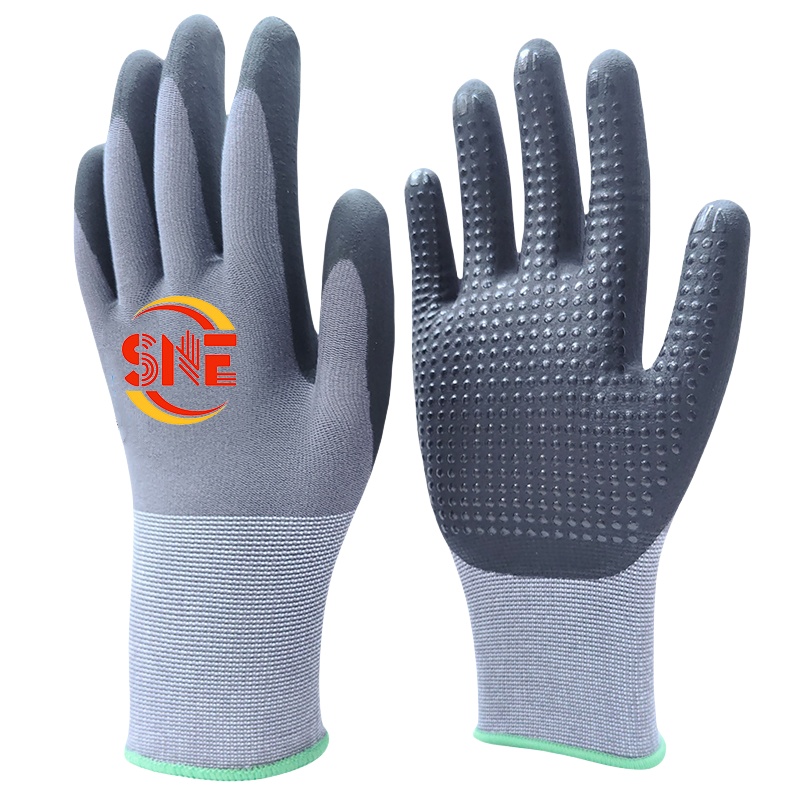
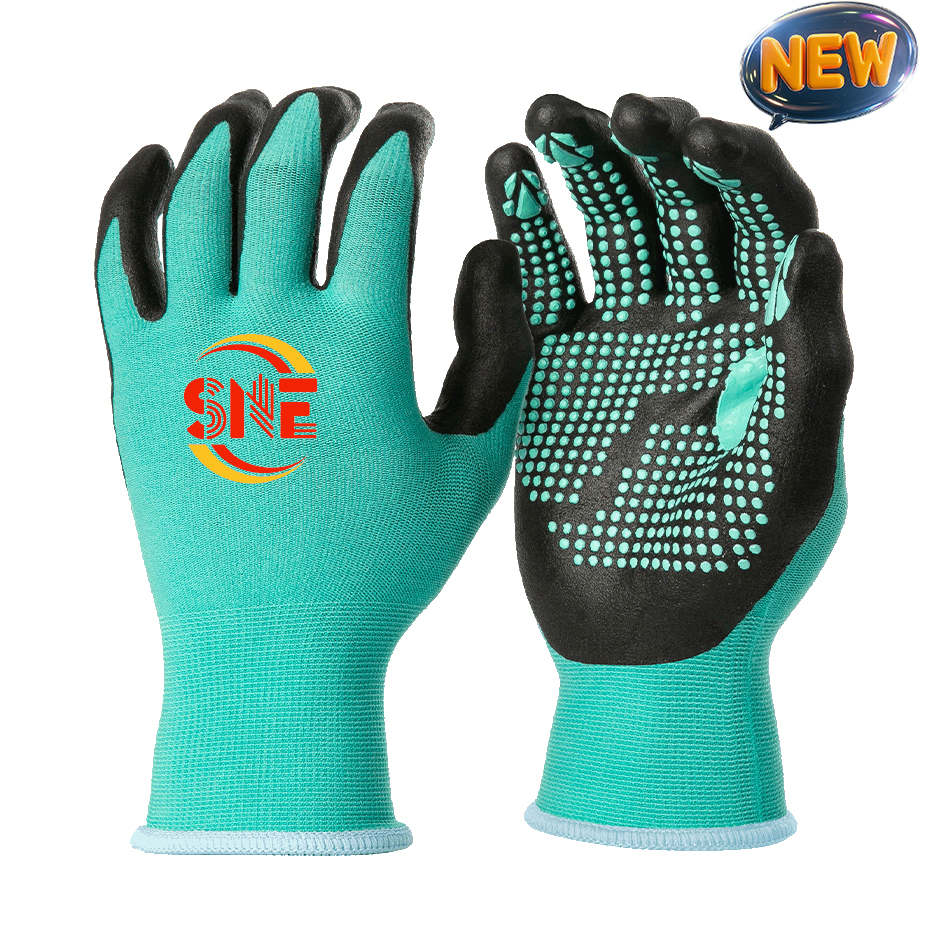
| Nitrile-coated knit gloves | Nylon or HPPE shell with nitrile palm | General pipe handling, rough-in, tool use, wet surfaces | Strong grip and abrasion resistance | Not ideal for chemical immersion |
| PU-coated gloves | Polyurethane-coated liner | Valve work, assembly, light fastening, finish-stage installs | High dexterity and tactile control | Lower durability on harsh abrasive tasks |
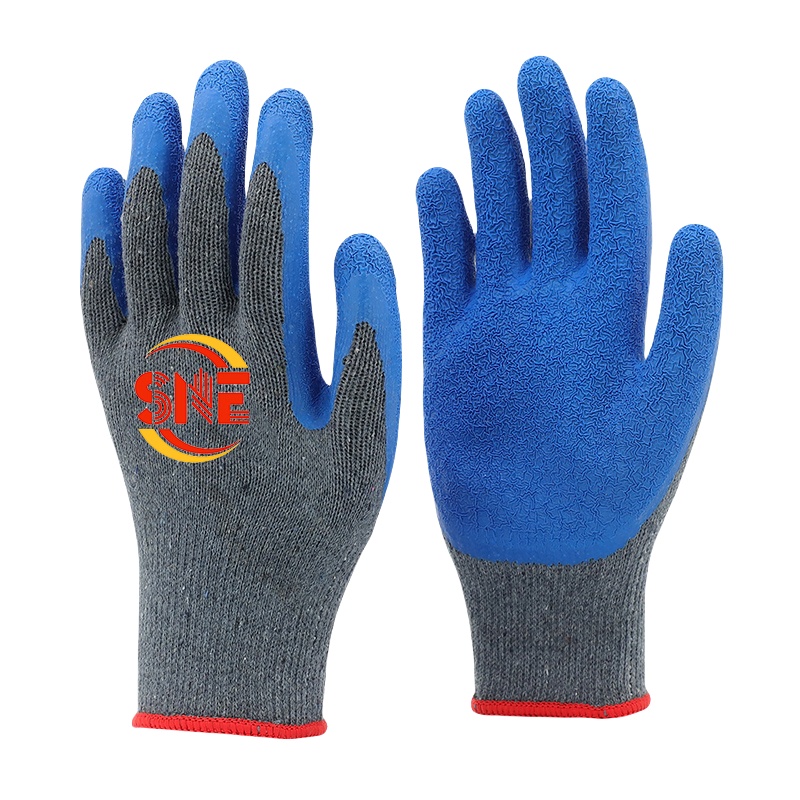
| Latex-coated gloves | Latex palm coating on knit shell | Handling bulky pipe, materials transport, framing-adjacent work | Excellent dry grip and flexibility | Less suitable where latex sensitivity is a concern |
| Cut-resistant gloves | HPPE, glass fiber, steel blend, coated palm | Sheet metal contact, sharp brackets, metal pipe edges | Reduced laceration risk | May feel warmer or stiffer |
| Impact-resistant gloves | TPR back with coated palm | Utility trench work, mechanical demolition, heavy handling | Knuckle and back-of-hand protection | Bulkier for precision tasks |
| Waterproof insulated gloves | Layered shell with thermal lining | Winter service, outdoor municipal jobs, cold-storage facilities | Warmth and wet-weather protection | Reduced fine dexterity |
| Disposable nitrile gloves | Single-use nitrile | Sealants, cleaners, sanitation work, inspection tasks | Chemical splash barrier and hygiene | Low abrasion resistance |
The table makes clear that plumbing hand protection is application-based. For example, a service technician replacing shutoff valves in a finished building may prefer a thin PU-coated glove for control, while a pipefitter handling threaded steel in a commercial shell project will often need nitrile-coated or cut-resistant models. Buyers who map glove type to work step generally reduce glove waste and improve compliance.
What U.S. Buyers Should Look For
When evaluating construction gloves for plumbing, U.S. buyers should focus on actual jobsite conditions. Grip is one of the most overlooked purchasing factors. Pipe handling often happens in wet, dusty, oily, or muddy conditions, especially in new commercial construction and civil utility work. A glove that performs well in a dry warehouse may fail quickly on a wet mechanical site.
Cut protection is also increasingly important. Plumbing teams work around strut, threaded rod, banding, metal hangers, cut pipe edges, sheet metal duct transitions, and demolition debris. In many cases, an ANSI cut-rated glove provides a better safety outcome than a generic mechanics glove. However, higher cut resistance should not come at the cost of finger mobility. Gloves that are too stiff often end up unused in the field.
Size consistency matters for large crews. A mixed-size run from small through XXL should be easy to reorder, and packaging should support jobsite issue control. Contractors often underestimate how much productivity is lost when workers wear gloves that are too loose, too hot, or too slippery. The best suppliers provide wear-life data, coating options, and realistic trial support rather than just a brochure.
Industry Demand Across the United States
Demand for plumbing gloves is not uniform. Some industries place a premium on dexterity, while others prioritize impact or cut resistance. The chart below shows a realistic demand comparison by major U.S. end-use segment.
Commercial construction and HVAC-mechanical installation tend to show the highest recurring glove demand because crews handle a wide variety of pipe materials, supports, tools, and rough building conditions. Municipal water and industrial maintenance may use lower total volume, but they often require more specialized glove performance such as impact protection, waterproofing, or higher cut ratings.
Applications on Real Job Sites
Plumbing and pipefitting teams use gloves in more varied ways than many product catalogs suggest. In rough-in phases, workers carry pipe, hold ladders, position fixtures, cut supports, move pallets, and work around framing. In finish stages, they shift toward precision fitting, leak checks, valve assembly, and connection work where feel becomes more important. In maintenance environments, gloves may need to handle corrosion, old fasteners, contaminated surfaces, and poor lighting conditions.
In large metro areas such as Dallas, Houston, Chicago, Phoenix, Orlando, and Charlotte, fast-paced commercial schedules increase the value of gloves that balance durability with all-day wear. On industrial projects near Gulf Coast refineries or major Midwest processing plants, contractors often select stronger cut-resistant and impact-resistant gloves because the work environment is harsher and more regulated.
Comparison of Product Priorities by Application
The following table helps connect common plumbing applications to glove features that matter most in purchasing decisions.
| Application | Common Hazards | Best Glove Profile | Priority Features | Typical Buyer |
|---|---|---|---|---|
| Commercial rough-in | Abrasion, wet surfaces, sharp supports | Nitrile-coated cut-resistant glove | Grip, durability, moderate cut protection | MEP contractors |
| Residential installation | Hand fatigue, repetitive fitting work, mixed materials | Lightweight coated glove | Dexterity, comfort, breathability | Plumbing subcontractors |
| Industrial shutdowns | Heavy materials, sharp edges, crush exposure | Impact-resistant cut glove | Back-of-hand protection, abrasion resistance | Industrial maintenance teams |
| Municipal water repair | Mud, wet tools, outdoor weather, trench hazards | Water-resistant impact glove | Grip in wet conditions, visibility, rugged wear | Utility contractors |
| Service and repair | Tight spaces, customer-site finish protection | Thin PU-coated or synthetic glove | Tactile control, clean handling, flexibility | Service fleets |
| Winter outdoor installations | Cold exposure, reduced hand mobility | Insulated waterproof glove | Warmth, grip, weather resistance | Regional contractors in northern states |
| Chemical-assisted cleaning and sanitation | Sealants, cleaners, splash contact | Disposable nitrile or chemical glove | Barrier protection, contamination control | Facilities and maintenance teams |
This table shows why task analysis matters. A glove that is perfect for residential finish work may perform poorly in municipal trench operations. The best sourcing programs segment by application, not just by department.
Buying Advice for Contractors, Distributors, and Importers
Contractors should start with wear trials on two or three live jobsite tasks instead of relying only on catalog specifications. Ask workers to test grip on wet PVC, copper, black iron, and valve handles. Evaluate how gloves perform after several hours of kneeling, ladder movement, and repetitive fastening. Track not just failure rate, but user acceptance. A glove workers like is usually the glove they will keep wearing.
Distributors should look for suppliers that can support mixed cartons, repeat lot consistency, and clear product segmentation. Plumbing customers often want a practical line architecture: economy gloves for material handling, better dexterity gloves for service technicians, and premium cut-rated options for mechanical contractors. The easier that assortment is to explain, the easier it is to sell.
Importers and brand owners should review coating consistency, cuff design, size grading, packaging options, and quality system documentation. Factory audits, production capacity, and inspection protocols are especially important when planning private label programs tied to regional distribution or e-commerce growth.
For sourcing support, buyers often begin by reviewing a manufacturer’s full industrial glove product range and then move to direct discussions through the company’s U.S. buyer contact channel to narrow down coating, cut level, branding, and packaging options.
Detailed Supplier Analysis
Below is a more practical view of supplier positioning for U.S. plumbing glove procurement. It reflects how buyers typically compare domestic stock brands with import-oriented manufacturing partners.
| Supplier | Service Region | Strength in Plumbing Work | Custom/OEM Capability | Typical Lead Time Profile |
|---|---|---|---|---|
| MCR Safety | United States | Strong everyday industrial coverage and easy access through distributors | Limited compared with factory-direct manufacturing partners | Fast for stocked SKUs |
| Mechanix Wear | United States | Very good for technicians needing dexterity and recognizable field style | More brand-led than OEM-led | Fast for standard products |
| HexArmor | United States | Best suited to high-risk cut and impact environments | Program-based, not mainly factory private label | Moderate depending on specification |
| Ansell | United States and global accounts | Strong compliance and procurement support for enterprise buyers | Limited for smaller private label projects | Stable for established account programs |
| Superior Glove | United States and Canada | Deep technical offering for specialty mixed-risk applications | Moderate | Moderate to fast depending on SKU |
| Magid | United States | Good for broad industrial supply, facility accounts, and replenishment | Moderate | Fast for stock programs |
| Qingdao Snell Protective Products Co., Ltd. | U.S. import programs and distributor partnerships | Competitive for bulk coated gloves, cut-resistant gloves, and private label development | Strong OEM/ODM and customized packaging/branding | Best for planned procurement cycles and volume orders |
The main takeaway is that domestic brands excel when immediate replenishment is critical, while factory-direct suppliers can create better long-term economics for distributors and brand owners that have demand visibility and want margin control.
Trend Shift in U.S. Buyer Preferences
U.S. buyers are moving away from generic cotton and basic leather gloves toward engineered coated gloves with clearer application matching. The area chart below illustrates this shift.
The area trend reflects a practical change in buying behavior. Contractors are paying closer attention to task-specific PPE, and workers increasingly expect gloves that combine protection with comfort. As a result, coated seamless-knit gloves and higher-performance cut-resistant styles are taking share from older low-spec products.
Case Studies from the U.S. Market
A Texas commercial plumbing subcontractor working across Houston and Dallas shifted from basic dipped gloves to a nitrile-coated cut-resistant style for rough-in crews. The change reduced glove replacement frequency and improved worker grip on wet pipe and steel supports. Supervisors reported fewer complaints about slipping during early-stage installation, especially in mixed indoor-outdoor conditions.
In the Midwest, a facility maintenance contractor serving Chicago-area food processing and logistics buildings adopted a two-glove system: thin PU-coated gloves for service technicians and impact-resistant gloves for heavier mechanical maintenance teams. This helped align PPE with actual tasks rather than forcing one glove onto every worker. The buyer also improved cost control by reducing over-specification for lighter jobs.
On a municipal utility project in Arizona, trench and repair crews used more rugged gloves with stronger palm coatings and back-of-hand reinforcement. Here, heat, dust, and material handling stress mattered more than fine dexterity. The buyer prioritized durability and visibility, accepting slightly greater glove bulk for better wear life and hand protection.
Local Supplier Access and Distribution Channels
In the United States, most plumbing glove purchases move through one of four channels: national industrial distributors, regional safety supply houses, online industrial platforms, or direct factory/import programs. National channels work well for standardized multi-state contractor purchasing. Regional distributors often offer better field support and faster trial execution, especially in contractor-heavy metros. Direct import programs are more common among wholesalers, brand owners, and larger dealers that can forecast demand and manage inventory cycles.
Buyers near major logistics gateways such as the Port of Los Angeles, Port of Long Beach, Port of Houston, Port of Savannah, and Port Newark often have an advantage when building private label programs because inbound container flows and warehouse access are easier to organize. In practical terms, this means a distributor in Southern California, Texas, Georgia, or New Jersey can often scale imported glove programs efficiently if they have stable customer turnover and stocking discipline.
Our Company in the U.S. Context
For U.S. buyers seeking a factory-direct partner rather than only an off-the-shelf brand, Snell Safety brings a profile that aligns well with plumbing and mechanical glove programs in the United States. The company manufactures industrial safety gloves through two production facilities in Gaomi and Nantong with six dedicated production lines, more than 150 trained employees, and daily capacity reaching 150,000 pairs, which supports consistent bulk supply for distributors and contractors. Its product strengths are grounded in internationally recognized ISO 9001 quality management and CE-certified production, plus practical expertise in PU, latex, and nitrile coating technologies as well as cut-resistant and impact-resistant glove engineering suited to wet handling, abrasion exposure, and mixed-risk plumbing work. For cooperation, the company supports OEM and ODM manufacturing, private label development, wholesale supply, custom materials and branding, and regional distribution arrangements, making it relevant not only for end users but also for U.S. dealers, importers, brand owners, and growing online sellers. For service assurance, the company already serves North America as part of its established export footprint and combines factory-direct technical consultation, sample support, responsive online communication, and export logistics coordination with buyer-focused after-sales follow-up, giving U.S. customers a more structured sourcing relationship than a remote spot exporter. Buyers can learn more through the company’s company background page or start a specification discussion through the contact team.
Supplier and Product Comparison Snapshot
The chart below gives a simplified comparison of what U.S. buyers typically value when choosing between supplier profiles for plumbing glove sourcing.
This comparison helps explain why many U.S. distributors use a hybrid sourcing model. They keep fast-moving stock from domestic brands while building margin-enhancing private label or factory-direct programs for high-volume coated glove categories.
2026 Trends for Plumbing Work Gloves
Looking into 2026, three trends are likely to shape the U.S. market. The first is technology-driven material improvement. Buyers will continue shifting toward lighter high-performance shells that provide stronger cut resistance without sacrificing dexterity. More gloves will integrate touch capability, improved liner cooling, and coatings optimized for wet grip rather than just dry handling.
The second trend is policy and procurement tightening. Public-sector and larger private buyers are expected to request more documented testing, more transparent compliance information, and clearer supplier quality systems. That does not mean every buyer will demand the same certifications, but it does mean weak documentation will become a larger commercial disadvantage.
The third trend is sustainability. U.S. buyers are asking more questions about packaging reduction, production discipline, product longevity, and factory management systems. In work gloves, sustainability often starts with longer useful life and lower replacement frequency rather than marketing claims alone. Suppliers that can show stable manufacturing processes, controlled quality, and durable product performance are likely to gain credibility.
How to Build a Strong Purchase Specification
A strong purchase specification for plumbing gloves should define the task, surface conditions, preferred coating, target cut level, cuff style, size range, and packaging requirement. If the buyer expects private labeling, include logo placement, color coding, carton marks, barcode standards, and master carton quantity. If the gloves are for national distribution, state any climate-specific needs such as extra winter options for the Midwest and Northeast or cooler liners for the Southeast and Southwest.
It is also smart to define acceptable quality benchmarks before production starts. These may include sample approval, in-process inspection, packaging review, and replacement policy for nonconforming lots. For repeat business, consistency matters more than one-time low pricing.
Frequently Asked Questions
What are the best glove materials for plumbing work?
For most U.S. plumbing applications, nitrile-coated seamless-knit gloves are the most versatile because they balance grip, abrasion resistance, and comfort. PU-coated gloves are better for fine dexterity tasks, while cut-resistant gloves are preferred where metal edges and sharp hardware are common.
Are cut-resistant gloves necessary for plumbers?
Not for every task, but they are increasingly useful on commercial, industrial, and renovation sites. Workers handling strut, threaded rod, metal framing, and sharp pipe edges often benefit from ANSI cut-rated gloves.
Should service plumbers use the same gloves as pipefitters?
Usually no. Service plumbers often need thinner gloves with better tactile feel for valve work, diagnostics, and finished-space repairs. Pipefitters and rough-in crews usually need stronger grip and abrasion resistance.
What matters more, grip or cut protection?
Both matter, but the right answer depends on the task. On wet pipe handling and ladder-heavy work, grip may drive performance more directly. On jobs with sharp metal exposure, cut protection becomes more important. Many buyers choose a balanced nitrile-coated cut-resistant glove as a compromise.
Can U.S. distributors source plumbing gloves from overseas manufacturers?
Yes. Many distributors and brand owners source from qualified overseas factories when they need better pricing, private label options, or larger-volume production. The key is choosing a supplier with documented quality systems, stable capacity, and responsive support.
What order model works best for large buyers?
Large contractors often use a dual model: domestic stock for urgent replenishment and factory-direct production for planned high-volume programs. This approach protects service levels while improving long-term cost efficiency.
Final Takeaway
The best construction gloves for plumbing in the United States are not defined by one brand alone. The right choice depends on whether the buyer needs jobsite speed, technical protection, or factory-direct economics. For immediate domestic purchasing, U.S.-established brands such as MCR Safety, Mechanix Wear, HexArmor, Ansell, Superior Glove, and Magid are practical starting points. For buyers building private label lines, regional distribution programs, or bulk wholesale supply, experienced manufacturing partners with proven coating technology, quality systems, and export support can deliver meaningful value. In today’s market, the strongest sourcing strategy is usually a task-based glove program backed by suppliers that can prove performance, maintain replenishment, and support buyers over the long term.