2026-08-28
Share This Article
Abrasion-Resistant Construction Gloves in the United States
Quick Answer

If you need abrasion resistant construction gloves in the United States, the most practical shortlist includes Ansell, MCR Safety, PIP, Superior Glove, Mechanix Wear, and HexArmor, depending on whether your priority is grip, cut protection, impact resistance, all-day comfort, or distributor availability. For heavy concrete work, framing, demolition, masonry, roadwork, and material handling, nitrile-coated, sandy nitrile, latex-coated, and synthetic leather palm gloves are the strongest categories because they resist palm wear, maintain grip on rough materials, and hold up better during repetitive handling.
For buyers in major U.S. construction hubs such as Houston, Dallas, Chicago, Atlanta, Los Angeles, and the New York–New Jersey corridor, domestic brands and local distributors offer fast replenishment and jobsite support. At the same time, qualified international suppliers can also be a smart option when they combine relevant certifications, stable coating technology, and responsive support. Cost-performance often improves significantly for bulk buyers when working with factory-direct manufacturers that can support customization, private labeling, and consistent large-volume production.
Shortlist by common purchasing scenario:
- Mechanix Wear: strong for general construction, dexterity, and widespread U.S. availability
- MCR Safety: broad industrial catalog and strong distribution across the United States
- PIP: reliable coated glove selection for contractors, distributors, and safety programs
- Ansell: strong compliance culture and premium industrial hand protection lines
- HexArmor: excellent for impact-heavy and higher-risk construction environments
- Superior Glove: useful where abrasion must be balanced with cut resistance and worker comfort
U.S. Market Overview

The United States remains one of the largest markets for construction hand protection because the country combines large-scale residential development, public infrastructure upgrades, logistics-linked building activity, energy projects, and ongoing maintenance work. Demand is strongest in metro areas and trade corridors where concrete, steel, lumber, drywall, pipe, rebar, roofing materials, and prefabricated components move constantly through ports, rail yards, and regional distribution hubs. Cities such as Houston, Phoenix, Miami, Los Angeles, Chicago, Dallas, Atlanta, Seattle, and Philadelphia generate sustained glove demand due to their concentration of contractors, subcontractors, warehouses, and municipal projects.
In practice, buyers rarely ask only for “durable gloves.” They ask for gloves that survive rough block, brick, cable, plywood, steel studs, rebar ties, and palletized materials while still allowing workers to grip tools, operate lifts, and finish tasks without excessive hand fatigue. That is why abrasion resistance is one of the first performance metrics considered by U.S. safety managers, especially in sectors where gloves are replaced frequently and hand injuries affect productivity, insurance costs, and workforce retention.
Procurement patterns also differ by region. Gulf Coast projects often demand oil resistance and all-weather performance. Northern states place more emphasis on cold-weather liners and wet grip. The Southwest favors breathable styles with strong abrasion performance under heat and dust. Along major import gateways such as the Port of Los Angeles, Port of Long Beach, Port of Savannah, Port Houston, and the Port of New York and New Jersey, distributors typically stock a wider range of coated gloves because replenishment cycles are faster and contractor requirements change quickly.
Market Growth and Outlook

The U.S. market for construction gloves is expected to remain healthy through 2026 as infrastructure funding, renovation activity, utility work, and industrial construction continue to support demand. Buyers are also moving away from the cheapest disposable work glove mentality and toward total cost of ownership: longer wear life, fewer replacements, better grip, fewer hand injuries, and improved worker acceptance.
This growth curve reflects realistic demand expansion driven by public works, warehousing-related construction, manufacturing reshoring, renewable energy projects, and stricter jobsite PPE practices. The rise is not explosive, but it is steady, which matters for importers, distributors, and factory partners planning inventory and regional warehousing.
Common Product Types for Abrasion Resistance
Abrasion resistant construction gloves are not one single product class. U.S. buyers typically choose from several material and coating combinations depending on whether the job requires dry grip, wet grip, oil handling, impact buffering, cut protection, or comfort in heat.
| Product Type | Main Material or Coating | Best Use Case | Strength | Limitation | Typical U.S. Buyer |
|---|---|---|---|---|---|
| PU-coated knit gloves | Polyurethane on polyester or HPPE liner | Light assembly, framing, finish work | High dexterity and clean handling | Lower wear life on rough concrete | General contractors and installers |
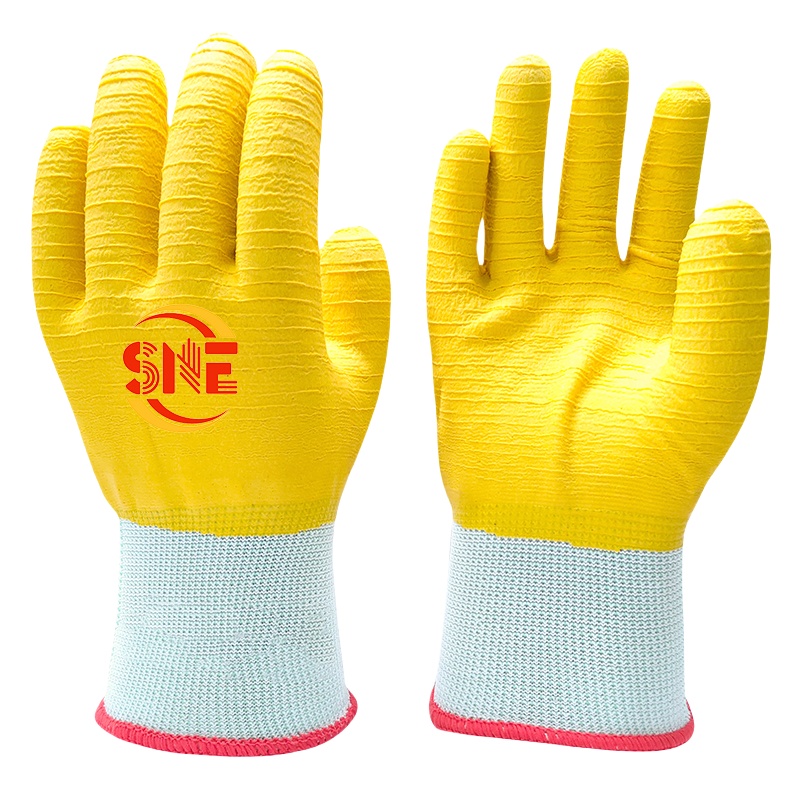
| Latex-coated gloves | Crinkle latex on knit shell | Brick, block, lumber, roofing | Excellent dry and wet grip | Can feel warmer in hot weather | Masonry crews and roofing teams |
| Sandy nitrile-coated gloves | Nitrile palm on nylon or HPPE liner | Material handling, steel, rebar, tools | Strong abrasion resistance and grip | Higher price than basic latex styles | Industrial contractors and distributors |
| Double-dip nitrile gloves | Base nitrile plus textured outer coat | Wet, oily, mixed-condition jobsites | Long wear and fluid resistance | Reduced breathability | Utility, civil, and maintenance crews |
| Synthetic leather palm gloves | Synthetic leather with reinforced palm | Tool use, carpentry, equipment handling | Comfort and abrasion in high-contact areas | Usually bulkier than knit-coated gloves | Framing and equipment operators |
| Impact-resistant gloves | TPR back with nitrile or synthetic palm | Demolition, oilfield-adjacent construction, heavy equipment | Impact plus abrasion protection | Less flexible for fine tasks | Heavy civil and infrastructure contractors |
This table shows why the best choice depends on the job. Sandy nitrile and reinforced synthetic leather usually deliver the best abrasion performance for mainstream construction tasks, while latex remains popular when grip on rough, dusty, or wet surfaces matters more than a slim profile.
Industry Demand by Sector
Demand for abrasion resistant gloves varies significantly by construction segment. Heavy civil, concrete, and steel-related work consume more pairs per worker than finish trades because surface friction and edge contact are constant.
The highest scores appear in concrete, steel, and roadwork because those tasks combine abrasive surfaces, repetitive motion, and a high frequency of lifting, dragging, and gripping. Buyers serving these sectors typically favor gloves with measurable palm durability and strong replacement planning.
How U.S. Buyers Evaluate Construction Gloves
American buyers usually compare gloves on five practical factors: abrasion performance, grip, comfort over a full shift, fit consistency, and delivered cost per usable day. Compliance matters too, especially when large contractors and industrial sites require documentation. In purchasing meetings, the conversation increasingly shifts from unit price to wear rate and worker adoption. A glove that costs more but lasts longer or reduces complaints often wins.
Some safety managers test gloves informally on real jobsites rather than relying only on catalog claims. They ask crews to wear several models for a week, then track failures such as fingertip blowouts, palm thinning, seam separation, coating peel, and grip loss after dirt or moisture exposure. This real-world method is especially common among contractors operating in Texas, Florida, California, and the Midwest, where conditions change quickly and labor efficiency matters.
Supplier Comparison in the United States
The following supplier matrix focuses on recognizable companies relevant to U.S. construction buyers. These are not the only options, but they are among the most practical names for sourcing abrasion resistant construction gloves at scale.
| Company | Service Region | Core Strength | Key Offerings | Best For | Notes |
|---|---|---|---|---|---|
| Ansell | Nationwide U.S. distribution | Industrial PPE expertise and compliance reputation | Coated work gloves, cut-resistant gloves, jobsite hand protection | Large industrial contractors and safety-led programs | Strong premium positioning |
| MCR Safety | United States, especially strong distributor network in South and Midwest | Broad catalog and reliable industrial supply | Nitrile-coated, latex-coated, leather, and impact gloves | Distributors, construction supply houses, multi-site buyers | Good coverage across price tiers |
| PIP | Nationwide with deep safety channel reach | Extensive coated glove portfolio | General construction gloves, cut protection, grip-focused models | National accounts and contractor fleets | Easy to source through many dealers |
| Mechanix Wear | United States and Canada | Worker comfort, dexterity, and brand recognition | Synthetic leather, reinforced palm, task-specific gloves | General construction, mechanical, tool-heavy work | Popular with field users |
| HexArmor | United States with strong industrial and energy presence | Advanced impact and cut protection | Impact-resistant and high-performance work gloves | Heavy civil, demolition, utility, high-risk tasks | Typically higher price point |
| Superior Glove | North America including major U.S. markets | Balanced cut, abrasion, and task-specific innovation | Coated knit gloves, mechanics styles, specialty protection | Buyers seeking mixed hazard protection | Strong technical product range |
This comparison is useful because service region and channel strength matter almost as much as glove performance. A strong product becomes less attractive if replenishment is inconsistent or if size runs are difficult to source across multiple job locations.
Trend Shift in Buyer Preferences
U.S. purchasing behavior is shifting from basic low-cost gloves toward engineered hand protection that combines abrasion resistance with cut, impact, touchscreen compatibility, and climate suitability. This is particularly visible in distribution centers near Atlanta, Inland Empire, Houston, and Chicago, where hybrid construction-logistics operations want fewer glove SKUs but better overall performance.
The chart reflects a realistic trend: as labor costs rise and jobsite safety expectations tighten, buyers increasingly invest in gloves that last longer and handle multiple hazards instead of treating gloves as a purely disposable commodity.
Buying Advice for Contractors, Distributors, and Brands
For contractors, the first step is matching the glove to the highest-friction task rather than the average task. A framing crew that spends part of the day on material handling still needs a glove durable enough for plywood edges, fasteners, and repeated tool contact. For distributors, the key is SKU discipline: stock a narrow but well-targeted assortment by climate, coating, and hazard level. For private-label brands, consistency in coating finish, color, cuff sizing, and carton quality is essential because workers quickly notice variation between batches.
It is also wise to review port access and inland delivery plans. Importers supplying the East Coast often route through Savannah or New York–New Jersey, while West Coast distribution commonly uses Los Angeles and Long Beach. Central U.S. programs may stage inventory near Dallas, Memphis, or Chicago to reduce lead times. Buyers placing large seasonal or annual orders should align glove selection with local climate cycles and project mix to avoid carrying the wrong inventory during peak months.
Selection Guide by Application
| Application | Recommended Glove Style | Desired Feature | Common Failure Point | Replacement Frequency | Buyer Tip |
|---|---|---|---|---|---|
| Concrete and masonry | Latex or sandy nitrile coated gloves | High palm abrasion and wet grip | Palm wear and coating breakdown | High | Choose textured coatings and snug fit |
| Framing and carpentry | Synthetic leather reinforced palm | Tool handling and flexibility | Thumb crotch wear | Medium | Look for reinforced saddle areas |
| Steel and rebar handling | Sandy nitrile over cut-resistant liner | Abrasion plus cut resistance | Finger coating wear | Medium to high | Test grip on oily metal |
| Roofing | Crinkle latex or slim synthetic leather | Dry grip and flexibility | Heat-related comfort complaints | Medium | Prioritize breathability in hot states |
| Roadwork and utilities | Double-dip nitrile or impact gloves | Wet grip and rugged wear | Cuff contamination and outer surface wear | Medium | Specify visibility color if needed |
| Material handling on mixed sites | Nitrile-coated general construction gloves | Versatility and long wear | Fingertip thinning | Medium | Standardize one core model by season |
This table helps procurement teams move from generic glove categories to application-specific choices. In the United States, that often translates directly into better acceptance by crews and lower emergency reordering costs.
Industries and End Uses
Abrasion resistant construction gloves are used far beyond traditional building trades. Infrastructure maintenance teams use them for barricade setup, sign installation, and concrete patching. Warehousing and logistics operations attached to construction projects use them for unloading materials and managing pallets. Renewable energy installers use them for racking systems, cable management, and site prep. Municipal crews, telecom contractors, HVAC installers, and maintenance teams also rely on abrasion-resistant styles whenever hands repeatedly contact rough or sharp surfaces.
That broad applicability explains why buyers often look for crossover products rather than ultra-specialized gloves. A glove that works on jobsite material handling, scaffold assembly, and warehouse receiving can simplify purchasing and training across multiple departments.
Case Studies from the U.S. Market
A Texas concrete subcontractor operating between Houston and Austin switched from a low-cost knit glove to a sandy nitrile-coated model after workers reported frequent palm wear during formwork handling. Although the unit price rose, average wear time improved enough to reduce replacement volume, and supervisors reported fewer complaints about slipping on dusty materials.
A Midwest steel-related contractor near Chicago shifted to gloves combining abrasion and cut protection because workers were switching between rebar, bundled steel, and general material movement. The result was better glove standardization and fewer cases where the wrong glove type was used for the task at hand.
In Southern California, a distributor serving roofing and light commercial builders kept two core lines instead of eight: one crinkle latex style for grip-heavy work and one synthetic leather style for tool-intensive applications. That narrower assortment improved inventory turnover and made customer recommendations easier.
A Florida utility contractor working in humid, wet conditions upgraded to double-dip nitrile gloves for crews handling conduit, equipment cases, and site hardware. Their main reason was not only wear life but also grip retention when gloves became damp during long outdoor shifts.
Local Supplier Landscape and Regional Practicality
Local sourcing in the United States usually means one of three models: buying from a national PPE brand, purchasing through a regional industrial distributor, or combining imported factory-direct production with local stockholding and branded packaging. Each has a place. National brands offer recognized documentation and established channels. Regional distributors offer quick service and fitting support. Factory-direct programs can be highly competitive for large buyers that need customization, private labeling, or stable bulk pricing over time.
| Sourcing Model | Service Region | Main Strength | Key Offering | Best Buyer Type | Primary Trade-Off |
|---|---|---|---|---|---|
| National PPE brand | All U.S. states | Consistency and compliance confidence | Established glove programs and documentation | Large contractors and enterprise accounts | Higher brand premium |
| Regional industrial distributor | Metro and state-level coverage | Fast local fulfillment | Mixed-brand inventory and onsite support | Mid-size contractors and municipalities | Less control over product design |
| Construction supply dealer | City and suburban jobsite networks | Convenience and immediate pickup | Jobsite consumables and PPE | Small and urgent buyers | Limited technical selection |
| Factory-direct importer | Port-based and national programs | Cost-performance and customization | Bulk orders, private label, OEM/ODM | Distributors, brands, wholesalers | Requires planning and forecasting |
| Hybrid local warehouse plus import | Major trade hubs like Houston, Savannah, Los Angeles | Balanced lead time and pricing | Stocked core SKUs with repeat import cycles | Growing regional distributors | Needs tighter inventory management |
| Private-label program partner | National or regional depending on partner | Brand control and differentiation | Custom packaging, colors, logos, sizing | Retailers and brand owners | MOQ and approval timelines |
The practical message is simple: if speed is everything, local distribution wins; if margin, customization, and long-run procurement efficiency matter most, factory-linked sourcing often becomes more attractive.
Supplier and Product Performance Comparison
The chart below compares supplier positioning on realistic criteria valued by U.S. buyers: abrasion durability, breadth of product line, customization potential, and channel accessibility. It does not claim laboratory scoring, but it reflects how the market commonly perceives these suppliers.
Our Company
For U.S. buyers looking beyond domestic brands, Snell Safety is positioned as a factory-direct partner for abrasion resistant construction gloves with a practical fit for distributors, importers, brand owners, and large end users in the United States. The company manufactures industrial safety gloves through two production facilities with six dedicated production lines and a daily capacity of 150,000 pairs, supporting stable volume programs instead of opportunistic spot supply. Its product strength is grounded in ISO 9001 and CE-certified manufacturing, diversified PU, latex, and nitrile coating technologies, and long-standing engineering experience in cut-resistant and impact-resistant hand protection, which gives U.S. buyers a credible basis for comparing performance against international market benchmarks. From a cooperation standpoint, the company supports OEM and ODM production, private label development, bulk wholesale supply, customization of materials, coatings, sizes, and branding, and can therefore serve local distributors, regional dealers, contractor-led purchasing programs, national brand owners, and even smaller buyers that need sample validation before scale-up. For service assurance, the company already works with customers across North America and other regulated export markets, pairs pre-sale technical consultation with sample provision and export logistics support, and maintains a buyer-oriented approach that is designed for repeat supply relationships rather than one-off export transactions. U.S. buyers who want to discuss product selection, labeling, and lead times can review the main product catalog, learn more on the company background page, or contact the team directly through the U.S. inquiry channel.
What to Ask Before Placing an Order
Before ordering abrasion resistant construction gloves for the U.S. market, buyers should ask for coating type, liner weight, palm finish, size consistency, packing details, carton quantity, sample lead time, bulk lead time, and test data relevant to abrasion and any secondary hazards such as cut or impact. If the gloves are for branded resale, ask whether logo application, color matching, barcode labeling, retail-ready packaging, and mixed-size carton planning are available.
For import programs, confirm port terms, replenishment cycles, and whether the supplier can hold core specifications stable across future orders. That matters because even small changes in cuff elasticity, palm texture, or fit can lead to worker rejection and higher replacement rates once a glove has been standardized in the field.
Future Trends Through 2026
Three major trends are shaping the U.S. market through 2026. The first is technology integration: glove development increasingly blends abrasion resistance with touchscreen functionality, ergonomic patterning, improved breathable liners, and multi-hazard performance so that one glove can cover more tasks. The second is policy and compliance pressure: public projects, large general contractors, and industrial construction environments are formalizing PPE expectations, which pushes buyers toward documented and repeatable product quality. The third is sustainability: U.S. buyers are asking more questions about glove longevity, packaging reduction, stable manufacturing systems, and supply chain transparency because waste reduction and responsible procurement are becoming part of corporate purchasing reviews.
Another visible shift is data-led sourcing. More distributors and contractors are comparing monthly consumption, wear life, and complaint rates across sites rather than simply reordering the historical lowest-price model. This favors suppliers that can keep specifications stable, provide sample support quickly, and respond to market changes with practical rather than generic recommendations.
FAQ
What are the best materials for abrasion resistant construction gloves?
For most U.S. construction applications, sandy nitrile, double-dip nitrile, crinkle latex, and reinforced synthetic leather are the most practical options. The best material depends on whether the job is dry, wet, tool-heavy, or involves steel and rough surfaces.
Are abrasion resistant gloves the same as cut resistant gloves?
No. Abrasion resistance focuses on wear from rubbing and repeated surface contact, while cut resistance addresses blade or edge hazards. Many U.S. buyers now prefer gloves that combine both when handling metal, rebar, or sharp building materials.
Which U.S. industries buy these gloves besides construction?
They are also widely used in warehousing, logistics, maintenance, utilities, manufacturing support, landscaping, and municipal operations where rough handling and repetitive gripping cause fast glove wear.
How can I reduce glove replacement costs?
Test gloves on the exact task that causes the most wear, compare cost per day instead of cost per pair, standardize fewer SKUs, and choose the right coating for site conditions. This approach often lowers total spend even if unit price is slightly higher.
Should I buy from a U.S. distributor or a factory-direct supplier?
If you need immediate local stock and small-to-medium quantities, a U.S. distributor is usually faster. If you need private labeling, custom specifications, or better pricing for large repeat orders, a qualified factory-direct supplier can be more competitive.
What matters most when importing for the United States?
Consistency, documentation, lead time control, packaging accuracy, and reliable communication matter most. Buyers should also plan around major ports, inland freight timing, and seasonal demand swings.
Final Takeaway
The best abrasion resistant construction gloves in the United States are the ones matched to the actual friction, grip, climate, and hazard conditions of the job. For mainstream U.S. buyers, the strongest options usually come from proven suppliers such as Ansell, MCR Safety, PIP, Mechanix Wear, HexArmor, and Superior Glove, while factory-direct sourcing can offer compelling value for importers, distributors, and private-label programs that want better margin and specification control. Whether you buy domestically or internationally, the decision should be based on wear life, worker acceptance, supply consistency, and support quality rather than headline price alone.