2026-08-26
Share This Article

Coated vs Uncoated Construction Gloves in the United States
Quick Answer

For most construction work in the United States, coated construction gloves are the better choice when crews need stronger grip, better abrasion resistance, improved oil handling, and more reliable performance on wet or dusty job sites. Uncoated construction gloves are usually the better fit for dry, light-duty tasks that require breathability, lower cost per pair, and easy movement for material handling, cleanup, or general labor. If the job involves concrete, framing lumber, steel studs, masonry, roofing, mechanical installation, or frequent tool use, coated gloves usually deliver longer wear life and fewer replacements. If the task is dry warehouse staging, inspection, light landscaping, or basic site preparation, uncoated gloves can still make sense.
In practical terms, U.S. buyers often choose nitrile-coated gloves for oily surfaces, latex-coated gloves for strong grip in rough construction, and PU-coated gloves for dexterity and precision. Many contractors buy both styles and assign them by task rather than trying to use one glove for every crew member. Major U.S.-relevant suppliers worth reviewing include Honeywell, MCR Safety, Magid, Ergodyne, Superior Glove, and Grainger’s private-label channels, while qualified international manufacturers can also be a smart option when they hold recognized certifications, support custom programs, and provide dependable pre-sales and after-sales service. That is especially true for cost-sensitive bulk buyers seeking strong value from factory-direct production.
The U.S. Construction Glove Market

The U.S. market for construction hand protection is shaped by a mix of OSHA-driven safety culture, labor shortages, rising replacement costs, and the growing need to match glove design to specific tasks instead of buying one generic product for the entire site. In major building hubs such as Houston, Dallas, Atlanta, Phoenix, Chicago, Los Angeles, Miami, and New York, contractors are dealing with hotter climates, longer project schedules, and tighter cost controls. That has pushed procurement teams to compare glove service life, grip reliability, and worker acceptance much more carefully than before.
Ports and logistics centers also influence buying patterns. Gloves entering through Los Angeles/Long Beach, Houston, Savannah, New York/New Jersey, and Seattle/Tacoma are distributed quickly to regional wholesalers and industrial suppliers. This matters because many U.S. buyers now prefer stable supply arrangements with warehouse backup and predictable lead times rather than spot purchasing. For large contractors and distributors, the question is no longer only coated versus uncoated; it is also which coating, what liner gauge, what cuff, and what price-to-life ratio makes sense in each operating region.
In colder northern states, coated gloves with textured palms are often favored because they hold grip even when surfaces are damp and workers wear layered clothing. In southern states, breathable lightweight liners remain important, but coated palms are still popular because they reduce slippage on ladders, rebar, conduit, and hand tools. As public infrastructure spending, commercial renovation, and energy projects continue, glove selection is becoming a purchasing decision tied directly to productivity and injury prevention.
The line chart shows a realistic upward demand trend for construction gloves in the United States. Growth is driven by infrastructure work, distribution center expansion, residential repair, energy-sector maintenance, and broader safety compliance. It also reflects the shift from basic cotton gloves toward task-specific coated styles that last longer and reduce total replacement frequency.
What Coated and Uncoated Gloves Really Mean

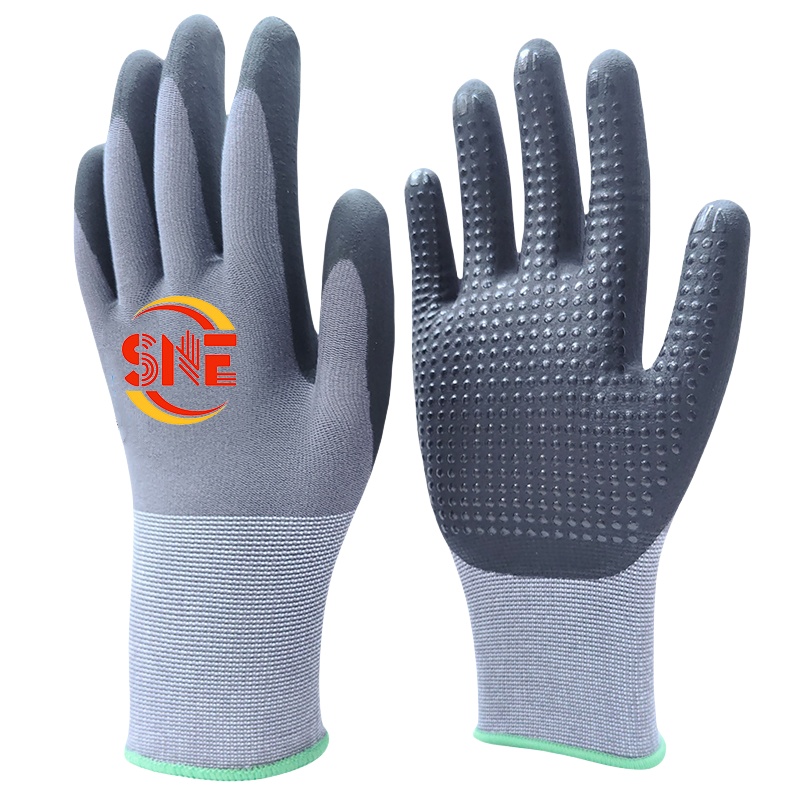
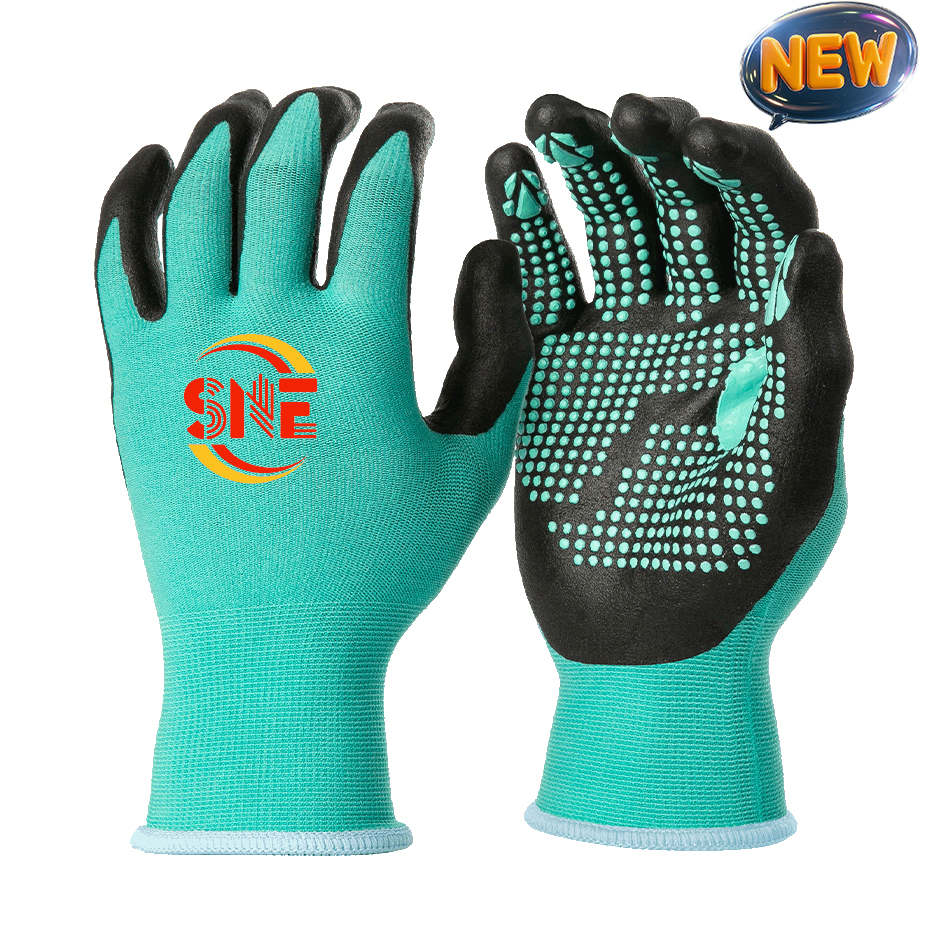
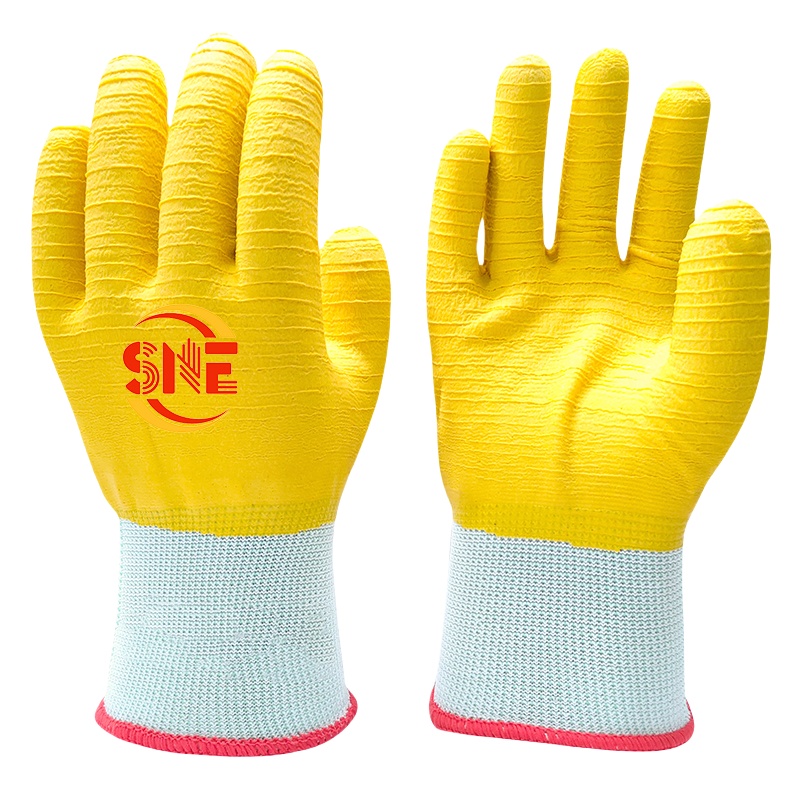
Coated construction gloves are made with a textile liner, often polyester, nylon, HPPE blend, or cotton, with a palm or full-hand coating such as nitrile, latex, or polyurethane. The coating provides grip and surface protection. Depending on the coating type and finish, these gloves can offer resistance to abrasion, puncture, and light contact with oils or moisture. Some coated gloves are smooth, while others use sandy, foamed, crinkled, or micro-foam finishes to improve grip and airflow.
Uncoated construction gloves, by contrast, usually rely on the base fabric or leather without a synthetic palm coating. In the lighter-duty category, that often means cotton, string knit, jersey, or canvas gloves. In heavier-duty categories, some uncoated options may include leather driver gloves or plain knit shells used for dry handling. The main advantages are breathability, low unit cost, and comfort in dry conditions, but they usually wear faster when exposed to rough materials, repeated friction, or slick surfaces.
The best choice depends on the actual work environment. A concrete crew handling rough forms, rebar, and wet surfaces needs something very different from a warehouse team unloading dry cartons or a punch-list crew doing final cleanup. That is why glove selection should start with hazard mapping rather than general preference.
Side-by-Side Comparison for U.S. Buyers
| Feature | Coated Construction Gloves | Uncoated Construction Gloves | Why It Matters on U.S. Job Sites |
|---|---|---|---|
| Grip | Usually stronger on tools, lumber, metal, and damp materials | Limited grip on smooth or dusty surfaces | Reduces slips during framing, scaffolding, roofing, and MEP work |
| Abrasion resistance | Typically higher, especially nitrile and latex coated palms | Usually lower in knit and cotton styles | Important for concrete, masonry, pallets, and repetitive handling |
| Breathability | Moderate to good depending on coating coverage | Usually better in dry, hot conditions | Helps acceptance in states with long hot seasons |
| Oil handling | Nitrile coated gloves perform better | Poor for oily or greasy tasks | Useful in equipment service, mechanical work, and utility crews |
| Dexterity | High in PU and micro-foam nitrile styles | Good in lightweight knit styles, less control on slick items | Matters for fasteners, wiring, and hand tools |
| Typical service life | Longer in medium-duty and heavy-duty construction | Shorter under abrasion and rough contact | Affects total cost of ownership more than unit price alone |
| Initial cost | Higher upfront cost | Lower upfront cost | Relevant for very large crews and temporary labor pools |
| Best fit | General construction, mechanical, steel, masonry, logistics | Dry handling, cleanup, inspection, low-risk tasks | Supports task-based glove assignment |
This comparison shows why many U.S. contractors standardize coated gloves for daily field use but still keep uncoated styles on hand for visitors, dry staging areas, and lower-risk work. The key is that price per pair is only one part of glove economics; replacement frequency, grip-related inefficiency, and hand fatigue matter just as much.
Which Coating Works Best
Not all coated gloves perform the same way. In construction procurement, the coating chemistry often matters more than the simple label of coated versus uncoated. Nitrile coatings are commonly selected for abrasion resistance and better handling of oils and grease. Latex coatings tend to offer strong dry and wet grip, especially with crinkle finishes, which makes them popular in masonry, roofing, and rough material handling. PU coatings are lighter and more precise, often preferred where dexterity is critical, such as electrical assembly support, finish work, and installation tasks requiring finger control.
There are also different coating coverage designs. Palm-coated gloves keep the back of the hand more breathable and are often enough for general construction. Full-coated gloves add more protection against moisture and dirt but may feel warmer. Sandy nitrile and micro-foam nitrile styles continue to gain share because they balance grip, breathability, and worker comfort better than older heavy coatings.
| Coating Type | Typical Strengths | Common Construction Uses | Limitations |
|---|---|---|---|
| Nitrile | Strong abrasion resistance, handles light oil well | Equipment maintenance, steel handling, general contracting | May feel stiffer in some heavier formulations |
| Micro-foam nitrile | Good grip with better airflow and dexterity | General site work, mechanical install, logistics support | Not ideal for heavy liquid exposure |
| Latex | Excellent grip on rough and wet surfaces | Masonry, roofing, landscaping, concrete-related handling | Can be less suitable for oil contact |
| Crinkle latex | Very aggressive grip and durability | Block, brick, timber, rebar, rough outdoor tasks | Bulkier feel for precision work |
| PU | High dexterity, tactile control, light weight | Assembly support, detailed installation, inspection | Less durable for rough heavy handling |
| Uncoated knit or cotton | Breathable, low cost, comfortable in dry conditions | Light material handling, cleanup, packaging, dry staging | Wears fast and lacks grip in tough conditions |
The table makes it clear that the buying decision should focus on jobsite reality. A subcontractor managing drywall hanging, metal stud framing, and finish punch work may actually need both micro-foam nitrile and uncoated knit gloves in the same order, with different carton allocations by crew type.
Where Each Glove Type Fits Best
Coated gloves are usually the practical choice for framing, concrete work, steel erection support, MEP rough-in, roofing, HVAC installation, and utility work. In these settings, workers are gripping ladders, carrying rough materials, moving tools, and dealing with debris, dust, moisture, and occasional oil contamination. Better palm protection directly helps output because workers can maintain control without over-gripping.
Uncoated gloves remain useful in demolition cleanup where gloves are changed frequently, in dry indoor material movement, in landscaping support tasks, and in warehouse staging linked to construction distribution. They also make sense where labor turnover is high and unit cost must stay low, provided the risk profile is limited. Some buyers use uncoated gloves as entry-level issue gloves and upgrade specific teams to coated products after evaluating task demands.
The bar chart highlights where coated gloves dominate in real use. Concrete, masonry, equipment service, and commercial site work show the highest practical preference because these activities involve high abrasion, dust, tool handling, and inconsistent surface conditions. Warehouse support has a lower coated share because dry carton handling can still be done economically with uncoated gloves.
Buying Advice for Contractors, Distributors, and Safety Managers
In the United States, glove buying mistakes usually come from overgeneralization. Procurement teams often ask for the cheapest glove that “works for construction,” but that approach tends to increase waste and worker complaints. A better method is to group tasks by hazard and wear pattern. Ask how often gloves are replaced, which crews complain about slipping, which jobs create the most palm wear, and whether hands are exposed to wet surfaces, oil, concrete dust, or sharp edges. This gives a much clearer view of whether coated gloves create savings through longer use.
For large contractors, carton-level field trials work well. Issue one coated option and one uncoated option to different crews over two weeks, then compare replacement counts, comfort feedback, and supervisor observations. Include climate conditions in the trial. A glove that works in Seattle rain may not be the same glove that a Phoenix crew prefers in summer heat. Regional buying is often smarter than a national one-style policy.
Distributors should also pay attention to packaging flexibility. Small contractors may need mixed-size runs in moderate volumes, while large regional buyers need pallet-scale replenishment and private-label programs. Brand owners and dealers often prefer OEM or ODM arrangements that let them tailor coating color, cuff style, packaging, and logo placement for local resale channels.
| Buyer Type | What They Usually Need | Best Glove Strategy | Commercial Note |
|---|---|---|---|
| General contractor | Multi-trade coverage across large job sites | Blend coated gloves for field crews and uncoated for light tasks | Focus on replacement rate and crew acceptance |
| Specialty subcontractor | Trade-specific glove performance | Choose coating by task, such as nitrile for mechanical or latex for masonry | Jobsite productivity matters more than lowest piece price |
| Industrial distributor | Broad stock for varied customers | Carry multiple coating types and basic uncoated options | Regional demand differences are significant |
| Dealer or reseller | Private-label or branded resale programs | Use OEM/ODM coated glove lines plus budget uncoated SKUs | Packaging and color customization can lift margin |
| Facilities team | Maintenance and mixed-use support | Micro-foam nitrile plus low-cost dry handling gloves | Central storeroom programs benefit from clear glove segmentation |
| Small contractor | Simple, practical ordering | Start with one versatile coated style and one budget uncoated style | Avoid overbuying specialty gloves before testing |
This table helps buyers match glove programs to their operating model. It also shows why there is no single universal answer. The right mix depends on trade concentration, climate, worker expectations, and procurement structure.
Industries and Applications Beyond Traditional Building
The coated versus uncoated question also appears in adjacent sectors tied to construction supply chains. In oil and gas support around Texas and Louisiana, coated gloves with stronger grip and abrasion performance are often the default. In logistics and warehouse operations near Inland Empire distribution hubs or Savannah port-connected facilities, uncoated gloves still appear in dry handling, but coated gloves are increasingly used where speed and carton control matter. In metal fabrication, pre-cast support, and equipment rental servicing, nitrile-coated gloves are often favored because they bridge handling protection and light oil resistance.
Public works crews, utility contractors, landscaping teams, and highway maintenance departments may use a mixed approach. Latex-coated gloves are often valued for outdoor grip on rough materials, while uncoated gloves remain useful for low-risk warm-weather tasks. The broader the application range, the more valuable it becomes to maintain a segmented glove matrix instead of a one-style inventory.
Real-World U.S. Use Cases
A framing contractor in Dallas may find that uncoated cotton gloves are inexpensive but fail too quickly when crews handle engineered lumber, fasteners, and power tools all day. Switching to a palm-coated nitrile or latex style can reduce daily glove changes and improve grip during fast-paced installation. A commercial MEP contractor in Chicago may prefer a lighter micro-foam nitrile glove because electricians, pipefitters, and HVAC installers need dexterity as much as palm protection. A masonry supplier in Florida may report that crinkle latex gloves outperform uncoated options during humid outdoor work because workers keep better control of wet block and hand tools.
On the other hand, a regional building materials warehouse in Ohio may still use uncoated gloves for dry case picking, packaging, and light loading where the risk level is low and fast glove replacement is acceptable. This demonstrates a simple rule: the rougher, slicker, or more repetitive the task, the stronger the case for coated gloves.
Local and Regional Suppliers Relevant to U.S. Buyers
U.S. buyers usually source through a mix of manufacturers, importers, industrial distributors, and private-label channels. The following companies are widely relevant to the United States market and give buyers practical benchmarks for service coverage, product range, and program style.
| Company | Service Region | Core Strengths | Key Offerings |
|---|---|---|---|
| Honeywell Industrial Safety | United States nationwide | Large industrial safety portfolio, broad distribution reach, compliance-focused programs | Coated work gloves, cut-resistant gloves, general-purpose hand protection |
| MCR Safety | United States with strong distributor network | Wide selection for industrial and construction users, recognized PPE brand | Nitrile-coated, latex-coated, string knit, leather, and impact glove lines |
| Magid | United States nationwide | Private-label support, custom programs, broad industrial supply capabilities | Coated gloves, cut-resistant gloves, disposable gloves, branded safety solutions |
| Ergodyne | United States and North America | Jobsite-focused PPE, strong contractor and industrial presence | Grip gloves, cold weather gloves, impact gloves, high-visibility safety gear |
| Superior Glove | United States and Canada | Technical glove expertise, broad premium range, strong cut and specialty products | Coated gloves, cut-resistant styles, specialized industrial hand protection |
| Grainger and private-label channels | United States nationwide | Fast fulfillment, local branch access, procurement convenience | Multiple glove brands, coated and uncoated options for maintenance and construction |
This supplier table is useful because it reflects real buying paths in the United States. Some buyers prioritize rapid branch fulfillment and standardized procurement systems, while others want factory customization, private-label options, or stronger technical support for trade-specific glove selection.
Detailed Supplier Comparison
Large national channels are often the easiest route for immediate replenishment, especially for contractors with multi-state operations. However, direct manufacturers and specialized importers may offer better customization, lower landed cost for bulk orders, and more control over packaging, branding, and glove specifications. Buyers comparing local availability against factory-direct sourcing should consider minimum order quantity, inventory planning, sample testing, and lead-time reliability.
The area chart illustrates the long-term shift in U.S. construction purchasing toward coated gloves. This does not mean uncoated products are disappearing. It means buyers increasingly reserve them for lower-risk, dry, and cost-sensitive work while coated gloves absorb a larger share of everyday field use.
This comparison chart helps explain why some U.S. distributors and brand owners continue to evaluate direct manufacturing partners. Established domestic channels score well on speed and market familiarity, while factory-direct OEM programs often stand out on customization depth and bulk pricing when the buyer can plan inventory in advance.
How to Evaluate Total Cost Instead of Piece Price
A glove that costs less per pair can still cost more over a month if workers replace it twice as often. U.S. buyers should calculate cost per wear cycle, not just purchase price. For example, a low-cost uncoated glove may be suitable for dry handling if it lasts a shift and replacement is easy. But if workers doing concrete forming or tool-intensive installation go through multiple pairs a day, the apparent savings disappear quickly. Add in lost grip, dropped materials, lower comfort, and worker resistance, and coated gloves often become the better operating choice.
Total cost also includes inventory simplification. Too many glove styles create confusion, but too few cause poor fit between glove and task. A practical program often uses three bands: a budget uncoated option for low-risk dry work, a general coated option for everyday construction, and a task-specific premium glove for oily, sharp, or high-abrasion environments.
Our Company
For U.S. buyers that want a factory-direct alternative, Snell Safety offers a practical model built around coated and specialty hand protection for construction and industrial users. The company combines ISO 9001 quality management and CE-certified production with hands-on expertise in PU, latex, and nitrile coating technologies, supported by two manufacturing facilities in Gaomi and Nantong, six production lines, more than 150 skilled employees, and daily capacity of about 150,000 pairs, which gives distributors, contractors, brand owners, and regional dealers the confidence that bulk orders can be delivered consistently under controlled manufacturing and testing standards. Its cooperation model is flexible enough for OEM and ODM development, private-label programs, wholesale supply, customized materials, sizes, branding, and packaging, making it suitable for local distributors, importers, dealer networks, end users, and even smaller buyers testing new glove lines. For U.S. customers, the real value is not only factory pricing but also structured pre-sale product consultation, sample support, export logistics coordination, and ongoing after-sales communication through the company’s established global business operations and export experience across North America and other regulated markets. Buyers exploring long-term sourcing can review the manufacturer’s background on the about us page, browse the broader product catalog, and reach out through the U.S.-focused contact channel for specification matching and sampling.
How Different U.S. Industries Decide
Residential builders often need a balanced glove that can handle wood, sheet goods, ladders, and basic tool use, so latex-coated or nitrile-coated gloves tend to outperform basic uncoated knits. Commercial general contractors usually move toward coated styles because crews face a wider mix of materials and more demanding schedules. Utility, highway, and municipal crews often maintain mixed inventories because weather, rough surfaces, and maintenance tasks vary day to day. Warehousing and building material distribution continue to buy uncoated gloves for some dry handling, but the trend is still moving toward coated palms for better grip, especially as labor productivity becomes more important.
Industrial maintenance linked to construction support uses coated gloves heavily because workers may encounter lubricants, metal edges, and repetitive tool handling. Landscaping and outdoor improvement work can go either way depending on the season and the type of materials handled, but latex-coated gloves remain a strong performer for grip in outdoor conditions.
Case Studies
A Texas concrete subcontractor switched a 90-person crew from low-cost uncoated cotton gloves to crinkle latex palm-coated gloves for formwork, rebar tie support, and material positioning. The unit price increased, but the average glove consumption per worker dropped, and supervisors reported fewer complaints about slipping when surfaces were dusty or damp. The company’s purchasing team found that total weekly spend remained stable while crew satisfaction improved.
An Illinois mechanical contractor tested micro-foam nitrile gloves against basic knit gloves for duct installation, hanger placement, and rooftop unit prep. The coated gloves lasted longer around sheet metal and hardware bins, and workers liked the improved finger control. The company adopted a two-tier system: coated gloves for installation crews and uncoated gloves for staging and cleanup.
A Florida block and masonry supplier used uncoated gloves for yard handling but moved brick crews to latex-coated gloves in summer due to sweat, humidity, and rough materials. The stronger grip helped reduce glove discard caused by palm wear. Managers noted that workers kept the coated gloves on longer during the day, which also supported better safety compliance.
Future Trends Through 2026
By 2026, three trends are likely to shape the U.S. market further. The first is technology. Buyers increasingly want glove data tied to abrasion ratings, cut levels, touchscreen compatibility, and job-specific grip performance. This pushes manufacturers toward more engineered liners, improved foam coatings, and better consistency between production lots. The second is policy and compliance. More contractors are formalizing PPE selection through written hazard assessments, especially on large public projects and corporate-led developments. This supports more documented glove matching by task rather than generic procurement.
The third trend is sustainability. U.S. buyers are beginning to ask tougher questions about packaging waste, longer product life, responsible manufacturing, and logistics efficiency. In practice, sustainability in gloves often starts with durability because fewer replacements can mean less waste. Some importers and brand owners are also asking suppliers for cleaner production controls, streamlined carton design, and traceability in raw material and manufacturing systems.
Another likely 2026 trend is regional inventory strategy. With ongoing supply-chain risk awareness, buyers are more interested in suppliers that can support forecast-based replenishment, private-label planning, and stable lead times rather than purely transactional imports. This benefits manufacturers with scalable production and strong export discipline.
FAQ
Are coated gloves always better for construction?
No. They are better for many common construction tasks, especially where grip and abrasion matter, but uncoated gloves still work well for dry, low-risk, light-duty handling.
Which coated glove is best for oily work?
Nitrile-coated gloves are usually the first option for light oil exposure and mechanical handling. Buyers should still test specific finishes because not all nitrile coatings perform the same way.
Are latex-coated gloves good for masonry?
Yes. Latex and crinkle latex gloves are widely used for masonry, concrete-related handling, and rough outdoor materials because they provide strong grip on uneven surfaces.
When should I choose uncoated gloves?
Choose them for dry handling, low-risk cleanup, packaging, inspection, or low-cost temporary use where breathability and minimal upfront cost matter more than long wear life.
Do U.S. contractors usually buy one glove for every crew?
Smaller firms sometimes do, but more mature buyers usually create a glove matrix by task, climate, and trade. That approach improves performance and often lowers overall replacement cost.
Can factory-direct overseas suppliers work for U.S. buyers?
Yes, especially for bulk purchasing, private-label programs, and distributor sourcing, provided the supplier has recognized certifications, proven production capacity, clear quality controls, and responsive pre-sales and after-sales support.
What is the safest procurement approach?
Run a field trial, compare replacement rates and worker feedback, then standardize by task. The best buying decision comes from measured wear data, not from assumptions or the lowest quoted unit price.
Final Takeaway
If you need one direct answer for the United States market, coated construction gloves are the best choice for most active construction environments because they deliver better grip, better abrasion performance, and stronger day-to-day value on demanding job sites. Uncoated gloves still have a place, but mainly in dry, light-duty, or highly cost-sensitive situations. The smartest U.S. buyers do not treat this as a simple either-or decision. They build a glove program that combines coated and uncoated options by trade, hazard, climate, and budget, then source from suppliers that can support consistent quality, practical testing, and dependable replenishment.